Last December, the Vienna State Opera performed "The Nutcracker." I'd bought stalls tickets six months in advance, anticipating a perfect evening. But I couldn't enjoy the music. The woman in the next seat had generously doused herself with a heavy oud extract. In the enclosed, warm space of the auditorium, the scent became a physiological weapon, triggering migraines in the entire row. That evening, I was once again convinced: the right evening perfume for women is a matter not only of taste but also of basic respect for others.
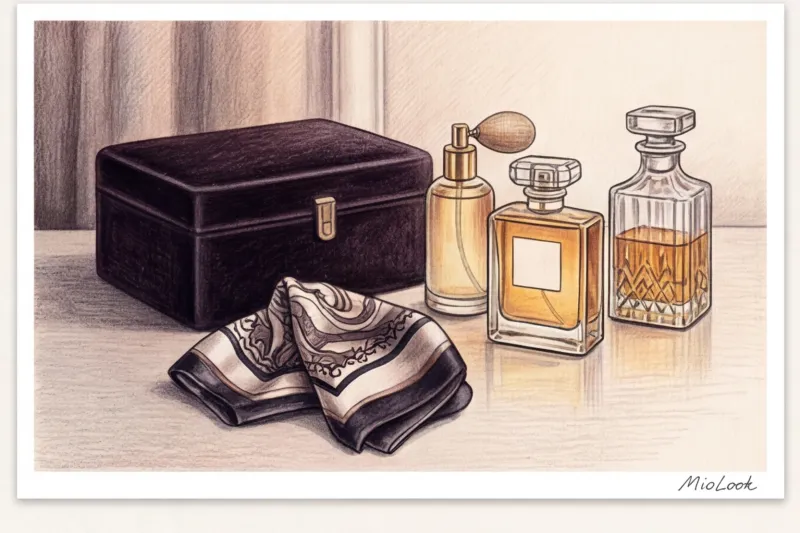
Unlike typical "top 10 sexiest fragrances" lists, I suggest looking at perfume differently. It's a functional wardrobe item. Its choice is strictly dictated by the location, the distance from the person you're talking to, the texture of your dress, and the etiquette rules of the specific event. We discussed the daytime base in more detail in our the complete guide to perfume etiquette , but today we'll talk about the highest level of performance - evening outings.
Why One Bottle "Per Goal" No Longer Works: Evening Dress Code Rules
The concept of "one signature scent for all occasions" is hopelessly outdated. Today, perfume is an invisible accessory, requiring the same rotation as shoes or bags. You wouldn't go to the Bolshoi Theater with a beach tote bag, would you? Similarly, you shouldn't wear a loud club scent to an intimate dinner.
According to a 2024 report by the analytical agency WGSN, there has been a global shift in perfumery toward olfactory "quiet luxury." The era of aggressive sillages from the 1980s, when a scent would enter a room five minutes before its owner, is finally over. The main faux pas of modern times is the violation of personal boundaries with scent (so-called aggressive sillage).
I always teach my clients to apply the cost-per-wear concept to perfumes. From a financial and stylistic perspective, it makes much more sense to buy three 10-15 ml miniatures for different purposes than one 100 ml bottle for €300, which will be inappropriate 80% of the time. Furthermore, the fragrance should complement your outfit. Heavy, resinous notes (opoponax, incense, benzoin) call for dense, light-absorbing textures like velvet or thick crepe. Cool aldehydes, on the other hand, pair perfectly with flowing silk, emphasizing its coolness.
Access to MioLook for €0.99 — one-time payment
A smart AI stylist will select the perfect look for any evening event, taking into account your wardrobe.
Get access — €0.99 onceTheatre etiquette: what evening perfume is appropriate in the stalls
Theaters, operas, ballets, and philharmonic halls are all areas of heightened perfume hazard. The specific nature of these locations dictates strict guidelines: enclosed, often poorly ventilated spaces, static postures, and minimal distance between seats (sometimes less than 20 centimeters from a neighbor's shoulder).
At one premiere, I witnessed a patron overdosing on the popular Baccarat Rouge 540 and physically forcing her neighbors to move to the empty balcony seats. To avoid becoming the heroine of a similar story, remember the theater's no-no scents: any oud, indolic white flowers (tuberose, lily, carnivorous jasmine), and heavy, sticky gourmands.
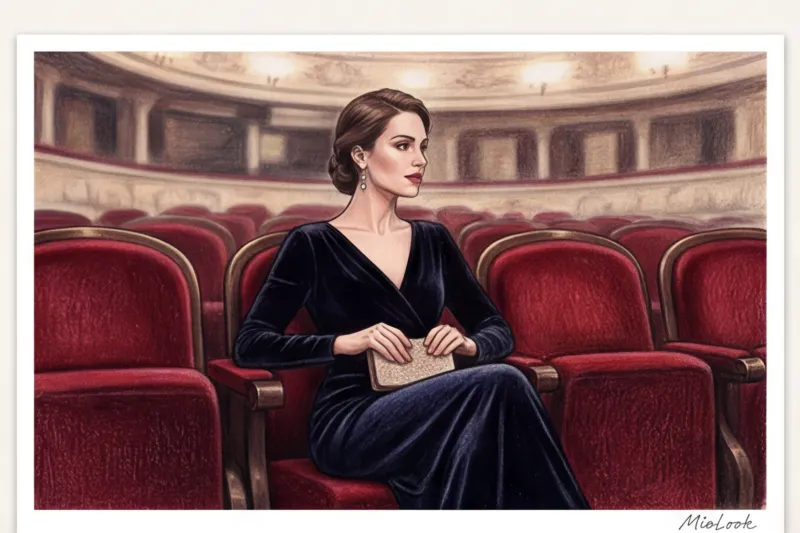
Your ideal choice is "introverted scents." These include powdery compositions with prominent iris or violet, dry woods (cedar, sandalwood), and "clean" musks. They create an aura of well-groomedness, as if you've just taken a bath with expensive soap, but they don't intrude at all.
The "elbow rule" in confined spaces
The Fragrance Foundation strictly regulates perfume etiquette: indoors, the permissible radius of your scent trail should not exceed 45 centimeters. This is the "elbow rule." If you extend your arm, the scent should only be detectable within the crook of your elbow, and no further.
Another practical tip: apply your theater perfume 40-60 minutes before leaving home. This will allow the harshest and most volatile top notes to evaporate, leaving you with a delicate, rounded base note as you enter the theater.
Gastronomic Perfume: Choosing a Scent for Dinner at a Restaurant
The cardinal rule of gastronomic etiquette is uncompromising: your perfume should not compete with your food or wine. Smell and taste are inextricably linked. A strong scent can literally overwhelm the taste buds of not only you but also your companions.
I recently discussed this topic with a sommelier at a Michelin-starred restaurant in Lyon. He admitted that the dense amber and vanilla aromas of his guests are his biggest professional nightmare. They completely distort the perception of complex red wines, turning fine tannins into a flat, indistinct taste.
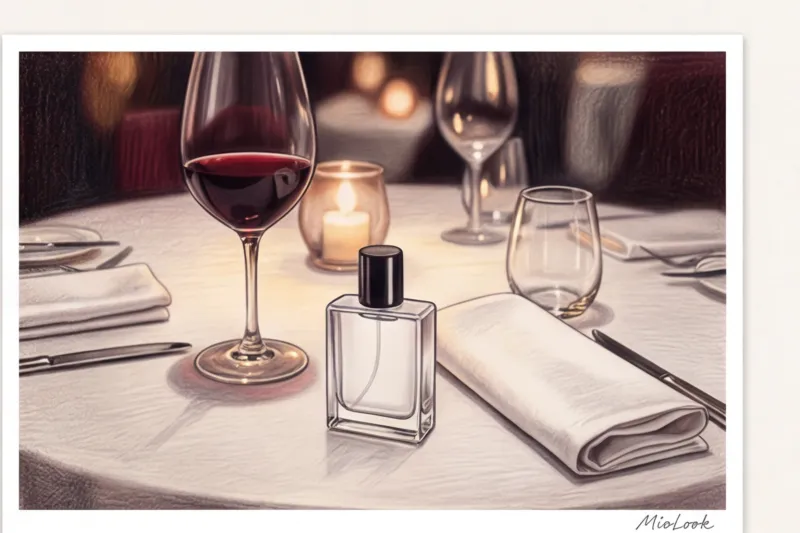
Notes to absolutely avoid in a restaurant: strong vanilla, praline, caramel, chocolate, and any animalic accords (civet, castoreum). What to wear? Opt for light chypres, citrus-woody compositions, or molecular perfumes based on Iso E Super or Ambroxan.
"Molecular scents are the perfect choice for a restaurant. They fade in and out, creating the effect of a clean, warm body, not a perfume factory."
To be fair, there's one caveat here that glossy magazines often gloss over: molecular perfumes don't work on everyone. On very cold skin, Iso E Super may not open up at all or smell like wet cardboard. Therefore, be sure to test such fragrances before an important dinner rather than buying them blind.
Your perfect look starts here
Join thousands of users who look flawless every day with MioLook. Plan your looks in advance.
Get access — €0.99 onceSocial events and gala dinners: time for statement fragrances
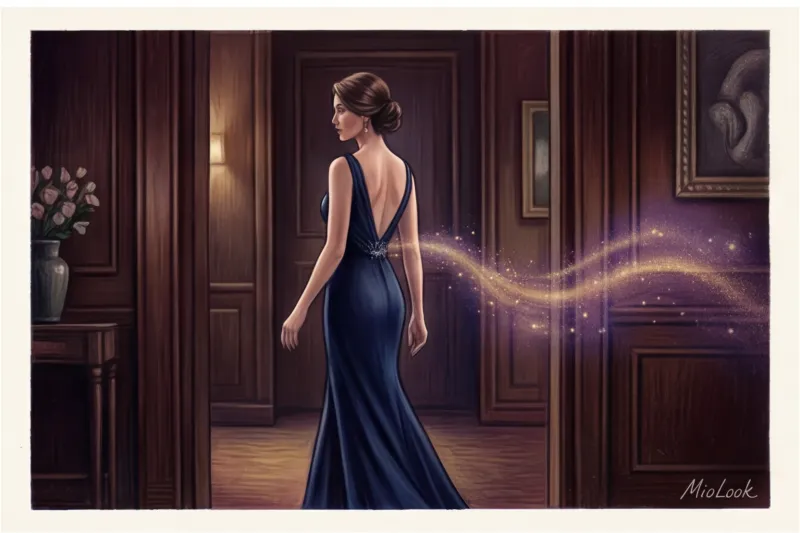
While the theater demands silence, large-scale social events (black tie, red carpets, corporate gala dinners) are the only venues where a long, beautiful train is completely legal and even desirable. These venues feature large, open spaces, high ceilings, powerful ventilation, and constant guest traffic.
When I style clients for high-profile events, we always choose a statement perfume. It's a scent that makes a statement. It helps maintain posture, conveys confidence, and leaves a beautiful mark as you walk past.
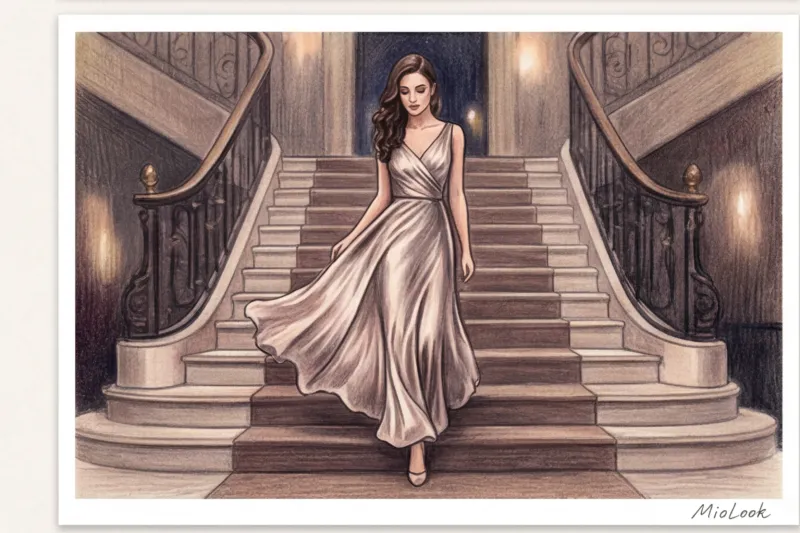
The best profiles for such occasions are classic floral aldehydes (they sound like the clinking of crystal glasses), modern, sharp patchouli, and elegant leather scents. As well as business makeup Evening perfume demands impeccable execution. If you're wearing a heavy necklace and a velvet dress, the perfume should match the level of drama.
Concentration Matters: EDP, Extrait or Perfume Oil?
This is where the biggest misconception I encounter in my practice lies. It's commonly believed that the higher the concentration (and price) of a bottle, the longer and more powerful the sillage. This is physically incorrect.
Let's examine the mechanics of evaporation. Alcohol is the "vehicle" for aromatic molecules. Eau de Parfum contains a large amount of alcohol. Body heat causes it to evaporate rapidly, carrying perfume molecules with it and scattering them for meters around. EDP literally "screams" across the room.
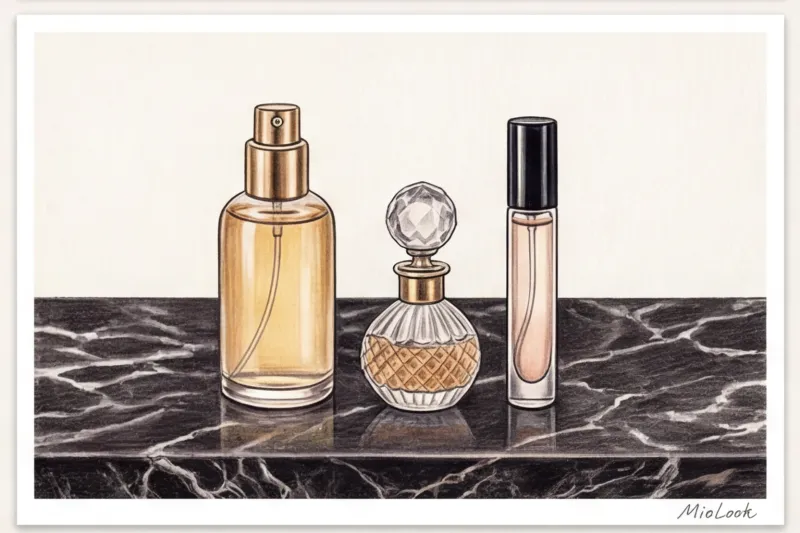
In perfumes (Extrait de Parfum), the concentration of oils reaches 30-40%, and the alcohol content is critically low. There's simply no way for them to "fly" off your skin. Therefore, true perfumes sit thick and dense, but only whisper to those who come close. This makes the Extrait or perfume oil format ideal for intimate evening dates or the opera, where maximum longevity with minimal impact is desired.
Checklist: How to apply evening perfume correctly so it smells expensive
Even the most exquisite fragrance can be ruined by improper application. Here's my step-by-step guide that has saved more than one silk blouse from stains and pearls from ruin.
- Stop rubbing your wrists. This habit literally breaks the fragile structure of the top notes, causing the fragrance to sound flat and evaporate faster. Simply spray on and let it dry naturally.
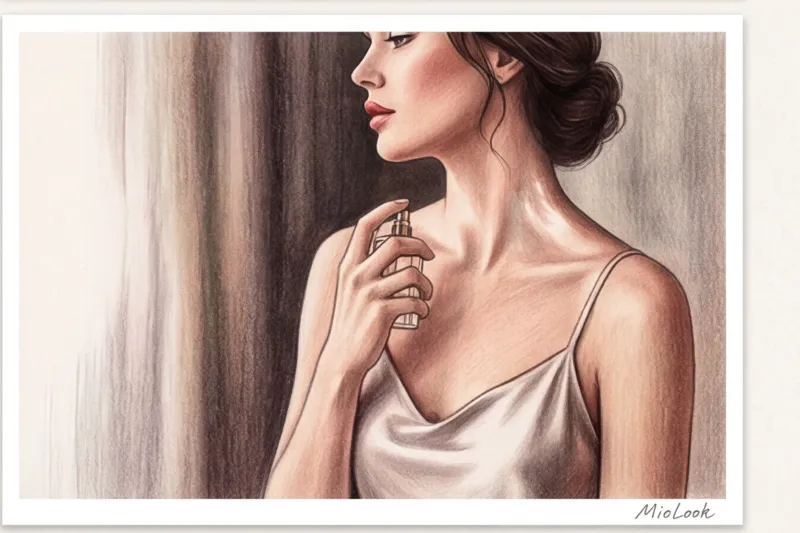
- Choose the right zones. For evening use, the ideal spot is the back of the neck, just below the hairline. The scent will gently rise with each turn of the head, without tiring your nose. The collarbones also work well.
- Take care of fabrics and decorations. Never spray perfume on natural pearls or costume jewelry—alcohol instantly corrodes the mother-of-pearl and oxidizes the metal. Silk and satin will immediately become covered in oil stains that no dry cleaner can remove. Perfume should only be applied to the skin before putting on the dress.
- Use atomizers. The rule of elegance is: it is better to delicately refresh the scent in the ladies' room after 4 hours than to pour half a bottle on yourself before leaving the house in the hope that “it will last until the morning.”
Ready to get started?
Organize not only your perfume but also your capsule wardrobe with the MioLook app. Try the free plan—no commitments.
Get access — €0.99 oncePerfume capsule: 3 bottles that will cover all your evening outings
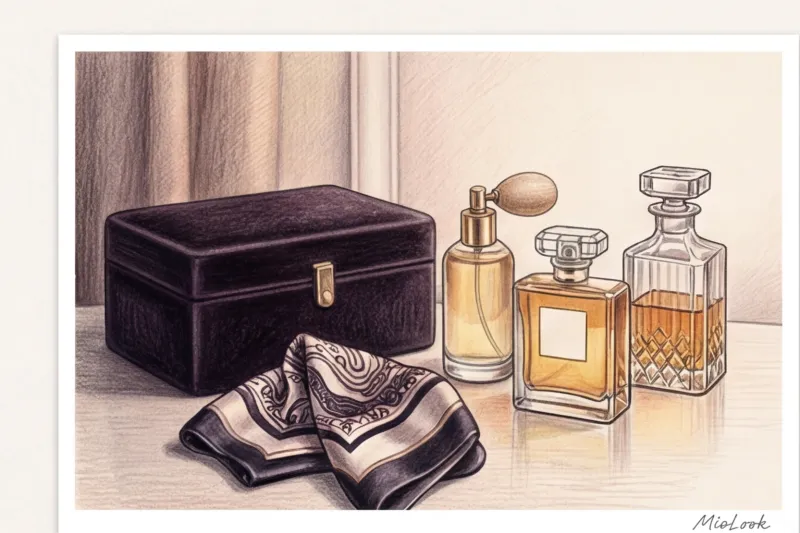
To always be relevant, you don't need a shelf filled with dozens of bottles. The same principle applies here as in smart wardrobe MioLook: strict calculation and functionality. Create a basic evening capsule from three elements:
- An introverted scent (powder/iris/purity). Your reliable companion for theatres, exhibitions and dense seating arrangements.
- Aroma molecule (woody-musky). A neutral yet intriguing backdrop for restaurants and wine tastings.
- Fragrance statement (chypre/aldehydes/leather). A dense, long-lasting perfume for formal receptions, corporate events and gala dinners.
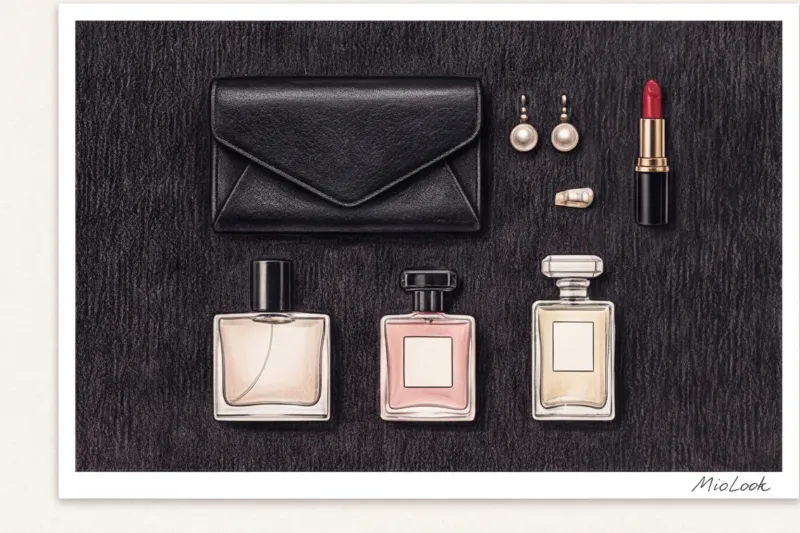
And my main tip for optimizing your budget: buy evening fragrances exclusively in travel-size bottles (10-15 ml). Evening perfumes last much longer than daytime ones. A full-size 100 ml bottle risks spoiling (oxidizing) before you've used even a third of it. Miniatures, on the other hand, are always fresh, fit easily in an evening clutch, and allow you to invest the savings in quality accessories or another trip to the theater.
Perfume is more than just a pleasant scent. It's a tool for impression management. Choose it as thoughtfully as you choose your pumps, consider the context of the event, and your look will always convey true luxury, not ostentatiousness.