Why Classic Tests Don't Work Anymore: Debunking the Myths
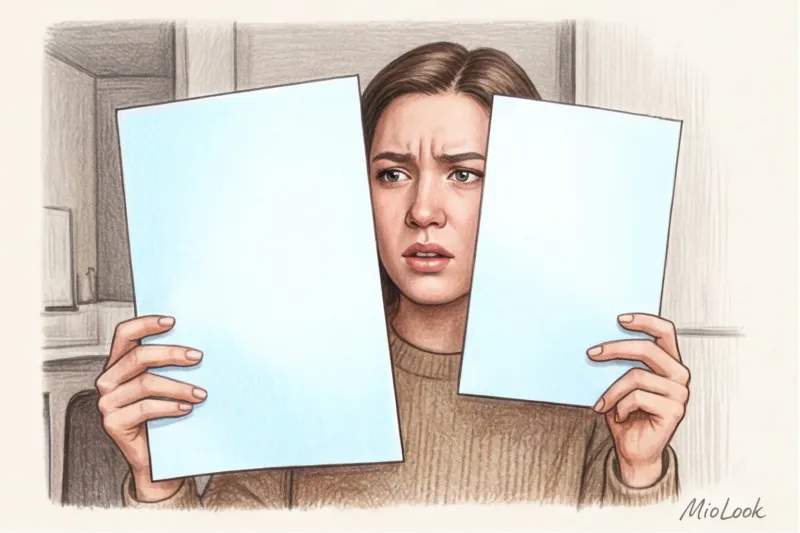
Sound familiar? You open an article online, press a white sheet of paper to your face, then stare at your wrists in daylight and... become completely confused. One test says you're a classic "spring" type, another categorically diagnoses you as a cool type, and a third even suggests you should wear only gray. The internet is overflowing with conflicting and outdated advice about... How to determine your skin undertone , and most of them today simply do not stand up to criticism.
I'll be honest: when I started my practice, about 12 years ago, I was a big believer in these methods. I made clients look at their veins and apply foil to their faces until I began studying professional coloristics and color physics in depth. I saw the despair in women's eyes when their "officially diagnosed" warm undertones didn't mesh at all with the recommended wardrobe, leaving their faces looking tired. The problem wasn't their appearance, but the measurement tools themselves.
The main failure of classic color tests is their rigid binary thinking. For decades, we've been forced to choose exclusively between "warm" and "cool," as if other options existed. In modern styling, we've long since abandoned this duality. According to the Pantone Color Institute (2023), over 30% of people have neutral, olive, or complex mixed undertones that simply don't fit into the molds of '90s glossy magazines. Minimalist brands like COS, Jil Sander, and The Row have long built their collections on complex, in-between shades, ignoring the "only warm or only cool" rule.
Another pitfall of the old methods is the fatal confusion between surface tone ( overtone ) and true skin tone ( undertone ). Traditional at-home skin tests often detect temporary or dermatological conditions. Rosacea, a fresh tan, post-acne scars, an allergic reaction, or even mild rosacea on the cheeks can visually "redden" the face. Because of this, you look in the mirror and decide you have a cool, pink undertone. But the surface layer changes with sun exposure, age, and health, while your true undertone is a genetic makeup that stays with you forever.
The "Blue and Green Veins" Myth: Why Determining Your Skin Undertone by Your Wrist Is a Bad Idea
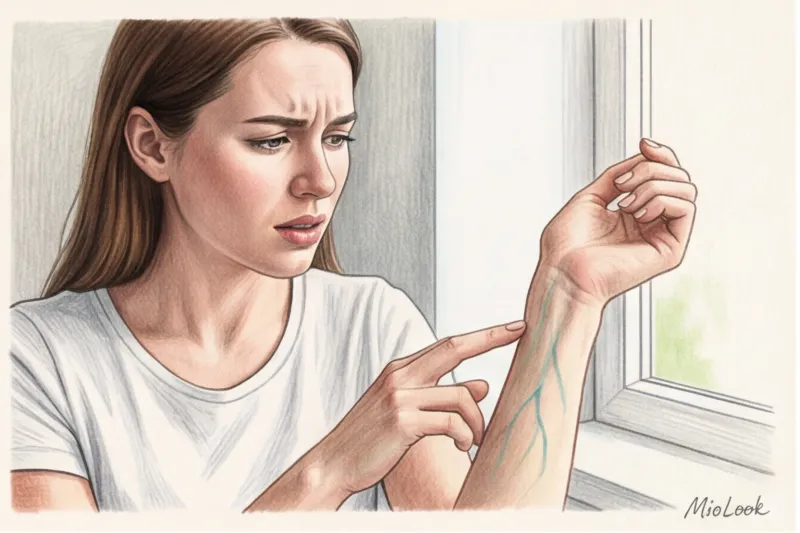
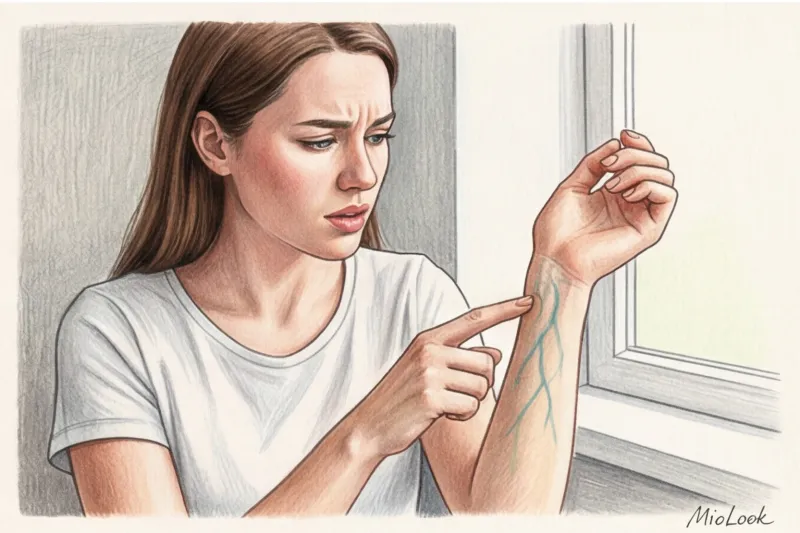
This is perhaps the most persistent myth in the beauty industry. Its premise is ridiculously simple: if your veins appear blue, you're a cool-toned person; if they appear green, you're a warm-toned person. Sounds logical? Until we remember our high school physics lessons.
The color of the veins we see with the naked eye is merely an optical illusion, the result of light refraction through different layers of the epidermis and dermis. Blood is always red, but the venous walls themselves are whitish, not green. Blue light is absorbed by the skin faster than red light, so deep-seated vessels reflect blue light back into the eye.
And now the most important thing: if your skin has a slight yellowish or olive undertone (which is incredibly common among Slavic, Asian, and Southern European skin types), the blue pigment in your veins shows through this yellowish natural filter. Remember those basic drawing lessons: blue plus yellow equals green. As a result, those with cool olive skin are declaring themselves to have a "warm" undertone and buying up peach blush and terracotta sweaters, which make their faces look sallow and sallow.
For deep skin tones with a high melanin content, this test is completely ineffective. The dense layer of brown pigment simply prevents light from refracting in a way that would allow us to clearly identify the color of the blood vessels. Using this method today is like trying to measure the outside temperature by placing your palm against a double-glazed window.
The illusion of a white sheet and gold foil
The second most common piece of harmful advice is to hold a sheet of printer paper to your face. This suggests that warm undertones will appear yellowish against the paper, while cool undertones will appear pinkish. This is a grave mistake: the white sheet creates a false, extreme contrast that doesn't exist in nature.
Modern office paper is chemically bleached, often with the addition of bluish fluorescent optical brighteners. Against this harsh background, almost any human face without heavy makeup will appear dull, grayish, or excessively yellow simply due to the difference in light reflectance. You're not testing skin temperature, but the degree of pallor against a chemical white background.
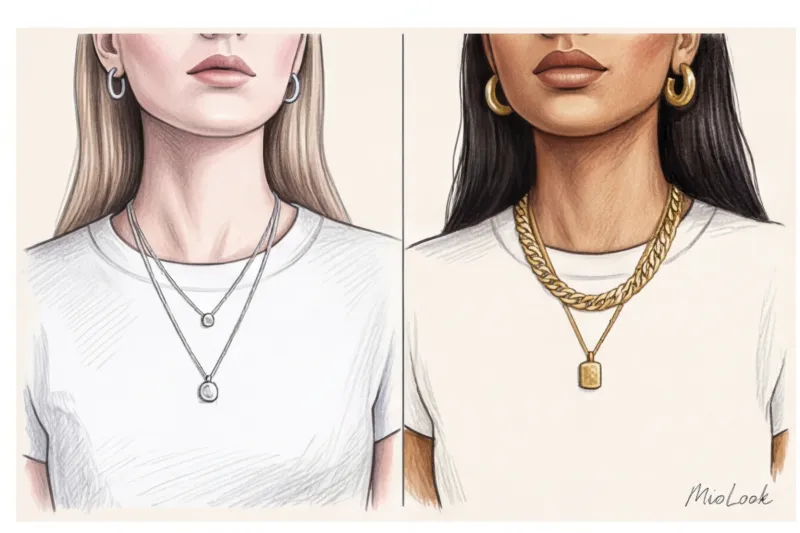
As for the gold and silver foil test, it suffers critically from confirmation bias ( confirmation bias ). If you've worn one metal your whole life and are used to seeing yourself in it, another will seem alien to you. This is a subjective emotional assessment, not an objective analysis. Besides, if you think about it, How to choose the color of jewelry metal: gold or silver Remember, modern jewelry has come a long way. Gold comes in dozens of different alloys—from cool lemon to deep red—and a piece of foil doesn't reflect how a real, complex piece of jewelry will interact with the texture of your appearance.
Fortunately, today we don't have to rely on optical illusions and subjective guesses. Digital tools are completely changing the approach to analyzing appearance. For example, neural network to determine color type of appearance It can be much more accurate because the algorithms calibrate colors pixel by pixel, accounting for red spots from acne, uneven lighting in the bathroom, or your personal style habits.
Anatomy of color: what is skin undertone and how is it different from skin tone?
In aesthetic dermatology, there's a clear rule: what we see in the mirror at a glance is only the surface layer of the truth. The problem with the vast majority of stylistic errors stems from a simple confusion of terms. We constantly confuse two completely different physiological concepts: overtone and undertone.
Skin tone Skin tone is a variable. It reacts to the environment, stress levels, inflammation, age-related changes, and even the glass of wine you had the night before. Did you spend the weekend in the bright sun? Your skin tone has darkened and become warmer. Are you experiencing rosacea or couperose? Your skin tone has acquired a persistent reddish tint.
And here it is undertone It's your biological shadow, a built-in "filter" that forms before birth and remains constant throughout your life. This is why the task of determining your skin's undertone often seems so impossible: we stubbornly try to analyze the changing surface, completely ignoring the stable base beneath.
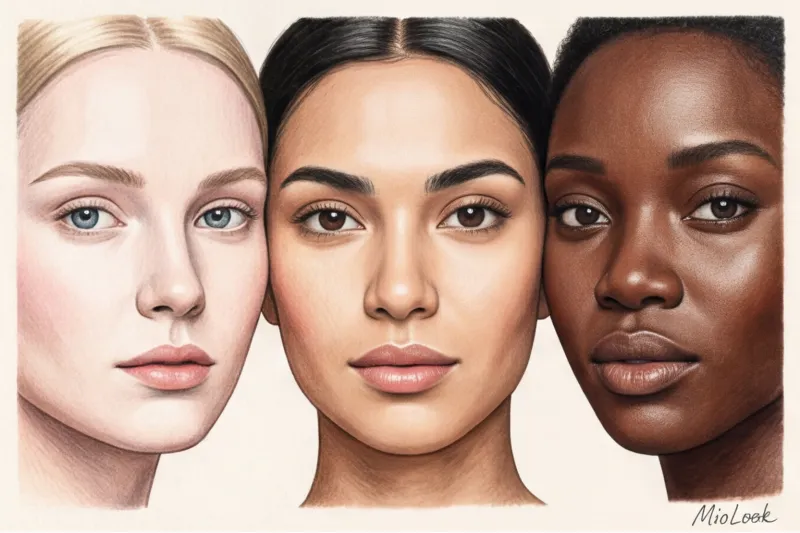
Scientifically, our true color temperature is determined not by abstract "seasons," but by our anatomy. Human skin tone is based on just three pigments in the epidermis and dermis. In digital styling, we call this the body's built-in RGB palette:
- Melanin (brown/black): A pigment responsible for depth and saturation. Contrary to popular myth, high levels of melanin in dark-skinned people does not automatically make them appear "warm." Melanin can have both a warm chocolatey hue and a cool, grayish ash tone.
- Carotene (yellow/orange): It accumulates in the stratum corneum and subcutaneous fat. This element is responsible for the golden or peachy glow characteristic of warm skin tones.
- Hemoglobin (red/blue): Blood vessels visible through the tissue. Oxygenated arterial blood imparts a warm, reddish glow, while the venous network adds cool, bluish-purple shadows.
Imagine mixing paints on an artist's palette. Your unique temperature is the result of the proportions in which this biological trinity is combined. If melanin levels are naturally high and carotene is present, your skin takes on a deep, warm caramel hue. If carotene is virtually absent and capillaries are located close to the surface (influenced by hemoglobin), you get porcelain skin with a distinctly cool, pinkish-purple undertone.
In 2023, at a conference on AI integration in the fashion industry, data from thousands of facial scans was discussed. The analysis revealed a striking fact: the human eye is constantly deceived by superficial redness (rosacea or vascular reactivity), mistaking it for warm coloration. Meanwhile, algorithms accurately capture the true blue-yellow balance of the deeper layers of the skin.
"Understanding that superficial changes (tanning, pigmentation, acne) don't affect your genetic makeup is the key to creating a smart wardrobe. Your perfect emerald sweater won't stop looking good on you just because you got a little sunburn on vacation."
Access to MioLook for €0.99 — one-time payment
A smart AI stylist will select the perfect look.
Get access — €0.99 onceBy stopping judging your appearance by temporary, superficial characteristics, you'll stop storing clothes in your closet that will hang with the tags for years. We begin working with an unchanging foundation, and it's this approach that allows us to build a system in which clothes serve you, not the other way around.
How to determine your skin undertone: professional stylist methods
When a client comes to my studio for a color analysis for the first time, the process often causes a bit of confusion. Many expect a relaxed and fun try-on in front of a mirror, but instead they find themselves in a strictly controlled environment that feels more like a photo lab or a cosmetologist's office. And this is perfectly logical: if you're investing in professional styling (a full session with a color analysis in Europe currently costs between €250 and €400), you need precise, mathematically verified data, not a subjective "I think this color looks fresh on you."
Over the years of practice, the task, How to determine your skin undertone With utmost precision, I developed a strict studio protocol. The first and most critical point is lighting. We absolutely do not rely on "sunshine streaming through the window." Morning natural light produces a blue reflex, sunset casts a yellow cast on faces, and clouds act as an unpredictable softbox. In a professional environment, we use exclusively calibrated lamps with a color temperature of exactly 5500 Kelvin (ideal daylight) and a color rendering index (CRI) of at least 95.
The second rule: the environment should be color-neutral. No bright walls, furniture, or paintings—only a neutral gray background (we use the Munsell N5 color reference code). Any bright object in the room will cast a colored glare on your face, distorting the results.
"Preparing the 'canvas' is the moment of truth. You can't test the skin's temperature while there's even a drop of foreign pigment on it."
That's why we insist on complete makeup removal. Even clear sunscreen or a light moisturizer can alter the angle of light refraction on the skin. Hair is a separate risk factor. If it's color-treated (even with a subtle balayage or highlight), we completely conceal it under a neutral-gray medical cap or a tight headband. Your platinum strands or warm honey highlights are guaranteed to trick the brain and trick the eye into imagining a temperature that doesn't actually exist.
Draping Method: Testing with Fabrics (Directional Method)
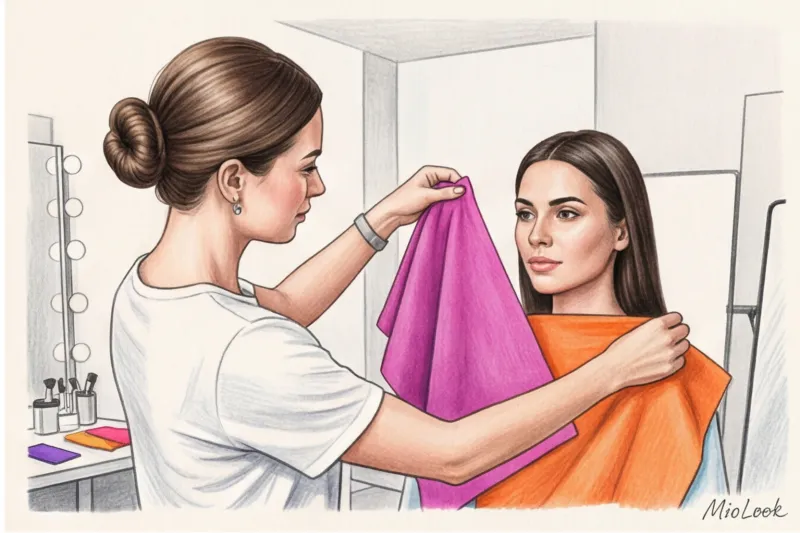
Once the perfect canvas is ready, we move on to physical testing. The Directional Method (or Draping Method) is the gold standard, based on the strict principles of the Sci/ART system. We don't simply apply random items from the closet to the face. The analysis is based on the use of paired indicator test fabrics, which pit two opposing temperatures against each other.
I usually start with the most revealing pairs:
- Warm Peach vs. Cool Pink: This test instantly shows how the skin reacts to the admixture of yellow and blue pigment, respectively.
- Tomato red (with a warm orange base) vs. magenta (with a cool blueish base): litmus paper for the deep layers of the epidermis.
The biggest mistake 90% of women make when trying to find a color on their own is looking for a shade that "stands out" or appears bright. We need something completely different. The right temperature works not as an accent, but as a good concealer.
When the undertone of the fabric and skin matches, we look for three physiological markers:
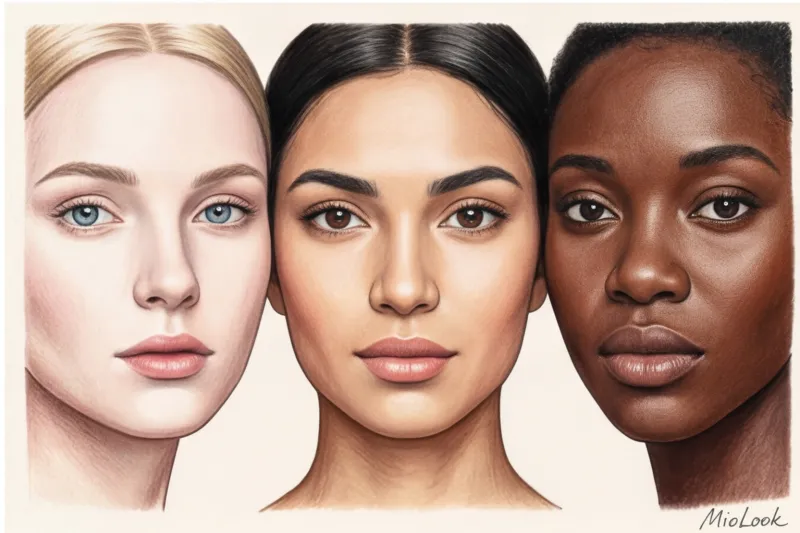
- Clearing the relief: Pigment spots, post-acne marks and spider veins are optically smoothed out, and the skin tone is evened out.
- Shadow neutralization: Dark circles under the eyes disappear or become less noticeable, nasolabial folds appear less deep.
- Jaw contour: The facial contour becomes defined and sculpted. If your complexion isn't your thing, the face often appears cut off from the neck or loses volume, turning into a flat pancake.
If people around you tell you, "What a stunning dress you have on!" that's a red flag. It means they're seeing the color, not you. The right undertone makes the compliment sound different: “How wonderful and rested you look today!”
Digital Coloristics: How AI Helps Find the Truth
Despite all the obvious advantages of the draping method, the human eye has one critical flaw: visual fatigue. After about 15–20 minutes of continuously changing contrasting tissues, the brain begins to defend itself and adapt. This creates the effect of simultaneous contrast (when, after looking at red for a long time, you begin to see green highlights on gray). At this point, even the most experienced stylist loses objectivity.
That's why today I'm increasingly integrating technology into my work. Digital tools and applications such as MioLook , use color calibration algorithms that completely ignore visual illusions and human error. AI analyzes the pixel structure of your appearance, mathematically deciphering the true RGB code hidden beneath the variable surface layer.
But the most important advantage of digital coloristics is the ability to filter out mistakes during the daily clothing selection process. Figuring out your temperature in the studio is only 10% of the success. The remaining 90% is integrating this knowledge into your routine. A smart digital wardrobe automatically filters out items with the wrong temperature. You upload your database, and the system analyzes combinations, blocking those that will give an unhealthy sallow complexion. For my clients—busy women who have exactly five minutes to get ready before a morning meeting—this feature is a complete game changer.
Complex cases: olive, neutral and contrasting undertones
According to Munsell Color Lab research (2023) and my own personal experience with digital wardrobes, approximately 30% of women fall into the so-called "gray zone" of color. If you've ever struggled to find the answer to this question, How to determine your skin undertone , tested dozens of online tips on yourself and ended up even more confused—welcome to the club. You're neither strictly warm nor strictly cool. You're a complex mix that standard binary systems simply ignore, leaving you with years of inappropriate clothes piling up in your closet.
One of my clients, Anna, was a classic victim of this simplistic approach. After consulting with a typical "seasonal" specialist, she spent over €1,500 on a complete capsule wardrobe overhaul: she bought pieces exclusively in shades of icy blue and snow-white, and added chunky sterling silver. However, at every fitting, she complained that these expensive clothes made her look "sick" and tired, as if she hadn't slept in a week. When we conducted a deeper analysis, the truth turned out to be paradoxical: she was not a "cold winter" at all. Her skin was a neutral olive. The icy tones clashed with the subtle yellow-green undertones on her face, bringing out her sallow, dull complexion.
Herein lies a crucial distinction: how do you know if you're truly neutral or simply high-contrast? In styling, we often see women with very fair, porcelain skin and richly dark hair. This strong contrast (the difference in lightness) tricks the eye, making it appear icy and cold. But contrast is about saturation, not temperature. A truly neutral undertone means your skin has a perfect balance of melanin, carotene, and hemoglobin. You can wear both muted warm tones and soft cool tones without compromising your complexion.
A high-contrast look requires purity of color, while a neutral look requires muted color. If you look gorgeous in the purest, brightest colors (cobalt blue or pure ruby), but get lost in soft pastels, your key to style is contrast, not temperature neutrality. See the appendix. MioLook We always recommend separating these filters when building smart images.
Olive Skin: Why Neither Gold Nor Silver Suits You
The olive spectrum is a true nightmare for classical coloristics. In outdated systems, it is almost always mistakenly classified as "warm" because it appears slightly yellowish. But let's look at the physics of color: a green undertone is a mixture cold Yellow (the color of lemon zest, not egg yolk) and blue. This is why standard jewelry metals look out of place on you. Pure yellow gold makes your face look sickly yellow, highlighting even the slightest pigmentation, while bright sterling silver sits on your skin like cheap foil, detached from you.
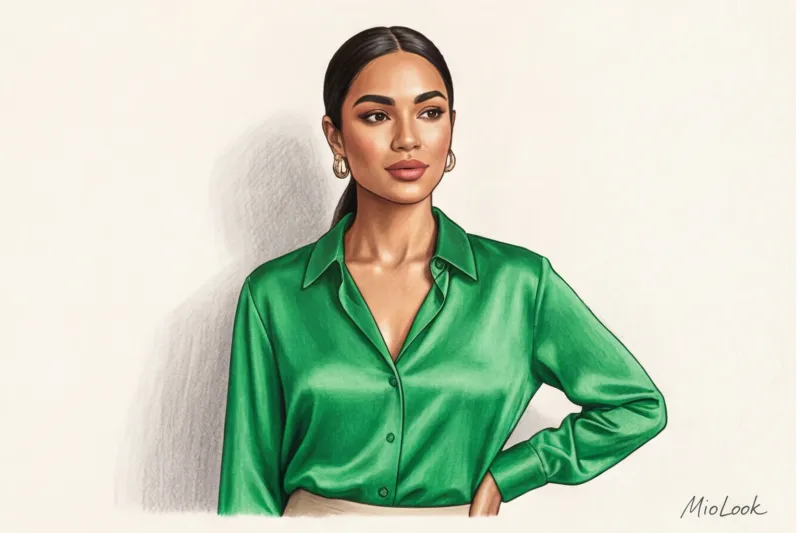
The situation is complicated by the fact that olive skin has its own subcategories: warm and cool. Warm olive skin contains slightly more golden melanin and tans easily to a luxurious bronze hue. Cool olive skin has more gray and blue pigments, often taking on an ashy or earthy tone in winter. How can you tell the difference at home without professional draping? Consider how your skin reacts to complex earthy colors. If a mustard jumper makes your face glow, you're closer to a warm olive. If mustard makes you look like you need emergency medical attention, but a muted pine color makes your eyes sparkle, you have a cool olive base.
The ideal metals for the olive spectrum lie outside the extremes. Your superpower is "dirty" or mixed textures. Blackened silver, pewter, aged brass, antique bronze, and soft rose gold (with copper balancing the pink) are perfect. As for clothing, avoid neons and pure spectral colors (open reds, solid yellows). Look for complex, multifaceted shades. Premium mass-market brands do this perfectly—their basic collections in the €50–€150 range always include the right slate gray, dusty emerald, terracotta, and taupe.
Try MioLook
for free
Start creating perfect images with the help of artificial intelligence
Get access — €0.99 onceHow to choose the perfect metals for your body temperature
According to 2023 statistics from the retail platform Lyst, over 40% of returns of expensive accessories are accompanied by the comment: "the item looks out of place." Over the years as a stylist, I've discovered the main reason for this phenomenon. Women can spend weeks searching for the perfect €500 basic bag, but they completely ignore the color of its hardware. And this is a critical mistake.
We're used to thinking that the choice of metal ends with the contents of our jewelry box. But absolutely everything plays a role in creating a cohesive, luxurious look: a chunky belt buckle, a chain on a crossbody bag, the buttons on a tweed jacket, the zippers on our shoes, and, most importantly, the frames of our glasses. Frames are the most insidious element of all. A thin metal frame in the wrong shade can make you look tired and accentuate the dark circles under your eyes more than a sleepless night. Once you've figured out how to determine your skin undertone, the next step should be a complete inventory of all the metal accessories in your wardrobe.

Metallic details act as tiny reflectors of light. When their glow matches your natural temperature, your skin appears illuminated from within. Let's explore which metals suit different skin types:
- Cool undertone: Your base is - platinum, white gold, classic silver and rhodium The physics here are simple: silver-colored metals have the highest reflectivity of light in the white spectrum. They complement bluish or pinkish tones in the skin, creating a more defined facial contour. Rhodium plating is especially effective, as it produces a bright, almost mirror-like shine without the yellowing that develops over time on sterling silver.
- Warm undertone: You need alloys that reflect the yellow-red spectrum of light - yellow gold, brass, copper and bronze Moreover, the richer your natural coloring, the deeper the shade of metal you can wear. An aged brass belt will beautifully highlight a warm, peachy complexion. However, cool silver next to warm skin will take on a cheap, dull gray appearance, highlighting all the imperfections of your complexion. It's no coincidence that brands like Celine offer their iconic handbags in two hardware options.
- Neutral undertone: If you're in the balance between warm and cold, there's a real style cheat available to you. The perfect choice is rose gold, satin (matte/brushed) metals and mixed hardware (mixed hardware). Rose gold is unique: it contains a warm copper pigment balanced by a cool alloy. Matte textures reduce light reflection, allowing the metal to blend seamlessly into the look without drawing attention to itself.
To avoid getting lost in your things, I recommend digitizing this process. When assembling capsules in MioLook We always tag the color of the hardware on our bags, shoes, and belts. The app's filter allows you to quickly weed out clashing elements and create an outfit where the buckle doesn't clash with the earrings.
"The main rule of styling: if you want to disrupt the temperature regime, do it as far away from your face as possible."
What if you're a woman with a decidedly cool complexion but you've fallen in love with a bag with a chunky brass chain or shoes with gold studs? Here's a professional hack I use: isolation of metal from the portrait zone You can wear the "wrong" metal if it's below the bustline, or better yet, below the waist. Shoes with gold details or a belt with a warm bronze buckle won't cast any glare on your face, meaning they won't ruin your skin tone. You can intentionally play with contrasts, but the key is to keep earrings, necklaces, and glasses in your true color range.
Digital Age Appearance Temperature: How to Look Expensive on Zoom
Webcam hardware algorithms are perhaps the greatest hidden enemies of our natural color perception. According to researchers from Stanford University's Virtual Interaction Lab (2024), the built-in automatic white balance (AWB) in standard laptop cameras distorts true skin temperature in 78% of cases. The software simply attempts to "average" the image: if a yellow light is on in your room, the smart sensor instantly applies a blue filter, literally erasing your true color code. For modern executives and experts who spend half their lives in online conferences, this means one thing: the classic rules of harmony don't apply here, and they must be adapted to the distorted optics.

Those with cool undertones suffer especially badly from digital "bleaching." Think back to how you feel: have you ever noticed how your face suddenly takes on a sickly, almost ghostly gray hue during a video call? This happens because the harsh, bluish light from your monitor (usually around 6000–6500K) mercilessly blends with your naturally cool undertones, completely washing out your natural flush and volume. To correct this "ghosting" effect, you need to artificially warm up the frame and locally enhance the saturation of the portrait area.
"On-screen coloring requires deliberate exaggeration. What looks elegant and delicate in real life often turns into a dull, washed-out blur through a webcam lens."
How to compensate for these optical losses in practice?
- Light: Set the ring light's temperature to a neutral-warm 4000–4500K. This will bring back the vibrancy of your face without making you look unnaturally orange.
- Clothes near the face: Choose colors a couple of shades richer than your base palette. If your ideal everyday color is pastel blue, wear a crisp sapphire blue for the camera. A deep V-neck or architectural collar in a contrasting shade (such as emerald or deep wine) will create a clear frame for your face, preventing the camera from blending you into the background.
- Metals: Choosing accessories and jewelry for video calls requires strict pragmatism. A 1080p camera simply "eats" thin silver chains—they turn into digital noise. Opt for chunky accessories. If you have a cool undertone, choose large earrings in polished platinum or white gold. For warmer skin tones, solid brass or matte yellow gold are ideal, providing an even glow without harsh glare that can interfere with autofocus.
In my practice, I've long ago introduced a mandatory step in working with clients: creating "digital capsules." In the app MioLook We pre-tag looks curated specifically for the camera. This is a huge help in the morning, when you have five minutes before an important call and need to look justified by a project bill of €1,500. You simply open your smart wardrobe and see ready-made, screen-tested combinations of metals and collars that are guaranteed not to make you look like a pale imitation of yourself.
Your ideal image
it begins Here
Join thousands of users who look flawless every day with MioLook.
Get access — €0.99 onceChecklist: A Step-by-Step Guide to Determining Your Home's Undertone
Stop reading tea leaves and relying on dubious internet experiments. Theory without practice is dead, so I suggest setting aside exactly 15 minutes for a structured algorithm. This step-by-step plan will help you once and for all solve the problem of how to determine your skin undertone at home without ordering professional test patch kits (the basic price of which usually starts at €150). Get your smartphone ready, check your closet, and simply follow these instructions.
Step 1: Set up the right lighting (north window, midday)
Forget ring lights, bathroom spotlights, and especially filters. The ideal diagnostic setup is diffused daylight. Stand facing a north-facing window in the middle of the day (around noon). Why north? The light temperature on this side of the horizon is the most stable, avoiding harsh yellow or red glare. Direct sunlight is strictly prohibited: it will instantly add a false "warm" filter to your face. The light should be even, soft, and slightly overcast.
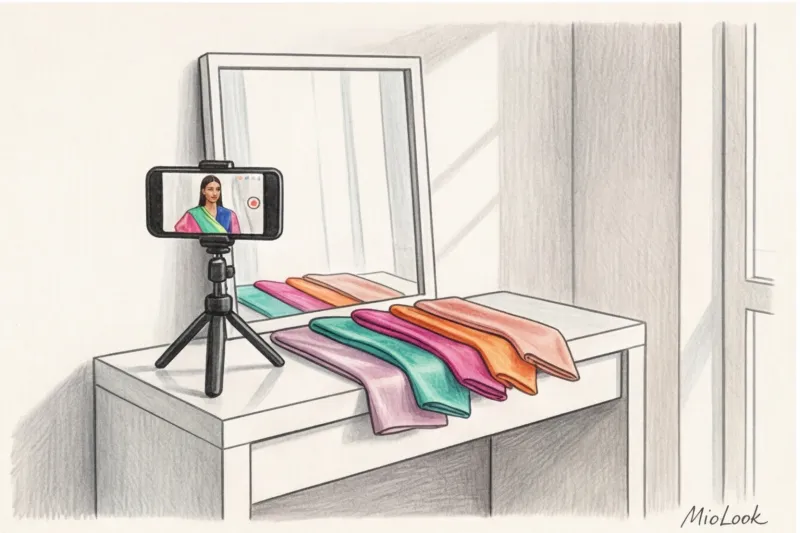
Step 2: Take a reference photo with a white balance chart
Modern smartphone cameras love to "enhance" reality by automatically stretching or cooling the frame. To bypass the built-in AI algorithm, you'll need a professional gray card (18% gray) or a matte white sheet of thick paper. Take a selfie holding the card directly under your chin. Open the photo in any editor (for example, Lightroom Mobile) and click the white balance eyedropper on the card. Your phone will instantly calibrate the colors. Right now, you'll see your skin on the screen without digital distortion.
Step 3: Do the Magenta vs. Orange Test
This is your at-home equivalent of professional draping. Take two voluminous items (sweatshirts, scarves, or even towels will work): one in a pure magenta (a cool, icy pink-purple), the other in a ripe orange (a rich, warm color). Pull your hair back and alternately apply the fabrics so they cover your neck and shoulders. Look not at the fabric, but at the facial reaction If magenta visually lifts the contours of your face and makes the whites of your eyes sparkle, you're in the cool zone. If orange seems to erase dark circles under your eyes and soften minor blemishes, you're in the warm zone.
Step 4: Conduct a Box Audit (Collect Historical Data)
Your intuition is often more powerful than any test. Analyze your most worn jewelry. Not the ones you bought on impulse on vacation, but the ones you wear for months and receive compliments on. When I ask new clients to bring in their everyday watches and favorite basic rings, it gives me a wealth of information. A metal that visually blends with the skin, without looking rough or foreign, directly indicates your natural temperature. If sterling silver sparkles, while basic 14k gold gathers dust at the bottom of a jewelry box, the conclusions are clear.
Step 5: Digitize the results in a smart wardrobe
Any knowledge is useless unless it's systematized. Once you've received an accurate diagnosis, translate that data into numbers. Go to MioLook and create a personal tag with your temperature. Sort your virtual closet: archive items with a different undertone or create a rule to wear them only on the lower half of your body (pants, skirts, shoes). When planning future purchases through the app, this filter will automatically eliminate accessories with hardware that clashes with your appearance.
"Knowing your undertone isn't a cage that limits your choices, but your personal visual equalizer. Once you stop fighting your genetics and start working in unison with it, your daily clothing choices become a transparent, manageable system."
Implement this approach, and you'll forget about the "closet full, nothing to wear" problem. Style isn't magic; it's about the right perspective and a little discipline.
Guide Chapters
How to determine skin undertone by tan: myths and facts
Many people believe that a quick bronze tan always indicates a warm skin tone, but this is a common mistake. Let's explore how your skin's reaction to the sun actually reveals your temperature.
Accurate white sheet test to determine undertone
Regular office paper can distort your complexion. We'll show you how professionals determine your skin temperature at home.
Warm Skin Tones: Colors for Peachy Skin
Shattering color stereotypes! Learn how to choose the perfect shades for warm skin tones and look truly chic in any color.
Cool Skin Undertones: How to Accentuate Pale Skin
An aristocratic pallor is a luxurious asset, not a flaw. Learn how to choose clothing and makeup shades to make your face literally glow from within.
How to Choose a Hair Color Based on Your Skin Undertone: Tips
The right hair color works better than heavy foundation. We'll figure out how to identify your color type without outdated myths and find the perfect color.
Gold or silver by color type: how to choose the metal
The classic vein color test no longer works. Learn how to choose the right metal for jewelry using the laws of color and physics.
How to choose clothing colors based on your skin tone
The wrong shade of clothing can make your face look tired, while the right one can make you look younger. Learn the secrets of choosing the perfect base from a stylist.
Neutral Skin Undertone: What Colors Suit You?
Is it true that absolutely every color suits those with a neutral undertone? We dispel popular myths and learn how to choose the perfect palette.
Wrist Vein Color and Skin Undertone: 1-Minute Test
Green veins don't always indicate a warm complexion. Learn how to avoid common mistakes when determining your skin undertone and choose the perfect shade.
How to choose a foundation based on your skin tone (W, C, N)
Stop wasting money on unsuitable shades! Learn how to correctly determine your skin undertone and what the letters W, C, and N on cosmetic bottles mean.
Olive Skin Undertone: How to Identify and Choose Makeup
Does your foundation feel like a mask? Find out how to determine your true undertone and solve the problem of finding the perfect makeup look once and for all.