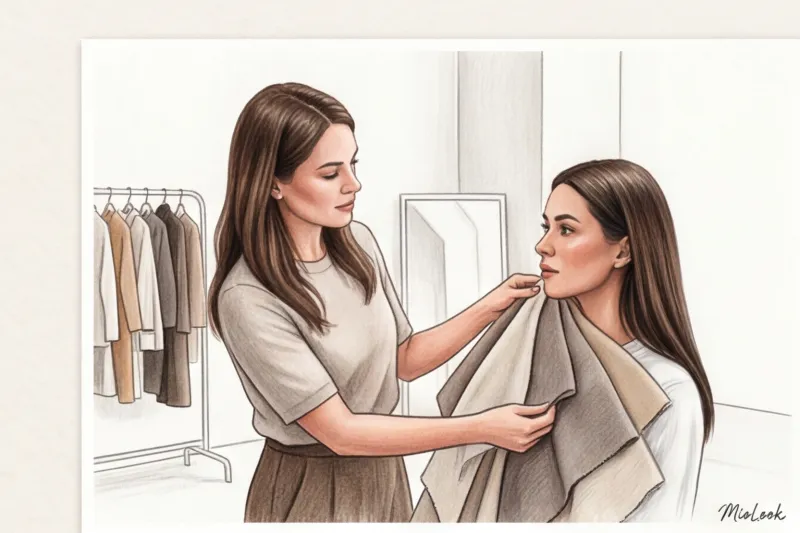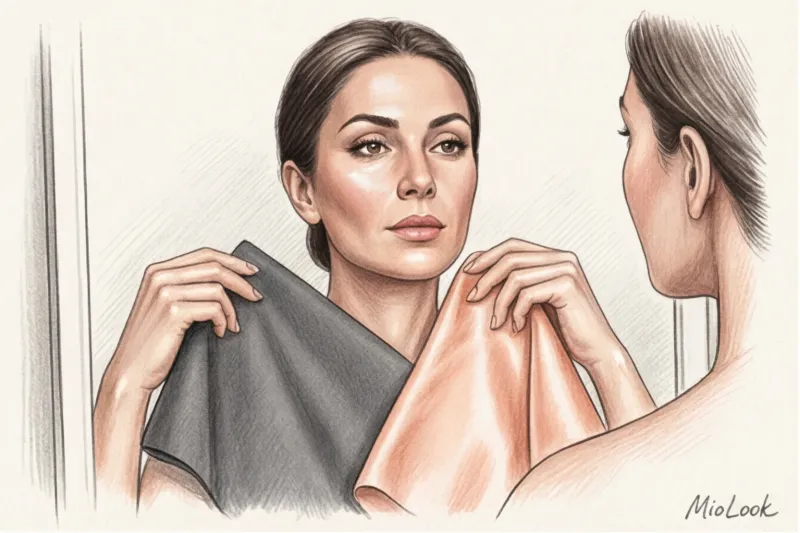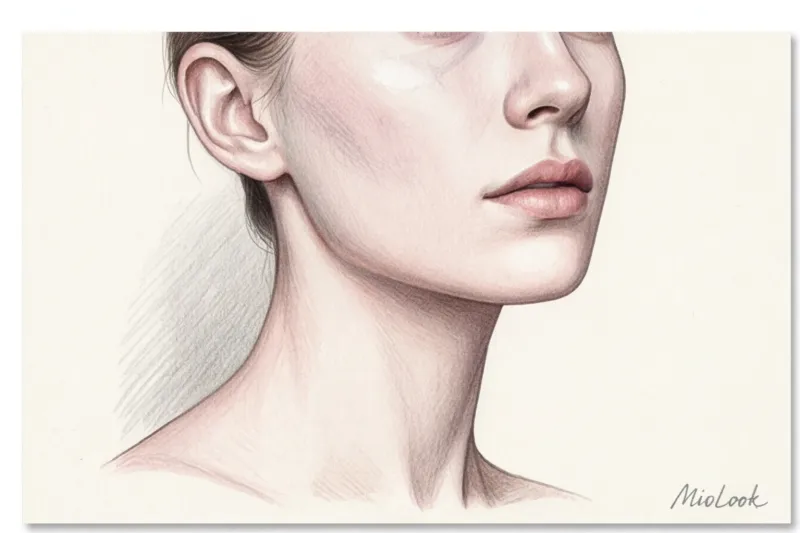
One day, a woman with stunning porcelain skin came to me for a consultation, desperately trying to transform herself into a California surfer. Three layers of terracotta bronzer, peachy blush, and a camel-colored cashmere sweater. Guess what the result was? She looked like she hadn't slept in a week, and her face had acquired a sickly, yellowish tint. When we washed off this "warm" camouflage and applied a piece of icy blue silk to her face, magic happened: the micro-shadows under her eyes disappeared, and her skin literally began to glow from within.
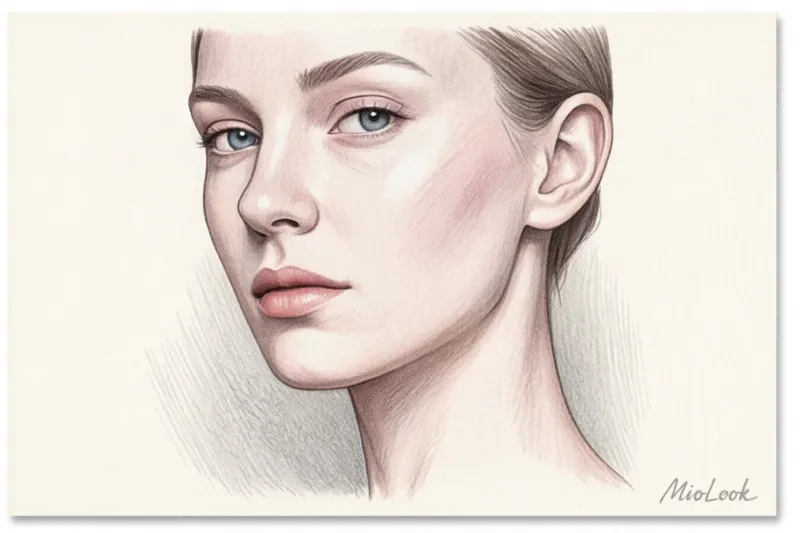
Having worked as a stylist for over 10 years, I see this picture constantly. A cool skin undertone is a luxurious asset, a status symbol, which for some reason is often hidden. Instead of dusting your face with bronzer, try to perceive your paleness as the perfect canvas. In this article, we'll explore the laws of light reflection used by Hollywood stylists and create a palette that will make your appearance shine.
I talked in more detail about why the old tests that involve looking at the veins on your wrist no longer work (and why they so often lie to those with fair skin) in our a complete guide to determining external temperature.
The Anatomy of Porcelain Skin: What a Cool Undertone Really Is
Let's immediately separate the overtone from the true undertone. Many girls see pink rosacea, reactive redness, or freckles on their cheeks and immediately conclude, "I'm a warm spring" or "I'm a summer." This is fundamentally wrong.
According to the PANTONE Color Institute (2023), more than 60% of women with a cool undertone mistakenly diagnose themselves as having a “warm” undertone precisely because of the superficial redness of the epidermis.
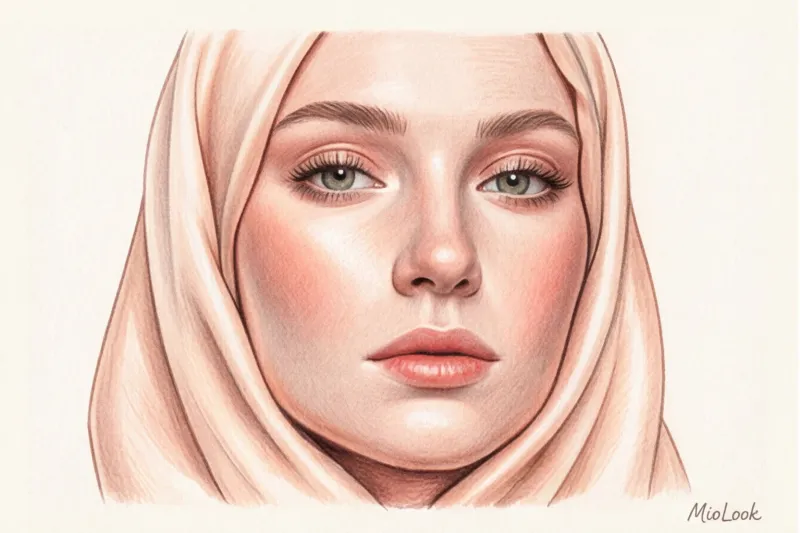
So what is a cool undertone? From a color physics perspective, light penetrates the upper layers of thin, fair skin and reflects off blood vessels, creating a subtle bluish-pink or lilac glow (the so-called Rayleigh effect). The skin appears translucent, like a porcelain cup held in the light.
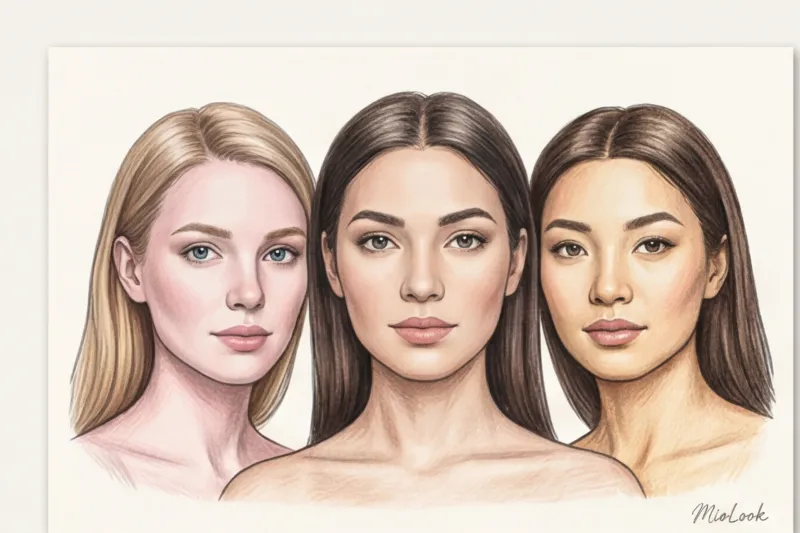
It's important to dispel a key myth: not all fair skin is automatically cool. Nicole Kidman has fair skin with a distinctly warm, peachy undertone. But Liv Tyler or Dita Von Teese have classic cool porcelain skin. The difference lies in that bluish or icy pigment underneath.
Access to MioLook for €0.99 — one-time payment
A smart AI stylist will select the perfect look based on your skin undertone.
Get access — €0.99 onceThe Biggest Mistake: Why You Shouldn't "Warm Up" a Cool Skin Undertone
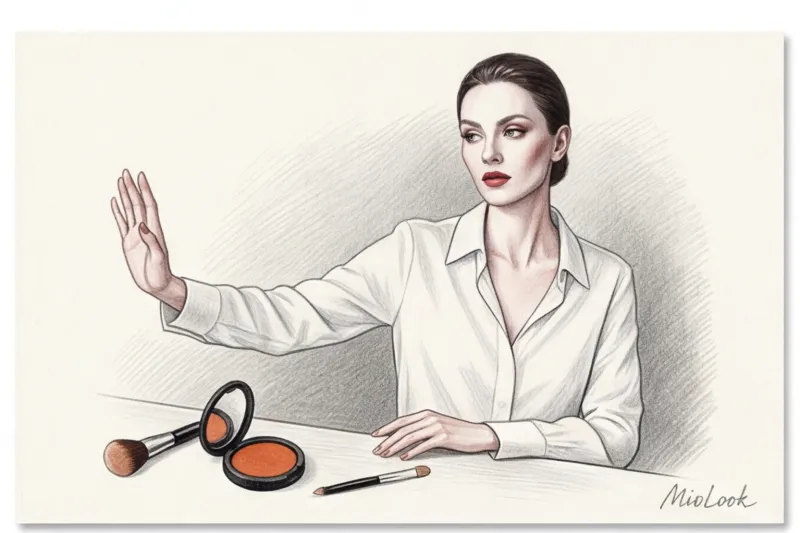
For decades, the beauty industry has been telling us that a "healthy" complexion requires a tan. Many pale-skinned women feel insecure about trying to artificially add a rosy glow. They resort to mustard-colored turtlenecks, camel-colored coats, and thick beige foundations.
The physiology of color works differently. If you place warm terracotta or ochre around a face with a cool bluish-pink undertone, the colors clash. The warm background "draws" the gray pigment out of your skin. This creates that "yellowing" or visually dirty effect. The face appears tired, the nasolabial folds become deeper, and the circles under the eyes appear darker.
In my experience, when we remove rust, camel (even if it's an expensive €2,500 Max Mara coat) and warm beige shades from our clients' portrait areas, the face instantly looks five years younger without any cosmetologists.
Basic Palette: How to Accentuate an Aristocratic Pallor with Color
For cool, fair skin, the rule of contrast and purity works. You need colors that have a clear blue or icy base in the PANTONE palette (Cool Neutrals section). Complex, dusty shades mixed with yellow or brown turn porcelain skin into a gray blob.
Jewel Tones
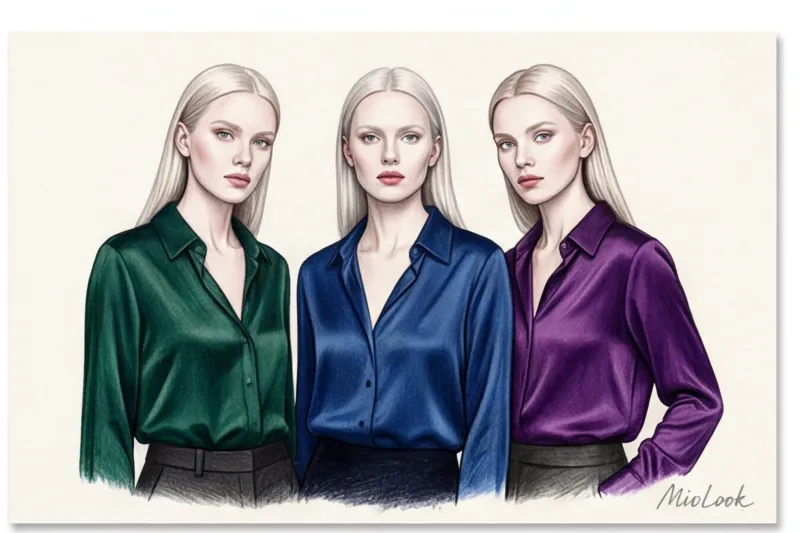
If you want to look expensive, a precious stone palette is your choice. Emerald, deep sapphire, ruby, and cool amethyst. These colors have a high saturation, creating a stunning contrast with pale skin. Against a dark emerald, skin appears not sickly white, but radiant and porcelain-like.
However, there's a caveat. If you have a low-contrast complexion (light eyes, ash-blond hair), a clear ruby might overpower you. In that case, choose slightly more muted, but still cool, shades—for example, burgundy instead of a bold red.
Icy pastels versus dirty powder tones
Those with cool undertones should be especially careful with pastels. The difference between a perfect look and a moth-like effect lies in a drop of gray pigment.
- Yes: Icy blue. Like frozen water, it illuminates the whites of the eyes and evens out skin tone.
- No: Dusty blue. There is a greyness to it that will make you look sick.
- Yes: Frosty Lavender. Perfect cool pinky purple.
- No: Dusty rose and salmon. They have too much warm yellow pigment.
The Black Illusion: Why This Color Can Harm Your Appearance

Now I'm going to say something that will outrage many fans of the basic wardrobe: Black doesn't suit everyone For very contrasting, translucent-pale skin, total black near the face is the worst enemy.
Black absorbs all light. When you wear a solid black turtleneck, it creates a "floating head" effect—the contrast is so stark that it highlights every micro-shadow, wrinkle, and capillary on your face. You look older and more severe.
What can you replace black with to maintain a classy look? Perfect alternatives that look even more expensive:
- Midnight Blue: deep, almost black blue.
- Charcoal (charcoal gray or graphite): softened black.
- Dark Plum: a chic base for outerwear.
What should you do if you really want to wear black? Use the buffer zone rule. Show off your collarbones with a deep V-neck, tie a scarf in the right icy shade around your neck, or wear a pearl-white silk blouse under a black jacket (like this one from Zara for €60). This will help draw the harsh pigment away from your face.
Your perfect look starts here
Join thousands of users who look flawless every day with MioLook. Take photos of your clothes, and AI will create looks for you.
Get access — €0.99 onceFabric Texture Matters: A Stylist's Secret Tool
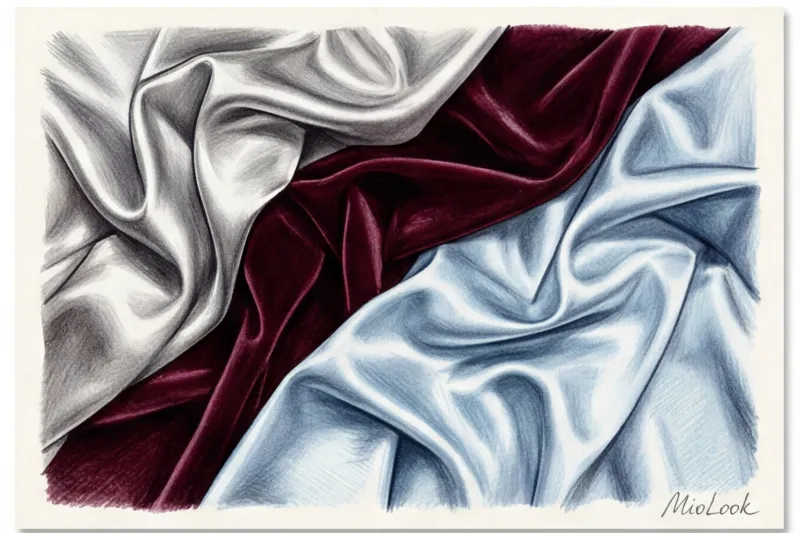
Color is only 50% of success. The other 50% is how the fabric interacts with light. This is my favorite secret, which is rarely mentioned in fashion blogs.
Take a look at Anya Taylor-Joy's red carpet looks. Her stylist, Law Roach, masterfully works with the actress's porcelain skin. The key trick? Glossy textures. Silk, satin, and satin-weave viscose. According to textile design research, glossy fabrics reflect up to 30% more light onto the face than matte ones.
Imagine a cool emerald green. In shiny silk, it will act like a studio lightbox, softly illuminating the skin, making it appear smooth and dewy. The same emerald green in matte linen, thick cotton, or loose wool will absorb the light, making the skin appear matte and dry.
But there is one fair exception (when it DOESN'T work): Reflectivity from glossy fabrics only works on relatively smooth skin. If you have active acne or severe acne scars, the harsh shine of satin near your face can unfavorably highlight this texture. In this case, it's better to choose semi-matte fabrics, such as heavy crepe de chine or high-quality suiting viscose.
Metals and details: the perfect frame for cool undertones
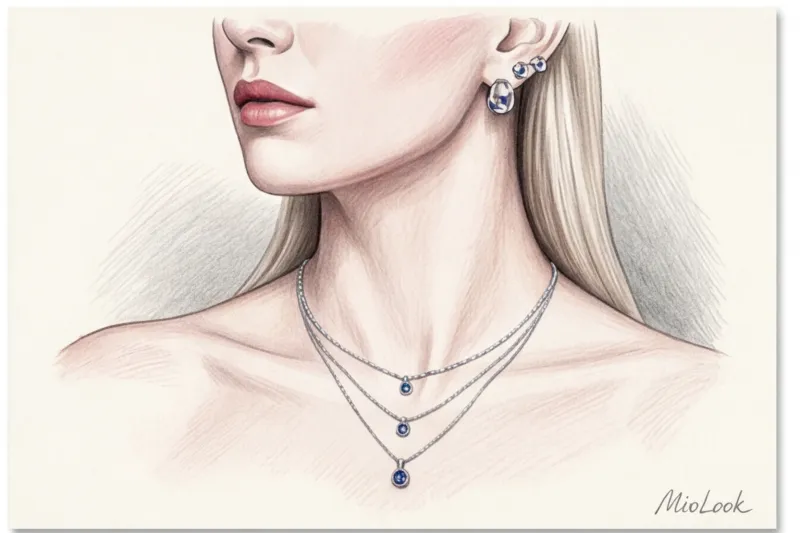
Accessories in the portrait zone (earrings, necklaces) act as the final finishing touch. For cool undertones, white metals are the clear winners: silver, white gold, and platinum. Yellow gold, especially the Soviet copper shade, will complement a cool appearance.
Pearls deserve special attention. Classic creamy-yellow pearls look dirty against pale skin. Look for pearls with a cool white-pink or silvery sheen. Sapphires, topazes, amethysts, and, of course, diamonds or high-quality cold-cut cubic zirconia will best enhance your sparkle.
Checklist: 5 Steps to Creating a Wardrobe for Aristocratic Pallor

Theory is great, but let's get down to practice. Here's a step-by-step plan you can put into practice today.
- Step 1: Get rid of "dirty" warm tones. Take stock. Remove mustard, khaki, red, terracotta, and camel from your face (leave them for trousers or skirts).
- Step 2: Replacing the black base. Buy the perfect basic jacket, but not black, but charcoal or navy. You can find good options at Massimo Dutti (around €150) or in the COS lines. The difference in how fresh your face looks will be dramatic.
- Step 3: Applying Ice Pastel. Add a basic T-shirt (choose a heavy cotton one from 180 g/m², for example from Uniqlo for €20) in frosty lavender or Icy blue.
- Step 4: Selecting reflective textures. Buy a high-quality silk or satin blouse in Jewel Tones. Wear it to important meetings or dates—it'll work like an Instagram filter in real life.
- Step 5: Synchronize with makeup. Give your friends some peach blush. Cool berry blush and wine/berry lipsticks with blue undertones are your go-tos. They'll make your teeth look whiter and your eyes brighter.
By the way, to avoid confusion in shades when sorting out your closet, you can upload photos of your things to MioLook app The neural network will analyze colors and help you create the perfect outfits based on your natural complexion.
Your Personal Manifesto: Paleness as a Style Marker
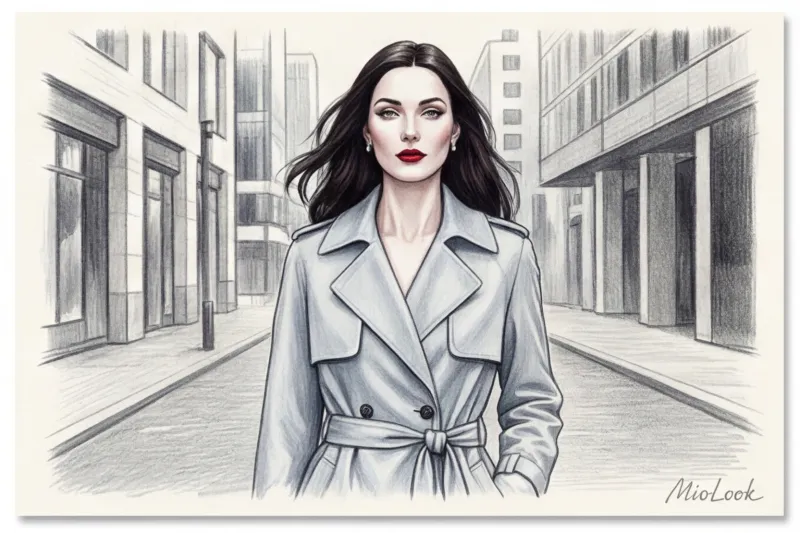
Cool undertones and translucent fair skin aren't something to be camouflaged, "warmed up," or hidden under a thick layer of bronzer. According to a global WGSN study, the trend for individuality and natural coloring has finally replaced the trend for a one-size-fits-all California tan.
View your appearance as a rare, prestigious asset. Dress it in the right textures, accentuate it with precious shades, and avoid the compromising black near your face. When you stop fighting your natural beauty and begin to use the laws of color to your advantage, your aristocratic pallor will become your most important and luxurious calling card.