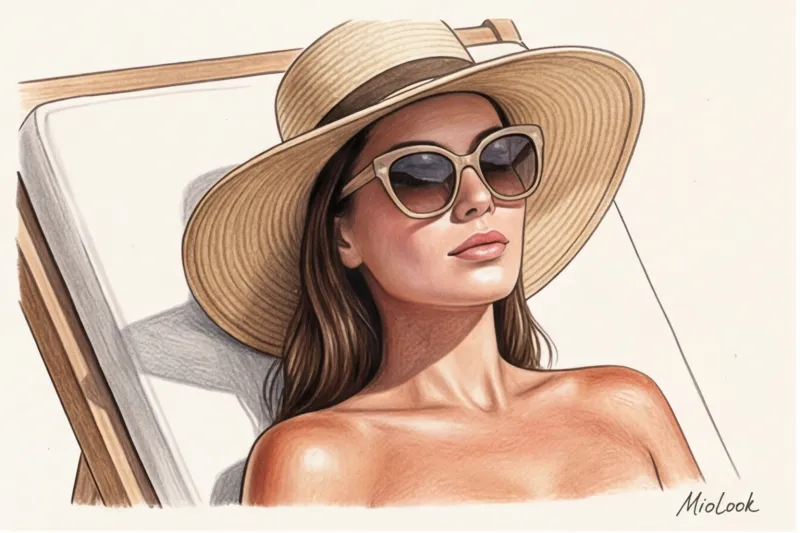
A client once came to my Milan studio requesting a complete overhaul of her jewelry wardrobe. For years, she'd been buying exclusively warm yellow gold, absolutely convinced she was a "classic Autumn." Her argument was ironclad: "Giulia, whenever I go to the Amalfi Coast, I turn chocolate brown within two days. I'm definitely a warm type!"
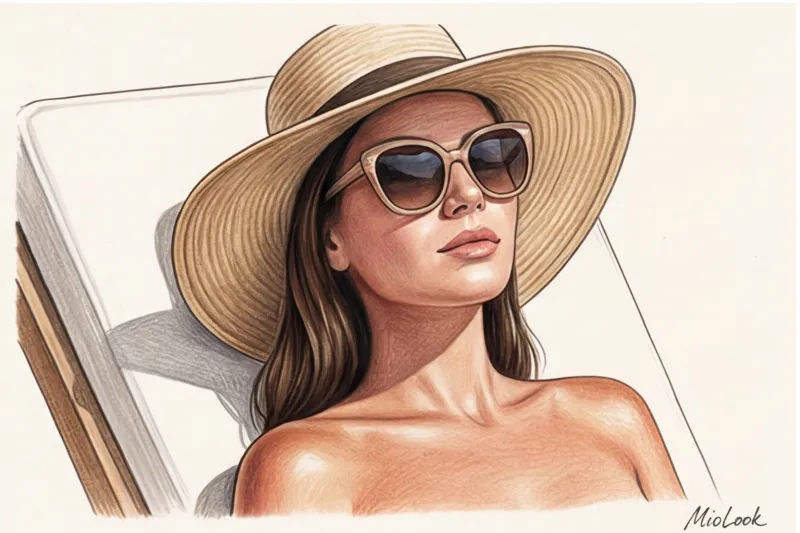
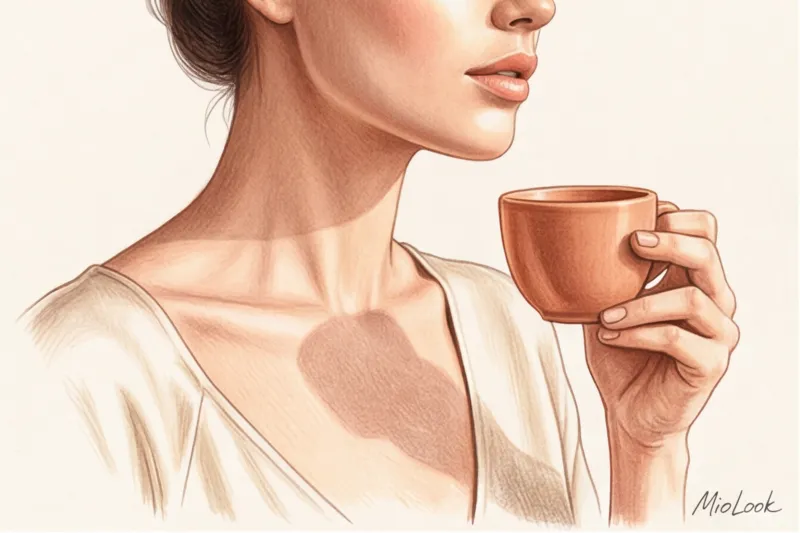
But when I placed a white gold and diamond necklace against her tanned décolletage, her face literally began to glow, while the yellow gold, on the contrary, made her skin look painfully tired. We analyzed the pigment of her tan—it turned out not to be a peachy bronze, but a deep gray-olive. It was then that I was once again convinced that the theme of How to determine skin undertone by tan , is shrouded in a monstrous number of myths.
We have already discussed the basic theory and classic errors in more detail in our a complete guide to determining external temperature Today, I invite you to examine your skin through the eyes of a professional stylist and dermatologist. We'll leave those notorious wrist veins alone and take a look at your skin's temperature using the most honest indicator—sunlight.
Sunlight as an Absolute Detector: Why Surface Tests Lie
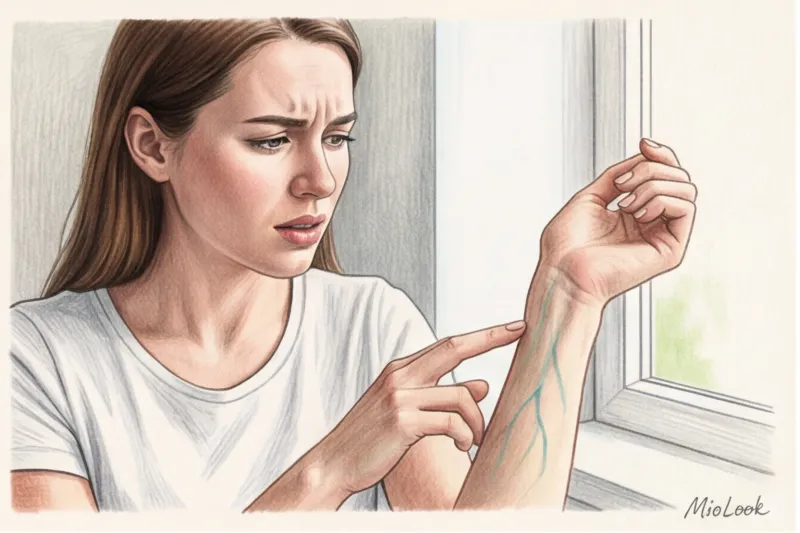
As a stylist with twelve years of experience, I've long since stopped believing in vein or foil tests. Why? It all has to do with the thickness of the epidermis and the difference between overtone (in a superficial tone) and undertone (true undertone). Your veins may appear green simply because your skin is thin, and your underlying skin tone has a slight yellow tint due to diet or lack of sleep.
The undertone is incredibly capricious. Rosacea, closely spaced capillaries, a reaction to hard tap water, or the stress of living in a big city can all produce a reddish or pinkish tint. Because of this, women with cool pinkish undertones overtone , but warm yellowish undertone They buy foundation and clothes that turn them into "pigs."
But the sun comes, and the rules of the game change. Ultraviolet light penetrates the skin and triggers melanocytes to produce melanin. According to the Fitzpatrick skin type scale (developed in 1975), the sun's response is a genetically programmed process. Tanning erases superficial redness and, like developer in a darkroom, brings out your true pigment.
Access to MioLook for €0.99 — one-time payment
A smart AI stylist will select the perfect look based on your true personality.
Get access — €0.99 onceHow to determine your skin undertone based on your tan: reading hidden shades
The biggest mistake I see everywhere is evaluating the speed of a tan, not its color. Forget the formula "burning = cool, tanning = warm." Ask yourself a different question: HOW exactly do I tan? What color does the skin turn on the third day, when the primary erythema (redness from the sun) disappears?
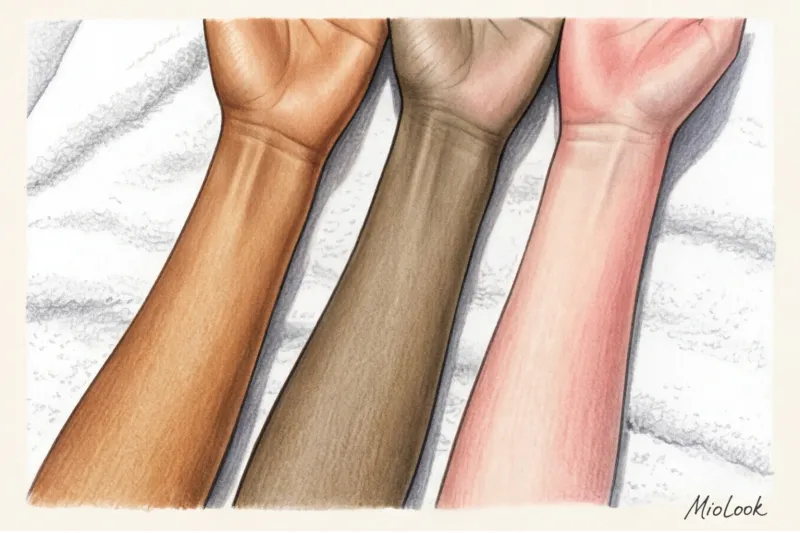
- Bronze, golden and peachy tan. This is a true warm undertone marker (for spring and fall skin tones). Your melanin has a pronounced yellow-orange pigment. Your skin resembles baked terracotta or caramel. Classic 18kt yellow gold reveals itself flawlessly against this skin, blending with it to create a warm symphony.
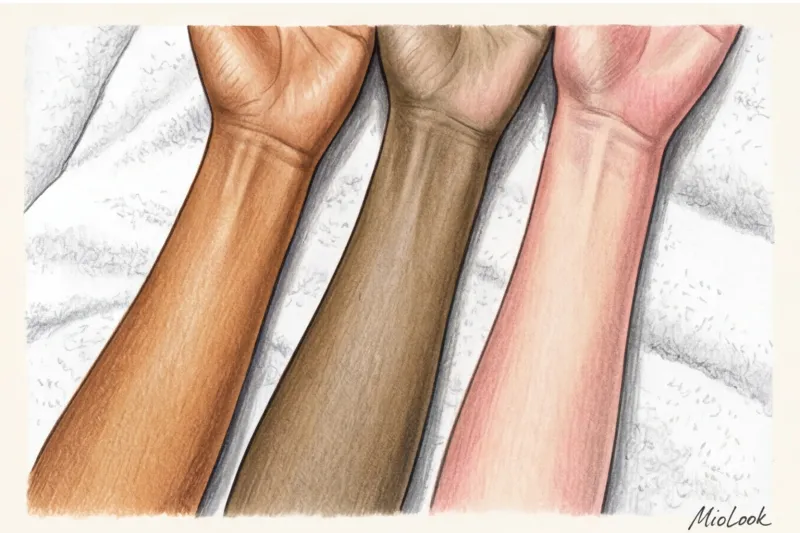
- Taupe, ash and olive tan. This is how cool undertones (summer and winter skin types) react to the sun. Your pigmentation doesn't have a hint of orange. Your tan turns into the color of strong coffee, wet asphalt, or khaki.
- A red tan that doesn't turn brown. If you burn to the color of a boiled lobster, and then your skin simply peels and returns to its lighter state, you have a very light, cool undertone. Your melanin (pheomelanin) is simply unable to create a dense brown barrier.
To avoid guessing about the palette after returning from vacation, I often recommend my clients to upload new photos to the "smart wardrobe" feature in MioLook The algorithm perfectly detects changing contrast and helps you recreate looks from existing items without making impulsive purchases.
The Olive Riddle: Why You Turn Dark Quickly, But Orange Doesn't Suit You
And now for the most counterintuitive rule of coloristics, which shocks half of my new clients. The greatest ability to tan deeply, quickly, and without burning is often found in people with cool olive undertone.
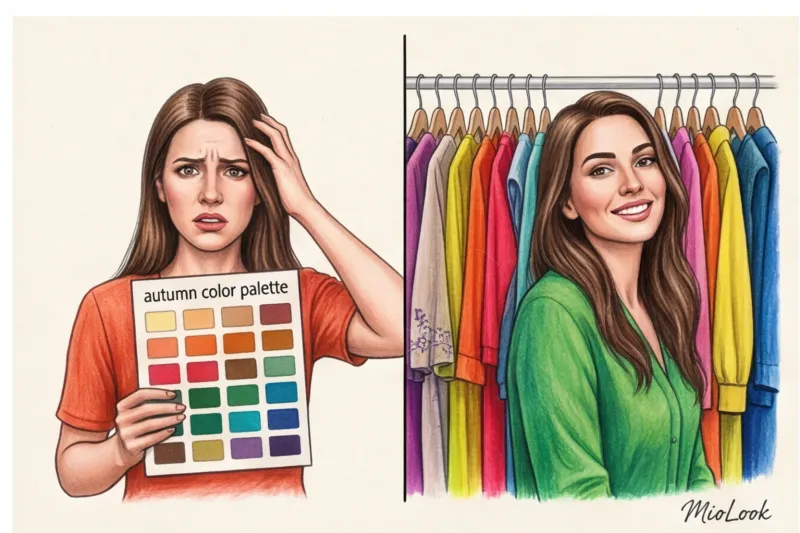
Over 40% of women with olive skin mistakenly consider themselves "warm autumn." They think, "I'm dark, so I need earthy tones—mustard, terracotta, warm beige." And then, putting on an €800 camel-colored sweater, they suddenly look tired, and their skin takes on an unhealthy, sallow, or downright dirty appearance.
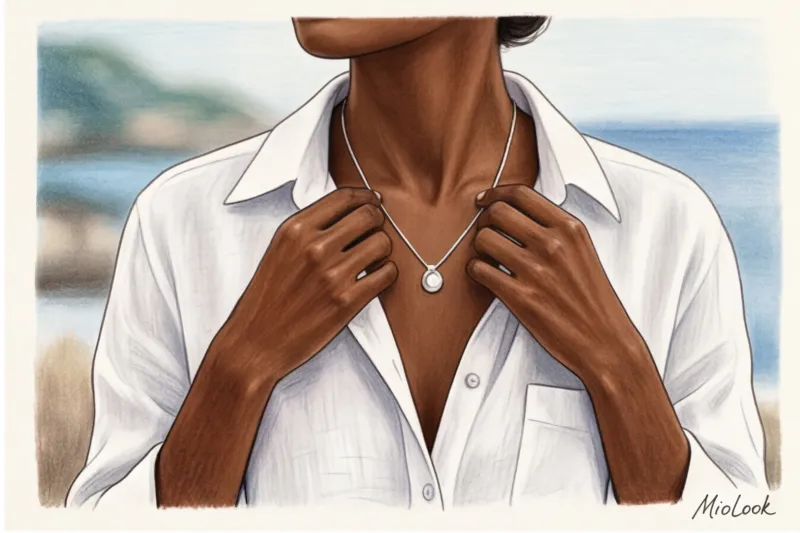
Olive skin is a greenish undertone that results from a mixture of natural blue (cool) and yellow skin tones. When you tan, you become darker, but not warmer Your premium palette for tanned skin is deep emerald, royal sapphire, fuchsia, and pure white. However, there's a caveat: this advice won't work if you have pronounced, warm-toned age spots—in that case, pure white will create unnecessary contrast.
Freckles: Debunking the Main Myth of Classic Coloristics
"If you have freckles, you're a warm Spring or Autumn." This myth, originating from glossy magazines in the 90s, has ruined the wardrobes of thousands of women. In 30% of cases, freckles are not a sign of a warm complexion at all.
Let's turn to science. Dermatologists divide what we call freckles into two categories: ephelides (true freckles that appear in the spring and fade in the winter) and lentigines (sun spots that stay with you forever). Both can have completely different temperatures.
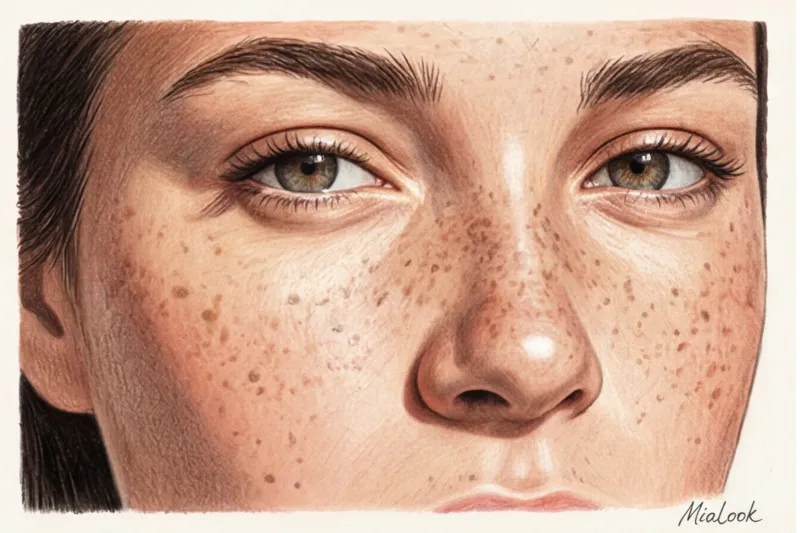
Notice the color of your freckles in daylight:
1. Red, golden-copper, rust-colored - Yes, this is a 100% indicator of a warm undertone.
2. Taupe, ash, and taupe - this is a cold pigment.
I had a client with ash-blond hair and a scattering of charming taupe freckles. Previous stylists, upon spotting the speckles on her nose, would dress her in curry and warm brick shades. Once we switched her to dusty rose silk and cool burgundy, the freckles transformed from a "flaw" into a sophisticated, aristocratic accent. Data from the Pantone Color Institute confirms that with mixed and neutral undertones, it's the analysis of the smallest color nuances (such as ash freckles) that determines the perfect base.
Your perfect look starts here
Join thousands of users who look flawless every day with MioLook, choosing colors to match their undertone.
Get access — €0.99 onceInvesting Smart: How Tanning Changes Your Ideal Palette and Metal Choices
A common question: "Julia, does my color type change in the summer?" Spoiler: no. You can't go from "Winter" to "Autumn." Your undertone (cool or warm) remains the same because it's your body chemistry. But it does change. contrast level.
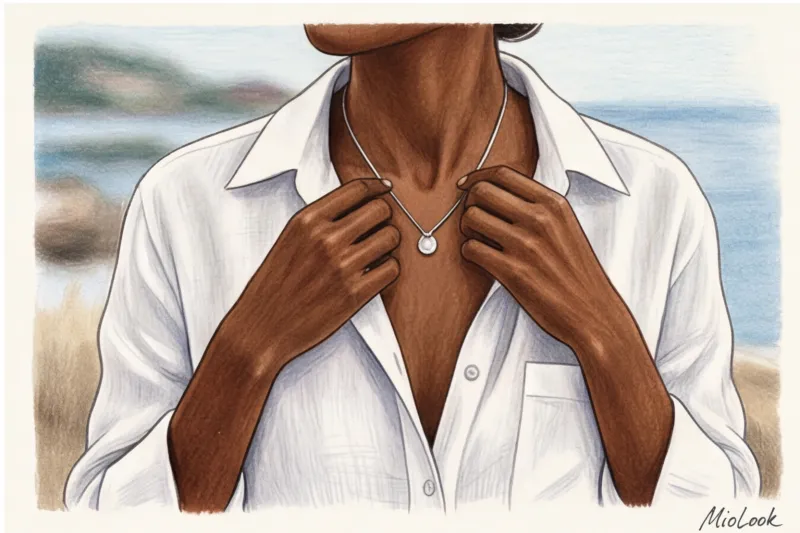
A tan blurs the differences between skin, hair, and eye color. The complexion becomes more uniform in tone. This opens up incredible opportunities for investing in a stylish wardrobe.
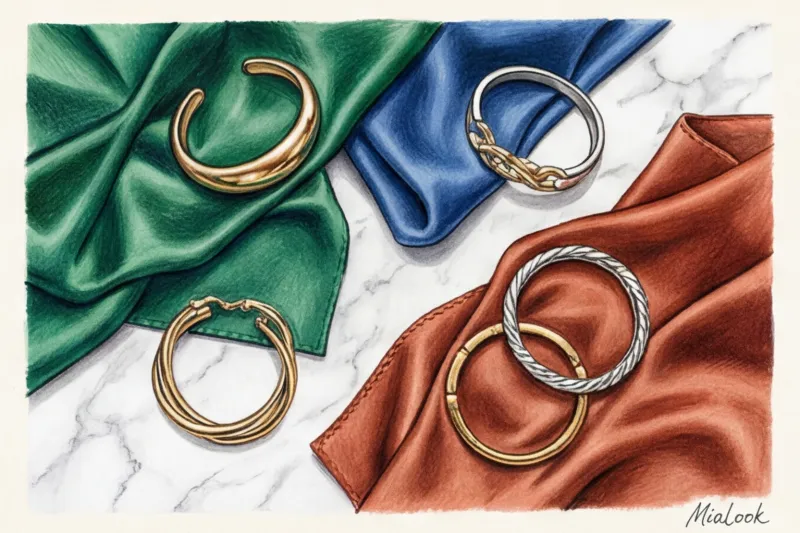
Take white shades, for example. Choosing the right white is an art. When my cool-olive client is tanning, I recommend she buy crisp, pure white cotton shirts. Against a dark taupe tan, this crisp, medical white looks incredibly expensive and refreshing. But if she wears ecru or ivory (warm white), the shirt will appear washed-out and old. Girls with a warm, golden tan, on the other hand, need a creamy white—pure white will make their golden skin appear gray.
Switching metals is another status marker. Platinum and white gold literally ring and sparkle against cool-tanned skin. But if you have a luxurious golden-peach tan, it's chunky yellow gold (like vintage chain bracelets) that will reveal its most elegant features.
As for fabrics, for summer evenings, I always recommend investing in silk with a weight of 19mm (for example, basic tops in the €150–€300 range) or the finest summer cashmere. On tanned skin, these textures act as light reflectors. But remember: glossy silk enhances the color temperature. If you've chosen the wrong undertone, a shiny fabric will highlight it twice as much as a matte linen.
Checklist: 4 Steps to Understanding Your Undertone After Vacation
To make this theory a practical tool, I've put together a short algorithm. Follow it upon your return from vacation, and you'll be able to solve your palette problem once and for all.
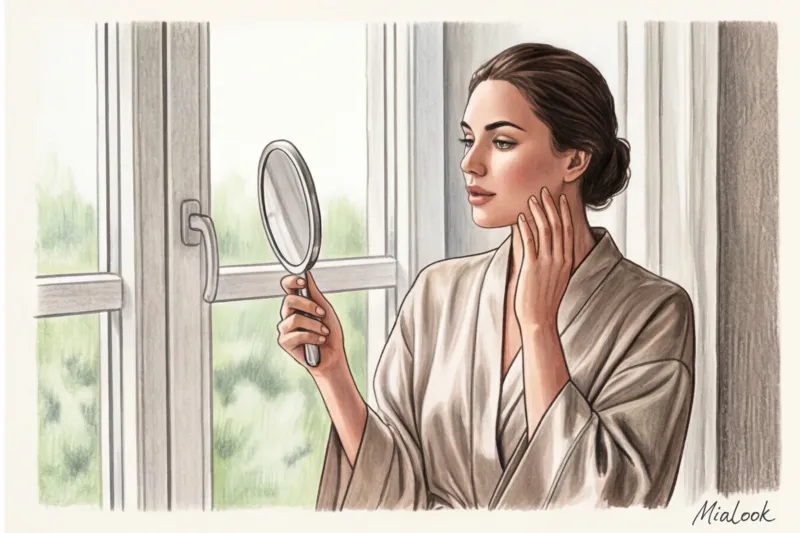
- Wait until the 3rd day. Don't try to assess your skin color immediately after the beach. Wait until the erythema (redness from dilated blood vessels) has subsided and the pure melanin pigment remains.
- Examine freckles in daylight. Go to the window at midday. Take out a magnifying glass. Do your freckles have a coppery, reddish hue? Or are they more coffee ground or taupe?
- Take the "expensive whiteness" test. Take two items: one pure white (like a sheet of Snow Maiden paper), the other ivory (with a slight yellow tint). Apply them alternately to your tanned face. Which one deepens your tan, and which looks "dirty"?
- Neckline and metals. Place a silver chain on your tanned collarbone, and a gold one next to it (avoid red gold; go for a classic lemon gold). Look with a defocused gaze: which metal seems out of place, and which blends in with your skin?
Summary: Trust nature, not stencils
Nature has already implanted within you a flawless beauty code. The sun is merely a tool that helps decipher this code. It reveals your true nature, hidden beneath fatigue, the stress of the big city, and improperly chosen skincare.
I urge you to stop squeezing yourself into the rigid confines of 12 color types. The fashion industry has long since abandoned these plastic stencils. Learn to feel the temperature of your skin. When you realize that your deep tan is actually cool and your freckles are ashy, you'll stop buying random things on sales. Your wardrobe will become more compact, but every item in it will work to make you look luxurious, prestigious, and, most importantly, harmonious.