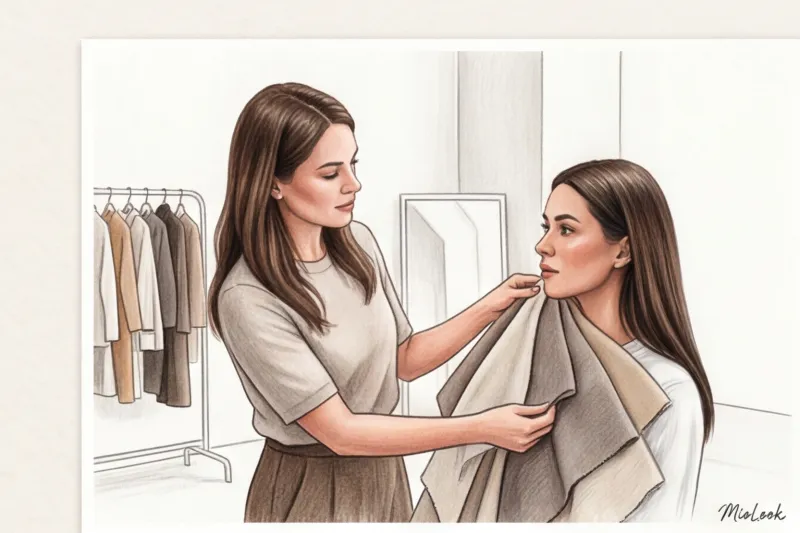
Over 12 years of working as a personal stylist, I've developed one ironclad rule: if a garment fits perfectly, but your face looks tired, gray, or puffy, you've chosen the wrong shade. One day, a client named Elena came to me asking for a classic base. She bought a classic, uncompromising beige trench coat for €300, but admitted she felt "moth-eaten" in it. The problem wasn't the cut. Elena had stunning olive skin, which, against the classic sandy beige, took on an earthy hue. We swapped the trench coat for a sophisticated "stone greige" color, and a miracle happened—her face brightened, and she looked five years younger.
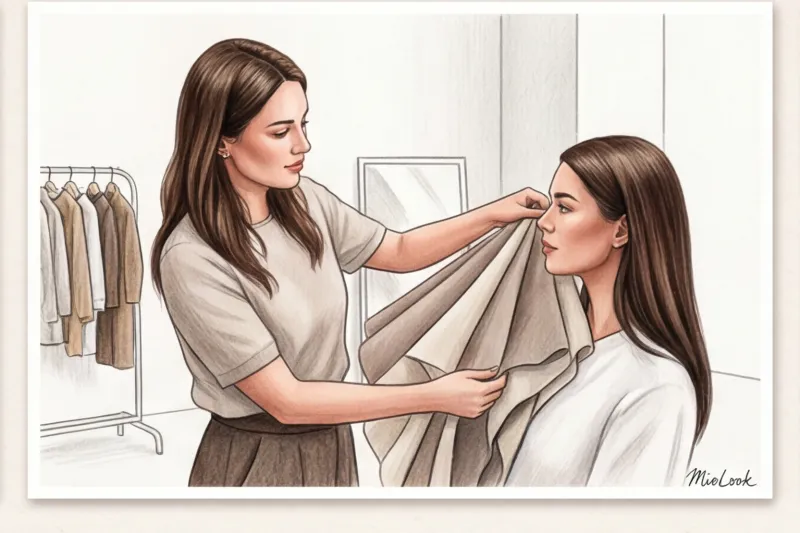
How to choose correctly clothing colors based on skin tone Forget everything you read in the glossy magazines of the 2000s. We've covered this mechanism in more detail in our The complete guide to determining your skin undertone , but here and now we'll figure out how to put together the perfect basic wardrobe in practice, one that will work for your appearance, not against it.
Basic Clothing Colors by Skin Undertone: Why the Old Rules No Longer Work
Let's be honest: tests involving placing gold and silver foil on the face and trying to spot blue or green veins on the wrist are hopelessly outdated. This approach is too simplistic for the complex European and Slavic appearance.
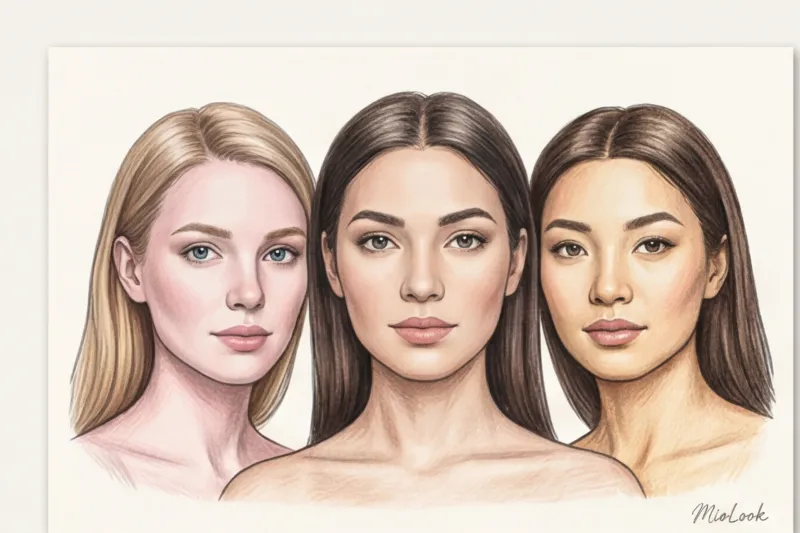
The world isn't strictly divided into "warm" and "cool" women. A 2024 study by the WGSN trend bureau on the evolution of color typing found that approximately 30% of women have neutral, complex olive, or mixed undertones, for which the 12-season system simply doesn't apply.
In professional coloristics we always distinguish between two concepts:
- Overtone (surface tone): what changes. A light Mediterranean tan, redness from the cold, rosacea, and shadows from fatigue.
- Undertone (true undertone): something that stays with you forever, a pigment buried deep under the skin.
The modern foundation, championed by minimalist brands like The Row, Jil Sander, and COS, is built not on overt, localized colors, but on complex, in-between shades. These are the ones that can adapt to your undertone, gently neutralizing any redness in your skin tone.
Black and white aren't universal: the main myth of a basic wardrobe
I know I'm breaking the rules, but I have to say it: a black turtleneck and a crisp white shirt are not a universal staple. In fact, for most people, they're the most dangerous colors in their wardrobe.
"Pure white works like a merciless spotlight. It not only highlights under-eye circles but also brings out even the slightest redness in the face for 80% of women"—that's what I repeat at every wardrobe review.
Jet black has another tricky property: it casts harsh, graphic shadows on the lower third of the face. If you haven't had enough sleep, black will exacerbate this by deepening the nasolabial folds.
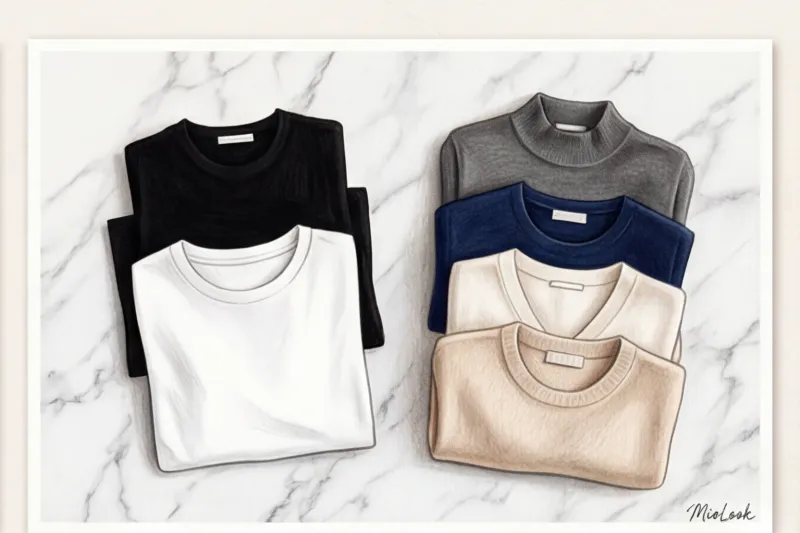
What to replace basic white with:
- Ecru (the color of unbleached wool or linen)
- Lactic
- Eggshell color
- Soft pearl
What to replace basic black with:
- Graphite (dark gray)
- Dark chocolate
- Deep blue (navy)
- Dark eggplant (ideal for those with green eyes)
Access to MioLook for €0.99 — one-time payment
A smart AI stylist will select the perfect basic wardrobe based on your personality.
Get access — €0.99 onceThe perfect base for a cool undertone: depth and nobility
Do you have porcelain, pinkish, or translucent skin with a cool glow? Wonderful. But that doesn't mean you're doomed to only wear light blue shirts and mouse-gray sweaters. A base for a cool undertone should be deep and refined.
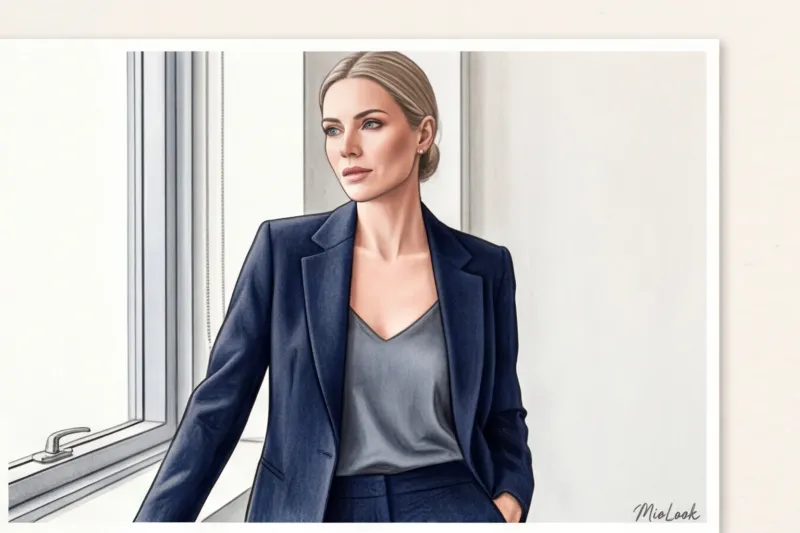
Last year, we put together a capsule collection for Anna, a partner at a law firm with a strict dress code. She has a bright, cool undertone and hated the color black. We built her entire work wardrobe around shades of anthracite, icy taupe, cool espresso (a brown without any red), and a slate gray-blue. The result? The look felt three times more expensive.
My favorite formula for cool undertones:
A graphite jacket (heavy wool) + a silk midi skirt in slate + black or navy loafers = instant, effortless chic.
Basic palette for warm undertones: softness and glow
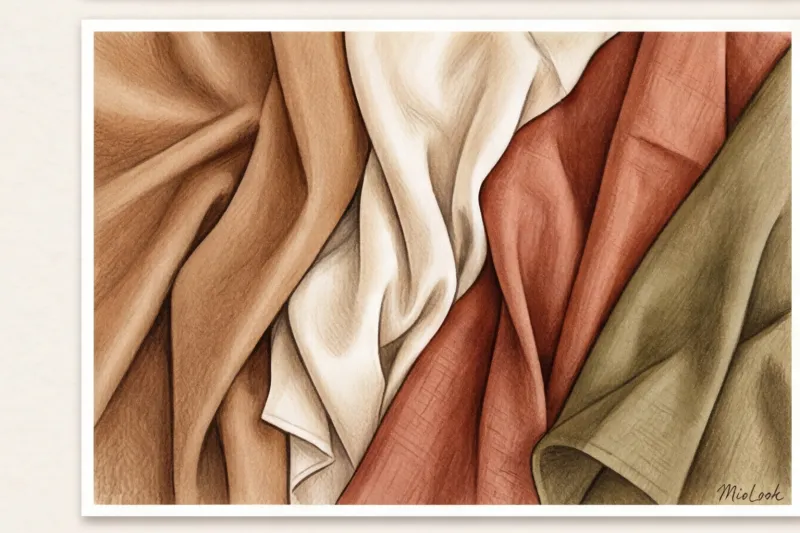
If your skin has a golden, peachy, or honeyed glow, you're in luck—you're destined for a "quiet luxury" aesthetic. Warm undertones call for "delicious," baked shades.
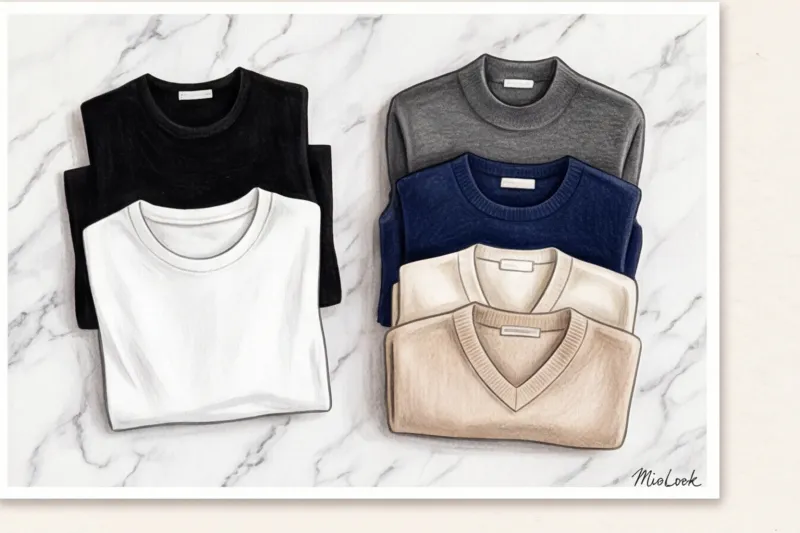
In its 2024 report, the Pantone Color Institute noted a huge increase in demand for warm, earthy tones in everyday wardrobes. This makes sense: after an era of sterile minimalism, we crave comfort.
The best base shades for you:
- Caramel and terracotta brown
- Warm olive (the color of crushed olive leaves)
- Classic camel color
- Creamy and creamy
Danger zone: Warm undertones should absolutely avoid wearing a "dirty," dusty gray near the face. It will instantly make golden skin look sickly and yellowish. If you want gray, move it down to your lower body (pants, skirts).
Your perfect look starts here
Join thousands of users who look flawless every day with MioLook. Digitize your wardrobe in minutes.
Get access — €0.99 onceWhat to do with neutral and olive undertones? The art of complex shades
Olive skin is the most tricky. It contains a greenish pigment. Classic warm colors (mustard, orange) make such skin appear gray, while pure cool colors (fuchsia, icy blue) bring out the sickly green.
Your salvation lies in royal, complex shades—those that can't be described in just one word.
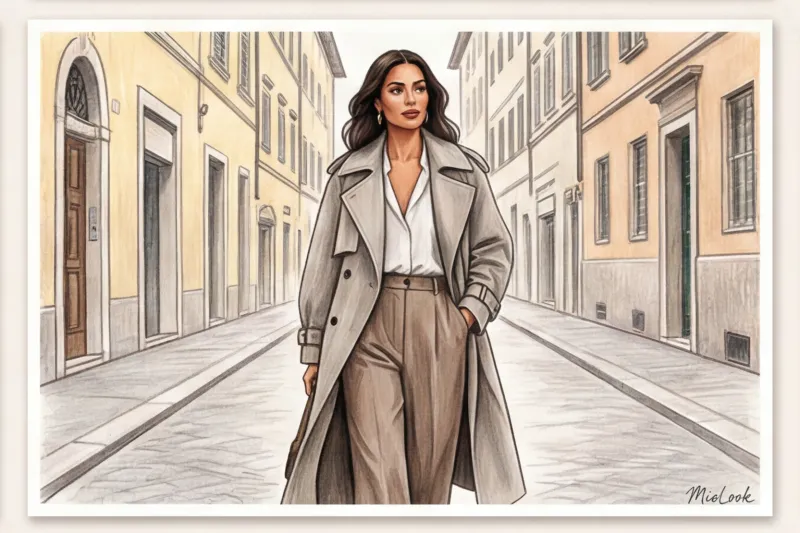
- Greige — a mix of gray and beige. The perfect alternative to a pure beige trench coat.
- Teal - complex blue-green with the addition of gray.
- Taupe — the color of the champignon cap.
Formulas for combining complex shades for the office and casual
When using a complex base, the secret lies in the difference in texture. A monochrome taupe look will look boring if it's cotton on cotton. But if you take flowy taupe palazzo pants (COS or Massimo Dutti have great options in the mass-market segment for €90-€120) and add a fluffy milky cashmere sweater, you'll have a look worth a million.
How to Incorporate "Unusual" Colors into Your Wardrobe: Clever Stylist Tricks
Now for the most important part. I'm a stylist, not a dictator. If you have a cool undertone but adore a warm caramel sweater, wear it! But do it wisely.
The golden rule: keep "dangerous" colors away from the portrait area (face). If you love a controversial color, buy pants, a skirt, a bag, or shoes in it.
But what if you've already bought the wrong color in the form of a jacket or dress? Here are my favorite workarounds:
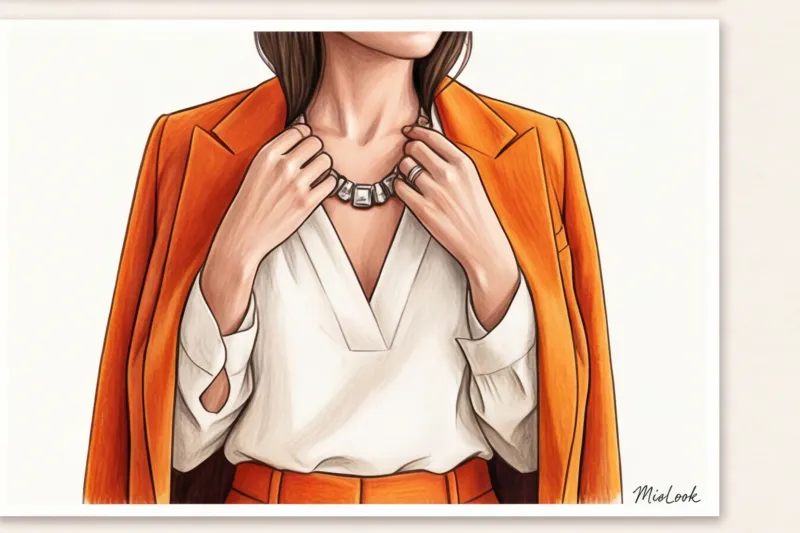
- Create a "buffer". Wear a shirt in a color that flatters you (like ecru) under a statement jacket. The collar will create a protective barrier between the jacket and your face. A well-chosen silk scarf does the same.
- The magic of the V-neck. The more exposed skin on your chest and collarbone, the further away the color will be from your face. If the color doesn't suit you, but the dress has a low neckline, it won't hurt. (Note: This trick absolutely doesn't work with turtlenecks—if the color isn't "your thing," the turtleneck will mercilessly highlight any bruises.)
- Temperature makeup. The right lipstick and blush can really elevate your entire look. Ever notice how a red lipstick with a blue undertone (like the iconic MAC Ruby Woo) instantly makes your face look fresher, even in the most off-duty outfits?
Ready to start your stylish transformation?
Try the MioLook free plan—no commitments required. Artificial intelligence will help you combine colors like a pro.
Get access — €0.99 onceChecklist: Putting together your perfect capsule of basic shades
Ready for a wardrobe overhaul? Take 20 minutes and open the app. MioLook To easily visualize your things, follow this algorithm:
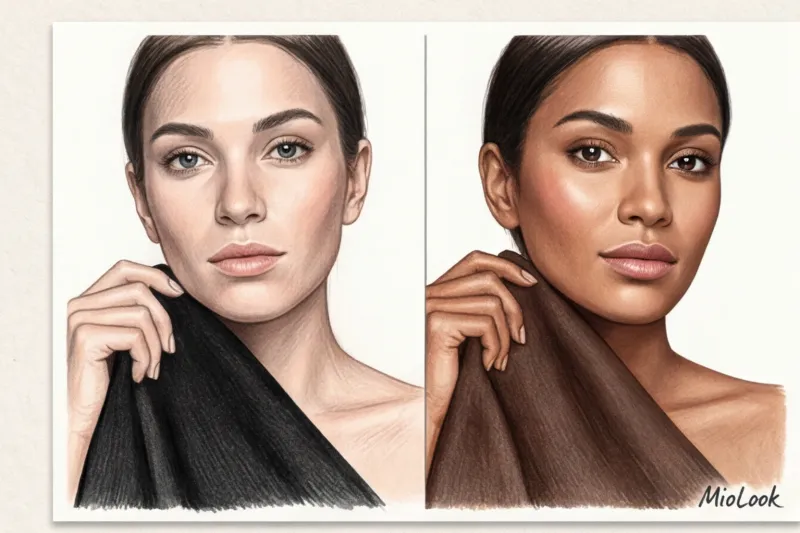
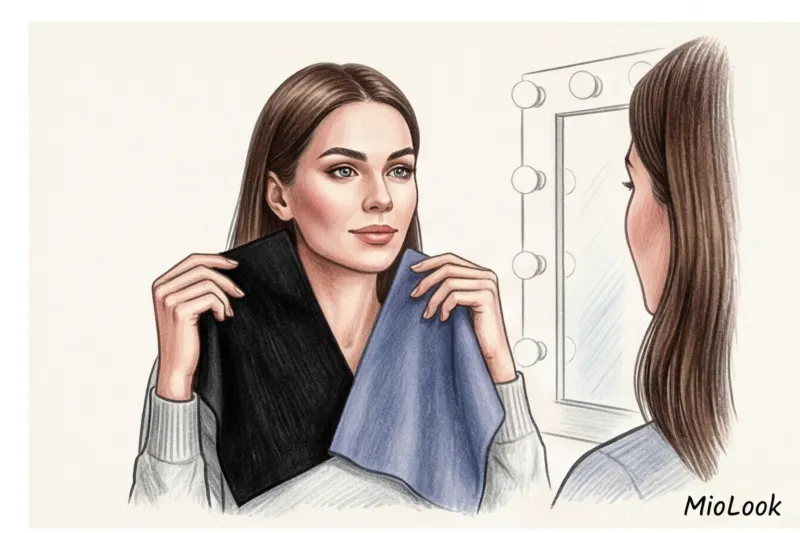
- Step 1: Forget about veins. Take two colors—one gray and one warm brown. Place them on your bare face in daylight. Which one makes your skin look smoother? This will determine your direction.
- Step 2: Choose 2 main dark base colors. For example, deep blue (navy) and graphite. They will replace black for you.
- Step 3: Choose 2 light base colors. For example, ecru and light gray melange. They will replace snow white for you.
- Step 4: Add 1 accent neutral. Yes, there are such things. Burgundy, rich emerald, or dark chocolate work great as a base, but they add character to the look.
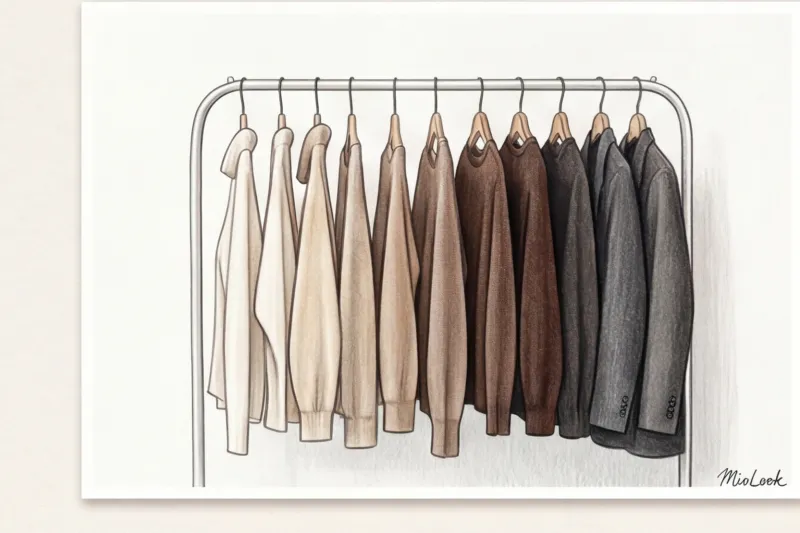
A basic wardrobe isn't a boring uniform; it's a canvas. And when that canvas is composed of complex, rich shades that complement your complexion, even a simple jeans-and-T-shirt combination will look like it was crafted by a team of stylists.