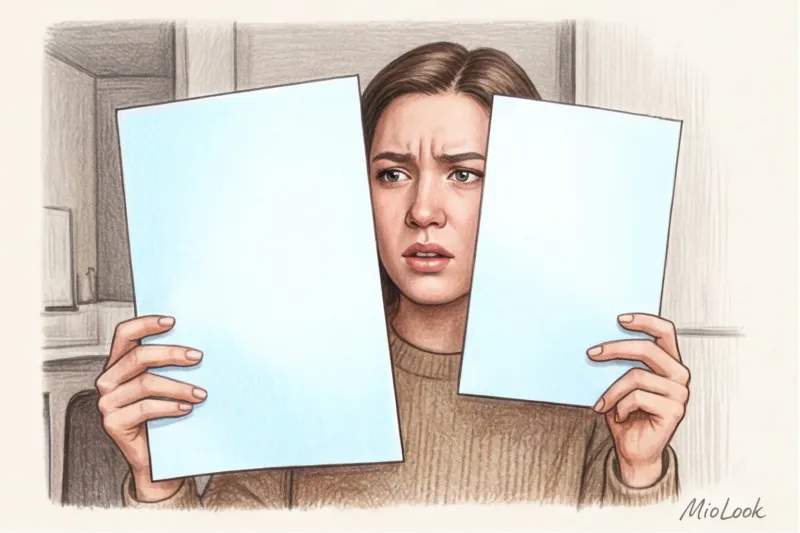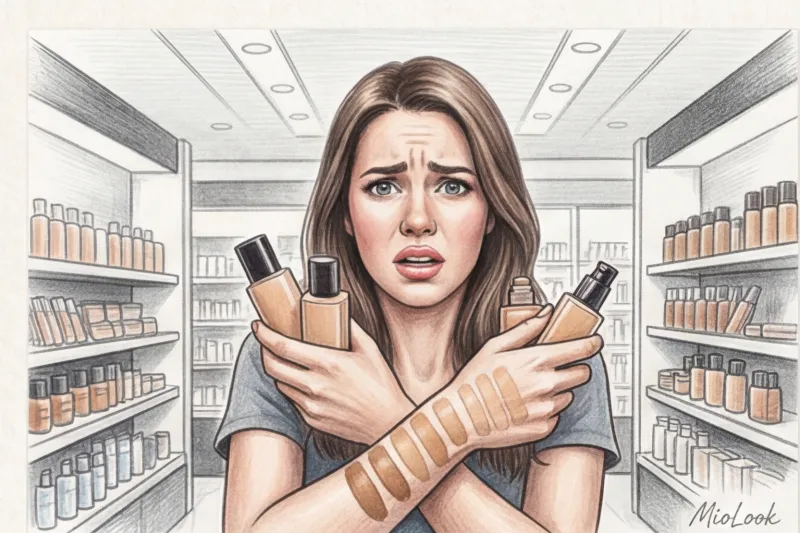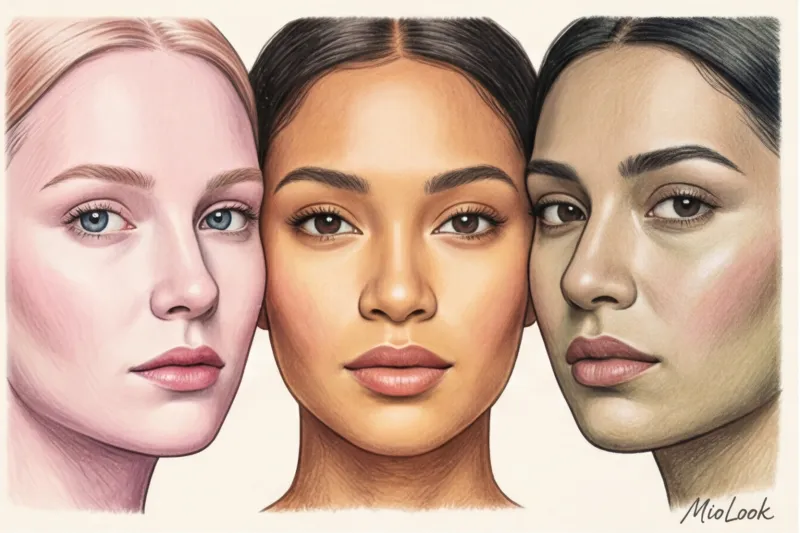
Over my 12 years as a stylist, I've witnessed the same scene dozens of times: a client sits down, takes out her makeup bag, and sighs heavily, declaring that no foundation in the world suits her. One of my clients, Anna, spent years buying the "lightest, coolest" shades of luxury foundations because she considered herself a porcelain Snow White. On her face, these products turned into a strange pink mask, starkly contrasting with her neck. The problem was solved in a minute when I added a drop of green pigment to her favorite shade. That's when Anna discovered she had olive skin undertone.
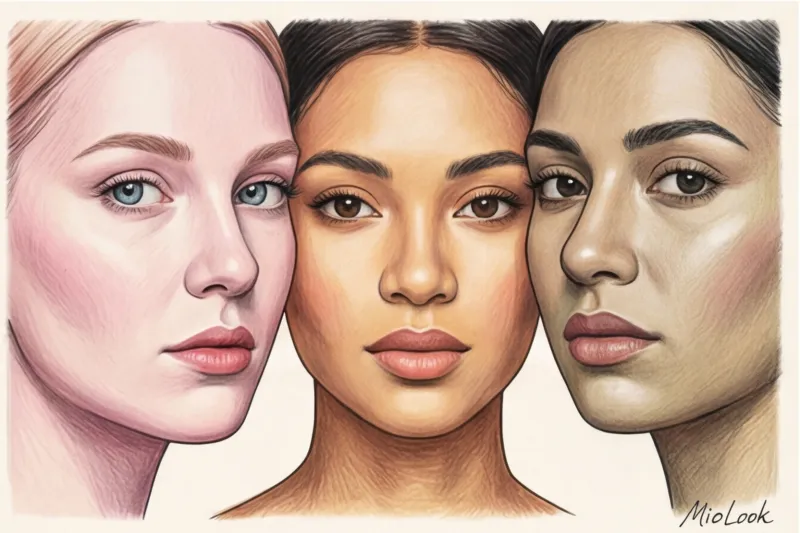
Magazines from the 2000s accustomed us to a simple, but completely unworkable binary system: you're either a "warm spring/fall" or a "cold summer/winter." We covered this in more detail in our The Complete Guide to Determining Your Skin Undertone: Forget the Old Myths In reality, the coloring of the human face is much more complex.
What is olive skin tone and why are classic tests ineffective?
To understand the mechanics of color, let's look at the basics of cosmetic chemistry. Olive skin undertones are not a distinct pigment, but a complex visual illusion created by the overlapping of yellow (melanin) and blue (blood vessels) nuances with a slight gray tint. According to the Pantone Color Institute (Pantone SkinTone Guide, 2023), over 30% of people worldwide have such complex, mixed undertones that don't fit into the standard "pink-yellow-peach" matrix.
Mass-market brands often ignore this third of consumers. Producing a "pure" olive is unprofitable, so shelves are filled with distinctly warm or cool bases. The difference between your undertone (whether you're light or dark) and your undertone (what shade shows through your skin) is crucial. You can be extremely pale and still have an olive complexion.
The biggest myth in coloristics: "Olive means dark."
The stereotype that olive skin is the preserve of sultry Italian or Latin American women persists. Because of this, fair-skinned women don't even consider it.
"The pale olive phenomenon is light skin with a distinct greenish-gray tint. Without a tan, it often appears translucent and slightly unhealthy, reminiscent of marble with a slight green tint."
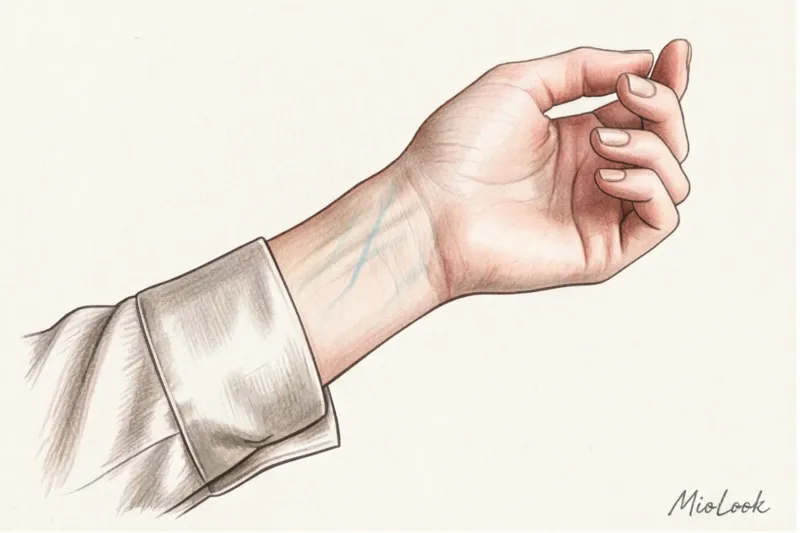
This is why the classic wrist vein test doesn't work here. The advice "look at your veins: if they're blue, you're cool; if they're green, you're warm" breaks down due to the physics of color. Olive skin has a greenish overtone. You're viewing your objectively blue or purple veins through the yellow-green filter of your skin. Naturally, they'll appear turquoise or a mixture! Any conclusions based on this test will be erroneous.
Access to MioLook for €0.99 — one-time payment
A smart AI stylist will select the perfect look based on your skin undertone.
Get access — €0.99 onceChecklist: 5 subtle signs that you have an olive skin undertone
In my experience, up to 80% of women with olive undertones wear the wrong shade of foundation every day. Check yourself for these five signs:
- Yellow foundations lie like orange. The sales associates at the store see your yellowness and suggest a warm tone. On your face, it immediately oxidizes and turns red.
- Pink bases make you look like a ghost. "Light Porcelain" lays down as an ash-gray mask, highlighting all imperfections.
- In winter you look "earthy". Without a light summer tan, olive skin often takes on a grayish, slightly sickly tint (that same gray pigment comes to the fore).
- Pastels are killing you. Soft blue, mint or light peach in clothing and makeup make the face look visually tired.
- Jewelry uncertainty. Pure shades of gold and silver suit you equally well (or not at all). Neither metal has a "wow" effect.
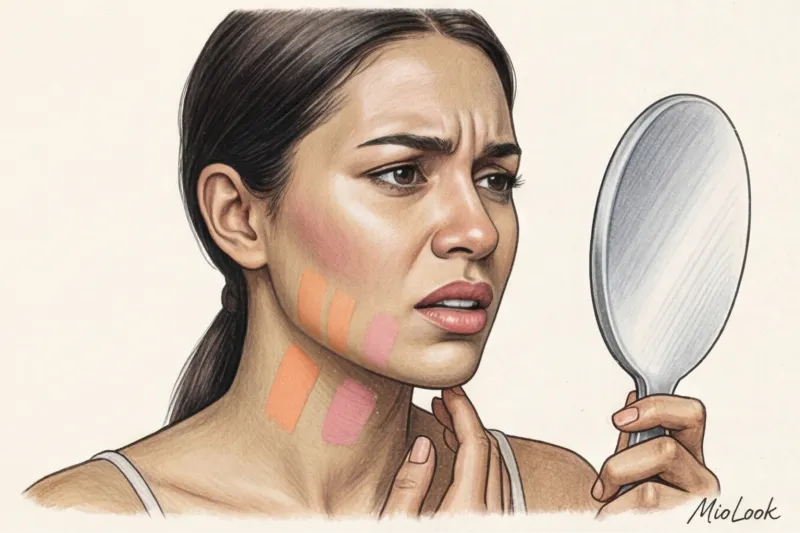
I was once preparing an executive client for an important business photo shoot. Her previous experience had been disastrous: the makeup artist had used a classic peach shade, which, under the studio lights, added ten years to her appearance and emphasized her tiredness. We switched to a sophisticated olive-beige shade, and her face literally lit up from within.
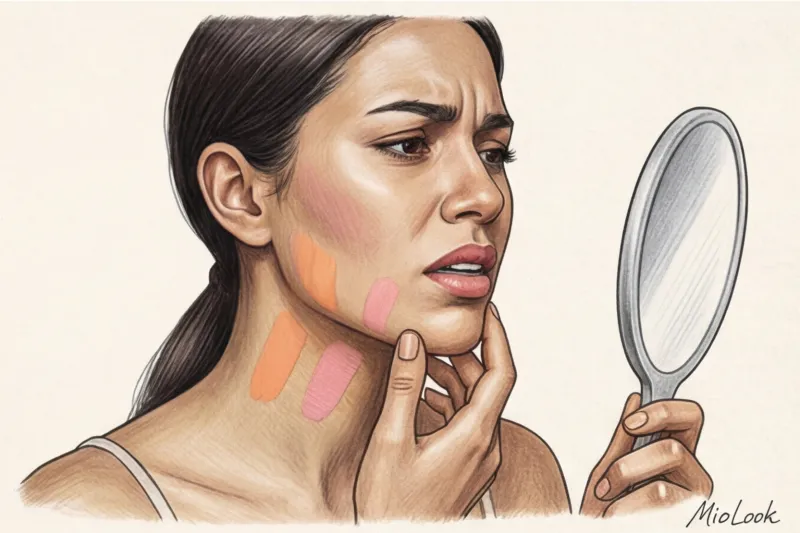
Olive skin temperature: cool, warm and neutral
Olive skin tone isn't a monolith. It has its own internal temperature spectrum, which directly influences not only cosmetic choices but also clothing textures.
Cold Olive: Gray and blue tones dominate here, with minimal yellow pigment. This skin often appears pale and "wintery." Stylist's advice: Matte, light-absorbing textures like wool, thick cotton, and cashmere are ideal for such women. They balance out their natural coolness.
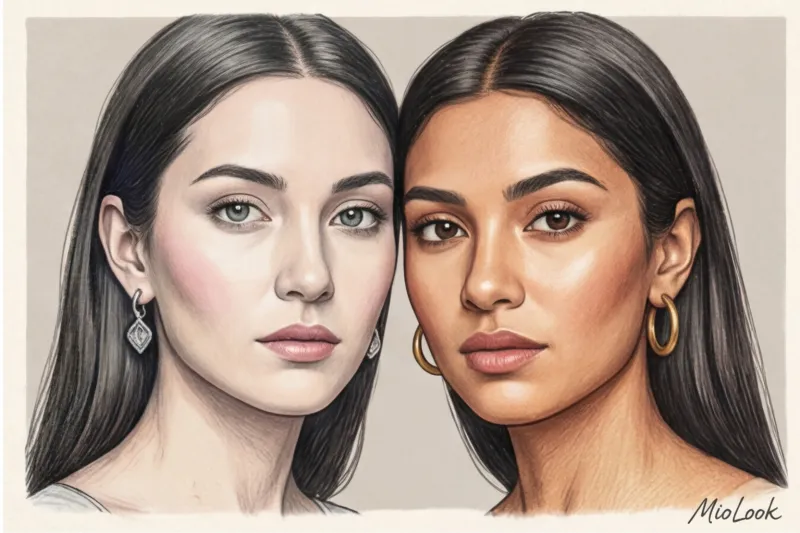
Warm Olive: A high content of golden melanin that shines through a green base. Often seen in Mediterranean skin tones, this skin tans quickly and beautifully. Glossy textures, flowing silk, and satin, ranging from €150 to €300 for a basic blouse, are the best investment for this type, as the shine accentuates the warmth of the skin.
Neutral olive: Perfect balance. The temperature of your complexion will change depending on the lighting: on a cloudy day, you're cool, while in the setting sun, you're warm. To avoid getting confused with the palette, many of my clients use MioLook — the app's artificial intelligence helps visualize color combinations and match makeup to specific lighting.
The Perfect Foundation: How to Choose a Foundation and Save Unsuitable Makeup
Why do brands rarely produce "pure olive"? The answer lies in the chemical composition of cosmetics. Iron oxides (red, yellow, black) and titanium dioxide (white) are responsible for the color of foundation. Creating a stable green base is technically challenging—the pigments can separate during long-term storage.
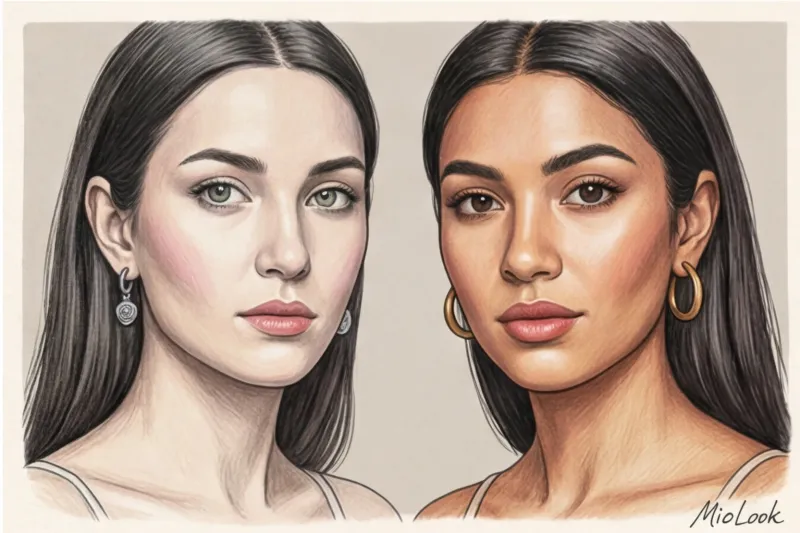
But what if you've already bought an expensive foundation (say, €40-60), and it turns out to be too yellow or pink? As a proponent of sustainable beauty, I'm categorically against throwing almost full bottles in the trash. It's not environmentally friendly and it's hard on the wallet.
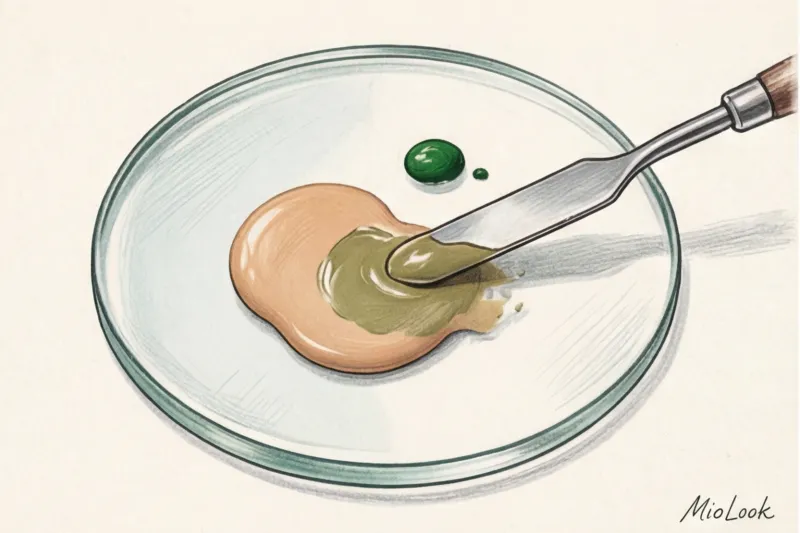
Makeup Artists' Secret Weapon: Green and Blue Adjusters
Adjuster is a highly pigmented color-correcting drop. It's your ultimate tool for customizing your makeup.
- If your tone is too yellow or orange: Add a tiny drop of blue adjuster. Blue neutralizes orange (according to the color wheel) and returns the tone to a neutral range.
- If your tone is too peachy or pink: Add a drop of green pigment. Green neutralizes the redness and creates that coveted olive-beige shade.
One bottle of adjuster will cost you around €15–20, but it will extend the life of all your cosmetics by 100%. You'll even be able to use foundations that have been gathering dust in a drawer for years.
Important limitation: This trick doesn't always work. Silicone- or oil-based adjusters can't be mixed with light, water-based foundations—the pigment will flake and peel right off your face. Always check the compatibility of the ingredients (silicone to silicone, water to water).
Your perfect look starts here
Join thousands of users who look flawless every day with MioLook. Our AI will select a palette to match your unique undertone.
Get access — €0.99 onceMakeup Color: The Best and Worst Shades for Eyes and Lips
Olive skin tones dictate their own strict rules when choosing makeup. The main anti-trends for you are pure, bright, neon colors and white-pastel shades. Any color with a lot of white pigment (light peach, pink) will create a "putty" effect on your lips or cheeks.
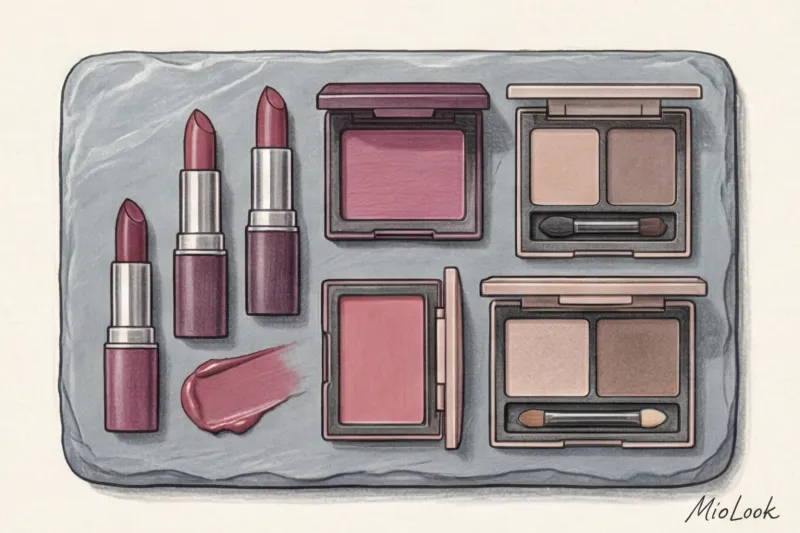
The ideal palette for olive is always slightly muted, as if dusted with a grayish tint:
- Blush: Forget flashy coral. Your best shades are dusty rose, muted plum, and terracotta. They mimic a natural flush. Important: dry matte textures can accentuate sallow skin. Opt for a creamy blush—a subtle, dewy glow will add a fresh look.
- Eyeshadow: Cool taupe (grey-brown), deep eggplant, green-toned bronze (antique gold).
- Lipstick: Finding your perfect nude for olive skin is a quest. Classic beige lipsticks make lips look dull. Your ideal nude is a shade slightly darker than your natural lips, with a mauve undertone.
Capsule Cosmetics Bag: Invest in Quality, Not Quantity
Working with clients, I've come to the conclusion that minimalists with olive skin suffer more often than others: in their search for "their" color, they buy dozens of products. The smart wardrobe philosophy we communicate through the app MioLook , is also ideally applicable to cosmetics.
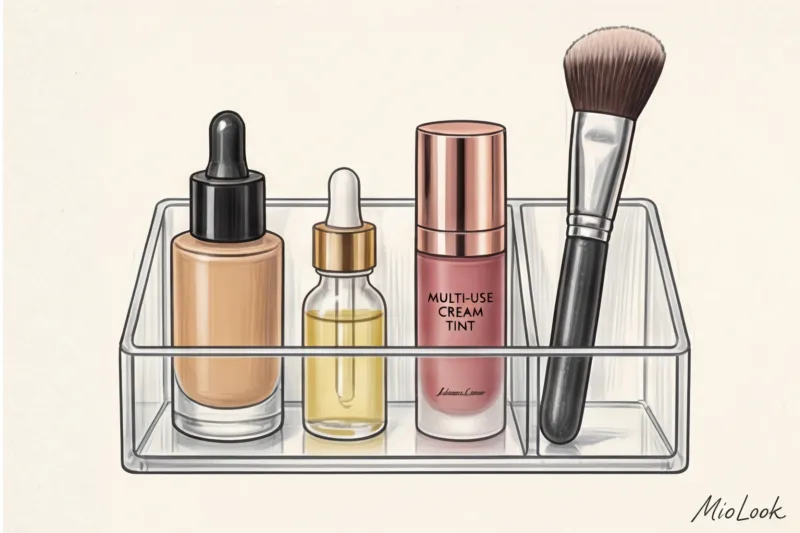
Create a minimalist makeup kit for both business and everyday use. You don't need a palette of 40 colors, only to use two. Invest in quality: buy one perfect multi-tint (a creamy product for lips and cheeks) in the perfect berry shade for €30–€40, which will instantly refresh your face.
Being mindful about your choices frees up space not only on your shelf, but also in your mind. Instead of fighting your natural coloring by trying to "warm" or "cool" your complexion with unsuitable tones, add a drop of green pigment and let your unique olive skin become your greatest asset.