Did you know that almost 90% of women with dark hair and brown eyes in Eastern Europe live in a fashion delusion for years? They mistakenly type themselves as "Winter," buying up crisp white shirts and jet-black jackets, and then genuinely wondering why their faces look tired and the shadows under their eyes deepen. The answer lies in color. If there's a subtle, hidden warmth to your appearance, your true color type is... Dark Autumn We've covered in more detail why the old four-season system is hopelessly outdated and how to find your perfect shades in our a complete guide to the 12 color types of appearance.
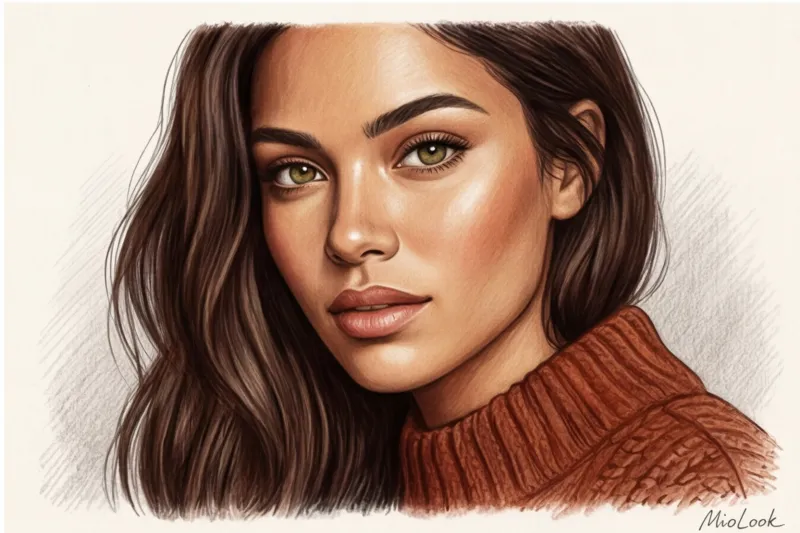
Dark Autumn color type: key characteristics and differences from winter
According to Albert Munsell's three-dimensional color system, Dark Autumn's color palette is built on three basic characteristics. The dominant one is dark, the secondary one is warm, and the final one is muted. It is this mutedness that distinguishes it from the contrasting, crisply clear Winter.
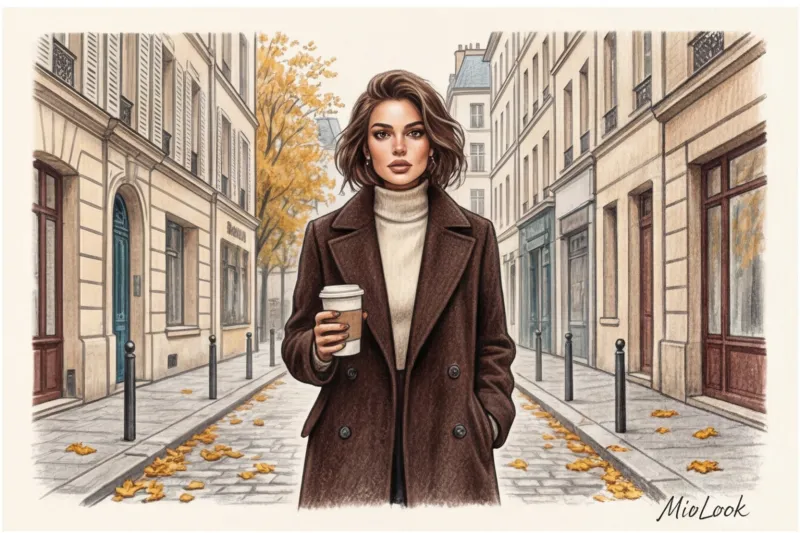
The main pitfall lies in the contrast in appearance. Dark hair and expressive eyes are deceiving. I had a telling case: my client Anna had been dyeing her hair jet-black for five years and wearing strict graphic styles, trying to embody the image of a "vampire." But when we gently washed out the cool pigment, transforming her hair into a dark chocolate shade, and replaced the smooth white silk with textured oatmeal linen, her face literally glowed from within, and the need for heavy foundation disappeared.
How to Accurately Determine Your Color Palette: A Metal and Fabric Test
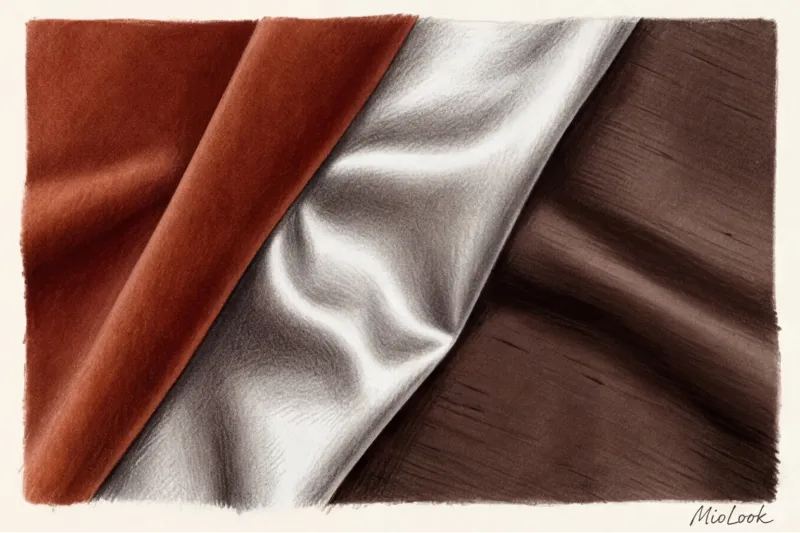
Forget about simply applying pieces of colored paper to your face in daylight—that method only works in theory. Color in real life always has texture.
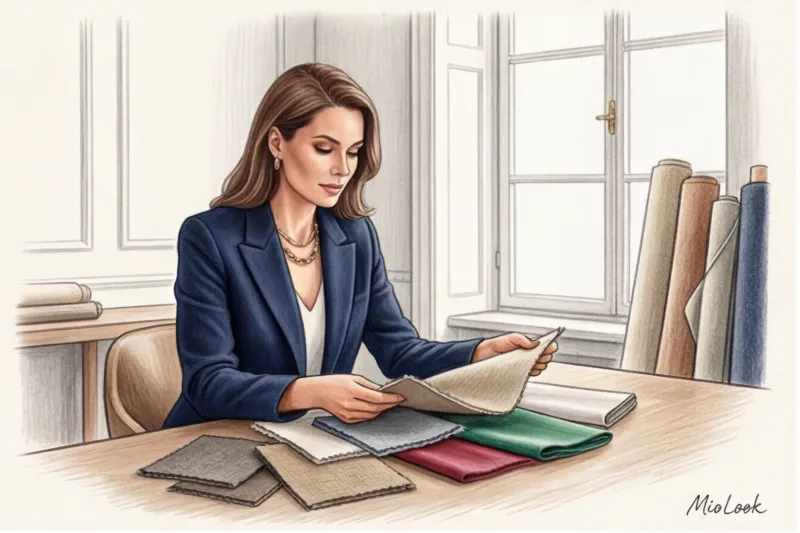
Try a fabric test: take a matte rust-colored velvet and a smooth silver satin. Place them on your décolleté. If you're a Dark Autumn, velvet will make your skin tone even and refined, like you've just finished a vacation in Tuscany. Silver satin, on the other hand, will highlight every micro-wrinkle and give your complexion an earthy tone.
Dark Autumn Basic Palette: Luxury in Every Shade
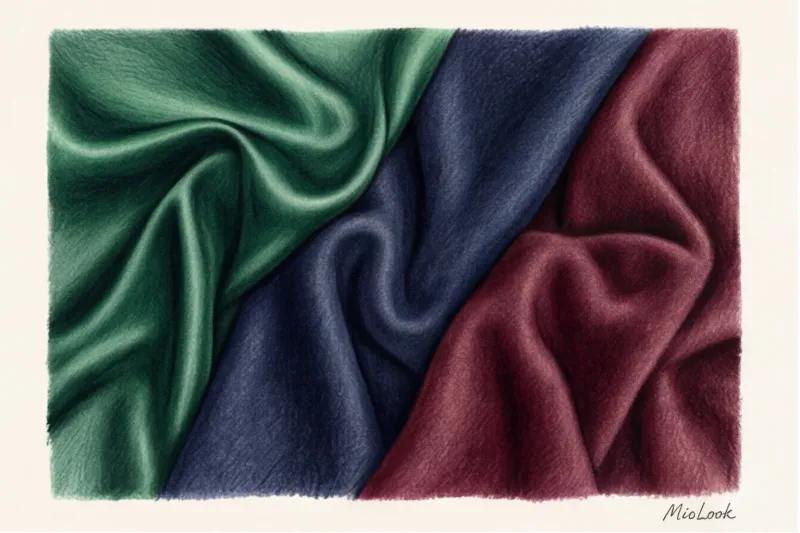
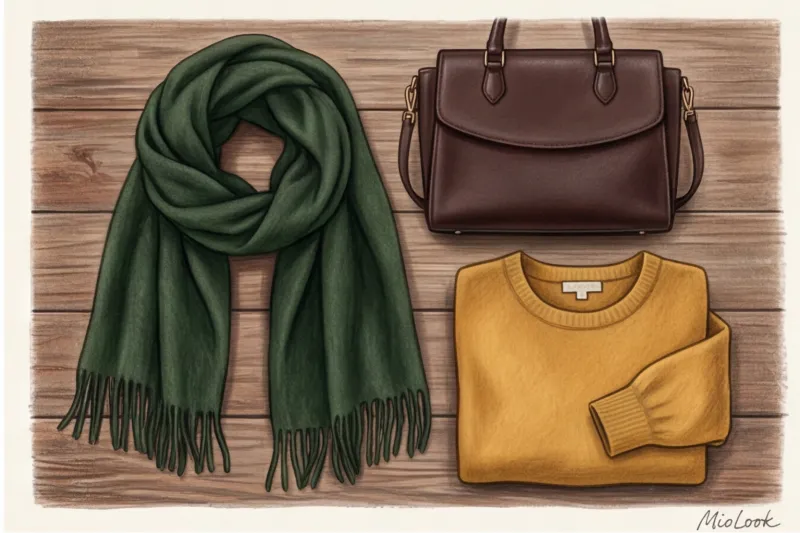
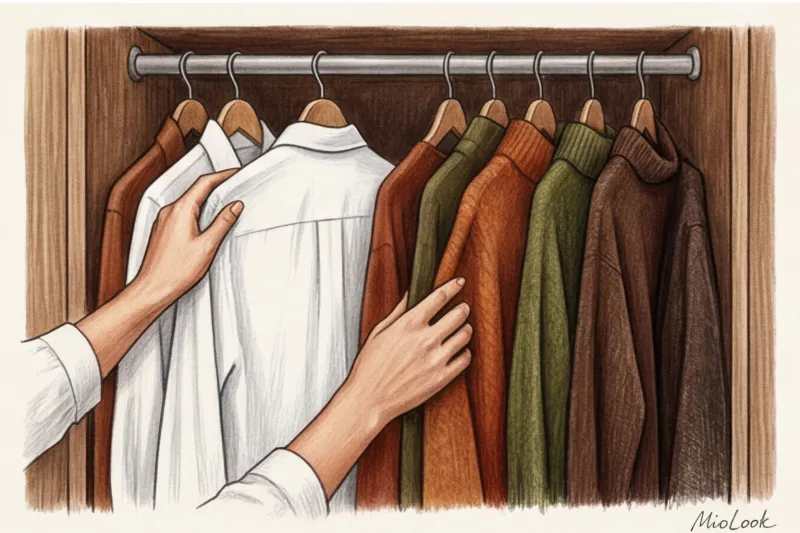
Your palette evokes the aesthetics of old libraries, autumn forests, and rich spices. Primary colors: dark chocolate, forest green, marsala, rich terracotta, and deep mustard. What's their secret? From a color physics perspective, these are "complex" colors. They always contain a drop of gray or black pigment at their core, which softens excess brightness and imparts that alluring depth to the hue.
To create contrast, you need light base tones. But not optically white! Choose milky white, unbleached linen, and camel. These shades create a luxurious contrast without cutting into the silhouette.
"The New Black": What to Replace Classic Black With
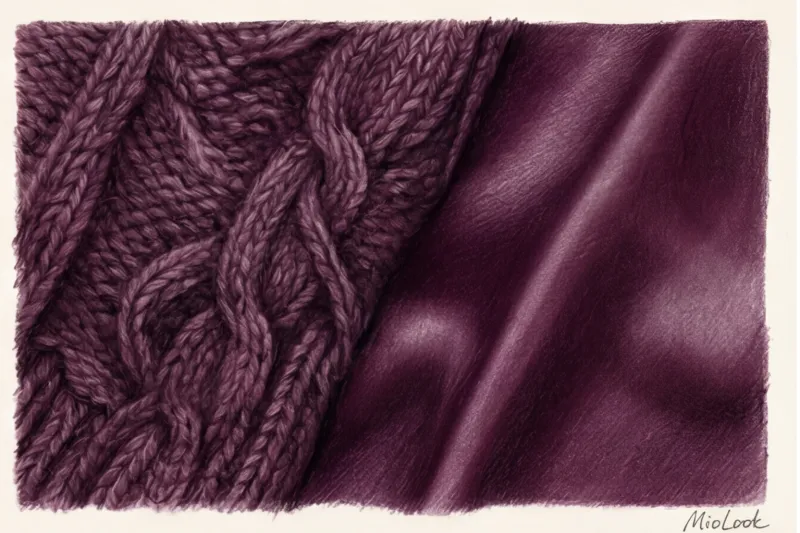
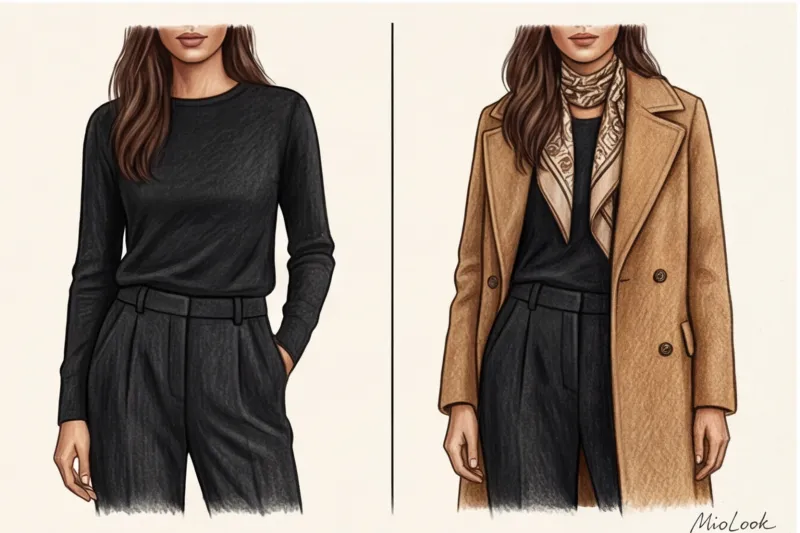
Why does classic jet black make Dark Autumn look older? It drains all the warm pigments from the skin, leaving only a grayish undertone. Replace it with the "new black"—a strong espresso, graphite with a warm greenish undertone, or deep eggplant. These shades will work just like black when paired with your skin, but without the tired look.
Your perfect look starts here
Join thousands of users who look flawless every day with MioLook. Our intelligent AI stylist will select the perfect palette and textures to suit your color type.
Get access — €0.99 onceA Stylist's Secret: How Fabric Texture and Quality Change the Perception of Color
My main professional insight, which took me a while to come to, is that color isn't just a dye. It's how the surface of the fabric reflects light. And for Dark Autumn, this principle is crucial.
Cheap synthetics literally "kill" deep autumnal shades. Polyester and acrylic have a smooth, closed-thread structure that creates a cheap, plasticky sheen. On shiny polyester, Marsala looks flat and cheap. But transfer the same pigment to natural matte silk, cashmere, or organic wool, and you get absolute luxury.
According to the report Textile Exchange (2023) Natural fibers absorb light 30–40% more effectively than synthetic materials. Over 12 years of working with eco-brands and organic dyes, I've become convinced that natural fabrics create micro-shadows within the very structure of the thread. It is this physical property that allows us to reveal the complex, muted beauty of Dark Autumn.
A Capsule Wardrobe for Dark Autumn: From Business Dress Code to Smart Casual
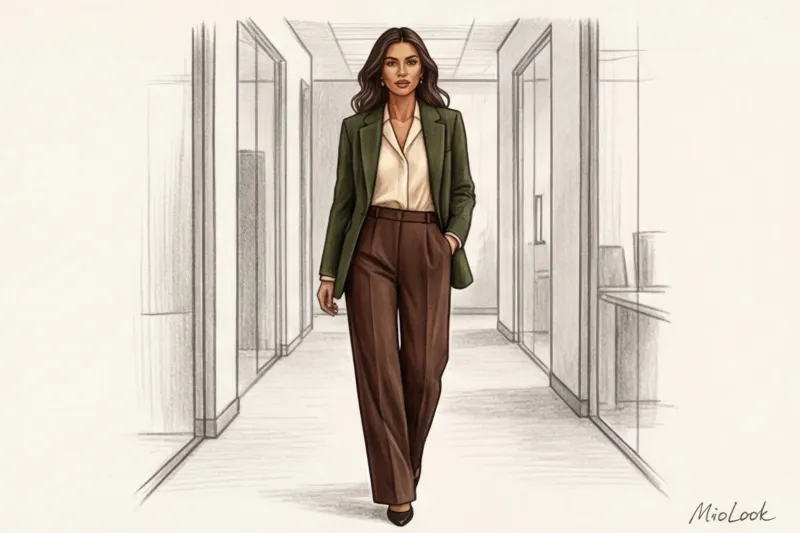
Building a capsule for your color palette requires a shift in focus. Instead of the usual black and white uniform, we're building a base around deep earthy tones. I discussed how to adapt strict corporate boundaries in detail in the article. "Business Wardrobe by Color Type: Your Best Colors".
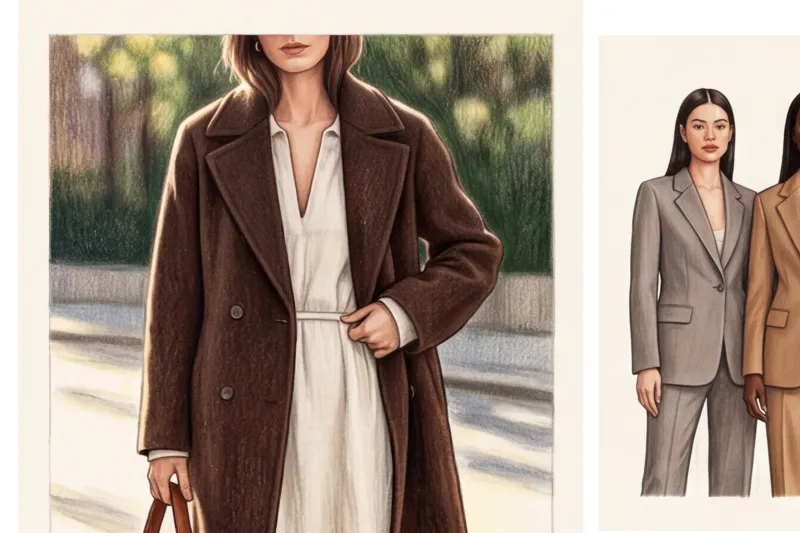
- Outerwear: A double-breasted coat in thick wool in camel or forest moss is a top investment. At high-street stores (such as Massimo Dutti or COS), these shades always look more expensive than their actual price.
- Prints: Complex patterns look fantastic on you. Leopard (but only in the right warm brown tones, not too gray!), Scottish tartan, and classic paisley.
- Base: Ivory silk blouses instead of white cotton shirts.
Accessories and Makeup: Metals That Emphasize Status
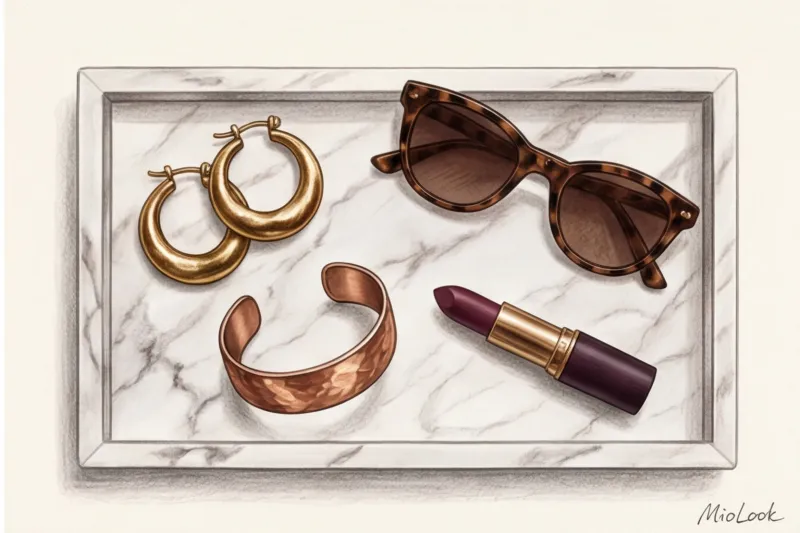
Absolutely off-limits for Dark Autumn are bright, dazzling silver and white gold. They clash with the warm base of your look. Your choice should be metals with a history: antique gold, tarnished bronze, copper, and matte brass. When choosing stones, consider amber, rich garnet, tiger's eye, and warm, creamy pearls.
When it comes to makeup, leave glossy, cool-toned lip glosses for Winter and Summer. Matte textures are your trump card. Deep brick, berry, and terracotta lipsticks look natural on you, not overly flashy. More secrets to a classy look can be found in our article. "Color Combinations in Business Attire: A Status Look".
Access to MioLook for €0.99 — one-time payment
Start creating your perfect looks with artificial intelligence. Digitize your wardrobe and receive daily recommendations.
Get access — €0.99 onceCommon Mistakes: Why the "Right" Colors Sometimes Don't Work
Even knowing your palette can still lead to a bad look. Let's look at three common mistakes:
- Monochrome without any difference in textures. Dressing Dark Autumn head to toe in smooth brown cotton is a surefire way to turn it into a "dark spot." Monochrome requires play: combine smooth silk with chunky knits, and matte suede with heavy denim.
- Winter contrast. A 50/50 balance of the darkest (chocolate) and the lightest (milk) will "cut" your appearance. Your contrast should be soft and flowing.
- Use of pure colors. A bright scarlet or neon yellow accent will ruin the harmony. Need a red bag? Choose oxblood or cherry.
"The myth that light colors are contraindicated for Dark Autumn is long overdue to be dispelled. You can wear pastels as long as they're toasted: shades of oatmeal cookies, caramelized sugar, or baked milk. They have sufficient visual density and beautifully brighten the face."
However, this advice has a severe limitation: it doesn't work If the chosen light shade has an icy, bluish undertone, any redness or imperfections will become more apparent.
Checklist: How to Eco-Friendly Adapt Your Current Wardrobe to Your Palette
Once you've discovered your color type, there's no need to rush to the closet with trash bags. A conscious, eco-friendly approach to your wardrobe means working with what you already have, gradually replacing items as they wear out.
Transition Zone Rule:
Keep only those shades that are 100% Dark Autumn around your face. This is called the "portrait zone." Do you have a favorite gray dress that's too cool? Don't throw it out. Tie a warm mustard scarf around your neck or wear a chunky bronze necklace. You'll create a visual barrier between the "wrong" color and your face.
Gradual replacement of the base:
When your basic white polyester t-shirt is completely worn out, don't buy the same one. Buy a heavyweight cotton t-shirt (at least 180 g/m²) in a soft caramel shade. You'll be surprised how much easier it will be to put together your morning outfits.
Your color type isn't a set of rigid restrictions, but a precise tool for managing your personal brand and impression. Invest in refined natural textures, choose deep, complex shades, and your wardrobe will work for you for years to come, highlighting the natural luxury of your appearance.