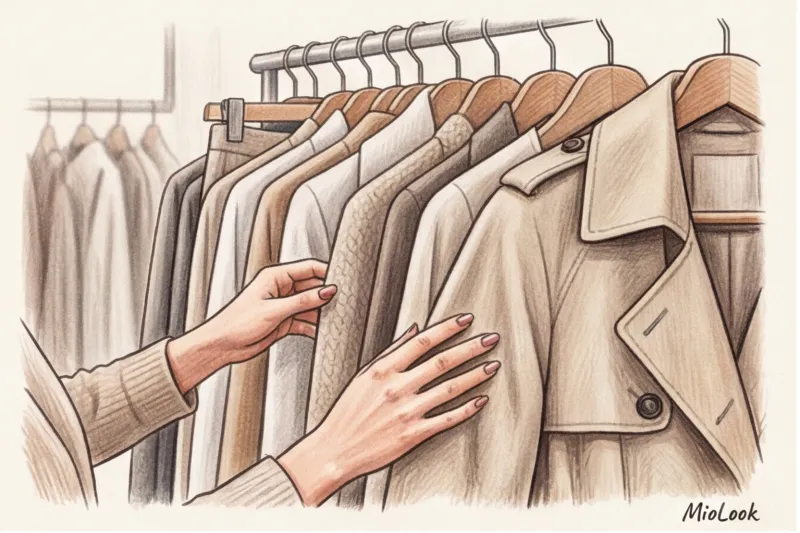
The Foundation of a Smart Capsule: Why Choosing Quality Clothing Starts with Fabric
Over 14 years of working as a stylist, I've realized one indisputable truth: a wardrobe starts not with the style, but with the fabric. I had a telling example with a client, let's call her Elena. As an experiment, we bought two visually identical white shirts: one from a popular mass market for €30, and the other from a premium brand for €150. In the fitting room, they fit identically. But after just five washes, the difference was catastrophic. The cheap shirt had lost its shape, the collar had become untidy, and the fabric had become gray and loose. Meanwhile, the €150 shirt looked like we'd just taken the tag off it. It was then that Elena realized, firsthand, How to choose quality clothing: You need to look not at the trendy cut, but first of all, read the composition and evaluate the threads.
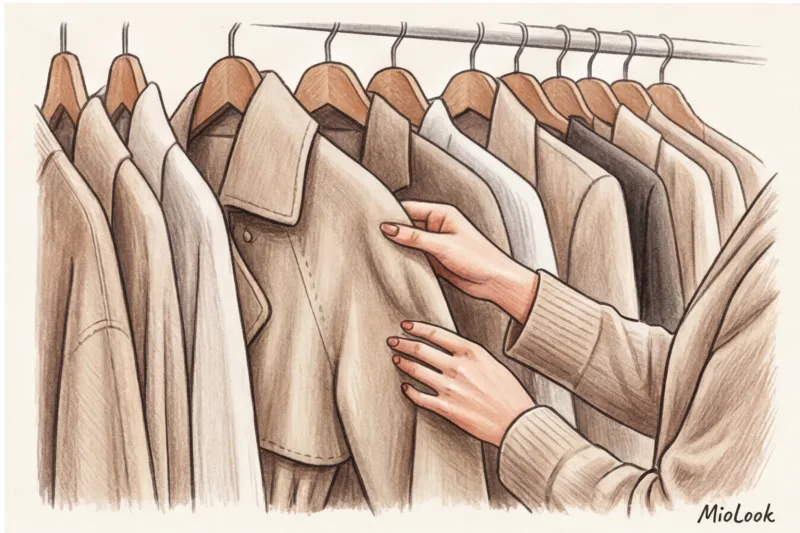
Many women make the mistake of focusing solely on the silhouette. But the truth is that neither a brilliant cut nor a perfectly chosen shade (we wrote in detail about how to combine them in the article about basic colors in the wardrobe ) won't save a garment if it's made from cheap materials. Poor fabric won't hold the shape defined by the pattern. A perfectly tailored, complex jacket made from flimsy, squeaky polyester will always hang lifelessly, shimmer cheaply in the light, and instantly reveal its price. The quality of the material is the very "skeleton" that holds the entire fit together.
In the smart wardrobe concept, fabric is the fundamental base. A capsule wardrobe implies that you wear a limited number of items, actively combining them. Consequently, the load on each item increases exponentially. Here, predictability in wear comes first. You need to be sure that the knees of your trousers won't stretch out into blisters by the middle of the workday, and that your favorite cardigan won't become covered in stiff pilling after a week of use. This is especially critical if you're collecting Basic wardrobe for a 40-year-old woman , where the nobility of textures and status play a decisive role in a personal brand.
Here we inevitably come to the most important economic rule of stylists - the concept Cost Per Wear (price per wear). Poor fabric makes seemingly "bargain" purchases the most expensive items in your closet. Let's do the math: a €30 acrylic jumper that's faded after three washes costs you €10 per wear. A high-quality €150 merino sweater that you've worn 70 times over several seasons costs just over €2 per wear. Investing in quality always pays off. To visualize these statistics and understand which fabrics really last, I recommend digitizing your closet. MioLook app When you have your wardrobe in the palm of your hand, you stop buying things that don't last forever.
"The mass market masterfully sells us the illusion of quality through chemical finishing—an industrial trick that is rarely told to consumers."
Why do cheap clothes often seem quite luxurious and sturdy in the fitting room? Fast fashion brands use finishing—an extensive treatment of the fabric with special chemical compounds based on starch and synthetic resins. Under the spotlights of the store, such a garment appears smooth, heavy, and holds its shape perfectly. But this beautiful finish is completely washed down the drain during the first wash at home. Ultimately, you're left with a loose, thin gauze that bears no resemblance to the garment you paid for. That's why knowing how to analyze fabrics before purchasing is your main and only defense against such marketing ploys.
The Anatomy of Ingredients: Analyzing Labels Like a Professional Stylist
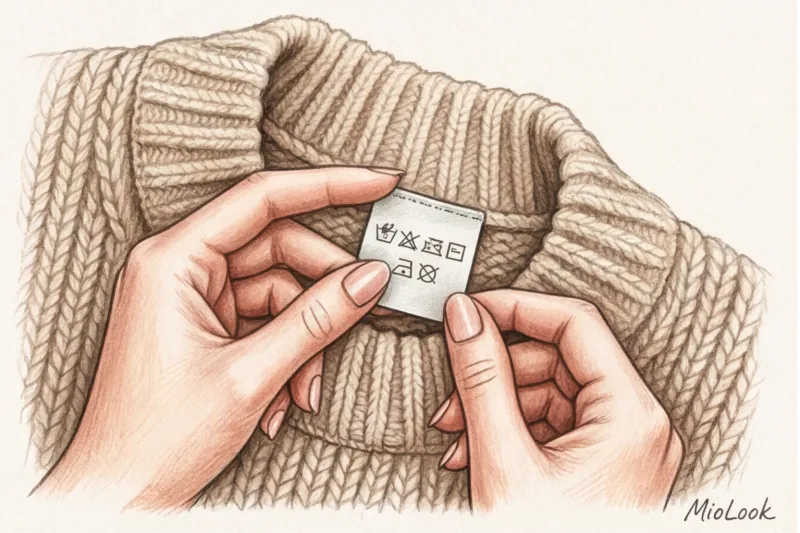
When I review a new client's wardrobe, the first thing we do is turn the garments inside out. We're not looking for the brand on the collar, but for the small, often prickly white tag in the side seam. Knowing how to read this tag is your key skill for protecting yourself from bad investments.
In the textile industry, there's a clear classification of fibers, which many buyers (and even sales consultants) often confuse. All materials are divided into three broad groups: natural (grow in nature or are produced by animals), artificial (created by man from natural raw materials) and synthetic (created chemically from petroleum products).
Before we delve into the properties of each type, let's master the basic skill of reading a label - the "first two components" rule According to international clothing manufacturing standards, composition is always listed in descending percentage order. The components listed first and second determine the garment's "character." If the first two components add up to 80% or more, they will dictate how the fabric breathes, wrinkles, and warms. For example, a sweater with a composition of "70% wool, 20% nylon, 10% cashmere" is an excellent, warm garment with a synthetic core for durability. However, if polyester is listed first (say, 60%) and wool is only 20%, you're looking at a garment that will make you sweat indoors and freeze outdoors, no matter how much cashmere is added at the bottom of the list.
Natural materials: pros and cons
Wool, silk, cotton, and linen have historically been considered the gold standard of a premium wardrobe. Their strengths are undeniable: they naturally regulate temperature, are hypoallergenic, resist static buildup, and age gracefully. High-quality cashmere or thick silk immediately convey a sense of class.
However, if you delve into the details of how to choose high-quality clothing for a long-lasting capsule, you'll encounter the hidden downsides of 100% natural materials. The main problem is fiber instability.
- Cotton Unblemished fabrics tend to deform. Even your favorite 100% cotton T-shirt with a density below 180 g/m² risks warping at the side seam after just 10 washes.
- Flax It's great in hot weather, but its structural fragility leads to the formation of hard creases in the bending area of the elbows and knees, which over time can literally wear out to holes.
- Wool is subject to strong shrinkage with the slightest violation of the washing temperature regime, and silk fades catastrophically quickly under the influence of ultraviolet light and deodorants.
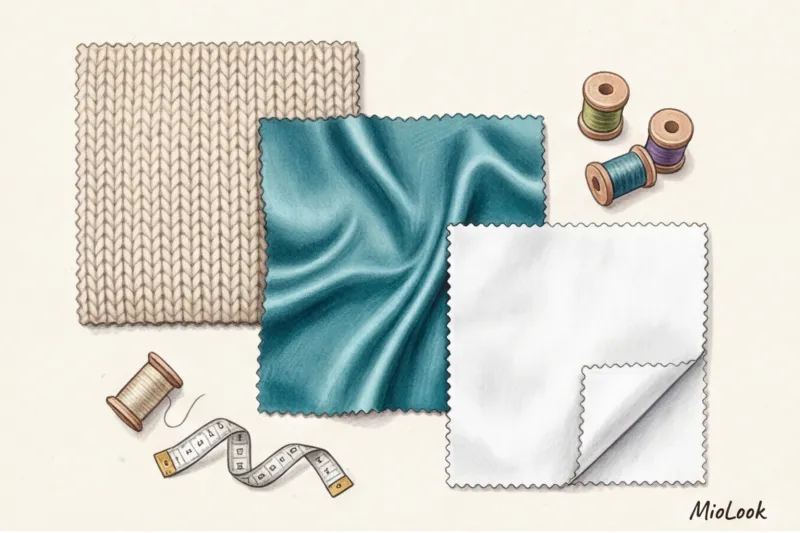
This is why a completely natural composition is not ideal for all wardrobe items, and this is where technology comes into play.
Artificial fibers: the best alternative
This is where the most common misconception among buyers lies: the fundamental difference between artificial and synthetic fabrics. Many automatically dismiss viscose as "synthetic." This is a grave mistake.
Synthetics (polyester, acrylic, elastane) are completely chemical products made from polymer resins (roughly speaking, plastic). But artificial fabrics (Viscose, Modal, Cupro, Lyocell/Tencel) are cellulose fibers. They are made from completely natural wood or cotton linters, which are dissolved into a paste and spun into ultra-fine threads. This means they are closer to cotton than polyester in terms of breathability.
Tired of reading labels in vain?
Upload photos of your items to MioLook, and a smart AI stylist will suggest how to best combine materials and textures for the perfect silhouette.
Get access — €0.99 onceAmong professional stylists, next-generation synthetic fibers are absolute favorites. We adore cupro and tencel for flowing silhouettes. A slip dress or bias-cut skirt made of dense cupro (often called "vegan silk") fits flawlessly. Unlike natural silk, which can cost between €200 and €500 for a top, a high-quality cupro garment will cost between €80 and €150, yet it won't stain even with a drop of water and can be washed on a delicate cycle rather than dry cleaned.
"Tencel (lyocell) is a true triumph of textile engineering. When clients complain that cotton is too hot for them in the summer, I always switch them to lyocell."
Why does it work better? The expert explanation for Tencel's creation process lies in its raw material—Australian eucalyptus wood. The process uses an organic solvent, 99% of which is recycled in a closed loop (making the fabric super eco-friendly). But the most important thing for us is the microstructure of the thread. Under a microscope, eucalyptus fiber has a completely smooth cylindrical surface, while cotton thread resembles a twisted, rough ribbon. Thanks to this smoothness, Tencel absorbs moisture 50% more effectively than cotton and releases it instantly. The fabric literally cools the skin. If you're looking for the perfect summer pants or a basic shirt, the 100% lyocell composition will provide you with a level of comfort unmatched by conventional materials.
Debunking the Myth: Why 100% Natural Ingredients Are Not Always a Good Thing
In its 2024 Consumer Habits Report, the analytical agency WGSN noted a curious paradox: most premium-segment shoppers harbor a persistent misconception that "true luxury" only means 100% wool, silk, or 100% cotton. This belief is so ingrained in our minds that many women squeamishly put aside a basic item costing €150–200 as soon as they see 5% synthetics on the label. In practice, however, absolute naturalness often becomes the main enemy of your capsule wardrobe's longevity.
Understanding that, How to choose quality clothing , requires a radical rejection of stereotypes about "evil chemicals." Natural materials are truly beautiful: they breathe, are tactilely pleasant, and environmentally friendly. But they have one fatal flaw from a physical perspective: a complete lack of "mechanical memory."
Let's look at a classic scenario. Imagine you've invested in a pair of crisp, perfectly tailored, pure cotton trousers. They fit flawlessly in front of the mirror in the morning, creating a perfectly crafted silhouette. But have you ever considered what happens to the knees of 100% cotton trousers by the end of the workday? Cotton is a cellulose fiber that stretches under pressure but doesn't spring back. If you frequently sit, stand, and cross your legs, by evening the fabric at your knees and buttocks will inevitably stretch and sag in "bubbles." Only another wash and aggressive ironing will restore their shape, which quickly wears out the garment.
This brings us to one of the most controversial styling insights I often explain to clients. For active, everyday office wear, 100% wool is objectively inferior to wool blended with 5% elastane and 10% polyester. Pure wool suiting (even premium, superfine twist Super 120s) will begin to shine on the elbows and hips after just a couple of months due to constant friction against a desk or chair. A microdose of elastane will ensure the fabric obediently follows your movements and returns to its original shape, while high-tech polyester will act as an invisible reinforcement, protecting the fragile natural fibers from abrasion.
It's important to understand that all synthetics are not the same. In professional circles, we constantly discuss the acrylic versus polyester debate. And here, my verdict, backed by years of practical testing, is unequivocal: acrylic should be avoided entirely, but proper polyester should not. Why is acrylic so beloved by the mass market? It's an extremely cheap material that visually imitates puffy, voluminous yarn perfectly. However, acrylic consists of short, brittle fibers. It doesn't retain heat at all, creates a "greenhouse" effect on the body, and, worst of all, becomes covered in hard, difficult-to-remove pilling after just one wear under outerwear. High-quality polyester, on the other hand, is a long, smooth fiber. In modern blended fabrics, it ensures that the garment doesn't wrinkle in the suitcase, dries quickly, and withstands dozens of washing cycles without color fading.
The perfect blending formula for basic items
Textile engineering has long since developed mathematically precise proportions that preserve natural fibers' noble properties, while synthetic additives meticulously mitigate their shortcomings. If you want your clothes to work for you, rather than you working for them (spending hours with a steamer), look for the following combinations on the labels:
- For trousers, jeans and skirts: 95-97% natural fibers (cotton, wool) + 3-5% elastane or spandex. This is the gold standard for shape retention. Three percent elastic is enough to prevent a tight waistband from digging into your waist after lunch, and to prevent the fabric from bunching up unsightly at the hips.
- For coats and structured jackets: 70-80% wool + 20-30% nylon or polyamide. Nylon is a champion in tear resistance. Adding it to drape, cashmere, or tweed reliably protects coats from abrasion in the armpit area (where we typically carry a bag) and makes a heavy winter garment noticeably lighter without sacrificing its warmth-retaining properties.
- For knitwear (sweaters, turtlenecks): maximum 10-15% synthetics. Knitted items are the most vulnerable category of wardrobe. A small percentage of polyamide will help the elastic on the cuffs hold its shape, but if the sweater contains more than 15% synthetics, the risk of pilling increases exponentially.
Keeping all these percentages in mind while shopping can be difficult. A practical life hack: when you add a new purchase to MioLook To digitize your closet, make it a rule to record not only the brand but also the fabric composition. After a couple of seasons, you'll be able to analyze your statistics and clearly see why you wear pants with the right 5% elastane content three times more often (and they still look like new) than a fickle pair made of 100% linen. A smart wardrobe is always built on analyzing successful investments.
A practical guide: how to choose quality clothes in a store in 5 minutes
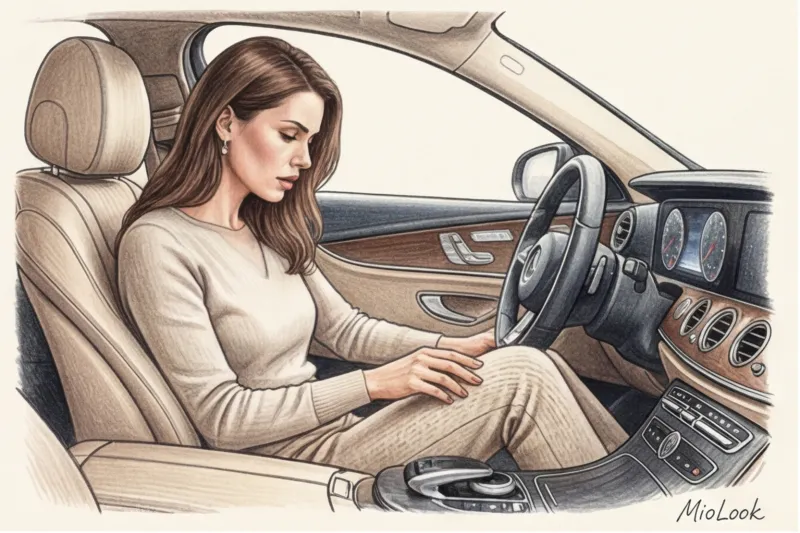
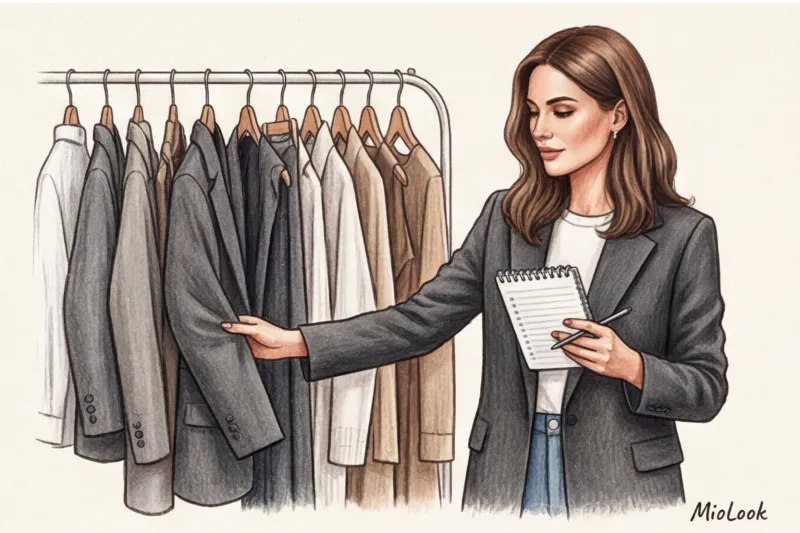
One of my clients once said in exasperation, "I hate shopping because the clothes in the store always lie to me." A jacket looks like a million dollars on a mannequin, but after an hour behind the wheel, it turns into a wrinkled disaster. Sound familiar? The problem is that most of us are used to choosing clothes solely with our eyes. But a professional stylist always "looks" with their hands. If you're serious about choosing quality clothes, you'll need to master a new skill. I highly recommend conducting a five-minute quick analysis of the material right on the sales floor, before you even carry an armful of hangers to the fitting room. This will save you hours of time and prevent you from making one-time purchases.
Let's start with the main visual deception: store lighting. Did you know that merchandisers use light as a built-in retouching filter? Powerful, directional, warm-spectrum halogen spotlights (around 3000 Kelvin), so beloved in the mass market, literally bathe fabric in light. This smooths out texture and masterfully disguises the cheap, glassy sheen of low-grade synthetics. Under such a spotlight, a cheap 100% polyester dress for €40 can appear like heavy, flowing silk. My advice: remove the item from its hanger and step into the shadow of your body, or better yet, move to a window. Without aggressive lighting, low-quality synthetics will immediately reveal themselves with an unnaturally glossy, flat surface, reminiscent of cellophane.
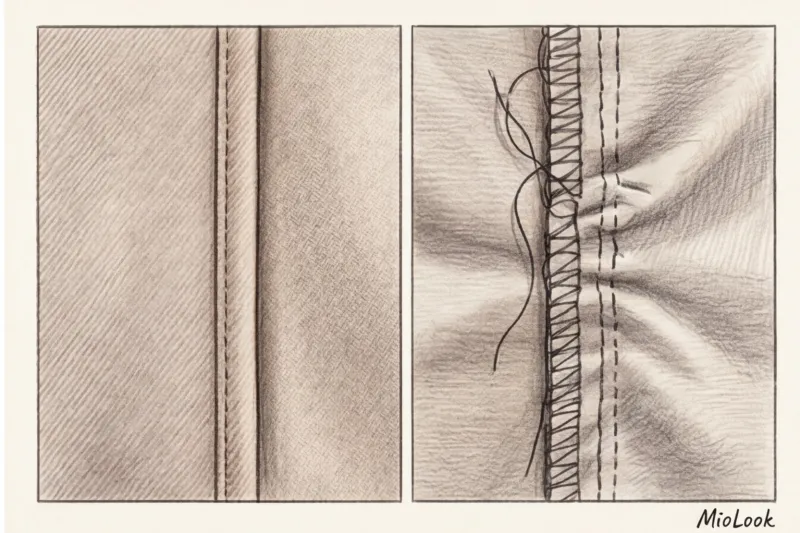
The next step in diagnosis is to look for circumstantial evidence. There's an immutable rule in tailoring: the quality of the main fabric is always synchronized with the quality of the fittings and assembly. No factory in the world would sew expensive horn buttons or install a smooth Italian zipper on loose fabric that will be unusable within a couple of months. Carefully inspect the seams. If the stitching is clearly wrinkling or rippling right on the hanger, this often indicates not the seamstress's poor handiwork, but rather instability of the fabric itself, both in the weft and warp—the material simply isn't holding its shape. Be sure to check the inside of the garment: if the lining is made of stiff acetate that generates static electricity and sticks to your hands even in the store, rest assured the manufacturer has cut corners on the top layer as well.
Crumpling, stretching and clearance
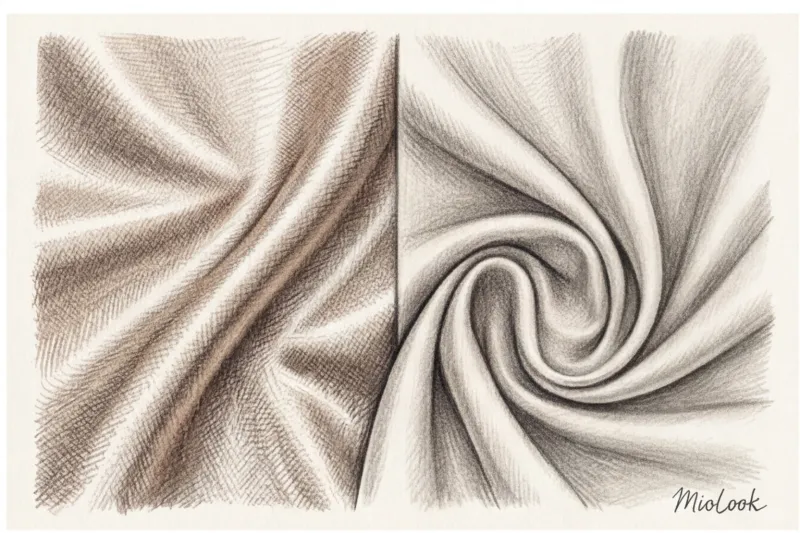
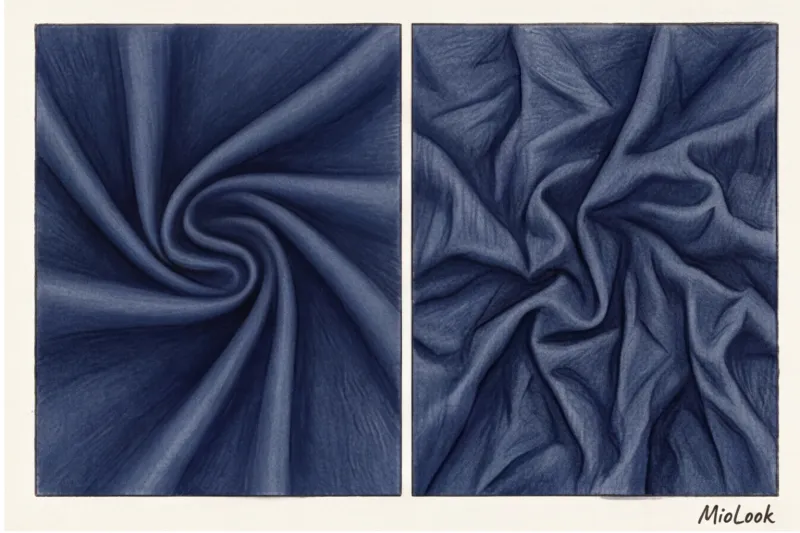
Let's move on to the heavy artillery. The first rule of my method is no fuss with the item. We need a real "crash test." Conduct the wrinkle test: take the hem of a dress, the sleeve of a shirt, or the leg of a pair of pants, squeeze the fabric tightly into a fist for 10-15 seconds, and then release it sharply.
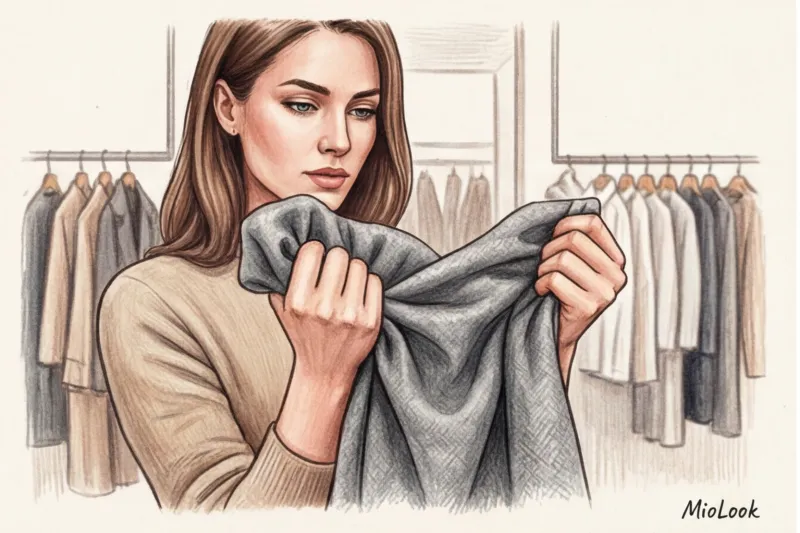
What you see in your palm is a direct projection of how the garment will behave in real life. If the material straightens out instantly or leaves only a smooth, barely noticeable wave (typical of good suiting wool, Tencel, or high-quality, dense viscose), the test is passed. If the fabric is covered in a stiff, sharp network of wrinkles and resembles a crumpled paper bag, imagine what your new pants will look like in the groin area and behind the knees after a morning drive or an hour at your desk.
The second step is the density test. Lift the garment and look through one layer of fabric at a bright lamp or natural light from a window. A high-quality basic T-shirt, a heavy cotton shirt, or a mid-season jacket shouldn't look like gauze. If light shines through the fibers unimpeded, the weave is too loose. Such a garment will show through the contours of the underwear and, worse yet, will lose its shape after the first wash, as the threads simply have nothing to hold onto.
We conclude the physical inspection with a deformation test. This step is critical for knitwear, denim with elastane, and turtlenecks. Take a small section of the fabric, gently tug it in different directions, and release. High-quality fabric, in which the elastane threads haven't been damaged by improper storage, will act like an elastic spring and instantly return to its original shape. If a limp lump or "bubble" forms at the point of tension, you can safely return the cardigan to the shelf—the elongated elbows will appear before lunch.
Access to MioLook for €0.99 — one-time payment
Start creating your perfect looks with the help of artificial intelligence. Upload your wardrobe and let the algorithms suggest everyday combinations.
Get access — €0.99 onceTactile pilling test
The main fear when buying sweaters, jumpers, and coats is pilling, or the appearance of those dreaded bobbles. There's a persistent myth that pilling is exclusive to cheap synthetics. However, according to textile testing standards (for example, the Martindale laboratory method, which tests fabrics for abrasion), short-fibered fabrics are the most likely to deteriorate and pill. In practice, poorly combed, short-pile 100% wool and budget cashmere perform the worst.
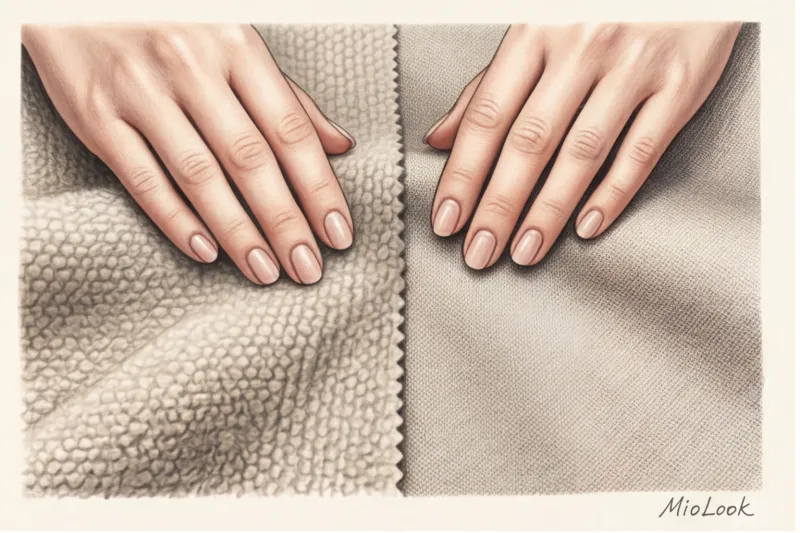
How can you spot this problem while you're still in the boutique? A tactile test can help. Look closely at the surface of a brand-new item at eye level or take a macro photo. A clear sign of low-quality, loose yarn is the presence of a light, loose fuzz on the fabric. If you notice the threads are already fuzzing, try discreetly rubbing two areas of the fabric together (for example, along an inseam) for 5-7 seconds. If the fuzz immediately begins to clump into micro-balls, the item won't survive more than a couple of weeks of wear under a fall coat or where it touches a bag strap.
The secret to durable, "expensive" knitwear lies in the length of the fiber and the density of its twist. High-quality yarn consists of long strands tightly twisted together. To the touch, such material feels smoother, denser, heavier, and even slightly cooler. Cheap yarn, on the other hand, is made from textile waste—short tow, intentionally loosely twisted to create the illusion of airy volume and softness. These short ends easily come loose from the yarn structure and cling to each other when rubbed. When choosing between a fluffy but suspiciously lightweight jumper for €60 and a smooth, tightly knitted equivalent for the same price, always choose the latter—its lifespan in your capsule will be many times longer.
Fabrics for different tasks in a smart wardrobe
In an investment wardrobe, the rule of evenly distributing the budget doesn't work. The biggest mistake I regularly see at reviews is buying an expensive silk blouse for €250 while trying to save on a loose synthetic jacket bought for €40. A smart wardrobe strategy dictates the opposite: fabric is critical where the garment needs to maintain its cut. You can't skimp on outerwear and suits—cheap interlining and thin fabric will result in lapels that bubble after the first dry cleaning. But on base layers, which are washed after every wear, you can and should optimize your spending. If you're wondering how to choose quality clothing without overspending, start with this simple financial prioritization.
My professional specialty is creating capsule suits for female executives who live a life of constant business travel. When you've got an eight-hour flight under your belt and a presentation to investors an hour later, the fabric of your suit becomes your bulletproof vest. We need materials that are adapted to the harsh climate control of airplanes and conference rooms and that maintain a presentable appearance without an iron. On the other hand, if your schedule includes working with small children, your requirements change radically: durability, stain resistance, and the ability to machine wash at 40 degrees without shrinkage become paramount.
"The secret to a functional wardrobe lies in an honest analysis of your schedule. If active motherhood takes up 70% of your time, the foundation of your capsule wardrobe should be heavyweight knits, modal, and technical blends that can easily be wiped clean of baby food with a damp cloth, rather than fickle silk or light-colored cashmere."
By the way, to avoid confusion about which items are intended for which scenario, I always advise clients to digitize their closets. After uploading your capsule wardrobe to MioLook , you can create separate digital lookbooks for "long flights," "important meetings," or "active weekends," where you'll find outfits with the right ingredients for each task.
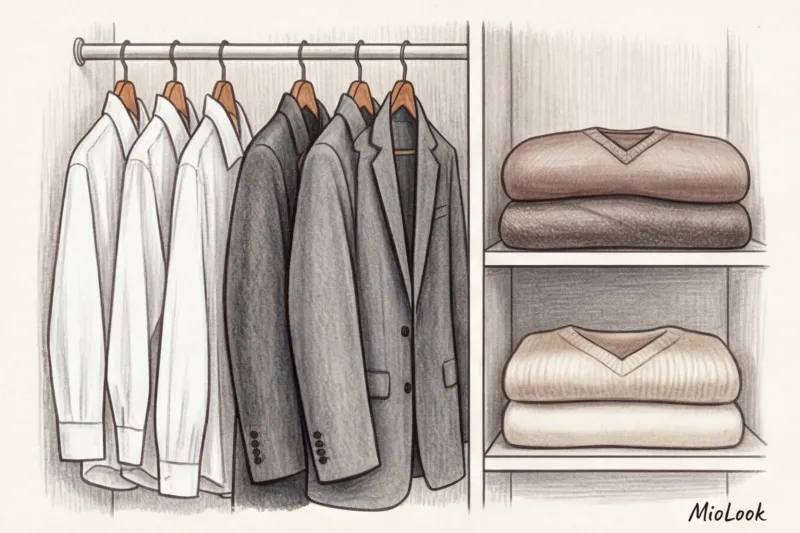
Base layer (T-shirts, shirts, tops)
A base layer is the foundation of your physical comfort, a kind of "second skin." Since these items are in direct contact with your body throughout the day, two uncompromising requirements are hygroscopicity (the ability to quickly absorb and wick away moisture) and high breathability. You simply won't feel comfortable if you start sweating in a thick, 100% polyester top in a stuffy room.
The best choice for this layer is a long-staple cotton such as pima ( pima cotton ) or mako. Thanks to the increased fiber length (up to 40 mm versus the standard 20 mm), the yarn is incredibly smooth, less prone to pilling, and has a light, elegant satin finish. This T-shirt or shirt will last three times longer than regular carded cotton. Thick viscose is an excellent alternative—it flows beautifully, doesn't add bulk under jackets, and feels pleasantly cool on the skin in summer.
Silk is also great for blouses and tops, but be aware of its vulnerability to sweat and deodorants—they can leave yellow stains on expensive fabric that no dry cleaner can remove. That's why I recommend treating basic cotton and viscose items as consumables and updating them as they wear out: an excellent premium cotton T-shirt can be found in the mid-price range, ranging from €40 to €70.
Suit group (jackets, trousers)
Skimping is absolutely not an option here. A suit's composition shapes your silhouette, ties your look together, and communicates your status to others. The key technical requirements for materials in this category are absolute dimensional stability, a luxurious visual texture, and the ability to minimize creasing (that life-saving "get up, dust yourself off, and go" effect).
The undisputed leader for workdays, important meetings and frequent air travel is fine suit wool (known in the industry as cool wool "Cool wool" (also known as "cool wool") with 2-5% elastane or spandex added. The secret to "cool wool" lies in the tightly twisted yarns, which leave micro-spaces for air circulation, making it comfortable even on warm September days. It also has a unique springy structure. Even if you spend the whole day sitting in a chair or driving, the inevitable creases in these trousers will smooth themselves out—just hang them on a hanger in a damp hotel bathroom in the evening.
For more dynamic situations, gabardine is ideal—a fabric with a special, dense diagonal rib, historically designed for weather protection. It repellent even light moisture and dust. If cotton is your preferred choice (for example, for summer casual suits), be sure to look for a synthetic backing: heavy cotton with 20–30% polyester or polyamide. This thread structure will prevent your trousers from stretching unattractively at the knees and buttocks by lunchtime.
Stylist's Checklist: Hidden Signs of Cheap Fabric
Let's be honest: sometimes we fall so in love with a style or a trendy color that we deliberately overlook the quality of execution. Over the years, I've developed a personal list of "red flags" when shopping—it saves my clients hundreds, if not thousands, of euros each season. Ultimately, knowing... How to choose quality clothing — means being able to read not only the ingredients on the label, but also those telltale micro-details that clearly reveal the manufacturer's total savings.
The first and most obvious marker is excessive glassy shine Material. This is especially critical and cheap on black and deep dark items. Have you ever noticed how some trousers or jackets take on an oily, downright plasticky sheen under the artificial lighting of a retail space? This is a sure sign of low-grade synthetic materials. Fine fabric, whether high-quality viscose, Tencel, or a good wool blend, absorbs light or has a delicate, matte sheen (like premium silk), but never shimmers like cheap wrapping paper.
The second item on my checklist is mismatched seams. If you're picking up a checked or striped garment, immediately look at the side seams, the junction of the sleeve and armhole, and the patch pockets. Self-respecting brands spend 20–30% more fabric when cutting to ensure the print's geometry fits perfectly. Cheap mass-produced garments are cut in layers, dozens of them, without regard for alignment. As a result, jagged lines not only ruin the visual harmony but also distort the proportions of your figure. Asymmetrically skewed checkered patterns on the hips never look flattering.
The third traitor to good taste is the static-inducing lining. Manufacturers often invest their entire budget in the outer fabric, trying to keep the retail price between €100 and €150, while ruthlessly skimping on the inner fabric. You can find a nice jacket, but if the lining is made of cheap acetate or 100% stiff polyester, it's doomed. It will rattle alarmingly every time you take it off, stick to your tights, and attract pet hair from all over the room. Furthermore, the "wooden" synthetic lining creates a shell-like effect, preventing the outer material from draping gracefully as you move.
Your ideal image
it begins Here
Join thousands of users who look flawless every day with MioLook.
Get access — €0.99 onceFinally, the fourth flaw that instantly ruins the garment's geometric shape is the sagging of heavy elements on thin fabric. Mass-market designers often try to imitate luxury aesthetics by adding accent hardware. The most typical example I see all the time: heavy metal buttons on a thin, loose cardigan or a massive metal zipper on a flowing viscose dress. Fine yarn is physically unable to support this weight. The placket treacherously pulls down, the loops stretch into shapeless holes after just one wear, and the silhouette becomes sloppy. Remember this rule: the weight and aggressiveness of the hardware should always be strictly proportionate to the density of the material.
By the way, when we load new purchases into the smart wardrobe MioLook I often advise my clients to pay attention to how a garment looks in a digital photo. If the hardware is pulling the fabric down or the seams are wavy on a smartphone screen, this defect will be doubly noticeable in real life, when walking.
Caring for investment fabrics: how to extend the life of the capsule
We have discussed it in detail, How to choose quality clothing At the purchasing stage, however, according to statistics from the International Textile Care Institute (2023), over 60% of premium items deteriorate not because of frequent wear, but because of harsh maintenance. There's a dangerous myth in the industry that expensive fabrics need to be dry-cleaned after every wear. In fact, perchloroethylene, which is widely used in dry cleaning, mercilessly strips the natural oils from natural fibers. As a result, silk becomes brittle, and cashmere loses its signature fluff after just three or four dry-cleaning cycles.
Improper home washing destroys quality even faster than natural wear. Too high a temperature and a hard spin in the washing machine destroy elastane (the 3-5% found in ideal basic trousers), causing the garment to lose its shape forever. My gold standard for capsule clothing is washing at 20 degrees Celsius with liquid detergents. Dry powder forms microscopic crystals in the weave of the yarns, making them stiff and dull. And for washing delicate wool, I often advise my clients to use regular, mild hair shampoo—after all, they are also protein fibers.
The next essential step is to abandon traditional ironing in favor of steaming. An iron, even with an innovative Teflon coating, literally presses and bakes the fibers, stripping the fabric of its natural volume. This is precisely why cheap shiny streaks appear on the seams of dark trousers. A handheld or stationary steamer works fundamentally differently: hot steam gently penetrates the threads, relaxing them. After steaming, cupro, tencel, and fine wool suits look as if they just came from an expensive tailor.
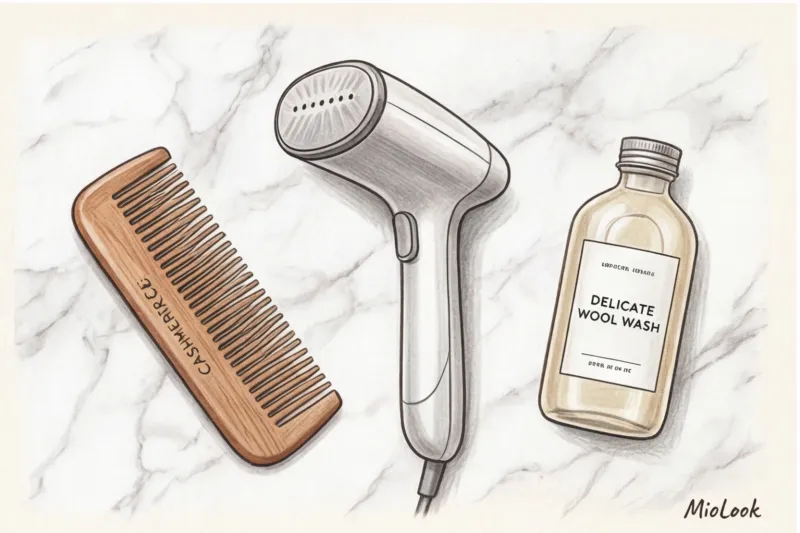
Even the highest-quality 100% merino sweater costing €300 is susceptible to slight pilling in areas of friction (for example, where you carry a crossbody bag). This is a normal physical property of natural short yarn. Your best friends in this situation are a good pilling machine with a wide blade and a special clothes brush with natural bristles. Running a brush over a drape coat after being outside takes only a minute, but it removes static dust and combs the pile, preventing future pilling.
The final step in garment care, often overlooked, is proper storage. Poorly proportioned hangers can ruin the fit of a perfectly worn jacket in just a couple of weeks. If the hanger is wider than your shoulder seam, elongated "bubbles" are guaranteed to appear on the sleeves. For structured garments, choose thick wooden hangers, and for silk blouses that slide, choose thin flocked (velvet) hangers. However, any knitwear—from thin turtlenecks to heavy sweaters—should never be stored on hangers. The weight stretches the loops, throwing the garment out of proportion. Sweaters are best left on shelves.
"Investing in expensive wool and washing it with harsh detergent is like buying a sports car and filling it with cheap gas. Proper care preserves at least half the value of your wardrobe."
By the way, to help you remember where your seasonal items are folded and avoid rummaging through shelves looking for the right sweater, it's helpful to digitize your capsule. By uploading the database to MioLook , you can visually assemble looks right on your phone, without the hassle of constantly moving delicate fabrics from one place to another.
Let's sum it up: your personal filter before buying
Do you know what moment I consider the most dangerous when shopping? Those three minutes when you walk from the fitting room to the checkout. At that moment, your brain is intoxicated by a beautiful reflection in the mirror, a flattering color, and perhaps a tempting discount. This is where most wardrobe mistakes are made. McKinsey's consumer behavior research (2023) confirms that 68% of impulse purchases that later end up as dead weight on the shelves occur because we evaluate only the design, completely ignoring the physical properties of the material.
To close the question of whether, How to choose quality clothing You don't need a degree in textile engineering. It's enough to implement a rigorous, uncompromising filter at the selection stage. Let's briefly summarize our strategy: we always look at the first two components on the label, aren't afraid of 3-5% elastane in basic trousers to maintain their shape, avoid 100% cheap, squeaky acrylic, opting for dense wool-polyamide blends, and rely on high-tech synthetic fibers (Tencel, Cupro) when we need a flowing texture without the "greenhouse" effect.
But theory only works when it's put into practice. Before you pull out your bank card, ask yourself three security questions. It only takes a minute, but it will save you hundreds of euros over the course of a year.
Three security questions at the checkout
1. How does this fabric feel on my skin right now?
There shouldn't be any compromises in the hopes that the item will stretch out or become softer after washing with fabric softener. If an alpaca sweater tingles slightly in the store, trust me—after two hours of wearing it in a heated office, that slight tingling will turn into unbearable torture. If the lining of a jacket is already magnetic to your blouse during trying it on, there won't be any miracles. The fabric should be tactilely comfortable from the start.
2. How will she behave in real life?
We rarely stand up straight, like mannequins in a shop window. Think back to your busiest days: flights, driving, child seats, eight hours at your desk. Crumple the edge of a garment in your hand for a few seconds. If it's left with deep creases, will you be able to look presentable by evening? Expensive fabric has the right weight: it falls gracefully, elongating your silhouette, rather than bulging in awkward folds with every step.
3. How much time and money will the care require?
We often buy a stunning top for €40 without even looking at the care labels. Only to find a categorical "dry clean only" symbol when we get home. With dry cleaning costs averaging €15-20 per item, the cost of cleaning this top will exceed its original price after just three months of regular wear. Understanding the true cost of owning a garment is what separates an emotional shopper from a strategic wardrobe expert.
Investment in quality as a form of freedom
In concluding this fabric guide, I want to share a key observation from my practice. My clients often admit that switching to high-quality materials completely changes their attitude towards themselves. Buying fewer items made from high-quality fabrics isn't a restriction. It's the highest form of freedom.
You free up your mornings from the tedious ironing of fretful shirts. You free up money by stopping sponsoring brands that sell disposable rags. When you wear a perfectly tailored jacket made of thick, cool wool, your posture literally changes.
When you start collecting your capsule in the app MioLook Try analyzing your favorite pieces for fun. You're guaranteed to see a pattern: clothes made from the right blends will have the lowest cost per wear. They'll last for years, retaining their original luster. Invest in quality, respect your comfort, and your wardrobe will surely reciprocate.
Guide Chapters
The Perfect Coat Lining Fabric: The Secret to Comfort
Expensive wool won't save you if the inside is made of cheap synthetics. Find out why the right backing directly affects the comfort and durability of your outerwear.
Sustainable Fabrics for Clothing: A Guide to Conscious Fashion
True sustainability starts with durability, not a green label. Find out which materials are best for a sustainable wardrobe.
Is viscose natural or synthetic? A stylist's answer.
How can you distinguish high-quality man-made fabric from cheap synthetics? We explore the key properties of viscose, tencel, and lyocell, as well as care tips.
How to Identify Real Silk: A Guide to Flowing Fabrics
Forget about burning threads in boutiques. We'll tell you how to easily inspect flowing fabrics before buying and the difference between silk, satin, and cupro.
Is polyester a good fabric or not? The whole truth.
We're debunking the biggest wardrobe myth: why 100% natural isn't always a good thing. Find out when premium polyester can save your look and budget.
The Warmest Fabric for Winter: A Guide to Choosing
Why is a thin turtleneck warmer than a bulky sweater? We explore which fabrics will truly keep you warm in cold weather without adding bulk.
How to Choose Quality Jeans: A Denim Guide
Why do soft jeans sag by lunchtime on the first day? Let's learn about ounces, elastane, and the physics of premium denim.
The Best Fabrics for Summer Clothing: What to Wear to Stay Cool
Forget the myth that only 100% cotton can save you from the heat. We'll explain how textile physics helps you choose clothes that are comfortable even at +35°C.
Wrinkle-Free Fabric: Building a Travel Wardrobe
How to look flawless after a long flight? Learn the secrets of choosing the perfect wrinkle-resistant fabrics from a professional stylist.
How to Find Knitwear That Doesn't Pill: Tips
High-quality knitwear is the foundation of a classy wardrobe. Learn how to properly evaluate yarn texture and choose pilling-resistant items.
How to Read Clothing Labels: A Guide to Ingredients
A clothing label isn't just washing instructions, it's a strict financial document. Learn how to recognize a quality garment by its fabric composition.