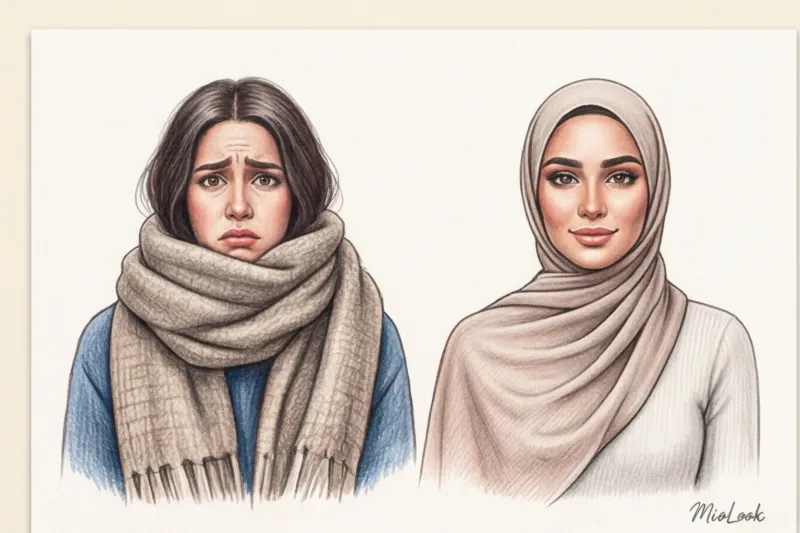
Have you ever noticed how sometimes you wear a huge, heavy, chunky-knit sweater that looks like a suit of armor, but still shiver at the bus stop? Meanwhile, there's a girl standing next to you in a thin turtleneck and a light coat, looking completely relaxed. The secret here isn't genetics or any special training. It's purely a matter of the physics of materials.
Over 14 years of working as a personal stylist, I've conducted hundreds of winter wardrobe analyses. And every time, I see the same mistake: trying to achieve warmth through volume rather than composition. We've covered the basic principles of building a long-lasting wardrobe in more detail in our a complete guide to choosing quality capsule clothing , but today I want to talk about the most important winter aspect.
If you want to stop looking like a “cabbage” and still feel comfortable even at minus twenty, you need to know what the warmest fabric for winter suits your lifestyle. Let's get to the bottom of it, without the marketing fluff: how to read labels, why thinner fabrics often keep you warmer than thicker ones, and what we're really paying for when we buy expensive knitwear.
Why a thick sweater doesn't always keep you warm: Debunking the biggest winter myth
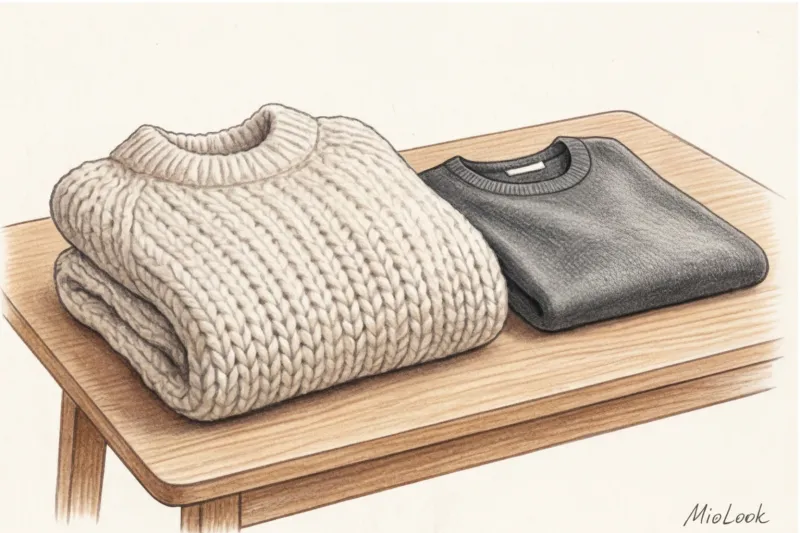
The main misconception new clients bring to me is: "The thicker and heavier the item, the warmer it will be." This is an absolute myth, and one that mass-market clothing makes millions off of.
Your clothes aren't keeping you warm. What's keeping you warm is the warm air your body has generated, which the right fabric has trapped within its fibers.
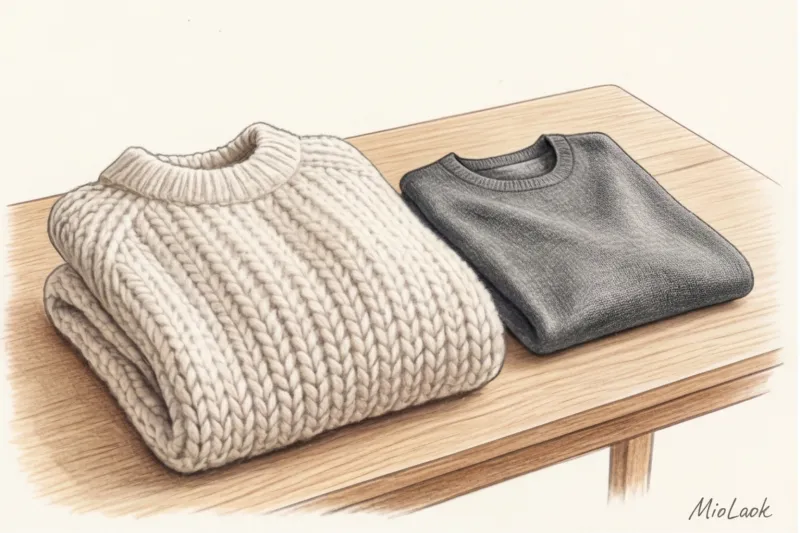
Consider the story of one of my clients. She bought a massive cardigan at a popular fast-fashion store (50% acrylic, 30% polyester, 20% wool). It weighed almost a kilogram, and no coat fit underneath. Furthermore, the cardigan was completely drafty outside and created a greenhouse effect indoors. When we replaced this "monstrosity" with a super-fine 100% baby alpaca jumper weighing just 200 grams, the client was shocked: she felt warm outside and completely comfortable in the office.
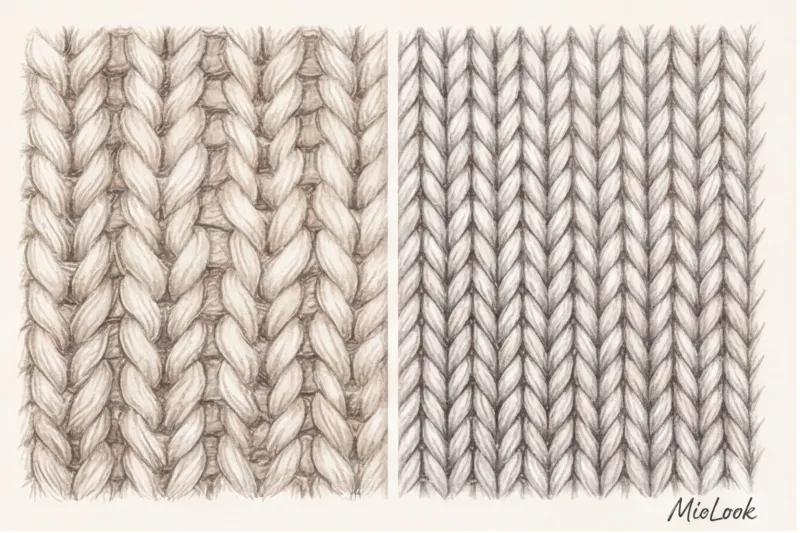
Bulky yarns with a high synthetic (acrylic) content have no internal porous structure. They simply lie there like dead weight. Natural fibers, on the other hand, act like microscopic thermoses: they trap air inside.
The warmest fabric for winter: a ranking of natural materials
In the textile industry, the quality and heat capacity of yarn is measured not by subjective "oh, how soft," but by an objective indicator—fiber thickness in microns (micrometers). The finer the fiber, the more air pockets it creates in the finished product, and the more expensive it is.
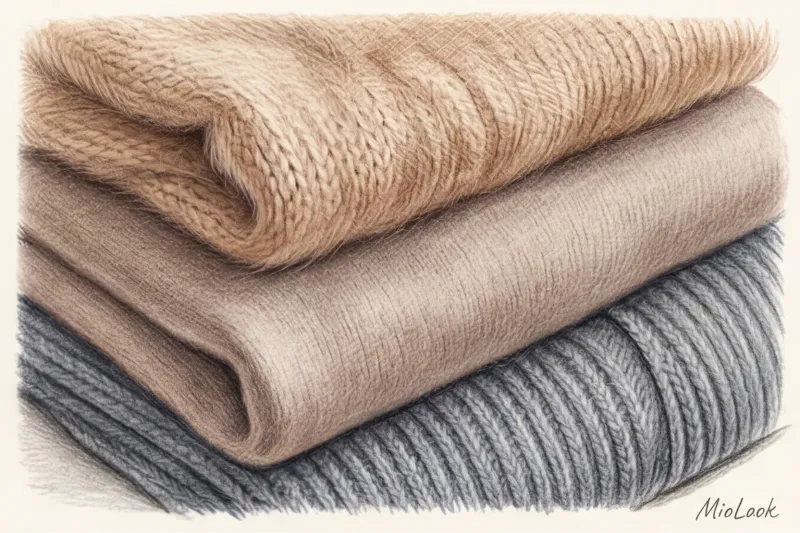
Sheep's wool and merino: basic thermal insulation
Regular sheep's wool is an excellent working material, but it often "bites." This is because its fibers are over 30 microns thick, and their stiff ends irritate the nerve endings in our skin.
Merino wool is a different matter. Merino fibers (especially those marked Extra Fine ) are 15–19.5 microns thick. They are so thin that they simply bend when in contact with the skin, causing no itching. Merino wool also contains natural lanolin, which repels moisture and odors.
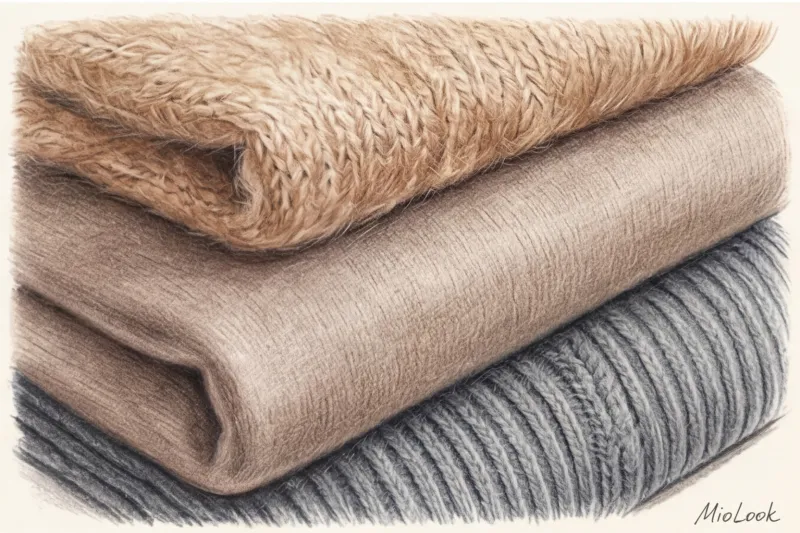
- Ideal for: basic turtlenecks, thermal underwear, thick trouser suits.
- Service life: with proper care - from 3 to 7 years.
Cashmere: Status Warmth and Pitfalls
Cashmere is not wool, but the down of mountain goats, which is hand-combed once a year (in the spring). According to the Cashmere and Camel Wool Institute (CCMI), true premium "A" cashmere should have a pile thickness of no more than 14–15.5 microns and a length of 34–38 mm.
This is where the main trap for buyers lies. When you see a "budget" cashmere sweater in a store for €50-70, rest assured it's grade "C" (short, thick fibers). Such a sweater will pill after literally three wears, because the short fibers easily come loose.
Good cashmere costs €150 and up, but its warmth-to-weight ratio is phenomenal. It's three times warmer than regular wool while weighing minimally.
Alpaca and Baby Alpaca: Champions in Heat Retention
If cashmere is luxury, then alpaca is a technology created by nature itself. According to textile research, alpaca fiber is seven times warmer and three times stronger than sheep's wool.
What's the secret? Alpaca hair is hollow inside. These microscopic air pockets make the yarn incredibly light, creating the perfect thermos effect. Furthermore, alpaca contains no lanolin at all—a lifesaver for allergy sufferers. The most premium type is... baby alpaca (wool from the first shearing of young animals). This is my personal number one recommendation for harsh winters.
Your perfect look starts here
Join thousands of users who look flawless every day with MioLook. Our smart AI stylist will help you digitize your wardrobe and create stylish winter looks.
Get access — €0.99 onceThe Anatomy of Ingredients: How to Read Labels to Stay Warm
When I'm accompanying my clients on a shopping trip, I teach them one strict rule: never look at the price or design of an item before examining the inside tag. Marketers know we want genuine goods, and they skillfully manipulate this.
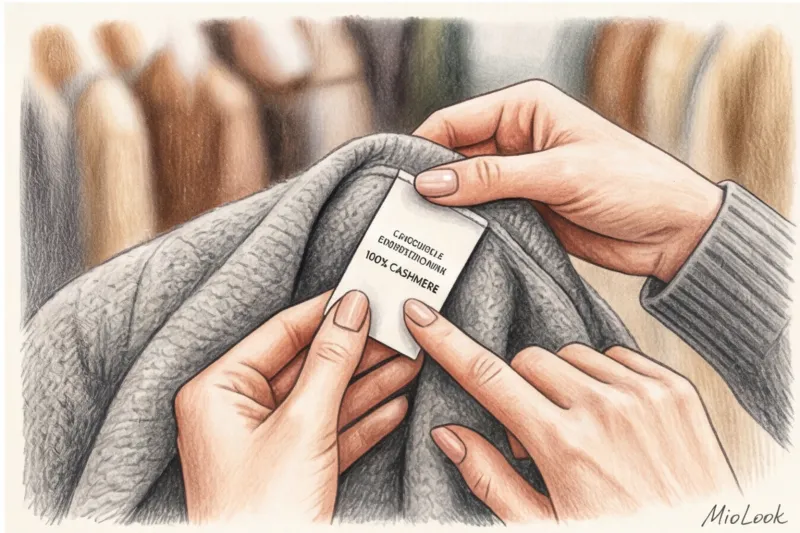
In a smart wardrobe it works 80/20 rule 100% naturalness isn't always necessary. Adding 10-20% polyamide (nylon) or elastane to a wool sweater or pants is perfectly fine. Synthetics act as reinforcement, preventing the garment from stretching out at the elbows and knees.
But there are critical red flags:
- Acrylic above 10%. Acrylic is a plastic. It doesn't warm, doesn't breathe, and shrinks instantly. In 99% of wardrobe reviews, items containing more than 30% acrylic are thrown out because they're hopelessly out of style.
- Viscose as the base of a warm sweater. Viscose is a great cooling material for summer, but in winter it feels cold on the skin.
- The inscription "Cashmere blend" (Blend with cashmere). Brands often write this in large letters, and then in smaller print on the tag it says: 60% cotton, 35% viscose, 5% cashmere. These 5% won't keep you warm; they're just there to justify the inflated price.
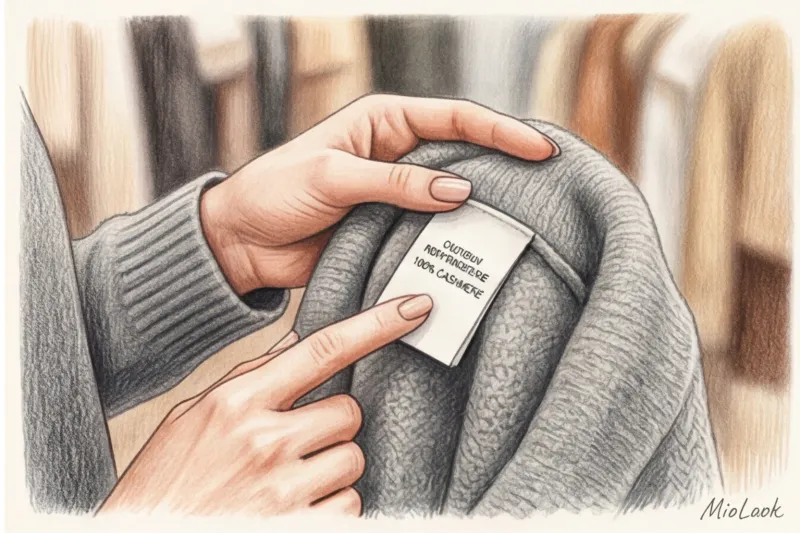
A Stylist's Practical Test: How to Check Fabric Quality Right in the Store
Even if the tag says "100% wool," the quality of the raw material can be terrible. Here are three tests I make all my clients do right at the hanger:
- Tactile test for "wetness". Run your hand over cashmere or merino. High-quality yarn will feel dry and soft. If the fabric feels greasy, slippery, or creaky, the fibers have been generously treated with silicone to disguise the cheapness of the material. After the first wash, the silicone will wash out, leaving the sweater feeling stiff.
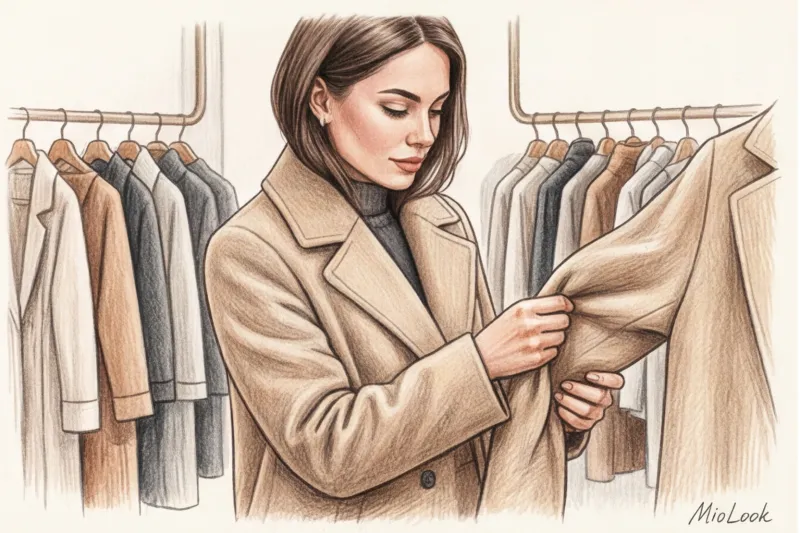
- Compression test (Crumple test). Squeeze the sleeve of a sweater or coat tightly in your fist for 10 seconds, then release quickly. Good wool and high-quality cashmere will straighten out almost instantly (due to the fiber's natural elasticity). If the fabric remains wrinkled like paper, the garment will quickly lose its shape at the elbows.
- Translucent test. Hold the knitwear up to a bright light in the store. If you see obvious gaps between the stitches and the yarn itself fuzzes unevenly, you're looking at a loose, weak knit. Such a sweater will be drafty even with a good composition.
Access to MioLook for €0.99 — one-time payment
Start creating your perfect capsule wardrobe with AI. Add items, plan looks, and save time in the morning.
Get access — €0.99 onceWinter capsule: which fabrics are best to buy?
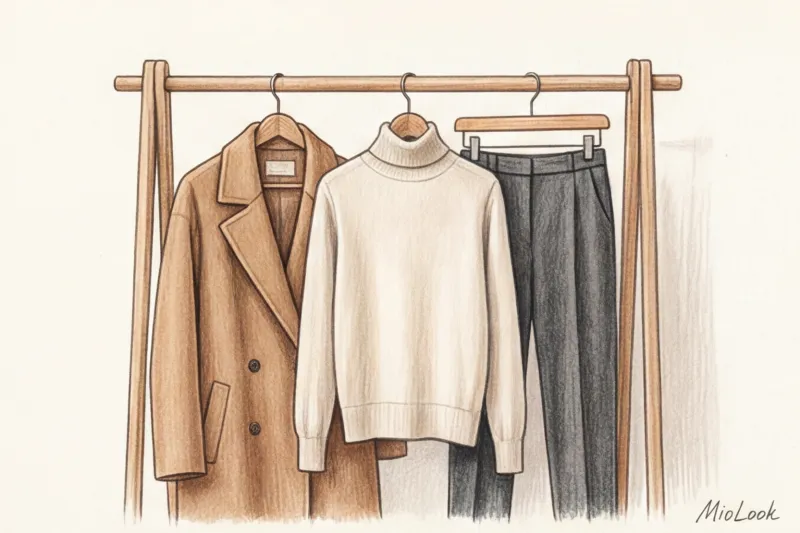
A smart winter wardrobe is a system of layers. You don't need 15 sweaters. Just 4-5 pieces with the right composition are enough. Appendix MioLook It's a great way to visualize these layers and calculate the Cost Per Wear (CPW). Investing in a high-quality alpaca sweater for €200 that you'll wear 100 times over the winter (CPW = €2) is much more cost-effective than buying five acrylic sweaters for €40 each that will lose their shape within a month.
- Coat: look for a blend (70-80% wool, 10-20% cashmere, 10% polyamide). Exception to the naturalness rule: A 100% cashmere coat is a bad idea for everyday wear on the subway or in the car. Cashmere is too delicate, and pockets and the seatbelt area will quickly wear out. Wool and polyamide are needed for a rigid frame and durability.
- Bottom layer (turtlenecks, long sleeves): Choose lightweight extrafine merino or cashmere-blend silk. They won't add bulk under your jacket.
- Middle layer (cardigans, oversized sweaters): baby alpaca or dense two- or three-layer cashmere.
Care checklist: how to extend the life of expensive winter items
The biggest mistake women make when buying an expensive sweater is taking it to the dry cleaner. The harsh solvents used in dry cleaning strip the natural lanolin from wool and cashmere. The hair becomes dry, brittle, and prone to pilling.
Dry cleaning is indicated only For structured, lined items (coats, jackets). Knitwear loves water, but on its own terms:
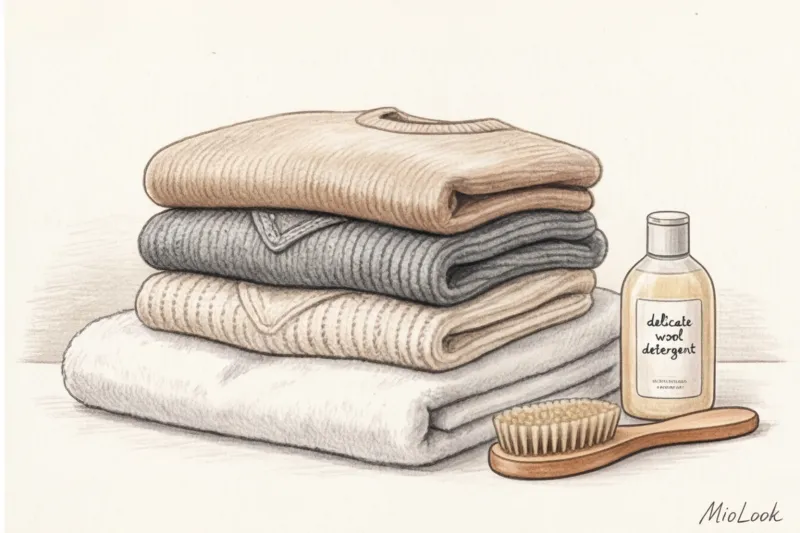
- Washing: hand wash only (even if the machine has a “Wool” mode) in cool water (no higher than 20-30 degrees).
- Means: Forget about regular washing powders. Use specialized cashmere shampoos with lanolin (they cost €15-25, but they save hundreds of euros worth of items).
- Drying: Never wring wool. Gently squeeze out the water through a terry towel and lay the item flat, away from radiators.
- Storage: Knitwear should never be hung on hangers—it will stretch under its own weight. Fold it only on shelves. For moth protection, use natural cedar blocks or lavender sachets.
To summarize, I want you to remember the most important rule of winter style: invest in the quality of your yarn, not its quantity. One perfectly fitting jumper made of fine merino or fluffy alpaca will give you more warmth, status, and comfort than a shelf full of heavy but useless mass-market items. Read the labels, touch the fabric, check its compression—and winter will no longer be a test of your endurance.