Imagine a typical situation: you invest a hefty sum in a stunning wool coat. The color perfectly flatters your complexion, the cut accentuates your waist. But the moment you take the subway or walk into a café, you start to feel out of breath. Your back gets wet, your hair gets staticky when you take it off, and the coat itself treacherously clings to your dress, gathering in unsightly folds. Sound familiar?
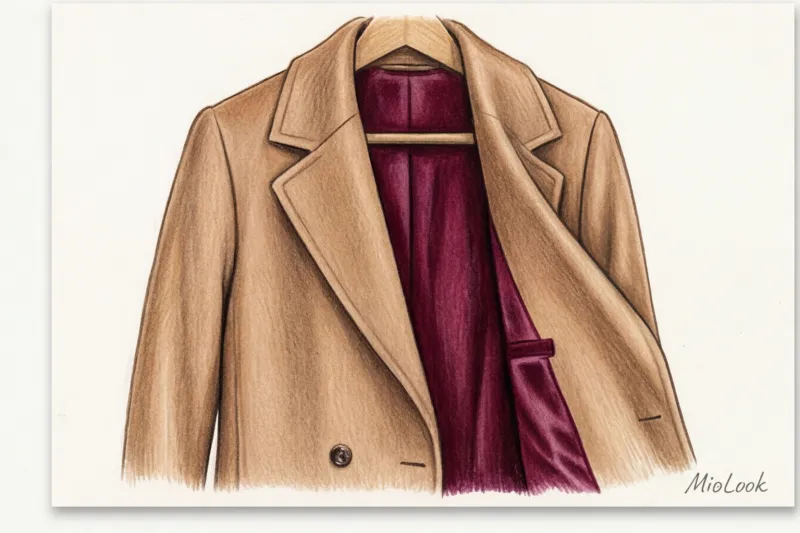
Over 12 years of working as a personal stylist and smart capsule wardrobe enthusiast, I've audited hundreds of wardrobes. And you know what I've noticed? Women stop wearing outerwear not because the cashmere has pilled or the style is hopelessly outdated. They toss items into the back of the closet because of one hidden element that almost no one notices when buying. The right one coat lining fabric — it's not just the inside. It's a true enhancer of the comfort and durability of your clothing. We discussed composition analysis in more detail in our a complete guide to choosing quality capsule clothing , but today I suggest you take a look under the hood of your things and find out the truth that brands are hiding.
The Anatomy of a Perfect Fit: Why Coat Lining Fabric Makes All the Difference
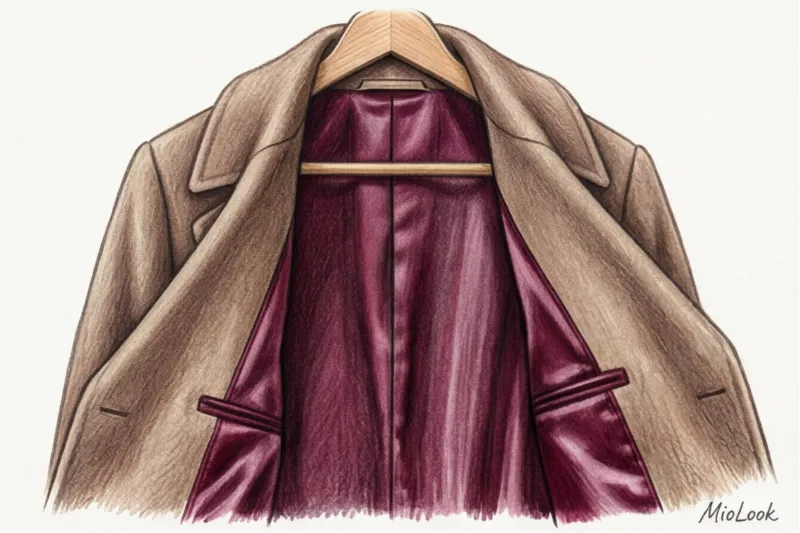
If you compare a coat to a car, expensive Italian wool is just a pretty body and paint job. The lining, however, is the chassis and engine. It bears all the mechanical stress when you walk, protects the main fabric from deformation, and is responsible for how the garment glides over your figure.
In my practice, I use the term "wardrobe micro-stress." These are those subtle yet annoying moments: when a jacket sleeve pulls up your blouse, when the hem of your coat clings to your tights, when a tight armhole restricts your movement while driving. In 90% of cases, this stress is caused by the high friction of cheaply made linings.
When investing in a smart wardrobe, we often focus on cost per wear. But this formula directly depends on the durability of the inner layer. You can buy the perfect coat, but if the inside is made of hard plastic, you'll subconsciously start avoiding it.
The Biggest Brand Deception, or How Polyester Is Killing Premium Wool
One of my clients, top manager Anna, bought a gorgeous midi coat for €600. But after just a week, she complained, "Emily, I arrive at meetings completely sweaty. I think I have trouble regulating my body temperature." We turned the coat inside out. The outer layer is 80% gorgeous wool and 20% cashmere. The inner layer is 100% cheap polyester.
This is the main dirty secret of the middle and premium segments. Brands in the €300–€800 price range need to increase their margins. They attract you with luxurious outer fabrics, but skimp on what's hidden. Statistically, almost 80% of coats in this segment have a polyester or cheap, non-breathable acetate backing.

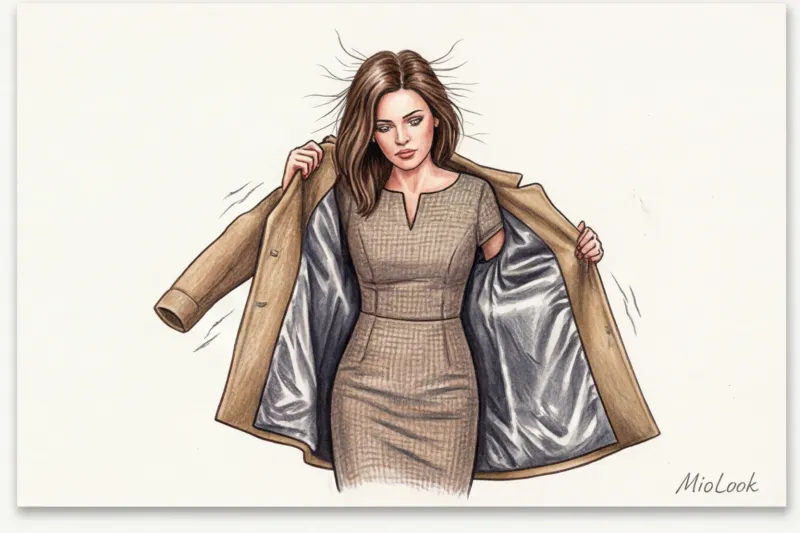
What happens in practice? Polyester is a petroleum product, essentially a plastic film. It completely blocks the natural breathability of expensive wool. This creates a greenhouse effect: your body heat can't escape. The second problem is static electricity. It's synthetics that make your hair stand on end and silk skirts cling unattractively to your legs.
Access to MioLook for €0.99 — one-time payment
A smart AI stylist will select the perfect look, taking into account every detail of your wardrobe.
Get access — €0.99 onceLet's break down the compositions: which fabric is best for lining coats and jackets?
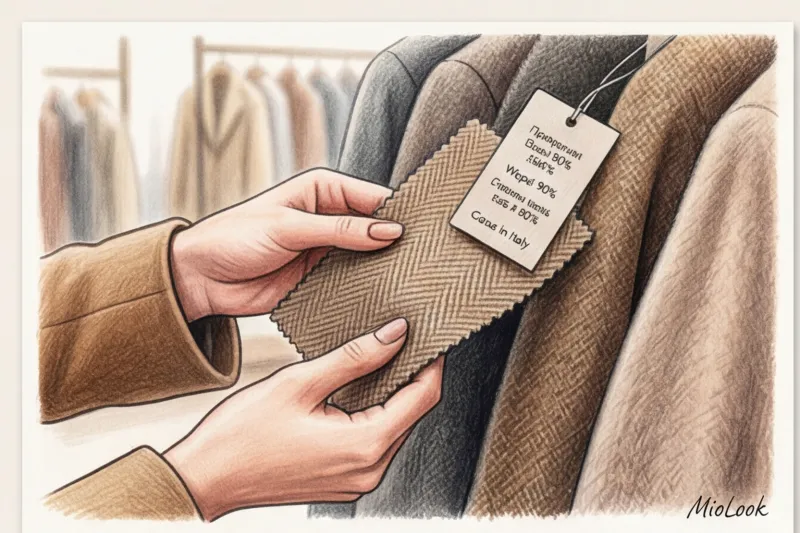
When we build images in an application MioLook I always ask my clients to photograph not only the front side but also the inside tag in the side seam. Let's take a data-driven approach and figure out which fibers are truly worth your money.
Cupro (Bemberg): the gold standard for stylists
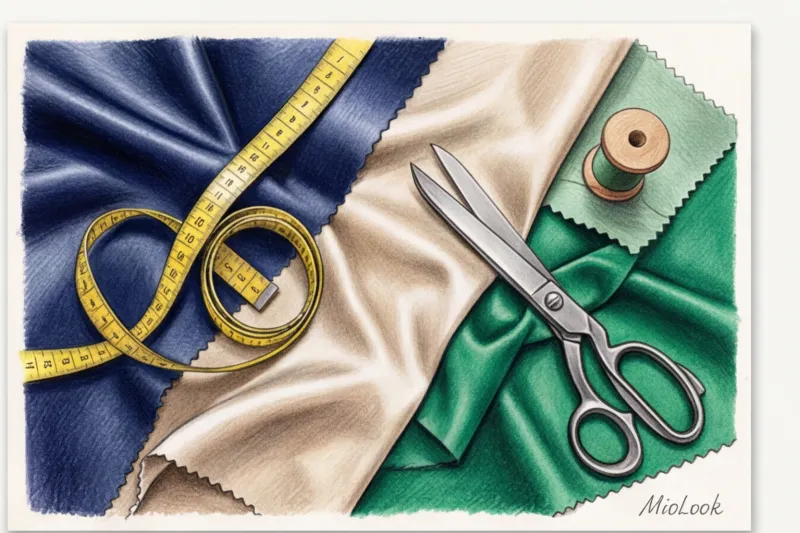
If you visit any historic tailor shop on London's Savile Row, you won't find polyester. Tailors use cupro (often under the brand name Bemberg). This is a regenerated cellulose made from cotton linters. The Japanese company Asahi Kasei, which patented this technology, has proven that cupro absorbs and releases moisture three times faster than natural silk.
This material is a true treasure for outerwear. It breathes like cotton, drapes beautifully, is completely static-resistant, and has high tensile strength. It's easy to recognize cupro in the store: place the fabric against your cheek or wrist. It will always feel cool and smooth, like water.
Viscose and acetate: compromise or basic standard?
Viscose (Rayon) is a reliable, breathable "golden mean." It's highly breathable, doesn't create a sauna-like effect, and is less expensive than cupro. Its only drawback is that it wrinkles more easily, but this is rarely a problem for the inner layer of a coat.
A blend of acetate and viscose (usually 50/50) is often found in high-quality business suits. Acetate imparts a refined shine and smoothness to the fabric, while viscose provides hygroscopic properties. This is a perfectly acceptable compromise for smart casual jackets worn indoors.
Myth Busted: Why Natural Silk Is a Bad Idea for Outerwear
And now for a counterintuitive fact that will shock many. It's commonly believed that 100% natural silk is the pinnacle of luxury and the perfect lining for an expensive coat. In fact, for everyday outerwear, silk is a disastrous choice.
"Silk looks amazing on the hanger, but it's completely unsuitable for real life in the big city. It retains heat more than viscose, and most importantly, it has zero elasticity."
What does this mean for you? Even the slightest tension at the armhole area won't stretch silk; it will simply tear at the seam. Furthermore, silk fibers deteriorate and change color with the slightest exposure to sweat. If you plan to wear your coat every day, cupro will outperform natural silk in all durability parameters.
Stylist's Checklist: How to Check Lining Right in the Store
I never allow clients to bring an item to the checkout until we've run a series of tests. Remember these four steps to avoid a bad purchase:
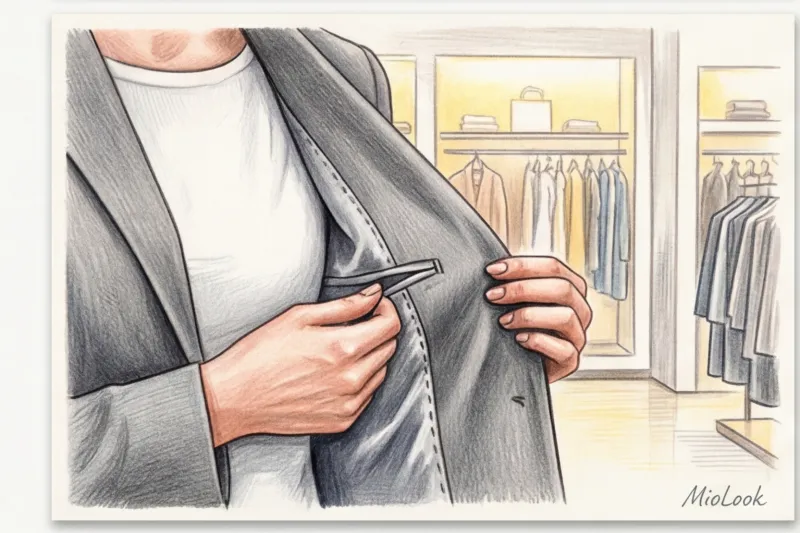
- Scrunch Test: Squeeze the inner fabric in your fist and listen. Cheap polyester will make a characteristic dry, glassy crunch. High-quality viscose or cupro will crumple silently and softly.
- Seam Pull Test: This is my personal method. Gently tug on the lining where it's sewn into the armhole. If you see the threads already taut and creating "holes" in the fabric, the garment will come apart at the seams after a month of heavy wear.
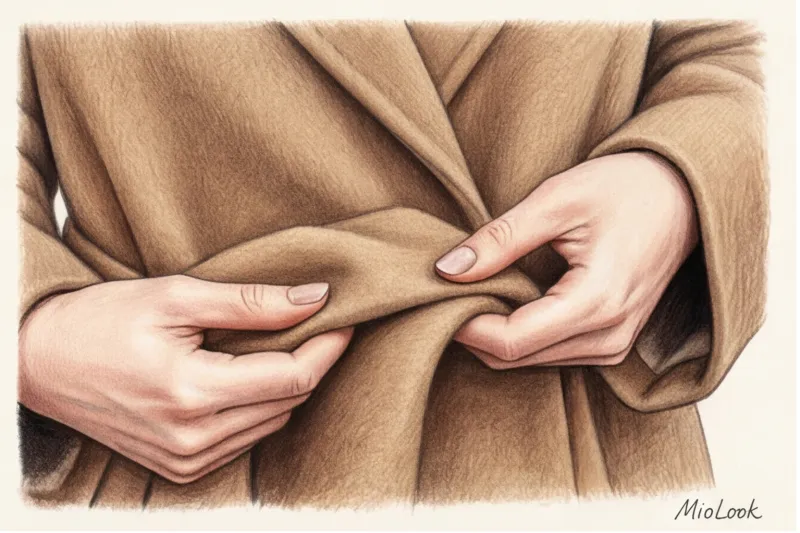
- Ease Pleat: Look at the center seam on the back of the coat. A reputable manufacturer always leaves a small longitudinal fold of fabric there (about 1.5–2 cm). This fold prevents the lining from tearing when you clasp your hands in front of you, for example, when holding onto a handrail or steering wheel. No fold, no deal.
- Finding the real label: Ignore the giant "100% Italian Wool" patch on the back. Look for the small white tab on the left side seam. That's where the lining composition (Lining/Doublure) is listed in small print.
Wardrobe life hack: Replacing the lining can elevate a garment's status.
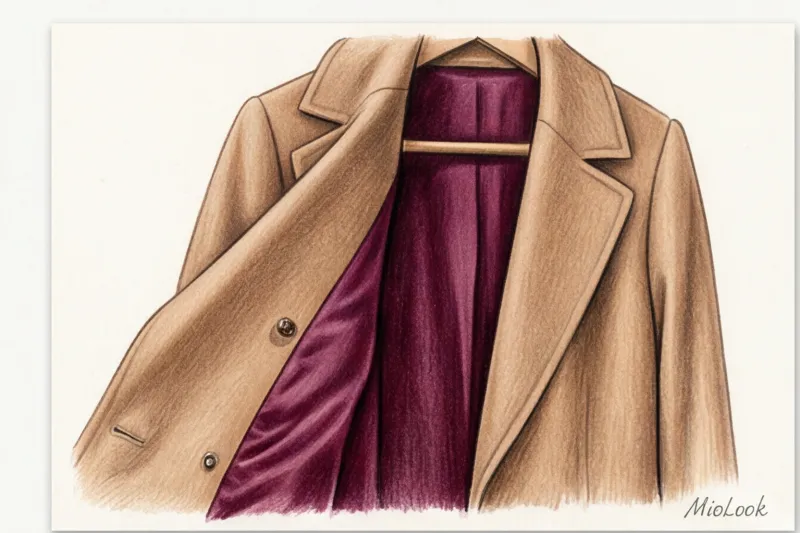
Let's get back to the story of top manager Anna and her €600 coat. We didn't throw it away. We took it to a tailor and, for €50, replaced the plastic polyester with thick Italian cupro in a deep wine shade. The result? Anna wore this coat for five years, and it looked and felt like something from a luxury boutique.
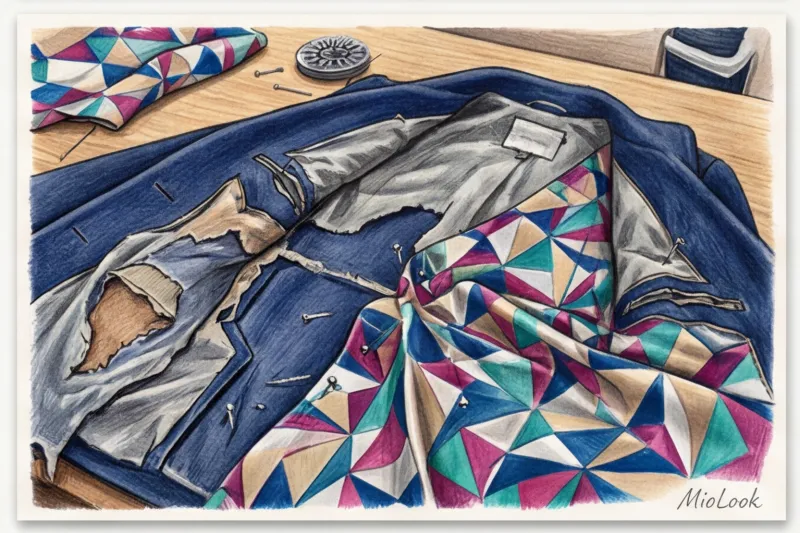
I use this trick myself regularly. I once deliberately bought a coat from Zara made of luxurious, thick wool, but the lining was terribly squeaky. I didn't even bother removing the tags; I took it straight to my tailor. An investment of €60 for labor and fabric completely transformed the garment's design—it began to flow across my figure instead of stiffly. In wardrobe math, this is the most cost-effective equation: spend €40–€80 on a new lining to increase the garment's lifespan by 40%.
Your perfect look starts here
Join thousands of users who look flawless every day with MioLook. Plan your capsule wisely.
Get access — €0.99 onceLining as a hidden element of personal branding
Quality hidden from view builds your inner confidence. This is the psychology of "quiet luxury." You can choose a classic beige coat, but make it unique with a contrasting backing. We wrote more about these techniques in the article. Fabrics that look expensive: a stylist's secrets.

Imagine a formal trench coat whose hem flutters in the wind, revealing a deep emerald, rich burgundy, or powdery pink silky layer. It's a subtle stylistic gesture that others perceive subconsciously. Such details reveal a person who cares about themselves, not just the impression they make.
Ultimately, the lining fabric of a coat is a marker of self-esteem. Stop tolerating the micro-stress of low-quality synthetics. It's much wiser to buy a basic wool coat for €100 and invest €50 in high-quality viscose from a tailor than to spend €500 on a brand that makes you sweat in a plastic bag.