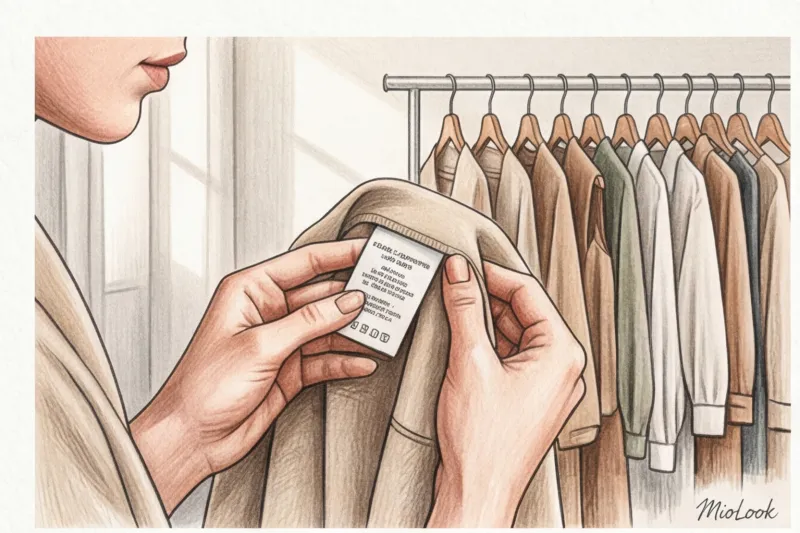
In 2023, at Copenhagen Fashion Week, which bills itself as the greenest in the industry, I witnessed a funny scene. The PR manager of a well-known brand was excitedly telling me about its new sustainability collection. She held a dress with a massive green "Conscious" tag. I touched the fabric, turned the inner tag over, and smiled: 100% polyester. It may be recycled, but it's still plastic, which in three months will lose its appearance and end up in a landfill.
In 14 years of working as a stylist and fashion journalist, I've learned one hard and fast rule: sustainable clothing fabrics aren't just green labels on mass-market labels. True sustainability starts with durability. A high-quality wool coat that you wear for 15 years is hundreds of times more sustainable than a T-shirt made from "recycled ocean trash" that pills after the first wash. We've already covered how fabric shapes the fit of garments in detail in our article. a complete guide to choosing quality capsule clothing.
Let's take off our rose-colored marketing glasses and figure out what conscious fashion is really made of, which innovations are worth paying for, and where we're being outright deceived.
What are eco-friendly clothing fabrics, really?
The fashion industry loves to sell us indulgence in shopping addiction. We're told: buy more, because it's made from recycled materials! But the statistics are relentless. According to a global report by the Ellen MacArthur Foundation, only about 1% of all clothing produced globally is recycled into new items. The rest is incinerated or rots in landfills for decades.
"The true sustainability of a wardrobe is measured by the Cost Per Wear formula. A €300 item worn 150 times is more sustainable and cost-effective than a €30 "eco-sweater" that will lose its shape after three wears."
The eco-friendliness of the fabric is based on three pillars:
- Raw materials: how much water, land and chemicals were required to grow or synthesize it.
- Manufacturing process: whether the water cycle is closed, whether the dyes are safe (the Higg Materials Sustainability Index helps us here).
- Service life: How long can the fabric retain its original appearance?
Cheap fabric ruins even the most ingenious tailoring. Imagine a perfectly tailored white men's shirt. If it's made of loose, low-quality cotton, by lunchtime it will wrinkle at the elbows and the collar will lose its stiffness. You'll stop wearing it, and it will become trash. Durability is the only truly eco-friendly trend.
Cotton is not all the same: organic, recycled, and conventional
You've probably heard this figure, but I'll repeat it: it takes about 2,700 liters of water to produce one regular cotton T-shirt. That's the amount an adult drinks in 2.5 years. Regular cotton is one of the dirtiest crops in the world, requiring colossal amounts of pesticides.
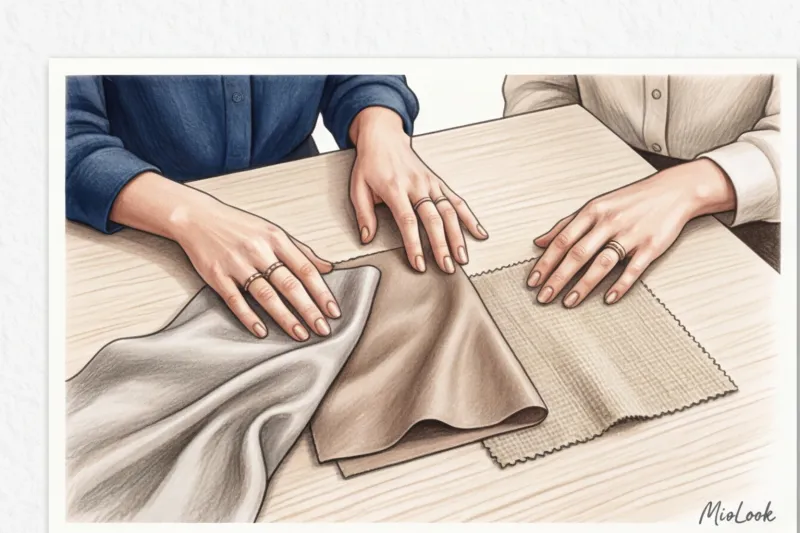
Organic cotton It's grown differently. No synthetic fertilizers, natural irrigation (rainwater), and strict crop rotation to avoid depleting the soil. In the fitting room, I always teach clients the tactile test: premium organic cotton is usually denser, its yarn is twisted more evenly, and it feels slightly drier and cooler to the touch than the mass-market variety.
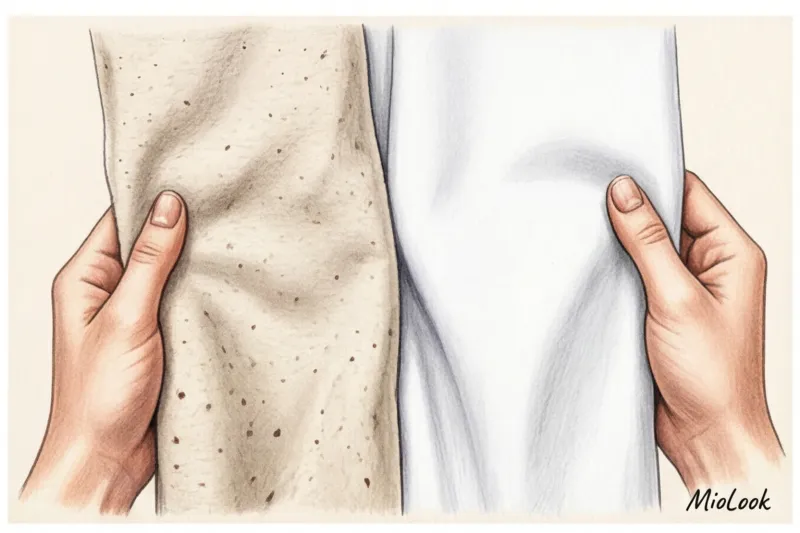
What about recycled cotton It sounds like saving the planet, but there's a technological catch. When old jeans or T-shirts are mechanically recycled, the cotton fibers break and become very short. Fabric made from 100% recycled cotton will be loose and short-lived. Therefore, virgin cotton or synthetics are always added to it for strength. This is a great compromise for denim, but a poor choice for thin summer tops.
Quality Certificates: How to Read Labels
To avoid greenwashing (when a brand simply paints the label green), look for independent certifications:
- GOTS (Global Organic Textile Standard) — the gold standard. It guarantees that the item is made of at least 70% (and often 95%) organic fibers and that no toxic heavy metals were used in the dyeing process.
- Oeko-Tex Standard 100 — means that the finished product (including threads and buttons) is completely safe for humans and does not contain harmful chemicals. This is especially important for underwear.
Your perfect look starts here
Join thousands of users who look flawless every day by building a conscious wardrobe.
Get access — €0.99 onceBamboo Myths: How Marketing Sells Us Chemicals
One day, a client came to me for a wardrobe review and proudly laid out a stack of turtlenecks on her bed. "It's eco-bamboo, very sustainable!" she said. I picked up the turtleneck: the fabric was incredibly soft, but after two weeks of wear, it was already covered in a fine mesh of pills (pilling) on the sides and sleeves.
Bamboo is perhaps the most ingenious deception in the modern fashion industry. Yes, the bamboo plant itself grows incredibly quickly and requires no watering or pesticides. It's the perfect raw material! But there's a catch: to transform the hard, woody bamboo stem into that flowing, silky fabric, it undergoes a harsh chemical treatment using carbon disulfide and sodium hydroxide.
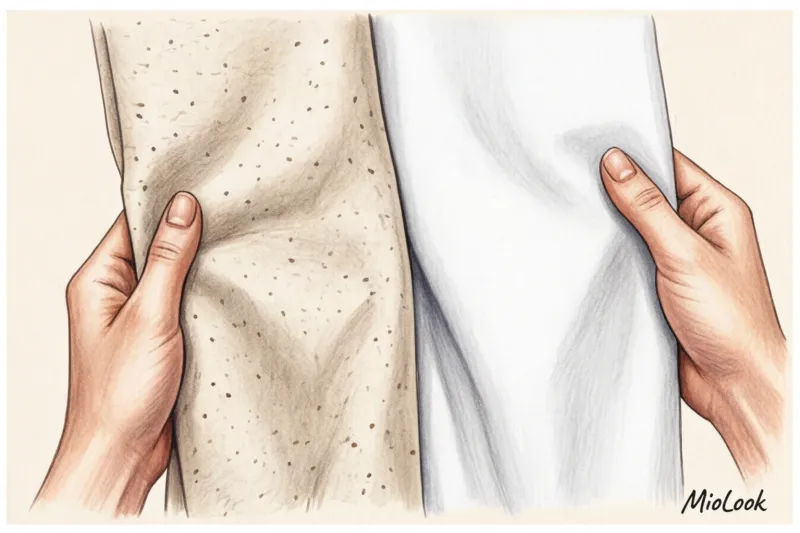
The end result is ordinary viscose. All environmental value is lost at the production stage, which is toxic both to workers and to water bodies.
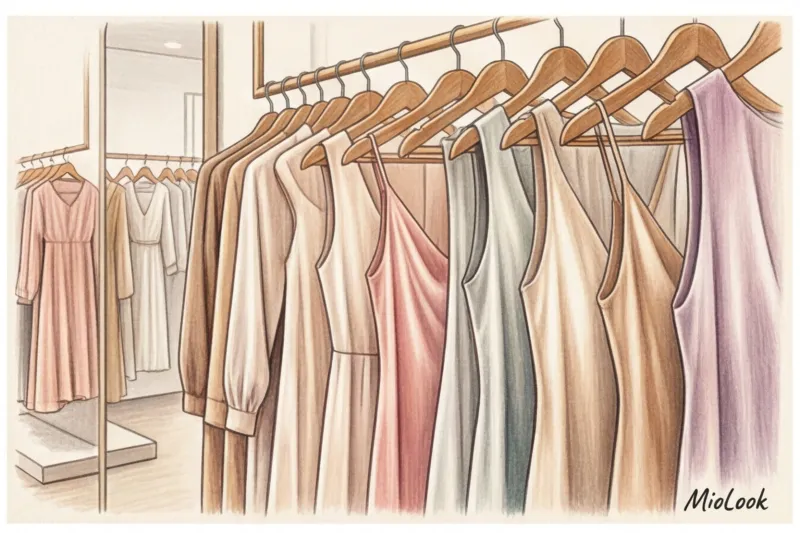
If you love flowing silhouettes and are looking for a replacement for silk or viscose for your summer capsule collection, I highly recommend looking at closed-loop fabrics:
- Lyocell (Tencel™) — made from eucalyptus wood. The solvent used in the process is 99% recovered and reused. The fabric drapes luxuriously, feels slightly cool against the skin, and doesn't pill as quickly as bamboo viscose.
- EcoVero™ — an improved version of viscose from Lenzing, the production of which reduces atmospheric emissions and water consumption by 50%.
Innovative eco-materials: what the future is made of
Watching Stella McCartney's collections and the development of Prada's Re-Nylon initiative over the past five years, I see luxury shifting away from natural leather and virgin plastics in favor of biotechnology. These are no longer niche experiments—they are commercially viable materials.
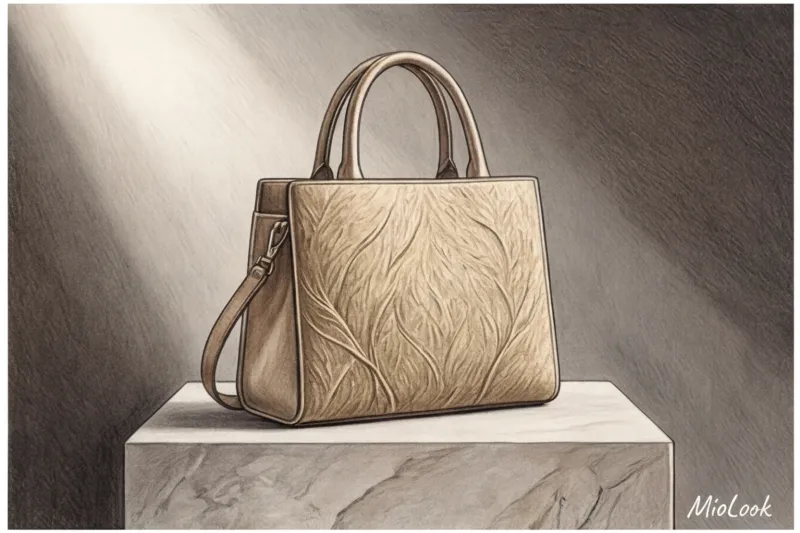
- Plant-based alternative to leather: Forget about polyurethane "eco-leather" (which will start to crack after two seasons). Today, the cutting edge is Piñatex (from pineapple leaves left after harvesting), Dessert (from the Mexican nopal cactus) and Mylo (grown from mushroom mycelium). They breathe, age beautifully, and are petroleum-free.
- Econyl (regenerated nylon): Prada has switched its iconic backpacks to this material. It's made from ocean-caught fishing nets and carpet scraps. Its main advantage is that Econyl can be recycled infinitely without losing quality.
- Cupra (in particular, Bemberg): A luxurious, silky material made from cotton fluff (previously considered a waste product in cotton production). It's the best lining imaginable for an expensive jacket: it breathes, glides on, and wicks moisture better than silk.
Limitation: It's important to be honest. Innovations are still expensive. A mycelium bag will cost you between €1,000 and €2,500, making this trend unaffordable for the mass market right now. However, investing in a high-quality cupra-lined jacket or a lyocell raincoat is already possible in the mid-price range (€150–€300).
Recycled Polyester (rPET) Trap
The shelves of popular brands are filled with fleeces, down jackets, and even underwear proudly labeled "Made from recycled plastic bottles" (rPET). It seems like we're cleaning the planet by buying this sweater. In reality, we're creating a new problem that's invisible to the naked eye: microplastics.
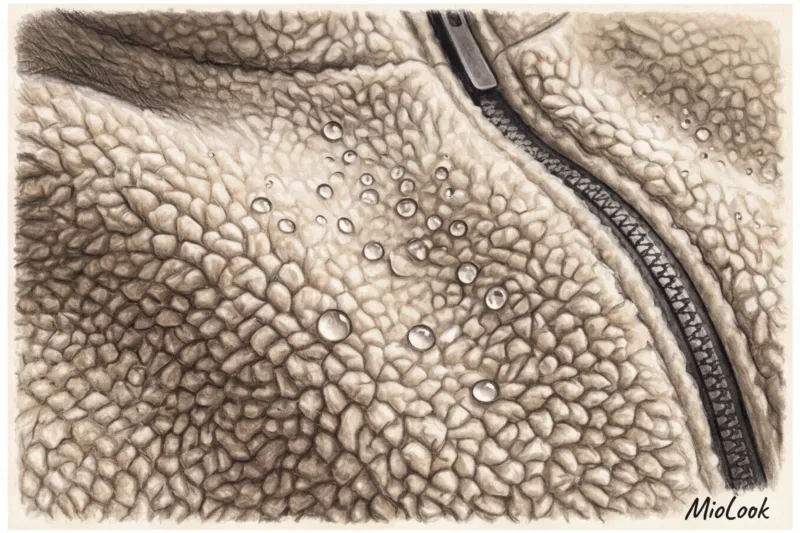
A study by the International Union for Conservation of Nature found that approximately 35% of all primary microplastics in the oceans come from washing synthetic clothing. With each cycle, a fleece sweater made from bottles sheds thousands of microscopic plastic fibers, which escape filters in wastewater treatment plants and end up in the oceans, eventually ending up in the fish on our plates.
My rule as a stylist: It's better to buy one sweater made of high-quality 100% alpaca wool for €150 than five sweaters made of recycled plastic that imitate cashmere for €30 each.
But this doesn't mean rPET is an absolute evil. It has clearly defined wardrobe uses:
- Where rPET is justified: Outerwear (trench coats, jackets, parkas), backpacks, bags, shoes. That is, those items that do not come into direct contact with the body and, crucially, rarely washed out.
- Where to avoid it: Underwear, T-shirts, low-quality sportswear, casual dresses.
Practical advice: If you already own synthetic items, wash them in special filter bags (such as Guppyfriend), which trap microplastics inside, preventing them from leaking into the sewer.
Access to MioLook for €0.99 — one-time payment
A smart AI stylist will create the perfect look based on your basics, so you wear your pieces more often and longer.
Get access — €0.99 onceHow to incorporate eco-friendly fabrics into your capsule wardrobe
When putting together a smart capsule collection for clients, I always start with a composition analysis. When you transfer your clothes into MioLook wardrobe The algorithm helps track which items you wear for years and which are discarded after a season. And in 90% of cases, items made from single-materials are the ones that last.
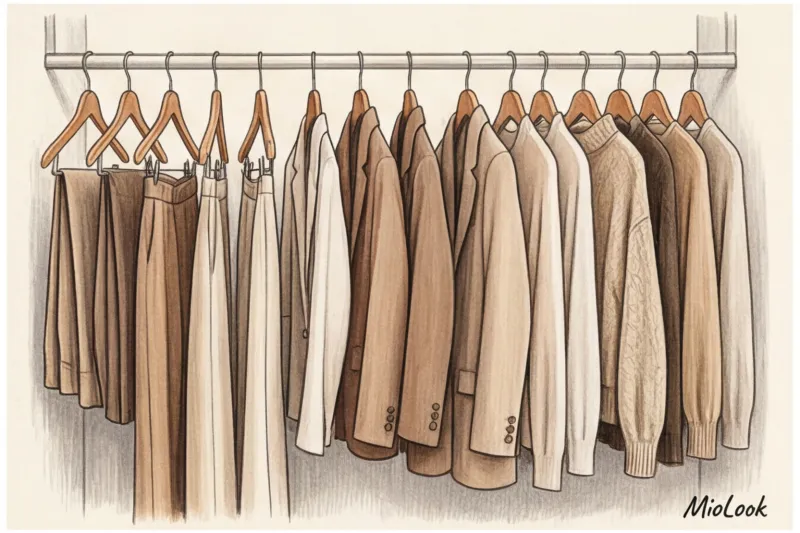
Mono-material is a fabric composed of a single fiber type (e.g., 100% cotton, 100% wool, 100% linen). Why is this important? Because blended fabrics (cotton + polyester + acrylic) are technologically almost impossible to separate into their components for recycling. By purchasing mono-material, you give your items a second chance.
Exception to the rule: elastane.
Many eco-fashion purists are wary of elastane. In practice, 2–5% elastane (or spandex) in classic trousers or a tailored jacket is an acceptable, even necessary, compromise. These few percent will prevent your knees from stretching after a day at the office and will maintain the garment's fit for years to come. A garment that fits perfectly is one you'll wear more often.
How to distribute fabrics by tasks:
- For business attire (office, strict dress code): Invest in RWS (Responsible Wool Standard) suiting wool, dense lyocell for blouses, and copper for linings. These fabrics are predictable, resist deformation, and maintain a classy appearance.
- For casual Fridays and weekends: Organic heavyweight cotton, linen (creases are allowed as a sign of a noble texture) and Tencel for relaxed palazzo pants.
A Mindful Shopper's Guide: 5 Steps to an Eco-Friendly Wardrobe
When accompanying clients on a shopping trip, I teach them not to look at the front of an item until they've examined the back. Here's my personal checklist to help you avoid wasting money on junk in pretty packaging:

- Ignore the big green tags. Look for a small white tag in the side seam. If it says "95% polyester, 5% elastane" and the item is sold as an "eco-friendly collection," walk away.
- Conduct a tactile test. Rub the fabric with your fingers (be careful not to notice). If you feel excessive slipperiness in a sweater labeled "cotton," it definitely contains hidden acrylic that will soon pill.
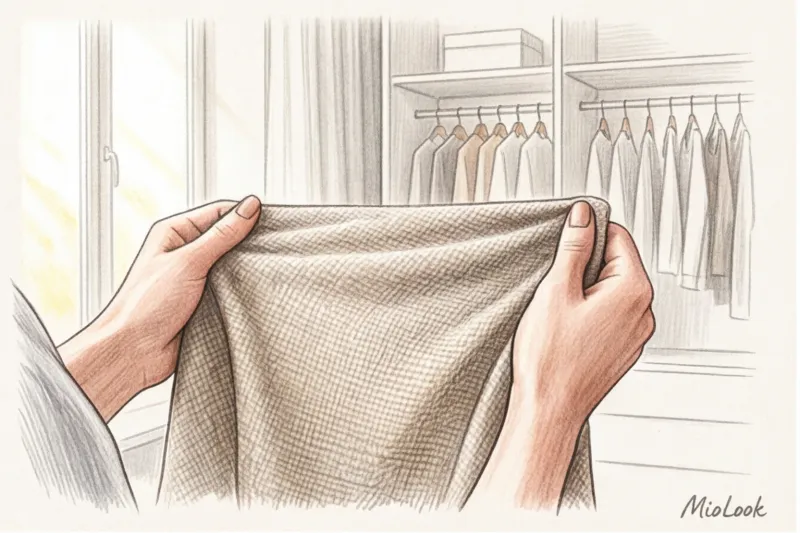
- Look through the thing at the light. A shirt made of high-quality organic cotton shouldn't be see-through, like gauze (unless that's the designer's intention for a translucent layer). The tightness of the weave is the key to durability.
- Check the fittings. Sustainable brands rarely use cheap plastic. Pay attention to the buttons: corozo nuts, coconut shells, recycled glass, or metal indicate the manufacturer has invested in the details.
- Ask yourself a security question. When you're standing at the checkout line, ask yourself: "Will I be able to wear this in 5 years? Will this item survive 50 washes without losing its shape?
Sustainable fashion isn't about giving up beautiful things or dressing in burlap. It's about moving from impulsive consumption to a more sustainable approach. By purchasing clothes made from the right materials, you're investing not only in the health of the planet but also in your own impeccable appearance, which won't fade after just one wash.