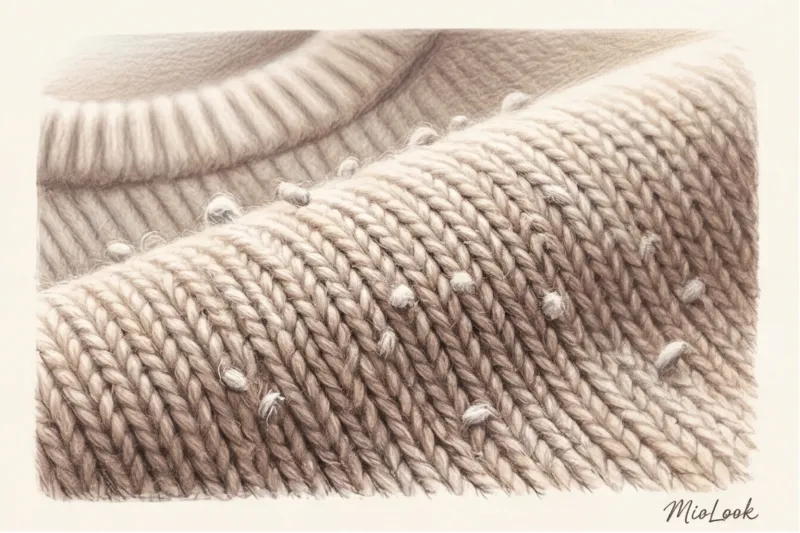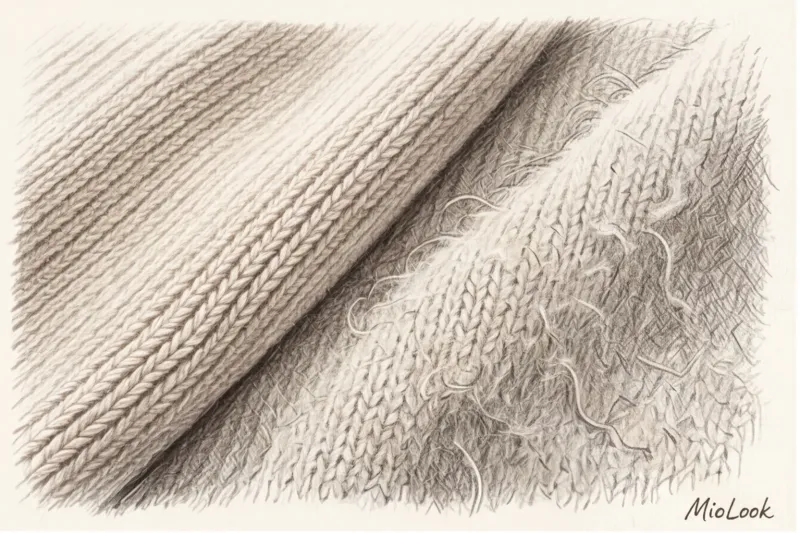
One of my clients nearly burst into tears in the fitting room when she returned a basic €800 jumper. "Julia, I only wore it twice under my coat, and it's already covered in fuzz! Is it fake?" she demanded. I had to pour her an espresso and give her a quick course in textile education. It turned out she didn't know the most important rule of a premium wardrobe: a slight initial pilling (that fuzz) on 100% natural cashmere is a normal process of "unfolding" the noble yarn.
Finding knitwear that doesn't pill is the holy grail for every woman who wants to look expensive without spending hours depilling. But the problem is, we're looking for it based on the wrong criteria. We blindly believe "100% natural" labels, forgetting that quality is determined not only by the composition but also by the structure of the yarn itself. The foundation of any prestigious look is laid during the basic evaluation of materials (we discussed this in more detail in our the complete guide to capsule fabrics ).
Let's forget the clichéd advice you find online. As a practicing stylist and investor, I'll tell you what professional buyers look for, why 5% synthetics in the composition is sometimes a blessing, and how to determine in 10 seconds in the fitting room whether an item will turn into a shabby rag in a month.
The Anatomy of Pilling: Why Even Expensive Sweaters Can Fuzz
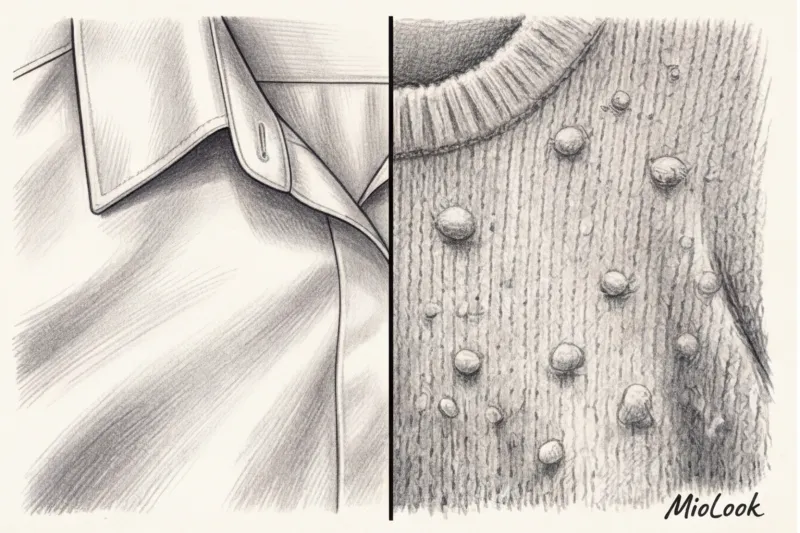
To defeat this enemy, you need to understand the physics behind its creation. Pilling (in professional jargon, the formation of pellets) occurs due to simple friction. When you carry a crossbody bag, wear a sweater under a stiffly lined coat, or simply rub your sleeves against the table while working, short fibers within the thread are pushed to the surface and tangled into knots.
"By textile industry standards, particularly the famous Martindale pilling test, fabric is subjected to thousands of friction cycles. And the paradox is that absolutely non-pilling wool doesn't exist in nature. The only question is how this pilling behaves afterward."
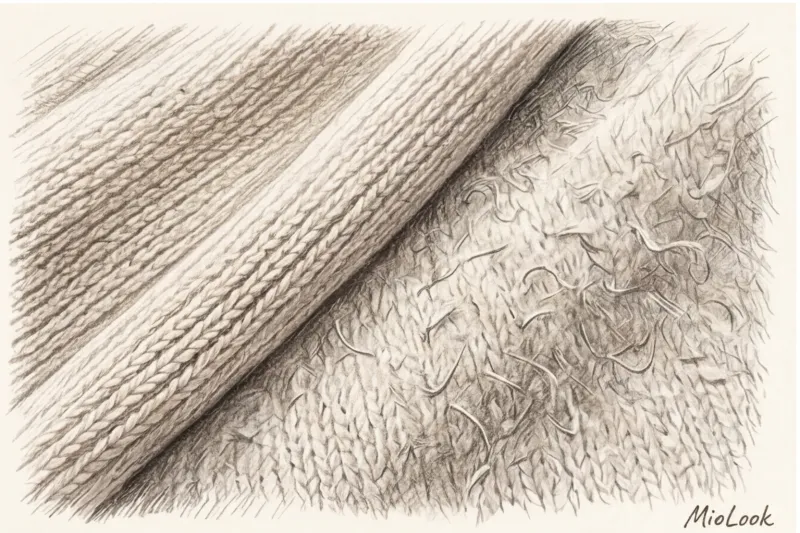
This is the main difference between luxury and mass-market knitwear. The myth is that high-quality natural knitwear never pills. The truth is that even premium cashmere from Loro Piana can develop a slight fuzz in areas of intense friction. But the difference is dramatic: the pills on fine wool are easily removed with your fingers or a special comb, after which the thread stabilizes and no longer pills. However, on cheap blends with polyester or acrylic, so-called "dead pills" form. The synthetic thread is so strong that it firmly holds the loosened wool in place. Removing this pill requires a piece of the fabric itself.
How to Find Knitwear That Doesn't Pill: The Secret to Yarn Length and Twist
During my visit to the oldest cashmere mills in Umbria, Italy, the technicians showed me something that forever changed my approach to shopping. The ingredients on the label are just the tip of the iceberg. True quality is woven into the structure of the yarn.
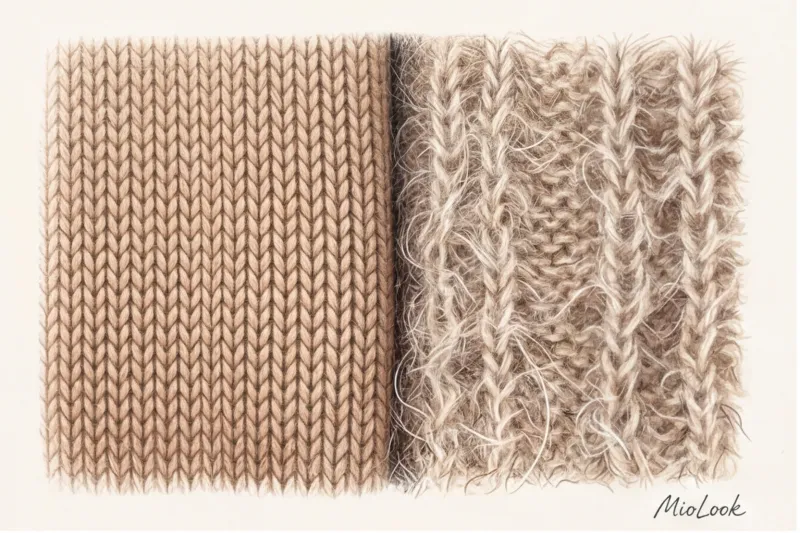
There are two main types of spinning: carded and combed. Carded yarn is fluffy, soft, and contains a lot of air—it produces cozy sweaters that are prone to pilling. Combed yarn undergoes a combing process, removing all the short hairs, leaving only the long ones, which are then tightly twisted. The result is a smooth, slightly cool knit that resists pilling for years.
Fiber length matters
In the textile industry, there's a concept called staple length—the length of an individual fiber. The longer the fiber, the more difficult it is to break free from the twisted thread when rubbed.
Low-cost mass-market products purchase raw materials with fiber lengths shorter than 25 mm (essentially waste and scraps). The premium segment uses fibers 34 mm and longer. This is why fluffy angora or cheap cashmere (which uses short hair from the goat's neck and belly) products shrink instantly, while smooth extrafine merino retains its perfect appearance after hundreds of washes.
Knitting density and tension (gauge)
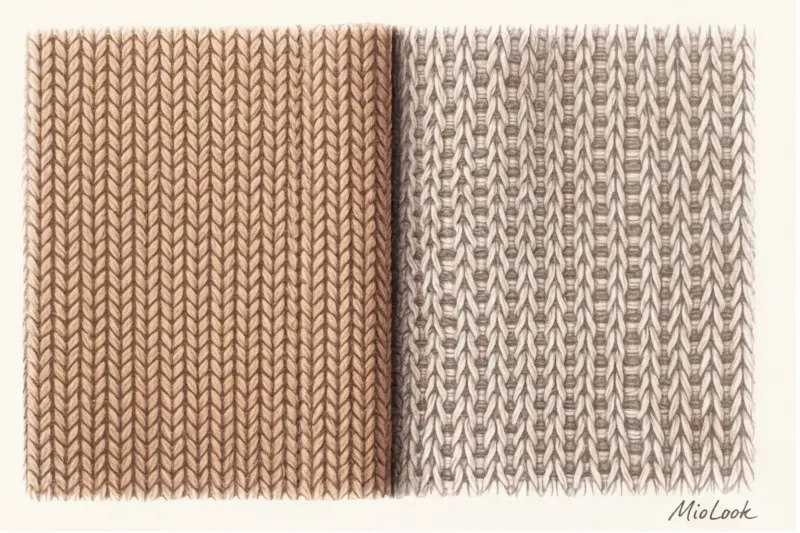
A loose knit means there's plenty of air between the yarns. The yarns have room to move, rub against each other, and the fibers are easily released. If you're looking to make a long-term investment, look for a tight, springy knit. The sweater should feel like springy, solid fabric in your hands, not like a loose, gossamer web.
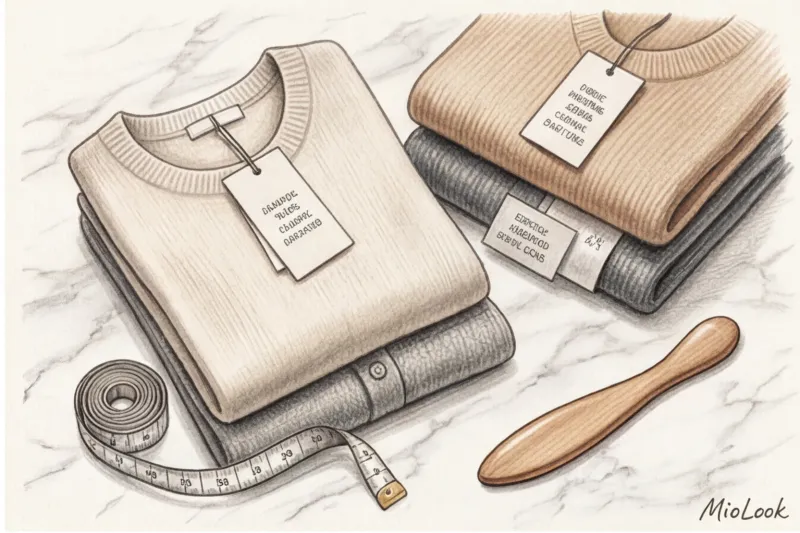
Reading the Label Like a Stylist-Investor: Dangerous and Safe Ingredients
An investment wardrobe tolerates no compromises in the basics. However, I often see women going to extremes, demonizing any synthetics. Let's set the record straight.
Adding 5-10% polyamide or elastane to fine wool or cotton knitwear isn't a brand's attempt to save money (as many believe), but a technological necessity. This microdose of synthetics acts like reinforcement in concrete: it stabilizes the thread, prevents stretching at the elbows and knees, and paradoxically reduces the risk of pilling. But as soon as the percentage of synthetics exceeds 20%, the irreversible process of "dead pills" formation begins.
Access to MioLook for €0.99 — one-time payment
A smart AI stylist will select the perfect look based on your wardrobe.
Get access — €0.99 onceNatural champions of longevity
If your goal is to buy something you can pass down as an heirloom, consider these favorites:
- Merino wool (Extrafine Merino): The absolute standard of smoothness. Merino fibers are long, fine, and springy. Smooth turtlenecks made from 100% merino are virtually indestructible.
- Silk + Cashmere / Silk + Cotton: Silk is a continuous filament of immense length. Adding silk to any yarn (even 15–20%) instantly increases its resistance to abrasion.
- Long-staple cotton (Pima, Supima, Mako cotton): Unlike regular cotton, which can become covered with a whitish fluff after washing, long-staple cotton retains a satin sheen.
Mixtures to Avoid
The worst duo the textile industry could ever come up with is wool + acrylic (in proportions such as 50/50 or 30/70). The wool in such a blend inevitably breaks and comes to the surface, and the bulletproof acrylic binds it into stiff pilling. Avoid such blends at all costs, even if the sweater looks beautiful on the hanger in the store.
Also, be careful with viscose in thick knits. It's incredibly comfortable against the skin, but it has low strength when wet and is prone to micro-pilling if the knit isn't tight enough.
Test Drive in the Fitting Room: 3 Steps to Check the Quality of Knitwear
Over 12 years of shopping support, I've developed a signature technique for inspecting items. You don't need to be a technologist to determine a garment's potential in 30 seconds in the fitting room. Never bring knitwear to the checkout until you've run these three tests:
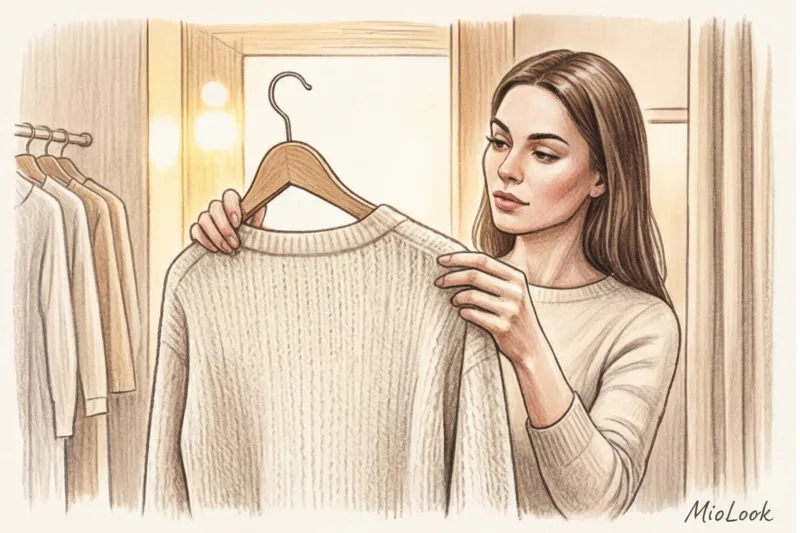
- Light Test: Lift the item and hold it up to the fitting room lamp. Unless it's intentionally translucent, you should see a uniform, dense mesh of loops without any obvious gaps or thickening of the threads. Unevenness is a sign of cheap fabric.
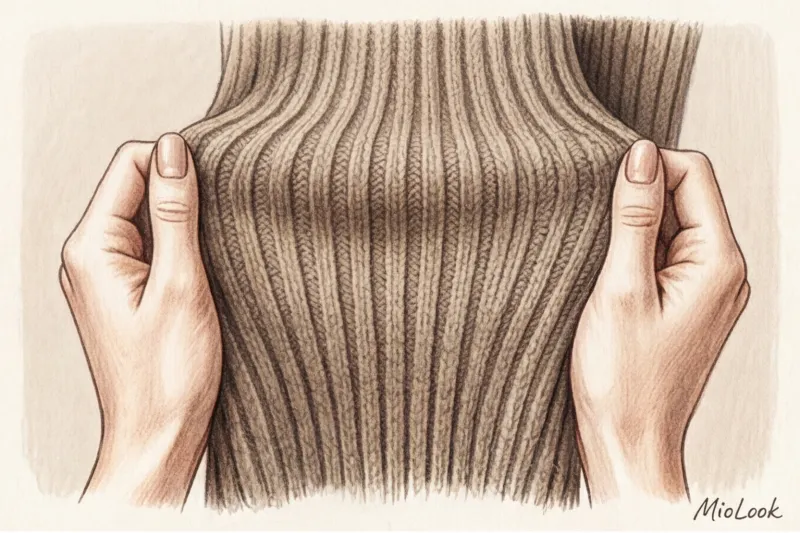
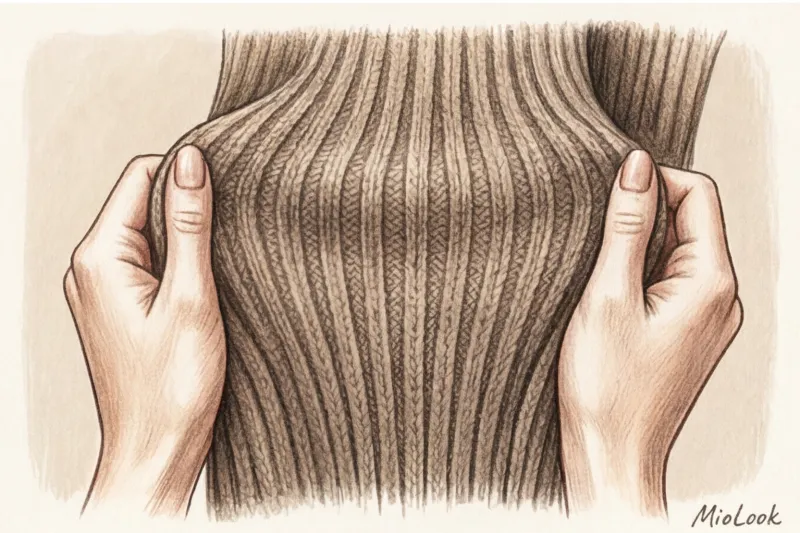
- Squeeze Test: Gather the edge of a sweater (for example, a sleeve) into a fist, squeeze it tightly for 3 seconds, and then release quickly. High-quality, tightly twisted yarn (the kind of knit that doesn't pill) will straighten instantly, like a spring, with virtually no creases. If the fabric is still wrinkled, it will just as quickly become deformed at your elbows and become covered in pilling.
- Friction Test: Take an inconspicuous area of the item (the inside edge of a seam is best) and gently but vigorously rub the fabric against each other for 10-15 seconds. Yes, right there in the store. If fuzz has already started to form on the surface by this time, imagine what your bag strap will do to it in a full day's work.
The Art of Grooming: How to Keep Your Favorite Items Looking Classy
Buying the perfect item is only 50% of the success. The other 50% depends on what you do with it at home. I often see how expensive gels and conditioners literally ruin luxury fabrics.
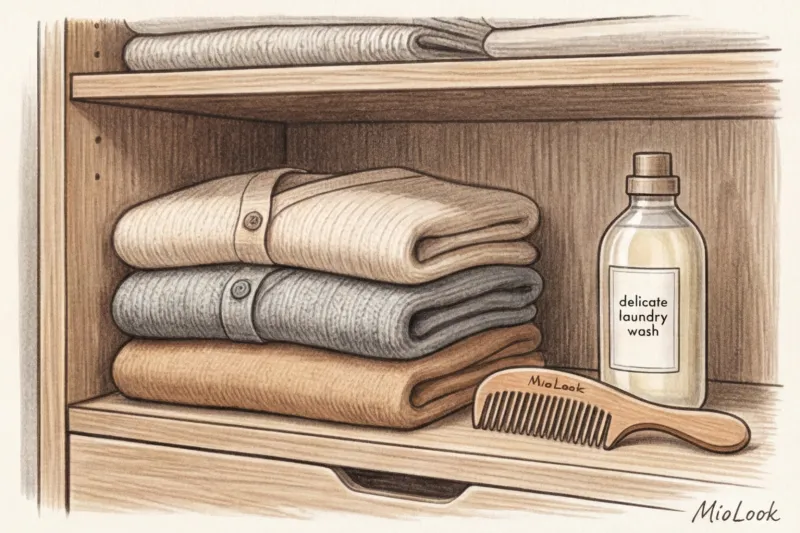
Here's a completely non-obvious insight for you: Never use fabric softener when washing knitwear. Most conditioners contain silicones, which coat the yarn to make it softer. But this lubrication causes the fibers to slip, become easily unstitched, and... bingo—you end up with pilling where it shouldn't be. Wash wool only with specialized liquid detergents with a neutral pH.
If fuzz does appear, forget about electric trimmers when it comes to fluffy fabrics like cashmere or alpaca. The blades cut not only the fuzz but also the fiber itself, thinning the garment. For fine yarns, use only special wooden combs with a metal mesh—they gently comb out excess fuzz without damaging the base.
According to research from British Textile Institutes, wool fibers require time to restore their moisture levels and natural shape. The "resting" rule states: if you wear cashmere for one day, let it rest on a shelf for at least 48 hours.
Your perfect look starts here
Join thousands of users who look flawless every day and manage their wardrobe with MioLook.
Get access — €0.99 onceInvesting in Flawlessness: Stylist Resume
Buying quality knitwear is a long-term investment. Sure, a 100% smooth merino turtleneck might cost €150–250, while a mass-market blended version will set you back €40. But let's calculate the cost-per-wear. A €40 item that will shrink after three washes will cost you €13 per wear. A premium merino that you'll wear 50 times a season for three years will cost you mere pennies per wear, yet convey a sense of status and well-groomed appearance every day.
It's this philosophy of smart consumption that we're embedding into the architecture of our digital wardrobe. By digitizing your items in the app MioLook , you will begin to clearly see which fabrics work for you for years, and which ones end up in the trash after one season.

To summarize, your ideal investment checklist is simple: hold the fabric up to the light, squeeze it in your fist, avoid acrylic, and look for combed yarn. Your wardrobe deserves pieces that only get better with age—just like you.