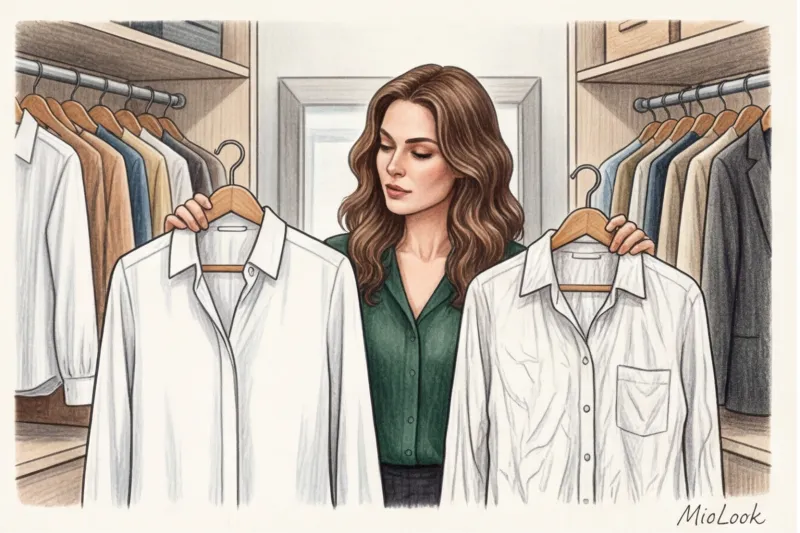
Three months ago, a client of mine, a senior executive at a fintech company, went on an important business trip to Berlin. For her first presentation, she chose her favorite 100% silk blouse for €250. Spoiler alert: by the time she went on stage, after a three-hour flight and a taxi ride, the blouse looked like someone had slept in it. When she returned, she was devastated. I suggested she swap the silk for a top made of high-tech premium polyester. At first, she winced: "Synthetics? I don't wear cheap things." But after wearing the top on her next trip, she ordered three more in different colors.
The question is, Is polyester a good fabric or not? , is a common theme in almost every wardrobe review consultation I have. Blindly pursuing "100% natural" is perhaps the biggest and most costly mistake when putting together a functional capsule wardrobe. We've already covered the basic principles of material analysis in more detail in our a guide to fabrics and choosing quality clothing , but today I want to rehabilitate the most misunderstood material in modern fashion.
Is polyester a good fabric or not? Debunking the main myth.
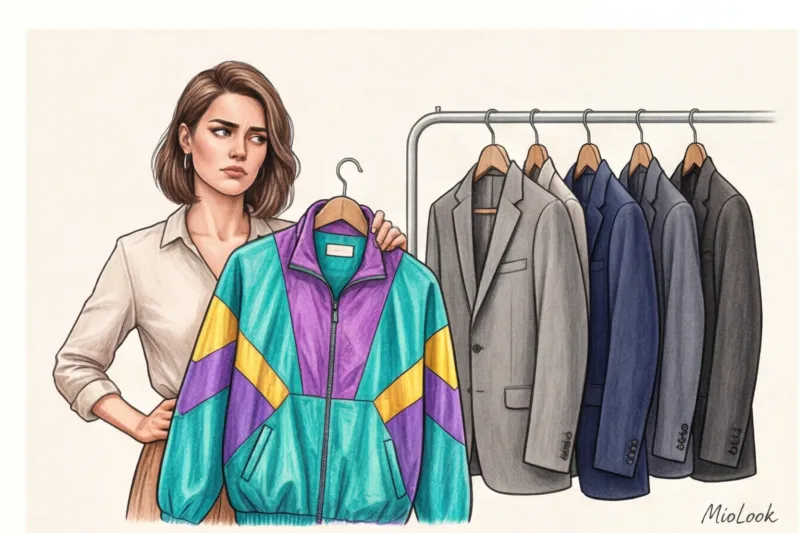
Where did this widespread hatred of synthetics come from? We all come from the 90s and 2000s, when the market was flooded with squeaky, electric-shocking blouses that left you sweating within five minutes. That old polyester was truly a disaster: stiff, non-breathable, and downright cheap-looking.
But technology has advanced greatly. According to the Textile Exchange global report (2024), more than 54% of all clothing produced today contains polyester. And this is no longer just about mass-market products. For decades, sportswear giants have invested billions in developing moisture-wicking, breathable microfibers (remember the famous Dri-FIT technology). Today, these same technologies have migrated to premium everyday wardrobes. Brands like COS, Massimo Dutti, and even high-end luxury brands are actively using high-tech synthetics because they solve problems that natural fabrics simply cannot.
"Modern polyester should be judged not by the name on the label, but by its density, thread twist, and the purpose it should serve in your wardrobe"—I repeat this rule like a mantra during every shopping trip.
Two Faces of Synthetics: Cheap Mass-Market vs. Technological Fabrics
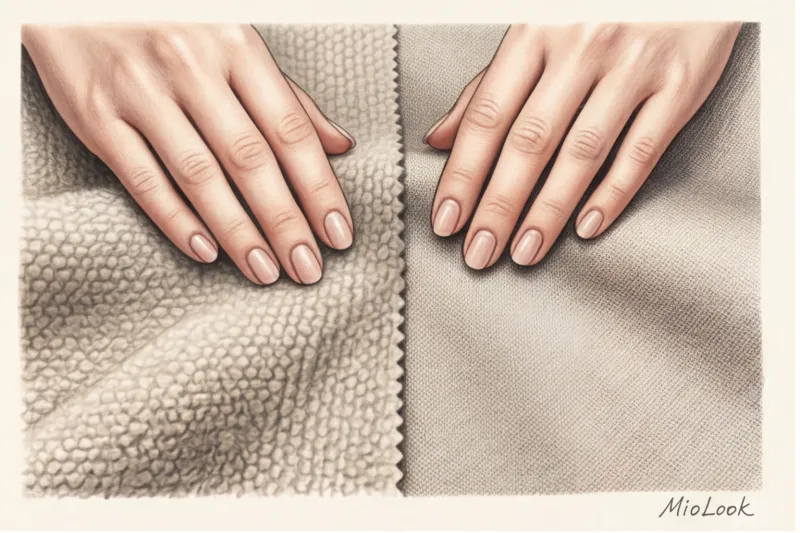
To understand the difference, you need to take a look at the production process. Cheap polyester is created using a primitive extrusion method—basically, liquid plastic is forced through large holes, producing a thick thread similar to fishing line. This gives it its squeak and shine. High-tech synthetics are created differently: modern micropolyester fibers are five times thinner than a human hair. They are woven into complex structures with micropores that allow air to pass through.
Let's be honest: premium polyester is often more expensive to purchase than basic cotton. You can easily find fabrics that look expensive , especially among modern blends. How can you tell them apart?

Signs of cheap polyester
- Unnatural "glassy" shine: The fabric glares under artificial lighting, cheapening the entire look.
- Strong electrification: the thing cracks in your hands and instantly sticks to your feet (especially during the heating season).
- Greenhouse effect: When you put on such a thing, you feel hot air stagnating between your skin and the fabric. The fabric is completely non-breathable.
New generation premium synthetics
- Matte noble texture: Materials such as crepe-diving or silk-armani are visually almost indistinguishable from heavy natural silk.
- Flowing drapery: The fabric falls beautifully and heavily down, creating flowing lines, rather than standing like a stake around the figure.
- Breathability: Thanks to the micropores in the weave, the material conducts heat away from the body.
Access to MioLook for €0.99 — one-time payment
A smart AI stylist will analyze your wardrobe and select the perfect looks based on the properties of each fabric.
Get access — €0.99 onceWhen Polyester Is the Best Choice for a Smart Wardrobe
Over 12 years of working as a stylist, I've come up with a clear rule: for some things, synthetics aren't a compromise, but a technological necessity. If you're building a base worth investing in , please pay attention to the following categories.
Pleated skirts and complex cuts. Remember: no natural fabric (not silk, not wool, not cotton) will hold its factory pleats after the first wash. The folds will simply unravel. If you want perfect, graphic pleats that will delight you for years, choose 100% polyester. It's baked at a high temperature in the factory and retains its shape forever.

Clothes for business trips and long flights. We put together a travel capsule for a business coach who flies three times a week. Her main requirement: take something out of her suitcase, shake it out, and go to a meeting. The capsule's core consisted of blouses and trousers made of heavy-duty polyester and blended fabrics. They don't wrinkle, don't fade even with frequent washing, and dry in two hours.
Outerwear. Trench coats, jackets, and parkas. Synthetic fibers provide durability, wind protection, and water repellency. A cotton trench coat will soak through in five minutes of rain, while a coated polyester blend will salvage your look.
In what items should 100% synthetics be strictly avoided?
I'm always honest with my clients: synthetics have strict limitations. They're not universal. The main rule is to avoid 100% polyester in first-layer garments (those that fit closely to the body).

Basic T-shirts, underwear and summer sundresses. In hot weather, pure synthetics (unless they're specialized sportswear) act like a plastic bag. They disrupt the body's natural thermoregulation system. Odor-causing bacteria multiply on smooth synthetic fibers much faster than on porous natural fibers. The result: clothing develops an unpleasant odor after just a couple of hours of wear.
Clothing for public speaking. If you're facing a hot spotlight in a stuffy theater or are simply feeling nervous, a synthetic blouse will be a real pain. In such situations, it's best to opt for high-quality viscose or fine wool.
The formula for the perfect composition: the golden proportions of blends
The art of creating a smart wardrobe lies in blends—mixed fabrics. It's like in cooking: we take the comfort of nature and combine it with the durability of technology. Perfectly pure compositions are often impractical.
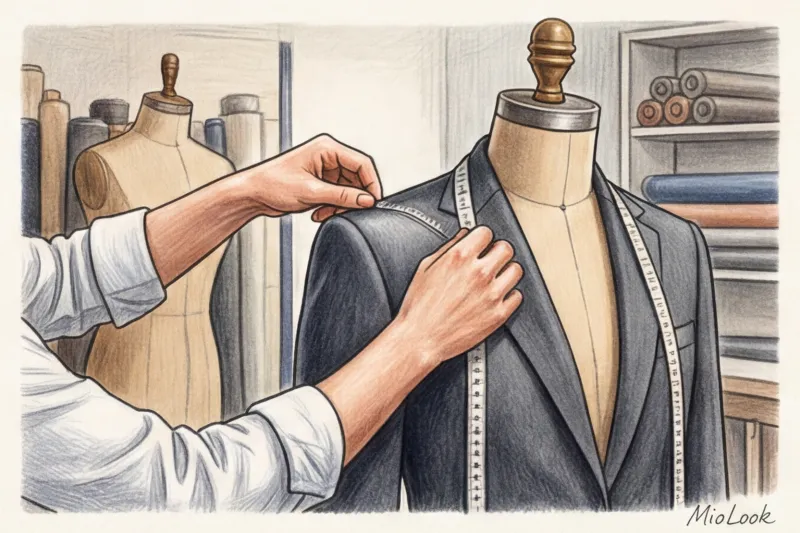
Costume group
My personal experiment: I spent a 12-hour workday (including showroom visits and fittings) first in 100% fine wool pants, and the next day in pants made of 75% wool, 20% polyester, 5% elastane. By the evening of the first day, the 100% wool pants had completely stretched out at the knees and were covered in small creases in the groin area. The blended pants looked like they'd just been ironed.
The golden formula for the office: 70–80% natural fiber (wool, cotton) and 20–30% synthetics. This is the perfect balance of a classy look and durability.
Knitwear and base layer
Jumpers, cardigans, and turtlenecks follow different rules. Here, synthetics are needed only as a "skeleton" to maintain shape.
The golden formula of knitwear: No more than 15–20% synthetic fibers. And here's an important caveat: avoid acrylic! Acrylic is a cheap wool substitute that will pill after exactly three washes. Look for added polyamide or nylon—they make cashmere or merino stronger without cheapening the look.
Your perfect look starts here
Take photos of your items, and MioLook's algorithms will create dozens of new combinations for every day.
Create a capsule in MioLookEco-friendly trend: recycled polyester (rPET) and its properties
We can't talk about synthetics without touching on the environment. The industry has made huge strides in the last five years. According to a McKinsey study (2024), the share of recycled polyester (rPET) in global brands' collections has grown to 32%.
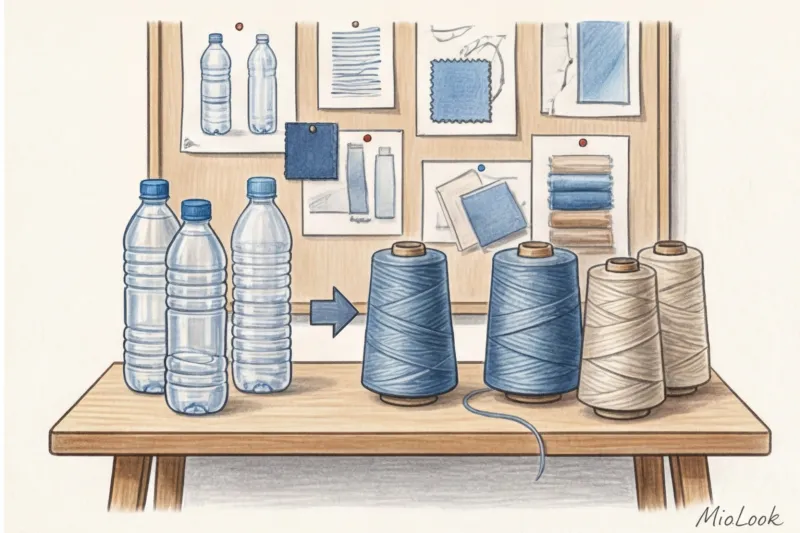
What is rPET? It's a fabric made from recycled plastic bottles and ocean-caught plastic. A common question from customers is, "Does it feel different from regular PET?" No. At the molecular level, it's the exact same material. It's just as durable, drapes well, and holds its color just as well.
By choosing items made from recycled materials (look for "Recycled Polyester" tags), you're voting with your rubles—or, more accurately, your euros, as high-quality basic rPET dresses typically cost between €80 and €150—to reduce your carbon footprint. Conscious consumption isn't just about buying 100% organic linen. It's also about buying one perfect polyester skirt that you'll wear for 10 years, instead of swapping out faded cotton ones every season.
Checklist: How to check the quality of polyester right in the store
I don't allow my clients to bring an item to the checkout until we've run three quick tests right in the fitting room. Save this checklist for your next shopping trip.
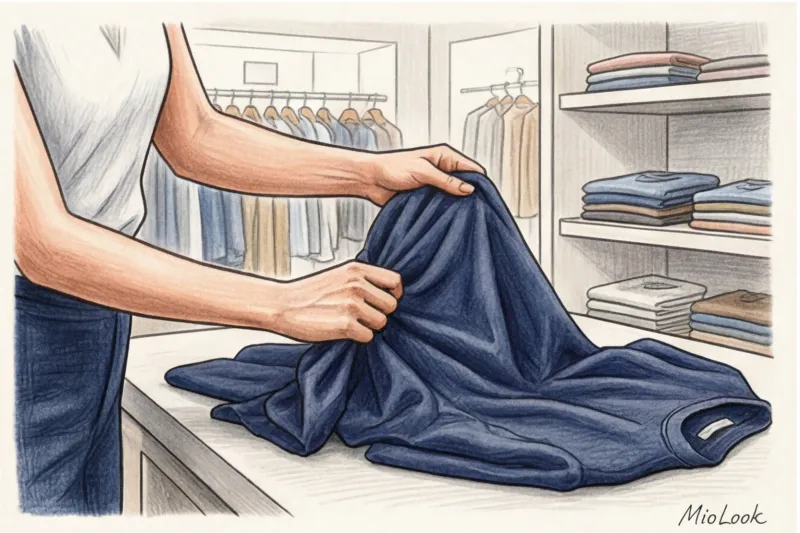
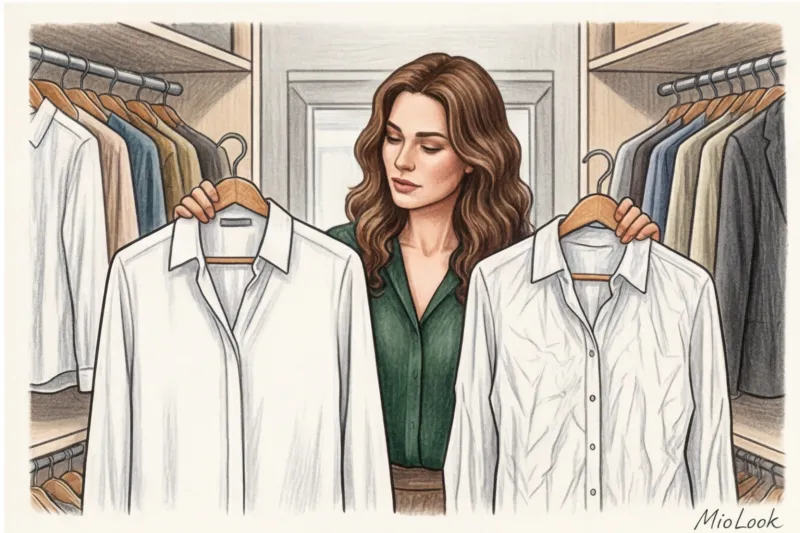
- Fist test for crumpling. Take the hem of the garment and squeeze it tightly in your fist for 10-15 seconds. Release it. If the fabric immediately straightens out or barely noticeable soft ripples remain, take it. If the fabric has creased into sharp, hard corners, like paper, return it to the hanger. You'll look sloppy in this garment on your way to work.
- Translucent test. Hold the fabric up to a bright lamp. The weave should be uniform, without any thickened threads or bald spots. High-quality synthetics have a uniform, dense structure.
- Friction test (pilling tendency). Take the edge of the garment from the inside and rub the fabric vigorously against itself for about 15 seconds. If a light fuzz immediately forms on the surface, the item will become covered in pilling within a month. A good, tightly twisted thread will remain completely smooth.
Stylist's Summary: How to Integrate Synthetics into Your Capsule
Let's sum it up. Is polyester a good fabric or not? The answer lies in your approach. Polyester is a brilliant tool, not an enemy. In a professionally assembled, smart wardrobe, the fabric is always chosen precisely to suit the task.
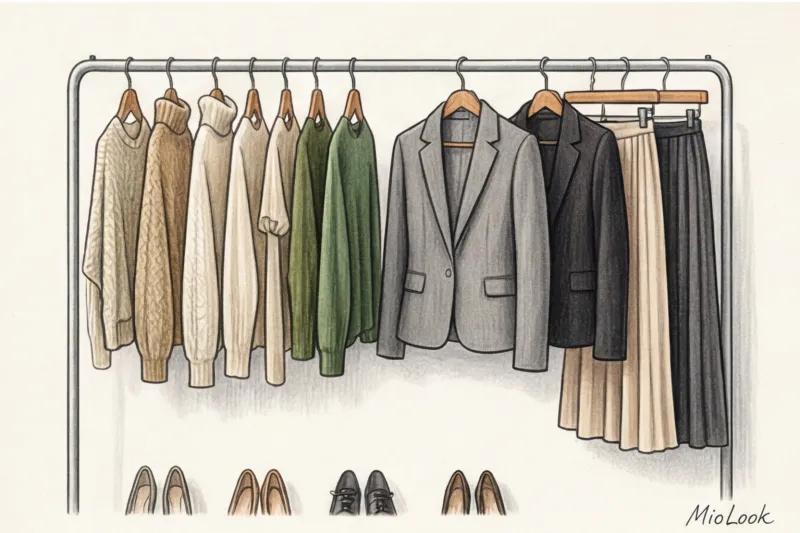
For a relaxing vacation in the heat, we choose breathable linen and muslin. For strict office wear, we choose a wool blend that won't bend at the knees. And for perfect draping, iron-free business trips, and intricate geometric skirts, we happily use high-tech synthetics.
Stop fearing the word "polyester" on the label. Learn to read composition labels, evaluate blend proportions, and tactilely test fabrics. To avoid having to remember all the information about your clothes' compositions, I recommend tracking new purchases in the MioLook app. Wardrobe analytics, including understanding the fabrics of your favorite items, will help you make accurate and durable purchases in the future.