Last Friday, my client Elena brought me a stunning Massimo Dutti slip dress she'd bought for €120. Or rather, what was left of it. She'd washed it at 40 degrees with a regular spin cycle, and the luxurious, flowing midi had turned into a stiff tunic that had shrunk two sizes. "I hate this cheap synthetic material!" she exclaimed angrily, tossing the dress onto a chair. I had to disappoint her: it wasn't synthetic, but 100% viscose.
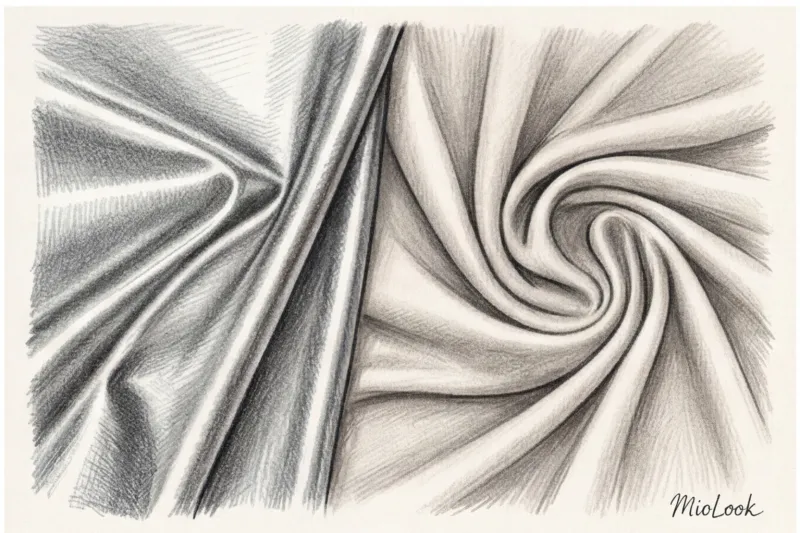
It was at that moment that I realized it was time to dot the i's and cross the t's. The most common question I get during my consultations is: viscose fabric, natural or synthetic? And the answer is much more interesting than the boring chemical formulas from textbooks.
The foundation of a smart capsule always begins with the materials. If you don't understand how an item will perform after its first wash or a long day at work, you're simply throwing money away. We covered this in more detail in our a complete guide to choosing quality capsule clothing And today, as a practicing stylist, I propose to analyze the differences between viscose, tencel, and lyocell—not through boring theory, but through their behavior in wear, washing, and how they look in real life.
The main myth: is viscose fabric natural or synthetic?
Let's clear up this confusion once and for all. Most shoppers use the terms "faux" and "synthetic" interchangeably. This is a fatal mistake for your wardrobe.
Synthetics (polyester, acrylic, nylon) are, roughly speaking, plastic. They are created from petroleum products through complex chemical synthesis. Such fabrics can be technical (like sportswear), but in everyday basics they often create a greenhouse effect.
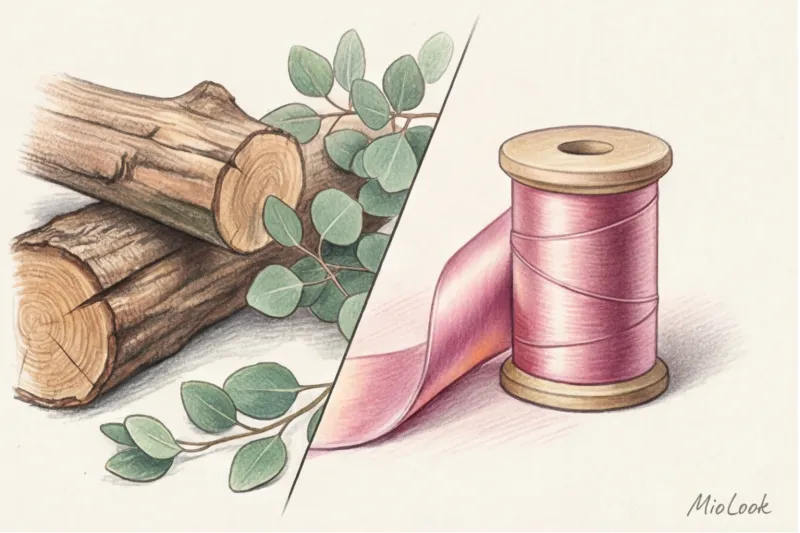
Artificial fabrics (viscose, tencel, modal, cupro) are a completely different story. They are made from completely natural raw materials: wood pulp, bamboo, or even eucalyptus. This wood is ground up and chemically treated, turning it into soft, pliable threads.
Asking whether viscose is natural or synthetic is incorrect. The correct answer is: it's natural in origin, but artificial in the process of creation. It's wood that technologists have transformed into flowing silk.
The word "faux" on the label shouldn't scare you. High-quality faux lyocell breathes, feels pleasantly cool against the skin, and looks far more prestigious and expensive than 100% natural, but cheap and stiff, cotton.
Access to MioLook for €0.99 — one-time payment
A smart AI stylist will select the perfect look based on the textures and fabrics in your wardrobe.
Get access — €0.99 onceViscose (Rayon): The Basic Level of a Smart Wardrobe
Classic viscose (often called rayon in the US) is most often made from pine, spruce, or bamboo cellulose. It is the oldest and most common type of man-made fiber.
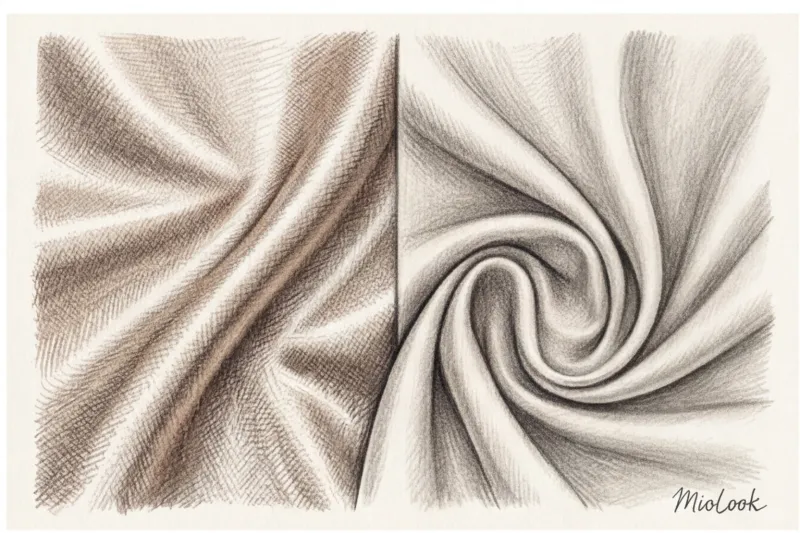
Main advantages: It has an incredibly beautiful, flowing texture. Viscose drapes beautifully, allows the skin to breathe just like linen, and is completely static-resistant (goodbye, clingy skirts).

But after 12 years of sorting through wardrobes, I've noticed a clear pattern: not all viscose is the same. A basic, thin blouse from a mass-market store for €20-30 rarely survives a single active season. It becomes thinner, covered in tiny pills (pilling), and loses its shape.
But dense, crepe-weave viscose (called "cady"), often used by brands like COS or Massimo Dutti in the €90–€150 range, lasts for years. The difference lies in the tightness of the yarn twist and the finishing process. Cheap viscose has one critical drawback: it wrinkles easily and drastically loses strength when wet.
Lyocell and Tencel: the premium evolution of viscose
While viscose is the basic grade, lyocell is the premium grade. It's important to understand the terminology: Lyocell is the generic name for the fiber, while Tencel is the patented trademark of the Austrian company Lenzing Group, which perfected its creation process.
Tencel is produced from eucalyptus wood using a closed-loop process (an eco-friendly process where 99% of solvents are recycled). The results exceed all expectations.
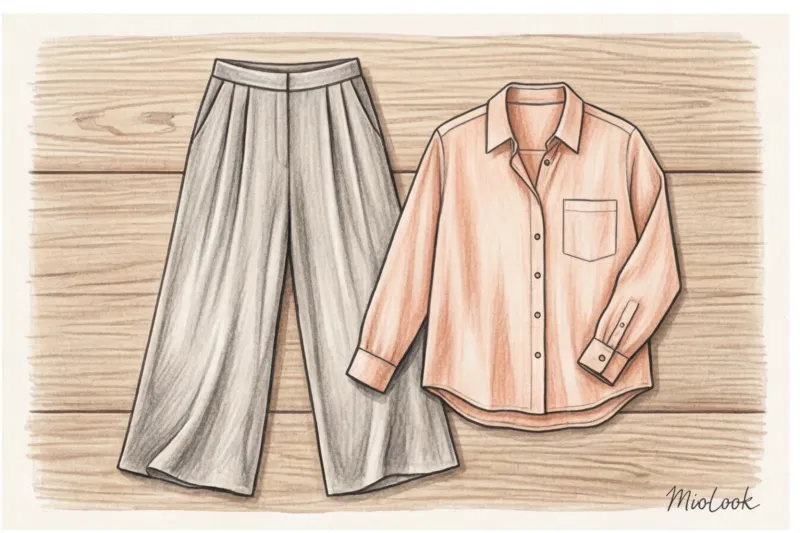
Why do stylists (including me) love Tencel?
- It hardly wrinkles. Unlike regular viscose, lyocell is elastic.
- The peach effect. The fabric has a noble matte sheen and a velvety surface that you want to touch.
- Strength. It does not tear when wet and is washable.
According to technical research by the Lenzing Group (2023), original Tencel absorbs moisture 50% more effectively than cotton. For me as a stylist, this means one thing: if my client is looking for summer business meetings, I always choose lyocell. It doesn't get hot and doesn't leave those telltale wet marks.
Your perfect look starts here
Join thousands of users who look flawless every day with MioLook. Digitize your wardrobe in just a few clicks.
Get access — €0.99 onceModal and Cupro: Secret Materials for a Status Image
In addition to viscose and lyocell, quality brands often feature two other names on their labels that instantly elevate the quality of a garment.

Modal Modal is an improved viscose made primarily from beech wood. It's thinner, softer, and lighter than regular viscose. Modal is ideal for knitwear, turtlenecks, and lingerie. It doesn't pill, doesn't lose color, and doesn't warp for years. By the way, if you're looking for the perfect loungewear, be sure to check out our article about the best fabrics for home wear.
Cupro Cupro is a true "vegan silk." It's made from cotton fuzz (the short fibers surrounding the cotton seed). To the touch and appearance, cupro is a flowing liquid metal, a perfect analogue of expensive wet silk.
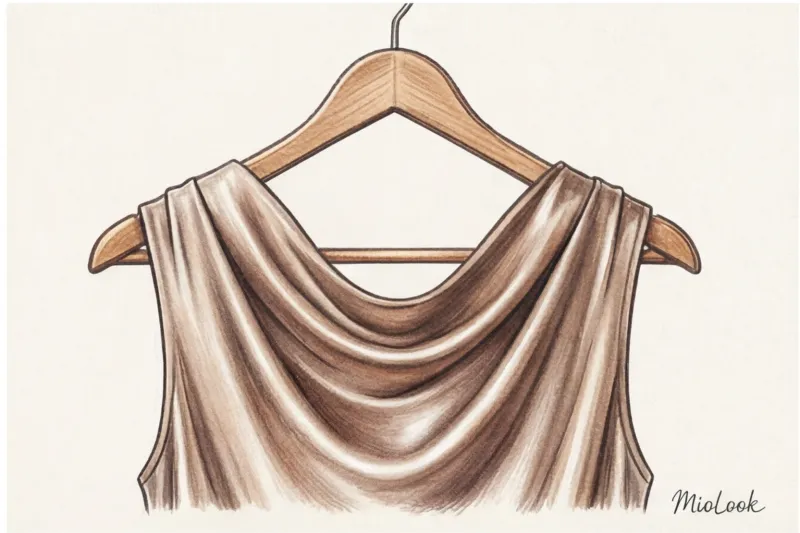
My personal life hack as a stylist: if you want to achieve an "old money" aesthetic but aren't willing to shell out €300-€500 for natural silk, look for cupro. I always check the linings of my jackets. If a brand uses cupro (and not cheap polyester) for the lining, it's a sure sign of high quality throughout the entire garment.
However, there's a fair limitation: cupro absolutely cannot handle harsh stain removers. One misstep with bleach, and a permanent white stain will remain on the fabric. This is a case where the item requires gentle dry cleaning.
Styling Practice: How These Fabrics Perform in Wear and Care
Let's get back to the story of my client Elena's dress. Why did it shrink two sizes? It's all about shrinkage percentage.
Regular viscose can shrink by 7-10% after the first wash in hot water. Tencel shrinks by a maximum of 2-3%. Experts at the Drycleaning & Laundry Institute sternly warn in their guidelines: cellulose fibers lose critical strength (up to 50%) when wet.
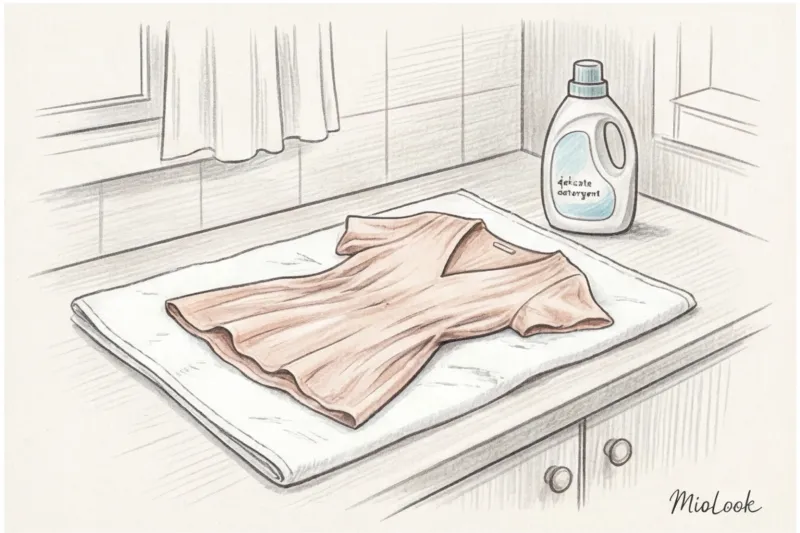
Here are three ironclad rules for caring for artificial fabrics that I give to my clients:
- No 40 degrees. Use only cold water (up to 30°C) and a gentle spin cycle (no more than 600 rpm). Ideally, hand wash without wringing.
- Drying and storage rules. Heavy viscose knitwear should never be hung on hangers, either wet or dry, as it will stretch under its own weight. Store such items folded on shelves only.
- Saving a shrunken item. If viscose has "jumped," it can be revived. Iron it while damp, gently and carefully stretching the fabric in the direction of the grain.
Ready to get started?
Try the MioLook plan for free—no commitments required. Organize your care and plan your looks in advance.
Get access — €0.99 onceChecklist: How to Read Store Tags (and Avoid Being Fooled)
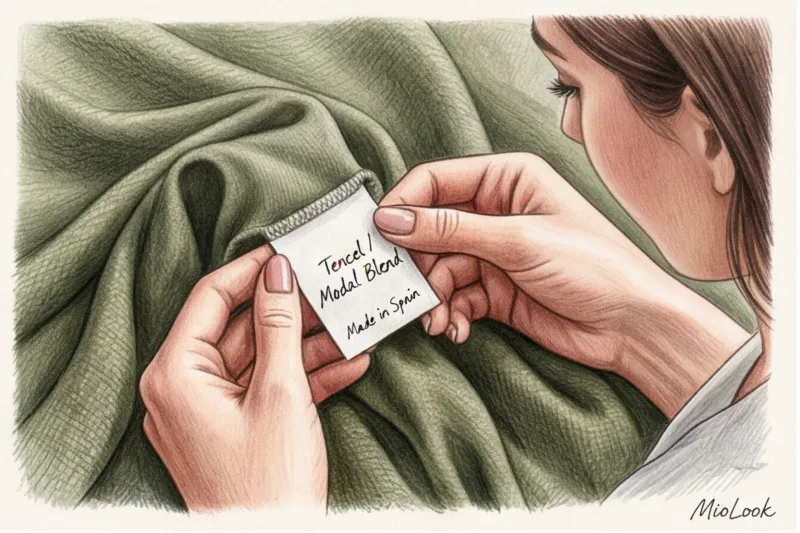
To ensure every cent you spend on a garment is worth it, you need to be able to read the ingredients. Simply seeing the word "viscose" and heading to the checkout isn't enough.
Look for the right blends. My favorite formula for the office: Viscose + Polyester (15% to 30%) Yes, that same polyester in small doses acts as reinforcement—it prevents the viscose from wrinkling and prolongs the life of the garment. Another luxurious combo: Lyocell + Flax Lyocell softens rough linen, and trousers no longer feel stiff.
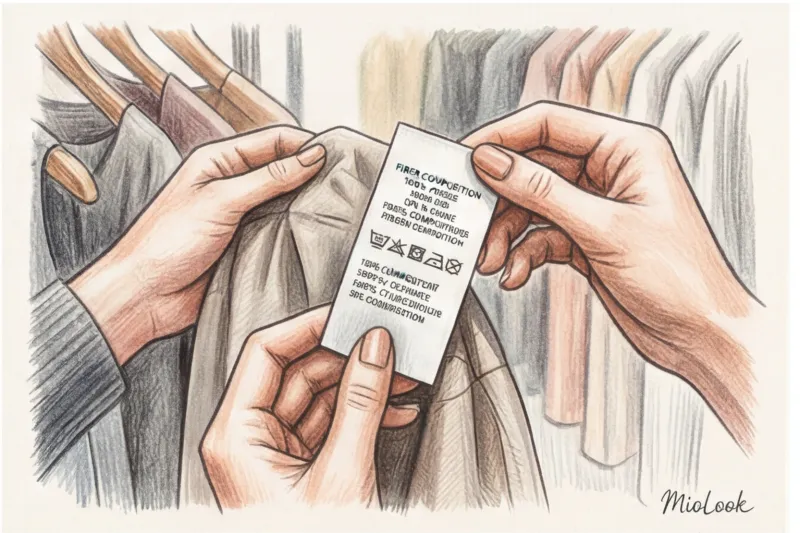
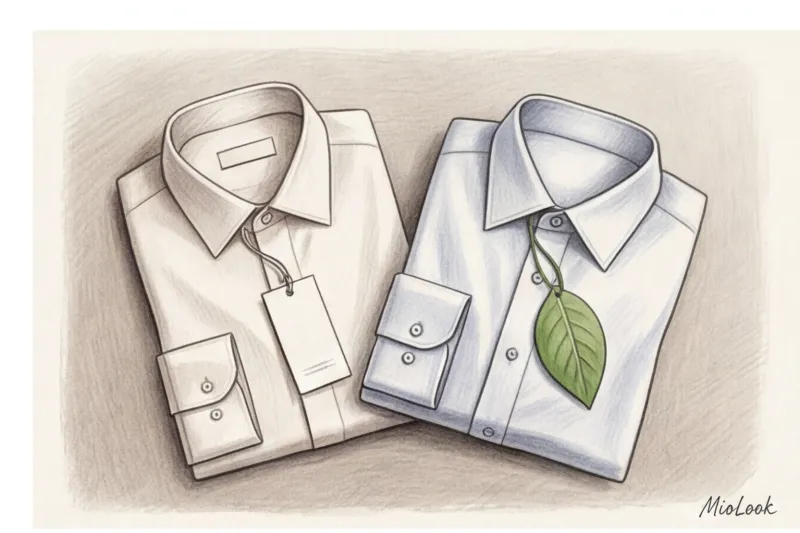
Beware of marketing gimmicks. If you see a large green label that says "100% Bamboo" on a label, don't be fooled. This isn't some unique eco-friendly material; it's regular viscose, made from bamboo. Its properties are exactly the same as pine viscose, so there's no point in paying extra for "bamboo."
Finally, do a tactile test in the fitting room (I call it the "fist test"). Firmly squeeze the hem of a dress or pants in your fist for 10 seconds, then release. If the fabric is mercilessly chewed, leave the item in the store. By mid-work, you'll look like you slept in it.
Verdict: Is it worth investing in synthetic fabrics?
My answer: a definite yes. Man-made cellulose fabrics aren't a compromise we make because we can't afford silk. They're a standalone, smart foundation for a modern wardrobe.

They meticulously fulfill needs that other materials fail to fulfill. Cotton is often too stiff and doesn't provide beautiful drape for feminine silhouettes. Natural silk is expensive (starting at €200 for a blouse) and requires meticulous care.
For basic, flowing skirts and dresses, feel free to choose thick viscose. For classy summer suits and palazzo pants, look for lyocell (Tencel). And if you want to add a touch of "quiet luxury" to your look, consider cupro. Read the tags, feel the textures, and your wardrobe will look three times more expensive than it actually is.