
What are essential women's accessories and why online lists don't work?
You know what request I hear most often from new clients? "Darina, I have a closet full of nice clothes, but I still look boring." As a practicing image consultant and colorist, in such cases, I don't look at the clothes first. I look at the details.
If you google it basic accessories for women , the search engine will happily return articles from ten years ago. They'll inevitably feature three "sacred cows" of outdated styling: a strand of faux pearls, a small black chain bag (à la Chanel), and classic beige stiletto pumps. Let's be honest: for 90% of modern women, this combination is completely useless. A strand of pearls paired with a plain jacket often adds age, a black bag harshly "cuts" lighter looks, and stiff pumps are simply uncomfortable for running around town.
Clothes are the dish itself, and accessories are the spice. Without them, even the most expensive and high-quality basics look bland and insipid.
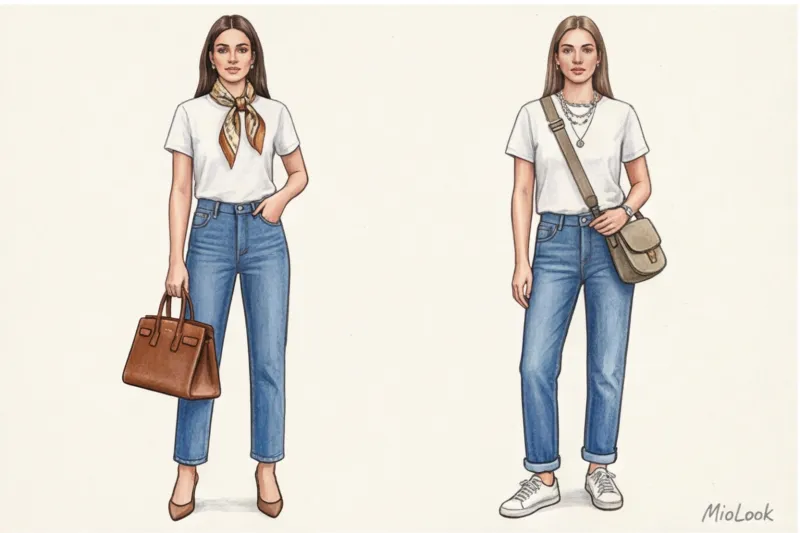
Let's take the simplest formula we all wear: a crisp white cotton shirt and straight-leg blue jeans. Add white leather sneakers and a soft city backpack, and you've got a relaxed weekend look. But swap them for structured dark chocolate loafers, a sturdy tote bag, and accent watches for office style — and now you're ready for a business meeting or presentation. The outfit remains the same, only the setting has changed.
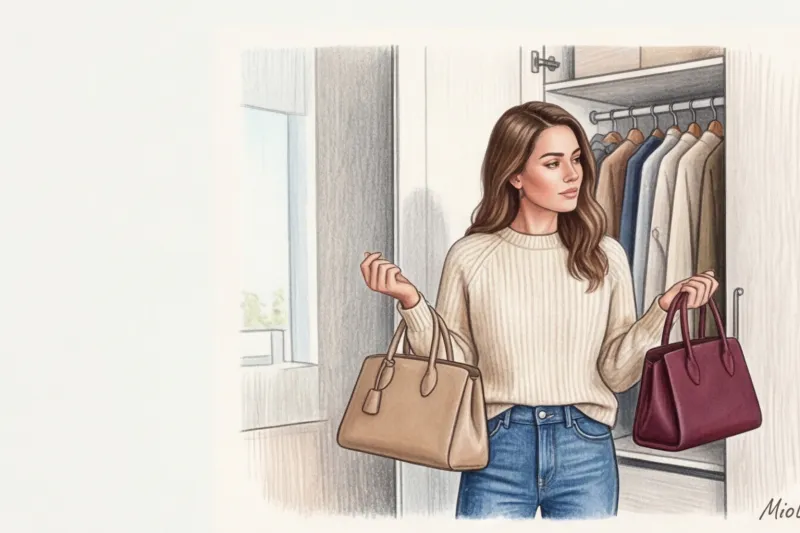
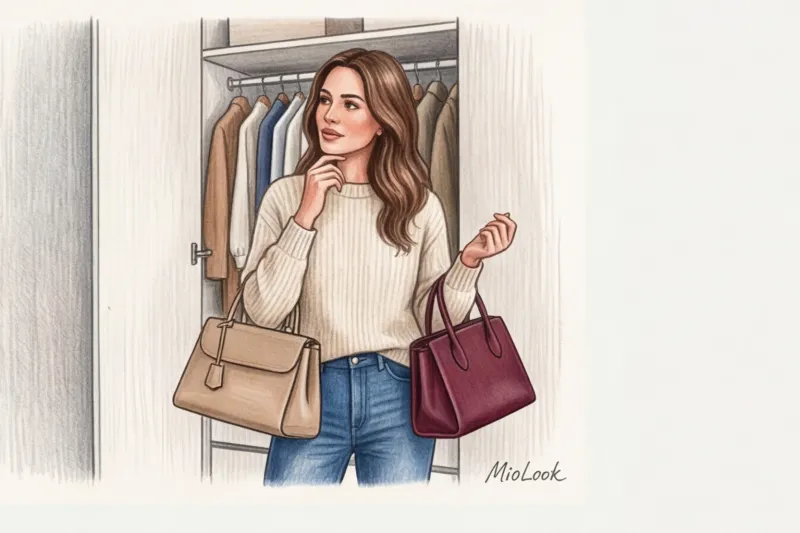
So what is a modern base? Forget the generic glossy lists. A proper base is items with maximum compatibility coefficient In YOUR wardrobe. If your closet is dominated by warm, natural tones (khaki, terracotta, or off-white), a black bag will never be your basic—it will look harsh and out of place. Your ideal base would be a bag in taupe, caramel, or burgundy.
To avoid buying things that will sit in boxes for years, I always advise my clients to digitize their wardrobes. Upload your everyday looks to the app. MioLook — a built-in smart assistant will clearly show you whether a new belt or scarf will fit into your current capsule, even before you pay for it at the checkout.
Another crucial superpower of the right accessories is their ability to change the tone of an outfit. Imagine: in the morning, you put on a silk midi skirt and a voluminous cashmere sweater. Pair it with low-heeled suede ankle boots and a roomy shopping bag—it's a comfortable daytime casual look. But if you're heading out to dinner that evening, you don't need to go home and change. Simply leave the shopping bag at work, grab a soft clutch, throw on large hoops (instead of discreet studs), and refresh your lipstick. Just one change of details, and the look instantly elevates from casual casual to elegant evening chic.
Foundation: Shoes and bags as the basis for stylish geometry
While studying composition at the design department, I learned one important principle: the human eye always seeks a fulcrum. In the context of personal style, shoes and bags serve as such visual anchors. They create the architectural framework of your look. While clothing can be flowing, soft, and voluminous, the accessory base must maintain its boundaries.
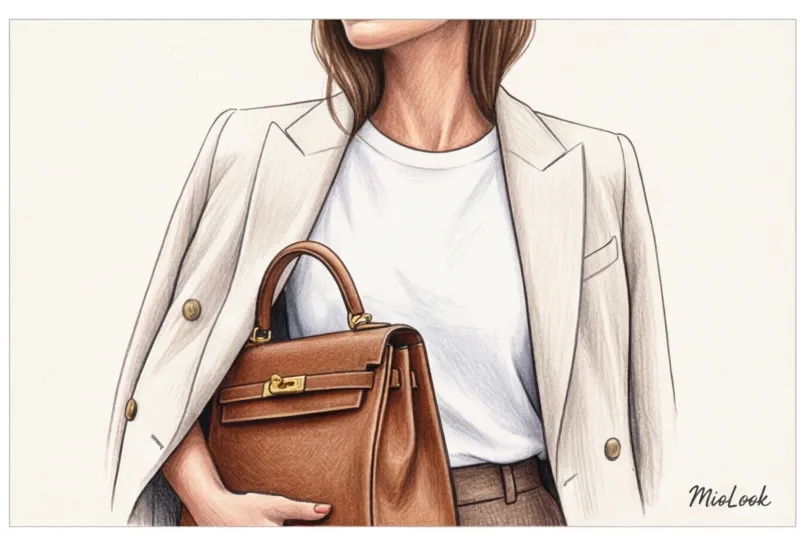
Over the years of working as a colorist and image maker, I have developed an indisputable rule for my clients rigid form rule Basic women's accessories should have clear geometric lines. Structure is subconsciously perceived by others as status, composure, and control. A $150 crossbody bag with clean lines and a solid bottom will always look significantly more expensive than a shapeless $1,500 designer leather bag.
"Soft hobo bags and relaxed backpacks don't integrate well into business and smart-casual styles. They physically pull the visual weight down, making the silhouette bulky and the look sloppy."
When I was putting together a capsule collection for a top manager at a large European IT company, we removed all the "soft" accessories from her everyday wardrobe. Swapping out her shapeless shopper for a structured tote instantly elevated the formality of her jeans-and-knitwear looks, allowing her to look authoritative without wearing formal suits.
The Perfect Basic Bag: Forget About Black
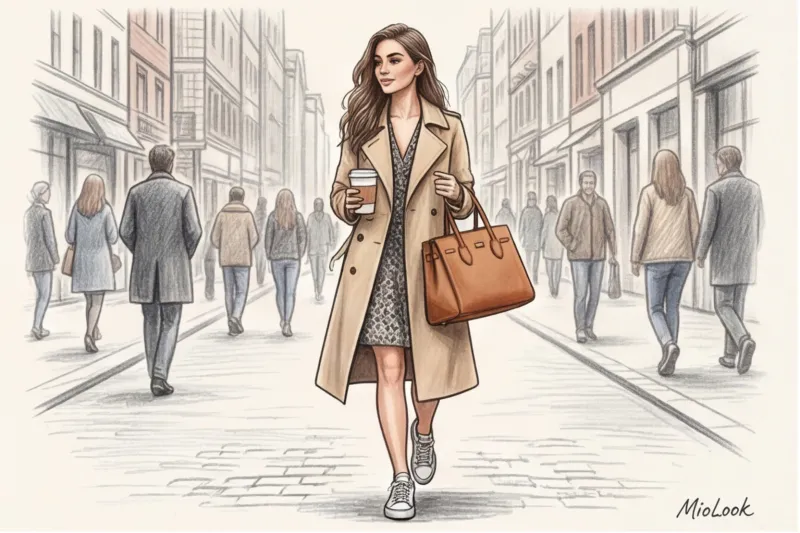
The most dangerous fashion myth I have to debunk at almost every consultation is: "A black bag goes with everything." As a color theory expert, I can assure you that's not true. In a daytime wardrobe, especially if you're wearing light denim, beige trench coats, or pastel knitwear, a black bag acts like a black hole. It creates a harsh, eye-catching contrast.
If you're looking for a truly sophisticated base, taupe, deep burgundy, emerald, and dark chocolate shades work a thousand times better than black. Why?
- Taupe — It's a color chameleon. It adapts to both warm and cool tones in your clothing.
- Chocolate gives the same depth and darkness as black, but looks softer and more noble.
- Bordeaux and emerald They act as neutral colors in leather goods, adding color to an outfit without clashing with prints.
The second critical parameter is the size of the bag is proportional to your height and body measurements The law of similarity in style states that small appears even smaller next to large, and large next to small appears gigantic. A petite woman 155 cm tall with a huge duffel bag looks like she's about to emigrate. Conversely, if you have curvaceous figures in a size L-XL, a micro bag will only accentuate your curves, creating unnecessary contrast. Choose a medium-sized bag that complements your build.
Finally, pay attention to the hardware. According to the Business of Fashion platform's 2023 analytical reports, the "quiet luxury" trend has finally replaced logomania. The absence of flashy, shiny hardware, chunky chains, and recognizable logos is the main sign of a high-status bag. A minimalist bag with matte or hidden hardware doesn't dictate which metal (gold or silver) to wear in the portrait area.
Not sure which shade to choose?
Try MioLook for free: A smart AI stylist will analyze your appearance and select the perfect palette of basic accessories that will perfectly complement your current wardrobe.
Get access — €0.99 onceThe bare minimum of footwear for modern life
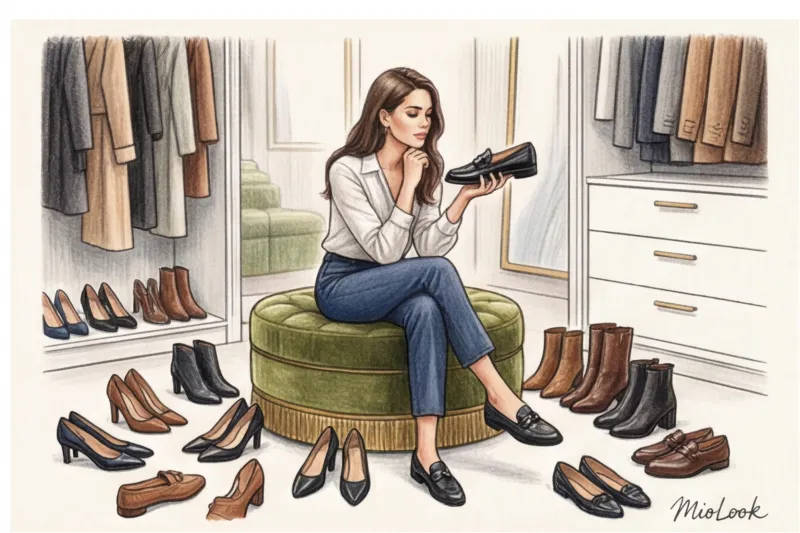
Now that we've covered bags, let's move on to the literal foundation—shoes. To cover 90% of urban scenarios (from the office to a weekend exhibition), the modern woman doesn't need dozens of boxes. A functional minimum of four items is sufficient.
Your Basic Shoe Quartet:
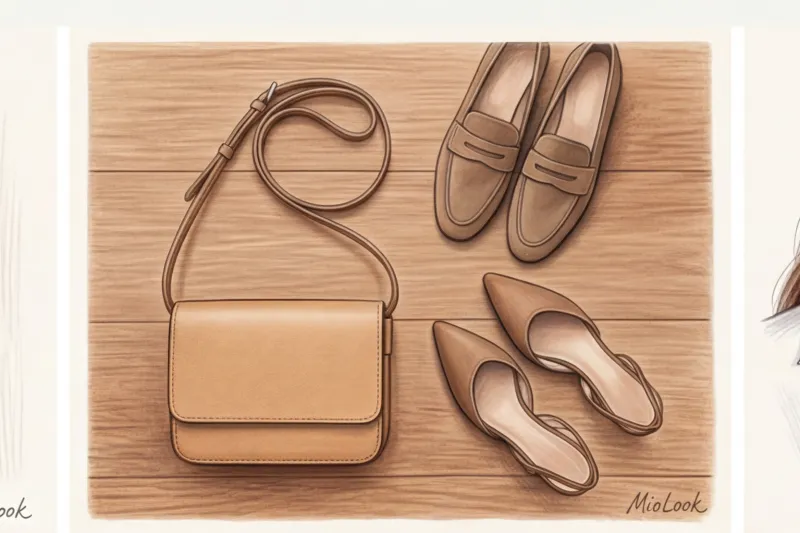
- Structured loafers — the perfect replacement for ballet flats. The stiff toe and low sole add a sophisticated touch.
- White minimalist sneakers — without colored inserts, perforations, or a chunky sole. It's a blank canvas that will calm even a formal pantsuit.
- Ankle boots with a narrow toe — shoes that visually elongate the height of the foot. A round toe cuts off the foot, while a narrow toe (not necessarily extremely pointed, almond-shaped is sufficient) continues the line of the leg.
- Universal pumps or slingbacks — with a heel of 5-7 cm. Slingbacks (shoes with an open heel) are especially popular now, as they look lighter and more modern than classic pumps.
And now the main secret that all stylists use: The color of your shoes directly affects the perception of the length of your legs. Have you ever noticed how your figure in the mirror sometimes appears squat, even though your clothes seem to be perfectly chosen? Chances are, you've messed up your color rhythm.
To make your legs appear endless, use the rule of continuous vertical lines: the color of your shoes should match either your skin tone (if you're wearing a skirt or cropped trousers with bare feet) or the color of your trousers or tights. A classic mistake is wearing black ankle boots with light-colored jeans, leaving a strip of bare ankle. You'll visually cut your leg into three short segments. In this case, beige, camel, or taupe shoes are the solution. If you have trouble judging the proportions yourself, I recommend uploading photos of your outfits to MioLook — On a smartphone screen, geometric distortions of the silhouette are read much more objectively than with a quick glance in the mirror.
Jewelry Wardrobe: How to Choose "Your" Metals and Stones
Place a sheet of crisp white A4 paper next to your face in natural daylight and look in the mirror. How does your face appear against a pure white background: slightly pinkish, porcelain-like, or, conversely, peachy with a golden undertone? As a certified colorist, I always begin creating a jewelry capsule with this simple skin temperature test.
Basic embellishments are an extension of your portrait area. They sit close to the face and act not as standalone decoration but as built-in reflectors.
If you have a distinctly cool skin tone (pinkish, olive) and wear a chunky chain made of intense yellow or copper gold, the metal will cast a yellowish glare on your face. Your skin will appear tired, and under-eye circles will be more noticeable. Conversely, warm peach skin often takes on an earthy, grayish cast against an icy silver backdrop. When choosing basic accessories for women , it is this physical law of light reflection that must be taken into account first and foremost.
In addition to temperature, contrast is important. For women with a soft, low-contrast complexion, subtly muted metals like rose gold and blackened silver are ideal. However, for high-contrast complexions (for example, dark hair and fair skin), pure, bright alloys like platinum, rhodium-plated white gold, or classic lemon gold work well.
Silver, Gold, or a Mix? Color Rules
The most persistent style myth that still frightens many women is: "Gold and silver can't be worn together." Forget it. The rigid separation of metals is a thing of the past. Today, bicolor (mixing two or more shades of metal) is the absolute norm, making your wardrobe far more functional.
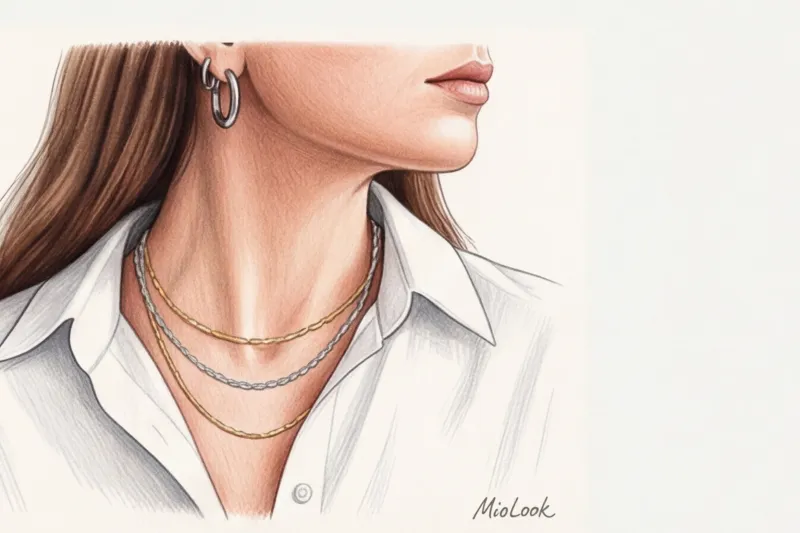
According to the WGSN trend analysis for 2024, layering with mixed metals has become a dominant styling technique. To ensure the mix looks harmonious, rather than like you've worn everything in your jewelry box at once, use the "transitional element" rule. While you might wear gold earrings and a silver necklace, be sure to wear a ring or watch with a design that incorporates the metal. already both metals are combined (as in the iconic Cartier Trinity ring design or the two-tone bracelet watch).
Another critical aspect of a jewelry base is texture. Smooth vs. textured metal: which looks more expensive?
- Smooth, mirror-polished metal It reflects light in a targeted manner. This looks luxurious in silver or white gold. However, when it comes to inexpensive yellow gold jewelry (under €50), the excessive glossy shine immediately betrays the alloy's low cost. Furthermore, micro-scratches quickly appear on the smooth surface.
- Textured metal (crumpled, satin, brushed, with a "liquid metal" effect) diffuses light, creating a soft, elegant glow. Even a budget ring for €30 with a matte or craft finish will rival the visual value of a glossy designer piece.
Earrings and chains: face contouring
Let's move from color to geometry. Basic hoop earrings and studs aren't just everyday jewelry; they're tools for facial architecture. The main mistake I regularly see during consultations is a mismatch between the size of the jewelry and the facial features.
The rule of scale is ruthless: if you have large, expressive facial features (wide eyebrows, full lips, prominent cheekbones), micro studs with a diameter of 2-3 mm will simply disappear, making your face appear even larger. Your basic minimum should be statement studs at least 8 mm in diameter or congo earrings with a tube thickness of at least 4-5 mm. Conversely, if you have petite, delicate features, massive, heavy hoops will steal the show, weighing down your jawline.
As for the portrait area in general, chains are your main ally in correcting proportions. The layering of the chains allows for the creation of an artificial V-neckline. , which phenomenally stretches its neck.
How does this work in practice? Even if you're wearing a turtleneck sweater, you can visually elongate your neck by creating a cascade of three chains of varying lengths:
- Upper level: a choker or short base chain (35-38 cm) lying at the base of the neck.
- Intermediate level: medium-weave chain (40-45 cm) - it sets the main diagonal.
- Lower level: an extended thin chain with an accent pendant (50-55 cm) that forms the tip of our letter "V".
By the way, to avoid confusion about what lengths and textures you already have, I always recommend that clients take photos of their chains and upload them to MioLook By creating looks in the app, you'll immediately see whether a particular neckline requires an additional V-shaped accent, or whether the neckline itself can handle the job.
Belts: An Underrated Tool of Body Architecture
Ask any experienced clothing designer, and they'll confirm: the silhouette's visual center of gravity lies exactly where we draw the horizontal line. That's why a belt isn't just a utilitarian strip of leather holding jeans in place. It's your primary body-architectural tool, capable of reshaping your proportions in seconds.
Properly placed waistband accents can visually elongate your legs by 5-7 centimeters. How does this work? If you want to elongate your lower body, simply wear your pants just above your natural waistline and secure them. The human eye automatically reads the beginning of your legs from this upper line. And by wearing a belt over a voluminous jacket (especially the oversized, menswear-inspired styles that are trendy today) or a thick cardigan, you instantly create the illusion of an hourglass silhouette, even if you naturally have a perfectly straight, rectangular body type. Think of the styling at Khaite or Jil Sander—they use this technique masterfully.
What width should a proper baseband be? Mass-market options are available, but the smartest investment is a smooth baseband that's exactly 3-4 centimeters wide. Why these specific widths? Firstly, the belt loops on standard suit trousers and jeans are designed to fit this width. Secondly, a thin belt (1.5-2 cm) looks short over a thick jacket fabric and cuts unattractively into the knitwear, highlighting even the slightest folds. And overly wide belts (5 cm or more) inevitably shorten the torso, making a person appear squat.
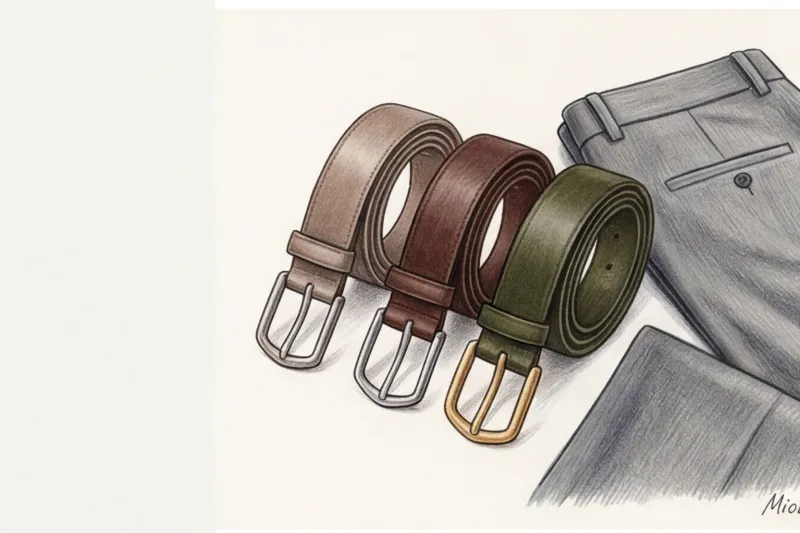
Now for the main rule of color, which will forever change your approach to shopping. Forget the outdated dogma of "your belt should strictly match your shoe color." In modern style, this rule seems downright mothballed and only complicates life.
When choosing a belt color, consider your overall goal. If you want to appear taller and slimmer, choose a belt that matches your pants, skirt, or dress exactly. A continuous vertical line of color elongates the silhouette. A contrasting belt (for example, a solid black belt on white jeans) creates a harsh horizontal line that mercilessly cuts the figure in half. This technique can only be safely used by very tall women who need to visually balance out overly long legs and a short torso.
So what color should basic women's accessories in the belt category be if they're no longer tied to shoes? My favorite pro trick: match the shade of matte leather to the root color of your hair. For sultry brunettes, try dark chocolate or deep graphite; for light browns, try cool taupe; for blondes, try soft caramel or olive. This creates stunning harmony between the portrait area and the center of the figure. Another surefire option for complex looks is to "pull out" the least noticeable shade from your blouse's print and repeat it in the belt.
Access to MioLook for €0.99 — one-time payment
Start creating perfect looks with the help of artificial intelligence and assemble your capsule collection of accessories without breaking the bank.
Get access — €0.99 onceTextiles: scarves and shawls according to the laws of color
According to colorist research, more than half of women wear shades close to their faces every day that highlight signs of fatigue and make their skin tone appear dull. This is especially true for outerwear, which we choose for purely practical reasons: "durable" and "goes with everything." And this is where basic textile accessories for women come to the rescue—they act as a powerful optical filter for your beauty zone.
Let me share a telling example from my practice. One of my clients bought a luxurious trench coat from a cult British brand for €1,900. The garment was beautifully cut, but the color—a cool, grayish-olive macadam—clashed sharply with her warm, golden complexion. Every time she wore the coat, she looked like she hadn't slept in a week, and it was too late to return it. The situation was saved by a single silk square scarf (classic 90x90 cm) in the perfect peach shade with a vibrant geometric print.
In applied coloristics this technique is called separating barrier If you're desperate to wear a color that's not your natural color (for example, a trendy cool burgundy, even though only warm autumn tones suit you), simply place a silk scarf in your color range between your neck and collar. Silk has a slight sheen, which will reflect the right light onto your face, acting like a softbox in a photo studio, and will completely neutralize the negative impact of an unflattering coat color.
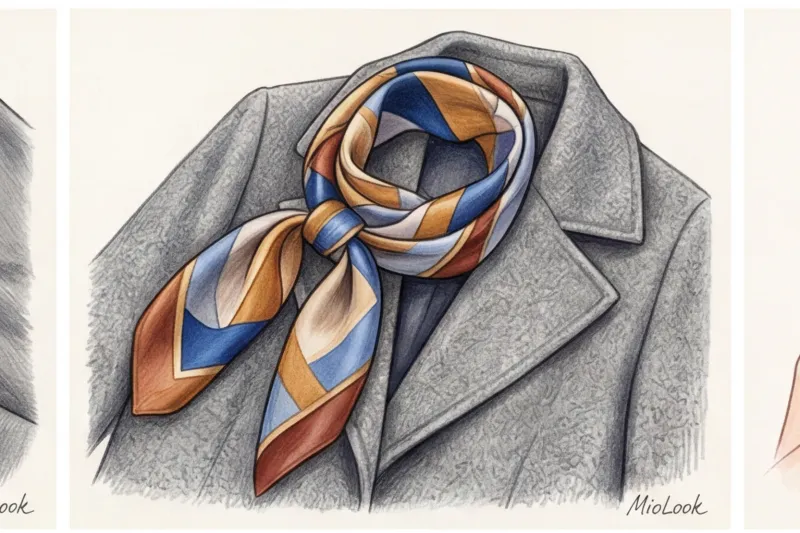
In addition to a fine, flowing silk, your wardrobe should include a substantial basic stole. The ideal composition I always look for for my clients is a blended yarn: 70–80% high-quality wool and 20–30% cashmere or silk. Unlike 100% cashmere, this blend is significantly less prone to pilling, yet retains its suppleness and elegant appearance. Flawless colors for this investment include deep camel, mouse gray, or soft milky white (avoid stark white, it's too harsh for winter). These three shades offer the best pairing index with the complex textures of drape coats and matte down jackets.
However, it's a huge styling mistake to think that a scarf is designed solely to protect the neck from the wind. Modern styling is built on casualness and versatility. I recommend using your bob in three unconventional ways:
- On the structured bag: Twist the stiff handle tightly (using the twill technique) or tie a fluffy, slightly asymmetrical knot on the side. This instantly takes the formality out of a boring office bag.
- In hair: Weave a thin silk scarf into a low, voluminous braid or tie it around the base of a relaxed ponytail. It's a great way to add texture to a simple look.
- Instead of a classic belt: Thread a long scarf through the belt loops of wide-leg palazzo pants or straight-leg jeans. This will add a bohemian flair to the most basic denim and white shirt combination.
Remembering all these combinations the first time can be difficult. So, when I'm incorporating new scarves into my clients' wardrobes, I always ask them to take photos of their successful knots in front of a mirror.
To make sure these ideas don't just remain theory, upload the resulting photos to MioLook smart wardrobe and link them to specific looks. This way, you'll always have a visual cheat sheet on your phone: which scarf to wear with a gray jacket, and which one to tie on your favorite tote bag before leaving the house.
Glasses and watches: status essential accessories
A study published in Harvard Business Review several years ago revealed a curious fact: during business negotiations, interlocutors subconsciously gauge a partner's status based on two details: the quality of their shoes and the presence of a classic watch. And this is happening in an era when the exact time is displayed on every smartphone screen. Why isn't this detail a thing of the past?
Why do we need watches today? The answer lies not in functionality, but in conveying meaning. As an image expert, I constantly emphasize: basic accessories for women in a business environment are, first and foremost, markers of your personal brand. Wristwatches instantly bring an image together, adding structure and visual discipline. From an archetype theory perspective, a simple chronometer on a steel bracelet or smooth leather strap evokes the "Ruler" or "Guardian" archetypes—those responsible for reliability, control, and expertise.
There's a strict rule when it comes to choosing a business wardrobe: if you want to be perceived as professional, choose a watch with a clear, uncluttered dial. In a classic corporate dress code, women's watches should be no larger than 32–36 mm in diameter, otherwise they become too casual and sporty. The optimal budget for a good entry-level model starts at $200–$300 for a high-quality Japanese or basic Swiss quartz watch.
The second powerful status marker is sunglasses. They're the only accessory that sits squarely in the center of your head and can dramatically transform your facial structure. Forget about one-season micro lenses or neon sports masks. There are three timeless frame shapes that are a wardrobe staple:
- Wayfarers: A slightly trapezoidal shape with emphasis on the upper corners, which visually lifts the cheekbones. Works flawlessly on oval and round faces.
- Cat-eye: adds a touch of boldness and elongates the face diagonally, creating a natural lifting effect.
- Soft square: A surefire choice for those with pronounced jaw angles, as the rounded edges of the lenses subtly soften the natural geometry.
And now, my favorite insight as a practicing colorist: Almost everyone buys dark glasses out of habit. But the solid black plastic next to your face creates an incredibly aggressive contrast. It mercilessly emphasizes under-eye shadows, nasolabial folds, and even the slightest unevenness in skin tone. This is especially true if you naturally have a low-contrast appearance (light brown hair, light eyes).
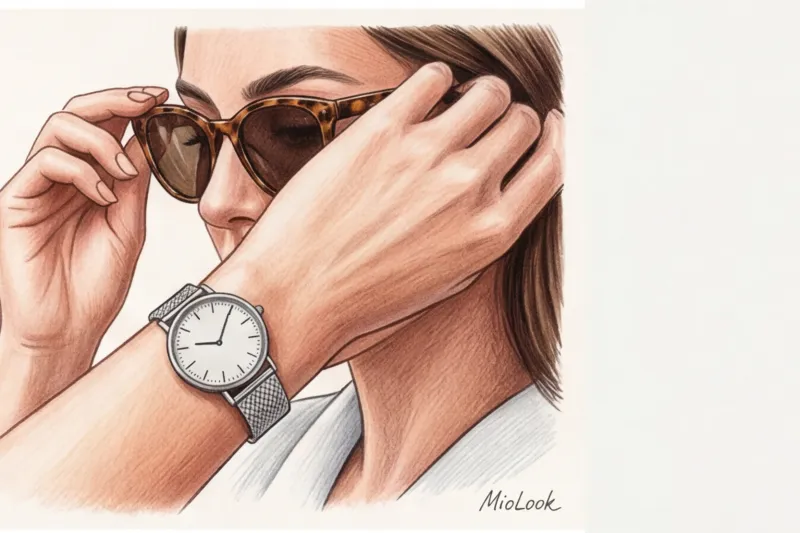
Tortoiseshell frames (havana or tortoiseshell) are a brilliant, significantly softer and more versatile alternative to black plastic. With a mix of amber, caramel, dark chocolate, and honey highlights, this pattern beautifully complements any skin tone. For warmer complexions, it highlights golden nuances, while for cooler complexions, it creates a refined yet unobtrusive accent.
Moreover, high-quality tortoiseshell acetate always looks more sophisticated and expensive than standard gloss black, perfectly fitting the aesthetic of "quiet luxury." Pair these frames with slightly gradient lenses, and you've got a status accessory that will garner compliments for years to come.
Your ideal image begins Here
Join thousands of users who look flawless every day with MioLook.
Get access — €0.99 onceThe Basic Accessory Matrix: A Checklist for Creating a Capsule
According to a report by the Ellen MacArthur Foundation, the average modern item is worn only 7-10 times before ending up in a landfill or a closet. The statistics for wardrobe essentials are even more dire. To break this cycle of impulsive consumption, I propose abandoning emotional shopping and implementing a strict, structured logic.
Building a stylish foundation doesn't tolerate chaos. There's a clear step-by-step plan for where to start shopping. You should work from the bottom up: shoes → bag → belt → jewelry.
Why is this so? Shoes determine your gait, comfort, and overall rhythm (you can't wear stilettos if you walk 10,000 steps a day). A bag reflects the logistics and scale of your figure. A belt ties the silhouette together, and jewelry is the finishing touch, framing the portrait area. Buying statement earrings before you've found the perfect everyday shoes is a strategic mistake.
Treat building your base as a business project. The Cost Per Wear formula is key. It's the best tool for justifying the purchase of an expensive, high-quality item.
Let's do the math. You buy a trendy, low-quality, mass-market bag for $60. It doesn't go with everything, and you only wear it four times a season. Your CPW is $15 per outing. You then invest $450 in a rugged leather tote (like Polène or Coach). You wear it to work 250 days a year. Your CPW is $1.80 per outing. In the long run, the right basic accessories for women are significantly cheaper than "bargain" one-off purchases.
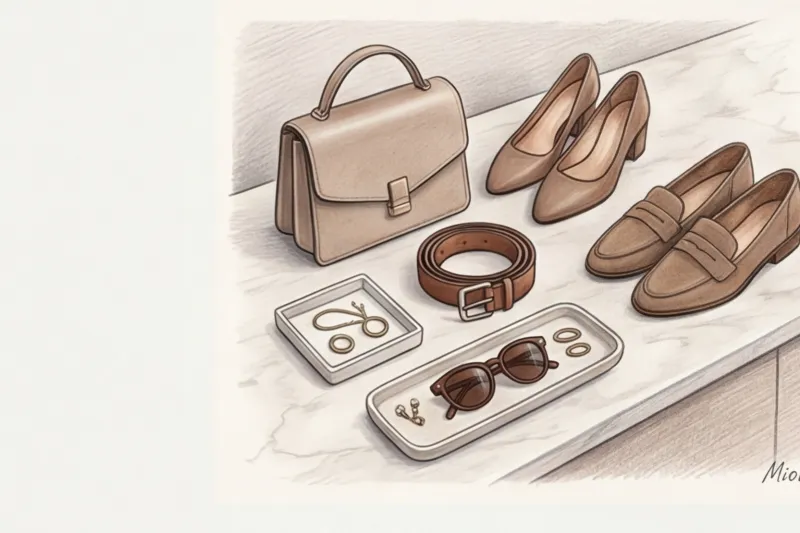
Below is my signature matrix—an example of an ideal 10-piece mini-accessory capsule that covers 100% of the needs of modern urban living:
- Structured loafers — in shades of dark chocolate, burgundy or taupe (in the spirit of the GH Bass classics).
- Shoes with a moderate heel — pointed ankle boots for winter or slingbacks with a 5-7 cm heel (kitten heel) for the warm season.
- Rigid everyday bag — A4 format, made of matte leather, without flashy logos and complex fittings.
- Compact crossbody or baguette bag — for weekends, going to the theatre or out to dinner.
- Wide belt (3-4 cm) — a basic architectural tool for trousers and jackets. Ideally, it should match the color of your roots.
- Thin accent belt (1.5-2 cm) — to fix the waist on flowing dresses and voluminous cardigans.
- Medium diameter hoop earrings - smooth metal, preferably in two colors (gold + silver).
- Basic chain of anchor weave - 40-45 cm long, creating a correct V-shaped neckline.
- Classic watches — a status detail on a metal bracelet or a minimalist leather strap.
- Sunglasses - "soft square" shape or wayfarers in a universal tortoiseshell frame.
I always give my clients one practical task: go through your things and collect these ten items from what you already have. To visualize the process, digitize the items you found in MioLook The app will clearly show you empty slots in your matrix, so your next shopping trip won't be an impulsive purchase, but a targeted, smart investment.
The main mistakes when styling basic accessories
The paradox of modern styling is that it's much easier to ruin a look at the final stage than when choosing trousers or a jacket. Have you ever noticed how often an impeccably tailored €500 cashmere suit loses all its luster due to one poorly chosen detail? When putting together a capsule wardrobe, we often stumble over hopelessly outdated stereotypes. Let's look at the three main mistakes that sabotage your efforts.
The first and most common pitfall is over-matching. The rule of "bag, shoes, and belt of the same material and strictly the same color" was written in etiquette books of the 1950s. Today, this approach looks pretentious and visually ages you. If you wear black leather pumps, a sleek black bag, and a matching belt, you're conveying to others that you've tried too hard.
Modern aesthetics demand a touch of casualness, the so-called sprezzatura Try breaking up this monolith: choose taupe-colored shoes made of dense suede, a belt made of dark chocolate-colored grained leather, and a structured bag in a deep olive green. Basic women's accessories should echo each other in color temperature and texture density, rather than be exact clones of each other.
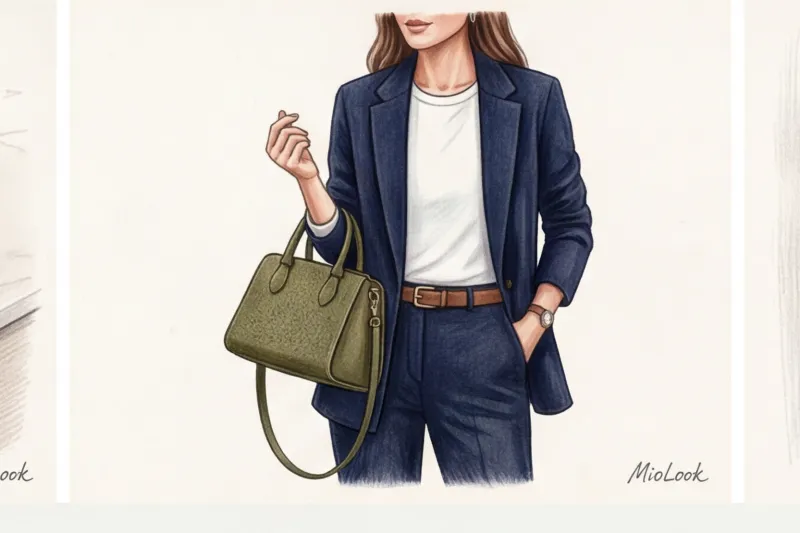
The second mistake stems from the basic laws of proportion—scale mismatch. Imagine a petite woman 155 cm tall with a huge, shapeless, oversized shopper that ends somewhere around the knees. Visually, such a bag "presses" the figure to the ground, distorts the center of gravity, and makes its owner appear even smaller. Conversely, on a statuesque woman with expressive curves, a tiny micro-bag (in the spirit of the famous Jacquemus Le Chiquito) will only emphasize her volume through contrast.
My rule of thumb for determining the ideal size: the width of your everyday bag should be no wider than your hips, and the size of the hardware and jewelry should be directly proportional to your bone structure. Those with thin wrists and delicate features should choose watches with narrow straps and thin chains, while larger women should choose chunky cuffs and watches with dials of 38mm or larger.
The third stylistic blunder is the use of overtly evening textures in a daytime casual base. Glossy patent leather, an abundance of rhinestones, shimmering satin, or vibrant metallics look out of place under office fluorescent lights or bright sunlight and often cheapen the entire outfit.
Patent leather shoes are highly reflective—historically, they're a tool for subdued evening lighting, when you need to catch the glare from candles or spotlights. For daytime basics, always opt for matte, "subtle" textures: pebble leather, high-quality nubuck, dense suede, or smooth calfskin without a strong sheen. They absorb light, look refined, show scratches less, and bring the look together without drawing too much attention.
We often don't notice these dissonances until we look at ourselves from the outside. To objectively evaluate how your combinations of textures and scales work, try creating several sets from what's already in your closet, photograph them, and upload them to outfits section in MioLook Your smartphone's screen will instantly highlight any mistakes: you'll immediately see if your bag appears disproportionately large or if your patent leather shoes clash with your matte wool coat.
To summarize, I'd like to offer you one practical action for tomorrow morning. Before leaving the house, look in the mirror and swap out one of your most "safe" pieces (like your usual black belt) for an accessory with an interesting texture or a complex yet understated hue. Remember, well-chosen basic accessories for women aren't just a shopping checklist. They're a daily investment in your confidence, personal brand, and social capital. Quality shoes, a well-shaped bag, and jewelry that complements your face work for you every day. They transform the boring "jeans and white shirt" formula into an expensive, well-thought-out ensemble that opens any door.
Guide Chapters
How to Choose a Basic Women's Watch: Stylist Tips
Oversized chronographs and blank dials are a thing of the past. We'll tell you how to choose a versatile watch that will complement any look.
Vacation Accessories Capsule: A Suitcase Without Overweight
How to pack stylish jewelry and bags for your trip without paying for excess baggage? We'll share a professional formula for the perfect resort luggage.
Stylish Office Essentials: Stylist Tips
Accessories account for 70% of the visual impact of a business look. We'll explain how to choose the perfect office essentials without outdated clichés.
A Basic Women's Scarf: How to Choose and Tie It Stylishly
Find out why cheap acrylic scarves ruin your outerwear. Styling tips for choosing and styling the perfect basic scarf.
How to combine gold and silver in clothing: tips
The "don't mix metals" rule is long outdated. Learn how to skillfully combine gold and silver jewelry to enhance your style.
How to choose accessories for clothing online at MioLook
The right accessories can elevate even a simple look. Learn how to create the perfect capsule wardrobe and avoid shopping mistakes with the MioLook app.
What to invest in: wardrobe, accessories, basics
Should you buy status or functionality? We'll explore which essential accessories are worth investing in, using math and lifestyle considerations.
Basic Sunglasses: How to Choose the Perfect Ones
The perfect basic sunglasses aren't just black frames; they're a stylish tool that acts as a micro-facelift. Learn how to avoid buying mistakes.
The Ideal Color for Basic Accessories: Myths and Facts
Black and beige are no longer the epitome of versatility. Learn how to choose accessory shades that will truly elevate your look.
Basic Summer Shoes for Women: The Perfect Capsule
How did a top manager manage to get just three pairs of shoes for a business trip across Europe? We're putting together a modern, minimalist capsule wardrobe for spring and summer, eschewing outdated tropes.
Basic Fall Shoes for Women: What to Buy This Season
Statistics show that 85% of women wear only two pairs of shoes per season. We'll explain how to mathematically accurately select the foundation for any look.
Basic Women's Belts: How to Choose and Wear Them
Forget the rule that black and brown belts go with everything. A stylist explains how to find the perfect accessory for your body type.
How to choose basic jewelry for every day
One-size-fits-all lists no longer work. We explore an architectural approach to creating a jewelry wardrobe that will highlight your individuality.
Basic Women's Bags: 3 Styles for Everyday Use
Forget the myth that a classic black bag goes with everything. We'll explore three truly versatile models in terms of style and biomechanics.