
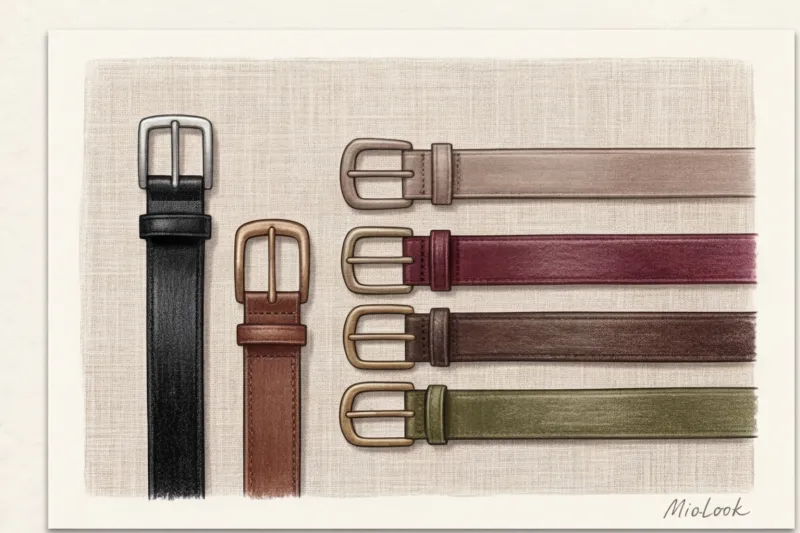
You know what purchase most often ends up hanging in the closet like dead weight? A black leather belt. I once had a client come in for a consultation who had spent 400 euros on a classic black Gucci belt with the recognizable logo. She was wearing a delicate pastel capsule belt, and this luxurious yet overly contrasting accessory mercilessly cut her figure in half. In the mirror, it looked like black duct tape tightly bound together a marshmallow.
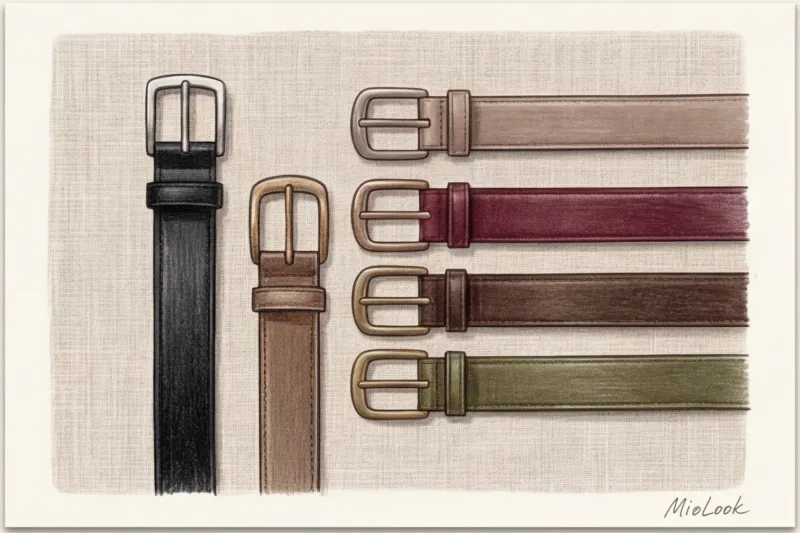
When glossy magazines advise "just buy black and brown," they're committing a crime against your proportions. Basic women's belts aren't a universal uniform. We've already discussed how to build a personalized, functional wardrobe in our The complete guide to essential accessories for women Today, as a practicing colorist and stylist, I'll show you how to choose a belt that won't ruin your figure but will become the smartest investment in your wardrobe.
The Anatomy of a Basic Women's Belt: Why Online Lists Lie
The myth of a "must-have" black belt for every woman is a legacy of the standardized men's business dress code. In women's styling, things work differently. A basic belt isn't a boring strip of neutral-colored leather. It's an accessory with the highest combination factor, specifically in yours closet.
A belt serves two functions: utilitarian (holding up pants) and visual (acting as a waist marker). While any string can perform the first function, the second requires a strategic approach. When you wear a dark belt with light pants, you create a rigid horizontal line. The viewer's gaze is drawn to this line.
A basic accessory wardrobe doesn't tolerate random pieces. Your ideal belt should be a logical extension of your natural contrasts, not an alien blot.
How to choose a belt color according to coloristics rules
The 12 color types system teaches us one important rule: the temperature and saturation of accessories should resonate with your skin and hair. If you're a naturally soft "Summer" with light brown hair, a jet-black color in the portrait area or at the waist will take center stage, overshadowing you.
Contrast and the "cut-off figure effect"
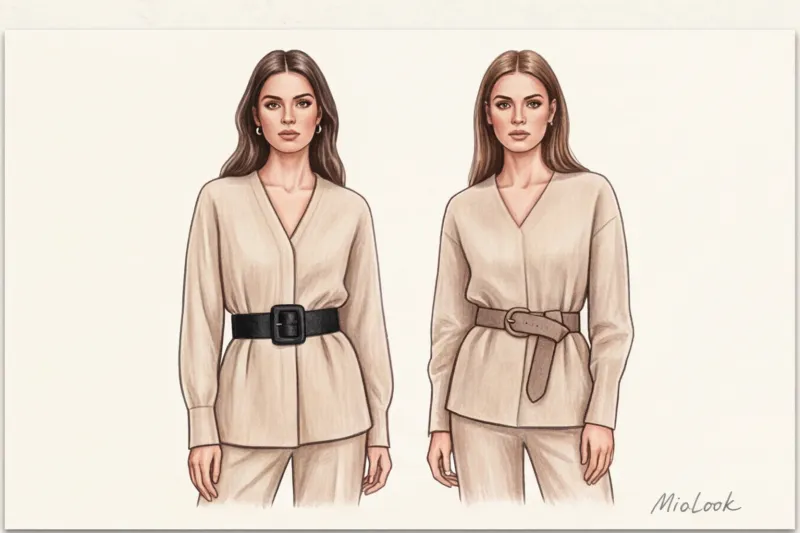
Let's talk about the mathematics of proportions. According to the golden ratio (1/3 to 2/3), the waist should be visually higher than the midsection to make your legs appear longer. If you're about 160 cm tall and you wear a contrasting belt, you're voluntarily stealing 5-7 centimeters of your visual height.
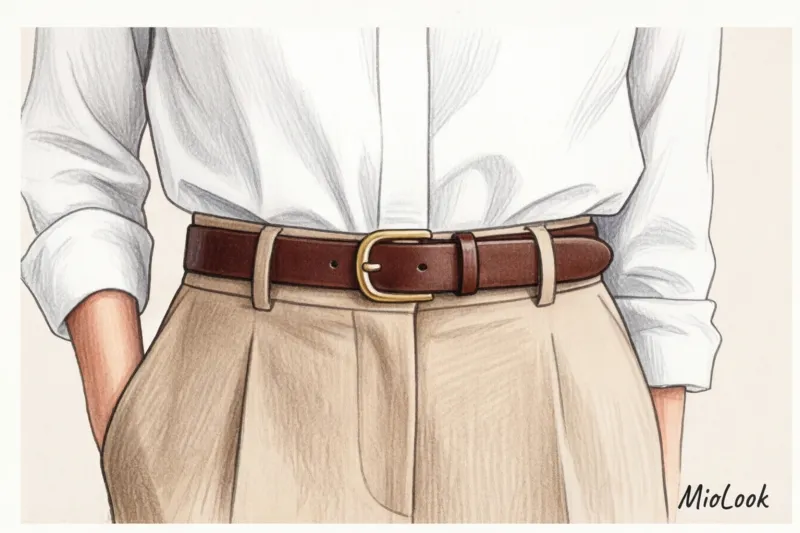
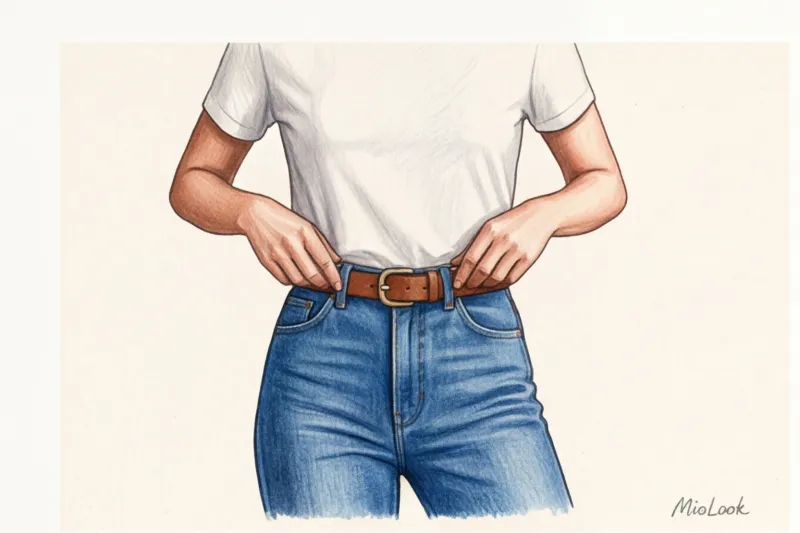
The golden rule for short girls: A belt that matches your bottom (pants or skirt) optically lengthens your legs. You essentially "build up" the length of your pants. If you match your belt to your top (for example, a white shirt and white belt with blue jeans), you elongate your torso. This technique is ideal for women with very long legs but a short waist.
Alternatives to Black: Ideal Basic Shades
In my experience, 8 out of 10 women look luxurious not in black, but in complex, mixed shades. If you're building a light wardrobe (typical for Spring and Summer color types), your base colors will be:
- Taupe (grey-beige): an absolute chameleon that adapts to both warm and cold tones.
- Caramel: Pairs perfectly with classic blue denim.
- Dusty rose and light olive: act as color neutralizers without attracting unnecessary attention.
For a deep wardrobe (Fall, Winter), I recommend replacing black with dark chocolate, graphite, deep burgundy (Marsala), or navy. Here's an insider secret: a textured taupe belt with a crocodile embossing will always look three times more expensive than a smooth black one of the same price. The texture makes the color more complex and adds a touch of class to the look.
Your perfect look starts here
Join thousands of users who look flawless every day with MioLook.
Get access — €0.99 onceWidth Matters: Choosing a Belt to Suit Your Body Type and Clothing
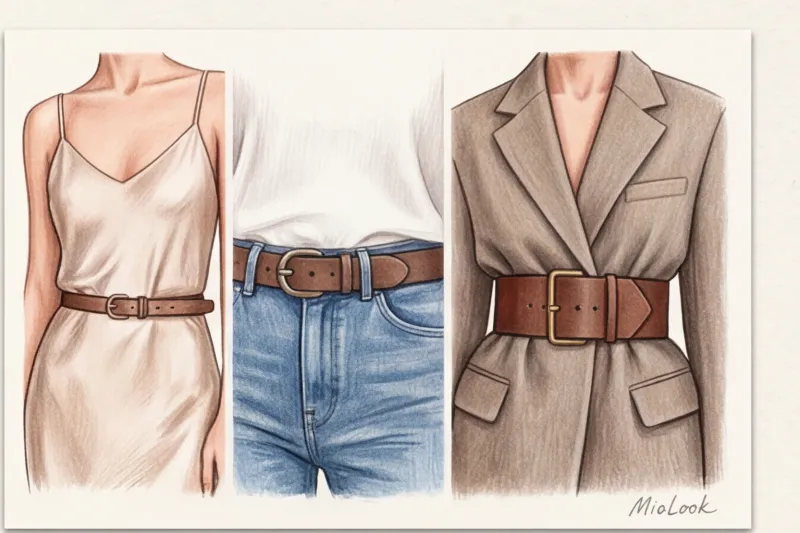
Over the years, I've learned the intricacies of clothing fit, measuring tape in hand. Belt width should correlate with your bone structure. Asthenic individuals (thin bones, narrow wrists) benefit from narrower belts. Hypersthenic individuals (large bones, statuesque figures) need larger accessories, otherwise the belt will disappear against the body.
2.5 – 3.5 cm: Universal standard for jeans and trousers
The standard belt loop width on women's jeans and trousers in modern brands (from Zara to premium labels) is 4-4.5 cm. Therefore, belts with a width of 2.5 to 3.5 cm are the universal standard.
This width fills the belt loop perfectly: the belt doesn't dangle like a drawstring or bunch up at the edges. This size doesn't weigh down the lower half of the body and maintains balance for most body types.
Wide Belts (4cm and Up): Who They Suit and What to Wear Them With
Wide, basic women's belts are a stylish addition to layering. They're perfect for adding structure to voluminous jackets, coats, and flowing maxi dresses. A wide, thick belt can transform a shapeless, oversized outfit into a graceful hourglass figure.
When it does NOT work: Wide belts are contraindicated for women with an apple-shaped figure and a short torso. On such figures, a 5-centimeter belt creates the effect of a rigid orthopedic corset, digging into the ribs below and the chest above, emphasizing the slightest folds at the waist.
Thin straps (up to 1.5 cm): Dangers and successful styling
The most common mistake I see on the street is trying to thread a thin, 1.5-centimeter belt into thick jeans. Against the roughness of 12-14 ounce denim, such a "string" looks skimpy, sloppy, and desperately cheapens the look.
The right way to use a thin belt is to work with delicate textures. Silk slip dresses, fine cashmere knits, summer chiffon skirts. Here, the thin line emphasizes the fragility of the fabric.
Styling Rules: How to Wear Basic Belts
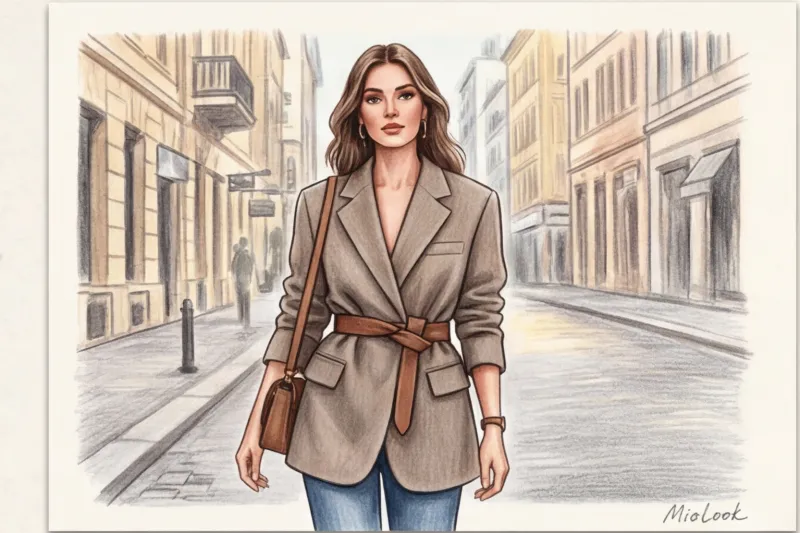
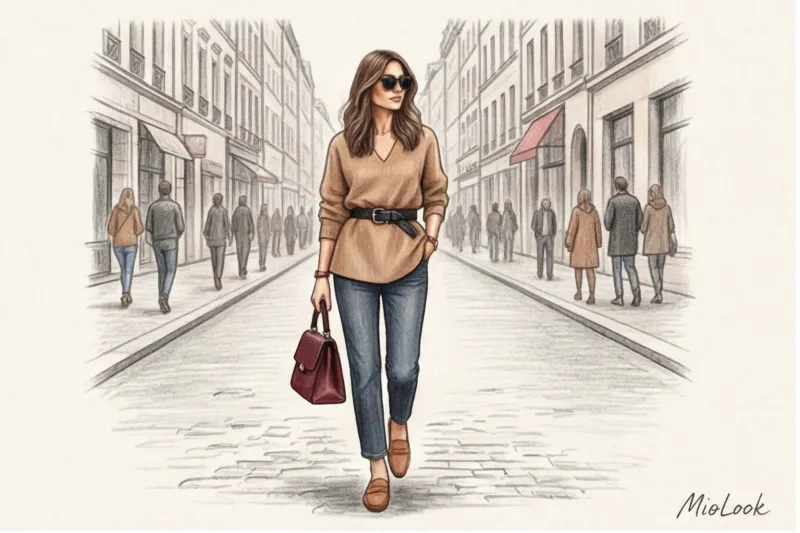
Today, a belt is more than just a fastening; it's a fully-fledged styling element. At the recent Bottega Veneta and Loewe shows, we saw the long end of the belt intentionally left hanging, tied in a casual knot. This takes the edge off an otherwise overly formal look.
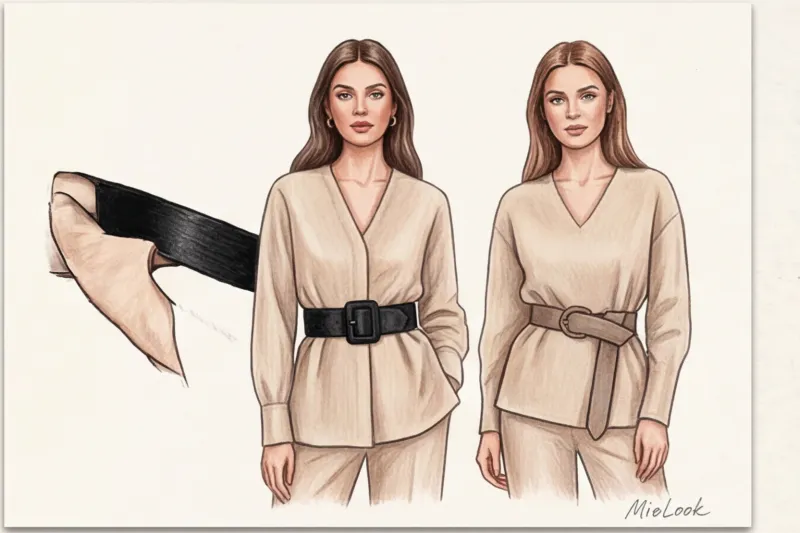
Another advanced technique is to use a belt as a color tie. For example, if you have a printed blouse with terracotta accents, a terracotta belt will perfectly bring out the color in the print and tie the top together with neutral pants. If you have trouble visualizing these combinations, upload photos of your items to MioLook — the algorithm will help you find subtle color bridges in your closet.
Do you need to match your belt to your shoes and bag?
A categorical "NO." The "bag, shoes, and belt in the same color" rule is hopelessly outdated. A precise, literal match today adds age and makes a look too tried-on (the "too matchy-matchy" effect, as stylists call it).
Instead of matching colors, use the "temperature affinity" rule. Pair accessories by warmth: a warm brown belt will pair perfectly with an olive bag and caramel shoes. A cool graphite belt will perfectly complement a dusty rose bag.
Belt over a jacket, cardigan or coat
To avoid the "teapot" effect (when the fabric bulges into untidy bubbles) when styling over a top layer, consider the fabric's density. The belt should be proportionate to the fabric: a soft, thin belt won't hold the structure of a heavy wool jacket (weight over 400 g/m²).
Proper technique: button the jacket, place the belt exactly at the waist (just above the navel), and smooth out the pleats at the back so they meet the side seams. The fabric should lie as flat as possible in the front.
Ready to get started?
Try the free plan—no commitment—and build your first perfect capsule.
Get access — €0.99 onceBuckle metal: gold, silver or matte hardware?
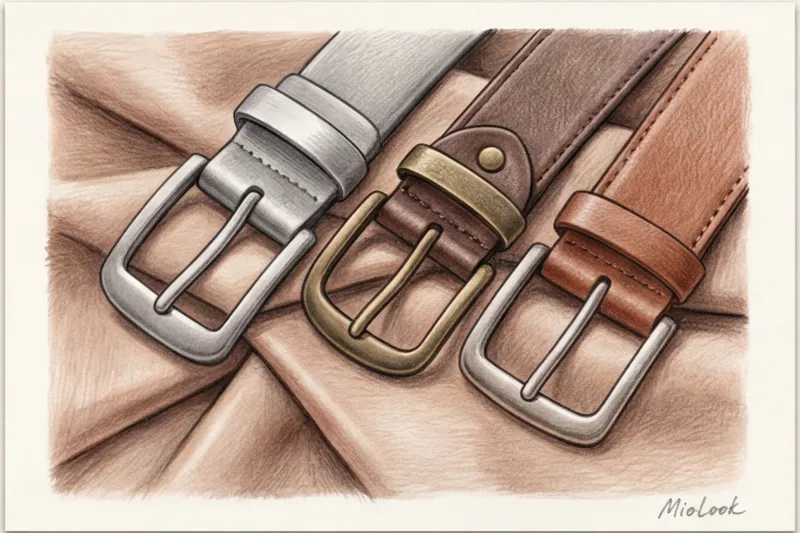
The color of the metal buckle is often a stumbling block. As a colorist, I always recommend considering your skin's undertone. Cool undertones (veins on the wrist are bluish, skin burns easily) are more flattered by silver. Warm undertones (veins are greenish, skin tans easily to bronze) are more flattered by gold.
But herein lies the main pitfall of the mass market. Bright yellow, shiny, "samovar" gold on belts instantly cheapens an outfit. It's easily scratched and betrays the item's budget origins. According to WGSN's trend analysis (2024), the current dominant trend is toward minimalist hardware and "quiet luxury."
If you want to look classy, choose:
- Leather-covered buckles (monochrome always looks expensive);
- Matte Brass (muted brass);
- Aged silver with patina.
Should you match your buckle color to your jewelry? Spoiler: no. Modern fashion encourages mixing metals. A matte brass belt buckle won't clash with your favorite white gold rings.
Checklist: 3 Basic Women's Belts That Will Complete 90% of Your Looks
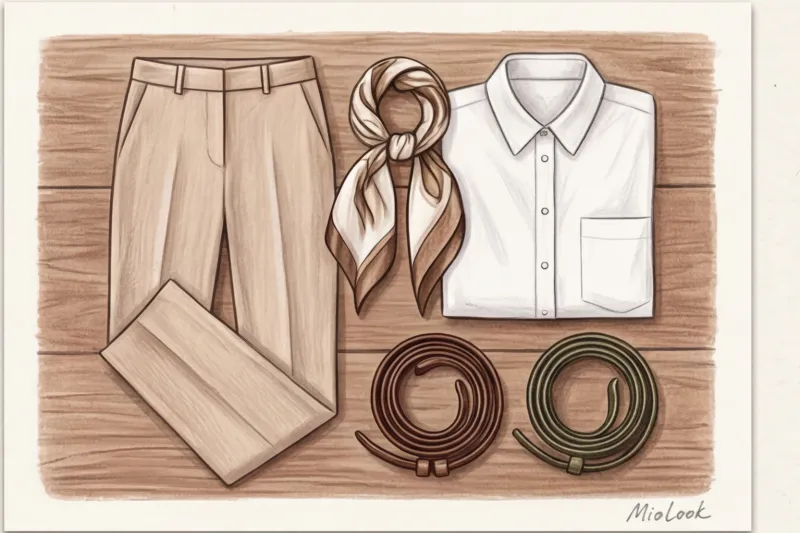
Instead of buying the tenth random belt on sale, put together a functional capsule collection. Here's my personal top 3 that I put together for my clients. It solves almost every style need.
- Casual belt: Width: 3–3.5 cm. Textured leather. Color: complex shade (taupe, caramel, or dark chocolate), tone-on-tone to match your favorite jeans or trousers.
- Accent belt (for top layers): Width from 4 cm. Medium stiffness. Designed exclusively for wearing over jackets, cardigans, and dresses.
- Elegant belt (evening/summer): Width up to 1.5-2 cm. Smooth leather, minimalist buckle without logos. For flowing fabrics, silk, and fine knits.
Belt as a status indicator: what to look for when buying
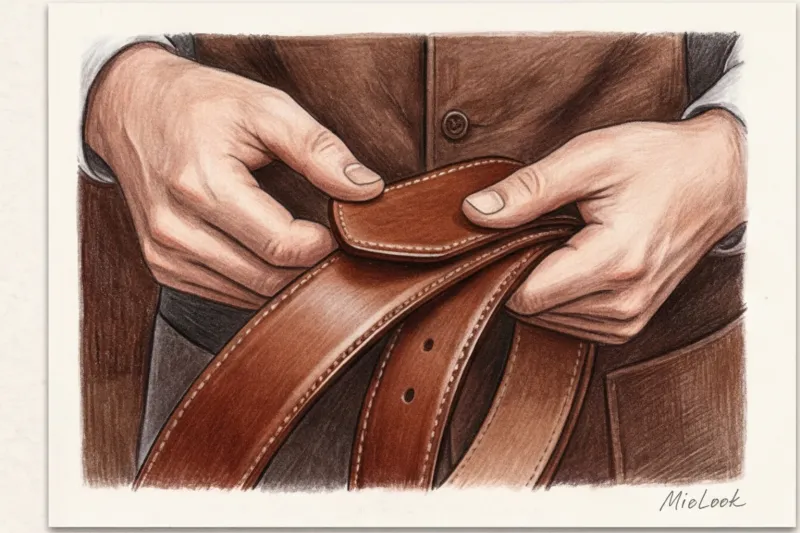
There are certain items in your wardrobe that you can skimp on (basic T-shirts, summer tops), but leather accessories aren't one of them. A belt is the center of your silhouette. It's a focal point, and it needs to be flawless.
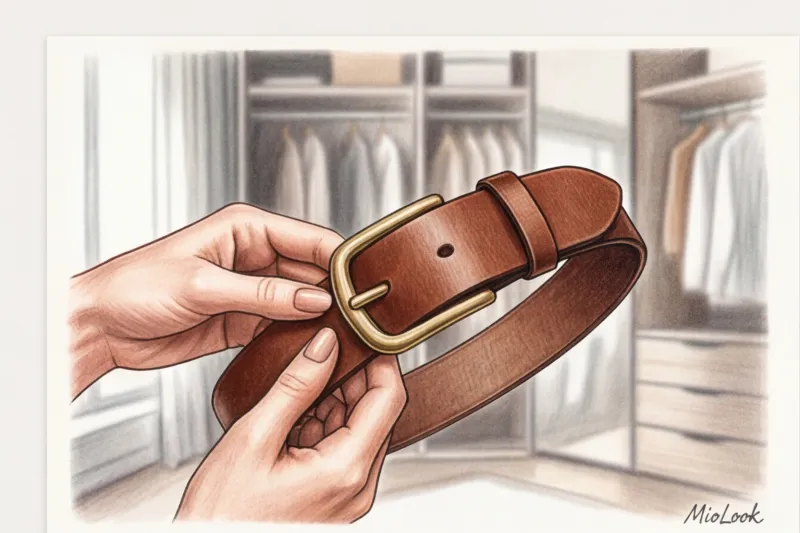
Insider knowledge: When handling a belt, look at the finish of the edge (side edge). Cheap belts have a thick layer of rubber paint on the edge, which will crack within a month. High-end belts have sanded edges, thinly painted edges, and sealed with wax. The stitching should be even, with a stitch pitch of no more than 3 mm, and without any loose threads.
Pay attention to the leather labeling. The label "Genuine leather" is often a marketing ploy. It actually conceals pressed leather made from glued scraps. Look for the label "Full-grain"—this is the entire top-grain leather, which develops a beautiful patina over time.
Yes, a high-quality full-grain belt is more expensive. But let's calculate the cost per wear. A €100 belt that you wear 300 times will cost you 0.33 cents per wear. A cheap pressed leather belt for €20, which will snap in half at the small of your back after 15 wears, costs €1.30 per wear. The math speaks for itself.
My final advice: It's better to have one perfect, expensive, basic belt in a sophisticated shade that pulls your look together than five cheap, multicolored leather belts sitting unused in your closet. Analyze your proportions, understand your color type, and invest in accessories wisely.