
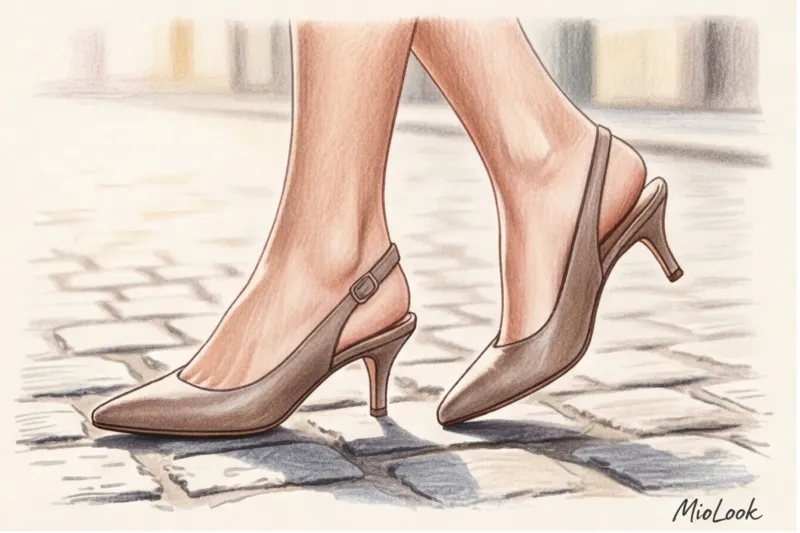
Last May, a client, a top manager at a large IT company, contacted me. She was about to embark on a month-long business trip across Europe: from rigorous board meetings in Zurich to relaxed dinners on the verandas of Rome. Do you know how many pairs of shoes we packed into her compact suitcase? Just three. And they covered 100% of the needs. This incident once again confirmed my most important rule: a wardrobe doesn't start with a white shirt, but with the right shoe last.
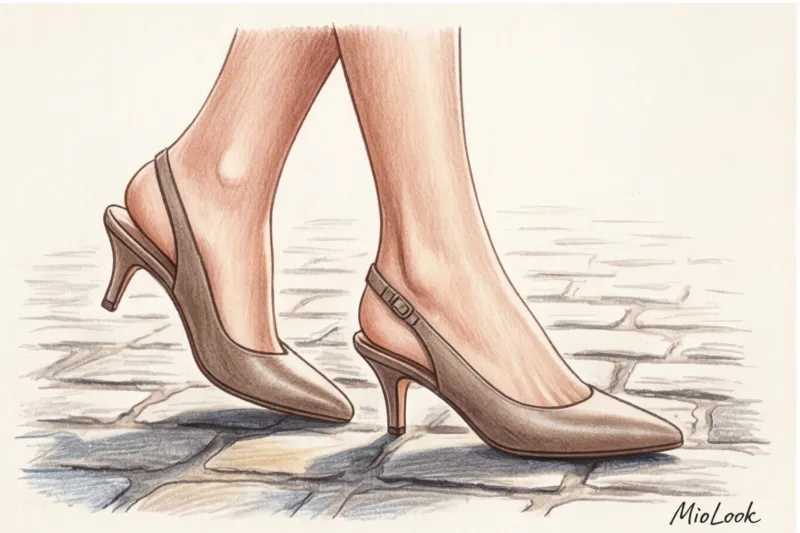
When we discuss what it should be like Basic summer shoes for women , algorithms helpfully feed us lists from ten years ago. We're advised to buy beige pumps with hidden platforms, fabric espadrilles, and round ballet flats with bows. We discussed the architecture of a well-designed look in more detail in our complete guide to basic accessories for women , but today I want to focus specifically on shoes. I suggest forgetting the standard lists and looking at your shoe wardrobe through the prism of status, Italian craftsmanship, and the value of every step you take.
Basic Summer Shoes for Women: Why Glossy Magazine Lists Don't Work Anymore
Let's be honest: classic ballet flats with a round toe will go with almost any modern outfit, while beige stilettos at 30°C on city streets look more like an attempt to prove something than an elegant basic.
Shoes are the foundation. They have a phenomenal quality: a pair of luxurious, architecturally crafted loafers can elevate even a Zara dress to a premium level. Conversely, cheap, poorly glued faux leather shoes will instantly ruin an impeccable Loro Piana suit. Over 12 years of styling, I've developed a micro-capsule formula: you don't need 15 pairs of trendy sandals for one season. You need four perfect pairs that will last for years.
"Shoes are the only item of clothing that physically changes the way you walk, your posture, and the way you carry yourself in space. Skimping on them means skimping on your own body language."
Your perfect look starts here
Join thousands of users who look flawless every day with MioLook. A smart AI stylist will help you create a capsule wardrobe from what's already in your closet.
Get access — €0.99 onceThe Anatomy of Quality: What We Pay for When Buying Expensive Summer Shoes
In my practice, clients often ask, "Julia, why are these sandals $500 if they look like the $50 ones?" The difference lies in what's hidden from view at a quick glance in the display case.
A few years ago, I spent a week in historic tanneries in Florence, exploring the process from the inside. It's quite easy to tell the difference between full-grain leather (the highest quality, unsanded grain) and pressed split leather with a polyurethane coating by touch. Full-grain leather "breathes," adapts to the anatomical features of your foot, and develops a refined patina over time. Split leather, on the other hand, creates a greenhouse effect in the summer heat—the culprit behind blisters and discomfort.
The second critical issue is the last and arch support. Statistics from European orthopedists are adamant: a completely flat sole (which we love so much in beach sandals) is even more damaging to the spine than a classic stiletto heel. The lack of cushioning puts stress on the joints with every step on the pavement. Italian shoemaking guilds still adhere to the gold standard: the ideal drop for everyday city shoes is 2-3 centimeters.
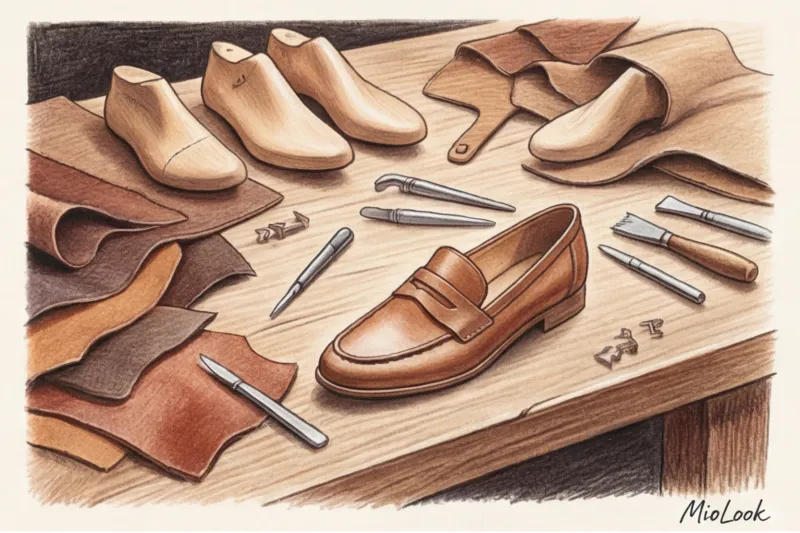
The third quality marker is the hardware and edge finish. In the premium segment, you won't find glue drips or shiny, easily scratched "gold." Hardware should be brass or matte metal, and seams should be perfectly even, with a spacing of no more than 2-3 mm.
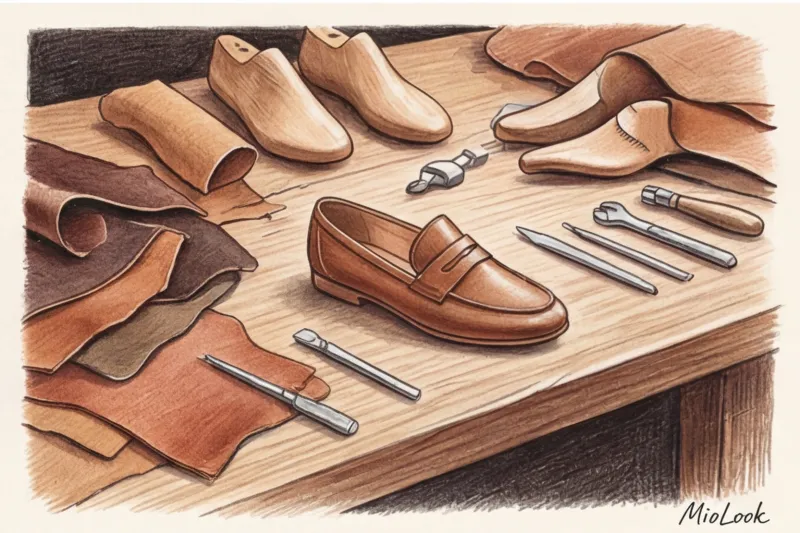
Minimalist Summer Capsule: 4 Pairs That Cover 100% of the Tasks
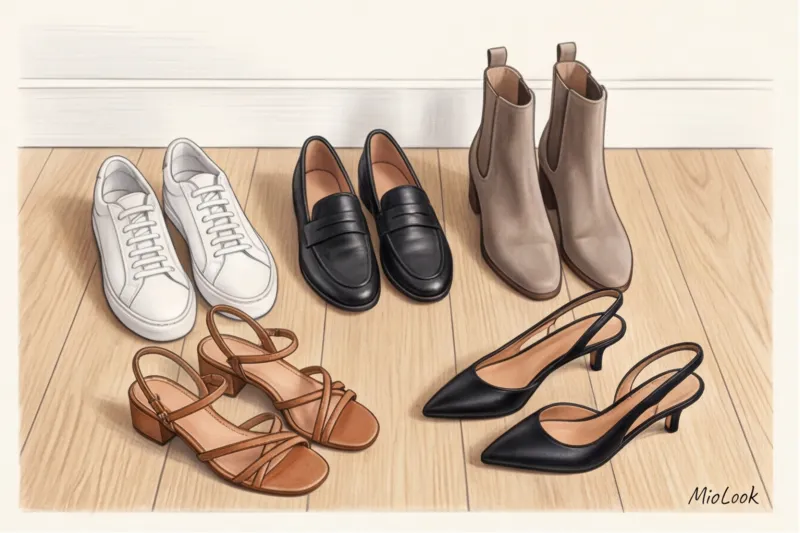
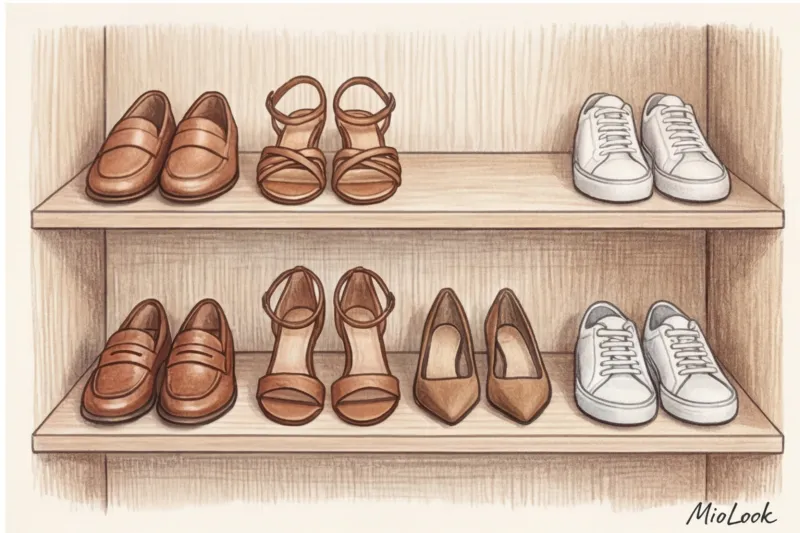
If you want to travel with carry-on luggage and avoid wasting your mornings wondering "what to wear with this?" I suggest my signature formula. These four pairs are interchangeable and easily take your look from a morning meeting to an evening cocktail on the veranda.
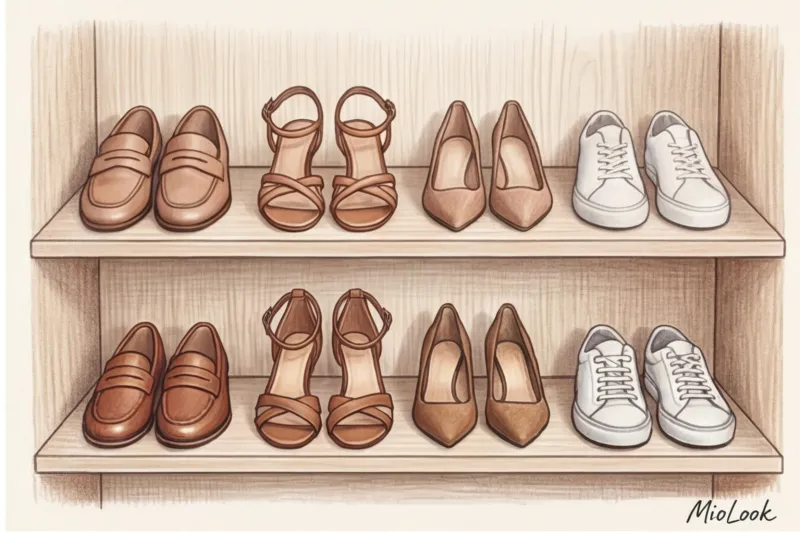
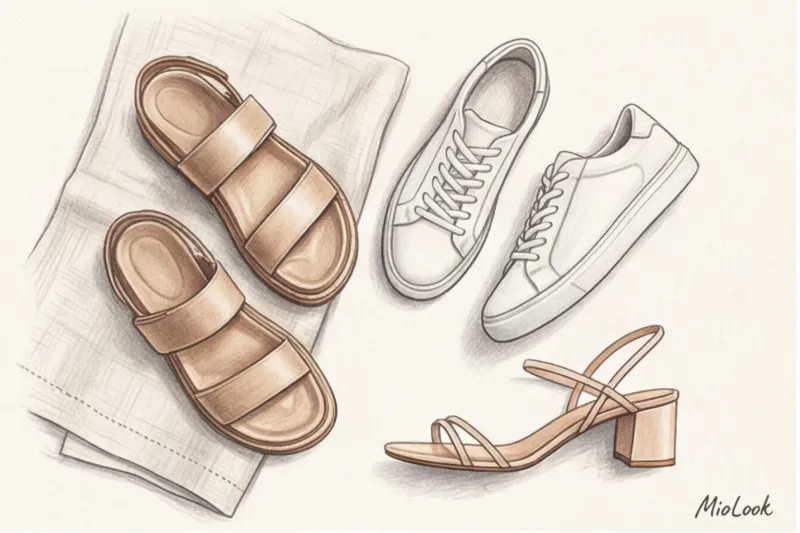
1. Elegant flat walk: loafers or mules
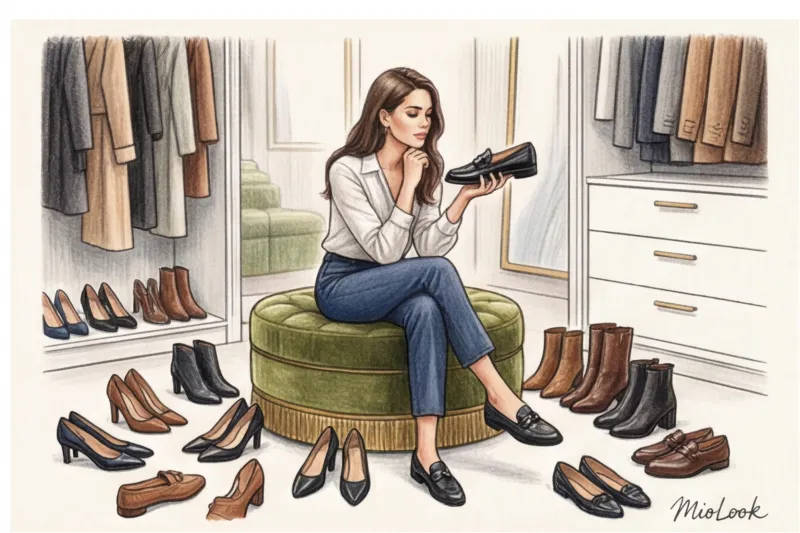
Save stiff oxfords for fall business meetings. In summer, soft loafers (often with a folding heel, or babouches) made of fine suede or nappa leather are the go-to. If your office dress code is relaxed, consider mules with an elongated, slightly square, or pointed toe. Unlike round toes, an elongated shape visually extends the line of the leg, creating a slimmer silhouette, even if you're wearing culottes or Bermuda shorts.
2. Urban sandals: architectural minimalism
I'm categorical here: no cork wedges, rhinestones, or excessive embellishments. Choose sandals with thin but secure smooth leather straps. Heel support is crucial for long walks in the city. Backless flip-flops force your feet to reflexively strain to hold the shoe in place, leading to evening swelling and fatigue.
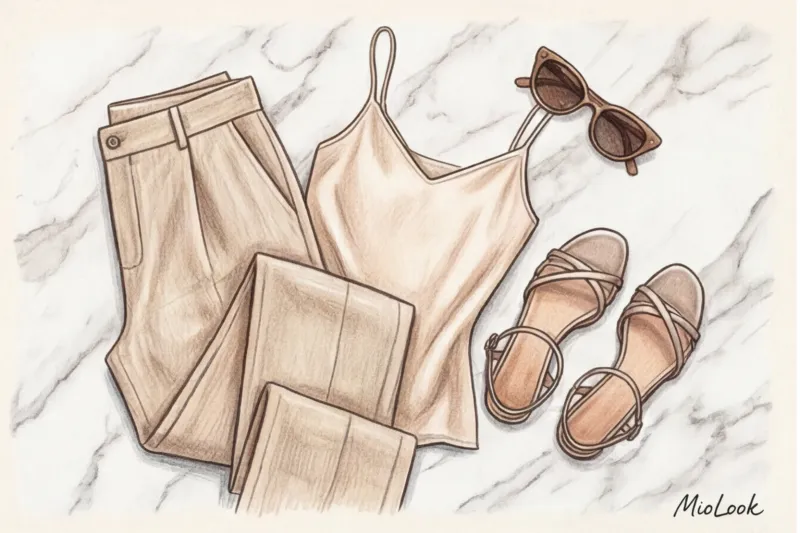
3. Accent pair: slingbacks with a micro-heel (Kitten Heel)
My favorite secret of Italian fashionistas: Kitten heels (3-5 cm) are the perfect compromise. Slingbacks with an open heel look incredibly elegant and are appropriate for everything from a date to smart casual office Try wearing them with wide-leg jeans: the pointed toe peeking out from under the rough denim creates a stunning contrast of textures.
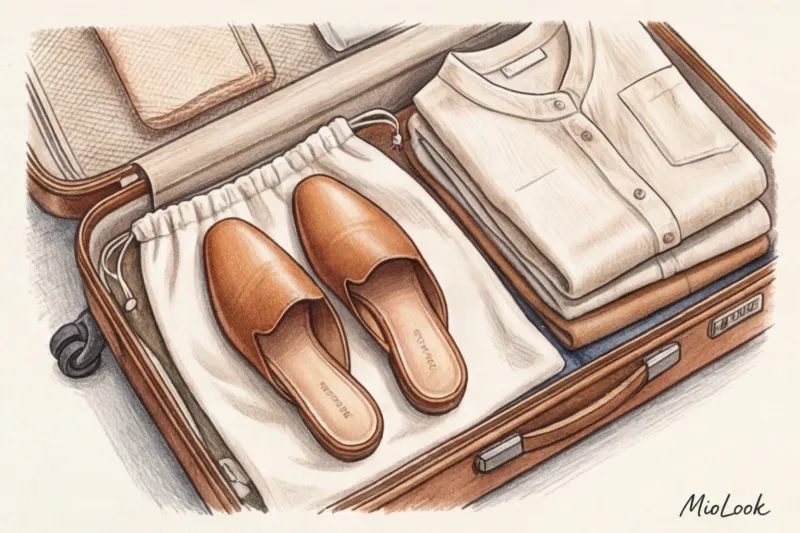
4. Minimalist leather sneakers (not trainers!)
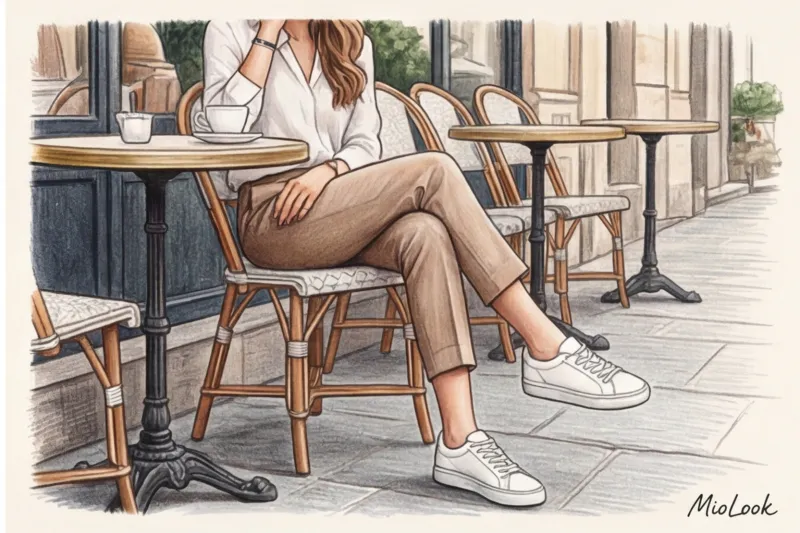
Now here's a counterintuitive tip: white running sneakers with mesh panels aren't the best investment in your basic wardrobe. Yes, they're popular. But the sporty aesthetic will instantly forgive your look. Wearing a linen pantsuit with chunky sneakers will make you look like a tourist. Swap them for sleek, minimalist leather sneakers without logos, perforations, or contrasting sole panels (in the spirit of Common Projects or The Row). They even pair well with silk slip dresses.
Fair limitation: This advice doesn't work if you're about to hike 20 kilometers through the mountains or parks. For sports and rugged hiking, wear athletic shoes. For city life, embrace the aesthetics of minimalism.
Ready to get started?
Try MioLook's free plan—no commitments required. Take a photo of your shoes, and our AI assistant will suggest dozens of new pairings with your outfit.
Get access — €0.99 onceColor and texture: how to move away from black without losing versatility
The most common myth I bust during my consultations is: "Black shoes are universal." In summer, this is absolutely not true. Black loafers or sandals paired with light-colored clothing (especially pastel colors or white linen) visually cut off the leg and make the lower part of the figure look heavy.
Instead of black, I recommend investing in rich shades: taupe (a complex gray-beige), warm caramel, dark chocolate, or deep burgundy. These colors look much more expensive. And if you're looking for a true summer nude, consider metallics—matte gold or aged bronze. Metallic leather acts like a mirror, reflecting the colors of your clothes, and therefore, paradoxically, pairs perfectly with everything.
Investing in Step: Calculating Cost-Per-Wear for Shoes
We've reached my favorite wardrobe investment rule. The Cost-Per-Wear (CPW) formula is the cost of an item divided by the number of times it's worn.
Let's do the math. You buy trendy faux leather sandals at a mass-market store for $50. Because of the stiff straps, you wear them five times during the summer, and by the following year they're worn out. CPW = $10 per outing.
Alternative: You buy impeccable, handcrafted leather loafers for $400. You wear them in the spring, cool summer, and early fall—about 100 days a year. With proper care, they'll last you at least four years. CPW = $1 per outing.
According to McKinsey's State of Fashion 2024 analytical report, conscious shoppers have finally shifted their focus from quantity to longevity. Buying less but better isn't just eco-friendly; it's mathematically sound.
But premium footwear requires expertise. Few ordinary people know the stylist's secret: cedar shoe trees. Leather absorbs moisture throughout the day. If left to dry, shoes will become misshapen. An unvarnished wooden shoe tree draws out moisture, smooths out creases at the toe, and deodorizes the shoe. One pair of high-quality shoe trees for $30 will extend the life of your shoes by several years.
A stylist's checklist: a pre-season re-evaluation
Don't rush to the store. Before putting together a new capsule collection, take stock of your current arsenal. Here are four steps I take with every client at the start of the season:
- Get rid of the "dead weight". Throw away shoes with worn-out heels, unremovable scratches on the toes, and those that constantly irritate your feet. Life is too short to endure pain for the sake of beauty.
- Take the base to the specialist. Take high-quality leather shoes to a reputable shoe repair shop. Replacing the heels, applying preventative treatment to the leather soles, and professional dry cleaning of the suede will work wonders – your shoes will return to looking like new.
- Identify the gaps. Take a look at my 4-pair formula. What's missing to complete your outfit? Perhaps you have too many sneakers but don't have a pair of elegant flats.
- Invest targetedly. Write a list of 1-2 missing items and go shopping with a clear request for a specific color, texture, and silhouette.
Basic summer shoes aren't about boredom. They're about the freedom of not having to worry about what to wear tomorrow morning, and still always looking impeccably expensive. Save experimenting with neons and complex shapes for micro-trends, and keep the foundation monolithic.