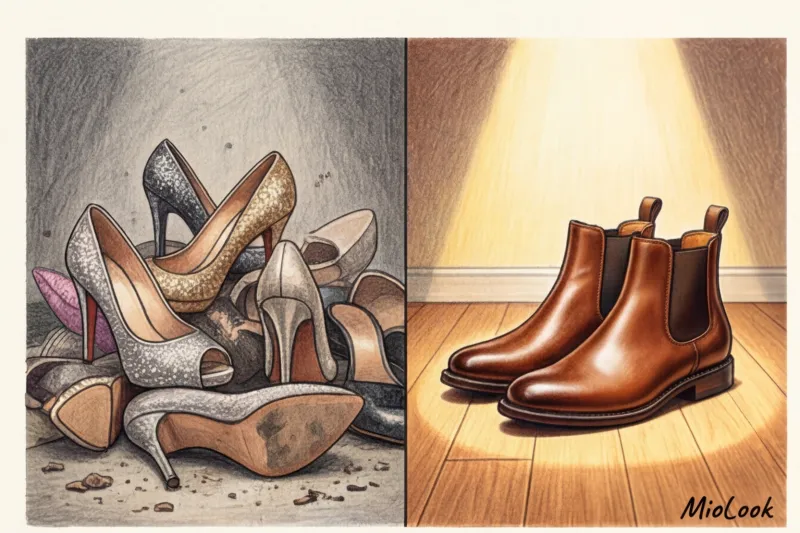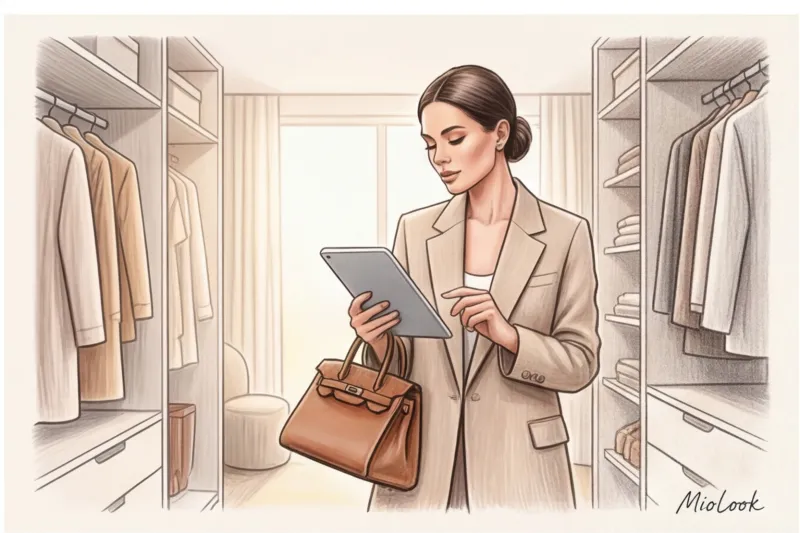
Over 12 years as a fashion journalist and stylist, I've studied hundreds of women's closets—from the apartments of up-and-coming professionals to the penthouses of CEOs. And you know what almost all of them have in common? Every closet has its own "shelf of disappointments." There lie those iconic stiletto heels worn exactly once to a corporate event and the trendy micro-bag that can't even fit a phone. When the question arises, What to invest in: wardrobe, accessories or shoes, most women make the same mistake - buying status over functionality.
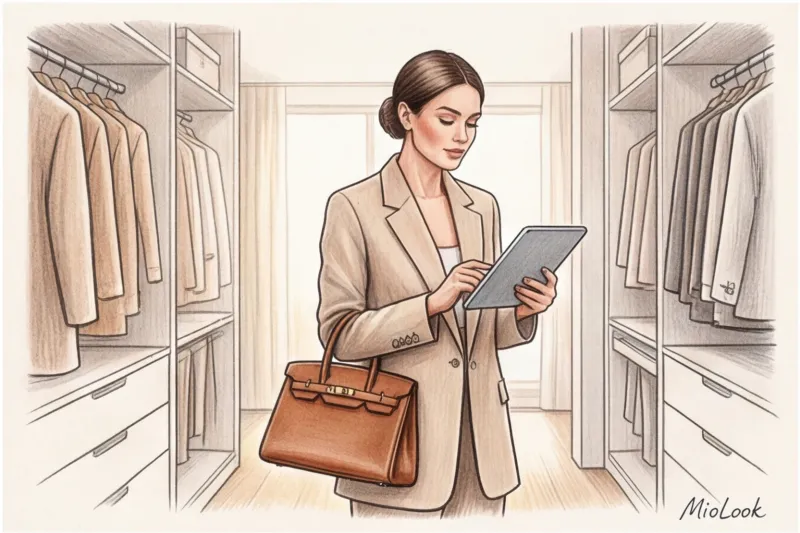
According to a McKinsey study (2024) on consumer habits, we wear only 20% of our clothes 80% of the time. The rest is frozen capital. Unlike the standard glossy lists of "10 things every woman should own," I propose evaluating the appeal of accessories not by their brand, but by dry math and your actual lifestyle.
If you want to understand the mechanics of how the basic parts work, we've covered this in more detail in our The complete guide to essential accessories for women Today, we'll examine your wardrobe as an investment portfolio: which assets will bring you daily dividends in the form of comfort and confidence, and which will only drag down your budget.
What to Invest in: Wardrobe, Accessories, and the Cost Per Wear Rule
Online "must-have accessory" lists are hopelessly outdated. You don't need classic beige pumps or a quilted Chanel-style bag if you work remotely or prefer a sporty-chic aesthetic. Blindly copying "millionaire lists" leads to the most senseless spending.
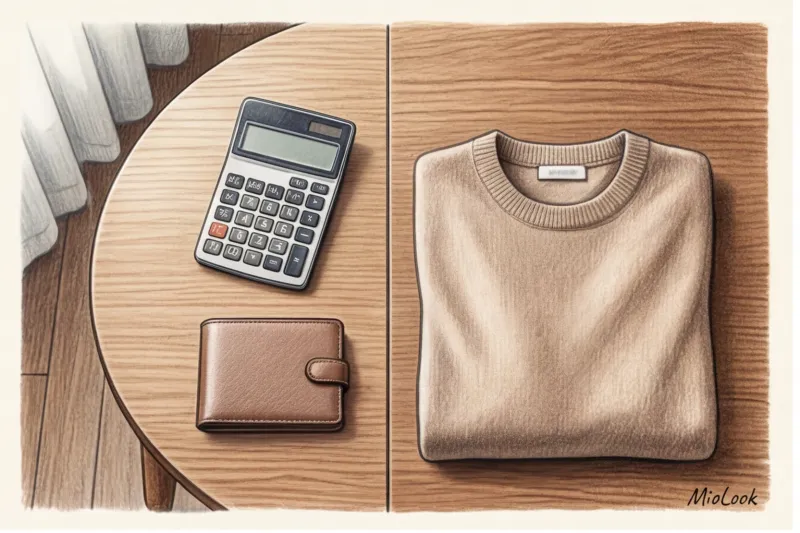
The main rule of a competent investor in his style is the formula Cost Per Wear (CPW) , or "cost per output." It's calculated simply by dividing the item's price by the expected number of outputs it contains.
Let's do the math. Let's say you bought a high-quality, structured sneaker for 20,000 €. You wear them 200 days a year. Your CPW is 100 € per outing. That's a brilliant investment. Now, imagine those rhinestone-studded evening shoes for 10,000 €, bought on sale and worn twice. Their CPW is 5,000 € per outing. That's a net loss.
In my practice, my clients and I regularly conduct this kind of audit. When you start digitizing your wardrobe, illusions melt away. It turns out that the "expensive" basic item you wear every day costs less than a cup of coffee, and that "bargain" purchase on sale can easily blow your budget.
Your perfect look starts here
Join thousands of users who look flawless every day with a smart wardrobe tracker.
Get access — €0.99 onceWhat you absolutely mustn't skimp on: The "framework" of your style
There are "framework" accessories—things that pull your look together, create clean lines, and contribute to your first impression. You can't skimp on them. A cheap dress fabric might go unnoticed, but cheap bag hardware or worn-out shoes will instantly ruin even the most carefully crafted look.
The quality of the materials here is a status marker. Forget about the inscriptions. Genuine leather (genuine leather) - in the leather industry, this is the lowest grade, often in the form of pressed crumbs on glue. You need to invest in Full-grain leather (full grain leather) - it is not sanded, retains its natural texture, ages beautifully and serves for decades.
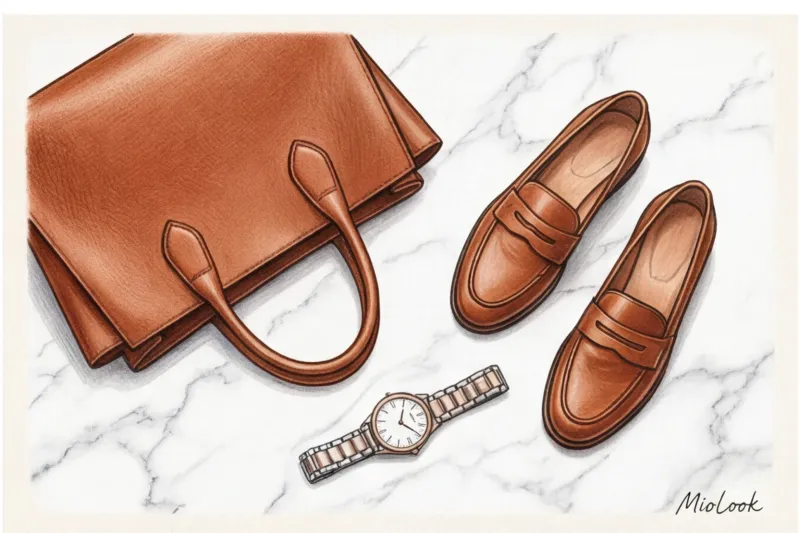
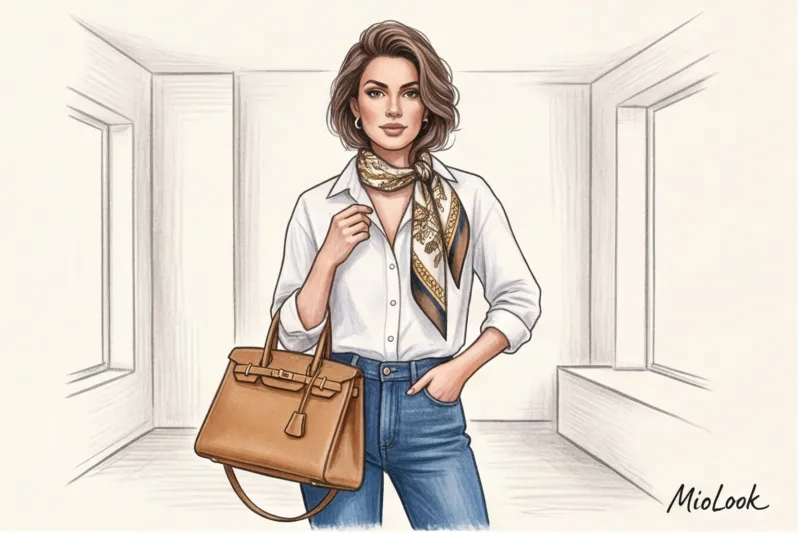
Structured bag (Daily Bag)
One of my clients once bought an expensive designer tote bag. It was soft as a cloud. The result? It's gathering dust in a closet because its thin handles are uncomfortable, and the lack of a rigid bottom makes it impossible to find her keys. Meanwhile, her structured, no-name bag is worn every day.
Soft bucket bags quickly lose their shape, stretch out, and visually cheapen the look. The ideal daily bag should stand on its own on a table. Look for a rigid bottom, high-quality seams (no exposed glue), and a minimum of flashy gold hardware.
"An investment bag doesn't have to be black. Dark chocolate, deep burgundy, or cool taupe work as a base, but they look a hundred times more sophisticated and expensive."
Shoes that define your gait
Cheap shoes literally change the biomechanics of your stride. When the last is unbalanced, you slouch and your gait becomes heavy. No logo on the toe box can compensate for the shifted center of gravity.
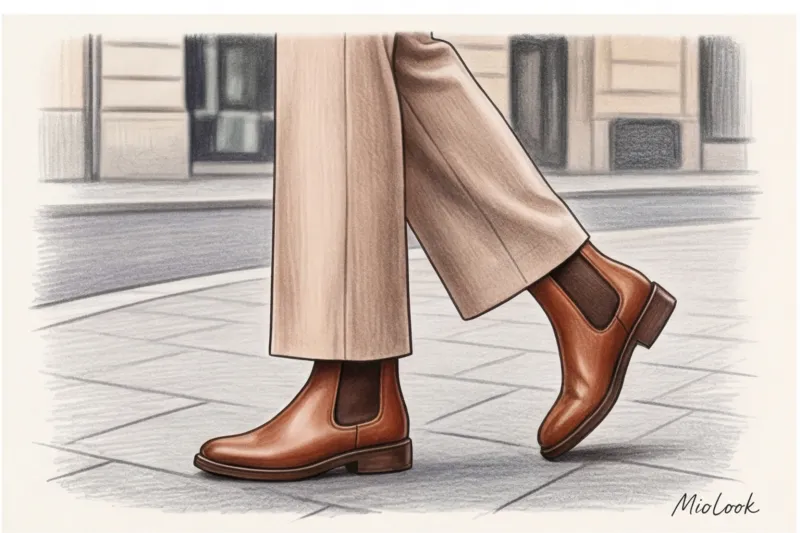
The difference in wear between mass-market and premium shoes is colossal. Invest in loafers, Chelsea boots, and minimalist sneakers made of smooth leather or thick suede. The interior of the shoe should definitely be leather (not fabric) to allow your feet to breathe. This is truly worth the extra cost.
Classic watches and belts
In the age of smartwatches, when everyone is wearing a blank screen on their wrist, classic analog watches have become markers of time and status. They convey the message: "I'm managing my time, not checking notifications every second."
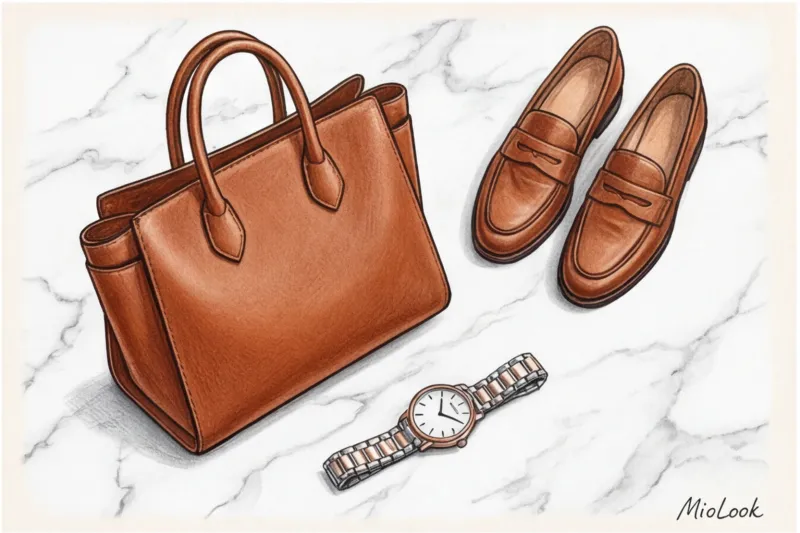
The same goes for belts. A single, high-quality belt made of thick, full-grain leather with a simple matte buckle can save even the most boring office suit or basic jeans. It's that vertical line that brings the silhouette together.
Access to MioLook for €0.99 — one-time payment
A smart AI stylist will create the perfect look from your own items in seconds.
Get access — €0.99 onceSmart Savings: Accessories Where Mass-Market Outshines Luxury
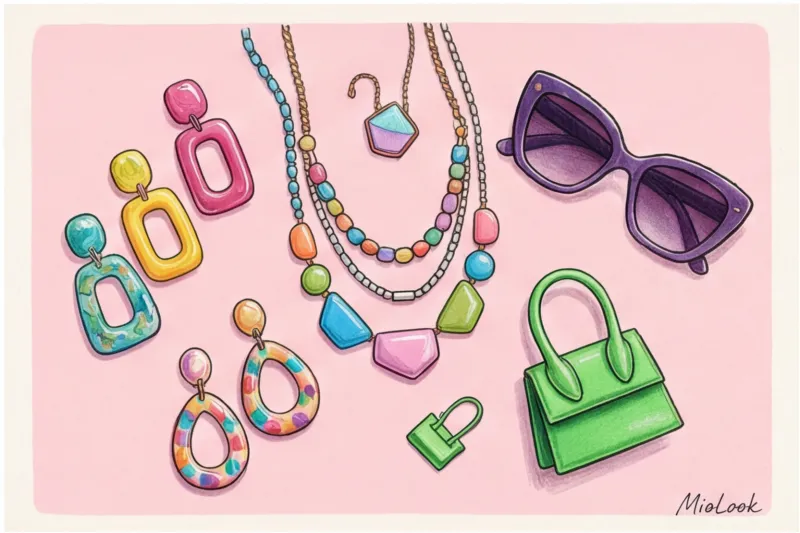
I often observe fashion editors at Paris and Milan Fashion Weeks. Do you know their secret? They masterfully mix shoes from The Row or Bottega Veneta with plastic jewelry from the mass market. There's no point in overpaying for fast-fashion trends that will go out of style within a season.
At fashion shoots, stylists constantly use affordable accessories. On camera and in real life, textured acrylic or high-quality jewelry alloys look just as impressive as heavy luxury pieces when styled correctly.
Trendy jewelry and micro bags
The lifespan of a hot micro-trend today is 3 to 6 months (according to trend analysis by WGSN). Chunky gold choker chains, childish plastic rings, and oversized mono-earrings—all of these should be bought from brands like Mango or COS.
Micro bags ("lipstick bags") are a particular pain. Buying one of those tiny Jacquemus or Prada bags for hundreds of euros is the worst investment for a basic wardrobe. They're a one-night stand. If you want to play with proportions, find a similar item in a mass-market store.
Sunglasses: A Trap for Beginners
Sunglasses are the most vulnerable to loss and damage. One scratch from your keys in your bag and your €500 glasses will lose all their shine. Personally, I prefer to have three or four pairs of high-quality, yet affordable glasses in different shapes (cat-eye, aviator, chunky square) than one luxury pair that I'll spend hours fussing over at the beach.
Investing in "Your Own," Not "Others'": Debunking Styling Myths
The most dangerous illusion is the belief in universality. For years, glossy magazines have been telling us that a strand of pearls and classic beige pumps suit everyone. This isn't true. Pearls on a girl with a dramatic, sharp face look out of place, and beige pumps, when combined with a contrasting complexion, make legs appear bare.
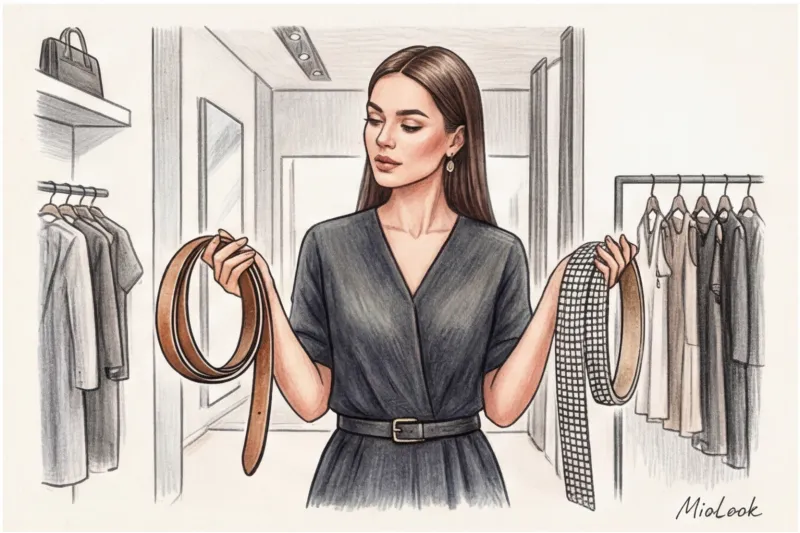
The architecture of your face and your lifestyle dictate the rules. If you have soft, rounded features, your go-to accessories are smooth lines, thick leather hobo bags, and stud earrings. If your features are sharp and graphic, you need structured totes, geometric jewelry, and square-toed shoes.
Even color types break stereotypes. For many women with a soft complexion, a black bag will never be a staple—it will look like an out-of-place dark spot. Their ideal investment is a khaki, deep blue, or burgundy bag.
Checklist: 5 Questions to Ask Before Buying an Expensive Accessory
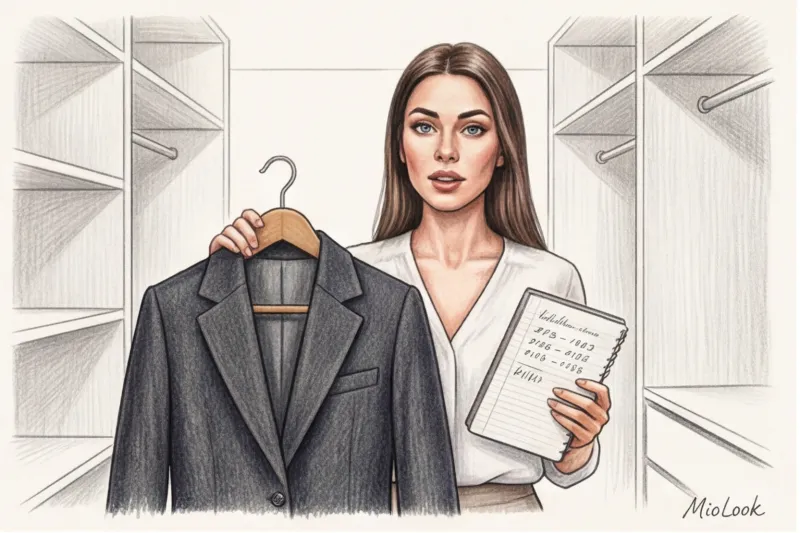
Before you spend a hefty sum on a bag, shoes, or watch, run the item through this style filter. My clients often save these questions on their phones and check them right in the fitting room:
- Will I be able to create at least 5 looks from my current wardrobe with this item? If you need to buy new shoes and a coat to buy a new bag, it's not an investment, but a financial black hole.
- Does it fit my actual (not desired) lifestyle? Don't buy a briefcase if you work from a cafe with just a laptop 90% of the time.
- Is this shape or color an "edgy" micro-trend? Neon, logomania, extremely strange heel shapes—all of this will be worthless in six months.
- What will be the cost per output (CPW) on my schedule? Calculate honestly, without discounts for “special cases”.
- Am I prepared to care for this material? Suede requires impregnation and brushes, silk scarves require dry cleaning, and expensive shoes require wooden shoe trees. Without time for proper care, the item will quickly lose its appearance.
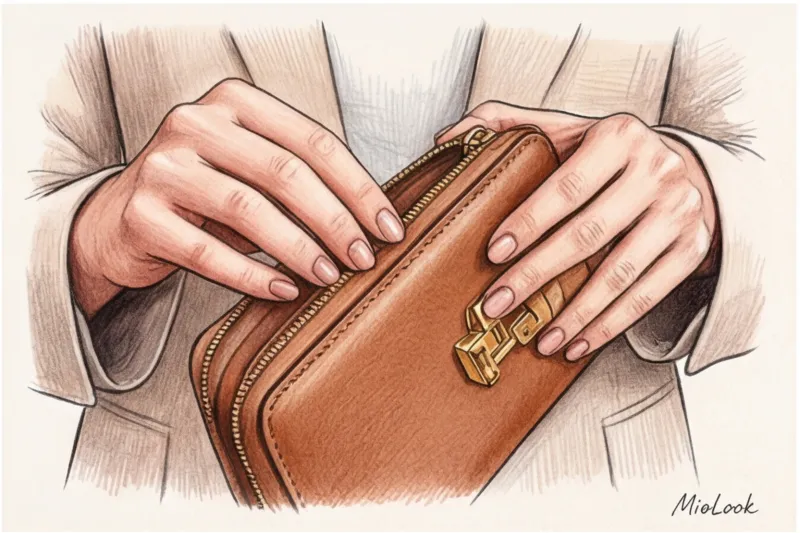
Results: An Inspection of Your Jewelry Box and Shoe Rack
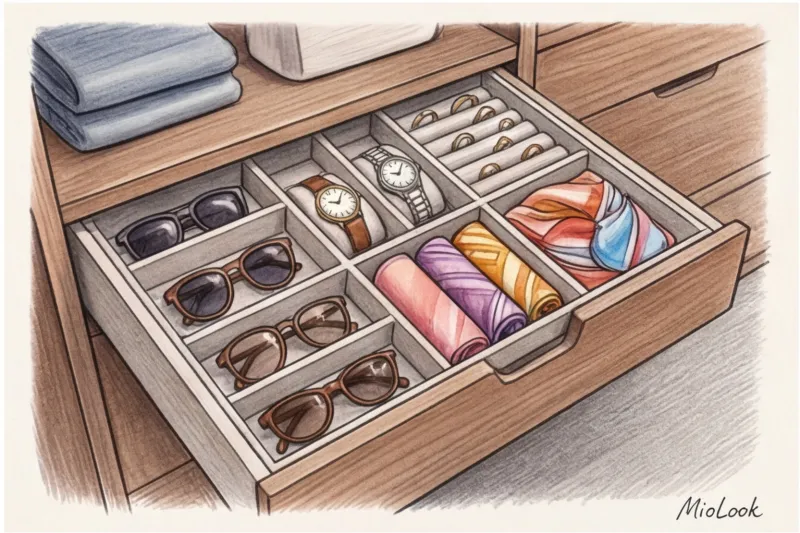
Before you go shopping, take stock of what you already own. Lay out all your bags, belts, and shoes. Calculate the weight loss (W/C) of your favorites and those with tags. You'll immediately see a pattern: which shapes and colors really work for you.
I recommend sticking to the 70/30 budget rule. Reserve 70% for high-quality foundation pieces: structured shoes, thick belts, and full-grain leather bags. And then confidently spend the remaining 30% on emotive mass-market trends: statement plastics, bright glasses, and wild shapes.
Remember: investing in style isn't about chasing logos or trying to copy someone else's success. It's about deeply understanding your needs and respecting your own money. When you invest in something that resonates 100% with your lifestyle, you stop simply wearing things—you start managing them.
Ready to get started?
Digitize your wardrobe and start calculating your Cost Per Wear with MioLook—try the free plan with no commitments.
Get access — €0.99 once