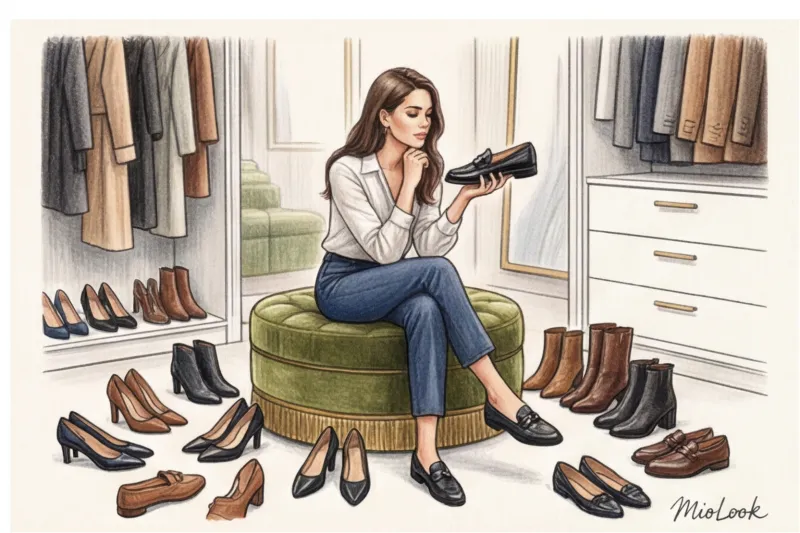
One of my clients, a top manager at a major IT company, once confessed to me during a wardrobe review: "I bought these gorgeous beige Jimmy Choo pumps for $700 because they were always advertised as a must-have. Do you know how many times I wore them? Once. To a corporate event, where I sat in a chair the entire evening because the lasts were torture."
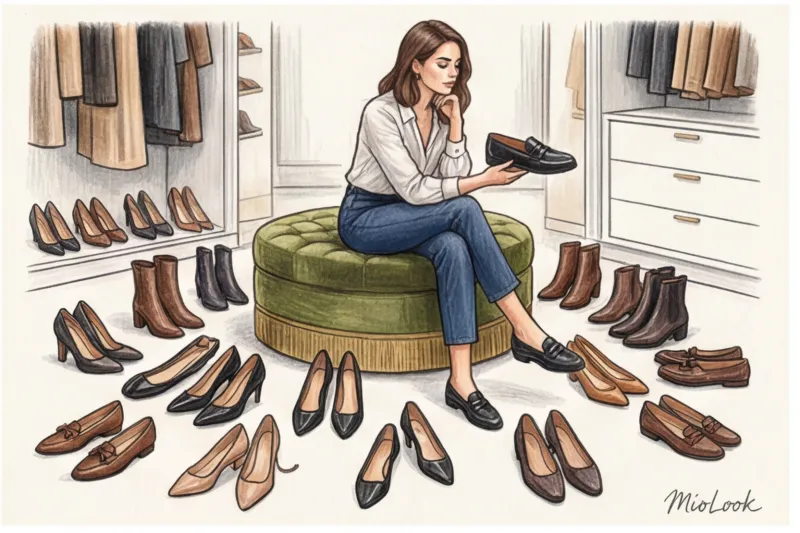
Sound familiar? Over 14 years as a stylist, I've seen hundreds of these "perfect" shoes sitting bored in boxes. We're used to believing glossy lists of essentials, ignoring our own anatomy and the real pace of life. But true essential women's footwear isn't a one-size-fits-all set found online. It's a well-thought-out system that works for you, not you for it. I've already covered the architecture of a smart closet in more detail in our complete guide. Timeless Style: How to Create an Elegant Wardrobe , and today we will talk exclusively about shoes.
Let's forget the "every woman needs stilettos" rule and figure out how to put together a shoe capsule in which you can confidently spend 12 hours without losing an ounce of elegance.
The Myth of the Universal List: Why Someone Else's Database Won't Work for You
Open any article from ten years ago, and you'll see the same set: black pumps, beige ballet flats, white sneakers, and thigh-high boots. Why doesn't that work anymore?
Because the concept of one fashion is dead. It has been replaced by personal uniform Shoes should support your real lifestyle, not a fantasy one. If you're a stay-at-home mom, your base is built around structured sneakers, Chelsea boots, and comfortable loafers. If you're a corporate executive, it's about high-status Oxfords, micro-heeled mules, and ankle boots with the perfect last. And if you're a freelancer working from a cafe, you might not need classic shoes at all.
"Nine out of 10 of my new clients' closets contain perfect, but never-worn shoes. They were bought for the woman they'd like to be, not for the woman they are every day."
Before buying another pair "because you have to," analyze your last 14 days. What kind of shoes do you spend 80% of your time in? This is the category you should improve and invest your maximum budget in. What else outdated style rules It's time to forget, we wrote earlier.
The Anatomy of Elegance: 3 Signs of Expensive Shoes
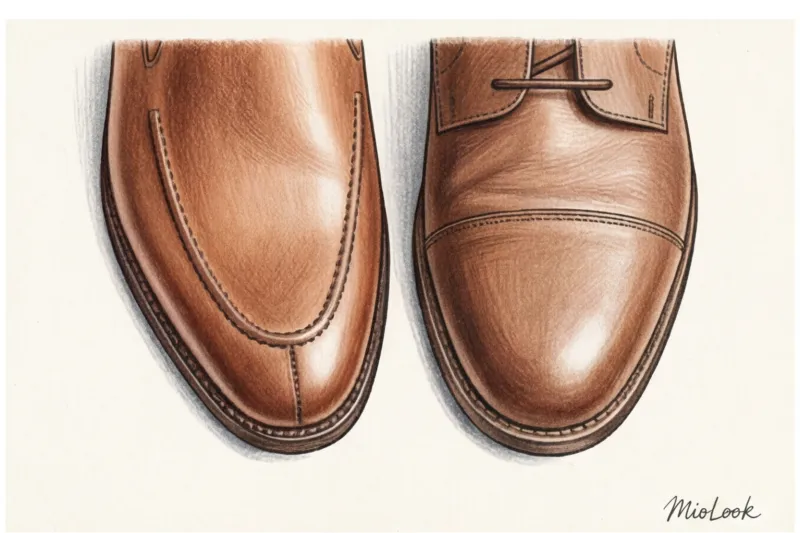
Have you ever noticed how some $100 loafers look luxurious, while others for $300 look like plastic knockoffs? It's not the brand. Buyers and stylists recognize the status of shoes by three subtle markers.
1. The shape of the cape. A perfectly round, short toe (like the classic ballet flats of the 2000s) visually chops off the foot and simplifies the look. A trendy and expensive base always features either an almond-shaped or soft square toe. They extend the natural line of the leg and create a more graceful silhouette.
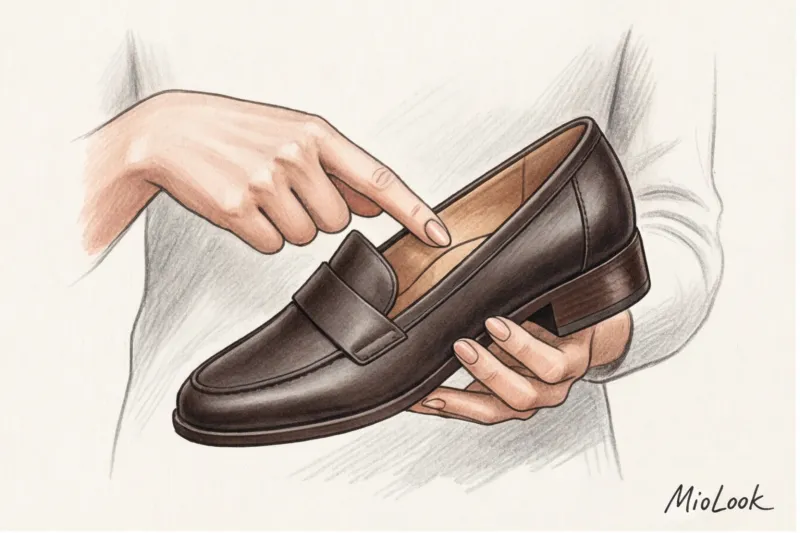
2. Quality of materials. Here's a professional secret: always check the leather type. Expensive shoes are made from full-grain leather (leather with its natural grain preserved). It ages beautifully, developing a noble patina. Mass-market leather often uses corrected grain Split leather is the bottom layer of hide coated with polyurethane. Such footwear doesn't breathe, and after a season, unsightly plastic cracks appear at the flex points of the foot. Furthermore, the inner lining of basic footwear must be exclusively leather, otherwise the greenhouse effect cannot be avoided.
3. Fittings and seams. The fewer shiny details, rhinestones, logos, and contrasting stitching, the easier it is to incorporate a pair into your wardrobe. Minimalism is the main sign of self-confidence.
The "invisible platform" rule
Nothing cheapens shoes or boots more than a hidden platform in the toe box (think hoof-shaped shoes from the 2010s). Elegant, basic women's shoes always have a thin but firm sole. Yes, without a platform, the heel feels higher, so we simply lower it rather than compensate with a platform.
Access to MioLook for €0.99 — one-time payment
A smart AI stylist will select the perfect look based on your shoe base.
Get access — €0.99 onceFlat Shoes: From Loafers to Derbies
Here I want to make an important confession that often shocks my clients: Absolutely flat ballet flats with a round toe and a thin sole are the killer of your joints and elegance. According to the American Podiatric Medical Association (APMA), constantly wearing shoes without arch support and micro-heels leads to plantar fasciitis and knee problems. Aesthetically, they make the foot look like a flipper and add weight to the hips.
What can replace them in a basic wardrobe?
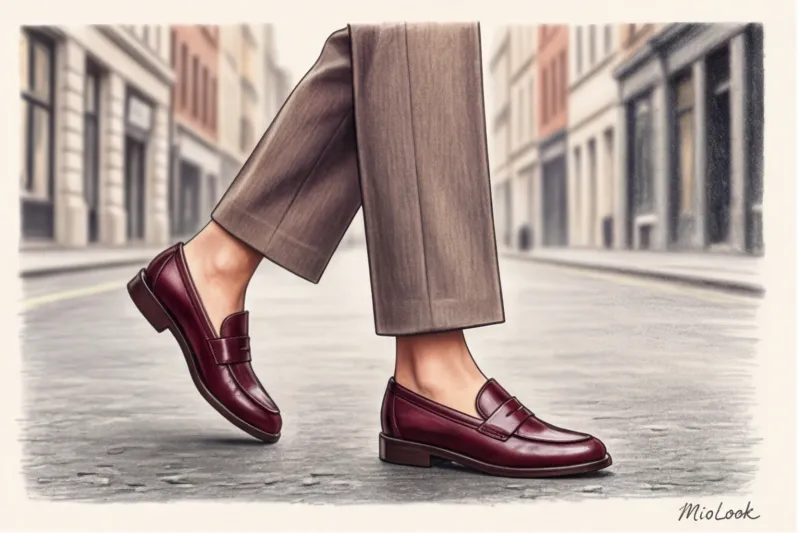
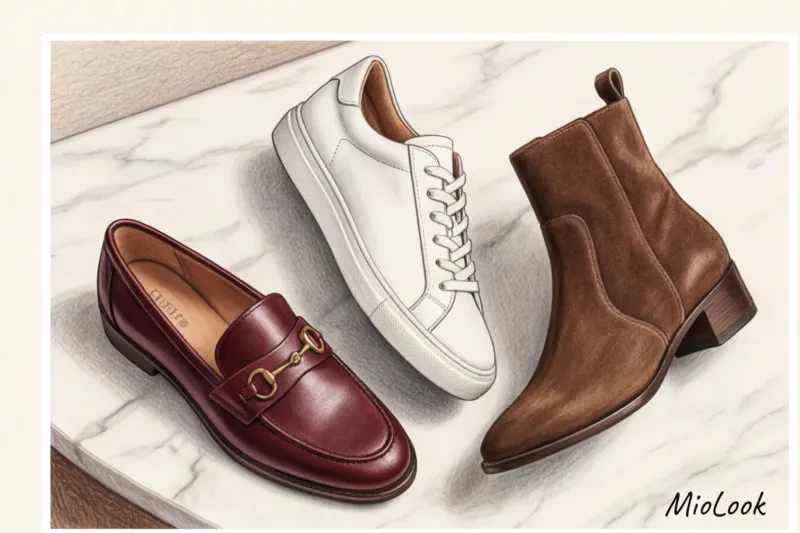
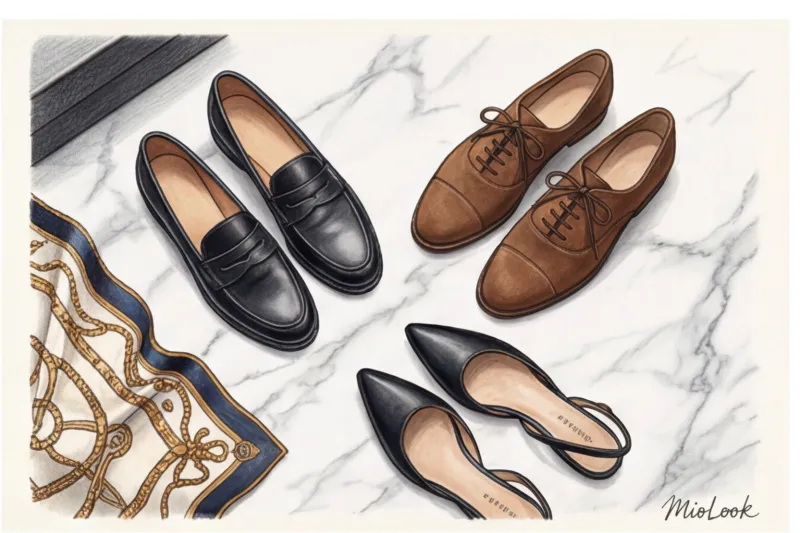
- Loafers (penny or horsebit). This is the foundation of modern smart casual. The rugged shape of loafers creates a relaxed look. We once swapped a client's usual soft moccasins for structured wine-colored penny loafers—and her casual denim looks instantly looked like they'd been stylist-designed.
- Oxfords and derbies. The masculine touch perfectly accentuates femininity. Wear them with cropped trousers, revealing a slender ankle.
- Mules and slingbacks with micro heels (1-2 cm). The perfect summer alternative that gives your feet the support they need and looks far more sophisticated.
Pumps and Heels: Breaking the Studs Stereotype
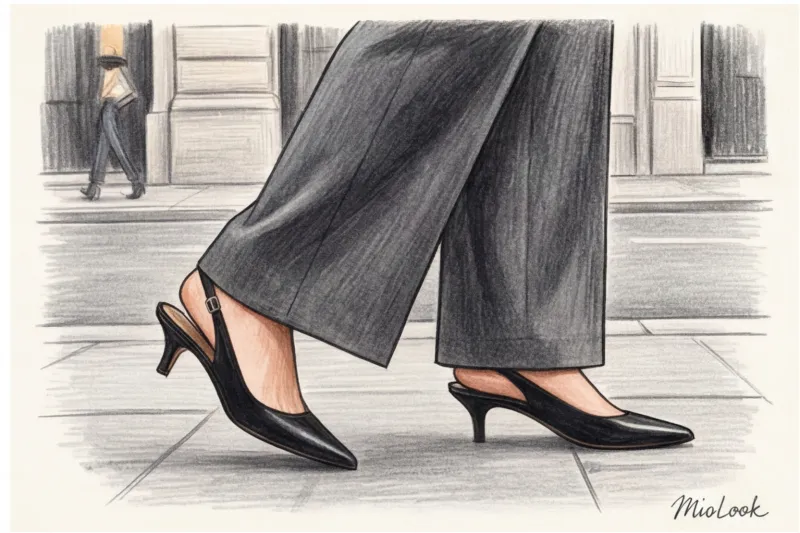
Another myth I've been fighting for years: "Beige pumps make your legs look longer and go with everything." This does NOT work If your wardrobe is based on cool shades (gray, graphite, cool blue, black), nude shoes will look out of place. For a "cool" capsule, the best base would be burgundy, navy, or graphite shoes.
Regarding heel height: orthopedists are adamant—the safe heel height for everyday wear is 3-5 cm. And fashion is finally agreeing with them!
"While working at Paris Fashion Week, I realized the most important thing: no professional buyer or editor runs around shows in 10-centimeter stilettos. Their choice is kitten heels or a stable block heel."
Pay attention to the vamp. The deeper the vamp (where the base of the toes is visible), the longer your legs appear. A closed, high instep, on the other hand, will cut off your proportions.
How basic women's footwear has become friends with sporty chic
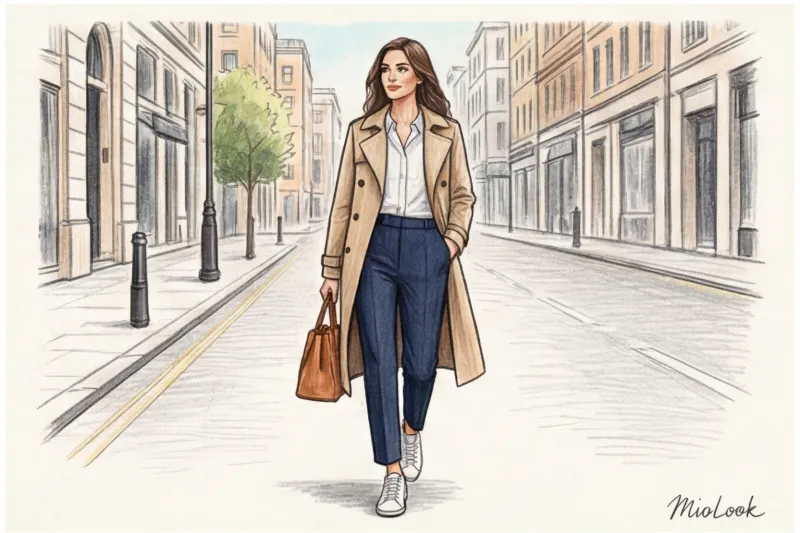
Sneakers have long been a staple, but therein lies a key stylistic pitfall. Running shoes (with their mesh, neon accents, and massive cushioning) are designed for sports. Period. Pairing them with a classic trench coat or pantsuit is a grave mistake (unless, of course, you're embracing sophisticated street style grunge).
For an elegant base you need city sneakers What makes them different?
- Smooth matte leather or high-quality suede.
- No obvious sports logos or reflectors.
- Thin or medium flat sole.
- Neutral palette: white, milky, beige, khaki.
Retro 70s-style silhouettes (inspired by soccer cleats from the last century) are all the rage right now. They're quite slim, sleek, and look great with wide-leg suit pants. The main no-no: never wear overtly athletic shoes with thick black tights or formal office skirts. a mistake that instantly ages an image.
Your perfect look starts here
Join thousands of users who look flawless every day with MioLook. Digitize your wardrobe in just a few clicks.
Get access — €0.99 onceFall/Winter Essentials: Boots That Don't Cut Out Your Proportions
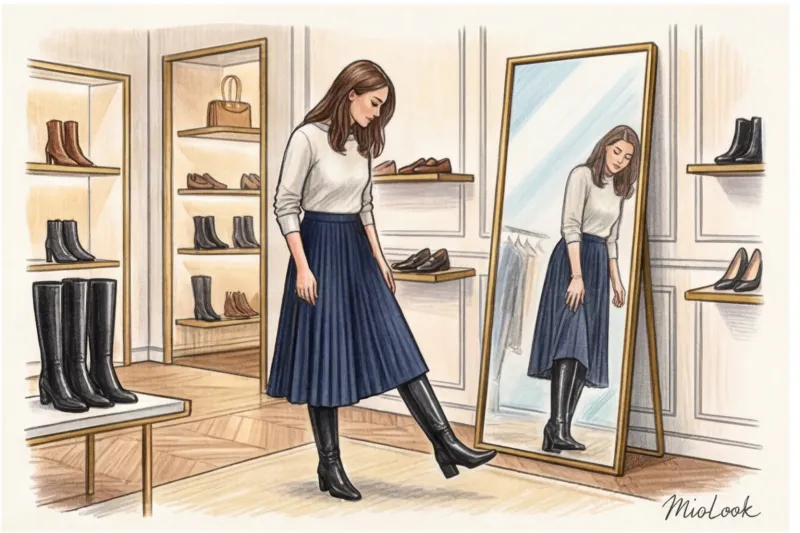
Winter footwear is the most challenging category because it interacts directly with outerwear and tights. To avoid looking like a "sliced loaf of bread," follow this style rule: continuous line.
Sock boots. A must-have item if you wear wide-leg pants or culottes. They fit snugly around the ankle, showing off the narrowest part of the leg, without creating excess bulk under the leg.
Knee-high tube boots. Unlike over-the-knee boots, which require perfect legs and often look provocative, wide-shafted tube tops are pure elegance. How to wear them? Follow the "gap rule": the hem of your midi skirt or dress should overlap the top of the boot by a couple of centimeters. There should be no strip of tights between the boot and the skirt! This visually adds a few centimeters to your height.
Chelsea. For inclement weather, choose styles with a thick sole (but avoid oversized "tractor" treads; their time is over). Chelsea boots pair perfectly with cropped jeans and thick ribbed socks.
Purchasing Strategy: Investing Wisely (CPW Formula)
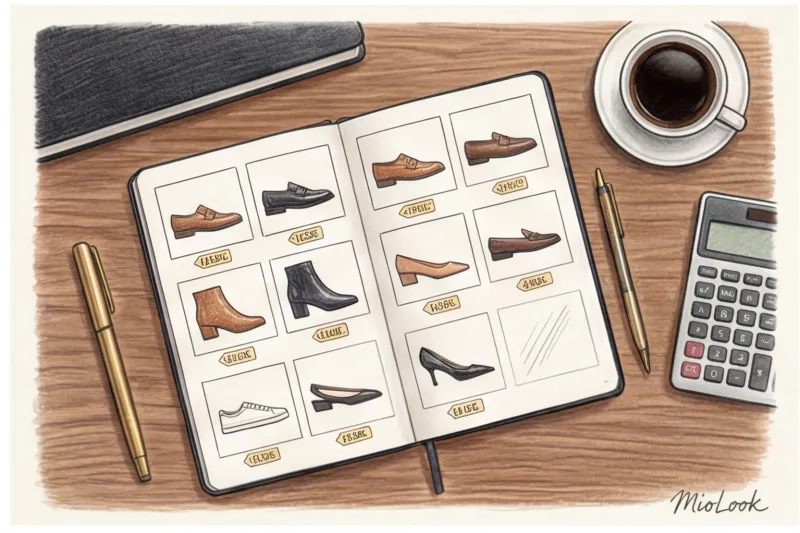
As a stylist, I often hear, "I can't afford $300 loafers, I'd rather buy five pairs for $60." It's a mathematical illusion. In the fashion world, there's a hard and fast rule: Cost Per Wear (CPW) , or the price for one output.
Let's do the math. You buy a pair of quality leather loafers for $300. You wear them in the spring, cool summer, and fall—about 100 days a year. Good leather will last at least 3 years. Total: 300 wears. $300 / 300 = $1 per exit.
Now let's take a pair of trendy faux leather shoes for $50. They rub, your feet sweat, and after 20 wears, the toes crack. $50 / 20 = $2.50 per exit Cheap shoes cost you two and a half times more!
What can and should you save on? On the hottest trends (leopard print ankle boots), summer open sandals (they wear out quickly due to dust and sweat), and formal shoes you'll only wear twice a year. What should you invest in? Fall boots, everyday loafers, and winter boots.
Personal advice: Always try them on on your evening feet. Buy shoes only after 4:00 PM, when your feet naturally swell. What was perfect at 10 AM will look like a Spanish boot by evening.
Checklist: Audit Your Shoe Wardrobe
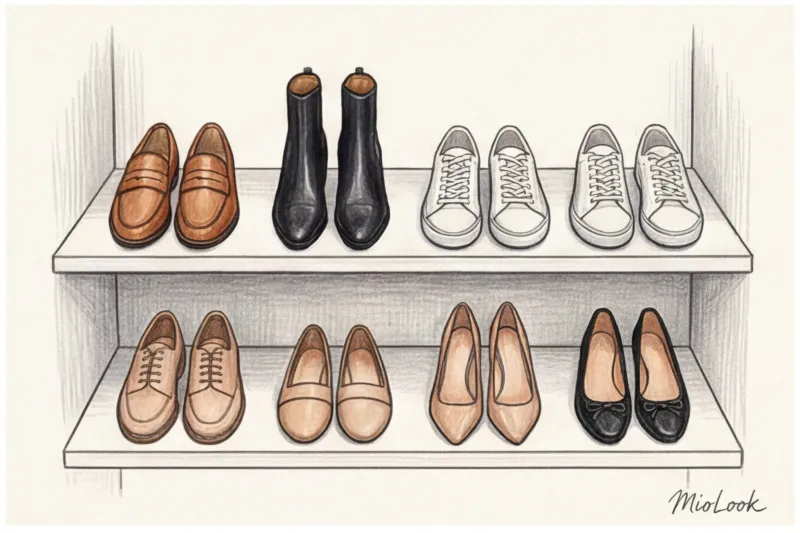
Ready to get organized? Here's the process I use during my first consultation with clients. Bring all your shoes out into the light and follow these three steps:
- Merciless cleaning. Remove anything that pinches, rubs, requires repair (which you've been putting off for six months), has worn-out toes, or has worn-out heels. Shoes with defects can ruin even the look of a Hermès bag.
- Analysis of proportions. Calculate the ratio. If 70% of your time is spent in the office without a strict dress code and hanging out with the kids, and 70% of your shoes are stilettos and patent leather shoes, you have a systemic wardrobe error.
- Smart shopping list. Don't go shopping for "something new." Make a list of two or three pairs you need to complete your everyday looks.
To avoid having to keep all this in your head, take a photo of the remaining database and upload it to MioLook — the app will help you identify gaps and assemble dozens of new sets from what you already have.
Elegance isn't about enduring pain for the sake of beauty. It's about choosing things that respect your body and your lifestyle. Find your perfect last, invest in the right leather, and you'll be amazed at how much your gait and confidence will change.