
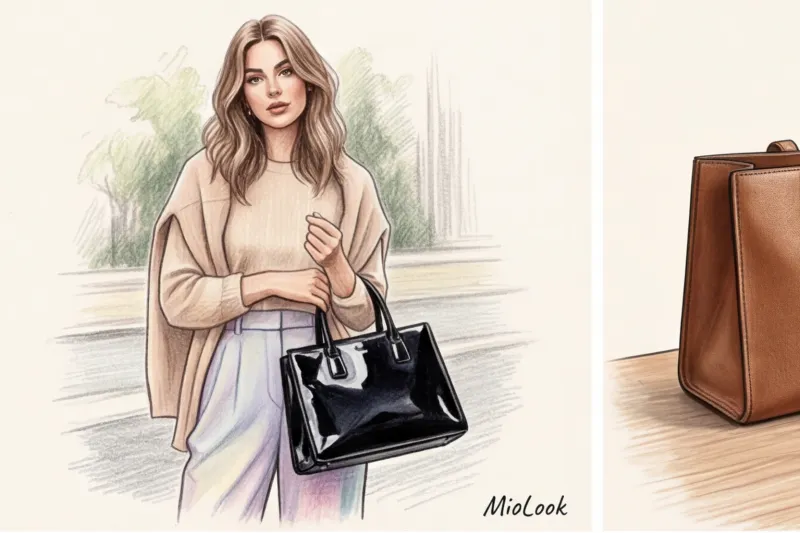
Open any "wardrobe must-have" list, and you'll see it at the top—a classic black bag. As a practicing stylist and textile expert, I want to say it bluntly: this is the worst advice that gets repeated from article to article. If you search for it basic women's bags , be prepared for the fact that most of the recommendations are hopelessly outdated.
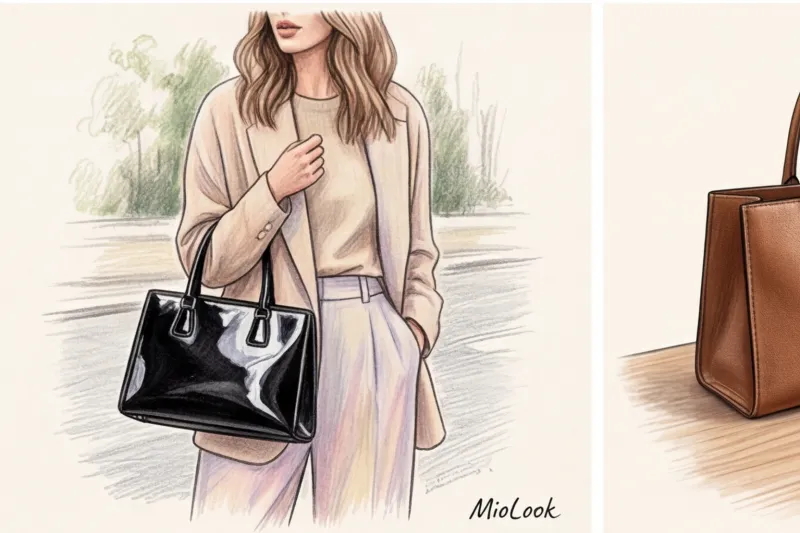
We talked about wardrobe architecture in more detail in our The complete guide to essential accessories for women , but today I want to focus specifically on bags. We won't be telling you that you "definitely need a beige clutch." Instead, we'll learn how to choose accessories based on the architecture of the patterns, the durability of the materials, and the biomechanics of your body.
Basic Women's Bags: Why Classic Online Lists Are Misleading You
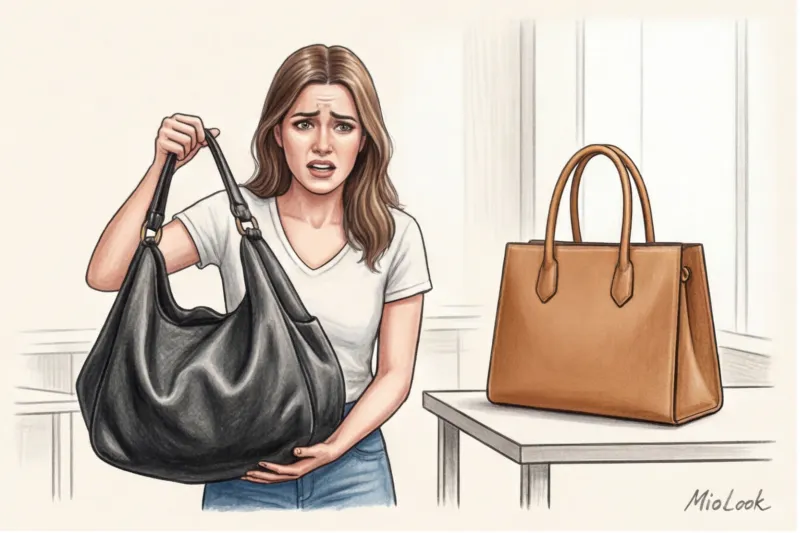
Let's start with the biggest myth: the versatility of black. Over 12 years of working with clients, I've noticed the same mistake: a woman buys an expensive black bag "to go with everything," and then wonders why her light spring outfits look heavy and cluttered.
Black is the most overrated "basic" color for accessories. For wardrobes with warm, pastel, or muted tones, a black bag acts as a visual "black hole," cutting through the silhouette and stealing the show.
A true base adapts to your natural coloring and the tone of your wardrobe. If you wear a lot of beige, gray, olive, or denim, your universal shades will be taupe (a complex taupe), dark chocolate, deep burgundy, or pine. These colors create a soft contrast, acting as a natural shadow within the look rather than a distracting stain.
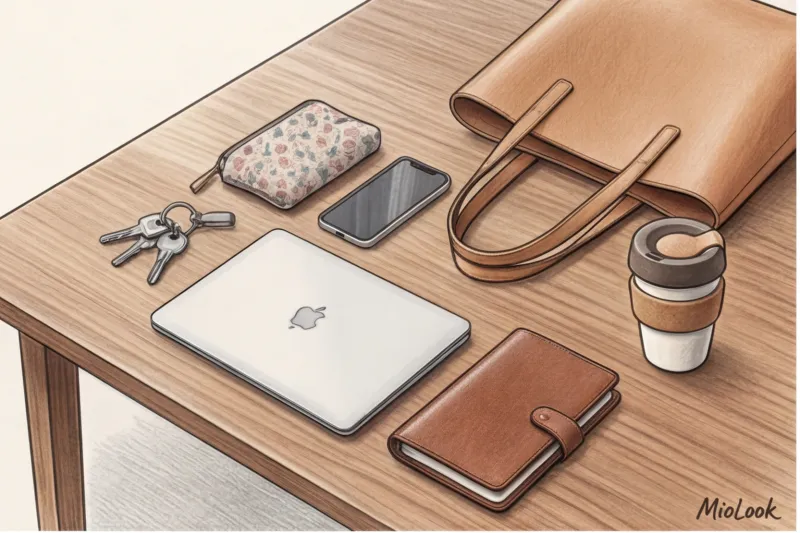
Furthermore, a bag should adapt to your routine, not the other way around. The concept of functional architecture dictates that if you carry a laptop every day, micro bags are not essential for you, but a waste of money. Let's look at three truly effective models that will cover 99% of your needs.
Access to MioLook for €0.99 — one-time payment
A smart AI stylist will analyze your personality and select the perfect shades of basic bags to complement your current wardrobe.
Get access — €0.99 onceModel #1: Architectural Tote or Shopper (Workhorse)
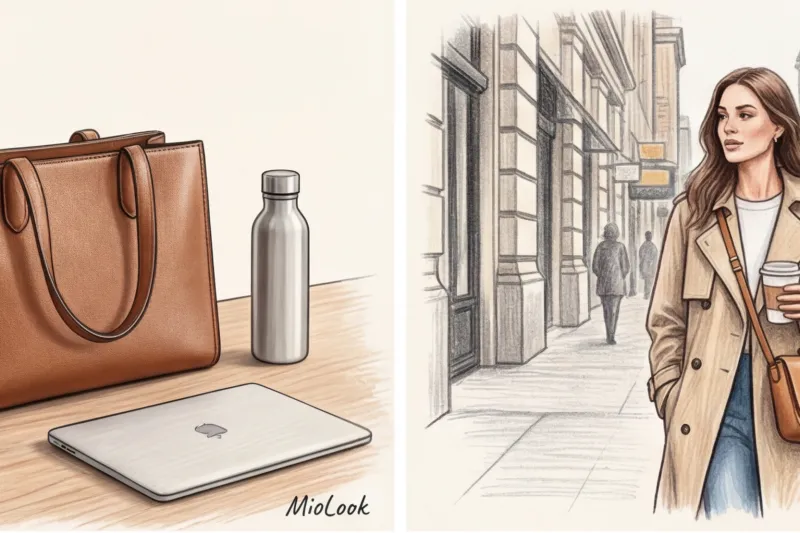
The tote is a staple of any everyday business or urban wardrobe. But there's a catch: a shapeless, soft shopper, reminiscent of a fabric bag, instantly cheapens the look and takes away its poise. A proper, basic tote always has a rigid base and a clean, geometric shape.
One of my clients, a senior IT manager, had been complaining of chronic pain in her right shoulder for a long time. During a wardrobe review, it was discovered that she was wearing a soft leather shopper, in which her laptop, makeup bag, and lunch container were all shifted to one side. This was throwing off her center of gravity. We replaced it with a structured tote with flat handles and a rigid frame—the problem resolved within a couple of weeks.
Why flat handles? It's pure physics. Round handles (especially those with dense padding) dig into the trapezius muscle, constricting blood flow. A flat strap distributes the weight over a larger area. By the way, American Chiropractic Association warns: a loaded everyday bag should under no circumstances weigh more than 10% of your body weight.
Eco-friendly alternatives and durability
Many people chase thick, genuine leather, forgetting about the weight of the bag itself. Some premium models weigh up to 1.5 kg empty! This is a critical mistake for an everyday accessory.
In my practice, I actively test innovative materials. The market currently offers excellent alternatives. However, there's a limitation: the currently popular "vegan leather" made from apples (Pellemela) or cactus (Desserto) still contains polyurethane binders. These binders are less frost-resistant than traditional leather.
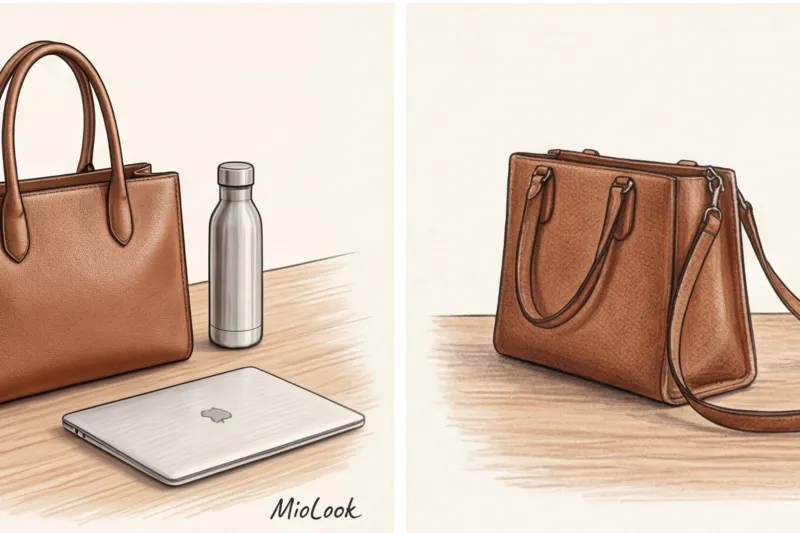
If you're looking for an accessory that will last for decades, look for brands that use vegetable-tanned leather with a standard LWG (Leather Working Group) — this guarantees environmentally friendly production without toxic chromium. For those who avoid leather altogether, a dense canvas with a special water-repellent treatment is an alternative. And be sure to check for metal studs (feet) on the bottom: they protect the corners from inevitable abrasion against the surface.
Style #2: Medium Structured Crossbody
While a tote bag is perfect for workdays, a crossbody bag is a lifesaver for weekends, walks, and flights. The key concept behind this style is "hands-free."
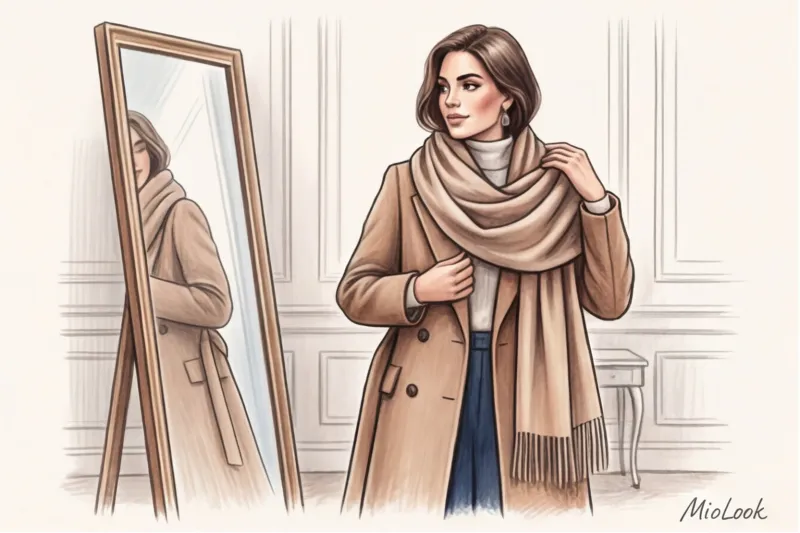
I recently worked with a client who made a point of not wearing bags outside the office. The result? The pockets of her expensive wool Massimo Dutti coat were stretched thin, containing her keys, a huge smartphone, and a cardholder. The silhouette of her outerwear was hopelessly ruined. Finding the right crossbody bag was a stylistic revelation.
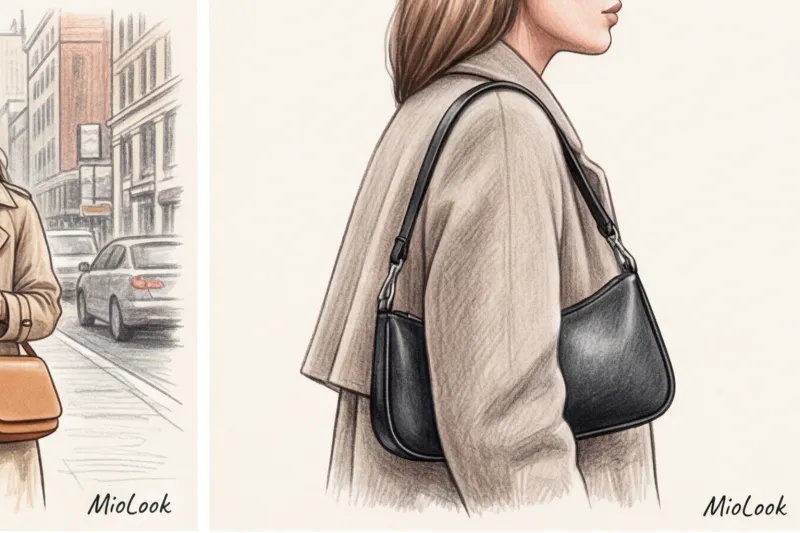
The secret to the perfect crossbody bag is finding the right balance. It shouldn't be microscopic (otherwise you'll have to carry your phone in your hand), but it also shouldn't be a messenger bag that hits your thigh when you walk. The optimal size is approximately 20x15x7 cm.
And one more strict prohibition: no thin chains For everyday wear. A metal chain looks stunning on an evening clutch, but if you put your phone and keys in the bag, it will start to dig painfully into your collarbone after 20 minutes. Choose models with a wide leather or fabric strap (at least 3-4 cm wide).
Your perfect wardrobe in one app
Digitize your bags in MioLook, and the algorithm will suggest which basic models you need to create a harmonious capsule collection.
Digitize your wardrobeModel No. 3: Laconic shoulder bag (Hobo or Baguette)
The third essential model bridges the gap between relaxed casual and smart-casual evening wear. A short shoulder bag worn under the arm (a classic baguette or a structured crescent-shaped hobo) lends a touch of French casualness to the look while still looking incredibly elegant.
Unlike the tout, here texture is more important than utility Avoid bold crocodile embossing, massive logos (logomania has long since given way to "quiet luxury"), and excessive embellishment. Smooth matte leather or a delicate fine-grained finish (pebble leather) will make a bag look more expensive.
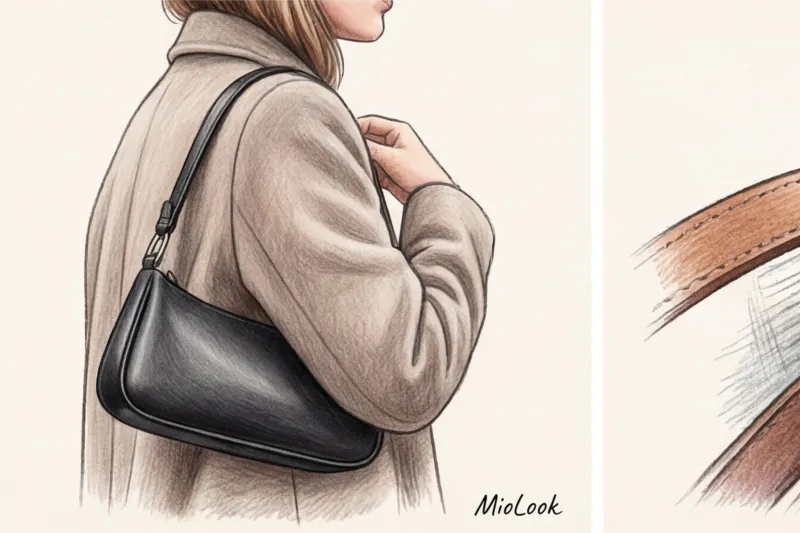
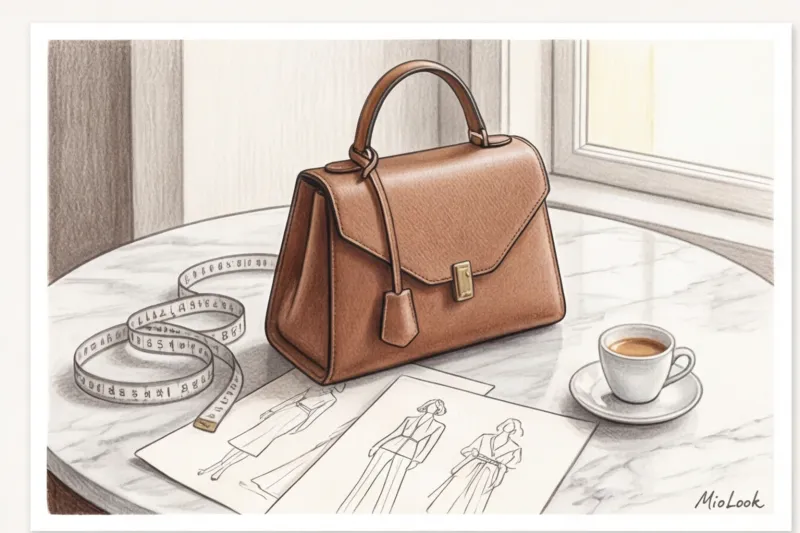
And now a professional stylist secret that few people know: When choosing such a bag, it's crucial to measure the following parameters: drop — the height from the top of the bag to the highest point of the handle. The ideal drop for an all-season bag should be at least 22-25 centimeters. Why? Because in the summer, a bag with a short strap will fit perfectly over a T-shirt, but in November, it simply won't fit over the armhole of your bulky wool coat or down jacket. The bag will constantly slip off your shoulder, annoying you with every step.
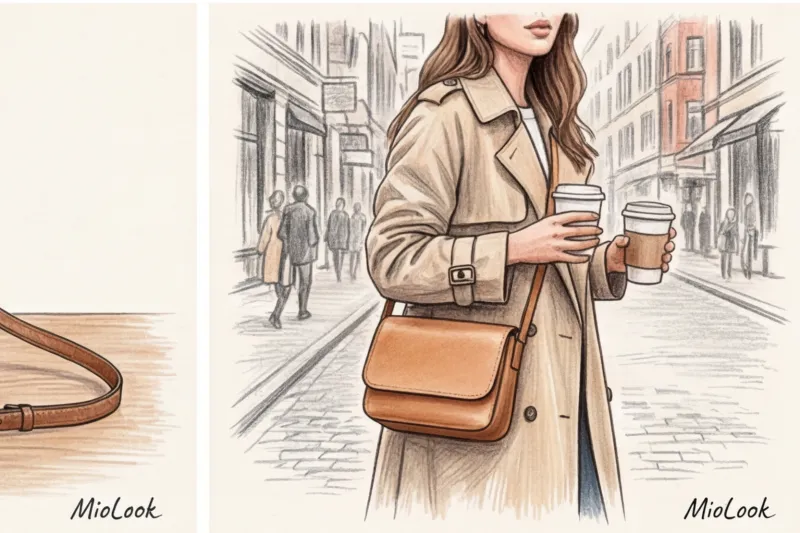
Stylist Checklist: The Anatomy of a Quality Basic Bag
How can you tell a truly high-quality investment from a one-season bag without logos? I always teach my clients to look at the technical construction.
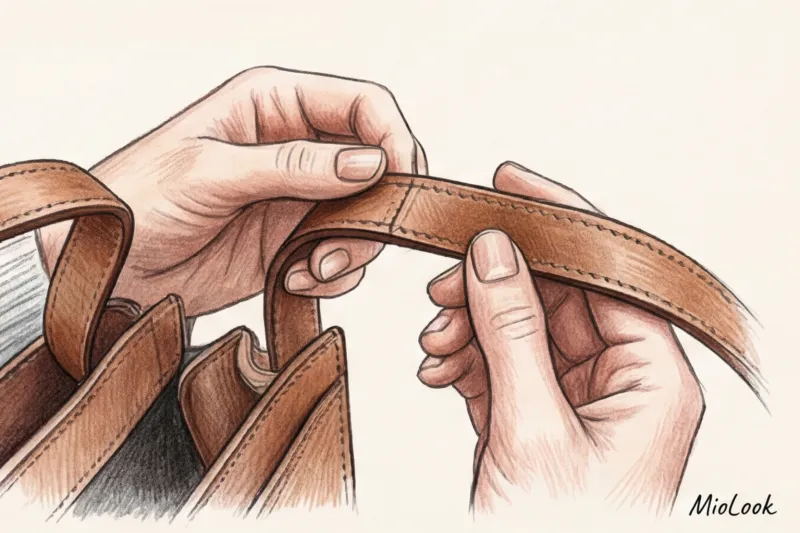
- Processing the edge (edge paint). Look at the side edges of the leather handles. Cheap bags have this edge covered with a thick layer of rubber, which will crack at the first frost. A high-quality edge is applied in 3-5 thin layers, sanding between each step. According to technological tests, a properly finished edge can withstand up to 10,000 bends without cracking.
- Blind touch lining test. When you enter a boutique, close your eyes, put your hand inside your bag, and rub the lining. If it makes a rustling sound, reminiscent of a cheap umbrella or plastic bag, put the bag back. High-quality brands use thick cotton (canvas), microfiber that imitates suede, or thick viscose.
- Quality of fittings. The shiny, "samovar-like" gold is a telltale sign of mass-market jewelry. Look for hardware with a PVD coating (matte or satin)—this coating technology is used in Swiss watches, and the metal doesn't peel for years. Regular electroplating will scratch and darken within a season.
- Seam symmetry and thread tension. The stitches should be at a slight angle (a feature of the saddle stitch), and the thread should not sink deep into the leather or, conversely, hang in loops.
Smart Investment: Cost Per Wear (CPW) Formula and Care
Many people are intimidated by the cost of quality basic bags. But let's apply some simple math—the Cost Per Wear formula.
If you buy a super-trendy mass-market bag for $50 and wear it five times per season, your CPW is $10 per wear. If you invest $300 in a flawless, basic crossbody bag made of high-quality leather and wear it 150 days a year for three years, your CPW is less than $0.70 per wear! A quality basic bag pays for itself in 120-150 wears.
In the report McKinsey State of Fashion (2024) The global trend toward a circular economy is highlighted: conscious consumers are choosing repair over new purchases. To ensure your bag survives until it reaches a restoration shop, rather than ending up in a landfill, it needs proper care.
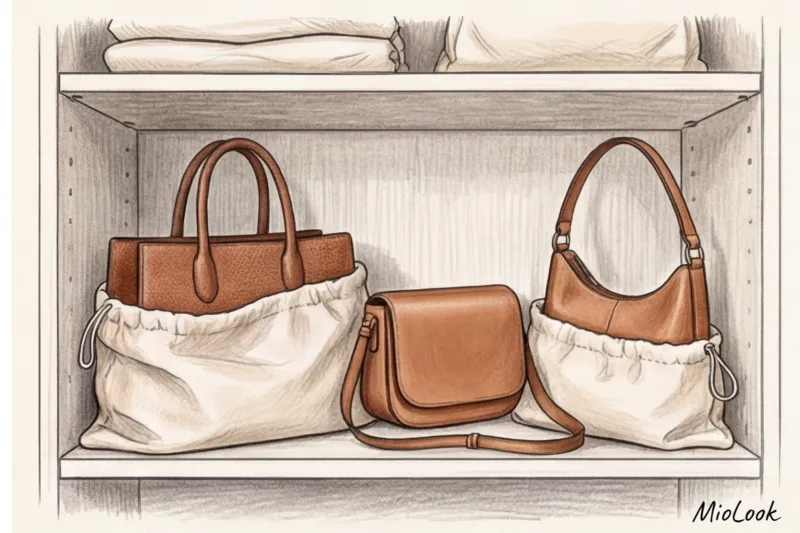
- Storage: Basic bags need time to rest. Store them only in fabric dust bags (preferably undyed cotton, to allow the leather to breathe). Always line them with acid-free paper to maintain their shape. Never use newspaper—printing ink may bleed onto the light-colored lining.
- Moisturizing: Genuine leather is a living material. Treat basic bags with a special moisturizing cream (leather lotion) twice a season to prevent drying out and creasing.
- Moisture protection: In autumn and winter, be sure to apply a water-repellent spray to suede and nubuck bags 24 hours before going outside.
Ready to rethink your style?
Try the MioLook plan for free—no commitments required. Start creating your perfect looks with the perfect bags right now.
Try MioLookEssential women's bags aren't a boring list of identical black rectangles. They're a well-thought-out system that works for you. Start with an honest analysis of your daily routine: how much you carry, what the temperature of your closet is, and how you get around town. Invest in one quality bag that fulfills your primary purpose (whether it's a roomy tote for the office or a comfortable crossbody for walks with the kids), and you'll be surprised how easy it is to put together your morning outfits.