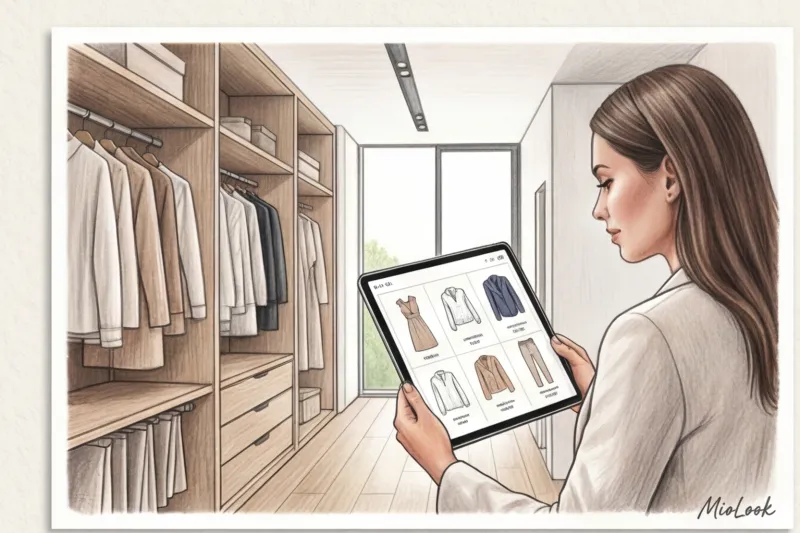
Neural Networks in Fashion: How Technology Is Silently Managing Your Wardrobe
Have you noticed how often when you say something "Neural networks are in fashion" Do we imagine something straight out of cyberpunk: iridescent foil dresses, 3D-printed plastic corsets, and android models on the catwalk? In reality, artificial intelligence is much more prosaic and practical. In my styling practice, I constantly explain to my clients: AI is not a futuristic suit for the metaverse. It's a mathematical formula for the perfect fit of your favorite basic jeans you bought last week for €45.
To understand the true scale of what is happening, it is enough to look at the fundamental report by McKinsey State of Fashion 2024 According to their research, 73% of fashion company executives named generative AI as a top investment priority. Technologies are already managing your wardrobe: they decide which shade of carmine red will hit mass-market shelves next season, and why an online boutique's algorithm so persistently suggests you buy this particular cashmere sweater.
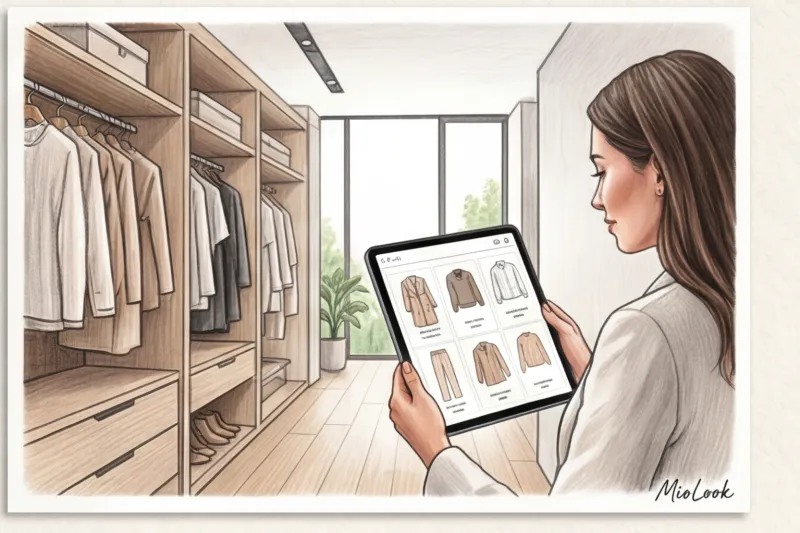
Let's break this digital backstage down into easy-to-understand concepts without the complex IT jargon:
- Computer Vision: Algorithms literally "see" and classify clothing. This technology allows smart cameras and apps to instantly recognize items from photos and understand whether they're modern oversized or classic. 90s style.
- Machine Learning: A rigorous analysis of your habits. The neural network learns that you consistently return A-line dresses (because they don't suit you) and stops showing them, saving you time and the store's logistics budget.
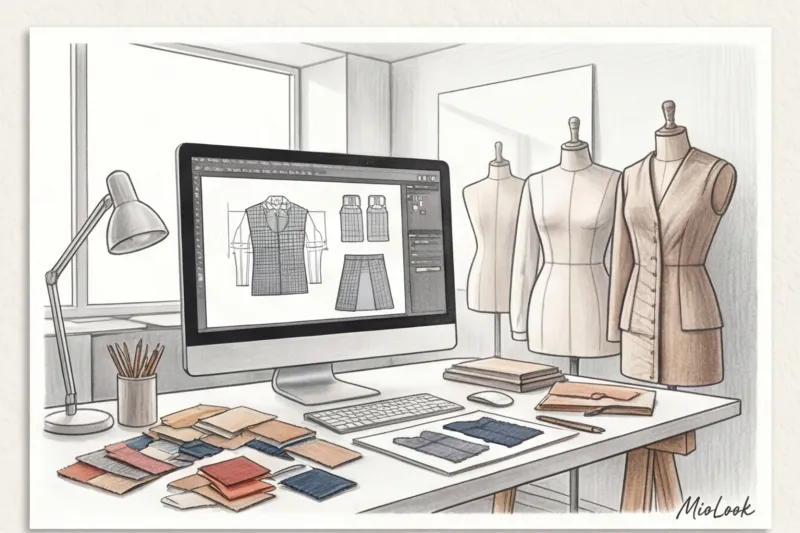
- Generative networks: Visualization tools help creative directors create hundreds of realistic sketches in minutes, testing out wild prints before a single meter of actual fabric is used.
"The biggest tectonic shift in the industry over the past five years has been a paradigm shift: we've stopped guessing 'what's fashionable' and started analyzing 'how we wear and buy it.'"
While trends used to be dictated authoritarianally by glossy editors, today algorithms parse millions of street style photos every second. They mathematically calculate that Y2K style It didn't just go viral, it became a macro trend, and therefore the brand should produce 30% more cargo pants than last year.
And the best part about this digital revolution is that enterprise technology now works for us. When you digitize your things through smart apps like MioLook , you're essentially hiring the same powerful neural network. Only now it serves you personally: it organizes the chaos in your closet, instantly organizes your workweek capsules, and saves you from buying a third identical white T-shirt.
From Concept to Shelf: How AI Creates Clothing Designs and Optimizes Patterns
In 2023, I consulted for an independent European brand (mid-up segment, average bill around €250 per jacket). Their main pain point was a classic: it took at least three months from the first sketch to a finished sample. While they were producing a trendy piece, the microtrend itself had time to cool off irrevocably. Everything changed when the creative director introduced generative networks into their daily work.
What does this look like in practice? Neural networks like Midjourney or Stable Diffusion don't replace the designer—they become their intellectual exoskeleton. Instead of spending weeks drawing dozens of sketches by hand, the creative director feeds the algorithm text prompts and visual references: the texture of a specific vintage tweed, the silhouette of '80s power dressing, and the brand's signature palette. Hundreds of variations are generated in a matter of minutes.
There's an important caveat here, rarely mentioned by tech bloggers: 90% of generated images are anatomically and technologically absurd. A jacket might have three sleeves, and the shoulder line might be physically incompatible with gravity.
This is why AI works exclusively in conjunction with a living human. An experienced designer takes a successful neural network "imagination" and translates it into real physical parameters using 3D modeling programs (for example, CLO 3D).
But the most interesting part begins at the pre-production stage. Over 12 years in the fashion industry, I've seen veritable cemeteries of unsold collections. Previously, a brand would make a batch, spend a staggering €15,000 on it, and then try to unload the items at sales. Today, smart brands use AI to A/B test digital samples. They create hyper-realistic 3D models of clothes (that don't yet exist in reality) and publish them on Instagram or run targeted ads. If an olive trench coat gets thousands of saves, shares, and pre-orders, it goes into production. If a lilac cardigan is ignored, the digital file is simply deleted. No more fabric costs, complex logistics, or test runs.
By the way, this same pre-checking principle works great for personal style too. Before you spend €150 on a new bag or a bright sweater, add a screenshot of the item to MioLook and create 3-4 looks with what's already in your closet. You'll instantly see if this "concept" fits your everyday life and save your budget from an impulse purchase.
Access to MioLook for €0.99 — one-time payment
A smart AI stylist will select the perfect look from your items and save you from unnecessary purchases.
Get access — €0.99 onceEnding Overproduction: Algorithms Against Textile Waste
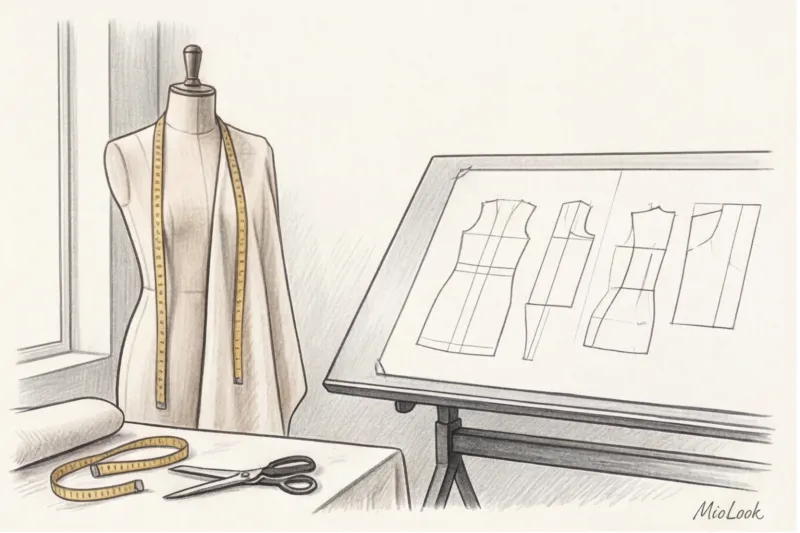
Once the digital concept has been successfully tested by the audience and approved, the AI takes on the most practical task—cutting the material. According to a McKinsey report (2024), traditional hand-cutting produces approximately 15–20% pattern-to-pattern errors. Put simply, almost a fifth of expensive fabric ends up in landfills, creating mountains of textile waste.
Artificial intelligence solves this problem through sophisticated mathematical nesting (or marking) algorithms. The program analyzes millions of geometric layout variations on a virtual roll of fabric. The algorithm takes into account strict technological requirements: the grain direction, the print repeat pitch (to ensure the checkered pattern matches perfectly at the seams), and the pile direction (for velvet or corduroy).
What would take even the most brilliant tailor hours of painstaking work, the algorithm calculates in seconds. It compresses patterns so masterfully that material savings reach 10-15%. On a global mass-market scale, this translates into hundreds of kilometers of saved fabric and millions of euros.
For me, this is the true face of sustainable fashion. For a long time, the industry relied on marketing: brands would release a few T-shirts made from recycled plastic and loudly proclaim their eco-friendliness. Today, true care for the planet is hidden deep in the code. Smart cutting reduces waste even more. to The physical production stage. This is a cold, mathematically precise approach to resources: producing exactly what the audience needs, and using only as much fabric as the garment's geometry requires. Technology is making fashion eco-friendly not for the sake of fancy press releases, but because it's simply cheaper and more efficient.
Trend Prediction: How Algorithms Know What You'll Buy Tomorrow
The days when a handful of influential fashion editors sat in the front row of Paris fashion shows and decided what color we'd wear next fall are gone forever. Subjective intuition, "observational insight," and behind-the-scenes forecasts have been replaced by rigorous mathematics and big data. Today, with millions of euros in production budgets at stake, brands can no longer afford to guess. They must know for sure, and powerful predictive models help them do just that.
How exactly is this data collected? Imagine an army of invisible analysts scrolling through feeds 24/7. In practice, this works through massive social media parsing—a continuous process in which computer vision technologies scan millions of photos and short videos on Instagram and TikTok. Artificial intelligence doesn't just see an image; it deconstructs the image down to the smallest technical details. The neural network identifies popular silhouettes, prints, specific shades according to Pantone color palettes, and even styling techniques—for example, whether a sweater is tucked in at the front (the famous "French tuck") or whether the sleeves of a jacket are rolled up.
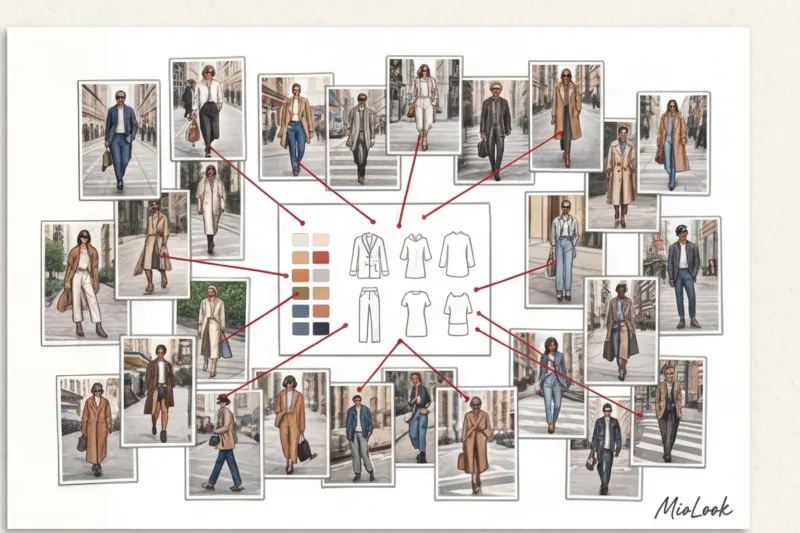
A great example of this kind of in-depth analytics is the French platform Heuritech. While trends were once considered solely based on what was seen on the catwalk, Heuritech now analyzes real life. This tool recognizes collar shapes, fabric textures, and cut nuances in photos of ordinary passersby with stunning accuracy. The neural network classifies users by their level of influence (from avant-garde influencers to mass consumers) and tracks the spread of visual patterns. This allows the algorithm to predict microtrends months before their commercial peak. So, by the time you're just thinking about buying a maxi skirt, the machine has already calculated the likelihood of this style becoming a hit in your region and has ordered fabric from factories.
Microtrends and macrotrends through the eyes of artificial intelligence
Machine learning doesn't understand the concepts of "beautiful" or "ugly"—there's only a trend's life cycle curve. AI's key value for the industry lies in its ability to clearly distinguish between viral aesthetics and sustainable macrotrends based on the growth rate of mentions.
Microtrends are those TikTok blips that last a couple of weeks at most. Think of the recent craze for the "office siren" aesthetic or the abundance of acid pink. The algorithm sees a vertical surge in interest and predicts an equally precipitous decline. Macrotrends, on the other hand, such as the global embrace of '90s minimalism or relaxed oversized silhouettes, gain momentum gradually. Their growth curve is flat, and AI marks them as a safe zone for long-term brand development.
Understanding this math is a powerful tool if you want to create a work wardrobe that won't go out of style within a season. I constantly use this logic with my clients. Recently, a senior manager approached me about putting together a capsule wardrobe for international conferences. Instead of buying trendy fitted jackets with exaggerated, accentuated shoulders (a microtrend whose decline AI predicts by the end of this year), we focused on macrotrends. We invested in a premium, relaxed, double-breasted three-piece suit (in the €600-€800 range) and straight, wide-leg trousers. According to predictive analytics, these silhouettes will remain relevant for at least three to four years.
To the algorithm, your style is a set of variables. But it's you who decide which of these variables are worth integrating into your life and which to leave out.
To avoid impulse purchases driven by social media recommendation algorithms, you need your own systematic approach. Digitize your items in an app. MioLook And look at your wardrobe as a data set. If an emerging macrotrend can be easily combined with 80% of your basics, it's a worthwhile purchase. But if you have to buy new pants and shoes just to get one viral blouse, skip the trend. Leave the fleeting hype to influencers and focus on smart investments backed by data.
Virtual Fitting Rooms: The Revolution That Saves Us from Returns
According to a 2024 McKinsey analytical report, the return rate for online clothing purchases reaches a catastrophic 40%. The main challenge of digital shopping is the brutal clash of "expectation and reality." Every return not only entails colossal financial losses for retailers and a double carbon footprint from courier logistics, but also deep personal disappointment for the buyer.
You find the perfect silk slip dress for €150, which looks gorgeous in a studio photo of a 180 cm tall model wearing a size 0. You click "buy," eagerly await delivery, and when you get home, you discover that the thin fabric bunches up in unsightly folds on your pear-shaped figure, and the darts are treacherously climbing. In my personal styling practice, I regularly work through this psychological block with my clients. A fear of making mistakes leads many women to order the same boring but "safe" style year after year. And that's precisely where neural networks are in fashion offer their most pragmatic and elegant solution.
AR (augmented reality) technology has long since outgrown the stage of funny social media masks and has confidently entered offline retail. Leading global brands are actively integrating smart mirrors into their physical stores. Imagine the mechanics: you walk into the fitting room of a COS or H&M flagship store. An interactive panel instantly reads the RFID tags on the clothes you bring. You touch the screen, and the system offers to try on the same shirt in three different shades—an AR algorithm projects the new color directly onto your reflection in real time with impeccable tonal accuracy. The mirror also acts as your pocket stylist, matching your chosen trousers with the perfect jacket from those currently in stock.
Industry statistics confirm the incredible effectiveness of this approach: The introduction of AI fitting rooms reduces returns by 30% because it takes into account body type, not just standard sizing. The intelligent system takes into account the slope of your shoulders, the natural curve of your lower back, and the height of your hips, digitizing a personalized fit with unprecedented precision.
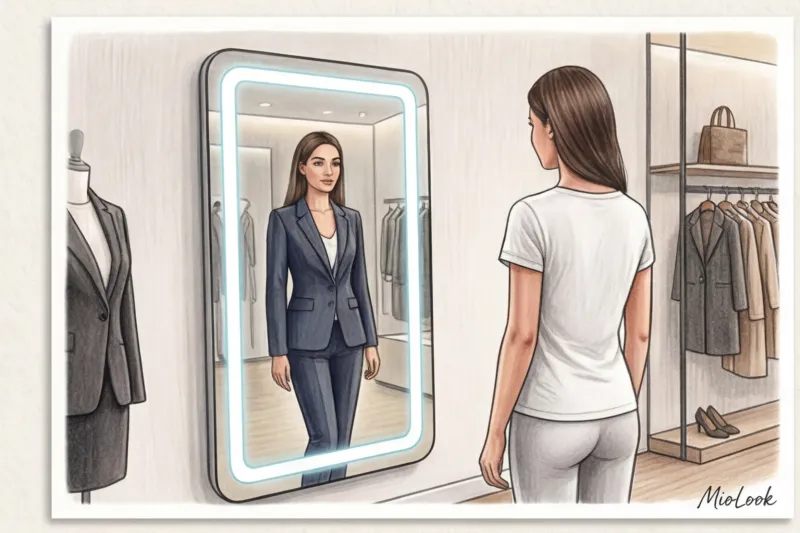
Generating your digital twin
At the heart of any high-quality virtual fitting is the creation of your personal digital avatar. Forget the agonizing measuring tape when you're trying for the tenth time to calculate your true waistline. Today, algorithms only need two or three basic parameters—for example, height, weight, and age (or a single photo of yourself in tight clothing in good lighting). Neural networks, trained on millions of 3D scans of real human bodies, can mathematically fill in the missing data and model volume.
Innovative platforms like Zeekit (whose technology has been successfully integrated by Walmart) use advanced topographic mapping. Artificial intelligence breaks down the garment's image into tens of thousands of tiny polygons and literally "applies" this mesh to your avatar. The program has an excellent understanding of the properties and density of materials: it knows that heavy denim costing €200 will hold its shape rigidly, while thin viscose will flow smoothly along the curves of your body. You can see in advance on your smartphone screen where the garment will stretch and where it will crease.
Of course, the technology still has its limitations—no digital twin can convey the tactile sensation of premium cashmere or the coolness of natural silk. However, AI is brilliant at predicting the visual geometry of fit.
For me, this technological leap is of colossal importance in the context of body positivity. For decades, the glossy magazine industry dictated a toxic rule: if something doesn't fit well, there's something wrong with your body—you need to go on a diet or buy rigid shapewear.
A digital twin completely shatters this outdated paradigm. Observing the fit of clothes on your 3D avatar, you begin to think analytically, without emotion. You understand pure mathematics: it's not that you have "wrong" hips, but that a particular brand's pattern is originally cut for a different waist-to-pelvis difference. The central tenet of modern conscious fashion is: Clothes should fit you, not you - clothes And artificial intelligence has finally given us a real working tool to apply this rule in practice every day.
Try MioLook for free
Start creating your perfect look with artificial intelligence and a virtual fitting room right on your smartphone.
Get access — €0.99 onceSmart Wardrobe: How Neural Networks Work as Your Pocket Stylist
Let's be honest: the "closet full, but nothing to wear" problem isn't caused by a lack of clothes, but by our blind spots. We physically can't keep track of all 150-200 items of clothing hanging on tightly packed hangers, folded into piles, and hidden in seasonal trunks. Our brains are lazy and tend to take the path of least resistance every morning, choosing the same tried-and-true jeans and sweater.
That's why the digital closet concept has become a true antidote to morning decision fatigue. Seeing all your items on your smartphone screen, neatly cataloged and cleared of visual clutter, is the absolute key to conscious style. You get an objective overview. Suddenly, you realize you don't need a sixth basic t-shirt, but you desperately need a structured jacket to tie together your disparate bottoms.
When I started digitizing clients' wardrobes through an app, the data revealed a harsh truth: 80% of the time, only 20% of the items are worn. AI helps tap into the "dormant assets" that have been hanging with their tags for years.
The philosophy behind smart platforms like MioLook The goal is to make your current closet work at 100%. Neural networks act not just as a passive photo catalog, but as a fully-fledged analytical center.

Style Architecture: How Capsule Generation Works
How exactly does the algorithm assemble images? It's not a random roulette. Capsule generation is based on strict styling rules, translated into mathematical language. Modern matching algorithms take into account three basic pillars:
- Color wheel: The AI understands complementary, analogous, and monochrome color schemes. It won't suggest clashing shades unless you manually specify a "color block" setting.
- Proportions and silhouettes: The neural network uses the rule of thirds and volume balance. It will pair wide palazzo pants with a fitted bodysuit or a cropped crop top, not a shapeless tunic.
- Dress codes and context: By selecting the "business casual" tag, you eliminate inappropriate options. The program understands that a silk slip dress can be brilliantly adapted for the office by layering it with a thick cashmere cardigan and tailored loafers.
As a result, the system can generate up to 40 unique outfits for a whole month from 15 basic items, forever eliminating the panic of opening closet doors.
The Mathematics of Conscious Consumption: The CPW Metric
And here we come to the most sobering function of the digital stylist - automatic calculation of metrics CPW (Cost Per Wear) Before algorithms, we assessed the value of an item exclusively at the checkout.
Let's say you're hesitant to invest in the perfect straight-cut wool coat for €350. Your inner critic balks at the high price tag. But once the item is in your smart wardrobe, the AI starts counting every day you add it to your "look of the day." After wearing this coat 100 times over two cold seasons, you've reached the actual price of entry—just €3.50.
By comparison, the algorithm will show you the merciless statistics for an impulsive purchase of a trendy mass-market dress for €50. You wore it exactly once to a New Year's party, and it settled at the bottom of your closet. Its CPW remained at €50. Thus, AI helps justify expensive but high-quality purchases by clearly demonstrating the mathematical fact that premium basics are significantly cheaper for our budget than the endless stream of cheap fast fashion.
The Myth of "Robot Couturiers": Why AI Won't Replace Personal Style
There's a popular techno-utopia: in just a couple of years, algorithms will completely replace stylists, producing flawless, mathematically precise looks. But let's face it. Neural networks in fashion are excellent at handling routine tasks, inventory, and optimization, but they're completely powerless where the real magic of style begins—in empathy and deliberately breaking the rules.
Artificial intelligence thinks in rigid patterns and relies on historical data sets. It has an impeccable grasp of color theory, memorizes the golden ratio, and will flawlessly match a navy blue jacket with the perfect pair of beige trousers. But AI is completely incapable of understanding psychological context. A machine can't read your micro-expressions when you say you want to look "sharp but relaxed" at tomorrow's IT startup pitch. Only a human being understands: today, you need not just a millimeter-perfect €400 suit, but a stylistic suit that will inspire confidence without making you look overly buttoned up.
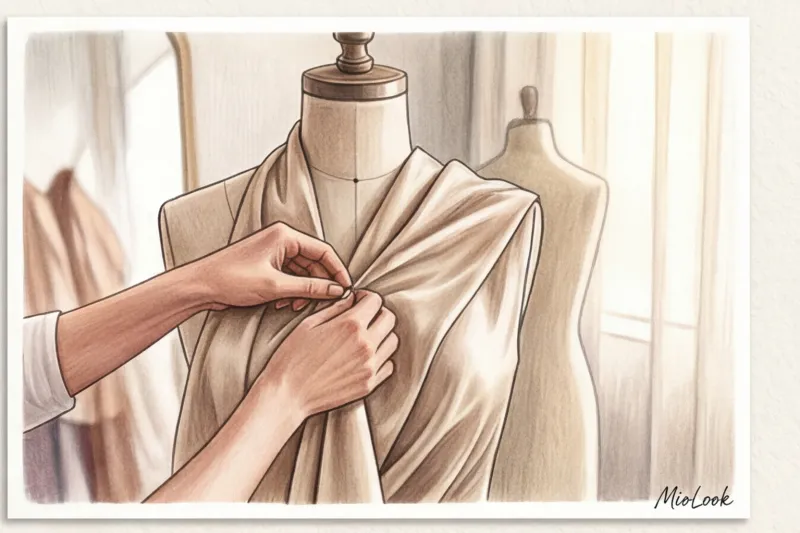
True chic is always born on the edge of what's acceptable. Remember how one of the biggest styling tricks of our decade emerged—pairing a formal two-piece suit with chunky sneakers. For a basic algorithm trained on classic dress code protocols, this is a critical "error," a stylistic flaw that must be immediately corrected with tailored loafers or oxfords. The human eye, however, saw freshness, dynamism, and a new norm in this paradox.
A machine can't make fun of fashion. Analytics can predict the popularity of a silhouette, but an algorithm is unlikely to come up with the idea of wearing a man's tie instead of a belt or casually tucking a bulky sweater into a silk slip skirt with one swift gesture (that same iconic French tuck ). For AI, inside-out seams in the spirit of Maison Margiela's deconstruction are a manufacturing defect and an anomaly, not a brilliant fashion statement.
Therefore, the future of the industry is not competition, but intelligent collaboration, where a human stylist controls an AI assistant. A smart algorithm takes care of the grunt work: filtering out unsuitable styles, assembling a basic capsule collection, and tracking wear statistics. You act as creative director. By delegating the routine Smart wardrobe features in MioLook , you take the ideal mathematical base and add to it that very “wrong” detail that makes the image come alive and truly yours.
Your ideal image
it begins Here
Join thousands of users who look flawless every day with MioLook.
Get access — €0.99 onceAction Plan: How to Incorporate Fashion Neural Networks into Your Routine Today
Enough theory. I often see clients inspired by the concept of a digital closet, only to become overwhelmed when trying to fit all 200 hangers into it. My top tip for busy professionals is to start with microsteps. Over the years as a stylist, I've developed a strict protocol for integrating technology into my life. This practical, productivity-inspired checklist is guaranteed to save my clients up to two hours of their morning time each month.
- Step 1: Digitize your basic wardrobe (photograph 15 key items without a background). Don't try to photograph your entire closet in one weekend—you'll just burn out halfway through. Choose your formal uniform: perfect straight trousers, a trusted blazer (for example, a quality basic for €150), a couple of classic shirts, and casual shoes. Photograph them in even daylight. Modern apps like MioLook , use built-in algorithms that will neatly cut out the background in a second, leaving a clean catalog silhouette of the item.
- Step 2: Set up tags (season, dress code, color) for quick search. Neural networks in fashion are completely blind without proper user markup. As soon as an item is uploaded, be sure to assign it metadata. Don't just write something generic like "skirt." Use a clear attribute hierarchy: Fall/Winter - Smart Casual - Navy - Wool It's precisely this meticulousness that will allow algorithms to deliver immediate, relevant results and avoid suggesting linen items for your December business trip.

- Step 3: Use the look generator to plan your work week every Sunday. Make this your new Sunday habit. Sit down with a cup of coffee, open your digital wardrobe, and let the AI generate five looks for the coming week based on your schedule. The neural network often suggests unobvious yet stylish combinations you wouldn't have thought of in your morning rush (for example, pairing a tailored suit vest with relaxed jeans). Save your favorites in a separate lookbook. Morning choice paralysis is finally over.
- Step 4: Analyze statistics (what you haven’t worn for more than 3 months) before going shopping. This is my favorite financial hack, which is more sobering than any consultant. Before heading to the boutique for another jumper, open the app's dashboard. The algorithm will impartially highlight your "blind spots"—items that have been sitting on the shelf unused for more than 90 days. If the statistics grimly tell you that you only wear 20% of your wardrobe, your next shopping trip should be focused on buying "connecting" pieces to activate those dormant pieces, not on buying the latest trend duplicates.
This algorithm transforms your smartphone from a time-waster into a personal strategist. You stop depending on the whims of your morning mood and start managing your style based on simple, yet extremely useful data.
The Future of Style: Where Will the Symbiosis of Technology and Fashion Lead Us?
A WGSN study (2024) revealed alarming statistics: the average woman spends about 115 hours a year simply standing in front of her open closet, trying to figure out what to wear. That's almost five full days of her life wasted on morning stress and self-doubt. This is why neural networks in fashion aren't just a toy for geeks or a passing trend, but a pragmatic tool for regaining control over one's time and resources.
To summarize our dive into fashion tech, let's highlight the key points. The symbiosis of algorithms and design is already irrevocably changing the industry in three fundamental ways:
- Eco-friendliness: AI ruthlessly cuts overproduction. Brands no longer blindly produce hundreds of thousands of items, hoping to anticipate demand. Predictive analytics algorithms know precisely how many basic jackets will be needed in a given region, reducing textile waste by millions of tons annually.
- Economy: As consumers, we're no longer subsidizing our impulse shopping. When a digital assistant clearly shows us that the real cost per unit (CPW) of a premium cashmere sweater is €2–3, while a trendy sequin top is a whopping €80, our approach to budgeting changes instantly.
- Hyperpersonalization: Clothes finally begin to serve a person, adapting to his lifestyle, and not the other way around.
"Recently, one of my clients, a top manager at a fintech company, confessed, 'Emily, I spent 15 years thinking I had a disproportionate figure until the app analyzed my measurements and revealed I was obsessively buying pants with patterns tailored to a completely different hip shape.' That's the real therapeutic power of data."
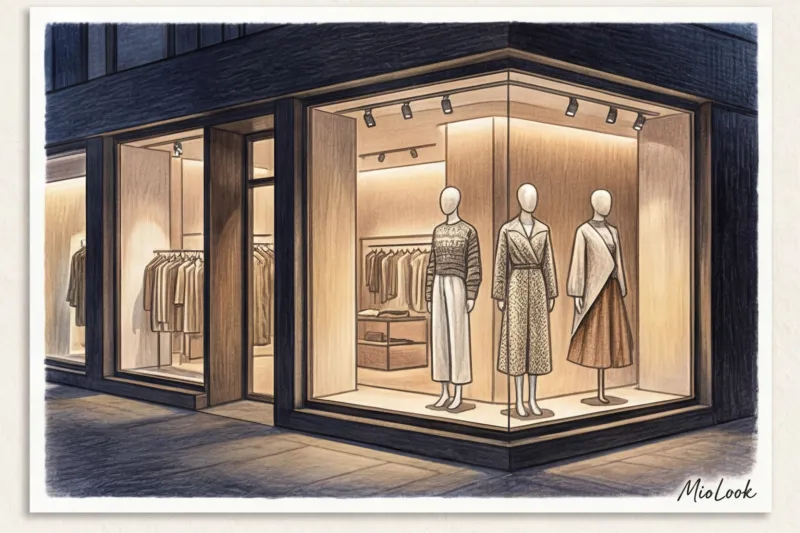
Three-year horizon: smart fabrics and the end of the size problem
Now let's look to the very near future. Over the next three years, we can expect two technological advances that will forever change the user experience. The first is a complete and utter victory over the problem of size mismatches. The integration of Lidar technology, already built into modern smartphones, will generate a millimeter-precise 3D model of your body in ten seconds. You'll forget about painful returns: online store algorithms will dynamically adjust patterns to your digital avatar even before your order leaves the factory.
The second revolution will occur at the intersection of AI and materials science—we'll see the widespread adoption of weather-adapted clothing. Massachusetts Institute of Technology (MIT) laboratories and innovative brands like Ministry of Supply are already testing smart textiles with shape memory. Imagine a minimalist trench coat whose fibers automatically contract to block the wind during a sudden cold snap and expand to create micro-ventilation when you enter a stuffy room or the sun shines brightly. Your wardrobe will become an interactive interface, responsive to the external environment.
Time as the main trend of the decade
Over the years of working with aesthetics and personal wardrobes, I've come to one uncompromising conclusion. The main trend of the future isn't a specific shade according to the Pantone Institute, nor is it the return of 2000s silhouettes, nor even the aesthetic of "quiet luxury." The main trend is time That time we free up from routine thanks to smart technology, so we can spend it on our careers, family, or a leisurely morning cup of coffee.
My final plea to you: stop viewing artificial intelligence as a threat to your individuality or as cold mathematics. Start delegating. Let the machine handle the boring stuff: inventory, budgeting, color filtering, and checking compatibility. Your job is to preserve for yourself the most interesting things: the pleasure of your reflection in the mirror and the pure joy of self-expression.
Guide Chapters
Innovations: New Materials for AI Clothing
Neural networks are no longer science fiction, but a real tool for the fashion industry. We explain how algorithms are developing eco-friendly and tactilely flawless fabrics.
Neural Networks and Ecology Are in Fashion: AI vs. Overproduction
Every year, nearly 30% of clothing produced ends up in landfills. We explain how algorithms are helping fashion brands combat overproduction.
Originality Check: Neural Networks Against Fakes in Luxury
The era of "superfakes" has forever changed the luxury market, rendering buyers' intuition useless. We explain how AI technologies accurately detect counterfeits.
AI in Fashion Brands: Top Companies Implementing Neural Networks
Neural networks are transforming the fashion industry behind closed doors in factories and warehouses. Learn how global brands are using AI to combat overproduction.
What is digital clothing? A guide to virtual fashion.
Virtual items aren't just toys for gamers, but a powerful style tool. Find out how digital outfits can save you money on impulse purchases.
How online shopping algorithms make you buy more
Went in for a basic T-shirt and bought a leopard-print skirt? Find out how tricky marketplace recommendations manipulate our emotions and ruin our personal style.
Virtual Models for Clothing: The Future or a Scam?
The fashion industry has been taken over by AI avatars showcasing perfect outfits on social media. We explore why virtual influencers will never replace the real fit of fabric.
Fashion Design with Neural Networks: AI Instead of a Fashion Designer
The real revolution in the fashion world isn't cyberpunk robots, but precise algorithms. We explore how AI optimizes pattern management and predicts trends.
Virtual Stylist Neural Network: How AI Will Transform Your Wardrobe
Algorithms take over routine tasks, leaving stylists with pure creativity. Learn how AI-powered closet digitization cuts your dressing time to 3 minutes.
Fashion and AI: How Neural Networks Predict Trends
Artificial intelligence in fashion isn't about weird, futuristic outfits, but rather precise mathematical calculations. We explore how algorithms help create the perfect basic outfit.