I still remember that moment at the Premiere Vision textile exhibition in Paris three years ago. At the booth of an innovative startup, I was handed a piece of matte, incredibly soft leather in a warm caramel shade. I turned it over in my hands, assessing the perfect grain and weight, imagining how flawlessly it would be to fashion a trench coat from this material. Then the booth's creator said with a smile, "There's not a gram of animal leather or a drop of polyurethane in this. This texture was calculated by a neural network, and we grew it from mycelium."
For many, designing clothes using algorithms is associated with science fiction—something shiny, squeaky, and tinfoil-like. In fact, it's quite the opposite. new materials for clothing, AI Today, it's saving us from the scourge of cheap plastic, bringing back fashion to natural, yet mathematically precise textures. We've already covered in more detail how technology is changing the entire production cycle in our The complete guide to neural networks in fashion.
Let's take a peek behind the scenes at the labs to see why your next perfect basic sweater will likely be designed by a data scientist.
From Loom to Algorithm: A Quiet Revolution in the World of Fabrics
The fashion industry has always relied on materials science. Think back to the 1930s: the invention of nylon forever changed the hosiery market. Later, the advent of elastane (Lycra) allowed designers to create fundamentally new, form-fitting silhouettes—we still see echoes of these when we examine 60s style in modern clothing.

But by the early 2020s, we had hit a ceiling. Traditional cotton requires colossal amounts of fresh water (around 2,700 liters per T-shirt), and polyester, which had been a cheap alternative for years, had flooded the planet with microplastics. Fashion houses urgently needed a way out. And they found it in Silicon Valley.
Today, large holdings hire not only colorists but also machine learning specialists. We've moved from simple "fashion design" to "materials engineering." Algorithms can analyze millions of chemical compounds in seconds to find the perfect yarn formula that will breathe like linen, stretch like spandex, and decompose in the soil like a fallen leaf.
Your perfect wardrobe without extra effort
Tired of buying things that quickly become unusable? Let algorithms analyze your wardrobe.
Get access — €0.99 onceSmart Lab: How New Clothing Materials Are Created, and Why AI Has Become the Chief Technologist
Imagine a chef who doesn't have to waste tons of ingredients to find the perfect recipe. They know exactly how each ingredient will react at the molecular level when heated to 73.5 degrees Celsius. In the modern textile industry, artificial intelligence takes on this role.
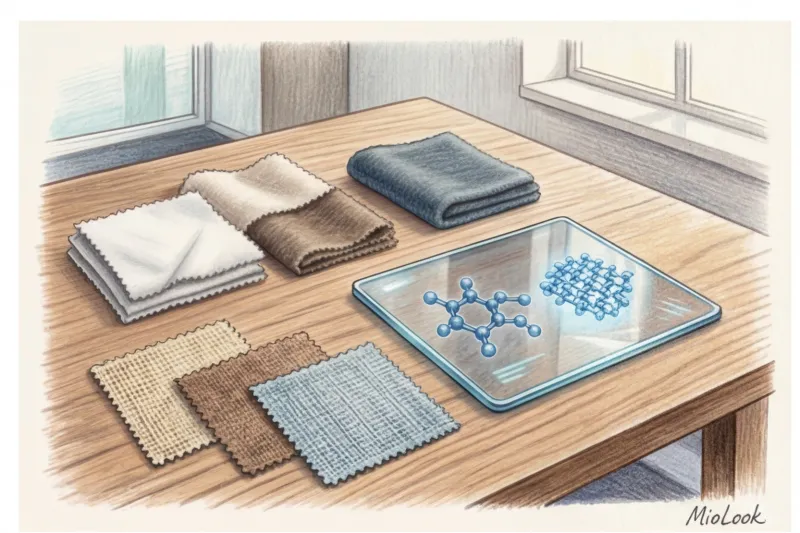
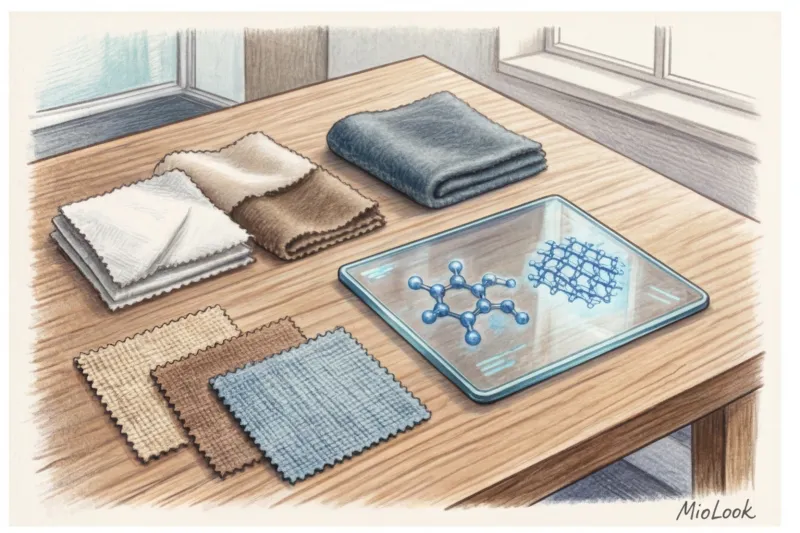
The main tool here is digital twins Before the machine weaves the first physical meter of fabric, a neural network creates an exact virtual copy. The program simulates everything: how the material will drape on the body, how quickly it will pill from rubbing against a bag strap, and whether the pigment will fade after twenty washes.
According to a McKinsey report (2024), the implementation of predictive modeling has reduced the development cycle for innovative fabrics from 3–5 years to an incredible 4–6 months. AI simply eliminates thousands of dead-end weave options during the computer simulation stage.
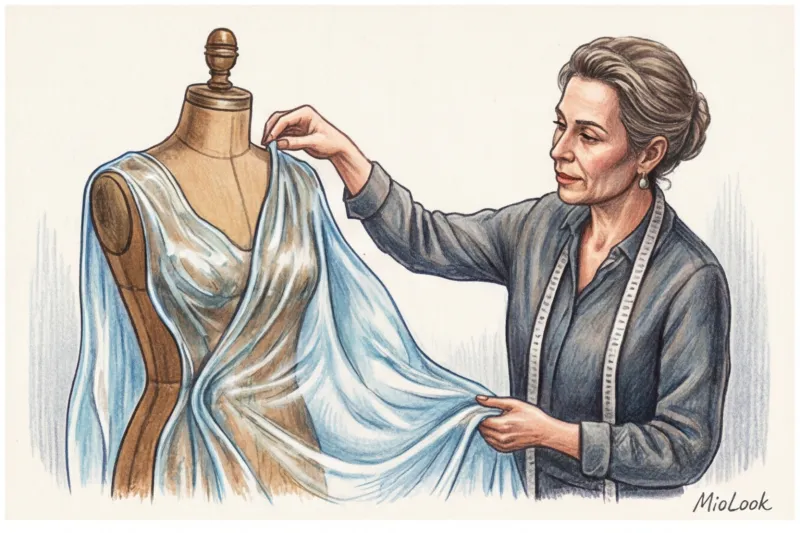
Bio-couture: silk from a test tube and leather from mushrooms
The most intriguing developments are occurring at the intersection of programming and biology. A prime example is the startup Bolt Threads, which created Microsilk. By analyzing spider DNA, algorithms helped scientists program yeast to secrete a protein identical to spider silk during fermentation (a process similar to brewing beer). The result? A material stronger than Kevlar and softer than silk, created without the help of the spiders themselves.
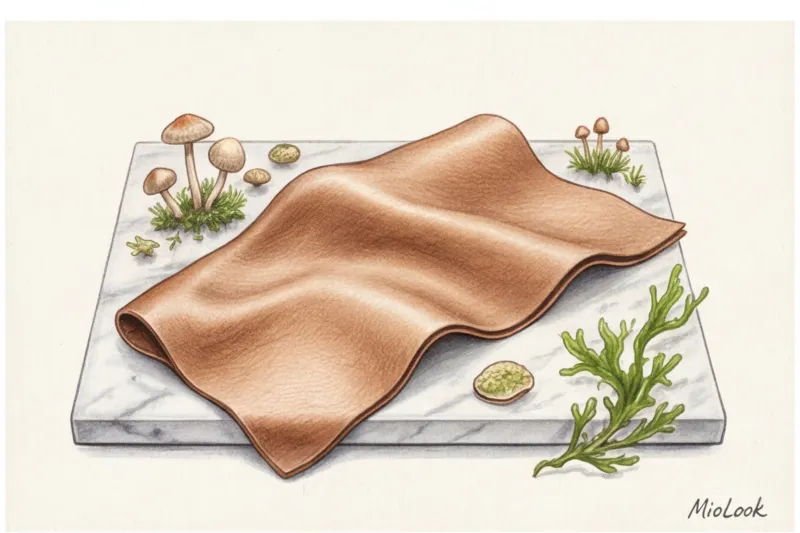
No less impressive is the work with mycelium (the root system of mushrooms). The problem with early experiments with mushroom leather was instability—the pieces would sometimes be too stiff, sometimes too loose. Machine learning solved this problem by calculating the ideal parameters of humidity, temperature, and nutrient medium for targeted mycelial growth. This is how Mylo, the material from which Stella McCartney already makes her iconic bags, was born.
Programmable comfort: climate-controlled fabrics
Remember that unpleasant feeling: you step from a freezing cold street into an overheated subway, and your down jacket instantly turns into a sauna. Phase-change materials (PCM) solve this problem.
In 2023, MIT researchers presented a programmable knitting algorithm. A neural network calculates the fiber structure so that the microcapillaries within the thread expand when body temperature rises (releasing heat) and contract when cold (retaining heat).
"We're no longer sewing clothes from dead tissue. We're creating adaptive interfaces between the human body and the environment," MIT engineers note.
However, honesty is needed here. This doesn't always work. In my experience, these smart fabrics handle urban temperature fluctuations (office-street-transport) very well, but if you're going to be standing still when the temperature drops to -20°C, no smart, thin blend will replace good old-fashioned layering and thick wool. When choosing, what outerwear If you need it, always consider the real climate, not just marketing promises.
The Cyberpunk Myth: Why Algorithms Are Making Fashion More Sustainable
It's time to dispel a major stereotype. Clothing created using high technology doesn't look like an astronaut suit. On the contrary, the goal is to make it visually and tactilely indistinguishable from premium cashmere or the finest Egyptian cotton.
Algorithms are being deployed to solve the waste problem. Today, neural networks calculate the strength of fibers derived from agricultural waste. This is how Piñatex (from pineapple leaves) and AppleSkin (from apple pomace) were created.
Even more important is saving resources at the dyeing stage. A WGSN study showed that virtual color testing in simulators allows brands to reduce clean water consumption during the development stage by up to 80%. AI accurately predicts how chemical dyes will adhere to the fiber, eliminating the need for factories to conduct hundreds of polluting test runs.
Create a capsule of the future today
Upload your items to the MioLook smart wardrobe, and the algorithms will suggest dozens of new stylish combinations.
Get access — €0.99 onceThe wardrobe of the future is already here: where we are using smart textiles today
Innovations are already on store shelves, but they're working unnoticed. As a personal stylist, I often encounter clients who are disappointed: "I bought a basic turtleneck at a mass-market store, and after three washes, it's a rag."
One day, a client and I decided to try an experiment. Instead of a stack of cheap jumpers, we bought one, priced between €120 and €150, made with a patented blend of merino wool and a new generation of lyocell, lab-designed to resist pilling. After two years of heavy wear, this item looks like it just came off the shelf.
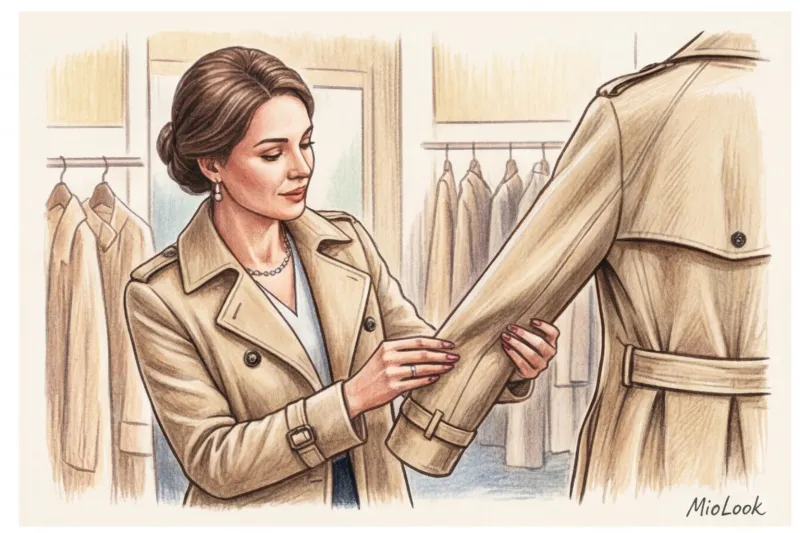
These high-tech, durable materials are changing the very approach to wardrobe planning. Items last longer without losing their shape, making the capsule wardrobe concept truly practical. To manage these investment pieces wisely, I recommend my clients use MioLook app When you have 30 perfect, well-maintained items hanging in your closet, an AI stylist can easily put together outfits for the month ahead.
A Stylist's Checklist: How to Read Labels in an Age of Innovation
Knowing how to read ingredients is your filter against marketing clutter. How can you tell cheap synthetics from high-tech materials? Look for specific, patented names on labels, not just generic terms.
- Econyl. Regenerated nylon, made from ocean-caught fishing nets. It has properties comparable to virgin nylon, but is infinitely recyclable. It's often found in premium swimwear and sportswear (priced from €70).
- Lyocell (Tencel™). Although lyocell itself has been around for a long time, its new algorithm-based modifications boast incredible hygroscopic properties. It cools better than linen in hot weather and is virtually wrinkle-free.
- Cupro. Regenerated cellulose made from cotton linters. It feels like dense, heavy silk, flows beautifully, yet is breathable and machine washable. Ideal for slip dresses.

Important care rule: If you have purchased a smart textile item (for example, a temperature-regulating blend or compression sports leggings), never use fabric softener It clogs the microcapillaries of the fiber with a thin silicone film, and the fabric permanently loses its breathable and moisture-wicking properties.
Ultimately, the main value of artificial intelligence in materials science is the quality we achieve. Neural networks can't replace good taste, but they give us fabrics that work for us: they don't wrinkle in your suitcase, don't fade in the sun, and allow your skin to breathe. And this is the kind of technological progress worth letting into your closet.