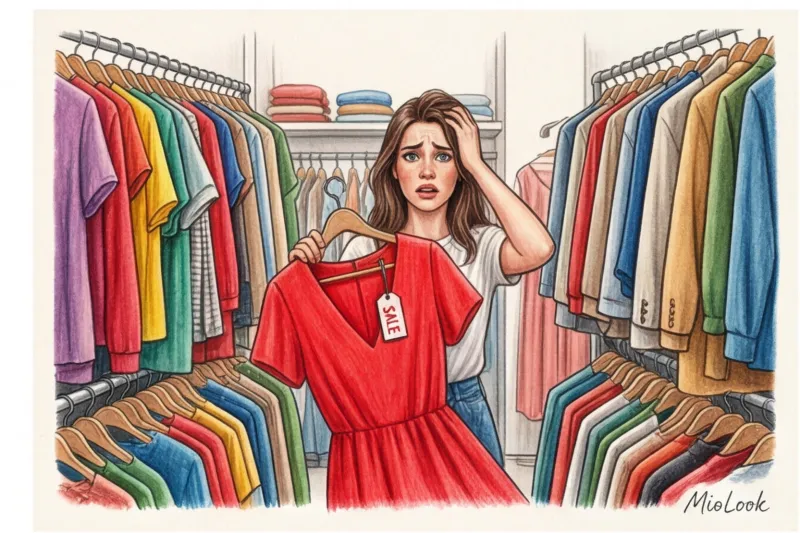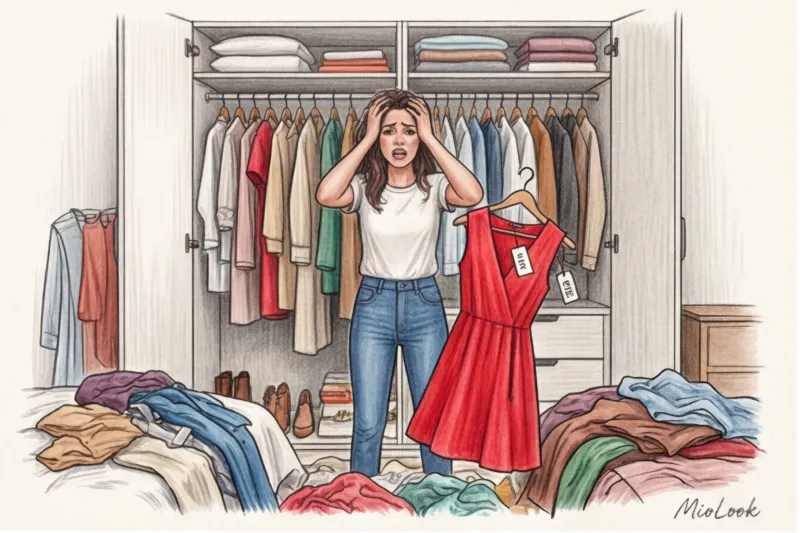
Take a look at your shopping cart on your favorite clothing website right now. We bet half the items there weren't there because you were specifically looking for them? Maybe you went in for a basic white t-shirt, only to find yourself at the checkout stage with a leopard-print skirt and a neon top. My name is Elena Kovalenko, I've been a personal stylist for 14 years, and every day I see the same picture: women's closets filled to the brim with things bought on impulse. And it's not your weak willpower that's to blame, but the way things work. algorithms in online shopping.
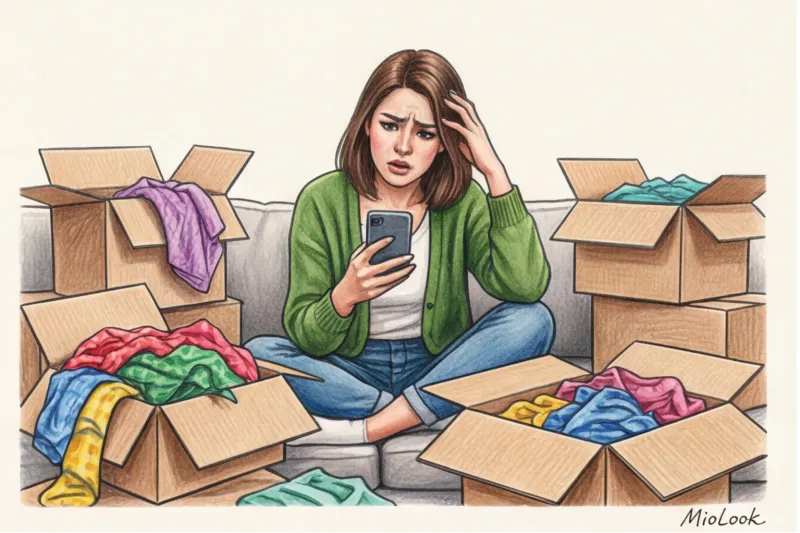
We covered the technological underbelly of the fashion industry in more detail in our complete guide. Neural Networks in Fashion: How AI Creates Clothing and Trends , but today I want to talk about practical matters. About how store interfaces ruin your personal style and turn your wardrobe into a chaos of incompatible items.
The Illusion of Choice: How Online Shopping Algorithms Shape Your Taste
We're used to thinking of the "Recommended for You" block as a helpful digital assistant that has studied our tastes and now offers the best. In reality, the product feed is completely biased. You see exactly what the system needs to sell you right now.
I'll let you in on a counterintuitive industry secret: 80% of the time, the recommendation block isn't about your style. It's the retailer's attempt to sell off overstock or promote products with the highest margins. The store skillfully disguises its business goals as your "personal style."
"An algorithmic wardrobe is a closet in which items don't fit together because each item was purchased in response to a specific digital trigger, rather than within the framework of a unified style concept."
I had a client in my practice, Marina. When we started going through her wardrobe, I found four slip dresses. They were all identical, cut in a way that was extremely unflattering for her figure, but in different colors. When I asked her why she needed so many identical items, she replied, confused: "The app kept showing me them on the main page with a discount, and I thought it was my style since they were so persistent in offering it to me." The algorithm simply found a weak spot and attacked it until the client bought up the entire illiquid line at €45 apiece.
The "Customers Also Bought" Trap
Classic cross-selling is another style-defying ploy. When you add a jacket to your cart, the marketplace immediately offers you matching trousers or a bag.
The problem is that ready-made looks from marketplaces are based on databases and tags, not the laws of harmony. The algorithm doesn't know that you have a pear-shaped figure and that these particular pants will make your bottoms look heavy. It doesn't take into account your color type or skin tone. It simply knows that these two items share the tag "office style" and the color "graphite." As a result, you buy a look that looks great on a faceless mannequin, but is completely unsuited to your real life and existing needs. capsule base.
Dark patterns: timers, red price tags, and "last size"
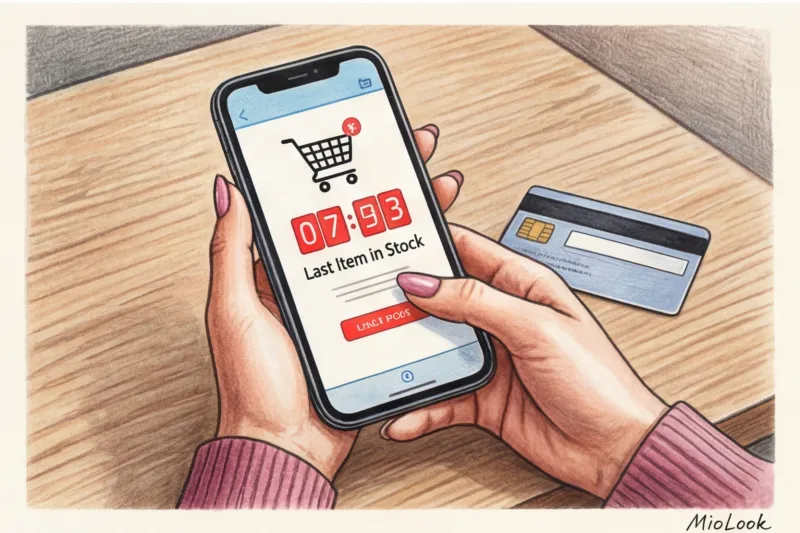
Have you ever noticed how your pulse quickens when you see the words: "15 people have this item in their carts, only 1 item left in your size." This isn't a coincidence. These are so-called "dark patterns"—the aggressive psychology of the interface that makes us nervous and rush.
According to the Fogg Behavior Model, three elements are required to take action: motivation, opportunity, and trigger. A red countdown timer is a powerful trigger that shuts down rational thinking and triggers FOMO (fear of missing out). According to a 2023 study by the Baymard Institute, artificial scarcity increases impulse purchases in the fashion segment by 30%.
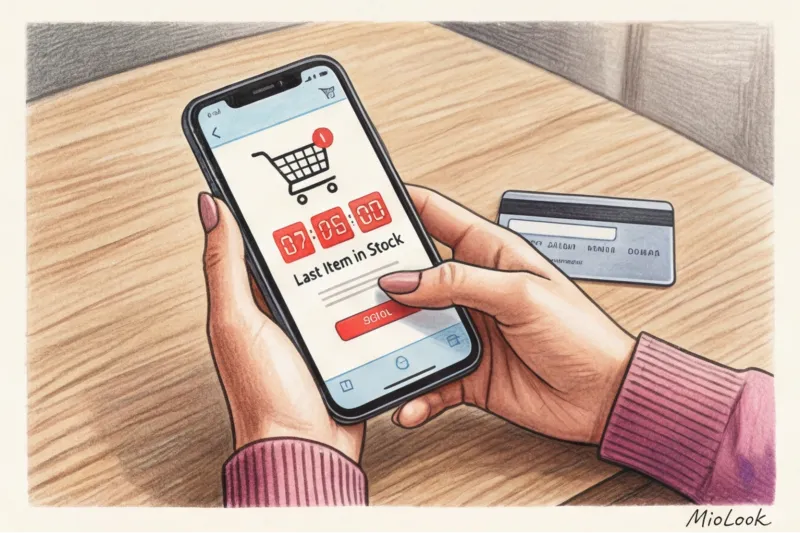
As a stylist, I always tell my clients: 9 out of 10 times, the "last size" label is a marketing gimmick. If an item is truly sold out, a major brand (like Zara or H&M) will likely restock it in a couple of weeks. My golden rule for avoiding dark patterns is: 24-hour rule Add the item to your cart, close the tab, and go to bed. If the next day you can still justify wearing it at least three times, buy it.
Your perfect wardrobe without stress
Tired of impulse shopping? Digitize your closet and plan your looks in advance with the help of a smart AI assistant.
Get access — €0.99 onceDynamic Pricing: Why is this bag worth more to you?
One of the most unpleasant secrets of online shopping is that the price of an item isn't set in stone. Stores analyze a huge amount of your data: what device you used (a brand-new iPhone or a budget Android), your browser history, and your geographic location.
Algorithms create dynamic pricing. If the system detects that you regularly purchase premium items and use an expensive smartphone, it may offer you a higher price than someone with no purchase history.

I encounter this regularly in my work. Recently, I was looking for a basic cashmere coat for a client. When I opened the link on my work MacBook Pro (which I use to browse hundreds of luxury websites daily), the coat was listed at €850. Experimentally, I accessed the same page on a basic Android tablet using mobile data, and the price magically changed to €780 with a "special welcome discount." A €70 difference for nothing! Personal discounts are often just an illusion, masking the initial inflated price for your profile.

The Microtrend Effect: Why Your Marketplace Wardrobe Becomes Outdated Within a Month
Algorithms are designed to promote fast fashion and hyped items for one simple reason: they generate quick clicks. A classic white shirt made of thick cotton doesn't evoke strong emotions. But an asymmetrical top with an acid-colored cutout grabs attention in the feed and compels you to click.
A 2024 study by the consulting firm McKinsey reveals alarming statistics: the average fast-fashion item is worn only seven times before being thrown away or forgotten in the closet. This is a direct consequence of algorithmic shopping.
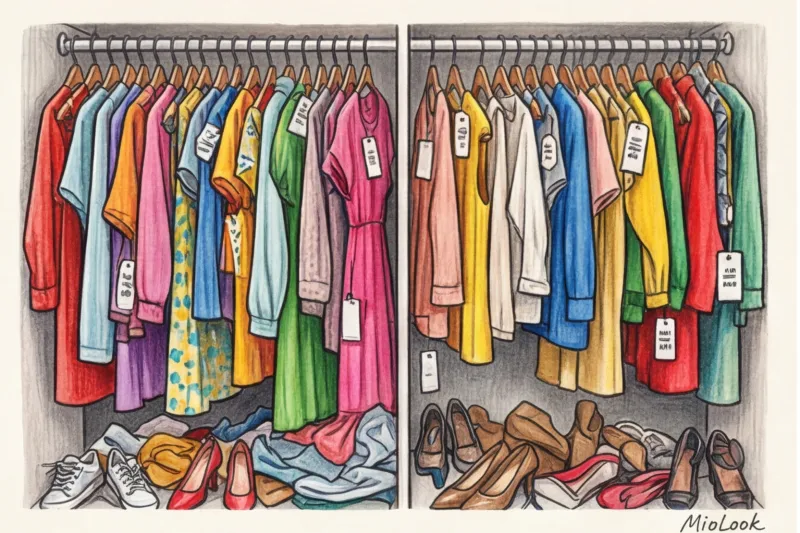
Let's calculate the ROI (return on investment) for your wardrobe. Let's say an algorithm convinced you to buy a trendy cargo skirt for €40. You wore it once to a party. The cost per wear was €40. Now let's take a classic double-breasted trench coat for €150 that you found yourself through targeted search. You'll wear it at least 50 times per season. The cost per wear is only €3. See the difference?
How algorithms exploit our emotions
Shopping has long since become a dopamine rush. Ever notice how you mechanically scroll through your online store feed before bed, just like you would your social media feed? Retailers know this. In the evening, when your energy levels drop, "decision fatigue" sets in. Your critical thinking is impaired. That's when algorithms throw up flashy, inexpensive items in the €20-€50 range, so easy to buy with a single click.
Access to MioLook for €0.99 — one-time payment
A smart AI stylist will curate the perfect look from your own pieces, so you don't waste money on unnecessary microtrends.
Get access — €0.99 onceA Stylist's Checklist: How to Game the System and Buy Mindfully
So, how can you stop being a puppet in the hands of marketplace neural networks? Over the years of work and shopping accompaniment I've developed a clear safety protocol for my clients. Here are three steps you can implement today:
- Incognito mode and reset history. If you're looking for an expensive basic item (€100 and up), always compare prices. Open the link in incognito mode, clear your cookies, or access it from a different device. This will disrupt dynamic pricing settings.
- Hard targeted search. Never surf the marketplace's main page. It's like going to the supermarket hungry and without a shopping list. Need jeans? Enter specific search parameters: Women's straight-leg jeans, blue, 100% cotton, high waist Ignore the "You may also like" block.
- Pairing method (Rule of three). Don't click the "Pay" button until you've mentally created at least 3 complete looks for the new item from what you have. already hanging in your closet. If you need to buy new shoes and a top to wear this skirt, close the tab.
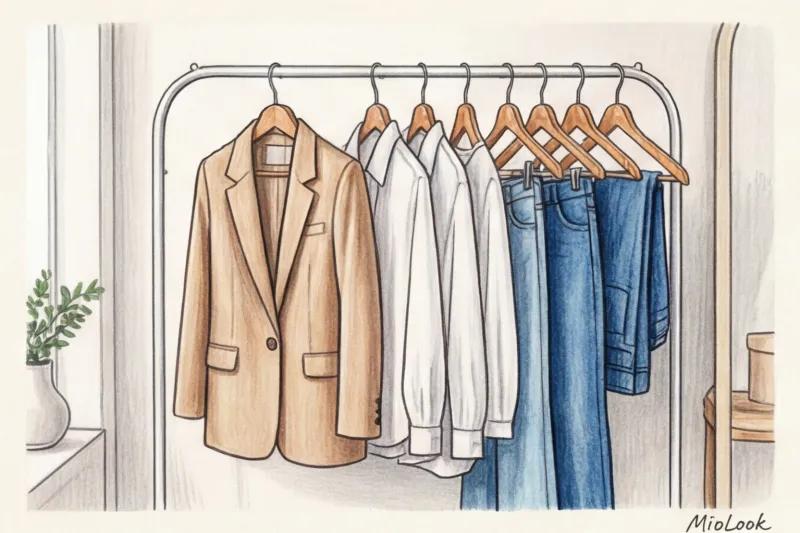
But I must make a disclaimer here: the pairing method does NOT work if you don't have a basic wardrobe at all. Trying to pair a statement blouse with three other extravagant items bought on impulse is a dead end. First, you need to build a foundation of neutral, high-quality pieces.
AI as a Smart Stylist: Taking Control of Algorithms
Does all of this mean technology is evil? Absolutely not. The secret lies in whose goals artificial intelligence serves. Marketplace algorithms work for the seller—their goal is to get you to buy. But you can use AI to work for you.
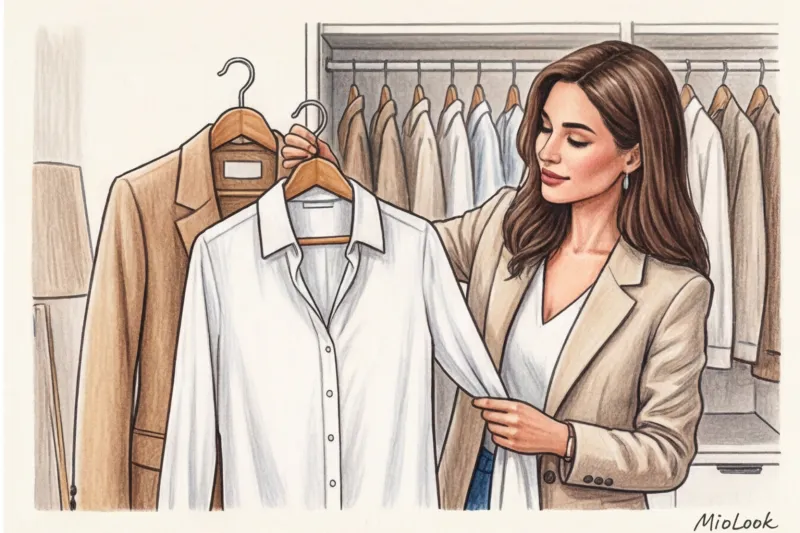
Digital wardrobe apps like MioLook shift your focus. Instead of thinking "what else should I buy," you start thinking "how to style what I already have in a new way." By uploading your items to a virtual closet, you instruct algorithms not to sell you new items, but to analyze your personal wardrobe, color palette, and suggest fresh combinations from your existing pieces.
Your perfect look starts here
Join thousands of users who look flawless every day with MioLook without buying anything extra.
Get access — €0.99 onceThe next time you reach for the "Place Order" button under the pressure of a ticking red timer, take a deep breath. True style isn't born in a rush at a sale. It's built on self-knowledge, an understanding of your proportions, and the ability to distinguish a genuine desire for a quality piece from a fleeting impulse masterfully orchestrated by code.