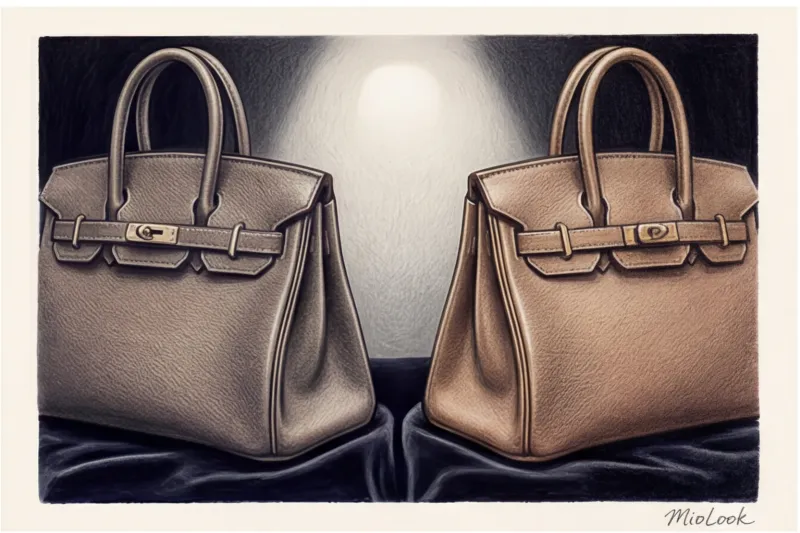
A few years ago, I arrogantly believed that my hands and eyes, trained by thousands of hours of wardrobe analysis, would never fail me. I'd pick up a Chanel bag and, by the weight of the cold metal chain, the distinctive scent of tanned leather, and the gentle click of the turnstile lock, I'd make an unerring judgment. Today, I honestly admit: this skill is hopelessly outdated. The shadow market for counterfeits, whose volume has long exceeded 600 billion euros, has evolved. Today, only technological advances can save your investment in status. Originality check: neural network sees what is forever hidden from the human eye.
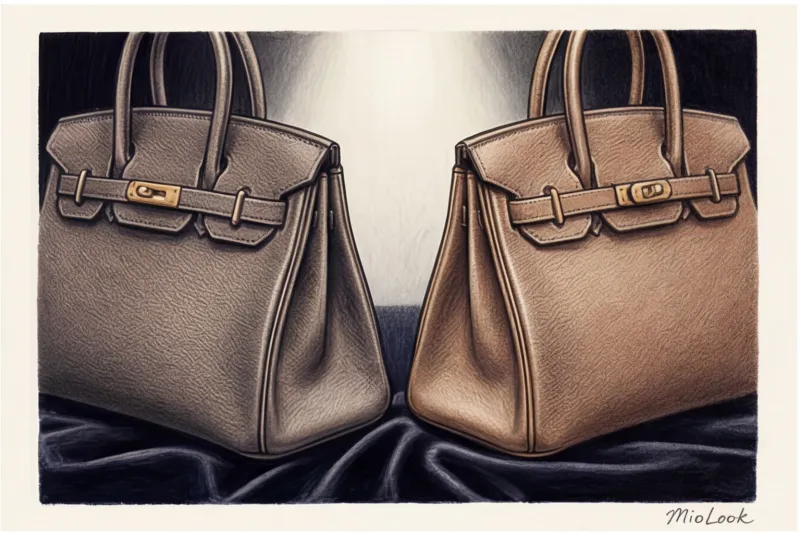
We've already covered how algorithms are globally changing the fashion industry in more detail in our complete guide. Neural Networks in Fashion: How AI Creates Clothing and Trends In this article, we'll discuss the practical security of your personal assets and explore why buyer's intuition no longer works against Guangzhou factories.
Why the Stylist's Eye Can't Cope Anymore: The Era of "Superfakes"
The main myth that many lovers of heavy luxury still entertain is: "A good stylist or a knowledgeable buyer can always spot a fake by touch." This was true ten years ago, when fakes were identified by crooked seams, cheap hardware, and the suffocating smell of glue. Today's "superfakes" (category AAA+) are made in the same factories, from the same batches of leather, and stitched with original Gutermann threads.
I had a telling case in my practice. I was sorting through a new client's wardrobe, and we came across a "vintage" Hermès Kelly 32 in Gold. The Togo leather was perfectly soft, the herringbone stitching (the famous Sellier stitch) looked flawless, and the engraving on the hardware raised no suspicion. The bag appeared 100% authentic. We decided to run it through a macro scanner just for the record. The result? A high-quality superfake. The deviation was found in the density of the weave on the inside pocket, which is impossible to notice without high magnification.
"As a certified colorist, I know how pigments work. Counterfeit factories have learned to perfectly replicate the visual shade of skin—you wouldn't be able to tell them apart even with a PANTONE fan. But they can't replicate the chemical structure of the dye or how the pigment is absorbed into the skin's micropores. It's this deviation that machine vision detects."
Access to MioLook for €0.99 — one-time payment
A smart AI stylist will select the perfect look for every day and help you organize your wardrobe.
Get access — €0.99 onceOriginality Check: How a Neural Network Sees Your Stuff
When we talk about AI authentication, we're talking about computer vision technology. The algorithm doesn't evaluate the shape of a bag or the beauty of a logo. For it, your item is a topographic map, a micro-landscape.
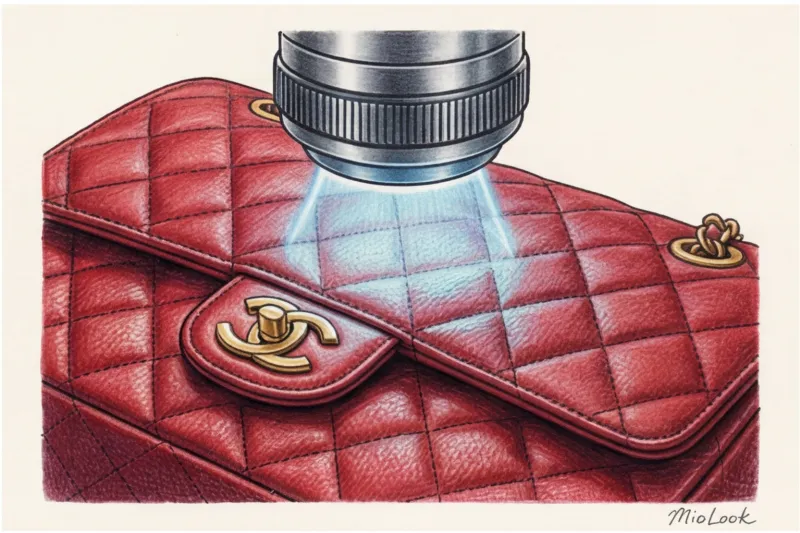
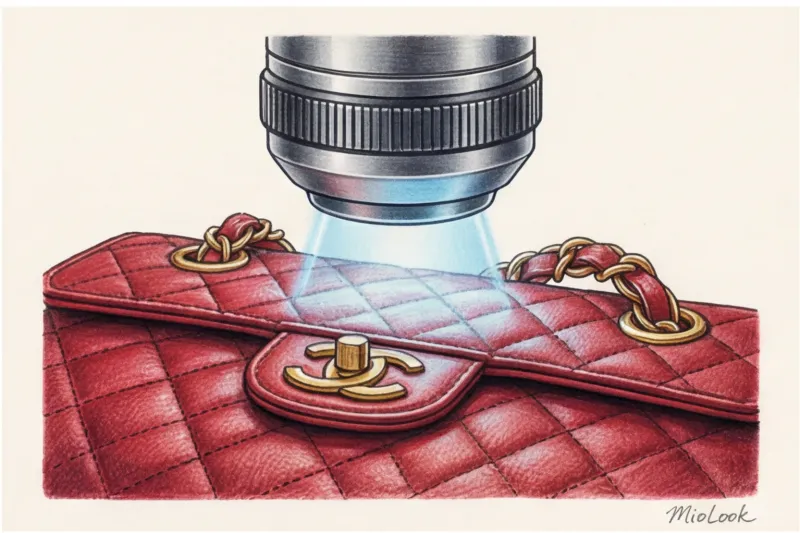
A special camera connected to a smartphone takes images of the material at 260x magnification. At this zoom level, the smooth calfskin looks like the lunar surface, and the metal logo looks like a jagged canyon. The neural network takes this "micro-landscape" and compares it with millions of reference images from its database.
Algorithms vs. Factories: How AI Learns from Mistakes
The most impressive thing about the Machine Learning system is its ability to self-learn. Every detected fake makes the neural network smarter. The database is updated dynamically.
As soon as counterfeiters acquire new machines for stamping hardware, AI instantly detects the new pattern of micro-scratches left by the counterfeit press. It's a never-ending arms race, but mathematics is currently winning. Counterfeiters need months to retool their production, while neural networks only need milliseconds to update their recognition algorithm.
Access to MioLook for €0.99 — one-time payment
Start creating perfect capsules with AI now.
Get access — €0.99 onceKey technologies guarding heavy luxury
If you're investing in a wardrobe with a "quiet luxury" style (by the way, we've covered this aesthetic in detail in the article Old Mane Style for Women vs. Royal Mane: What's the Difference? ), you need to know the main players in the authenticity protection market.
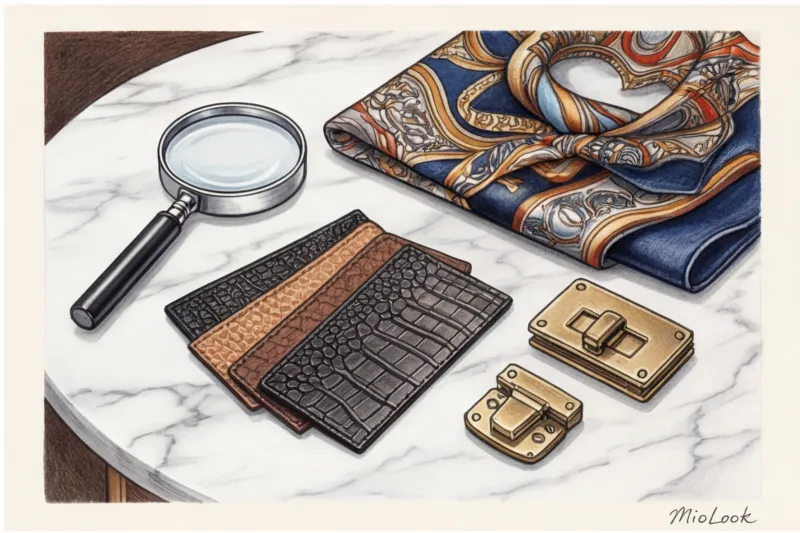
- Entrupy and similar scanners: This is the gold standard in the resale market. According to the developers, the system's accuracy reaches 99.1%. Verification takes 4 to 15 seconds, after which a digital certificate is generated. The price for this service from independent experts currently ranges from €30 to €80.
- Aura Blockchain Consortium: Fashion giants have realized that this problem must be addressed at the production stage. A consortium formed by LVMH (Louis Vuitton, Dior), Prada, and Cartier is assigning each item a unique digital twin (NFT) on an immutable blockchain.
- Smart threads and RFID tags: Microchips are being integrated into the lining of bags. And yes, hackers are already trying to reprogram these chips, copying data from the originals to fakes. But AI analyzes not only the presence of the chip itself but also the cryptographic trace of attempts to rewrite it.
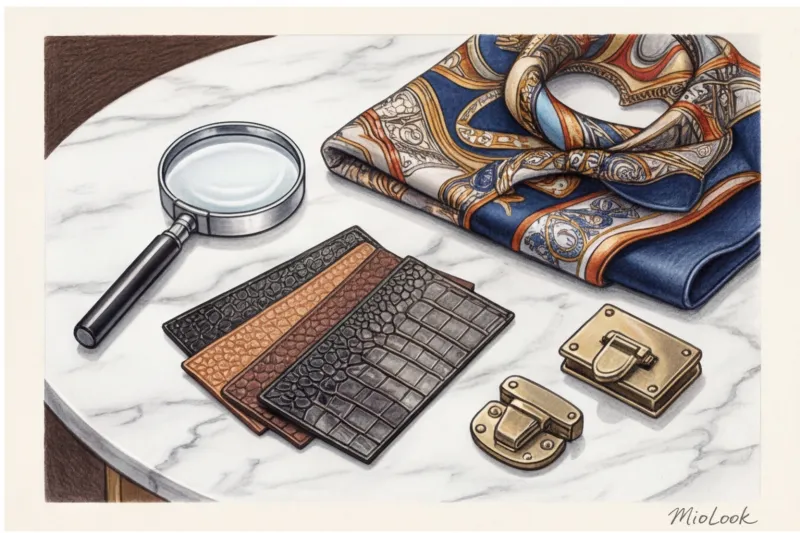
According to McKinsey's "State of Fashion 2024" report, the luxury resale market is growing three times faster than the primary market. Without the implementation of machine vision algorithms, this bubble would simply burst from the abundance of high-quality knockoffs.
The Inside Story of the Profession: How AI-Based Wardrobe Checks Work
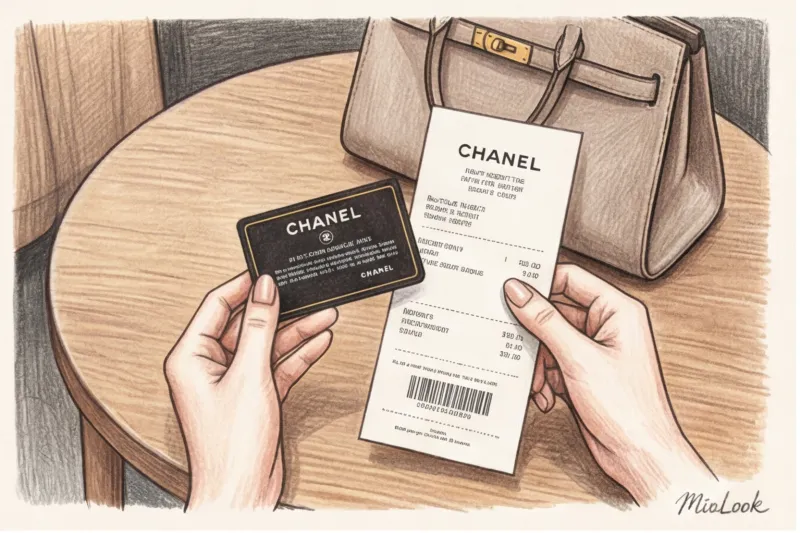
Hardware authentication has become routine for high-end stylists. I recently reviewed a client's wardrobe after she decided to sell some of her items. Among them was a Chanel Classic Flap—a "gift from an ex." The client was confident of its authenticity, as the bag came with a black plastic authenticity card, a dust bag, and a box.
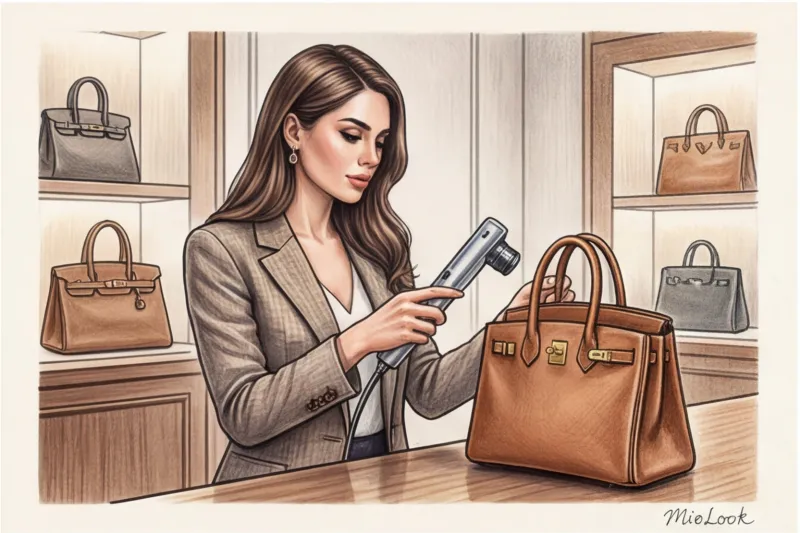
I pulled out the macro lens, connected it to the app, and began scanning step by step: the texture of the Caviar leather, the serial number, the engraving on the zipper pull, the weave of the strap. After a couple of minutes, the system displayed a red screen: Unidentified (not confirmed). It turned out that the box and card were genuine (they are often resold separately for €50-100), but the bag itself was a skillfully sewn replica.
Psychologically, clients are much more receptive to such a blow from an impartial algorithm than from a stylist. Mathematics doesn't know how to be jealous or make mistakes due to poor lighting.
Fair Limit: When a Neural Network Is Powerless
I must admit: technology isn't omnipotent. Hardware verification often fails on heavily worn vintage items. If a 1980s bag has undergone an aggressive restoration at a "bag spa" (the leather has been repainted, the original porosity has been sanded down, or some of the hardware has been replaced), the neural network simply won't find the required micropatterns and will refuse certification, even if the item was originally authentic.
Your perfect look starts here
Join thousands of users who look flawless every day with the MioLook smart organizer.
Get access — €0.99 onceChecklist: When You Critically Need AI Authentication
If you're planning to purchase a luxury item outside of an official boutique, a visual inspection isn't enough. Here are situations where authenticity verification using a neural network is a must-have:
- Purchase on C2C platforms (from hands). The presence of a branded bag, a receipt from a Paris boutique, and a velvet dust bag is simply smoke and mirrors. In Asia, a complete set of premium-quality counterfeit packaging is printed to order for €20–€30.
- Investments in the "Holy Trinity" (Hermès, Chanel, Louis Vuitton). These brands increase in value every year. If you buy a bag as a financial asset, without a digital certificate from the algorithm, you won't be able to sell it in a couple of years at market value.
- Transactions through new buyers. If you are working with a broker for the first time, ask them to provide screenshots or verification certificates.
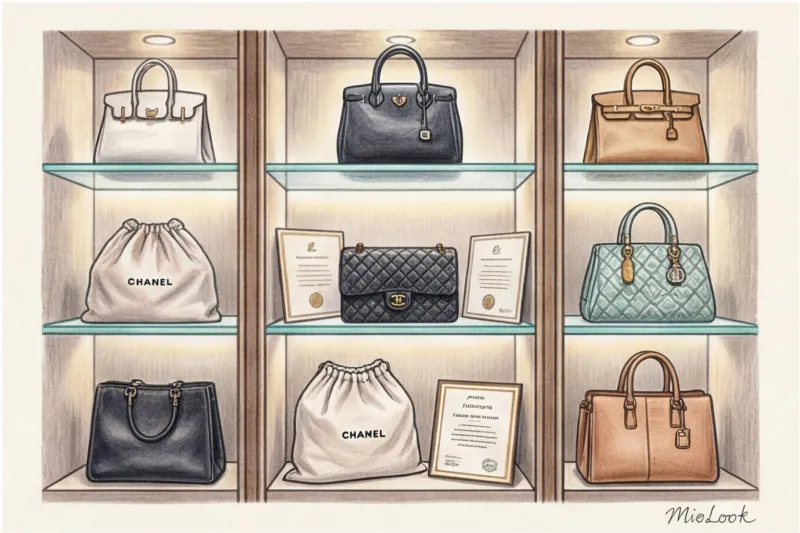
What questions should you ask the seller before making a deal? Don't ask, "Is this really the original?" Ask: "Has the item been inspected through Entrupy or similar systems? Are you willing to have it inspected by a machine together before payment?" Fraudsters usually disappear at this stage.
Ready to get started?
Try the MioLook free plan—no commitments. Digitize your wardrobe in just two clicks.
Get access — €0.99 onceSummary: A smart wardrobe is a true wardrobe
Artificial intelligence is often perceived as a threat to manual labor, but in the world of high fashion, it has become a key ally of conscious consumption. Algorithms cleanse the secondary market of toxic waste, protect the work of artisans, and keep your money safe from fraud.
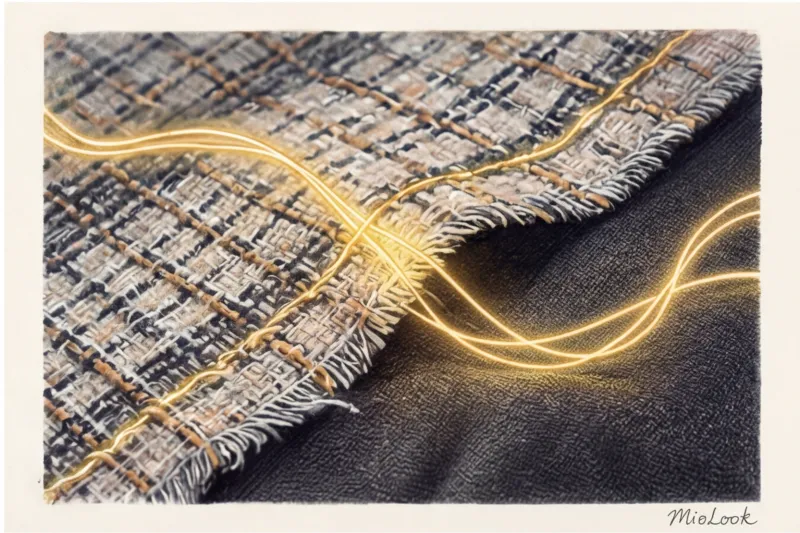
The combination of human taste and machine intelligence is the absolute future of personal styling. Neural networks can already determine the authenticity of items based on the micropores of skin, and other algorithms help us seamlessly combine these items. If you want to bring a technological approach to your everyday style, try the "smart wardrobe" feature in MioLook — an app that digitizes your belongings and compiles dozens of ready-made looks from them, taking into account your personality type and coloring.