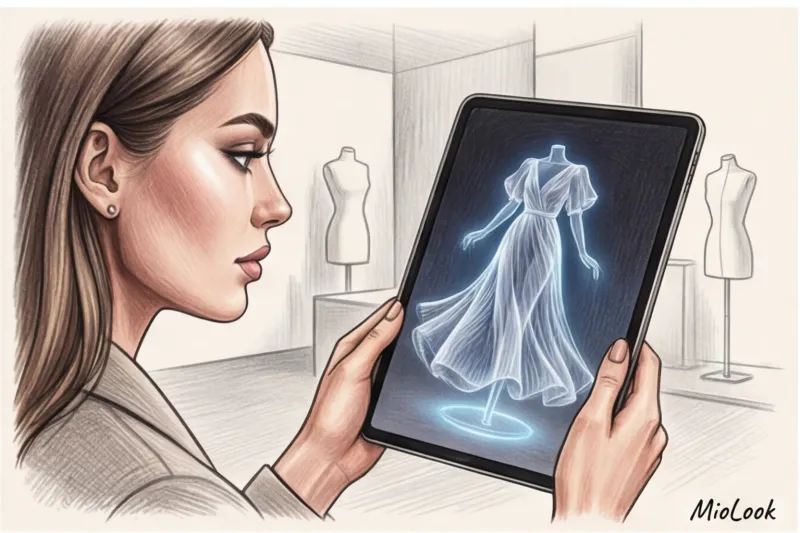
I vividly remember the moment when my snobbish attitude toward virtual fashion cracked. One of my clients, the owner of an architectural firm, confessed: she bought a couture dress with lush ostrich feathers for €3,800, wore it exactly once for a photo shoot in Milan, and now this masterpiece takes up half her closet. Selling it was a shame, and wearing it a second time would be considered "bad manners," since it had already appeared in all the glossy magazine reports from the event. What if I had told her then that she could have achieved the exact same visual result for her social media for just €40?
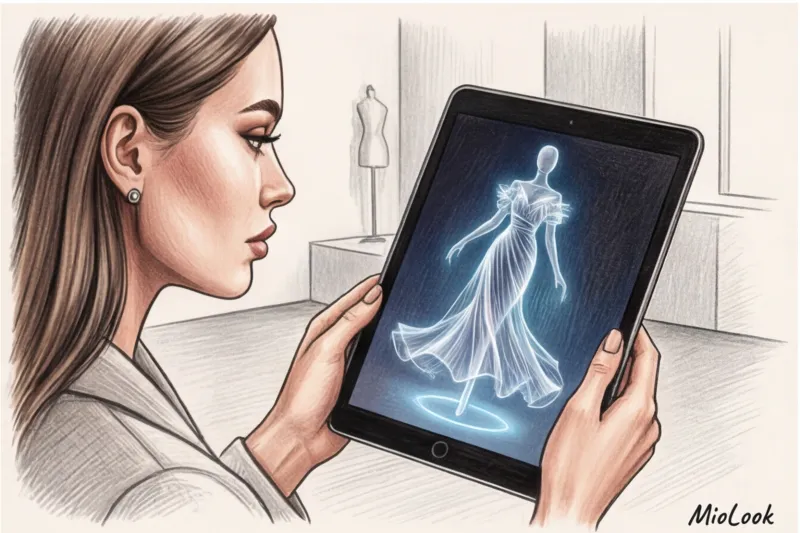
If you think virtual things are just toys for gamers, you're missing out on a powerful style tool. Today, we'll explore What is digital clothing? What it really is, why luxury brands invest millions in it, and how it can save your budget from impulse purchases. We've already covered the technical side of this process in more detail in our comprehensive guide: Neural Networks in Fashion: How AI Creates Clothing and Trends , and now let's talk about the practical benefits for your wardrobe.
Digital Clothing: What It Is and How It Works Outside the Metaverse
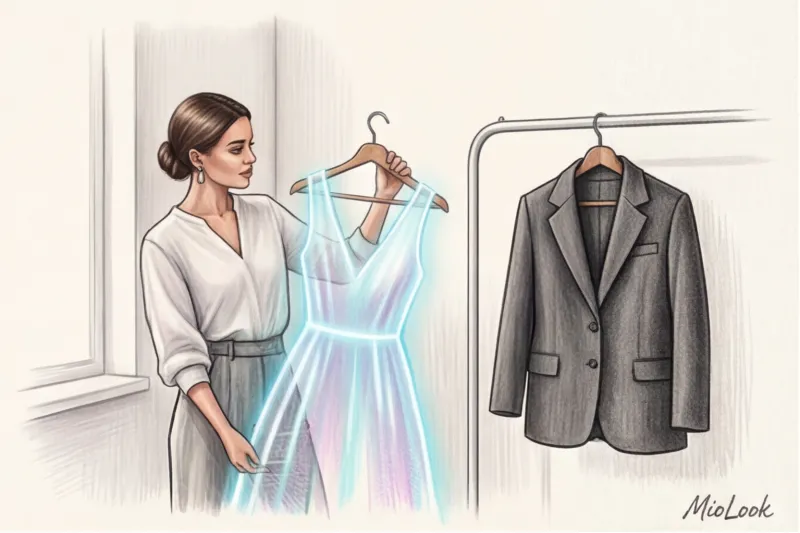
Let's dispel the main myth right away. Digital fashion isn't the pixelated "skins" from video games of the early 2000s. Modern digital clothing is highly detailed 3D models that, using augmented reality (AR) and neural networks, seamlessly "fit" onto your photos or videos.
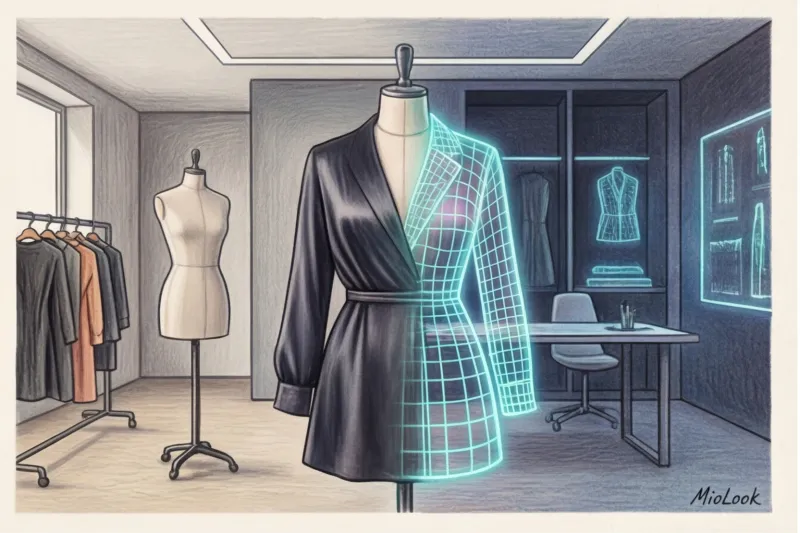
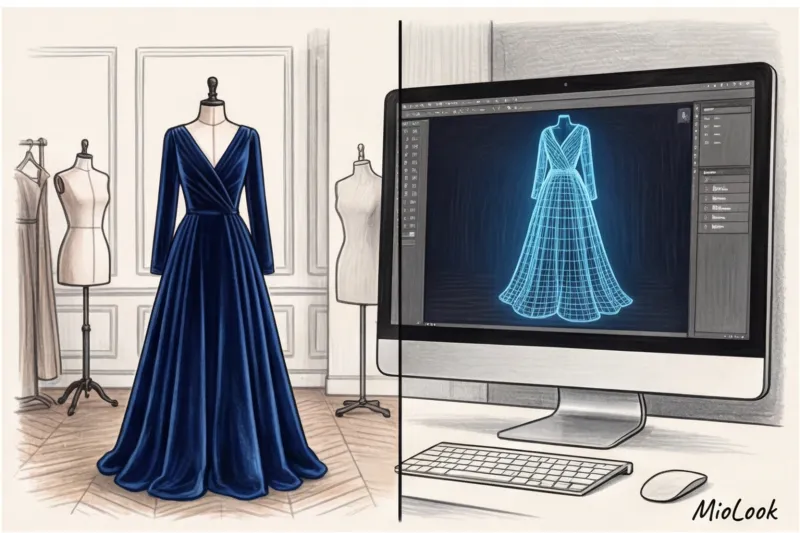
Over 12 years of working with premium fabrics, I've learned to determine the quality of silk with my eyes closed. And when I first saw how digital couturiers work in professional programs like Clo3D, I was amazed. They don't just draw a picture. They define the mathematical parameters of fabric physics: a 30-mohm density for heavy silk, a coefficient of friction for wool, and stiffness for calfskin. The program calculates exactly how this virtual fabric will drape on your body, taking into account gravity and lighting in the original photo.
The result is an image in which even a professional eye cannot immediately distinguish a digital render from a physically sewn item.
From Couture to Pixels: Why Luxury Brands Are Going Digital
You've probably heard the term Digital Twin (digital twin). This is a concept in which a physical luxury item is duplicated in virtual space. This is no longer an experiment, but a fully-fledged business strategy.
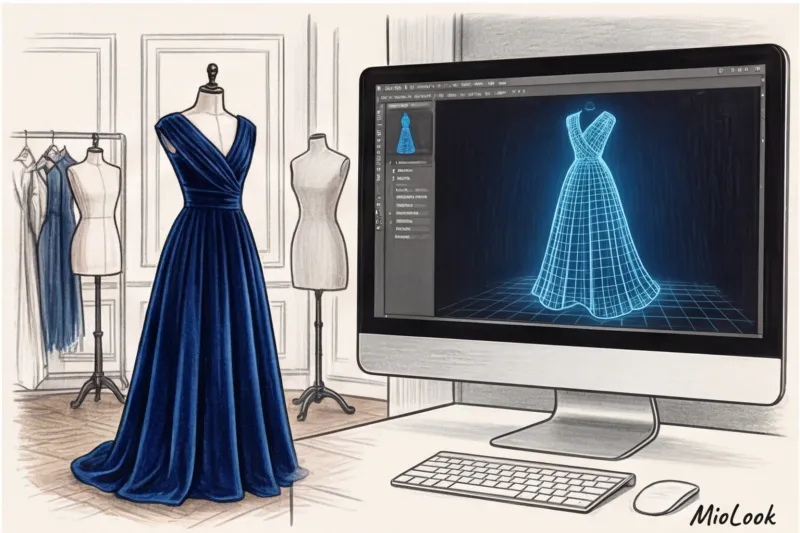
Why are fashion houses like Gucci, Balenciaga, and Dolce & Gabbana creating and selling virtual bags and dresses? According to Morgan Stanley analysts, the virtual luxury market has the potential to reach tens of billions of euros by 2030. But it's not just about the money. It's about giving customers a chance to touch archives. Imagine being able to "try on" a historic 1947 Dior Bar jacket during a video call, which museum staff only handle in real life wearing white cotton gloves.
Your perfect look starts here
Join thousands of users who look flawless every day with MioLook's smart tools.
Get access — €0.99 onceThe Psychology of Buying: Why Do People Pay for Things That Don't Exist?
The main paradox of modern times: we are physically present in the office or at home, but our "personal brand" operates digitally 24/7. We convey our style through smartphone screens far more often than in person.
The industry has long suffered from the phenomenon Wardrobing — when an item is purchased, worn once for a stunning selfie (carefully tucking the tag inside), and then returned to the store. Statistics are brutal: up to 9% of online returns occur for this very reason. Virtual fashion elegantly solves this problem.
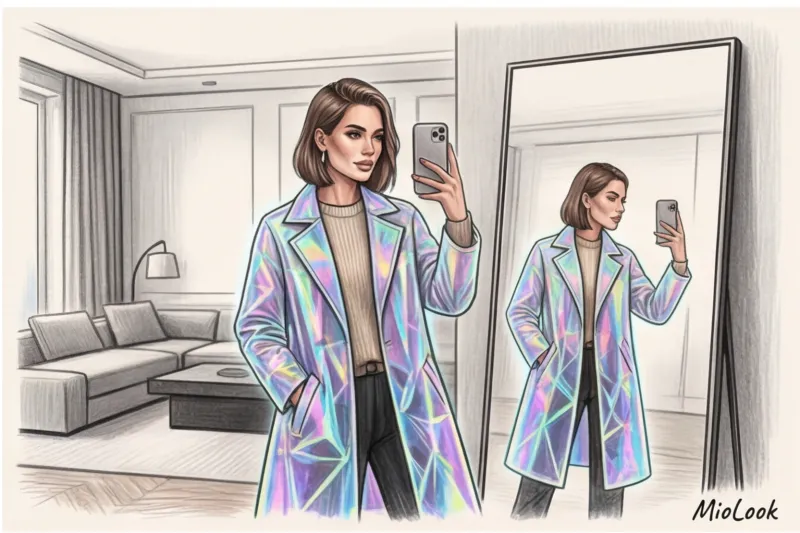
"Digital fashion gives you freedom of expression without regard for the laws of physics or office dress codes. You can try on a coat made of liquid metal or a dress woven from holographic glass while still wearing your favorite jeans."
I have a client who's a partner at a major law firm. Her real wardrobe consists of formal three-piece suits in muted tones and classic pumps. But she runs a fantastic creative art blog. Digital fashion allows her to create avant-garde, bold looks for her blog without risking her reputation at the office or buying extravagant pieces she has no room to store.
An eco-friendly testing ground for microtrends
The carbon footprint of creating a single digital T-shirt is 97% smaller than that of a physical one (taking into account the water used to grow the cotton and the CO2 emissions from logistics). But I see this not only as an eco-activist but also as a practical stylist.
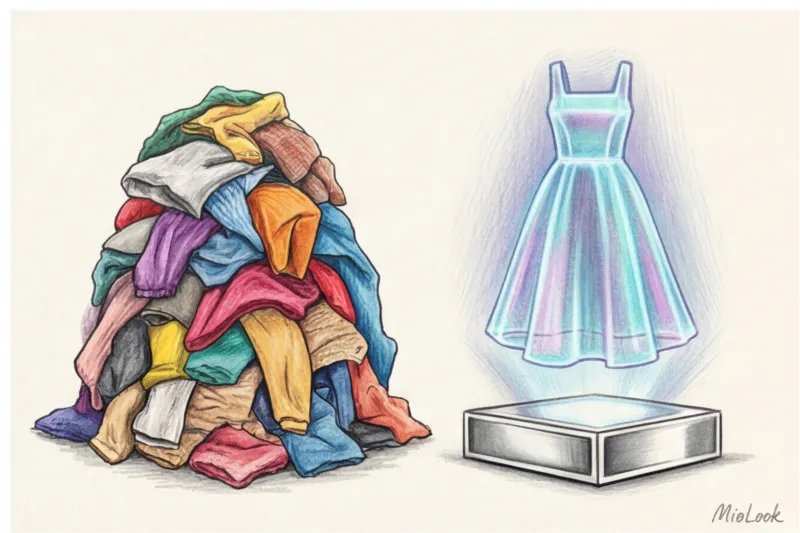
Consider digital fashion as eco-friendly draft Your style. Want to try a neon trend or a complex asymmetrical cut? Buy a digital version for €15–€30. If you notice from the photo that the style makes you look fat or the color flatters your complexion, you've just saved hundreds of euros on a mistake. This is the best way to protect your well-curated wardrobe from being cluttered with one-day microtrends.
AR Try-On: How AI Connects Virtual and Real Wardrobes
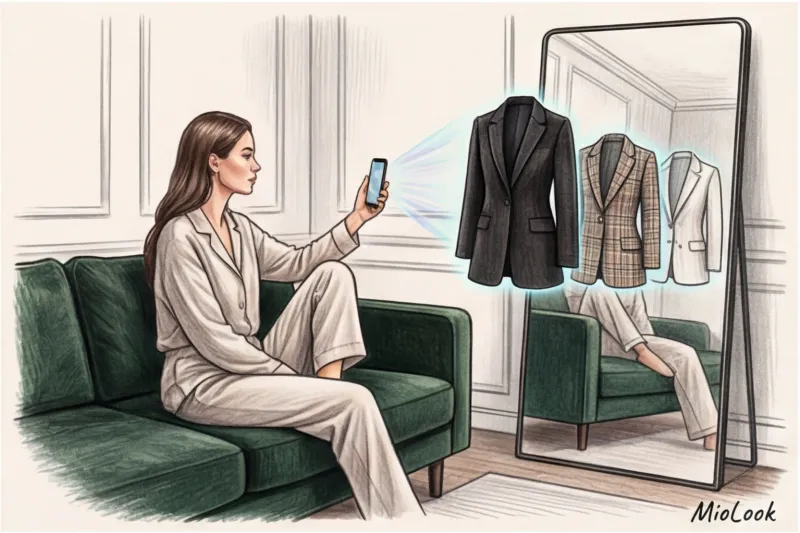
We're witnessing a significant shift from "virtual fashion for the sake of art" to a purely utilitarian function—the virtual try-on of real items before purchasing online. As McKinsey notes in its State of Fashion 2024 report, 73% of fashion brand directors consider investing in artificial intelligence a priority.
Computer vision algorithms have learned to scan your body proportions from photos and accurately predict the fit of a real garment. This is a game-changer. No more ordering three jackets in different sizes, only to find one that fits (and the other two end up back in the warehouse).
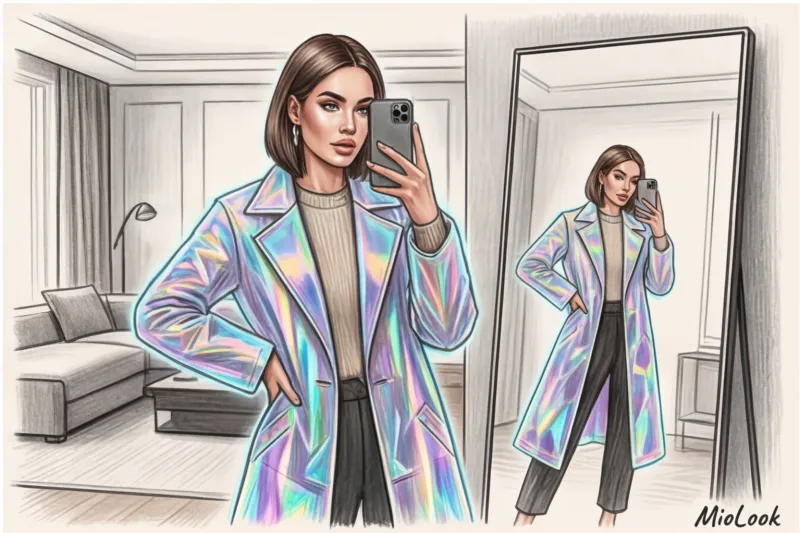
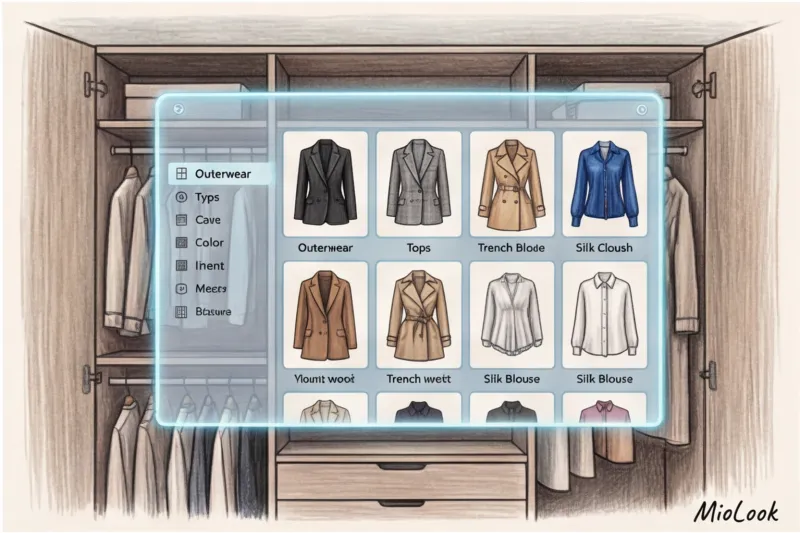
This technology is already available to everyone. For example, using the "smart wardrobe" feature in MioLook , you can digitize your real things and look like new the sweater matches your favorite pants , without even taking them out of the closet. You test combinations on a digital twin of your wardrobe.
Access to MioLook for €0.99 — one-time payment
A smart AI stylist will select the perfect look based on your real clothes.
Get access — €0.99 onceInvestment or indulgence: Calculating Cost-per-Wear in the digital age
Let's talk about money. As an investment wardrobe consultant, I always teach my clients how to count. Cost-per-Wear (CPW) — cost per output.
Let's compare two scenarios. You buy a real cashmere sweater from Loro Piana for €2,000. You'll wear it at least 100 times over five years. Your CPW is €20. It's a brilliant investment. Now imagine you buy an ultra-trendy sequin dress for €300 for a New Year's Eve party. You'll wear it just once. Your CPW is €300. It's a budget disaster.
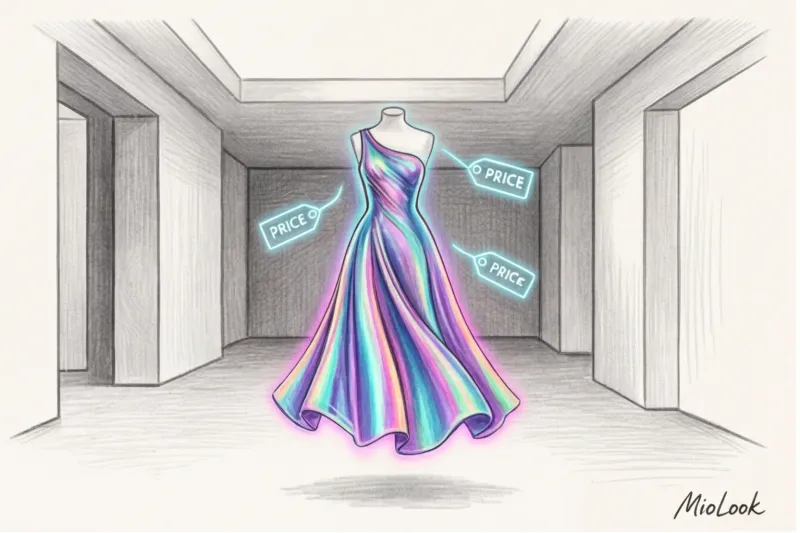
But if you buy a digital version of this extravagant dress on a platform like DressX for €35 and use it for a festive Zoom call and three Instagram posts, your CPW will be around €11.
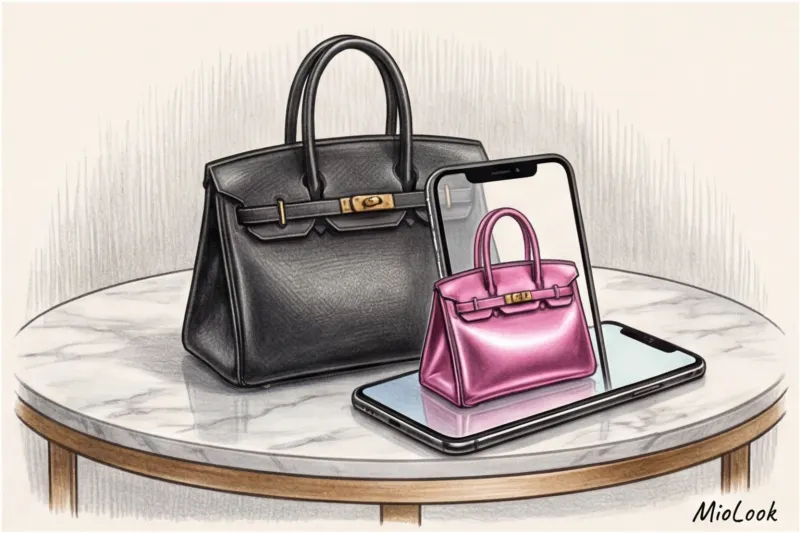
I want to be completely honest here (and this is my strict rule as a stylist): Digital fashion will NEVER replace the tactile pleasure of the weight of a Swiss watch on your wrist, the coolness of natural silk, or the scent of high-quality Italian leather. It doesn't work that way. If you want comfort and warmth, you go to a boutique for real cashmere. Digital doesn't provide warmth. Therefore, the golden rule is: invest in timeless classics in the real world, and in the digital world, buy fleeting, wild avant-garde fashion.
Checklist: How to Try Digital Fashion and Virtual Try-Ons Today
If you're ready to take a step into the future of conscious consumption, here's where to start—without the complicated jargon or cryptocurrencies:
- Step 1: Digitization of the database. Start by creating a catalog of your real items. Take photos of your shoes, bags, and outerwear, removing the background. Apps like MioLook will help you assemble smart capsules from these photos.
- Step 2: Test through AR filters. Before going to the hairdresser or optician, use virtual glasses try-on and makeup on social media. You'd be surprised how often what looks beautiful on display doesn't suit your face type at all.
- Step 3: First digital purchase. Choose a platform (like DressX or Replicant) and buy an inexpensive futuristic item. The key to a realistic render is to take the original photo in good daylight, wearing form-fitting clothing in a neutral color.
- Step 4: Smart Shopping. Make it a rule: if an online store offers a “Virtual Try-On” option, always use it before clicking the “Pay” button.
Ready to get started?
Try the MioLook plan for free—no commitments required. Organize your closet with technology.
Get access — €0.99 onceDigital clothing is no longer a fun gimmick for techies. Today, it's a pragmatic stylist's tool that helps keep your physical closet organized and saves you money. Reserve hangers for the pieces you'll actually wear for years, and delegate your thirst for instant trends and likes to pixels. After all, true luxury means having nothing superfluous in your closet (and in your life).