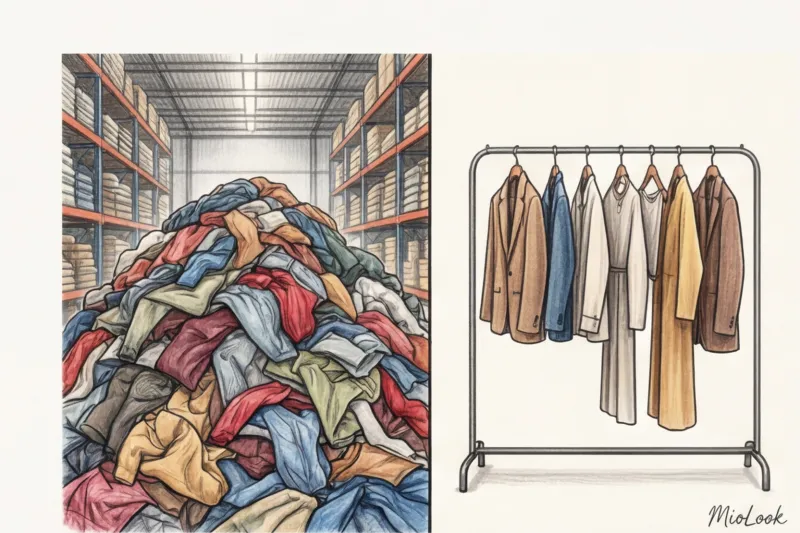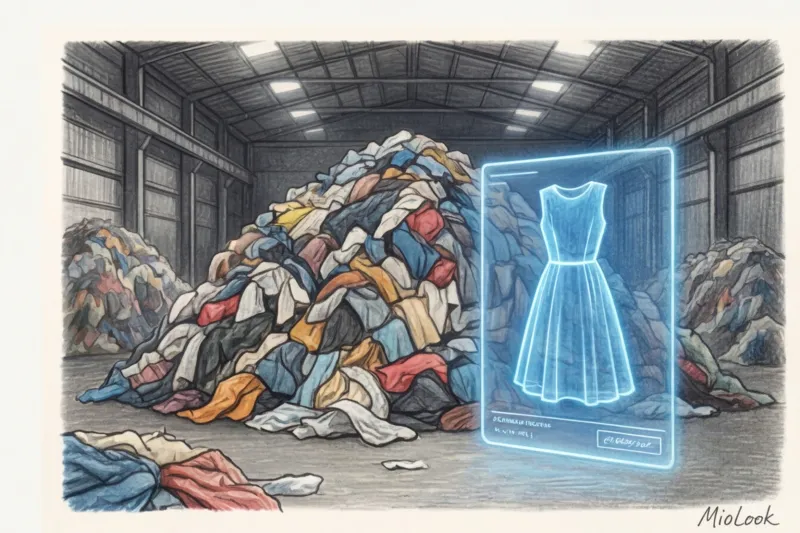
Imagine a mountain of brand-new, never-worn clothes, the size of a small European country. It sounds like a dystopia, but it's our reality. According to research by the Ellen MacArthur Foundation, approximately 100 billion pieces of clothing are produced globally every year. And you know what's scary? Almost 30% of them never find a buyer, ending up straight in landfills or incinerators as so-called deadstock.
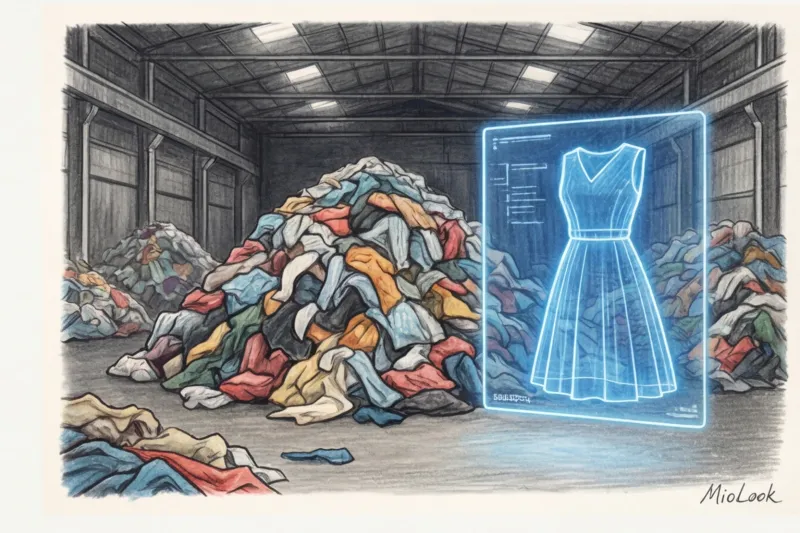
The industry has reached a dead end of overproduction, and now Neural networks and ecology are in fashion — this isn't just a catchy press release headline, but a matter of brands' physical survival. We covered the technological underbelly of this process in more detail in our comprehensive guide. Neural Networks in Fashion: How AI Creates Clothing and Trends But today I want to talk about something else. Not about how algorithms design beautiful dresses, but about how "boring" backend processes are saving our planet from textile catastrophe.
Neural networks and ecology are in fashion: why the industry needs a digital savior
Let's take a quick detour into history. In 1947, when Christian Dior introduced his famous New Look, the fashion cycle was meticulously calibrated down to the millimeter. Every item was tailored to a specific request, and every jacket had its own buyer. The system operated on the "pull" principle—demand created supply.
Today's mass market operates on a "push" model. Brands churn out two million identical beige trench coats in the hopes that aggressive marketing will compel you to buy them. But what if only one and a half million are bought? The remaining half a million are quietly destroyed so as not to tarnish the brand's image with sales. It is precisely this flawed system that neural networks are designed to break, shifting the fashion business from blind intuition to precise mathematical calculations.
Access to MioLook for €0.99 — one-time payment
A smart AI stylist will select the perfect look based on your wardrobe and save you from unnecessary purchases.
Get access — €0.99 onceFrom Intuition to Mathematics: How AI is Eliminating the Root of Overproduction
A few seasons ago, at Milan Fashion Week, I struck up a conversation with a buyer at a major European department store. Her job used to be like reading tea leaves: she'd look at the runway and try to intuitively guess how many wool cardigans Munich women would buy next fall. Today, she's looking at dashboards.
Predictive analytics algorithms process millions of non-obvious data points. They analyze not only past sales but also search queries, competitors' social media activity, and even long-term weather forecasts. According to the report McKinsey State of Fashion 2024 Using generative AI and predictive analytics reduces inventory errors by 20–50%. Artificial intelligence can accurately predict whether you'll need exactly 450 blue sweaters in October, not 1,000.

The second invisible hero is Computer Vision technology at the production stage. Imagine an algorithm playing Tetris with patterns on a roll of fabric. While a human cutter leaves up to 15% waste (even when working with high-quality 180 g/m² cotton), the algorithm lays the pieces so tightly that it reduces waste to 3%. At the factory scale, this translates into kilometers of saved material.

Virtual fitting and the fight against the returns epidemic
The environment suffers not only from overproduction but also from logistics. "Free returns" in online shopping have given rise to a monster: reverse logistics. An item that doesn't fit is sent back to the warehouse, leaving behind a huge carbon footprint. Read this article to learn how businesses are combating this. Clothing returns to online stores: how to reduce the percentage.
This is where digital avatar technology comes into play. I've seen a lot of "innovations" in my 12 years in fashion journalism, but virtual fittings are truly a game-changer. When you upload your measurements to an app like MioLook The algorithm doesn't just predict how a garment will fit. It learns from your habits.
"If you've returned an A-line skirt three times, the smart algorithm will stop suggesting it to you, even if it's on trend. It understands your anatomy better than the store's size chart."
This approach reduces the number of returns in e-commerce by 30–40%.
The Dark Side: How Neural Networks Accelerate Fast Fashion and Harm the Planet
It would be naive and dishonest to sing the praises of technology while turning a blind eye to its destructive potential. The industry loves greenwashing, hiding behind trendy terms. But let's be honest: AI isn't always a boon for the planet. It's often a scalpel that, in one hand, heals and, in another, kills.
The ultra-fast fashion business model (giants like Shein and Temu are household names) is built on relentless trend parsing. Their neural networks scan TikTok and Instagram every second. Whenever an influencer wears an unusual top, the algorithm generates hundreds of similar designs in minutes and sends them to microfactories. As a result, the market is flooded with cheap, synthetic clothing priced between €5 and €15 that will fall apart after three washes.
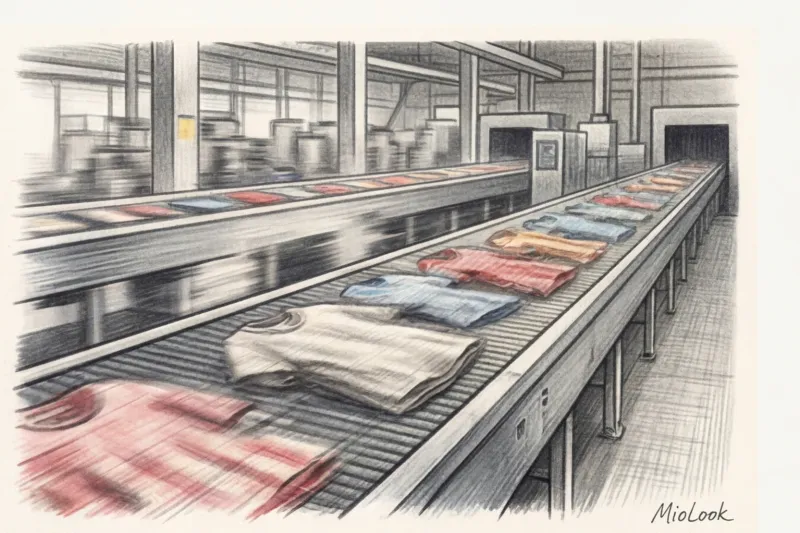
In this case, generative AI doesn't optimize the old; it creates hyper-consumption of the new. And here we come to an important limitation: Predictive analytics algorithms don't always work They're great at handling basic wardrobes, but they're completely blind to avant-garde design. AI can't predict demand for a completely new, radical form because it simply has no historical data to learn from. Therefore, true fashion will always require a dose of risk and intuition.
Ready to get started?
Try the MioLook plan for free—no commitments required. Create an eco-friendly wardrobe in just one click.
Get access — €0.99 onceDigital Twins: A Real Way to Reduce Waste in B2B
Remember the metaverse hype a couple of years ago, when brands were selling digital sneakers for thousands of euros? That bubble has burst. The real, "grown-up" value of digital clothing lies in the B2B segment—in so-called digital sampling.
I recently visited a 3D studio in Paris that works with luxury brands. Previously, to approve the design of a single jacket, the brand would sew five to seven physical samples. Each sample was flown from Asia to Europe for fitting. The fabric was cut, adjusted, and re-sewn.
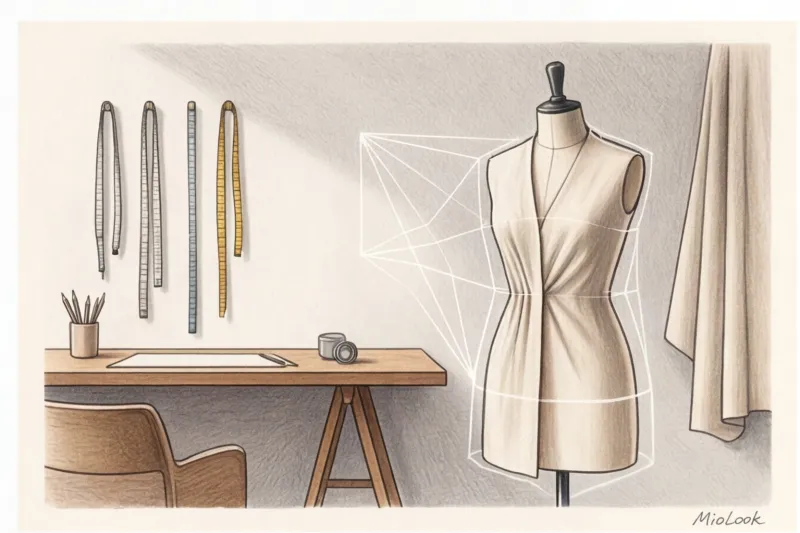
Today, thanks to programs like Clo3D or Marvelous Designer, the designer stretches digital fabric onto a precise digital mannequin The program simulates the physics of the material: how heavy silk drapes, how thick denim stands up. The physical sample is sewn only once—once the digital version is perfected.
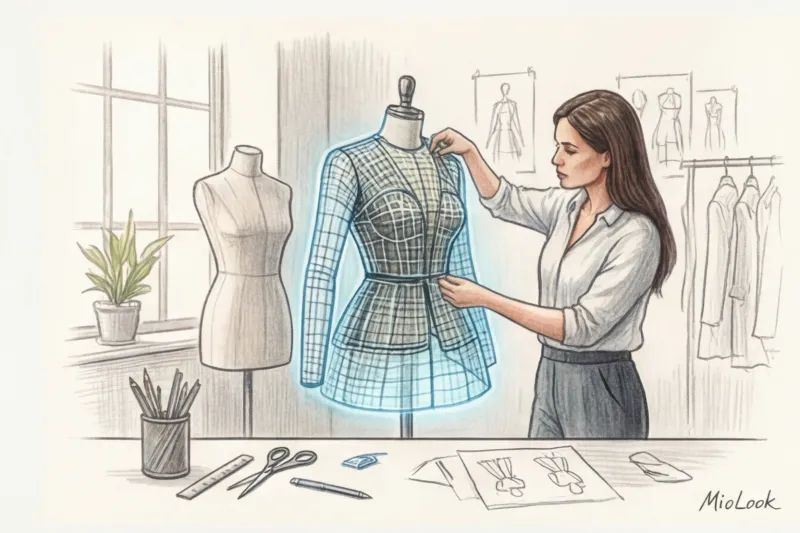
This paves the way to the holy grail of sustainable fashion—on-demand production. The integration of smart factories with digital storefronts allows brands to begin production of an item the moment you check out your shopping cart on the website.
Business Toolkit: A Green AI Implementation Checklist for Brands
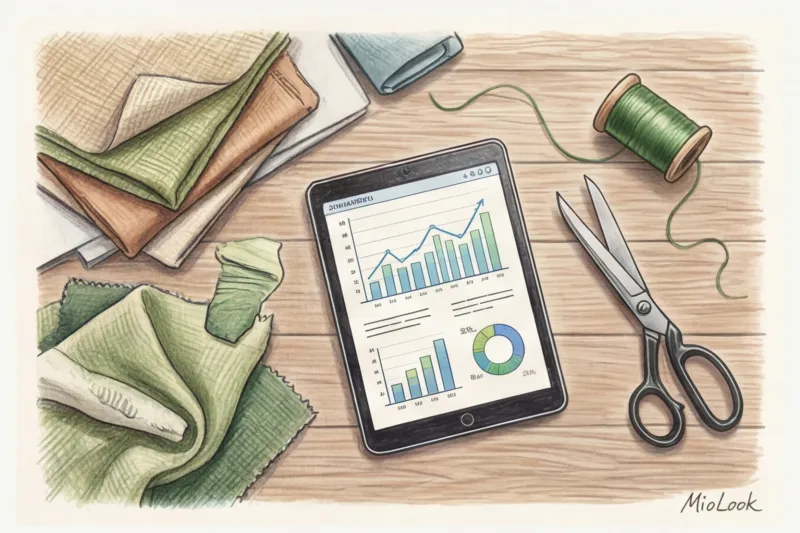
If you own a fashion brand or work in retail, AI implementation shouldn't start with generating fun images in Midjourney, but with optimizing boring spreadsheets. According to the index Business of Fashion (BoF) Sustainability Index Supply chain transparency is the key indicator of brand survival today. Here's a checklist for healthy digitalization:
- Invest in demand forecasting, not sketch generation. Knowing exactly how many sizes M and L you'll need in your region will save you more money than a hundred generated prints.
- Implement smart pricing. Dynamic discount algorithms help sell leftover inventory before it becomes deadstock. We wrote about how this impacts business metrics in the article How to Increase Average Order Value in a Clothing Store: A Smart Approach.
- Analyze the life cycle. Use AI-powered PLM systems to track raw materials from farm to processing.
- Create a library of digital patterns. This is a basic step to minimize fraying when cutting.
Your perfect look starts here
Join thousands of users who look flawless every day with MioLook. Digitize your closet today.
Get access — €0.99 onceThe Future of Wardrobes: Smart Essentials Instead of Endless Consumption
We're used to blaming corporations for the environmental crisis. But let's face it: the environment starts in our closets. We all have that one dress hanging in our closets, bought on a whim for €50 on sale, which has been collecting dust with the tag still attached for three years. This is your personal, homemade deadstock.
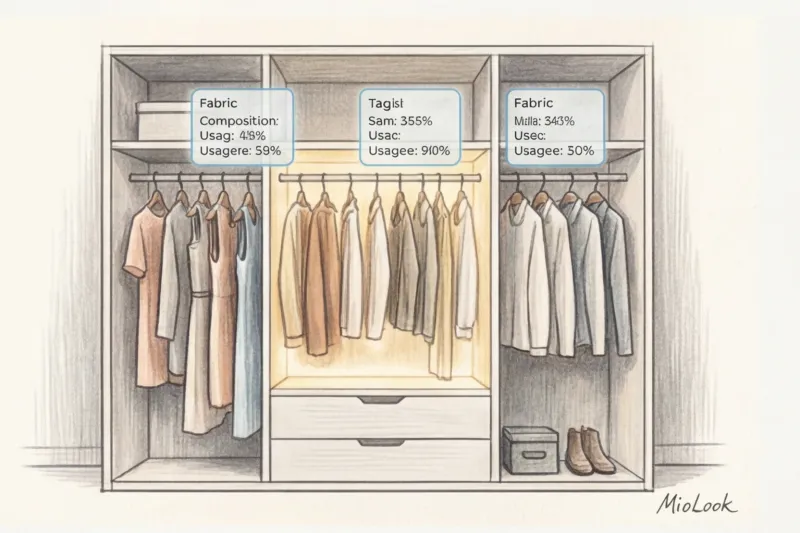
This is where technology really comes into its own. Styling apps like MioLook , use artificial intelligence to block our impulsive urges. When you're standing in the fitting room with yet another unwanted blouse, the app analyzes your digital wardrobe and shows you: this blouse will only create one outfit, but that basic jacket will complement eight of your outfits.
The point of introducing neural networks into fashion isn't to learn how to produce clothes even faster. The point is for algorithms to finally force us to slow down. Technology will only achieve its goal when it helps the industry produce exactly what it needs, and helps us buy exactly what we'll actually wear. And judging by how quickly smart wardrobes are replacing spontaneous shopping, this moment is closer than it seems.