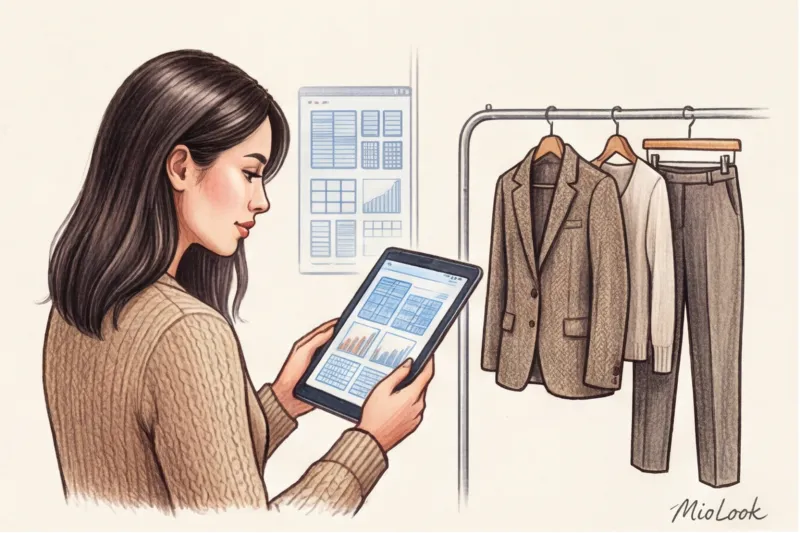
I've digitized the wardrobes of over 50 clients, and every time at the first meeting I hear the same question: "Emily, what virtual stylist neural network "Will it leave you without a job?" My answer is always the same: no, he will simply take over the boring math, leaving me with pure creativity.
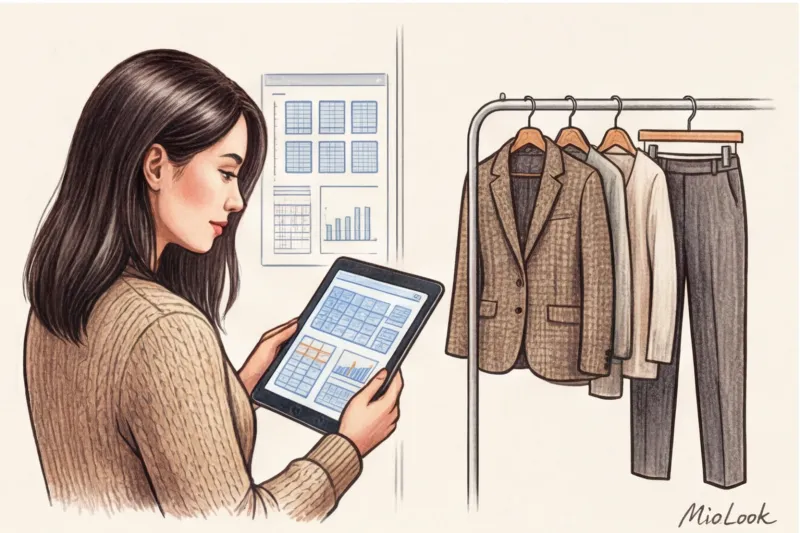
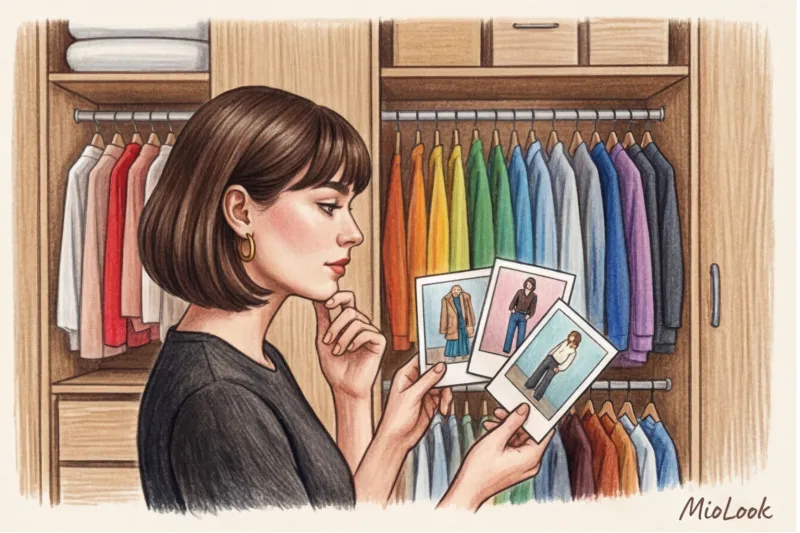
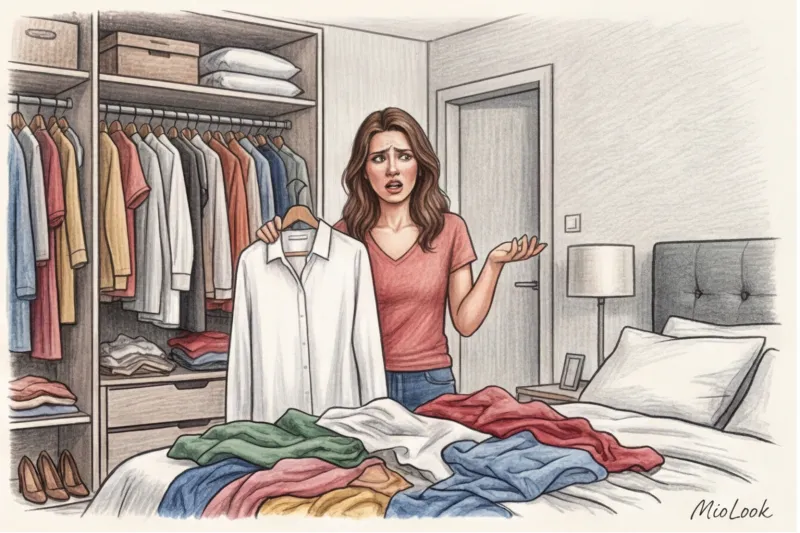
Statistically, a person wears only 20% of their wardrobe 80% of the time. Every morning, we open a closet full of clothes and utter the sacramental "I have nothing to wear." Why? Because our brains are lazy. It memorizes three or four safe combinations and refuses to generate new ones until the first cup of coffee. A digital wardrobe solves this problem, cutting the time it takes to get ready in the morning from 15 minutes to three.
We've already discussed the global impact of algorithms in more detail in our complete guide to Neural networks in fashion and trend creation And today I want to show you the real inside story: how technology is working inside your personal closet right now and why you should let it in as soon as possible.
Stylist vs. Algorithm: Why a Virtual Stylist and Neural Network Is Your New Assistant, Not a Competitor
There's a popular myth: "A neural network will create a unique personal style for me." The reality is far more prosaic: AI is terrible at handling emotions and personal context. If you type "I want to look stern but relaxed to impress my millennial boss" into a prompt, the machine will produce something generic. AI is all about logic, databases, and geometry. Style, however, is still created by humans.
According to McKinsey's extensive "State of Fashion 2024" report, the implementation of generative AI in the fashion industry has moved from the stage of tentative experiments to the category of everyday tools. The professional world has even coined the informal term "cyborg stylist"—a specialist who uses algorithms as an intelligent exoskeleton.
In my experience, using smart algorithms saves up to four hours on assembling a single seasonal capsule for a client. I no longer manually calculate Cost Per Wear (CPE) or remember all 150 items from a client's closet. This routine is handled by a machine.
A real person analyzes your lifestyle, insecurities, unspoken office dress code, and body features dynamically. And a virtual stylist—a neural network—instantly highlights color intersections, calculates the return on investment for a basic €250 trench coat, and mercilessly reminds you that you haven't worn those COS trousers in six months.
Access to MioLook for €0.99 — one-time payment
A smart AI stylist will select the perfect look for you and organize your wardrobe.
Get access — €0.99 onceThe Inside Story of Profession: How Technology Structures Closet Chaos
The transition from intuitive (and often emotional) shopping to a data-driven wardrobe is a game-changer. When you simply look at the shelves, you see stacks of beautiful fabric. When you load this into an app, you begin to see analytics and gaps.
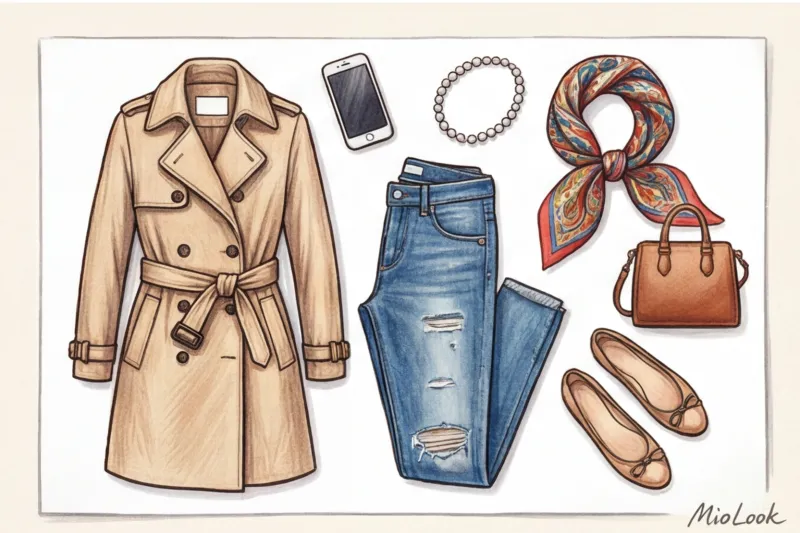
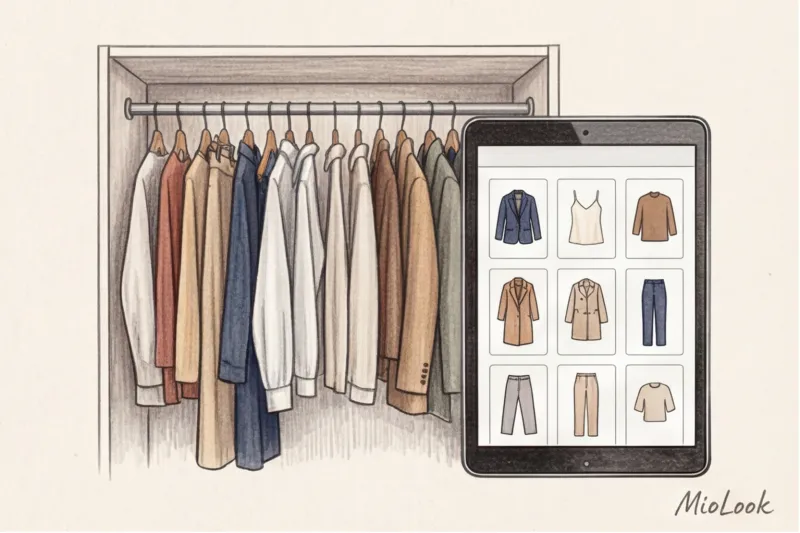
Let me give you an example. One of my clients was absolutely certain she urgently needed a new "basic office top." When we digitized her closet and displayed everything on a single tablet screen, the algorithm helpfully grouped similar items together. We found seven identical white shirts in varying degrees of wear. Not a single statement blouse, not a single high-quality long-sleeve shirt with a weight of 180 g/m² or higher—just an army of clone shirts. Unbiased visualization cures shopaholism better than any persuasion.
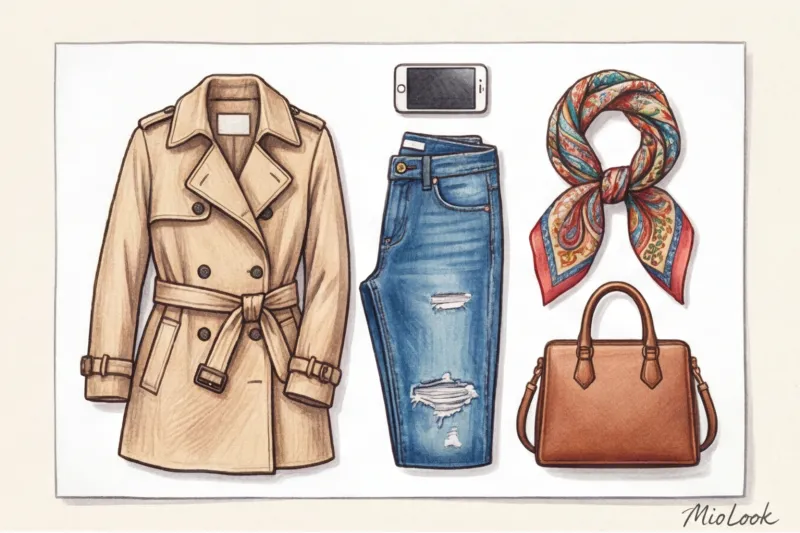
Computer Vision: How Algorithms "See" Your Things
Just five years ago, digitizing a closet was a real ordeal: you had to photograph each item, manually erase the background in an editor, and then laboriously enter the brand and category. Today, computer vision algorithms do it in a matter of seconds.
A modern neural network doesn't just neatly crop the background. It recognizes fabric patterns and cut features. Without your intervention, the algorithm understands that the jeans in front of it aren't just blue jeans, but mom-fit jeans made of heavy denim, while the adjacent pair are skinny jeans with 5% elastane. It automatically tags seasonality, print (for example, distinguishing between vichy check and houndstooth), and identifies dominant colors.
Machine learning and the mathematics of style
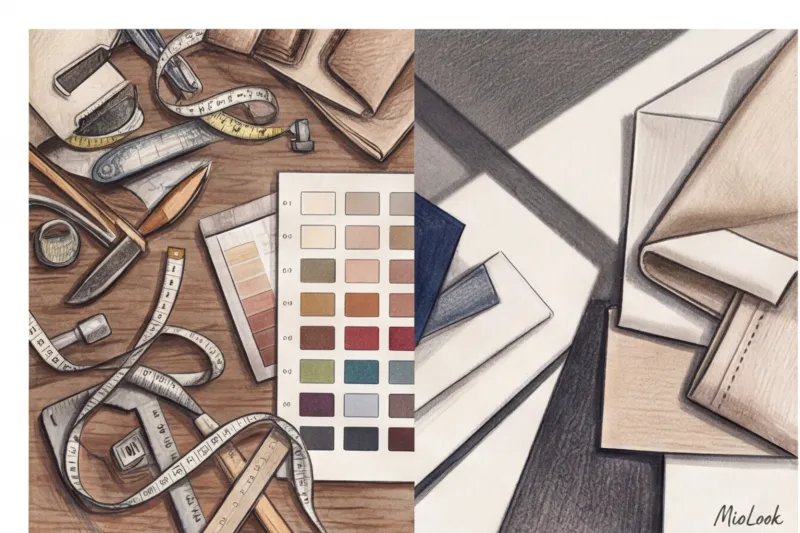
Once the digital database is assembled, machine learning kicks in. You receive ready-made capsule wardrobe formulas powered by ML (machine learning). The system analyzes which items pair well with each other mathematically, based on the rules of the color wheel and proportions.
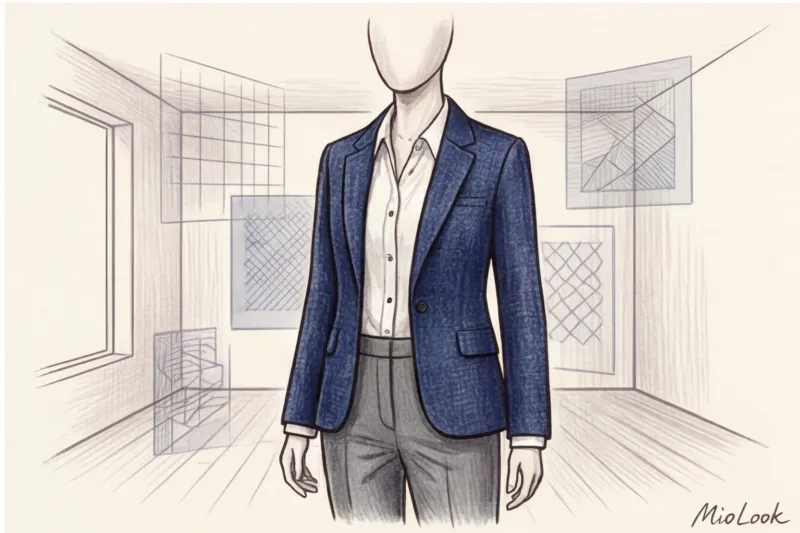
The most valuable metric this process provides is Wear Count. You track what you've worn today, and at the end of the month, the app shows you the real ROI (return on investment) for each item. That €150 Massimo Dutti jacket you wear twice a week costs you just a few euros each time. But that €300 silk dress you wore once to a friend's wedding is a major financial drain on your wardrobe.
From routine to creativity: how a virtual stylist puts together everyday looks
The real magic begins early in the morning. Your digitized wardrobe in the smart MioLook app Syncs with external data. The algorithm checks the local weather forecast (today is 15°C, strong winds, and a chance of rain), looks at your Google calendar (investor meeting at 2:00 PM), and returns three ideal options.
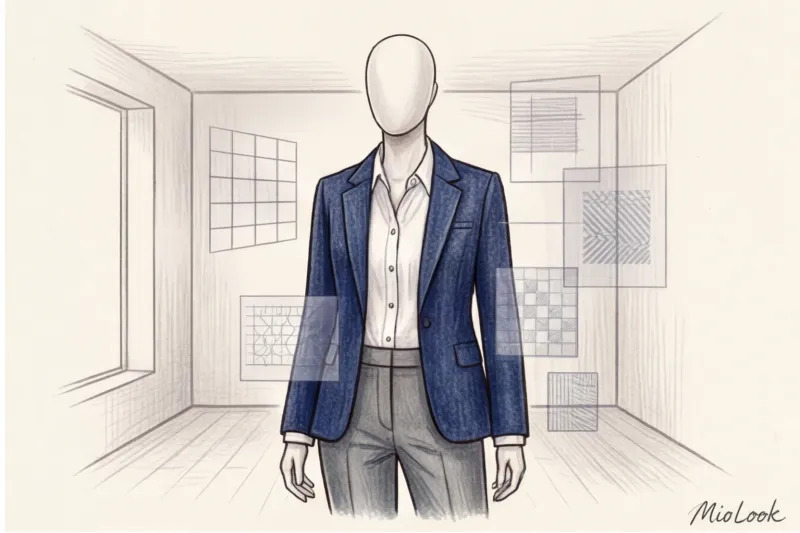
These suggestions are built on the principle of outfit recipes. The basic formula usually looks like this: base + accent + the right layer. The machine knows exactly that if the base is neutral (beige palazzo pants and a white cotton top), you need a structured top layer (a navy blazer) and a pop of color in the accessories.
And for those tired of the basics, there's the Shuffle function (a random look). After 12 years in styling, I've learned one thing: the human eye quickly becomes jaded. For a personal experiment, I trusted AI to create an outfit for me to present at a conference at an IT company with a smart-casual dress code. The neural network suggested pairing my most formal graphite jacket with relaxed silk joggers. I wouldn't have thought of this on my own—my brain had long ago categorized these items into different categories ("formal work" and "weekend"). But it worked brilliantly: the look was classy, yet just the right amount of edgy.
Your perfect look starts here
Join thousands of users who look flawless every day with MioLook.
Get access — €0.99 onceSurvivorship Bias: Why AI Sometimes Suggests Absurd Bows
It would be unfair to claim that technology is flawless. Every tool has its limits, and a neural network virtual stylist is no exception. Demonstrating these limitations only proves why you still need your own taste. This is where algorithms frankly fall short.
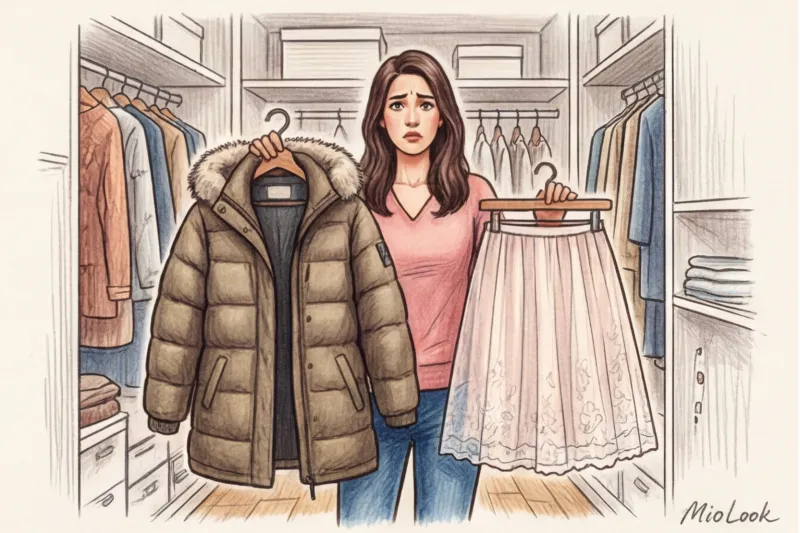
- Texture blindness. An algorithm can easily suggest you wear a heavy winter tweed with a light summer linen simply because they "match on the Itten color wheel." The machine sees pixels, not the physical properties of the material.
- Fit issue. AI sees things flatly. It has absolutely no understanding of how a particular fabric drapes on your body type. Heavy bias-cut silk and stiff cotton behave differently on your hips, but to the neural network, they're just two A-line skirts.
- Lack of emotional intelligence. The machine doesn't know that you physically can't walk more than 100 meters in those perfectly colored pumps, and that you're uncomfortable sitting in that tight sheath dress after a heavy lunch.
This is the main rule of working with a smart wardrobe: AI suggests, but a human always edits. If the algorithm gives you blatant nonsense, it's not a bug; it's a reason to adjust the tags in your database.
Instructions: How to Incorporate a Neural Network into Your Wardrobe (A Stylist's Checklist)
Ready to transform your morning chaos into a system? I've created a step-by-step plan based on an analysis of onboarding algorithms in top fashion apps. If you do this once, you'll never have to waste hours getting ready again.
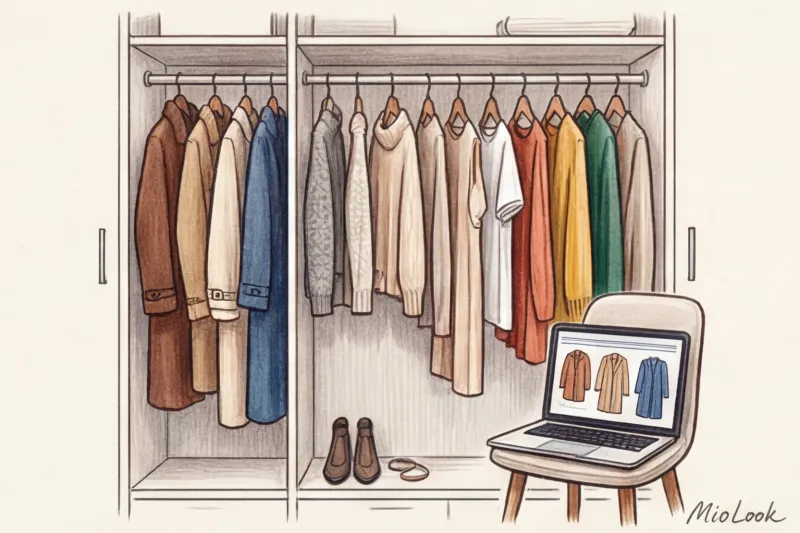
- Correct digitization. Recognition algorithms hate poor lighting. Photograph items exclusively in daylight against a contrasting background (light sweaters on a dark floor, black pants on a white sheet). The item should lie flat, without deep shadows or creases, otherwise the AI will mistake the creases for a design feature.
- Tagging "human" nuances. This is a critical step where you help the machine. Add user-defined tags to items that AI can't physically recognize: "itchy," "only suitable for heels," "prone to wrinkling," "only suitable for seamless underwear." This will eliminate 90% of the ridiculous suggestions in the future.
- Algorithm training. For the first two weeks, your new digital stylist will make mistakes. Be sure to like and dislike suggested looks. If the app suggests something incompatible, don't just ignore it, hit "dislike." Machine learning is directly fueled by your feedback.
- Data analysis after 30 days. Check out the statistics section. You'll be amazed to learn that AI has helped you use 65% of your closet instead of the usual 20%. Items with a Wear Count of 0 can be safely packed for resale.
Ready to get started?
Try MioLook's free plan—no strings attached, no hidden terms.
Get access — €0.99 onceThe Future of Personal Style: From Smart Fitting Rooms to Predictive Shopping
We're on the cusp of even more global changes. The next stage, already being tested by giants like Zara and H&M, is full, two-way integration of your digital wardrobe with their online stores.
Just imagine: you visit a brand's website, and your personal virtual stylist—a neural network—automatically hides items you don't know how to wear with. The algorithm suggests buying only the €120 cashmere jumper that perfectly complements at least four items in your current wardrobe. This is predictive shopping, which will put an end to impulse buys and dead spots in your closet.
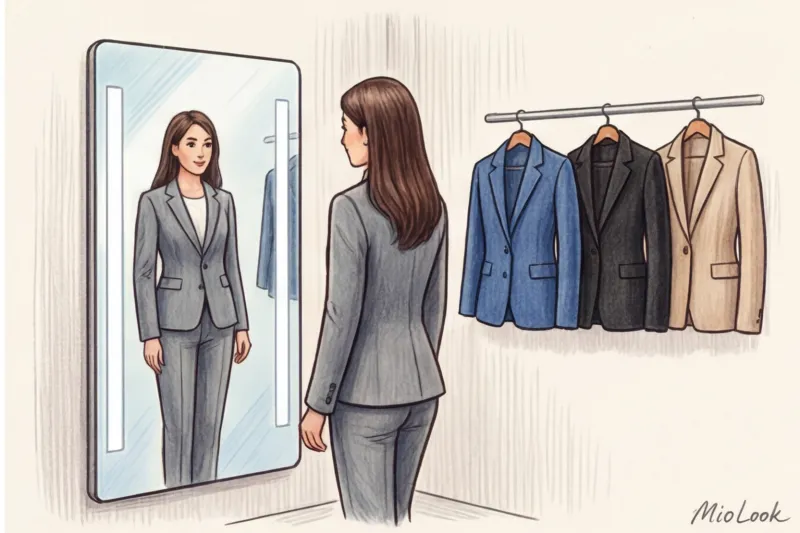
At the same time, generative networks for virtual try-ons are developing. You upload a photo, and AI shows you how a new item will fit, taking into account your body proportions, even before you click "Pay." This is far from a toy—according to recent data from WGSN, such technologies are already reducing returns in online stores by a significant 30%.
Technology doesn't kill fashion; it kills routine. By delegating closet logistics, costing, and color-matching math to artificial intelligence, you don't lose your style. On the contrary, you free up time and mental energy for what matters most—the joy of being beautiful.