Last season, I witnessed a revealing scene backstage at Paris Fashion Week. While models were changing and stylists frantically searched for a missing shoe, the brand's chief designer was nervously looking neither at the sketches nor at the runway. He was glued to his tablet screen, where an algorithm was recalculating the pattern layout for a dress made of intricate silk jacquard in real time. The fabric cost around €120 per meter, and the neural network was mathematically calculating how to save precious centimeters by adjusting the angle of the pieces by millimeters.
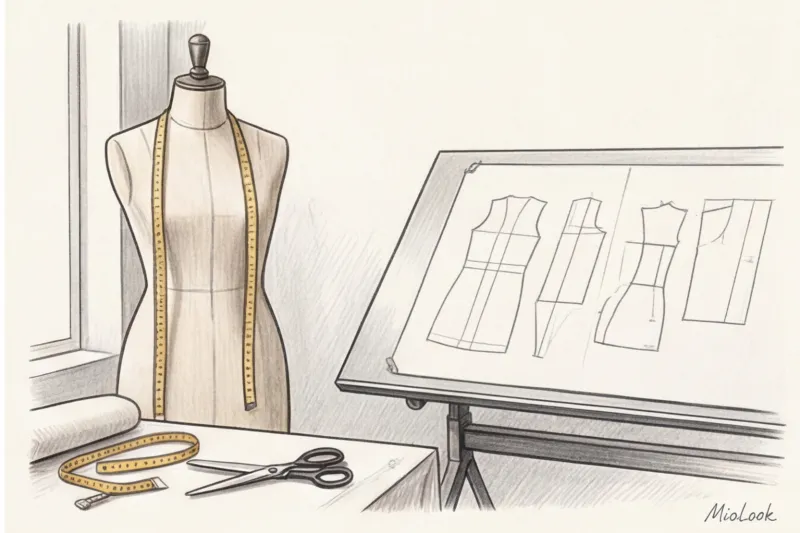
It's moments like these that make you realize: a true technological revolution in the fashion industry doesn't look like a cyberpunk robot drawing dresses. It looks like a dry, mathematically precise data table. We covered this in more detail in our The complete guide to neural networks in fashion.
Today clothing design using neural networks — is the ultimate tool for working with patterns, forecasting trends, and reducing colossal overproduction. Let's delve into the industry's underbelly and see how algorithms are subtly but radically changing what's hanging in your closet.
The Myth of the Digital Couturier: Why AI Isn't (Yet) Cristóbal Balenciaga
When it comes to neural networks in fashion, the imagination immediately conjures up glossy images from Midjourney: incredible liquid glass dresses, exaggerated car-sized down jackets, and surreal shapes. These images quickly go viral on social media, garner thousands of likes, and... that's where they end.
Why? Because most generated images are technologically impossible to stitch together. A neural network that creates images based on a text query doesn't understand the laws of physics. It creates a beautiful drape, ignoring the fact that real fabric wouldn't fall that way.
Fashion history has seen similar panics before. In 1830, French inventor Barthélemy Thimonnier patented the first practical sewing machine and opened a uniform factory. The reaction of Parisian tailors' guilds was predictable: they stormed the factory and burned the machines to the ground, fearing that technology would destroy their profession. Spoiler: the sewing machine didn't kill fashion. On the contrary, it freed the hands of tailors from the drudgery of counting and paved the way for the creation of Haute Couture. Artificial intelligence today is following a similar path—from fear and denial to the status of an indispensable assistant.
Machine learning can't replace sartorial genius, but it does a brilliant job of taking over all the technical drudgery, leaving pure creativity to humans.
But herein lies the technology's fundamental and honest weakness: AI has absolutely no sense of the tactility of materials. Over years of working in styling and journalism, delving into fashion house archives, I've learned one rule: the physics of fabric defies any ideal calculations. An algorithm can't understand how heavy cotton velvet drapes when cut on the bias, or how weightless silk chiffon behaves in high humidity. Therefore, a machine is not yet capable of replacing Cristóbal Balenciaga, who could stand over a mannequin for hours, sculpting its silhouette with his hands.
Access to MioLook for €0.99 — one-time payment
A smart AI stylist will select the perfect look based on your individual parameters.
Get access — €0.99 onceFashion design using neural networks: how it works in practice
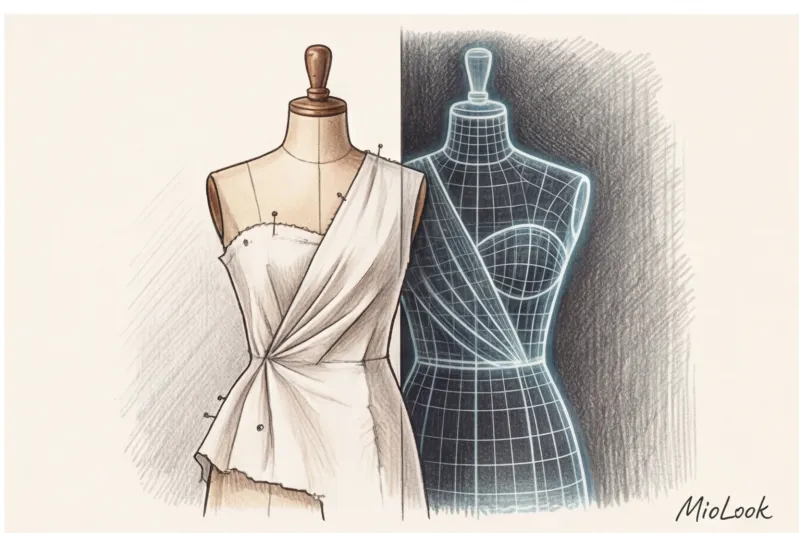
The real work of a modern designer takes place not in simple image generators, but in specialized software like CLO 3D or Marvelous Designer. Here, with the help of neural networks, clothing design is transformed into rigorous engineering.
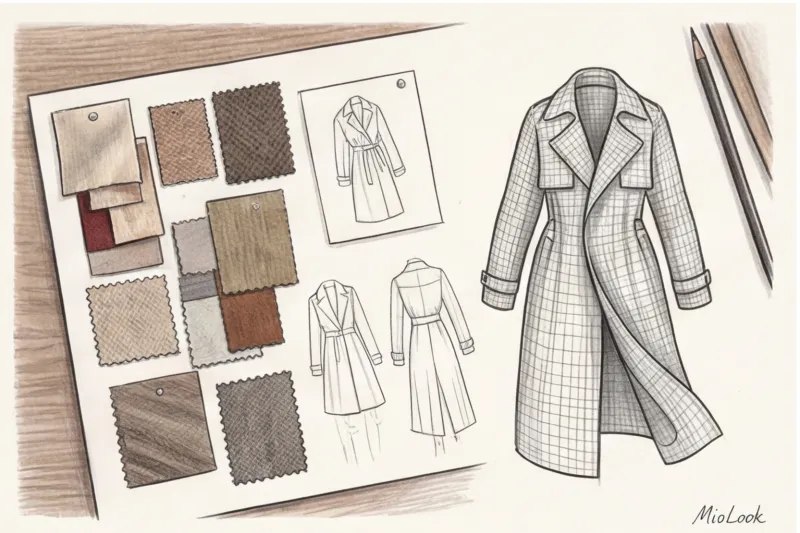
Creative directors are using AI as a super mood board. Imagine having to test a crazy hypothesis in 15 minutes: cross 90s style in modern clothing with elements of a Victorian corset. The designer specifies the parameters, and the algorithm instantly generates dozens of 3D silhouettes, calculating the attraction, thread tension, and density of the selected digital fabric.
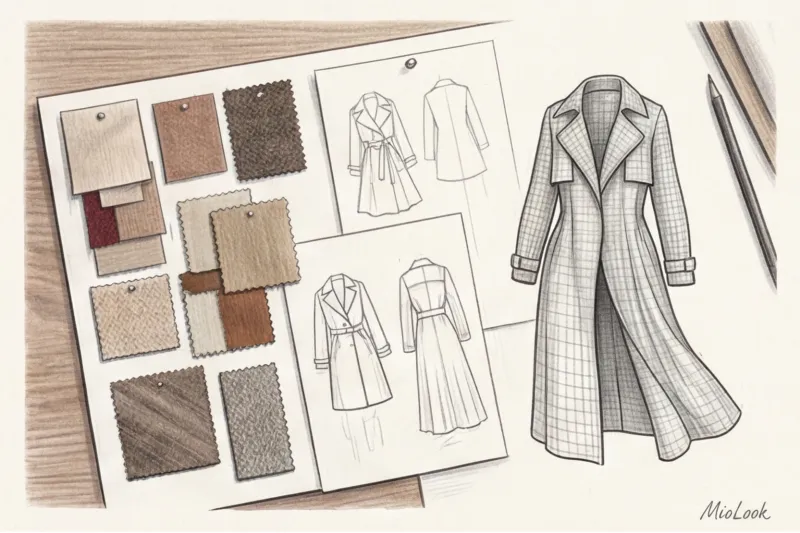
From Sketch to Pattern: The Mathematics of a Perfect Fit
Have you ever noticed that basic items from the mass market (Zara, COS, Massimo Dutti) fit much better now than they did ten years ago? It's not magic or the result of suddenly smarter tailors. It's pure mathematics.
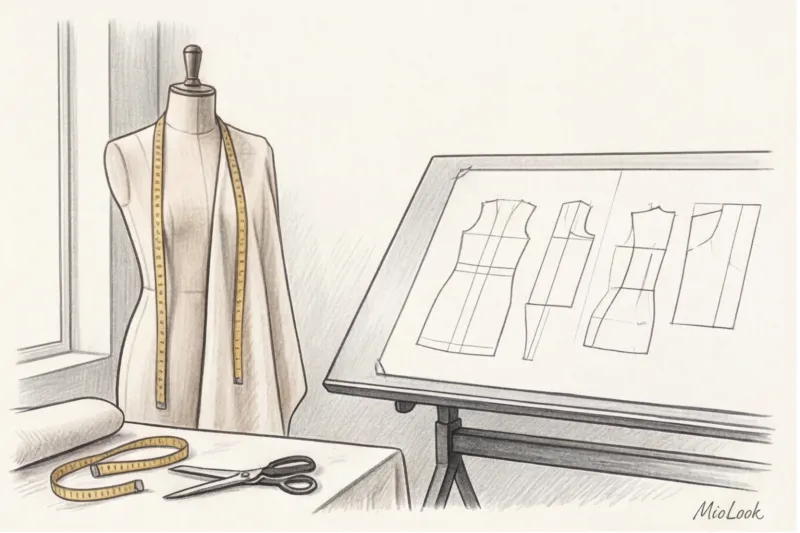
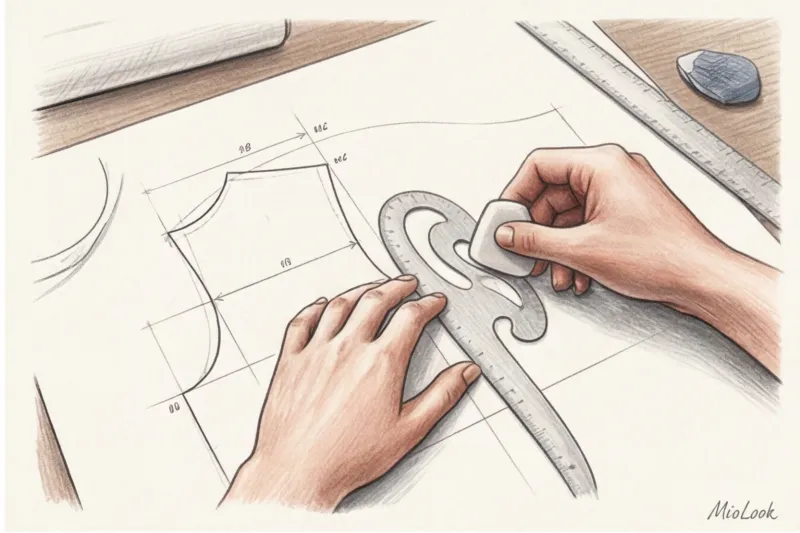
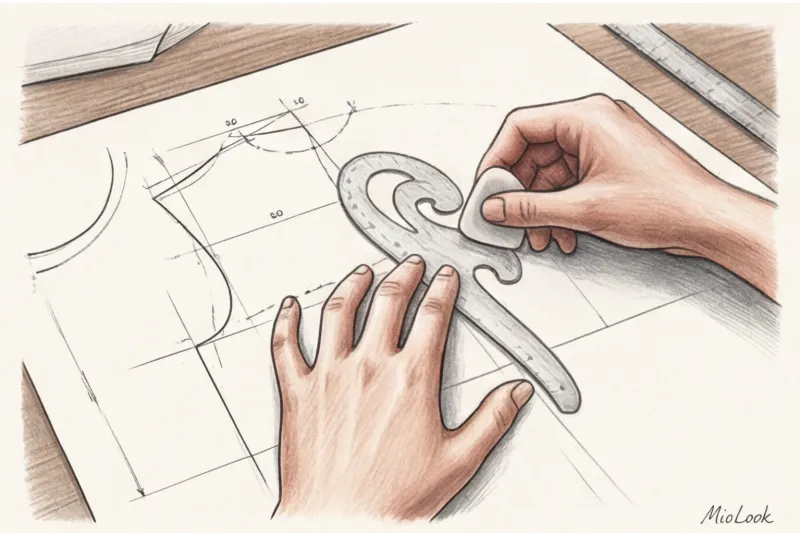
Previously, the pattern grading process (converting the basic size M into a grid from XS to XXL) was linear. A couple of centimeters were simply added to the pattern at the edges. As a result, XL garments often had disproportionately long sleeves or odd shoulder lines. Today, machine learning algorithms analyze millions of 3D scans of real human figures. They understand that as sizes increase, volume is distributed unevenly.
In my practice, clients often wonder, "How can these €50 jeans fit better than premium denim from the 2000s?" The answer is simple: their pattern wasn't created on flat paper, but rather calculated using a predictive model that takes into account the body's movements.
Trend Forecasting: How an Algorithm Decides What You'll Wear
If you think you choose your clothes yourself, I'm going to have to disappoint you a little. Much of your choice was mathematically predicted approximately 8-12 months ago. Computer vision technologies help with this.
Special algorithms scan millions of street style photos, social media posts, and runway videos daily. They break each image down into thousands of parameters: hem length, lapel width, presence of hardware, color scheme. The neural network detects micro-patterns invisible to the human eye.
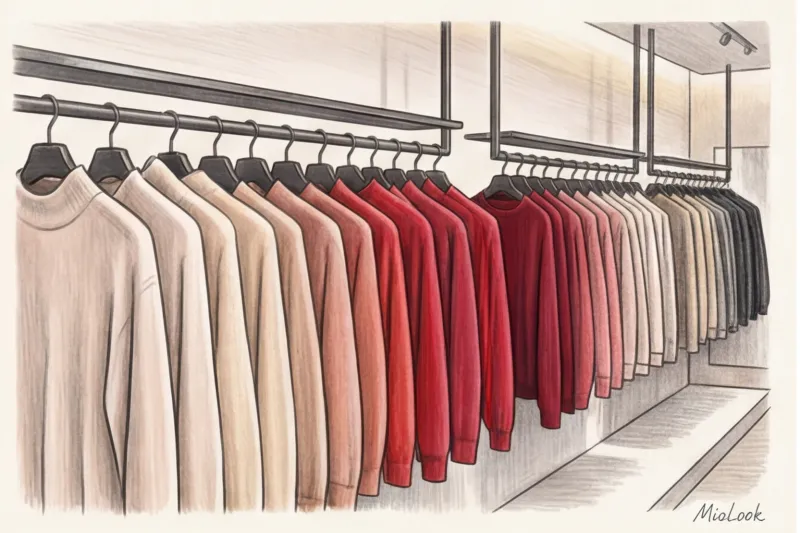
For example, the system sees that the frequency of carmine red in influencer accessories has increased by 14%, and interest in puffy shoulders has increased in response to economic news (yes, fashion always responds to the economy). Based on this data, the algorithm gives brands a clear forecast: in six months, start making oversized jackets in shades of red. And when you go to the store, that's exactly what you see.
Invisible Stylist: AI Managing Your Wardrobe
Technology is at work not only at the creation stage but also at the integration stage of a product into your personal wardrobe. According to the authoritative McKinsey report "State of Fashion 2024," 73% of fashion brand executives consider generative AI their top investment priority. Why? Because personalization sells best.
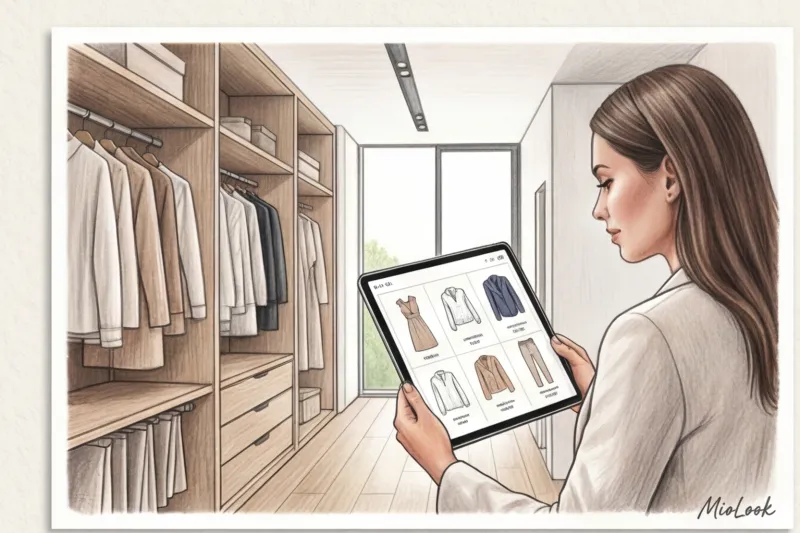
Have you noticed how online retailers seem to read your mind? Machine learning analyzes not only your purchases but also your returns. If you've returned A-line dresses three times (perhaps because they don't suit your body type), the algorithm will simply stop showing you that style, replacing it with wrap dresses. The store tailors its display to you.
But the real fun begins when AI helps you organize your belongings. This is the moment when chaos turns into a functioning capsule (by the way, if you're just planning to get your things in order, you'll find our guide helpful— Capsule Wardrobe: A Complete Guide to Creating One Smart wardrobe apps analyze your clothes and suggest combinations you wouldn't have thought of on your own.
Your ideal image begins Here
Join thousands of users who look flawless every day with MioLook. Digitize your wardrobe in just a few clicks.
Get access — €0.99 onceEcology and Optimization: An Algorithm Against Overproduction
The fashion industry consistently ranks among the top three most polluting industries on the planet. Tons of unsold clothing (deadstock) are burned or sent to landfills every year. And here we come to the most counterintuitive insight: the main benefit of artificial intelligence in fashion is not the creation of beautiful outfits, but saving the environment through tedious logistics calculations.
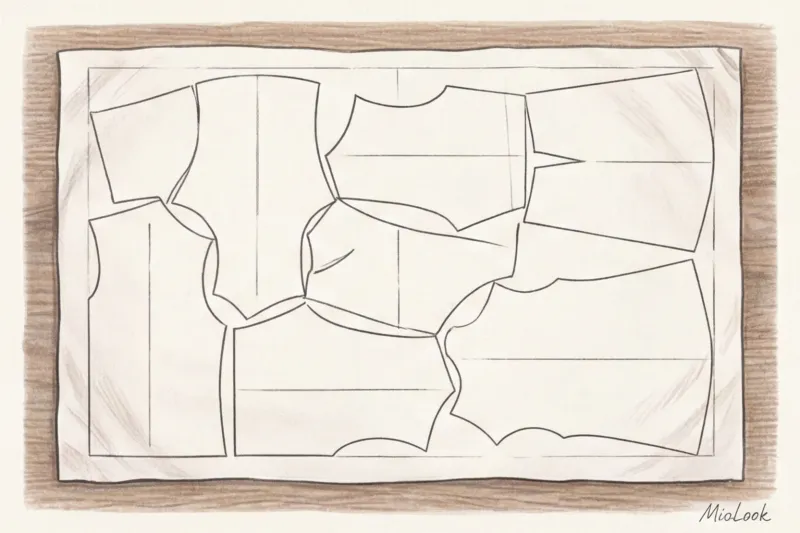
Algorithms have revolutionized the concept of zero-waste cutting. With standard cutting, up to 20% of the fabric is wasted. Considering that high-quality suiting wool can cost between €80 and €150 per meter, the financial and environmental losses are colossal. Neural networks lay out patterns on digital fabric like a complex Tetris game, achieving 98-99% material utilization.
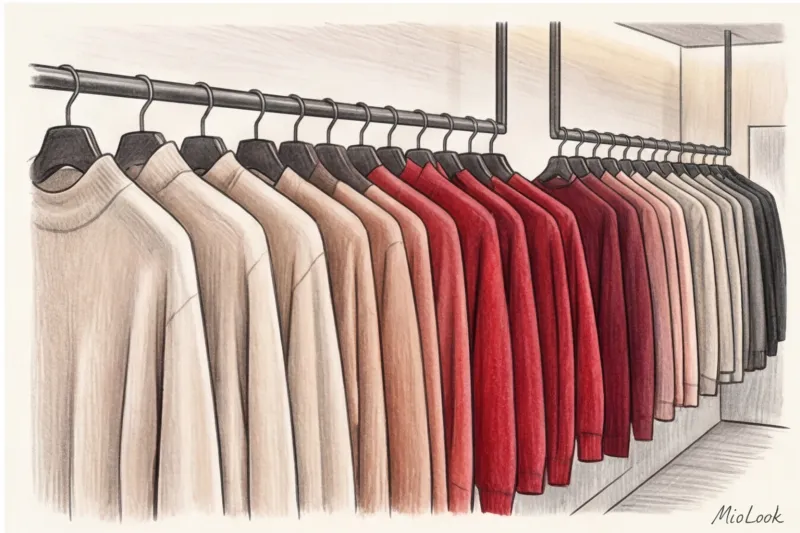
The second area is predictive demand analytics. The brand feeds the system with historical sales data, current trends, and even weather forecasts. The algorithm calculates that in November, exactly 4,200 dark blue cashmere sweaters priced at €180 will be purchased in Berlin, while only 300 will be sold in Rome. The factory produces exactly this volume. No surplus means no write-offs.
Will the algorithm replace humans? (Spoiler: No, but it will change the rules)
If mathematics is so perfect, why do we need designers at all? The answer lies in human nature. Fashion is more than just a cover for nakedness; it is a social language, a reflection of the era and psychology.
AI lacks empathy. It couldn't have created Christian Dior's legendary New Look in 1947. An algorithm, having analyzed the post-war fabric shortages, would have suggested minimalist, economical skirts. But Dior, acutely aware of women's psychological yearning for luxury and fragility after the difficult years of war, created full skirts that required 40 meters of fabric. It was an illogical, completely irrational move, but it was revolutionary. A machine will never defy logic for the sake of emotion.
My main thesis is this: AI won't replace fashion designers. But a fashion designer who uses AI will very quickly displace those who reject new technologies. The same applies to us, the consumers.
How can you use AI tools today to improve your style?
- Analyze wearability: Digitize your closet with smart apps (like MioLook). You'll be surprised by the statistics: most of us wear only 20% of our clothes 80% of the time. The algorithm will honestly reveal your blind spots.
- Test silhouettes virtually: Before investing €200 in a trendy jacket, use the virtual fitting room features. AI will show you how a strong shoulder line interacts with your natural proportions.
- Trust an unbiased view: The algorithm doesn't know complexes. It won't tell you "this is not age-appropriate" (by the way, we wrote about age stereotypes in the article What outerwear makes you look older: the main mistakes ). AI simply analyzes lines, contrasts, and color, offering objectively the best combinations.
The digitalization of fashion doesn't deprive us of creativity; it frees up time for it. Let the algorithms handle the mundane stuff—cutting math, fabric calculations, and cataloging your closet. And reserve for yourself the most interesting part—the art of self-expression through style.