Last week, one of my new clients asked me anxiously, "If artificial intelligence starts creating clothes, will we all be wearing identical silver foil jumpsuits?" This fear of "robotic" fashion is something I encounter constantly. The media loves to portray AI as the generator of crazy, unwearable 3D designs. But the reality, fortunately, is quite different.

As an expert in sustainable fashion and textiles, I see the opposite picture: algorithms are bringing the industry back to common sense. How neural networks predict trends Today, it looks more like the work of a meticulous mathematician in love with high-quality basic clothing than the fantasy of a mad couturier. We discussed the technical side of this process in more detail in our The complete guide to neural networks in fashion Today, we'll talk about how these technologies are saving us from the proliferation of disposable items and why your next perfect sweater was likely "designed" by a data scientist.
The Anatomy of Digital Prediction: How Neural Networks Predict Trends in Real Time
Let's get this out of the way right away: AI-powered trend forecasting is pure math, computer vision algorithms, and the analysis of colossal data sets. A neural network doesn't scroll through social media feeds for inspiration. It scans pixels.
According to the analytics agency Heuritech (2023), their algorithms process over 3 million street style images daily. Computer vision ignores influencers' faces. It reads millimeters: how has the width of a jacket's lapel changed compared to last month? How much lower has the waistline of a pair of trousers dropped? How is a scarf knotted?
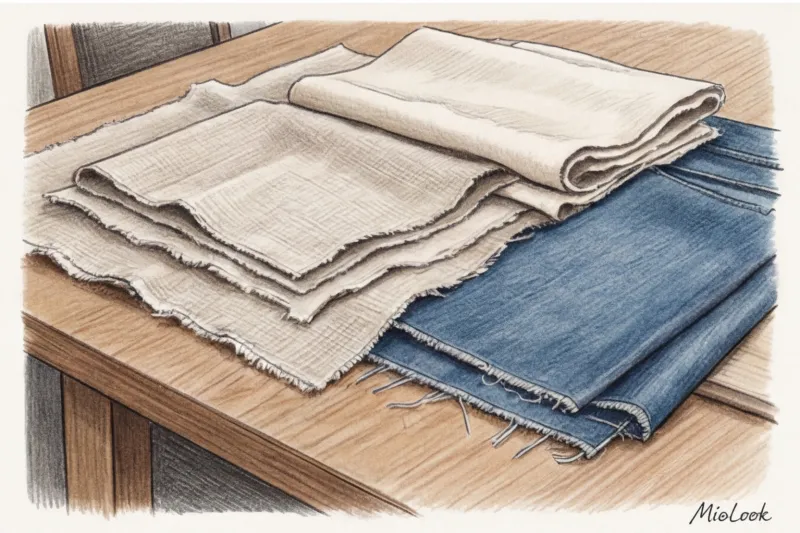
But the most interesting thing is happening in online stores. Over the years, I've noticed a clear pattern: the time a user spends zooming in on a fabric photo (that aforementioned zoom-in) is a much more accurate predictor of future demand than the "add to cart" button. Algorithms capture this micro-interest. If thousands of women suddenly start staring at the texture of thick corduroy in product pages, it's a signal to brands that corduroy will be everywhere in six months.
From Pixel to Pattern: How AI "Sees" Fabric Quality
Can you tell the difference between 100% merino wool and cheap, squeaky acrylic from an Instagram photo? Neural networks have learned to do this with alarming accuracy. We're in the app. MioLook We are actively training AI to recognize visual landing patterns.
The secret lies in the physics of draping. Heavy natural silk reflects light and forms folds in a completely different way than polyester. By analyzing thousands of these light-and-shadow patterns in photographs, AI creates a quality heat map. As a result, brands receive a clear forecast: next season, consumers will be willing to pay €100 to €150 for dense, shape-retaining organic cotton, ignoring thin, translucent knits.
Your perfect look starts here
Join thousands of users who look flawless every day with MioLook. Our intelligent AI stylist will select a capsule wardrobe to suit your body type and lifestyle.
Get access — €0.99 onceThe AI Paradox: Why Neural Networks Predict "Boring" Base Fashion Better Than Extravagant Couture
Herein lies the biggest paradox, one that fashion magazines rarely explore. Contrary to the stereotype that technology gravitates toward futurism, machine learning algorithms vote with their rubles (or, more accurately, euros) for durability, versatility, and total wearability.
Artificial intelligence is literally killing fast fashion. It's proving to manufacturers, with numbers in hand, that investing in a high-quality basic T-shirt for €40 yields a higher LTV (customer lifetime value) than producing neon crop tops for a single season.
The algorithm calculates the capsule potential, or Cost Per Wear index (the price per wear). The neural network recognizes the slow but fundamental trend for classic straight jeans more quickly and reliably than the surge in interest in rhinestones. The AI understands that a basic item can be easily combined with 80% of everything else in your wardrobe. This means it won't sit idle in your closet, and it's precisely for this that customers will return to the brand again.
Machine Learning and Ecology: How Technology is Saving Fashion from Overproduction
As a proponent of conscious consumption, I often turn to frightening statistics. According to the authoritative McKinsey report "State of Fashion 2024," a whopping 30% of all clothing produced globally is never sold. It ends up in landfills or incinerated, leaving a devastating carbon footprint.
In this context, predictive analytics is becoming the most powerful tool for sustainability. We're moving from the toxic model of "produce randomly and try to sell at a discount" to a model of "predict with 85-90% accuracy and produce exactly as much as needed."
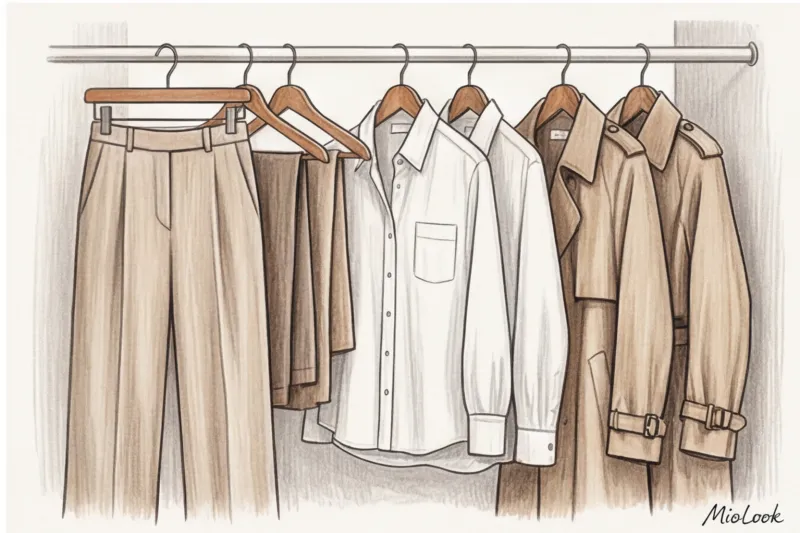
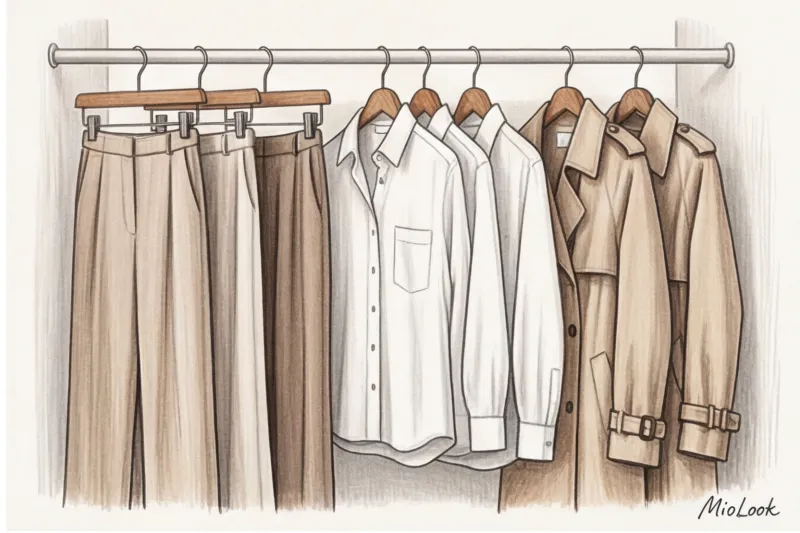
By calculating demand before the fabric is cut, AI saves millions of tons of cotton and fresh water. When a mid-price brand knows it needs to produce exactly 15,000 beige trench coats instead of 50,000, it can afford to purchase higher-quality hardware and heavyweight gabardine while keeping the retail price within €150–200.
Ready to get started?
Try the free plan—no commitments required. Upload your items to MioLook and discover which silhouettes the algorithm considers your ideal base.
Get access — €0.99 onceThe life cycle of a trend through the eyes of an algorithm
For a neural network, the birth and death of a fashion phenomenon isn't a matter of emotion, but of a predictable three-stage process. Understanding this mechanism is a sobering reminder when the impulsive urge to buy the latest "hot new thing" strikes.
- Stage 1: Innovators (data anomalies). The algorithm notices isolated deviations. For example, the return of the grunge aesthetic or the way 90s style in modern clothing is starting to appear among micro-influencers in Copenhagen. For the system, it's just "noise" for now.
- Stage 2: Growth (pattern confirmation). AI detects a synchronous increase in Google searches, Pinterest saves, and increased viewing time for specific textures. This is what happened with chunky cardigans made of thick sheepskin—the algorithms signaled to brands 18 months before they flooded the shelves of Zara and COS.
- Stage 3: Peak and Plateau. The most critical moment: As soon as a trend reaches the mass market, AI gives the "stop" command. It predicts imminent audience saturation and halts production to avoid massive inventory pile-ups.
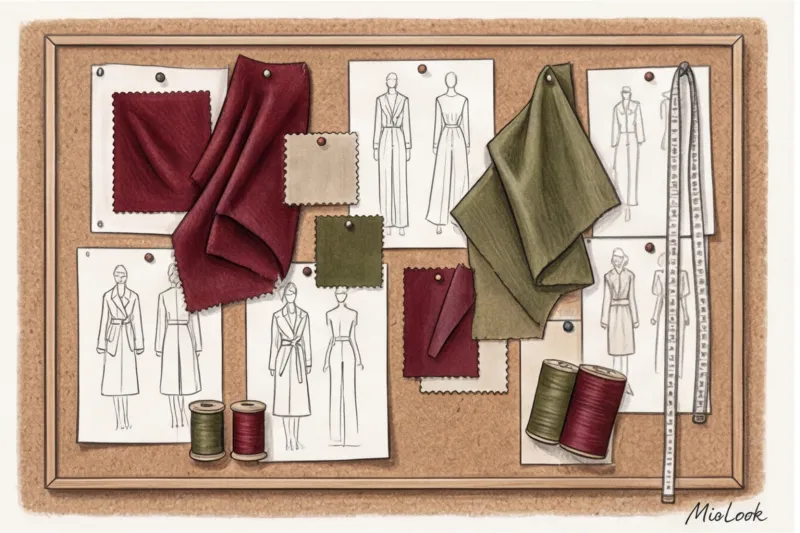
How Your Personal Wardrobe Is Silently Training Global Neural Networks
The connection between your closet and the world's catwalks is much closer than it seems. Every digitized item in smart apps is a signal of real, not imagined, style. Brands no longer rely solely on the imagination of creative directors; they look to what you and I are. really we wear.
Let me share a case from my experience. One of my clients believed that the core of her style was bright floral midi dresses. She regularly bought them in the €80–€120 range. But when we digitized her wardrobe, AI analytics ruthlessly revealed that 80% of the time she wore structured, straight-cut jackets and classic loafers. Dresses were worn perhaps a couple of times per season. The algorithm knows more about our habits than we do because it analyzes wearability, filtering out emotional and impulsive purchases.
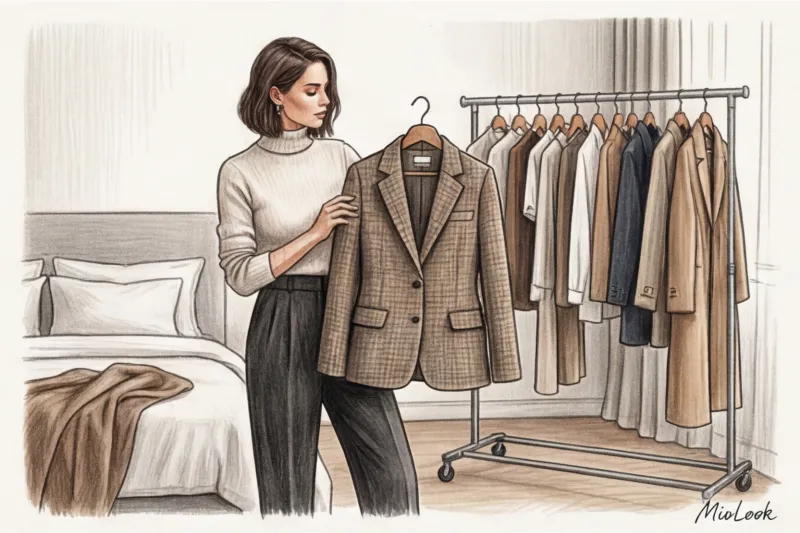
Breaking stereotypes in planting
Smart virtual fitting rooms collect millions of data points on real body types. This forces manufacturers to move away from rigid, outdated sizing. Neural networks analyze What outerwear makes you look older? due to an unsuccessful armhole, and they offer patterns that take into account the natural geometry of the modern human body.
It's worth being honest here and mentioning the limitations. AI works great with macro trends and basic cuts, but it passes Before the instant viral micro-trends of TikTok. If some subculture makes a ripped neon sweater with an odd shape popular overnight, a mathematical algorithm will consider it a statistical error and won't have time to react. And that's great—we don't need mountains of disposable fleece.
Try MioLook
A smart AI stylist will select the perfect look for you by analyzing your actual preferences and body shape.
Get access — €0.99 onceChecklist: How to Use AI Trends to Create a Smart Wardrobe
Understanding how algorithms work can be used to your advantage. Instead of blindly chasing seasonal displays, try incorporating a data scientist's approach into your shopping. Here's my action plan for those looking to invest in their wardrobe wisely:
- Ignore micro-flares, look for “long” trends. Artificial intelligence shows that truly successful silhouettes (like loose, straight-leg trousers with pleats at the waist) last for 3-5 years. Don't waste your money on something that'll only last one summer.
- Digitize your things. Upload your current database to the app MioLook Let the algorithm calculate your personal wearability index. You'll stop buying that tenth white shirt if the statistics show you only wear knitwear.
- Invest in quality fabrics. If brands' neural networks are voting for the return of 100% wool, cotton with a weight of 180 g/m² and heavier viscose, follow their lead. A mid-priced item (€80 to €150) made from the right fabric will pay for itself after dozens of washes without losing its shape.

The main conclusion that technology is pushing us toward is that the seemingly boring mathematics of machine learning makes fashion more human. Neural networks don't dictate extravagant rules—they simply listen attentively to our real needs and compel brands to create clothes we truly want to live happily ever after in.