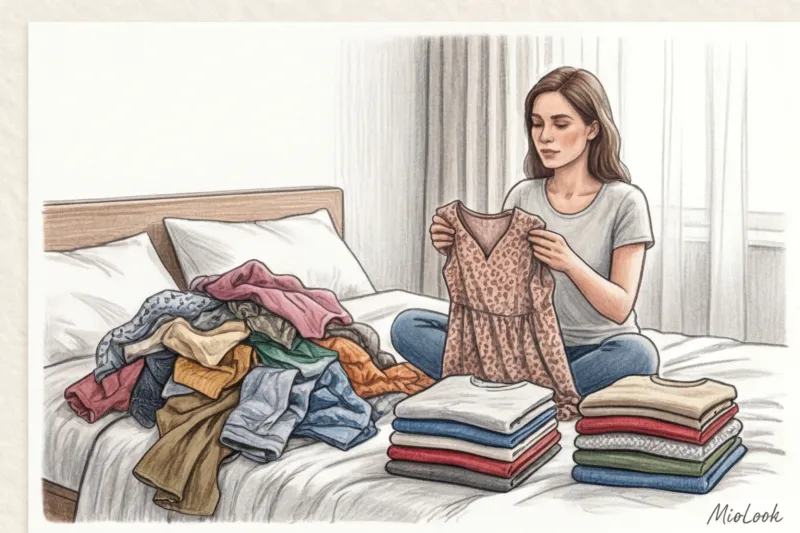
Why We Have So Much Difficulty Parting With Things (and a Stylist's Take on the Problem)
In my 14 years as a personal stylist, I've regularly observed the same paradox: the more clothes a woman has, the more often she sighs and utters the phrase, "I have absolutely nothing to wear." We buy, we fold, we shuffle from shelf to shelf, and when the closet doors stop closing, the natural question arises: Where to donate old clothes to free up living space without harming the environment?
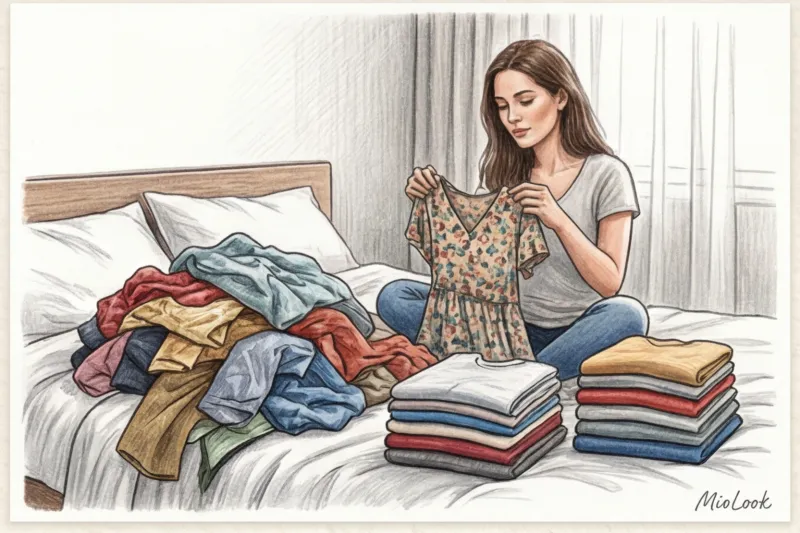
The psychology of hoarding clothes rarely stems from a genuine need for warmth or protection. More often than not, a full closet is a graveyard of our unfulfilled ambitions, spontaneous impulses, and the so-called "fantasy self." We cling to skinny jeans in the hopes of losing weight by summer, save evening dresses for social events we never attend, and stockpile dozens of identical T-shirts simply for "lounge wear."
"Things we don't wear don't just take up physical shelf space. They take up mental space, forcing us to make dozens of micro-decisions every day that leave us feeling tired before we even leave the house."
A separate category that's particularly difficult to part with is the phenomenon of "mistake items." These are clothes bought on impulse, on sale, or inspired by a fleeting trend. It's a familiar sight: a seemingly perfect silk top, bought on a whim for €150, never worn, with the tag hanging forlornly. Every time you open your closet, this item evokes not joy but a burning sense of guilt for wasting money. We hold onto it because we hope to somehow "justify" the investment, but in reality, it only drains our energy.
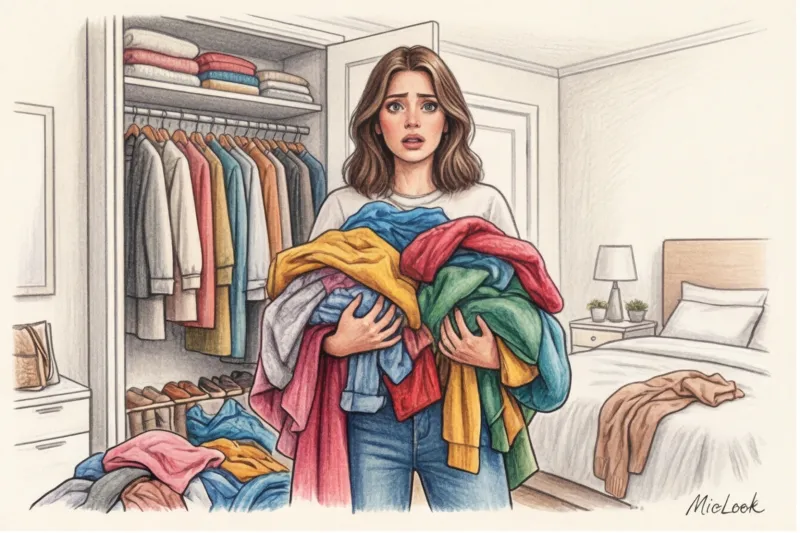
I worked with a client, a top manager at a large IT company. She had three full closets. Every morning began with stress: among mountains of neon mass-market tops, odd cardigans, and those very same "mistaken items," it was physically impossible to quickly find a smart wool jacket or the perfect white shirt. This overcrowded wardrobe literally blocked the development of her true, prestigious business style. She simply couldn't see her best pieces beneath the visual noise. We couldn't move forward until we performed a ruthless yet eco-friendly detox.
In such a situation, why not simply bag everything and take it to the trash? For modern people, throwing textiles in the trash is no longer an option. According to 2023 research by environmental institutes, the fashion industry is one of the planet's biggest polluters. Your old synthetic blouse will take over 200 years to decompose in a landfill, releasing microplastics into groundwater and greenhouse gases into the atmosphere. Therefore, it's important to dispose of textiles wisely.
The Three-Category Rule: Getting Ready for Green Decluttering
To prevent the detox process from descending into chaos, where you're simply shuffling things from your bed back into your closet, I always use a strict sorting rule. Remove absolutely everything from your closet. Now, sort clothes you haven't worn in over a year into three strict categories. There shouldn't be any "I'll think about it" category.
- Category 1: Sell. This is where premium items, current mid-range items in pristine condition, and those brand-new items with tags go. If you bought a €300 bag and it doesn't fit your lifestyle, it's better to get at least €150–200 back through resale platforms than let it sit in a dust bag. That's a reasonable return on investment.
- Category 2: Give away. These are clean, current items without defects, pilling, or stains. These include basic sweaters, jeans, and outerwear you've outgrown or that simply no longer brings you joy. The main rule: only give away items you wouldn't be embarrassed to give to your best friend. If an item has lost its shape, it belongs in the next category.
- Category 3: Recycling. Everything that can no longer be worn goes here: clothes worn to the point of holes, underwear, stretched-out T-shirts, textiles with stubborn stains. These items will be sent to special funds, where they will be turned into cleaning rags or technical filler for furniture and soundproofing.
Once you clear your shelves of clutter, you'll be surprised how clearly your true style becomes apparent. I recommend digitizing the remaining, truly functional base immediately. For example, by adding photos of your items to MioLook — a smart wardrobe management app that will save you from buying duplicates in the future. And if you're unsure how to create workable outfits from your remaining items, check out our article: How to build a capsule wardrobe: a step-by-step guide.
Micro-step for today: Open your closet right now and find exactly five items that make you feel guilty or irritated. Take them out—you've just taken the first step toward your ideal style.
Where to recycle old clothes: when an item can't be saved
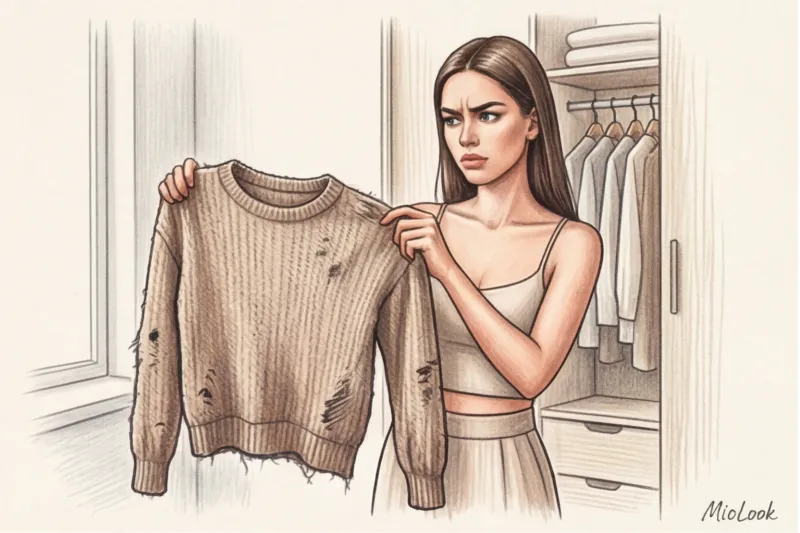
Every other wardrobe review brings an awkward moment. A client pulls out a favorite turtleneck, worn to holes, or a T-shirt with a persistent wine stain and asks, "Is this really going in the trash?" Her hand instinctively reaches for the trash can, as if it's no longer useful. But this is where the most important rule of eco-friendly wardrobe management begins.
It is strictly forbidden to throw textiles into a regular household waste container. This is not just a fashionable eco-trend, but a harsh necessity.
According to the Ellen MacArthur Foundation's extensive 2017 report on the circular economy, every second globally, a truckload of textiles is sent to landfills or incinerators. In landfills, synthetics (polyester, acrylic, nylon) take hundreds of years to decompose, releasing microplastics that leak into groundwater. Natural fabrics, such as cotton and wool, decompose without oxygen, emitting copious amounts of methane, a potent greenhouse gas.
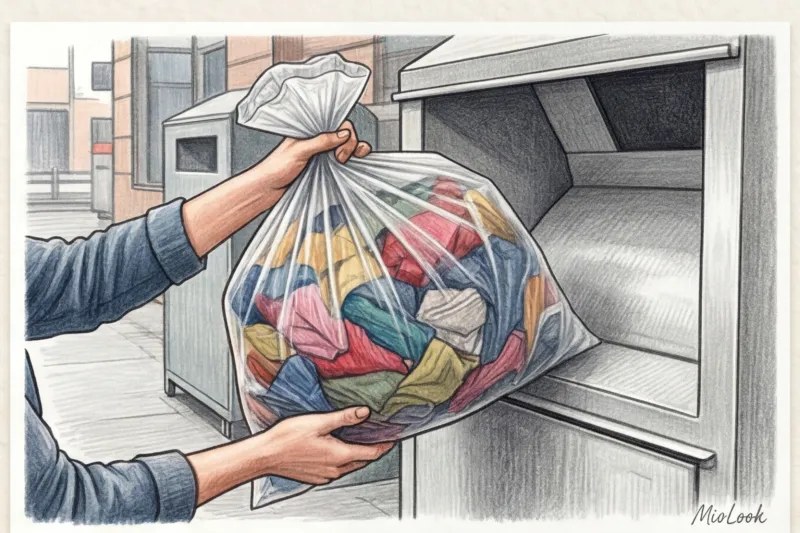
What happens to things after the container?
Many people think that a new T-shirt can magically be woven from an old one. Unfortunately, technology doesn't yet allow for the mass and affordable recycling of fabric into identical new thread, so in 99% of cases, we're dealing with downcycling—a degradation of the material's quality.
How does this work in practice? When you decide where to donate old clothes and take them to a special box, their journey has only just begun. On the sorting belt, items unsuitable for wear are separated by composition. Pure cotton awaits its fate. wiping rags — the fabric is cut into even strips, which are then purchased by printing houses, auto repair shops, and factories for wiping machine tools. Synthetics and blended fabrics are sent to chipping machines. The defibering process turns old sweaters into technical wadding. This raw material is then used to produce excellent soundproofing and insulation materials for the construction and automotive industries.
Large Containers and Funds: Who to Entrust Your Textiles to
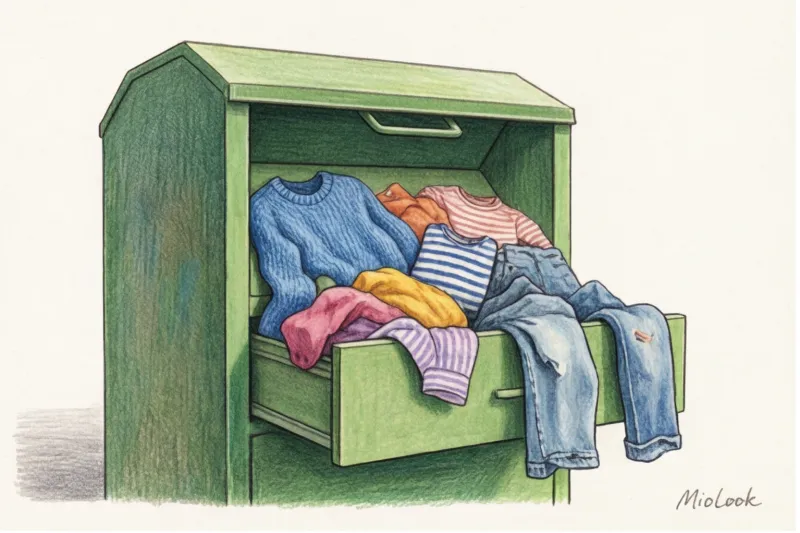
Today, disposing of unwanted items has become easier than ever. Special boxes are being installed everywhere—they can be found in shopping centers, supermarkets, and on the streets. The "Second Wind" foundation and similar large eco-projects are excellent examples of a well-established system.
According to the foundation's statistics, approximately 30–40% of all clothing collected in their containers is sent for recycling because the items are no longer wearable. It's important to understand that these organizations undertake a tremendous amount of manual sorting, so our goal is to make their job as easy as possible.
Access to MioLook for €0.99 — one-time payment
A smart AI stylist will select the perfect look from the items left over after decluttering and suggest what's missing from your capsule wardrobe.
Get access — €0.99 onceStrict rules: what will be accepted and what will be sent to the landfill
One day a client asked me: "Olena, why wash things if they're just going to be cut up into rags or shredded anyway?" The answer is a resounding yes, washing is a must! A dirty item in a closed container can become moldy and ruin dozens of kilograms of nearby clothing. Recyclers will simply throw the entire bag in the landfill for sanitary reasons.
Remember the basic rules of sorting for recycling:
- What is accepted with joy: Any textiles made of cotton, linen, viscose, polyester, and blended fabrics. Holes, stretched knees, pilling, stubborn paint or food stains—it doesn't matter, donate it.
- What is NOT accepted for recycling: Genuine and artificial leather, fur, shoes, and bags. These products consist of a complex mix of materials (glue, plastic, metal, cardboard) that cannot be separated mechanically.
- Absolute taboo: Unwashed underwear and socks. According to hygiene standards, if you hand over such items for fiber removal, they must be impeccably washed. Otherwise, it's disrespectful to the work of the sorters.
By getting rid of "mistake items" in an eco-friendly manner, you not only free up closet space but also relieve yourself of the burden of guilt over unsuccessful purchases. You know that that stretched-out jumper won't rot in a landfill, but will instead serve as insulation in someone else's home.
Charity: Where to donate good clothes to those in need
According to statistics from international organizations for 2023, up to 30% of donated clothing goes straight to landfill. People donate dirty, pilling sweaters, blouses with stubborn stains, and shoes with worn-out heels. The sustainability industry has a special term for this phenomenon: wishcycling (from the words wish - desire and recycling — recycling). It's an illusion of charity when we give away outright trash, consoling ourselves with the thought: "They'll get by with it; it's better than nothing."
In reality, this is anti-aid. You're simply shifting the responsibility for recycling onto the shoulders of volunteers. Funds are forced to spend thousands of euros monthly (money that could be used to purchase food or medicine) paying for the disposal of things people donate under the guise of a good deed. My strict rule as a stylist: never give away anything you wouldn't be ashamed to wear yourself or offer to a loved one. Donating clothes is a matter of dignity, not a convenient way to get rid of junk.
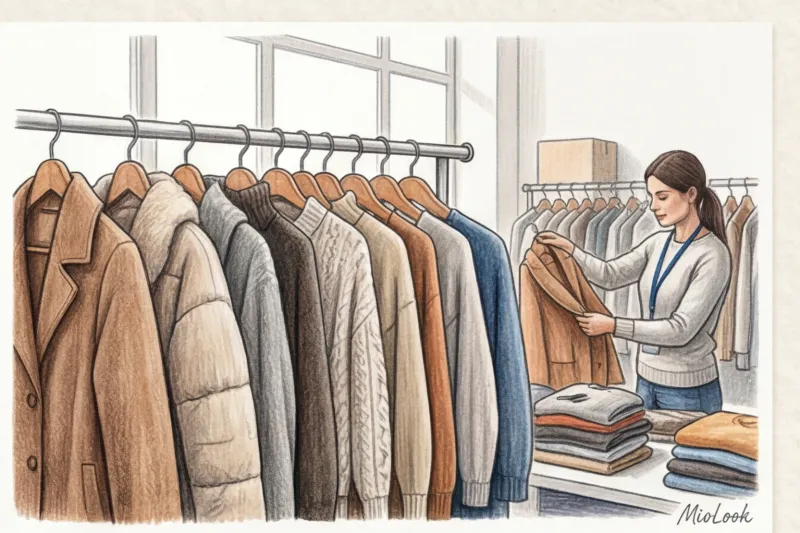
So who really needs our supplies? The beneficiaries typically fall into several categories: social shelters for women in crisis, family assistance funds, and homeless shelters. Each of these groups requires completely different equipment.
By analyzing the foundations' requests, I compiled a clear list of the most in-demand clothing items:
- Men's clothing. There's always a huge shortage. Men, in general, update their wardrobes less often and wear things to the point of exhaustion. Therefore, finding a good men's jacket, intact boots, or classic jeans in a warehouse is a real stroke of luck.
- Warm and basic equipment. When deciding where to donate old clothes, remember that no one wants a sequined evening dress or 5-inch stilettos at a shelter. People need thick sweatshirts, windproof pants, down jackets, and thermal underwear.
- Items without complicated fasteners. Clothing without tight corsets, numerous small buttons down the back, or complicated lacing is critical for the elderly and those with limited mobility. The easier a garment is to put on independently, the more valuable it is.
When a woman who has lost her home or escaped a toxic environment receives a clean, modern coat and basic trousers, it restores her confidence. She can go to a job interview not in stretched-out clothes from a previous decade, but in modern basics that make her feel confident. This is the true meaning of support.
In addition to large platforms, church parishes and regional social welfare centers traditionally accept clothing donations. They have strict collection procedures. Modern eco-projects often have their own disinfection and sorting facilities. Small social welfare centers or local shelters, however, distribute items directly, "hand-to-hand." This means the clothing must be in perfect sanitary condition: washed, ironed, and preferably sorted (women's size 46 in one bag, children's in another). Be sure to check pockets, sew on any torn buttons, and test the zippers before delivering the bags to these locations.
And a little pro tip before you tie up the bags. Sometimes, in a fit of decluttering, we give away a perfectly basic turtleneck simply because we forgot how to style it. Take a photo of the item and upload it to MioLook — the app's algorithms can suggest fresh, unconventional combinations with the skirts or jackets you already have in your closet. If the "match" doesn't happen and you realize that the item no longer reflects your lifestyle, feel free to donate it to charity, freeing up space for a truly functional wardrobe.
Smart Resale: How to Get a Refund for Clothes That Don't Fit
Have you ever counted how many euros are currently sitting unused in your closet? ThredUp's 2023 global resale market study found that over 50% of women have items in their wardrobes with tags or that have been worn only once. Decluttering isn't just about ecology and a clean space, it's also about return on investment. If the item is relevant and in excellent condition, let's turn your "shopping mistake" into cash.
Luxury and premium: specialized resale platforms
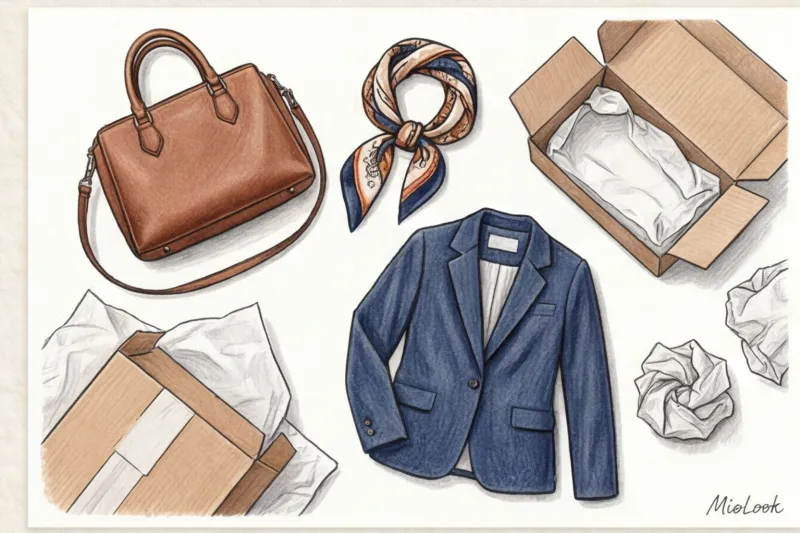
When it comes to brands like Celine, Prada, or even solid mid-range brands like Acne Studios, traditional classifieds are a poor choice. The risk of encountering scammers or buyers who will haggle to the point of absurdity is too high.
For such items, there are specialized international platforms like Vestiaire Collective or The RealReal. Their main advantage is multi-stage authentication. You send the item to the company's office, where experts examine the seams, fittings, serial numbers, and even the scent of the leather. Most major players today use this technology. Entrupy — microscopic scanning of materials, which detects counterfeits with 99% accuracy. The platform will take a commission (15% to 30%), but the sale of the €800 bag will be completely secure and transparent.
Mass Market and Middle Segment: Rules for Fast Sales
Items from Zara, COS, Massimo Dutti, and local designers sell well on traditional platforms like Vinted, Depop, and Avito. But to avoid selling a sweater for six months, you need a systematic approach.
My personal best is selling a wool coat in two hours. Over the years, I've developed a formula for the perfect ad, thanks to which my clients' items find new homes in three days maximum.
Here are my golden rules for designing for a quick sale:
- Light sells everything: Avoid yellow hallway lights or flashing lights. Photograph the item during the day by a window. Ideally, show the fit on yourself or use a simple wooden hanger against a clean, light wall.
- The rule of three measurements: Always include your bust measurement, sleeve length, and back length in your text. This will instantly eliminate 90% of the empty messages like "will this fit someone 170 cm tall?"
- Honest composition: Take a close-up photo of the tag. Don't just write "wool" if the actual composition is 30% wool and 70% acrylic. Buyers appreciate transparency.
- Adequate pricing: For a mass-market item in perfect condition, feel free to bid 40-50% of the current retail price. If there's a minor defect, clearly indicate it in the photo and deduct another 15-20%.
Access to MioLook for €0.99 — one-time payment
Start creating perfect images with the help of artificial intelligence
Get access — €0.99 onceNew format consignment shops
If you're looking for a place to donate old clothes (or rather, clothes you've worn but don't like), and the thought of messaging customers and going to the post office makes you shudder, consider modern consignment shops. You simply deliver or courier a package of clean items. The store handles everything itself: steaming the clothes, professional photography, communicating with customers, and handling logistics. After the sale, you receive 40% to 60% of the purchase price directly to your card. It's the perfect balance between time spent and proceeds.
Swap Parties: Fashionable Barter
If getting your money back isn't a priority for you, but you still want to update your wardrobe in an eco-friendly way, try going to a swap party. swap (—exchange). This is a popular sustainable fashion format where people exchange clothes. You give up a cool but now-tight skirt and get a stunning vintage jacket in return. These events often take place in creative spaces with DJ sets, turning the mundane act of getting rid of clothes into a stylish networking opportunity.
And to understand exactly what it’s time to part with without regrets, I strongly recommend using smart wardrobe feature in the MioLook app When your clothes are digitized, the statistics are relentless: if a blouse has been sitting unused for a year and has never been added to a capsule collection, feel free to resell or swap it. Free up resources for what truly complements your personal style.
Upcycling: A Creative Approach to Old Things
If the recycling we talked about earlier is most often the transformation of fabric into a faceless insulation, then upcycling is its ticket to high society. The term upcycling Literally meaning reuse with added value. Instead of breaking down a material into fibers, the designer uses a finished item as a canvas to create a completely new, exclusive object.
I had a telling case: a client was planning to get rid of her grandfather's high-quality but outdated tweed jacket. We took it to a local tailor, where the tailor reshaped the chunky garment into a structured cropped jacket with accent shoulders. The result? The client received a designer piece, the equivalent of which would have cost at least €300–€400 in a boutique.
Who can you upcycle your clothes to if you don't plan to wear them yourself? Today, sustainable fashion trends are supported by hundreds of independent local brands and designers around the world. They are constantly searching for high-quality raw materials. Many workshops are happy to take heavyweight vintage denim, men's two-piece suits, workwear, and leather jackets. Search for such projects on social media using relevant hashtags—for them, your tired trousers have real industrial value, and they're willing to recycle them themselves.
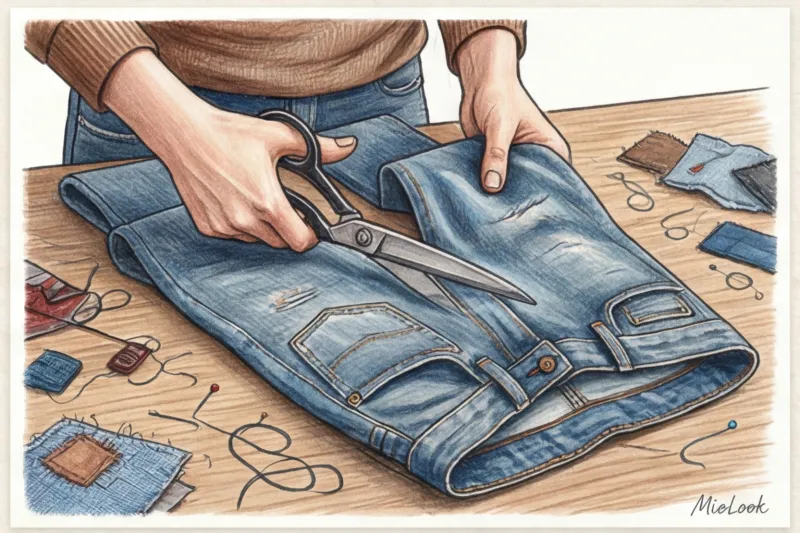
What can you repurpose and give items a second life? Here are the most popular transformations I regularly use when working with wardrobes:
- From a men's shirt to a top: A classic shirt made of thick cotton easily transforms into an asymmetrical off-the-shoulder top or a striking wrap skirt.
- From old jeans to shopper: Thick denim holds its shape perfectly. A pair of outdated skinny jeans makes a great tote bag, a trendy corset, or a maxi skirt with a front slit.
- From two old jackets: A single, ultra-fashionable two-tone Frankenstein blazer is created, referencing deconstructivism and the legacy of Maison Margiela.
"It's important to understand the limitations: not every item is suitable for alteration. Thin, loose knits or worn-out viscose simply won't stand up to being ripped apart and reassembled. Upcycling favors dense, shape-retaining fabrics: denim, suiting wool, cotton, and leather."
If you're unsure whether to recycle your old clothes or try to save them through redesign, I recommend first digitizing them. virtual wardrobe MioLook The app's smart algorithms will help you create new, unexpected outfits. Often, an item doesn't need to be cut or re-sewn—it's enough to look at it from a new perspective and find the right modern style.
How Decluttering Opens the Door to Your Perfect Style
Do you know what my favorite moment is when I work with clients? It's when we've collected the last few bags and a woman looks at her half-empty closet for the first time. At first, there's a hint of panic in her eyes—"I have absolutely nothing to wear!"—but after a few minutes, it's replaced by immense relief. My professional conclusion, backed by hundreds of closet reviews, is this: an empty closet isn't scary. On the contrary, it's your blank canvas. You've just freed yourself from the daily morning decision fatigue (the so-called decision fatigue ).
Physically decluttering is directly linked to understanding personal style. It's impossible to develop a recognizable signature when it's buried under layers of other people's trends. When we remove visual noise—those €15 blouses bought on sale "just to wear" or those skinny jeans that have been waiting for you to lose weight for years—we finally see our true essence. A clear space sparks creativity: you suddenly notice how beautifully those remaining favorite wool trousers pair with the crisp cotton shirt you previously hid behind a pile of colorful knitwear.
"Your personal style doesn't begin the moment you buy something new, but the moment you let go of something that no longer reflects who you are."
Once you've finally decided where to donate your old clothes and cleared the shelves of impulse purchases from mass-market stores, your shopping strategy will inevitably shift. This is the long-awaited shift from quantity to quality. Let's do the math: by cutting out your weekly fast-fashion purchases of around €40, you can easily accumulate a budget of over €450 in one season. This money is enough to invest in a status item—for example, the perfect cashmere coat, handcrafted loafers, or a structured mid-up leather bag. Calculated on a Cost Per Wear basis, such a premium essential will cost you several times less than a €20 acrylic sweater, which will permanently lose its shape after the third wash.
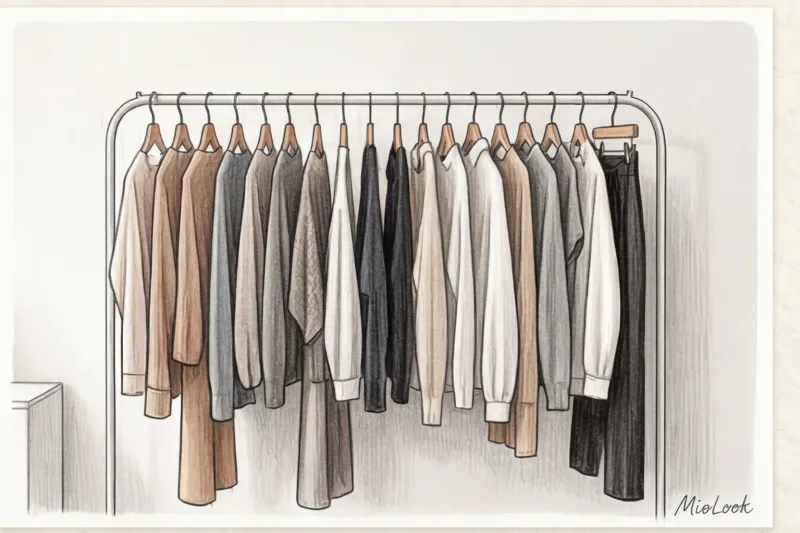
The most logical way to use the freed-up space is to build a functional capsule wardrobe. The idea of a capsule wardrobe isn't about boring, drab pieces, as many people mistakenly believe. Based on the original concept of Susie Fox, owner of the London boutique Wardrobe (she coined the term in the 1970s), a capsule wardrobe is a compact set of wardrobe items that fit perfectly and are 100% mix-and-match. Keep three bottoms (straight jeans, palazzo pants, and a midi skirt), five tops of varying thicknesses, and two outer layers. Add quality shoes, and you'll have over 30 different everyday looks without buying a single new item.
To avoid filling up your hard-won space with new, random textiles, all remaining items need to be digitized. I highly recommend uploading your updated database to MioLook This simple step will forever change your approach to smart shopping. When you're standing in the fitting room, unsure whether to buy a bright jacket, you simply open the app and check whether it pairs with at least three items from your virtual closet. If the puzzle doesn't work, the item goes back on the hanger. The app works like your personal pocket stylist, preventing impulsive spending and helping you plan stylish outfits for the week ahead right over your morning coffee.
Your ideal image begins Here
Join thousands of users who look flawless every day with MioLook. Digitize your items, create capsule wardrobes in one click, and manage your wardrobe intelligently.
Get access — €0.99 onceStylist Checklist: 5 Steps to Take Before Dropping Off Your Clothes
According to the European Textile Recycling Council (EuRIC) for 2024, approximately 15% of collected textiles are rejected at the primary sorting stage. The reason is both annoying and trivial: clothes arrive damp, dirty, or are hopelessly damaged during transport. You've already gone through a tremendous amount of emotional work in deciding to part with your past. All that's left is the final, purely technical step. To ensure your efforts aren't wasted, and your items truly benefit you or recoup some of your investment, I've developed a strict preparation protocol. Save this cheat sheet.
1. A thorough check of pockets (money, tickets, documents)
It sounds like obvious advice, but statistics from sorting centers suggest otherwise. A couple of years ago, while helping a client pack for a move, we discovered a forgotten €200 bill and receipts from a jewelry store in the inside pocket of her vintage jacket. Be sure to check all the hidden compartments of your coats, bags, and jeans. Look not only for banknotes, but also for tickets, business cards, and personal documents. No one else should have access to your private information.
2. Mandatory washing and drying
The most common mistake is throwing used items into the container with the excuse, "They'll wash them anyway," or "They'll be recycled, so why waste laundry detergent?" It's important to know the truth: sorting stations and collection centers don't wash incoming mass-market clothing! They simply don't have the resources. Just one damp sports shirt can trigger mold growth, which in a couple of days will destroy a 50-kilogram bag of perfectly good clothes next to it. Wash each item thoroughly and, crucially, dry it thoroughly, down to the last thread.
3. Minor repairs (if you donate to charity)
If you're donating a base to help vulnerable people, ask yourself an honest question: "Can this person wear this today?" A woman at a crisis center has neither the time, nor a sewing machine, nor the appropriate thread to sew torn buttons onto her blouse. Spend 10 minutes: fix loose hardware, replace a broken zipper pull on a child's jacket, mend a split seam. Charity is about respect, not about getting rid of junk.
4. Removing pilling (if you are selling)
Pilling isn't a sign of a bad item, but a natural process for blended fabrics, especially those containing cashmere or merino wool. However, in photographs, it can visually devalue the item. Invest 15 minutes in machine-treating your sweater. In my experience, a basic sweater in its "rolled" state sells for a maximum of €15-20 on resale platforms, but after proper cleaning, it easily sells for €45-50.
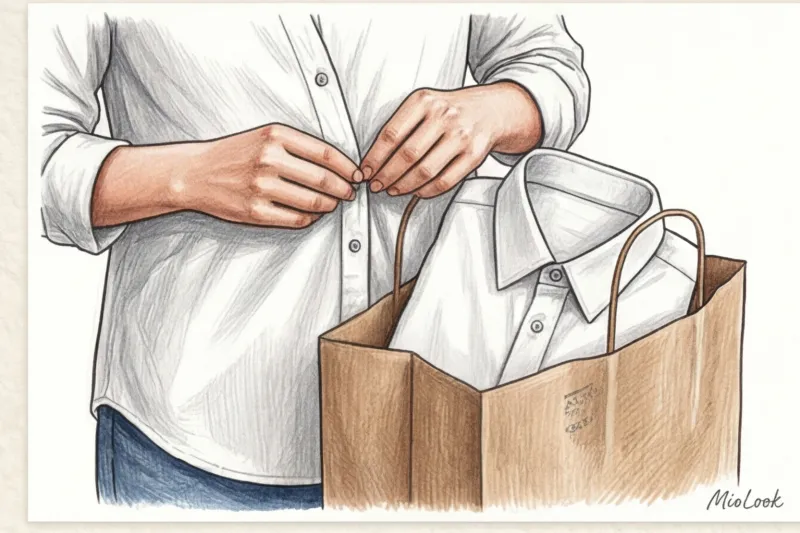
5. Proper packaging for transportation
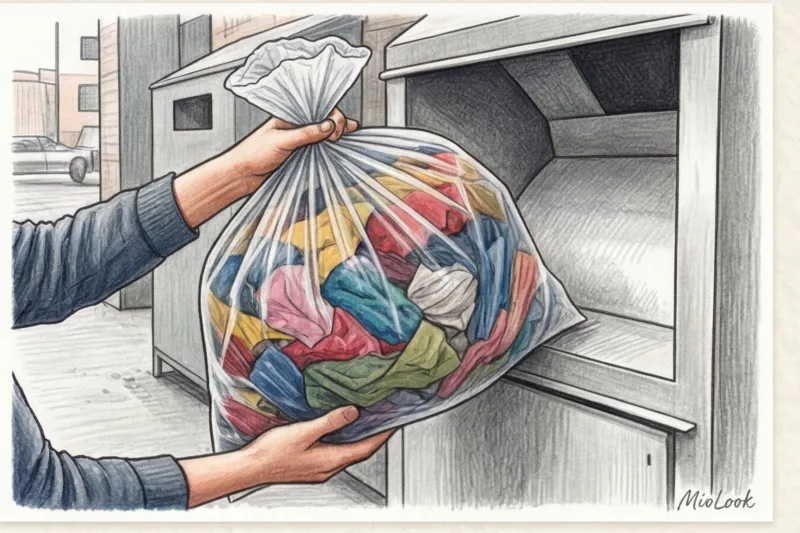
Never use thin paper bags from boutiques or flimsy "T-shirt" bags from supermarkets. If dropped into a deep metal dropbox (collection container), such a bag is guaranteed to burst on impact. Your clean shirt will fall out and get mixed in with someone else's dirty shoes. Use thick, drawstring garbage bags (at least 60 liters) or strong vacuum bags. Tightly tie the neck, releasing excess air first, to prevent items from spilling during transport.
Decluttering is complete only when the bags have left your hallway. Don't leave them "until next weekend"; take them to the collection center today.
Now that your space is clear and breathing, the main task is to avoid filling it with random, emotional purchases again. If you're looking for an answer to the question of where to donate old clothes, it means you made some style mistakes in the past. To avoid repeating them, I recommend transferring your remaining collection to a digital environment immediately after the detox.
Upload your perfect, favorite things to MioLook This smart app will clearly show you which colors and silhouettes really work for you, help you create dozens of new outfits from what you already own, and forever eliminate the problem of "a full closet but nothing to wear." Remember: a clean wardrobe doesn't mean emptiness; it means freeing up space for your true, confident style.
Guide Chapters
Clothing upcycling: giving old clothes a second life
Most women wear only 20% of their wardrobe. Learn how professional upcycling can transform forgotten items into unique outfits.
Where to donate a wedding dress: sales, rentals, and funds
A wedding dress often takes up a third of your closet, even though the chances of ever wearing it again are slim to none. Learn how to eco-friendly free up closet space and get some money back.
How to Organize a Swap Party: Swapping Out Clothes in Style
Swapping isn't just a fun bachelorette party; it's a strategic tool for a smart wardrobe. Get tips from a personal stylist on how to swap items smartly.
Where to recycle old underwear
We're addressing the most common question when detoxing your wardrobe: how to dispose of worn-out bras and tights in an eco-friendly manner. An honest discussion about recycling without greenwashing.
Where to sell branded clothing profitably and safely
Is your wardrobe overflowing with nothing to wear? We'll explain, without illusions, how to safely part with luxury items and get the maximum return on your investment.
Stores that accept old clothes for a discount
Is recycling clothes for a discount an eco-friendly move or a marketing ploy? We explore popular brand programs through the eyes of a stylist.
Where to Donate Old Shoes? A Guide to Recycling and Recycling Funds
Are old sneakers and rubbing shoes collecting dust? Learn how to declutter your shoe rack in an eco-friendly and beneficial way.
How to sell clothes on Avito quickly and efficiently
Is your wardrobe overflowing with clothes, but you have nothing to wear? We'll tell you how to declutter and sell your old clothes on resale sites for maximum profit.
How to prepare things for return: without perfectionism
Are bags of old clothes gathering dust in the hallway for months? Learn an effective system for sorting and packing clothes for donation without the hassle.
Where to Donate Torn Clothes: A Recycling Guide
Are you saving damaged items for the garden? Learn how to properly dispose of unusable textiles and give them a second life.
Where to Donate Clothes to Charity: A Complete Guide
We're sorting through your closets for the benefit of the planet and people. A selection of proven collections, containers, and projects that will give your good clothes a second life.