Take a look at your closet. I bet there's at least one item with the tag still attached, a pair of "lucky" trousers from a previous decade, and a stunning but completely ill-fitting vintage jacket. Statistics are brutal: most women wear only 20% of their wardrobe regularly. The rest is frozen capital and a source of daily morning stress.
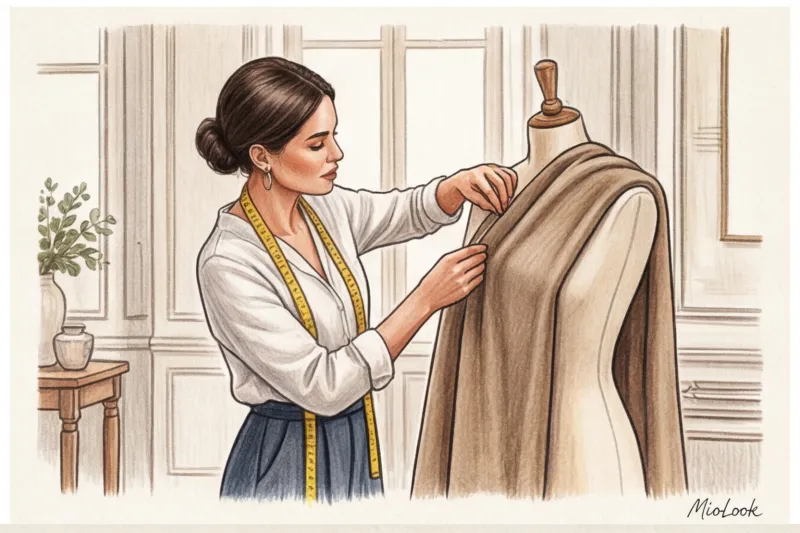
Of course, some of these things just need to be let go. We discussed this in more detail in our The complete guide to eco-friendly decluttering and clothing donation But what to do with high-quality fabrics and poor investments you're too sorry to give away? The answer is professional clothing upcycling. And no, I'm not suggesting you arm yourself with scissors and glue.
What is clothing upcycling: Debunking the myths about "jeans crafts"
Let's clear up a major misconception right off the bat. When I mention the word "upcycling," many clients roll their eyes, imagining a shopper bag carelessly stitched together from old jeans or a T-shirt painted with acrylics on the kitchen table. This is a myth that's long overdue for debunking.
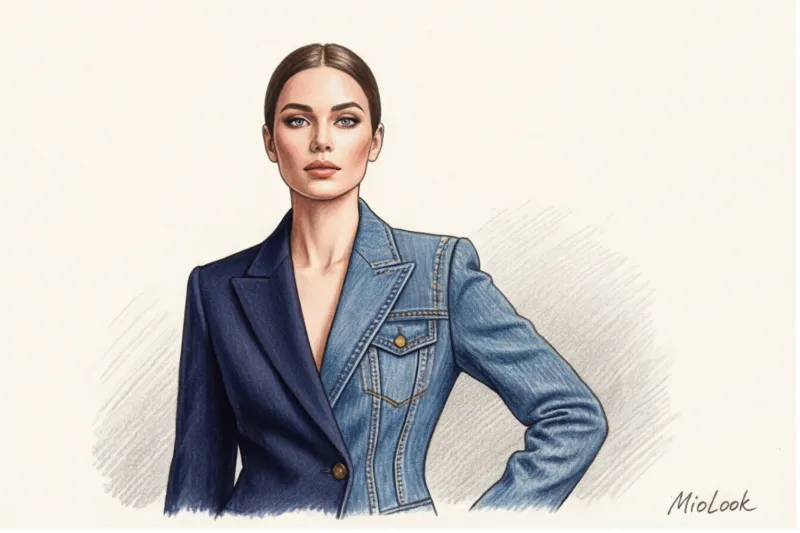
True upcycling elevates, not degrades, a garment's status. It involves working with the silhouette, proportions, and cut architecture with the help of a professional tailor. Homemade DIY often makes expensive fabrics cheaper, while clever redesign transforms mass-market items into luxury.
Don't confuse this with downcycling (when an old sheet becomes a duster) or recycling (the industrial processing of textiles into fibers). According to analytics McKinsey State of Fashion (2024) The trend toward customization and sustainability has made upcycling a new standard of quiet luxury. Take a look at the collections of Marine Serre or Stella McCartney—they create couture masterpieces from unsold fabric scraps.
Custom tailoring and alterations make your style unique. No one else will show up at a party wearing the same jacket if it was tailored specifically to fit your waist.
Closet audit: which items are ideal candidates for a second life?
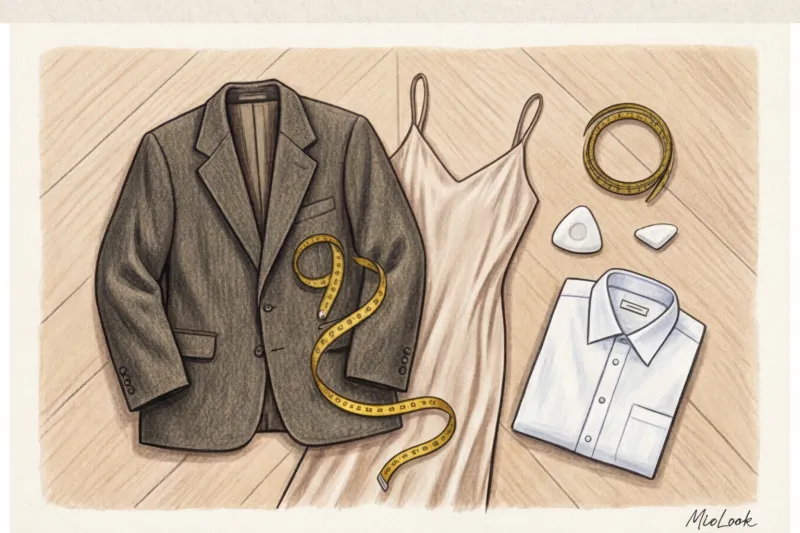
Over 12 years of wardrobe review, I've developed a golden rule: only alter items whose material justifies the cost of a tailor's work. Thin polyester, pilling acrylic, or flimsy viscose are recycled. But dense cotton (from 180 g/m²), high-quality suiting wool, cashmere, or natural silk are a blank canvas for a stylist.
Construction matters too. Oversized garments give the tailor leeway: a large men's jacket can be cut into anything. But if the garment is bursting at the seams and two sizes too small, there's simply no fabric to transform it.
Your perfect look starts here
Join thousands of users who look flawless every day by managing their wardrobe with MioLook.
Get access — €0.99 onceThe "mistake-things" phenomenon: rescuing failed investments
We all have that one item. I remember my client Anna, an IT director, who kept a stunning emerald silk top with a price tag of €150 in her closet for three years. It was a spur-of-the-moment purchase, completely out of keeping with her strict business dress code, but she couldn't bring herself to throw out such luxury. The guilt grew with every opening of the closet door.
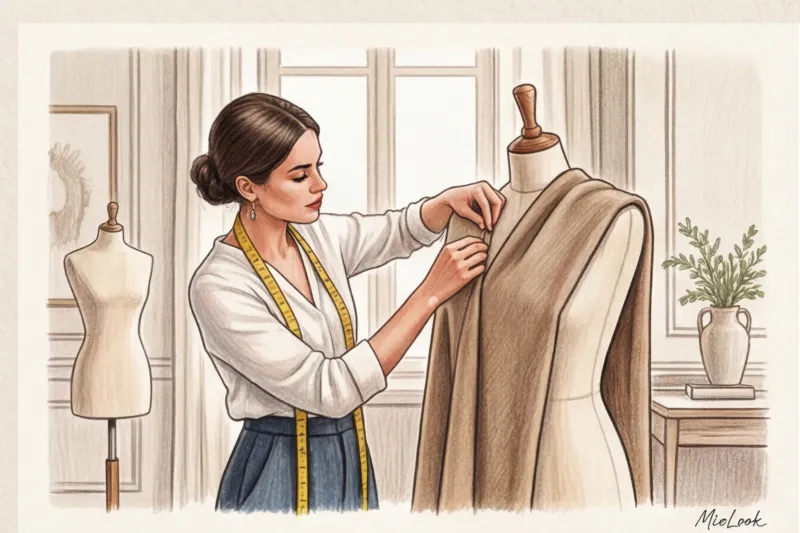
We solved the problem in two days. We ripped the top apart at the studio: most of the silk went into a luxurious contrasting lining for her basic black jacket, and the leftovers became an elegant scarf. Having gotten rid of the "mistake," Anna received an exclusive custom jacket that garners compliments at every board meeting.
Vintage and high-quality base with minor defects
A perfect cashmere sweater with a tiny moth hole? A favorite basic shirt with a stubborn coffee stain on the cuff? Don't be too quick to write them off. Designer camouflage solutions work flawlessly. Matching embroidery (not contrasting baby flowers, but a graphic abstraction in the same color thread), replacing a damaged collar with an accent leather one, shortening the sleeves to 3/4 length—these micro-interventions can save 80% of a damaged basic.
5 Formulas for Status Upcycling from a Personal Stylist
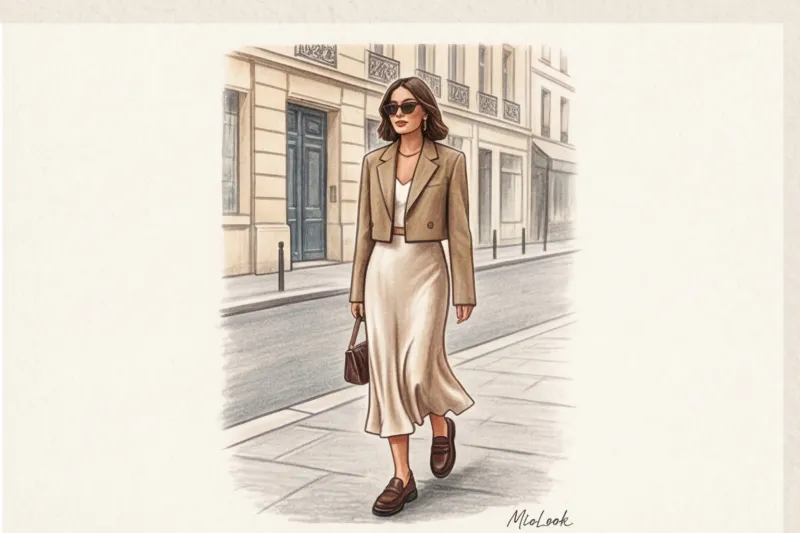
In my work, I often draw on Mediterranean aesthetics: relaxed elegance, freedom of movement, and a touch of casualness. Here are five of my favorite and tried-and-true alteration techniques that instantly elevate your style:
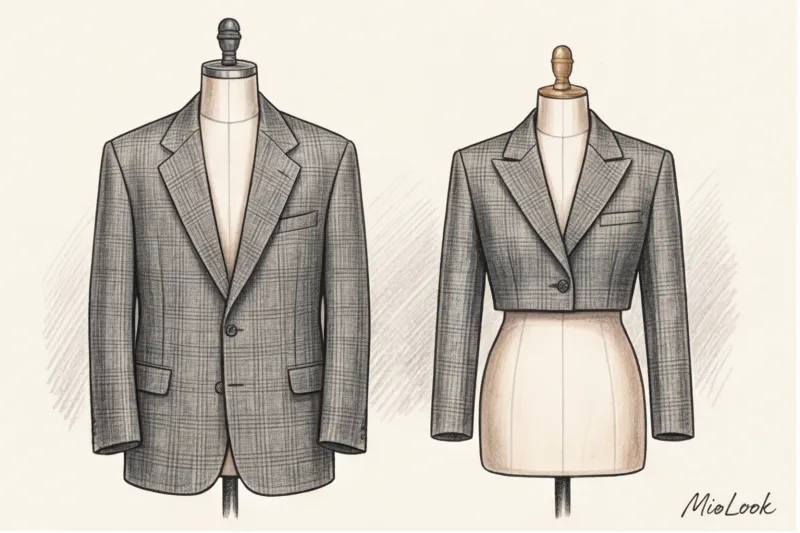
- Formula 1: Men's 90s jacket → cropped jacket. Find a high-quality wool blazer with wide shoulders at a thrift store (or in your husband's closet). Ask a tailor to shorten it just to the waist. Put it on according to the following formula: A cropped jacket + a flowy midi skirt + chunky loafers = instant chic..
- Formula 2: Outdated maxi dress → trendy two-piece suit. We cut floor-length dresses with timeless prints or complex bodices at the waist. The bottom becomes a slip skirt with an elastic band, and the top becomes a statement crop top. They can now be worn separately, multiplying the number of possible looks.
- Formula 3: Wide men's shirts → asymmetrical blouses. A classic blue or white XL shirt, in the hands of a tailor, takes on a wrap-over design, hidden buttons at the waist, and transforms into a complex architectural blouse that highlights the fragility of the collarbones.
- Formula 4: Long coat with a frayed hem → stylish pea coat. If the hem of a good wool coat is hopelessly ruined by chemicals, we cut it off just below the hip. The result is a trendy cropped pea coat that looks stunning with wide-leg jeans.
- Formula 5: Outdated skinny jeans → color block denim. If skinny jeans no longer appeal, a tailor can rip out the side seams and insert stripes of contrasting denim. You'll get fashionable straight-leg or flared jeans with a visually slimming effect.
If you're unsure how the new silhouettes will fit into your wardrobe, I highly recommend uploading photos of your items to MioLook The smart styling feature will help you visualize how to wear a cropped jacket before you even take it to the barber shop.
The Art of Delegation: How to Set the Right Specifications for a Tailor
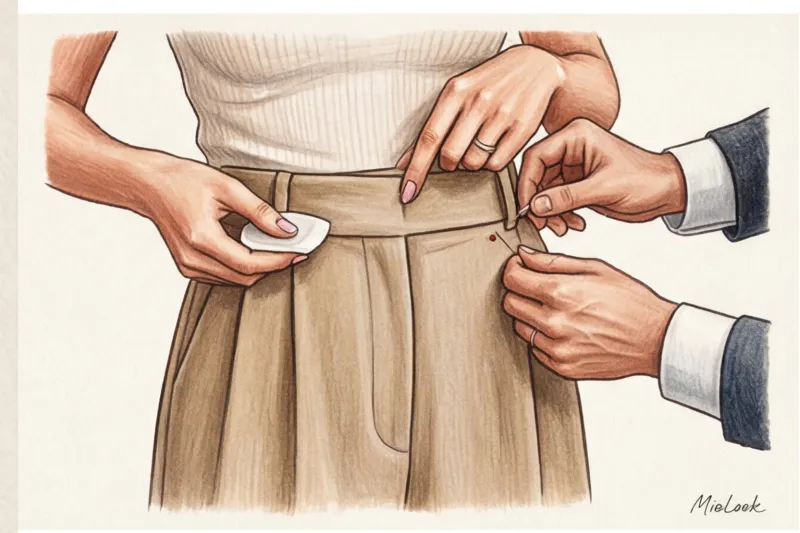
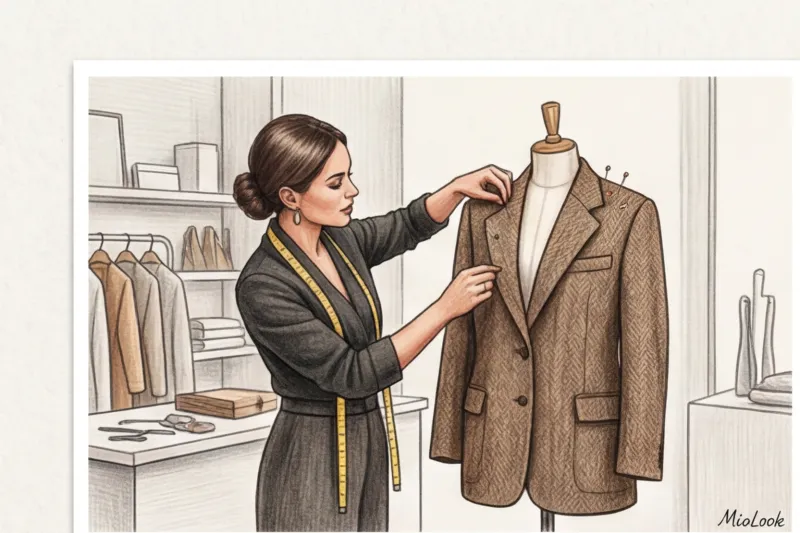
The secret to successful upcycling is communication with the atelier. The phrase "Make it look good" is a guarantee of failure. The tailor is the designer, and you are the stylist. Over the years of shooting, I've learned: always come to the fitting in the shoes and underwear you plan to wear with the item.
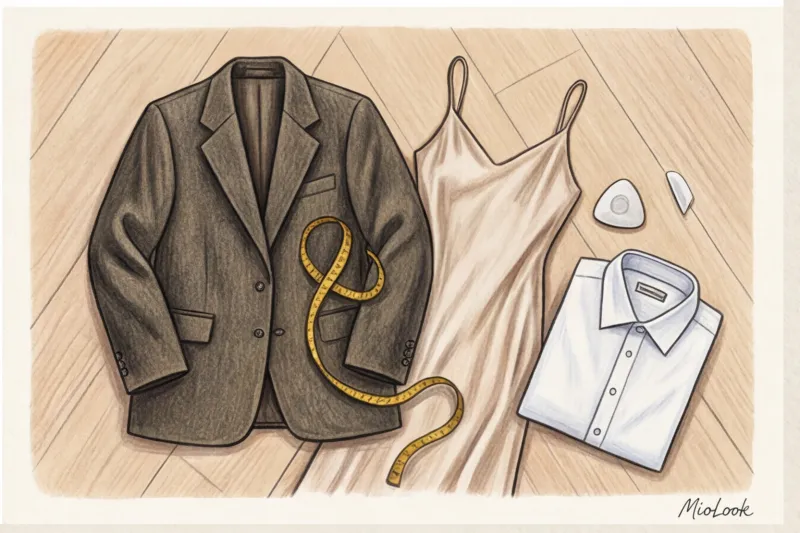
What is easy and profitable to remodel:
- Shorten the length of trousers or a skirt (usually costs between €15 and €25).
- Replace cheap plastic buttons with horn, metal, or mother-of-pearl ones (this immediately increases the price of the item, costing up to €20).
- Remove the sleeves from the dress, turning it into a vest.
- Add extra darts at the waist for a perfect fit.
There are also strict limitations. When does upcycling NOT work? Never ask a tailor to alter the armhole (where the sleeve attaches to the body) or reduce the shoulder seam width on a complex, structured jacket. This requires a complete re-cut of the entire garment. The balance of the garment will be disrupted, and the work will cost you between €80 and €150—often more than the garment itself. If the jacket is critically large in the shoulders, simply part with it.
Ready to get started?
Try the MioLook plan for free—no commitments required. Artificial intelligence will help you create stylish capsule wardrobes from what's already in your closet.
Get access — €0.99 onceUpcycling without scissors: styling that changes geometry
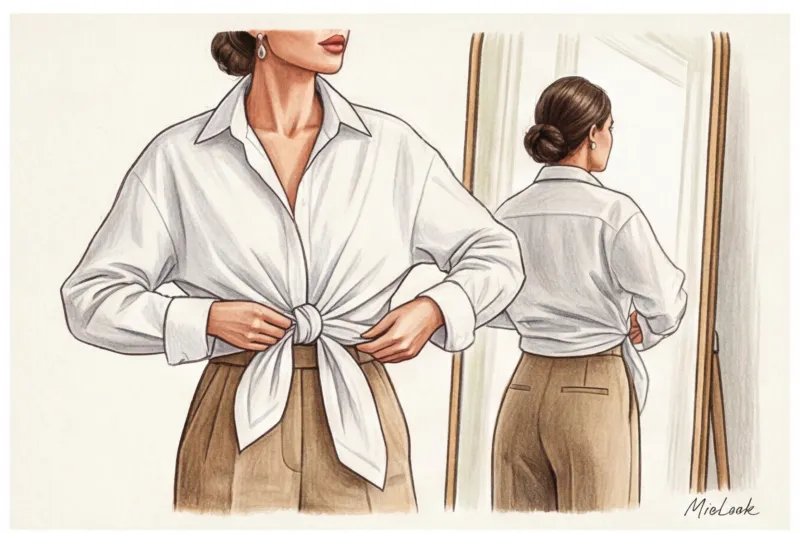
What if I told you that you can radically transform a garment without any sewing? My favorite Mediterranean touch is intricate draping and innovative uses of familiar wardrobe items.
Try wearing a lightweight summer midi skirt with an elastic band pulled over your chest instead of at the waist—it creates a gorgeous bandeau dress. Add a wide leather belt at the waist, throw a linen shirt over it, and you're ready for the waterfront.
Oversized men's shirts can be left unbuttoned, tied in intricate architectural knots at the waist, or crossed over the chest and tucked into high-waisted trousers. And those silk square scarves (90x90 cm) work in the summer as luxurious open-back halter tops or replace accent belts on tailored trench coats.
Economy and ecology: why refurbishing is more profitable than buying new
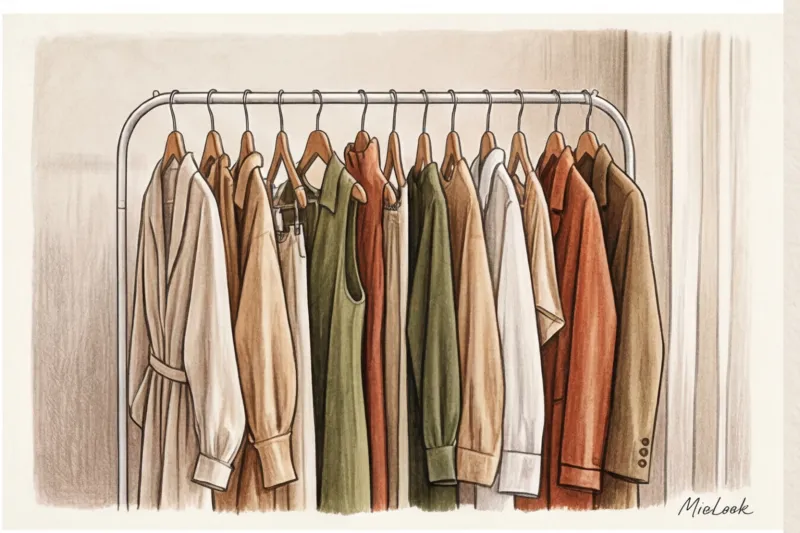
Let's talk numbers. According to a shocking report Global Fashion Agenda The textile industry remains one of the dirtiest in the world. Have you ever considered that producing just one new cotton T-shirt requires approximately 2,700 liters of water? That's the amount an adult drinks in three years.
Beyond ecology, there's also the cold economics—calculating the ROI (return on investment) of your wardrobe. Let's imagine this: you have high-quality wool trousers that have become a little loose around the waist. Having them taken to a tailor costs around €30. If you then wear them 60 times per season, the cost per wear (CPOW) is only €0.50.
The alternative? Leave them hanging in the closet and buy new trousers from a dubious mass-market store for €80. They'll likely lose their shape after the third wash (Cost Per Wear = €26.60). Quality upcycling is smart financial management.
Checklist: upcycling or eco-friendly decluttering?
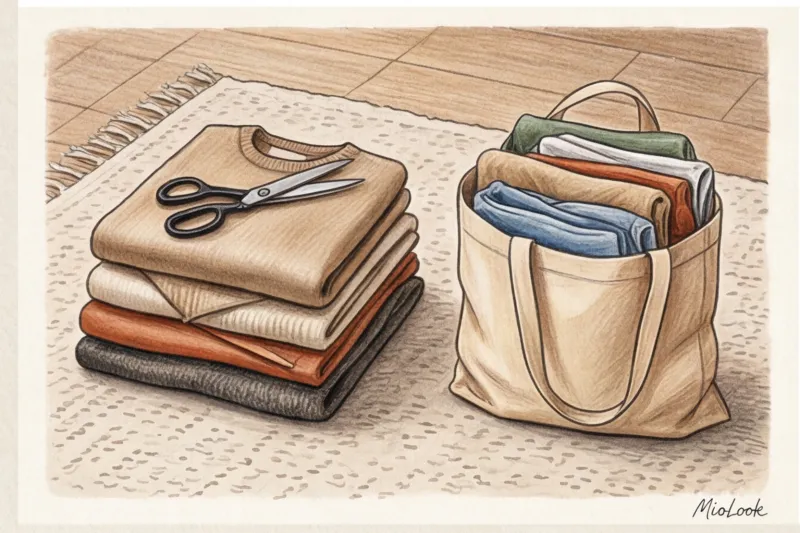
So, you're standing in front of the mirror with the item in your hands. How do you make a final decision: take it to a tailor or to a clothing collection center? Ask yourself three questions:
- Do I like the quality of the fabric and the color? If the color makes you look pale and the fabric is staticky, no amount of brilliant tailoring will fix it.
- Does the item sit comfortably in your shoulders? As I mentioned, altering the shoulder girdle is unjustifiably expensive. The exception is if you're intentionally going for an exaggerated silhouette.
- Will the new shape fit into my capsule? Imagine a new piece. Can you immediately name three items from your current wardrobe that you would wear with it?
If you answered "no" to at least two questions, let the item go. Wash it, fold it neatly, and donate it to charity or recycling centers. Clothes are meant to be worn, not taken up space.
True luxury today isn't about the number of logos in your closet, but about a perfect fit and a conscious approach to your style. By giving items a second life through thoughtful upcycling, you create a wardrobe that's impossible to replicate or buy at the mall. You become the co-creator of your own style.