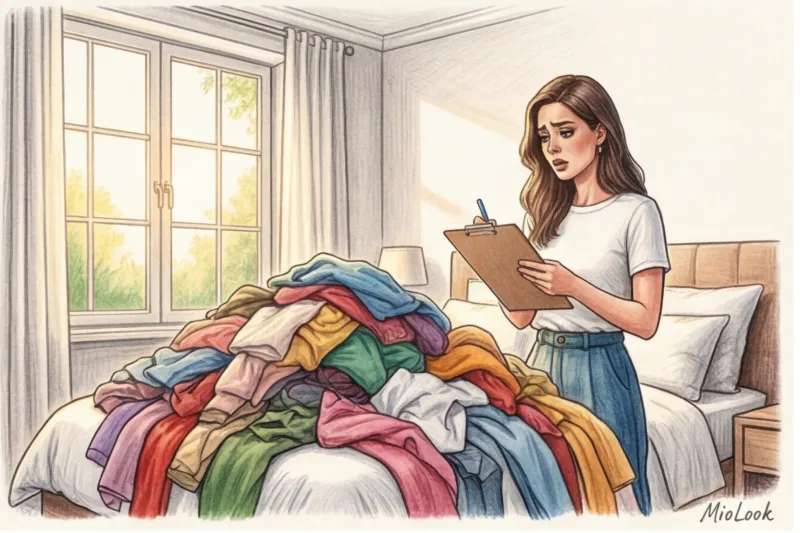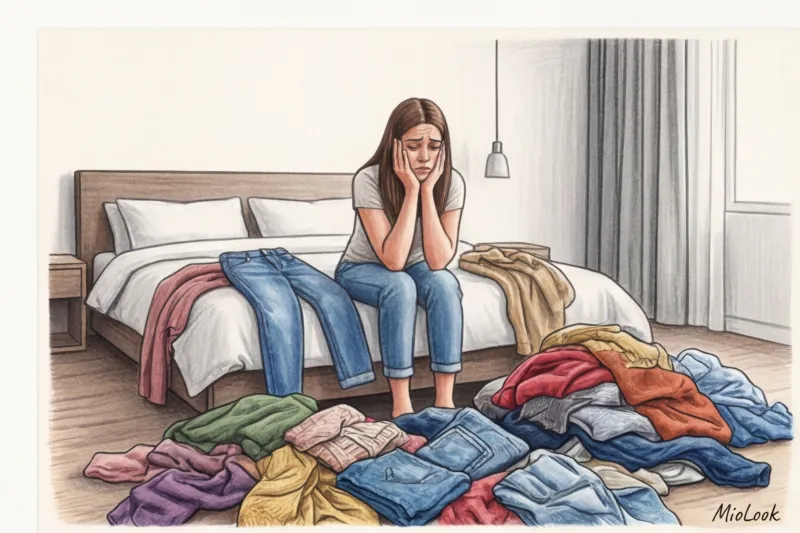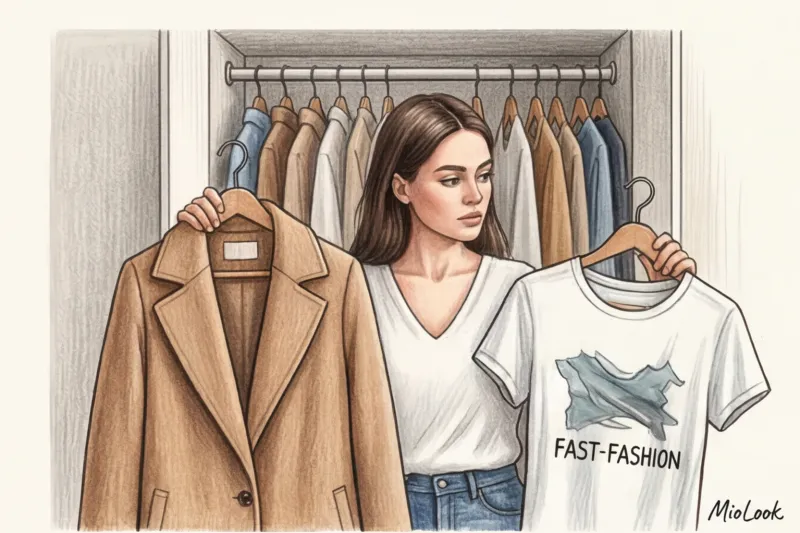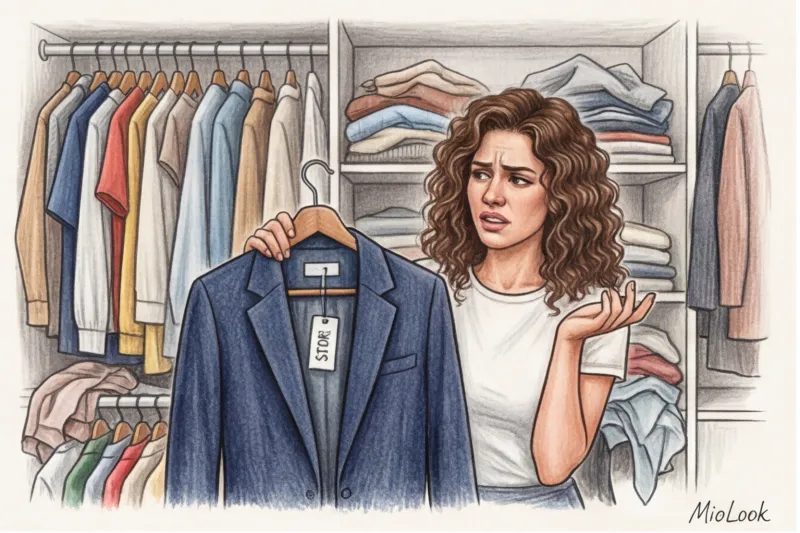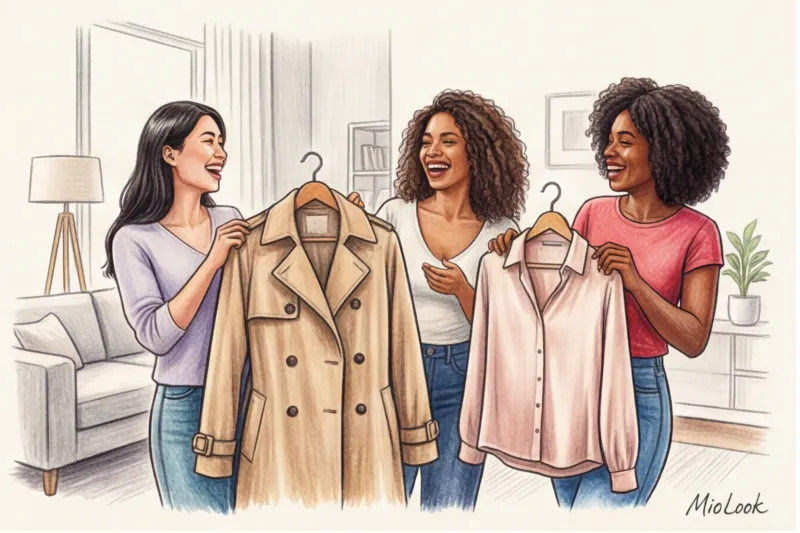
According to McKinsey statistics (2022), the average European woman wears a purchased item only seven times before it's consigned to the back of the closet and then to the trash. About 30% of our wardrobes are impulse purchases, made on the spur of the moment, that never see the light of day. If you've been looking at your overflowing closet and wondering, How to organize a swap party , forget everything you've read about "fun bachelorette parties with mountains of clothes."
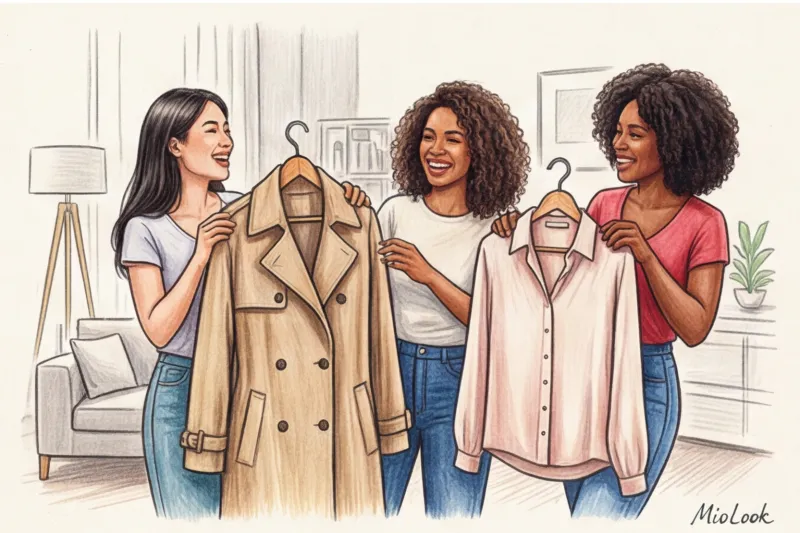
I'm Katarzyna Nowak, a personal stylist, and over 12 years of practice, I've seen hundreds of wardrobes. I've written about why clothes take up our mental space in our The complete guide: where to donate old clothes and eco-decluttering Today, we'll discuss swapping not as a pastime, but as a rigorous, strategic tool for a smart wardrobe. I'll teach you not just to swap items, but to intelligently filter out others' mistakes and incorporate their findings into your own capsule wardrobes with a curated approach.
What is a swap party and why is it the best way to eco-friendly decluttering?
Swap (from English swap A fashion exchange (also known as a swap) is an event where participants exchange clothing, shoes, and accessories they no longer need. But let's look deeper. According to a 2023 report by the Ellen MacArthur Foundation, the fashion industry generates millions of tons of textile waste annually, most of which is wearable clothing.
The classic Pareto principle applies to our closets: 80% of the time, we wear only 20% of our clothes. The rest are so-called "mistakes." Jeans that are too tight; a blouse in a tricky shade that doesn't match; a perfect dress that's never been worn.
The psychological barrier here is enormous: throwing away a new item is a shame, and selling it on resale platforms is a long and tedious process. But giving a beautiful but ill-fitting skirt to a friend, after seeing her glow in it in the mirror, brings satisfaction. You get a financial benefit (updating your wardrobe without shopping) and get rid of unnecessary items in an environmentally friendly way.
The Biggest Mistake: Why Exchanges Turn into a Dump
The most popular and most damaging advice online is: "Invite as many different people as possible to have more things to choose from." This is fundamentally wrong. A successful swap requires strict, almost snobbish, filtering of guests.
If you leave things to chance, you'll encounter the phenomenon of "wardrobe ballast." Instead of stylish items that simply don't fit, people start wearing outright trash: worn-out mass-market items, pilling knitwear, and stretched-out T-shirts.
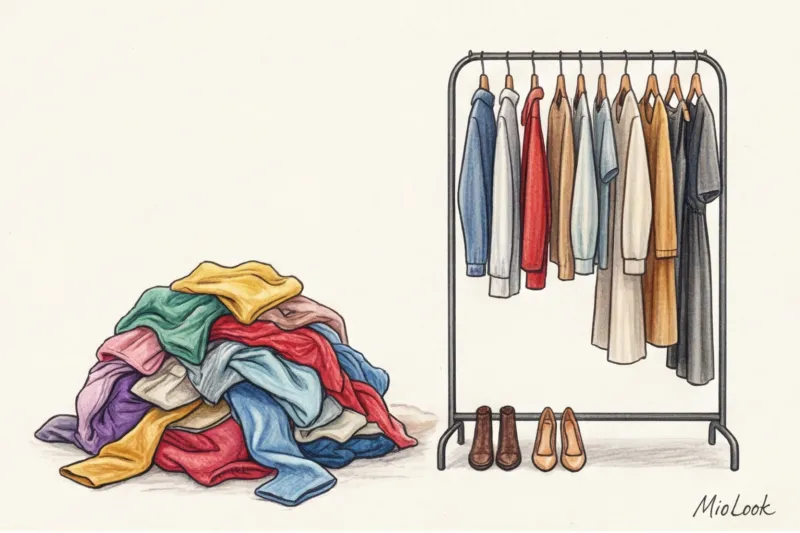
A colossal gap in value emerges. Imagine: you bring home a brand-new, tag-free, wool COS jacket you bought for €150, and in exchange, you're offered a pile of five-year-old H&M polyester T-shirts to choose from. Is it a shame? Absolutely.
Strict curatorial control at the entrance is not arrogance, but a sign of respect for the participants. The main rule of my style swap: bring only what you would proudly give to your best friend.
Another trap is the illusion of value. Women take a free item that's completely unsuitable in cut or style, purely because of the magic of the word "free." This is a surefire way to clutter your closet.
Your perfect wardrobe starts here.
Forgotten what items you already have in your closet? Digitize them and create stylish capsule wardrobes with AI.
Get access — €0.99 onceHow to Organize a Swap Party: A Step-by-Step Plan from a Stylist
As someone who loves checklists, I insist on meticulous planning. Chaos kills aesthetics. If you want your guests to feel like they're at a private VIP shopping experience, not a thrift store sale, follow this algorithm.
Step 1: The "Guests and Sizes" Rule (Who to Invite?)
The optimal number of participants is between 5 and 8. Any more and the party will become crowded, and fewer and there won't be enough dynamism. But most importantly, the guests should match on two critical parameters.
- Adjacent dimensions. Ideally, it's best to group items into XS-SM or L-XL-XXL sizes, plus adjacent shoe sizes. There's nothing more disappointing than going to a swap meet and realizing that 90% of the cool items are too small or too big for you.
- Similar lifestyle. This isn't an obvious point, but it's crucial. If you work for a corporation with a strict dress code, you'll have no business sharing it with a freelance friend who prefers relaxed sporty chic.
Step 2: Incoming Filter (What to Bring?)
Set a strict limit. Ideally, 5 to 10 items of clothing from each participant. This limits the number of items that people can choose, rather than dumping everything in their closets.
Write the rules in the invitation in advance: items must be washed, ironed (or steamed), and free of stains, snags, and broken zippers. Agree on categories upfront. For example: "This time, we're only exchanging spring/summer clothing, bags, and jewelry. No shoes or underwear."
Step 3: Space and Atmosphere
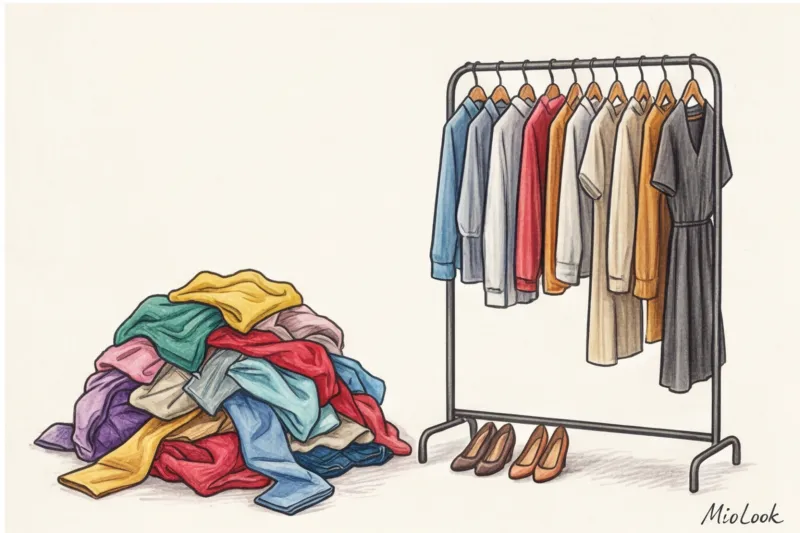
The way clothes are presented directly influences how they are perceived. Items piled up on a sofa look like rags. The same items hung on identical wooden hangers look like a boutique collection.
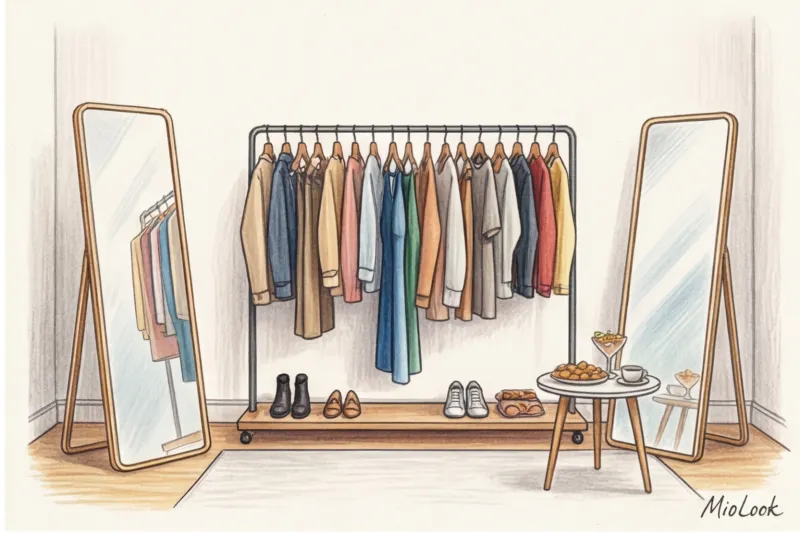
Lighting is everything. Yellow ceiling lamps in the living room distort colors—beige appears dirty, and blue veers toward black. Place additional ring lights or floor lamps with neutral white bulbs near the full-length mirror.
Prepare a light buffet: wine or champagne, canapés, fruit. Avoid anything greasy, crumbly, or staining (no paprika chips or chocolate fountains)—one awkward move and someone's silk blouse will be ruined.
Rules of exchange: mechanics that will ensure no one leaves feeling offended
To avoid awkward situations where two friends are clinging to the same cashmere sweater, a clear system is needed. Forget about the "whoever grabbed it first" principle.
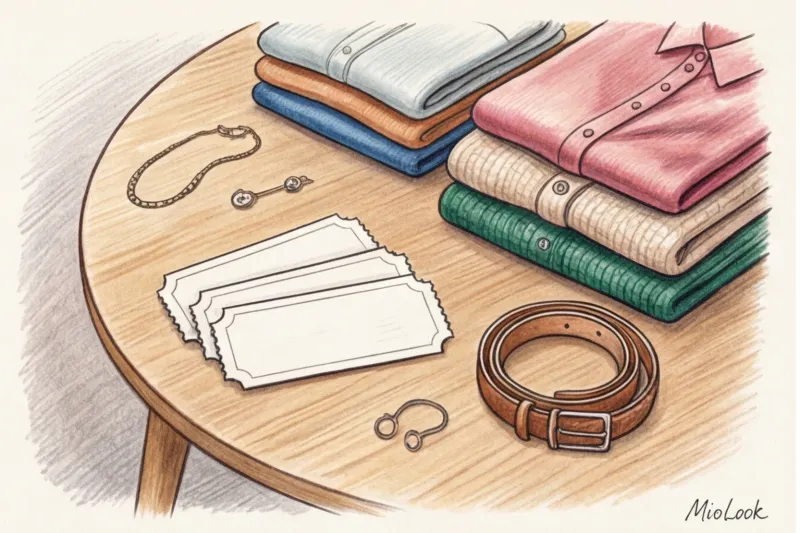
I recommend implementing system of tokens and presentations:
- Swap currency: 1 item brought = 1 token (or a nice ticket). You give away 5 items – you get the right to take 5 items.
- Price tiers: If your company is diverse, divide your rails into categories: "Mass Market" (Zara, Mango, priced from €30-€80) and "Premium/Middle" (Massimo Dutti, & Other Stories, local designers, priced from €100). Tokens also come in different colors.
- Story Format (My Favorite Method): Each participant takes her item and tells its story in 30 seconds. Why did she buy it? Why is she giving it away?
Last year, at a swap meet in Warsaw, I witnessed a stunning scene. A client brought in a perfect, expensive trench coat. No one dared take it—it seemed like there was a catch. Then she said: "I bought it in Paris, dreaming of losing weight. It's been hanging there for three years, chiding me every time I open the closet. I want it to be hanging around the city, not collecting dust." After this confession, the psychological barrier collapsed, the trench coat was taken by the girl who it suited perfectly, and it became the basis of her spring capsule.
If several people are vying for the same thing, draw lots (a short match). This turns a potential conflict into a joke.
Don't know what to wear with your new item?
Take a photo of your swap find, and a smart MioLook stylist will instantly select 3-4 looks from your current wardrobe to complement it.
Try the image generatorA stylist's perspective: how to avoid adding other people's "mistakes" to your closet
Critical thinking often switches off during swap meets. In my experience, eight out of ten women take home other people's neon tops, sequined dresses, or ultra-tight skirts, repeating their own shopping mistakes. The so-called "fantasy self" kicks in—an image of the woman you'd like to be but aren't in reality.
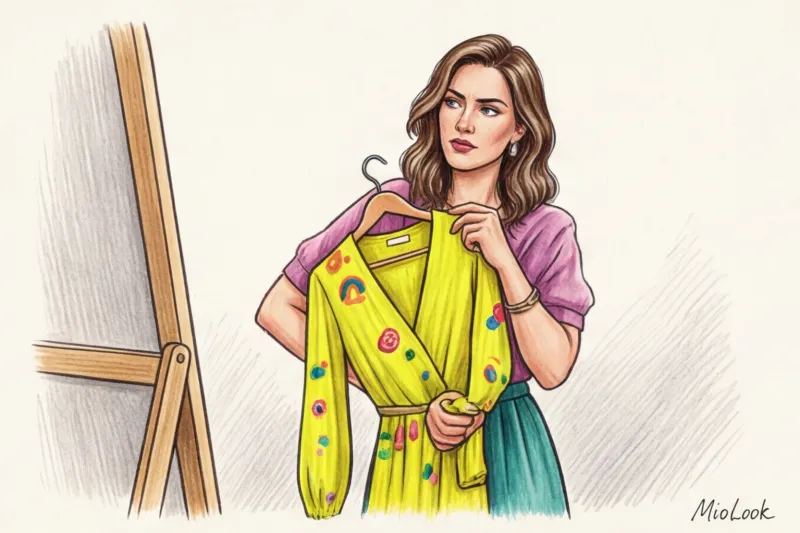
To leave your swap with a truly updated wardrobe, not new junk, use my professional filters:
1. The rule of three bows.
Take the item from the rail and mentally (or directly in the app) MioLook ) create at least three outfits with it, using clothes that are ALREADY hanging in your closet. Can't come up with something on the fly? Hang them back. You won't wear them.
2. Test for the “fantasy self”.
If you work from home and walk the dog, you don't need velvet culottes, even if they're from Prada and free. Be honest about your lifestyle.
3. Estimation of the cost of landing.
Just because an item is free doesn't mean it doesn't need to fit perfectly. If trousers need to be shortened or a jacket needs to be taken in at the waist, factor in the cost of the tailor's work (usually €15–€40). Are you willing to invest that much in this particular item?
An eco-friendly ending: what to do with things that haven't found new homes
No swap ends with everyone taking everything. You'll be left with about 20-30% of unclaimed items. And this is where the organizer's main responsibility lies—to ensure an eco-friendly outcome.
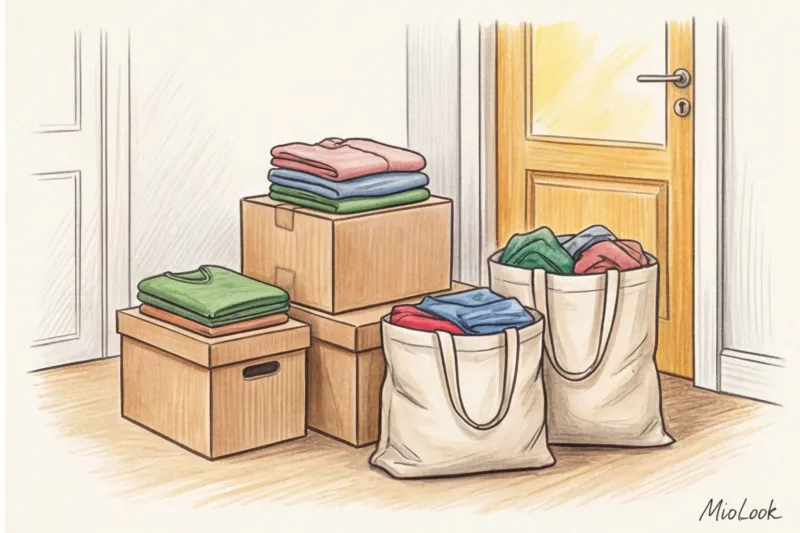
My golden rule: never leave leftovers "in the hallway until tomorrow." You won't be able to take them out for another six months.
- Immediately, in the presence of guests, sort out the remaining items.
- Place items in good condition in pre-prepared, sturdy boxes or shopping bags—they will go to reputable charities (such as the Red Cross) or clothing collection containers in your city.
- If someone has violated the entry rules, collect worn textiles in a separate bag for recycling.
- Particularly valuable branded items, with the consent of the original owner, can be sent to resale platforms (Vestiaire Collective, Vinted), and the proceeds can be donated to charity.
A checklist for the perfect swap organizer
To make sure you don't forget anything, just save this timeline:
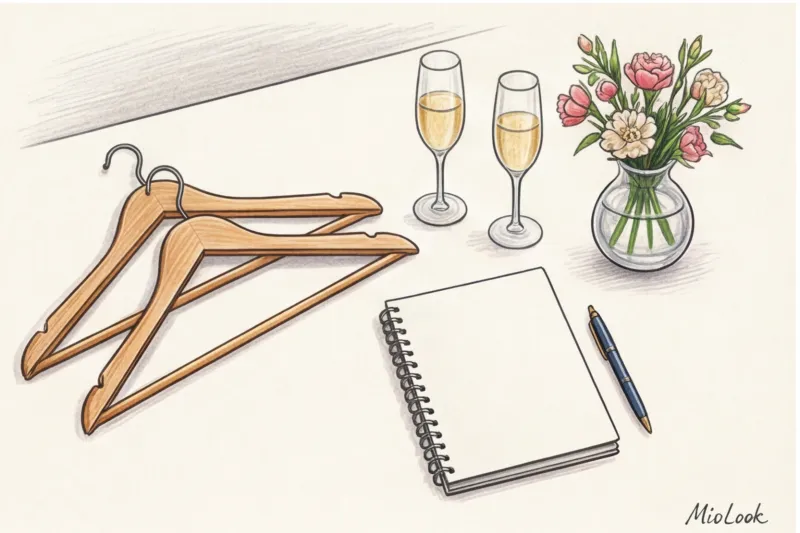
- In 2 weeks: Send out invitations via messenger. Describe the concept, discuss the size range (clothing and shoes), and set a limit of 7-10 high-quality items.
- In 1 week: Write a polite reminder. Ask guests to review their selection, wash items, and check buttons and zippers.
- In 1 day: Prepare your living room. Clear out some space, rent or borrow some clothes rails (floor hangers). Buy a set of matching wooden hangers. Wipe down a full-length mirror, adjust the lighting.
- On the day X: Prepare tokens for exchange, light snacks, and glasses. Have 2-3 empty boxes ready for items to be donated. Play some light lounge music or jazz in the background.
A swap party isn't just a way to get a new skirt for free. It's about quality interaction with like-minded women, renewing the energy in your home, and a smart, mature approach to style. Approach other people's clothes with the same strict scrutiny you would with store-bought items, and your wardrobe will respond with perfect everyday looks.