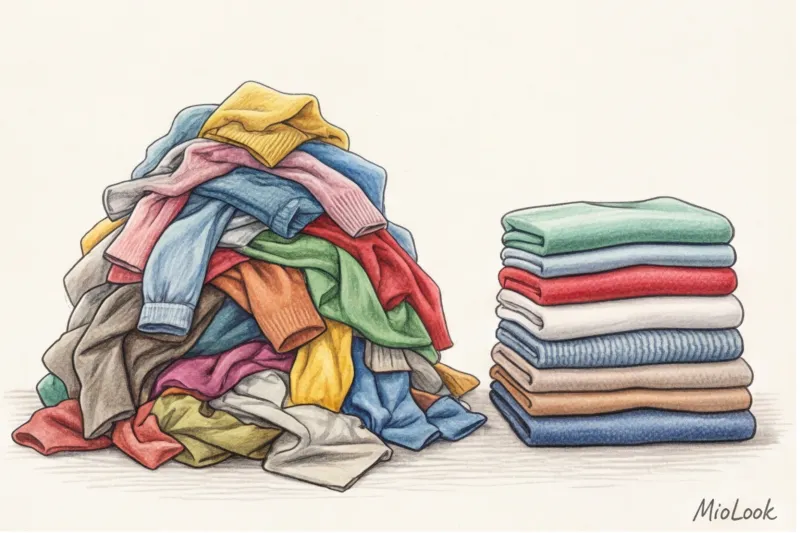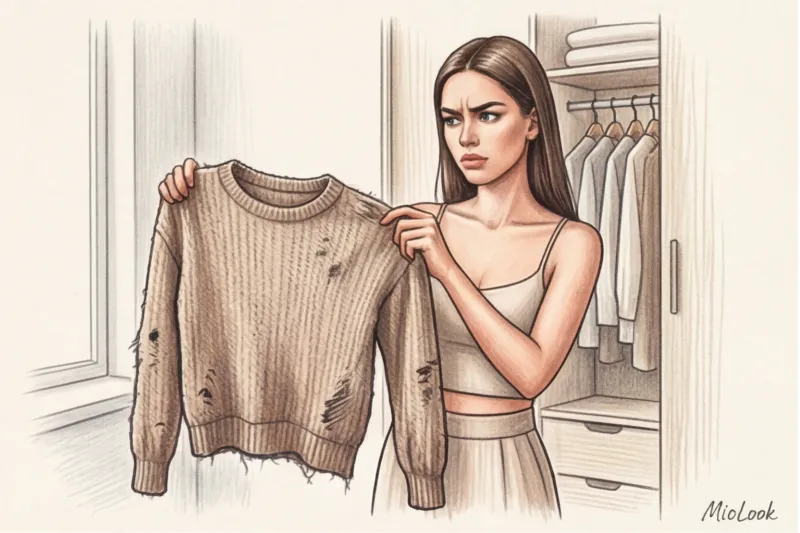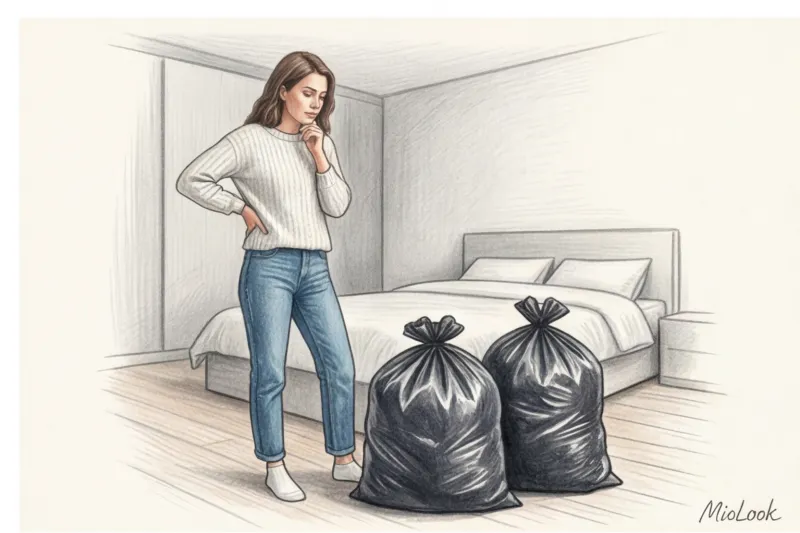
Do you also have this "corner of shame"? That spot in the hallway or on the balcony where bottomless IKEA bags filled with old clothes have been gathering dust for three months now. You've bravely survived the decluttering stage, pulled everything out of the closets, but the process has stalled at the final step. Why? Because you don't know... How to prepare things for return right, and you are afraid to do it “wrong”.
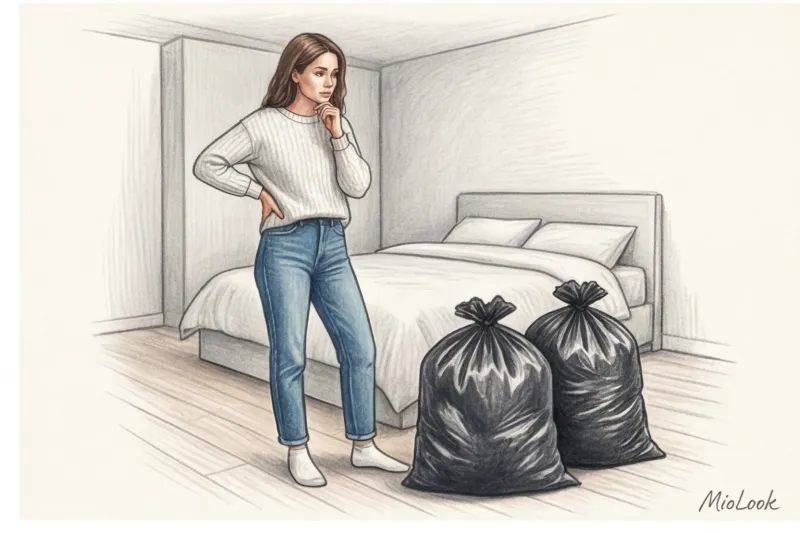
Over 12 years of working as a personal stylist in Europe, I've seen this scene hundreds of times. My client, Anna from Munich, kept four bags of clothes for six months. She was waiting for the weekend to "wash everything with expensive gel, iron the shirts, and sew on buttons." Spoiler alert: that weekend never came. We've already covered the different foundations and boxes available in our complete guide. Where to donate old clothes , and today we will talk about the technical side of the issue.
I suggest you put perfectionism behind you once and for all. In this article, I'll share a rigorous yet effective triage system that will save you hours and ensure your old Zara sweater actually gets some use, rather than becoming a source of mold on the sorting belt.
Your perfect look starts here
Join thousands of users who look flawless every day with MioLook.
Get access — €0.99 onceThe Perfectionist Trap: Why Do We Throw Bags of Clothes in the Hallway?
The main enemy of eco-friendly decluttering isn't laziness, but the illusion of self-importance on the scale of industrial recycling. We think that if we give away our favorite blouse from &Other Stories, we must accompany it with a farewell ritual and dry cleaning.
Let's face it. According to the 2023 report from SOEX, Europe's largest sorting hub, hundreds of tons of textiles pass through them daily. As soon as you drop your bag into a donation bin, your perfectly ironed shirt is thrown into the back of a truck, where it's then compressed into 400-kilogram bales to optimize logistics.
"Ironing clothes before donating them to a charity box is like washing the pavement before it rains. It's a form of psychological procrastination that only delays the process of getting rid of clothes"—I repeat this rule at every wardrobe cleanup.
You don't need to spend your weekends steaming. Your job is to ensure basic hygiene and proper logistics. Industrial machines will do the rest.
The Stylist's Triage System: 3 Categories of Items
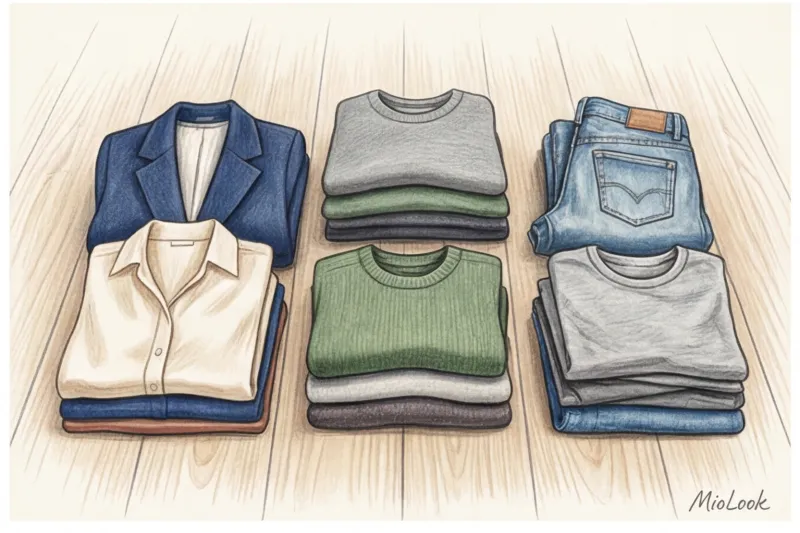
The medical term "triage" (sorting the wounded) is perfect for sorting through your closet. Don't try to salvage and refinish every single T-shirt. Separate everything into three strict categories. The principle is simple: we distinguish between respect for the future owner and a utilitarian approach to raw materials.
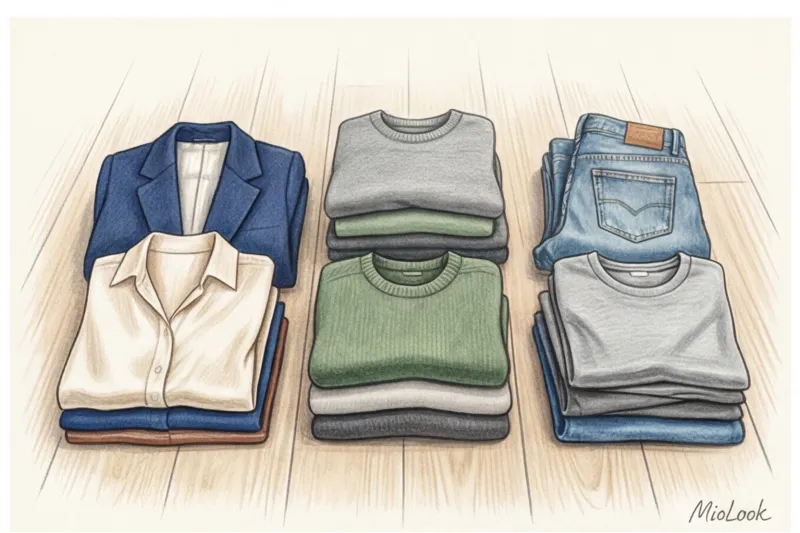
- Category A: Resale and elite second-hand. These are items in perfect condition, often with tags, or current collections from Massimo Dutti, COS, and premium brands. Their potential resale value is €50 and up. Only this category requires spot cleaning, steaming before photography, and careful folding.
- Category B: Charity. Clean, sturdy basic clothing (like H&M, Uniqlo, C&A) without holes, stubborn stains, or broken zippers. These are items that someone else would wear in a difficult life situation. Regular washing only is required.
- Category C: Recycling (rags). Washed-out T-shirts, jeans with holes in the crotch, items with indelible wine stains, single socks. These are no longer clothes—they are cellulose-cotton raw materials.
Counterintuitive Rule: Ditch the "Fix and Donate" Pile
Every other client of mine has a "to be mended" bag. It contains jeans that need darning and cardigans without buttons. Remember: 99% of the time, items set aside for repairs for charity don't reach the foundation.
Moreover, a WGSN (2024) study on the circularity of fashion showed that industrial shredders, which grind fabric into regenerated fiber, are more effective at fixing holes than trying to sew on a button. Human labor in sorting is expensive. If a foundation volunteer sees a split seam, they won't mend it—the item will end up in the bin with the rags.
Apply the 1-minute rule: If an item requires more than a minute to fix (for example, just cutting off a loose thread), and you don't plan to wear it, feel free to send it to Category C. Don't waste your time on illusions.
How to properly prepare items for return: washing and care
While we've eliminated ironing, washing remains an absolute must. And EVERYTHING, including rags, must be washed. Why? It's not just a matter of respect for the sorting line workers (although that's a factor too), but rather a matter of simple chemicals.
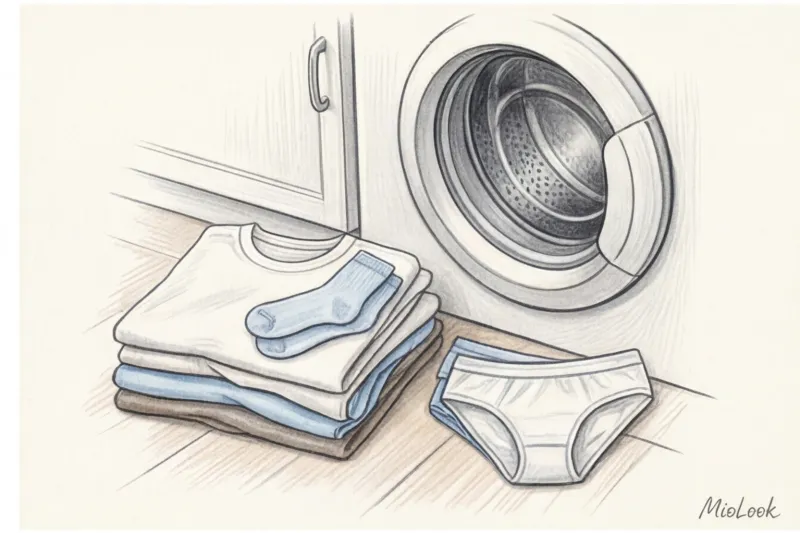
How to prepare things for delivery so that they don’t ruin someone else’s work? The main enemy of textiles in a closed box is moisture. According to European charities, a single damp T-shirt in a closed metal container can mold up to 100 kg of surrounding clothing within 48 hours. The mold isn't removed during industrial recycling—the entire batch is incinerated.
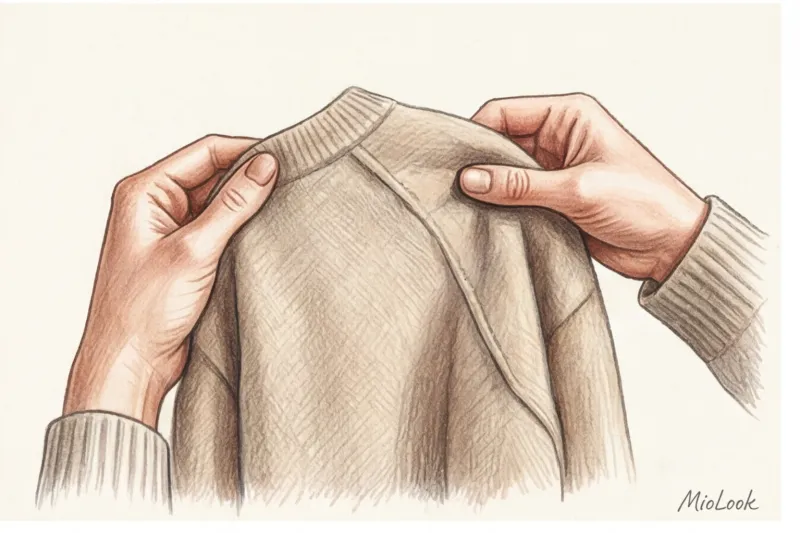
- Washing: A quick cycle at 30 degrees is enough to refresh.
- Drying: Items should be dried until crisp. If in doubt, leave them in the dryer for another 24 hours.
- Pills: Should you remove them with a machine? Yes, but only for Category A. No one will appreciate your meticulous work on a knitted sweater that's going to be thrown in the trash.
- Smells: If your clothes have been sitting in your closet for a long time and have acquired a characteristic "grandmother's" smell, don't rewash 20 kg of clothes with expensive capsules. Soak them in the bathtub with a glass of regular table vinegar for 30 minutes, then cycle them through the machine on the rinse cycle. Vinegar neutralizes odors without damaging the fibers.
How to prepare shoes, underwear, and accessories
Clothing is only half the battle. The most common mistakes are made when handing in accessories and shoes. At sorting stations, there's a term for a "graveyard of lonely shoes." The sorter processes 3-4 items per second. If a single sneaker falls out of a bag, no one stops the conveyor belt and searches through tons of rags for a pair. A single shoe goes straight to the trash.
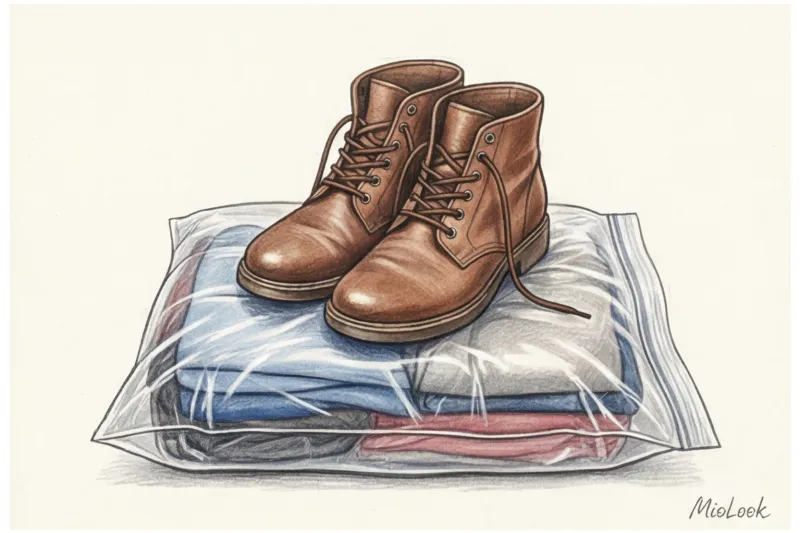
Rules for complex categories:
- Shoes: ALWAYS tie your shoes together. Either tie the laces tightly or wrap the pair with thick tape or a rubber band. Place the shoes in a separate bag inside a larger one to prevent the soles from staining light-colored clothing.
- Bags and pockets: Check all compartments. One of my clients once dropped off a Zara coat before moving, leaving €200 and her garage keys in the inside pocket. We couldn't get them back. Turn your pockets inside out—it only takes 10 seconds.
- Underwear and tights: Strict sanitary standards apply here. Used underwear, socks, and tights are returned. exclusively washed at 60 degrees and only For recycling (in a bag labeled "Rags"). Charities for people accept only new underwear with store tags. There are no exceptions.
Packing: How to transport items to the collection point
Many of my clients love to pack their clothes in pretty craft paper bags from boutiques. It looks nice in the entryway, but it's incredibly inconvenient. The paper handles tear under the weight of sweaters, and the bag itself gets soggy in the container if it's snowing or raining outside.
The best choice is thick polyethylene construction waste bags (at least 60 liters, at least 30 microns thick). They won't tear when you stuff them into the narrow opening of the collection box.
Stylist's tip for marking: Buy a roll of masking tape (it costs about €2 at any hardware store). Write "RAGS" or "GOOD CLOTHING, WOMEN'S, SIZE M" on a piece of tape with a thick marker. Stick it directly onto the tied bag. This small gesture will save volunteers hours of monotonous work. By the way, to avoid hoarding unnecessary things, learn to plan your purchases. Assembling a capsule wardrobe — a great step towards conscious consumption, and the most convenient way to manage it is in the app MioLook.
Access to MioLook for €0.99 — one-time payment
A smart AI stylist will choose the perfect look for you.
Get access — €0.99 onceChecklist: 5 steps before leaving home
To avoid standing in front of the container and feeling unsure, use this short checklist. I make my clients go through it every time we complete a wardrobe review.
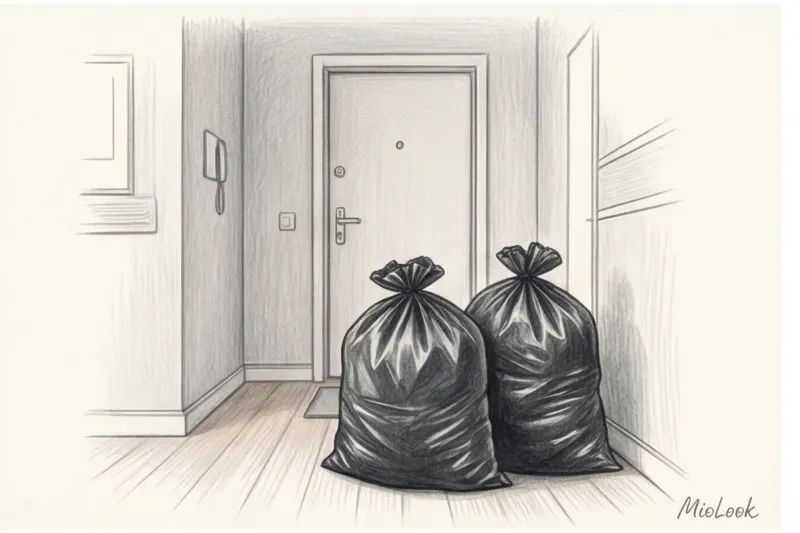
- Check all pockets: Including inside jacket pockets and hidden compartments in bags.
- Humidity test: Feel the cuffs and collars (the thickest parts). They should be completely dry.
- Link: Check if your sneakers, boots and gloves are connected.
- Separation: Make sure that items "for throwing away/rags" and "in good condition" are kept in separate, labeled bags.
- 24-hour rule: The most important point: Once the bag is tied, it must leave the apartment within 24 hours. Don't give yourself the chance to "get that blouse over there, maybe I'll wear it at the dacha."
Preparing your clothes for donation doesn't have to be a multi-day project. Your greatest contribution to the environment isn't a perfectly ironed shirt, but the simple fact that you're not throwing your textiles in the general trash. Wash them, sort them into rags and good clothes, pack them in sturdy bags—and confidently make room for a new chapter in your style.