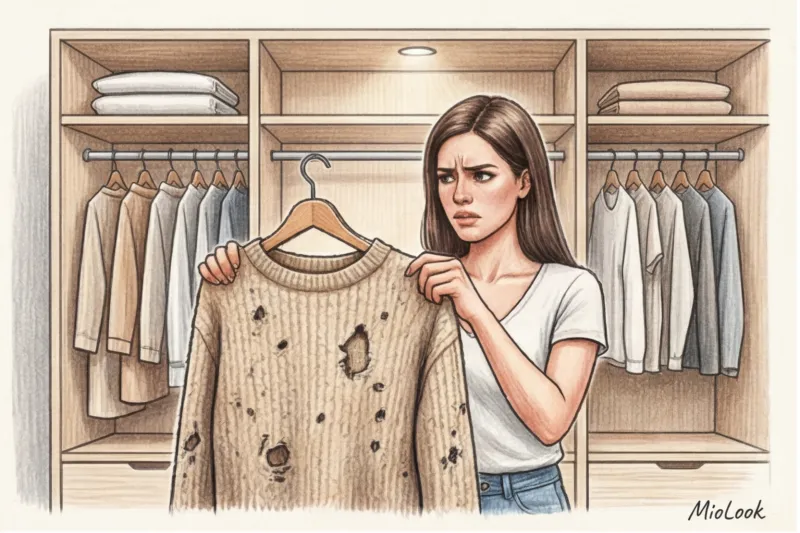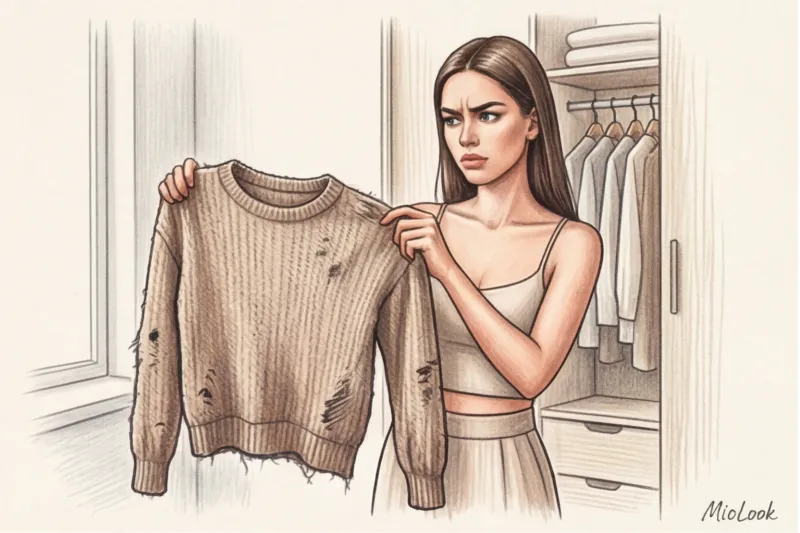
A couple of years ago, I was sorting through the wardrobe of the CFO of a large IT company. Opening the bottom drawer of her enormous closet, I discovered a stack of twelve cashmere sweaters and silk blouses. Each item had a fatal flaw: a permanent wine stain, a hole in the elbow, a split in the silk. My silent question was met with the typical response from the client: "These are for the dacha; I'll fix them someday." The irony was that she didn't have a dacha.
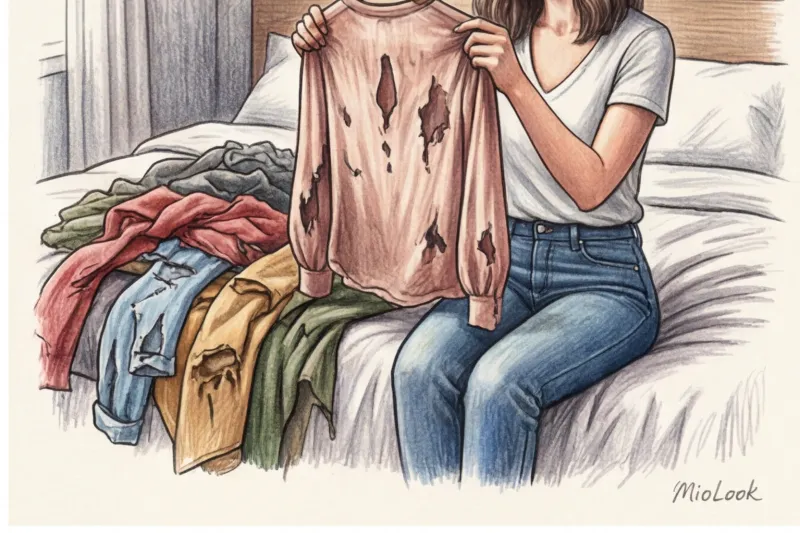
When women ask me, Where to donate torn clothes Behind this question often lies not a desire to become more eco-friendly, but a simple fear of parting with the past. We cling to things that were mistakes, to once-expensive brands, turning our closets into textile cemeteries. We've covered the psychological aspects and basic rules of decluttering in more detail in our The complete guide to wardrobe recycling Today, we'll tackle the most challenging scenario: what to do with a revealing rag that can no longer be worn.
Dead Weight: Why We Keep Ripped Clothes and How It Ruins Our Style
Over 12 years of practice, I've noticed a disturbing pattern: about 15% of the space in the average woman's wardrobe is taken up by absolute rags. These are items that are physically impossible to wear in polite company, yet they continue to hang on hangers, creating visual clutter.
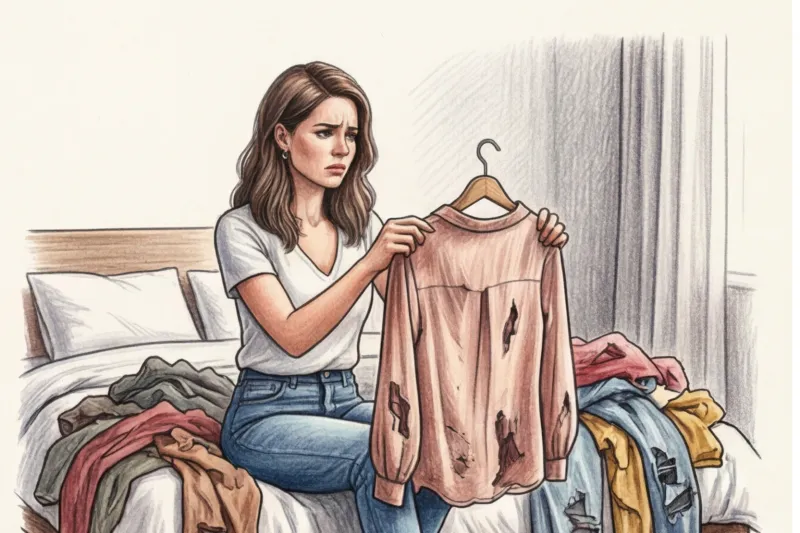
Why is it so hard to throw away a torn but once-beloved silk top bought for €200 in Milan? It's classic hoarding psychology. We think that by getting rid of an item, we're acknowledging a loss of money or erasing a happy memory. Our brains throw up self-saving illusions: "I'll mend it," "I'll save it for the apartment renovation," "I'll paint the walls in it."
In reality, this pile of rags is stealing your energy every day. Morning decision fatigue often occurs not because you have nothing to wear, but because your brain is forced to filter through dozens of unsuitable options before finding one that works. By clearing your closet of unwearable items, you take the first step toward put together a working capsule wardrobe.
The main rule of eco-etiquette: don't confuse charity with recycling
There's a terrible misconception out there: many people sincerely believe that an old T-shirt with holes in the armpits will be "useful" to someone if you take it to a church or a social center. Let's dispel this myth once and for all.
Giving old, torn, or stained clothes to charities isn't helping. It's a disservice. These charities spend enormous amounts of money sorting and disposing of your trash. Remember my stylist's strict rule: it's okay to give. just something you wouldn't hesitate to offer to your close friend.
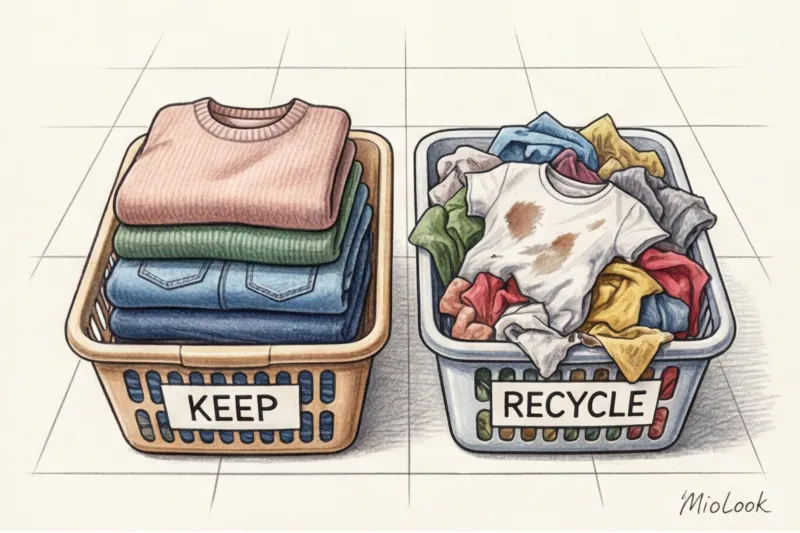
Here it is necessary to clearly distinguish between two concepts:
- Second hand - clothes in good condition that will go to new owners.
- Recycling/Downcycling - rags that will be shredded into fibers.
If an item has a hole, a snag, a stubborn deodorant stain, or a broken zipper, it belongs in a container marked "recycling," not "charity."
Your perfect look starts here
Join thousands of users who look flawless every day with the MioLook smart wardrobe.
Get access — €0.99 onceWhere to recycle torn clothing: proven routes
According to a 2023 study by the Ellen MacArthur Foundation, approximately 92 million tons of textile waste are generated globally annually. Only 1% of clothing is recycled into new clothing. The rest is waiting. downcycling — turning into wiping rags for factories, soundproofing for cars, or stuffing for cheap furniture.
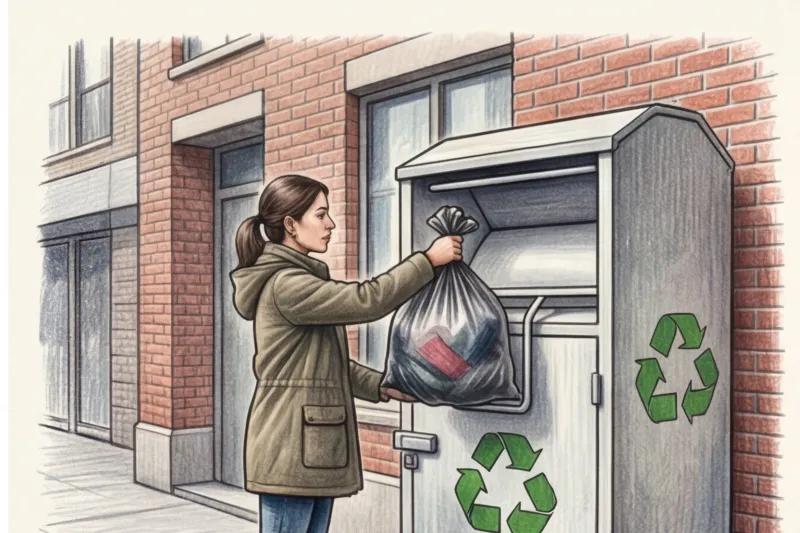
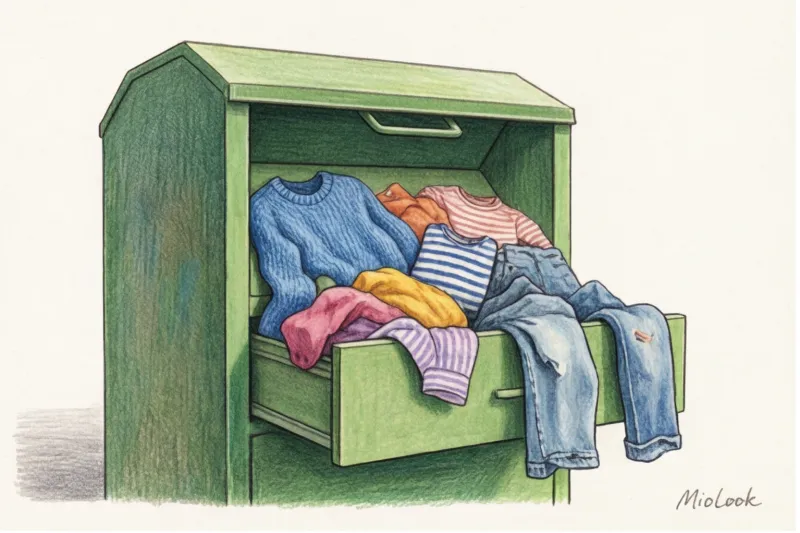
Where exactly should you take your rag bag? Look for specialized containers. Most major cities around the world now have charities and eco-projects that install large metal bins in shopping centers and on streets. It's important to carefully read the instructions on the bin itself: it should clearly state "we accept rags" or "for recycling."
Many international mass-market brands support clothing collection initiatives. Even after the demise of H&M's renowned program, collection containers can still be found at Zara, Mango, and Uniqlo. Often, for donating a bag of old clothes (in any condition), you'll receive a discount coupon, typically 10-15% off a new purchase.
Special category: what to do with underwear, nylon tights, and old shoes
Not all textiles are created equal. There are certain categories of items that require a real challenge to dispose of sustainably.
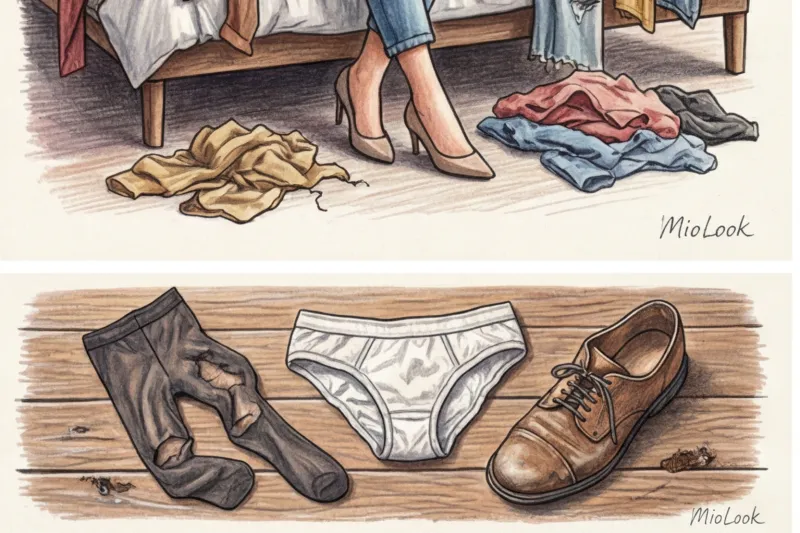
Underwear. Due to strict sanitary and hygiene standards, 90% of collection centers do not accept underwear and bras, even for recycling. The exception is specific campaigns by lingerie brands, such as when a brand collects old bras for recycling the metal underwire and foam.
Nylon tights. This is a complex polymer composition (nylon and elastane), which is extremely difficult to separate into fractions. Almost nowhere in the world is it recycled on a large scale. If you can't find a specialized eco-center in your city, torn tights will have to be thrown in mixed waste.
Shoes and bags. An honest admission that eco-activists don't like, but which will save you time: torn shoes from mass-market stores will have to go to the landfill. Shoes are made of dozens of glued-together components: leatherette, rubber, metal, toxic glue. Separating them is economically unviable. Only certain types of solid rubber footwear (Crocs, boots) are accepted for recycling.
Access to MioLook for €0.99 — one-time payment
A smart AI stylist will help you review your closet and choose the perfect look from the remaining items.
Get access — €0.99 onceUpcycling and Repair: When to Give a Damaged Thing a Second Chance
As a stylist, I often see clients attempt to "save" something that's clearly dead. Let's introduce a mathematical rule: the cost of repairs should not exceed 30% of the cost of a new similar item If you buy a jacket for €60, and replacing the lining and dry cleaning will cost you €45, the investment is pointless.
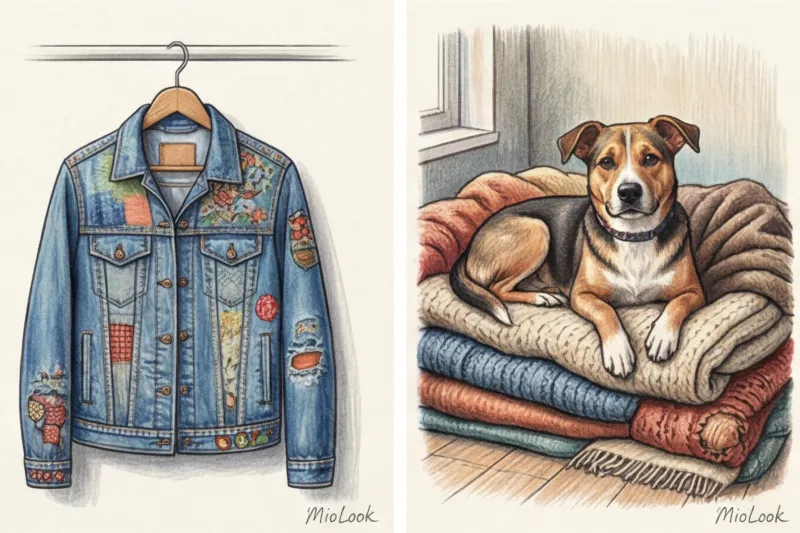
But there are exceptions. Visible mending, the Japanese sashiko technique, intricate embroidery over stains, or customizing heavy denim can transform a damaged item into a work of art. This technique works great if your style leans toward grunge, boho, or eclecticism.
When it does NOT work: If the basis of your wardrobe is strict minimalism, office capsule and status (old money). In this style, any homemade alteration looks sloppy. A darned sleeve on a classic blazer will ruin the whole look.
Animal Shelters: An Unexpected Way to Recycle Old Stuff
If you don't have recycling bins in your area, another great option for old items is animal shelters. Dogs and cats don't care if there's a coffee stain on your T-shirt.
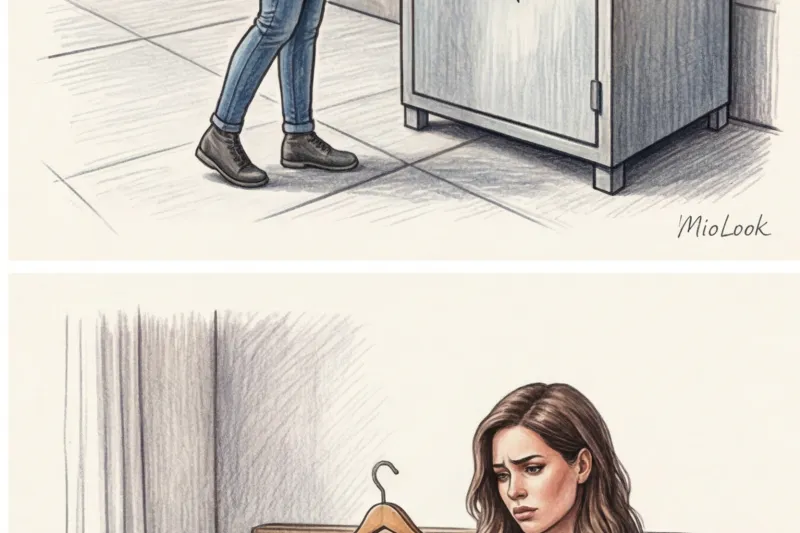
Shelters are always looking for:
- Old cotton t-shirts and sweatshirts.
- Terry towels (any degree of wear).
- Bed linen (it is used for operating tables and mats).
- Thick wool blankets and throws for insulating enclosures in winter.
However, there are strict restrictions. it is forbidden Don't bring synthetic materials, lace, or clothing with sequins, beads, or intricate buttons and zippers to shelters. Animals can chew off or swallow the hardware. Old down jackets are also prohibited—if a dog claws at the fabric, it could ingest the synthetic padding or down, which could be fatal.
Checklist: How to Properly Prepare Unusable Items for Recycling
Textile recycling isn't a magical cauldron where dirty items are tossed in and clean fibers are pulled out. Sorting lines handle huge volumes, and your package must comply with regulations.
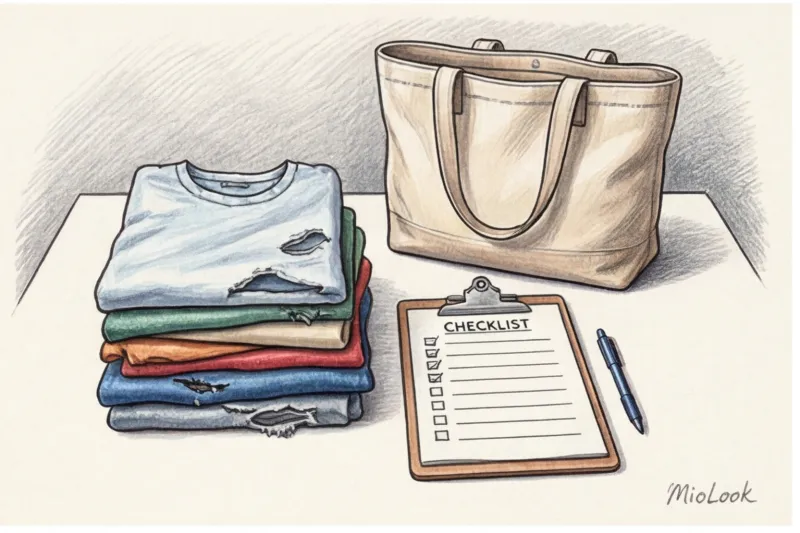
- Wash and dry. This is critically important. A damp or frankly dirty item placed in a common bin will become moldy within a couple of days. This mold will spread to neighboring bags, and eventually the entire ton of textiles in the bin will end up in the landfill. The rags must be clean.
- Sort. If you're donating clothes to a foundation that accepts both good and rag items, be sure to separate them. Place the torn items in a separate bag and write "RECYCLE/RAG" in large marker. You'll save volunteers hours of work.
- What to do with the fittings? There's no need to cut zippers or rip off buttons. Modern industrial shredders handle small plastics and metals, separating them using magnetic filtration.
- Reliable packaging. The bag must be tightly sealed. If items are simply thrown into the bin loose, they will absorb outdoor moisture and odors, making them unsuitable for recycling.
Summary: Making room for new victories
Getting rid of torn, worn, and hopelessly damaged items isn't just an eco-friendly initiative. It's a therapeutic process. By clearing your shelves of unwearable items, you'll finally get a true picture of your wardrobe. You'll understand which basic items you're truly missing, and which categories (like those "summer cottage sweaters") you're buying out of habit.
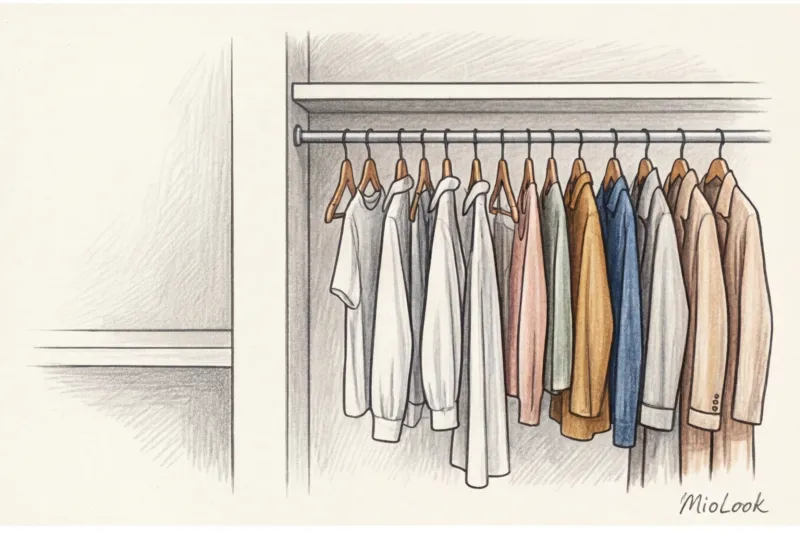
I challenge you: this weekend, set aside exactly 15 minutes. Grab a large bag, open your closet, and mercilessly toss in anything pilling, full of holes, or with stubborn stains. Take this bag to your nearest recycling bin. You'll be amazed at how much more air your bedroom will breathe, and how quickly the MioLook app will begin to curate new, flawless looks from the items truly worthy of your attention.