Recently, a client, a top manager at a large IT company, contacted me. Her closet was overflowing with items bought on impulse: dresses that didn't fit, shoes you couldn't even walk in, and jackets with tags still attached, waiting for a "special occasion." When I suggested she get rid of this dead weight, she sighed, "It's a shame to give them away for so little; it's better to let them hang." Looking ahead, I'll tell you: by using my merchandising system, she got back over €3,000 for her "mistaken items." With this money, we bought her the perfect beige Max Mara coat and a classic Swiss watch—assets that will enhance her status for years to come.
Many of my clients ask, How to sell clothes on Avito , Vinted, or other resale platforms without turning into a humiliating giveaway of items for next to nothing. The answer lies not in your ability to take photos with your phone, but in your approach. I invite you to look at selling your old wardrobe through the eyes of a stylist-investor. We've covered in more detail why it's so difficult for us to part with things psychologically and where you can recycle them sustainably in our the complete guide to decluttering and recycling And today we'll talk about how to turn waste into capital.
How to sell clothes on Avito for a high price: the "showcase" rule
The first thing you need to change is your mindset. Stop treating the process as "getting rid of clutter." You are in control of your own assets. When we buy something, we invest in our "fantasy self"—the image of the woman we want to be. When you sell something, you're not just selling a piece of fabric; you're selling that same emotion to the next owner.
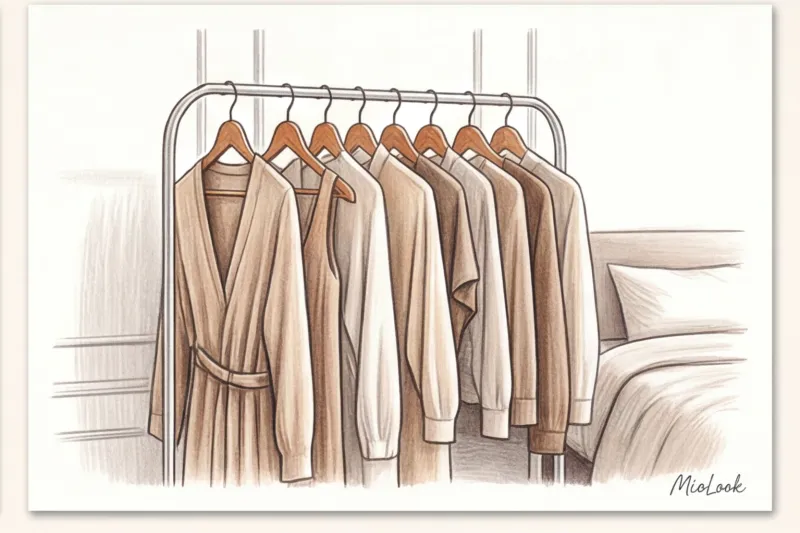
In luxury retail, there's the concept of visual merchandising. Buyers pay for atmosphere, presentation, and aesthetics. The same rules apply on resale platforms. If your item looks like it came from a box in the attic, no one will pay a good price for it. Your goal is to create a boutique-like effect right in the ad feed. A clean background, the right hangers (no colorful plastic, only wood or velvet), and a sense of airiness in the frame.
"Online shoppers can't touch the fabric. Your job is to convey tactile sensations through visual perfection. A wrinkled item is subconsciously perceived as cheap, regardless of the brand on the tag."
Pre-sale preparation: what distinguishes "junk" from "premium lot"
Over 12 years of working as a stylist, I've developed a strict rule: the condition of an item dictates its price. No brand will save a blouse if it has yellow deodorant stains or the scent of someone else's perfume. Italian boutiques smell expensive and neutral. Your item should smell fresh or nothing at all.
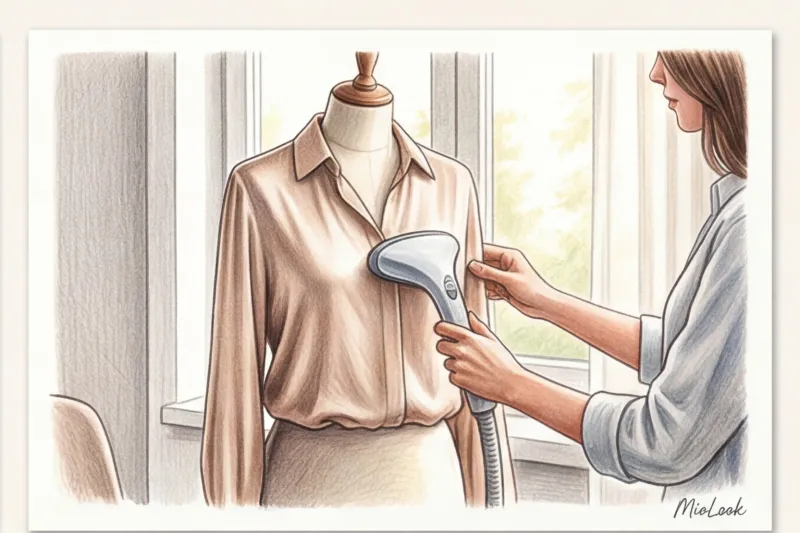
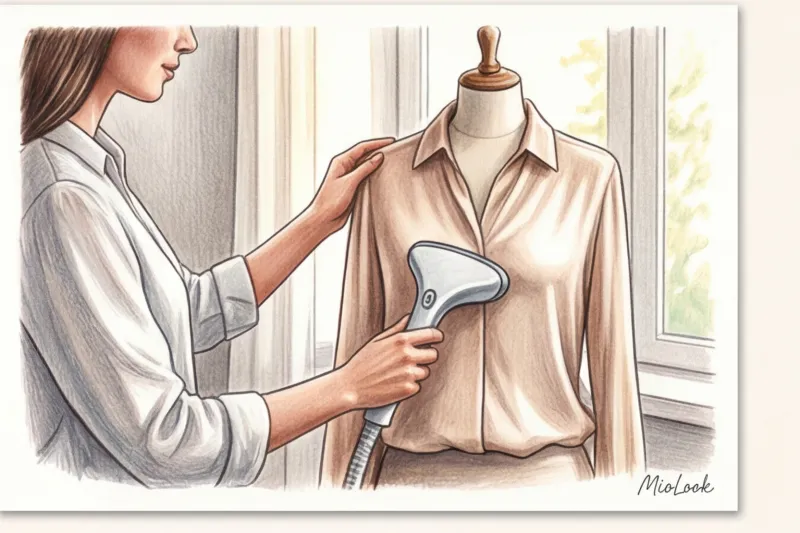
My personal professional secret: a high-quality steamer increases the value of an item by 20-30%. Before photographing, be sure to go over the knitwear with a steamer to remove any pilling, especially in the armpit area and where the fabric rubs against the bag. The item should look as if it just came off a mannequin in Milan.
Photos that sell themselves: light, angle, details
I once conducted a practical test. I listed a beautiful wool COS jacket with photos taken on a sofa in the yellow light of a room for €20. For a week, there were no responses. Then I took down the ad, steamed the jacket, hung it on a wooden hanger by the window on an overcast day (perfect diffused light), and photographed it as part of an outfit: thrown over a basic white T-shirt next to classic jeans. The jacket sold for €60 that same day.
Mandatory checklist for photos:
- Main photo: The entire item (on a person, a mannequin, or a beautiful hanger against a plain wall). No layouts on the bed.
- Macro shot of fabric: show the texture (the interweaving of the wool threads, the shine of the silk).
- Evidence of quality: close-up of buttons, zippers, even seams.
- Tags: A photo of the ingredients and brand is required.
- Honesty: If there's a micro-defect (a scratch on the hardware), take a close-up photo of it. This builds confidence.
Access to MioLook for €0.99 — one-time payment
A smart AI stylist will select the perfect look based on your wardrobe.
Get access — €0.99 oncePricing: Why You Shouldn't Set Your Price Too Low
Here we encounter the most counterintuitive rule of reselling. Pricing too low kills sales. People subconsciously look for a catch. When they see a cashmere sweater for €15, they think, "It must have shrunk in the wash, been moth-eaten, or even been a fake."
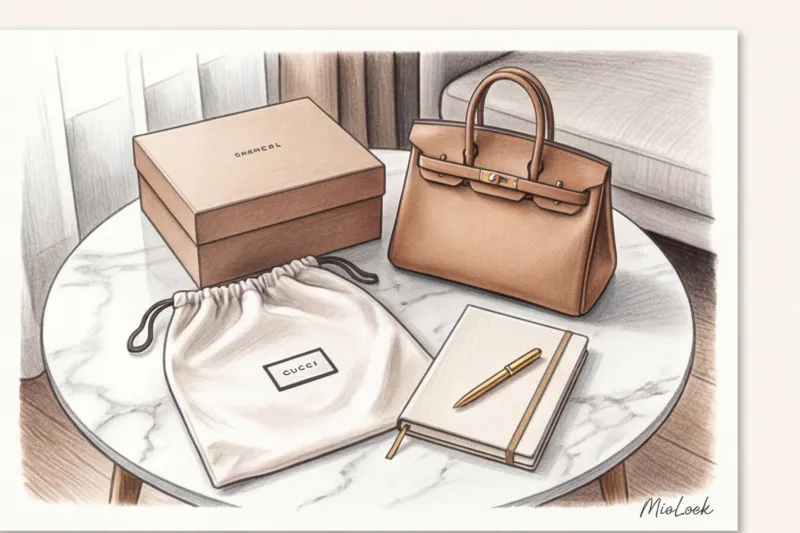
A prime example from real life: a client and I were selling her Furla bag. She listed it for €40, wanting to "get rid of it quickly." A week passed—only strange messages from resellers. We retouched the photo, added a branded dust bag, and raised the price to €110. A pleasant woman bought the bag the next day, without even haggling. The bag no longer looked fake.
How to calculate a reasonable price? Use the formula: The original price minus 30-40% (if the item is in perfect condition but without tags) minus another 10-20% for signs of wear. If the item is a hot trend this season, feel free to add 15% to the final price. And always allow a €5-€10 "safety cushion" for those who like to haggle—by conceding this amount, you'll please the buyer without losing your profit.
Anatomy of the Perfect Ad: Copy that Overcomes Objections
The text should be concise but comprehensive. S, M, or L on the tag means absolutely nothing. French brands run small, Scandinavian brands run large. Buyers don't want to play a guessing game.
Ideal description structure:
- Brand and name: (for example: Massimo Dutti double-breasted wool jacket).
- State: (Perfect, worn twice to the office / Good, there is a nuance).
- Compound: (100% Italian wool, lining 100% viscose - Be sure to indicate natural fabrics, this is your trump card ).
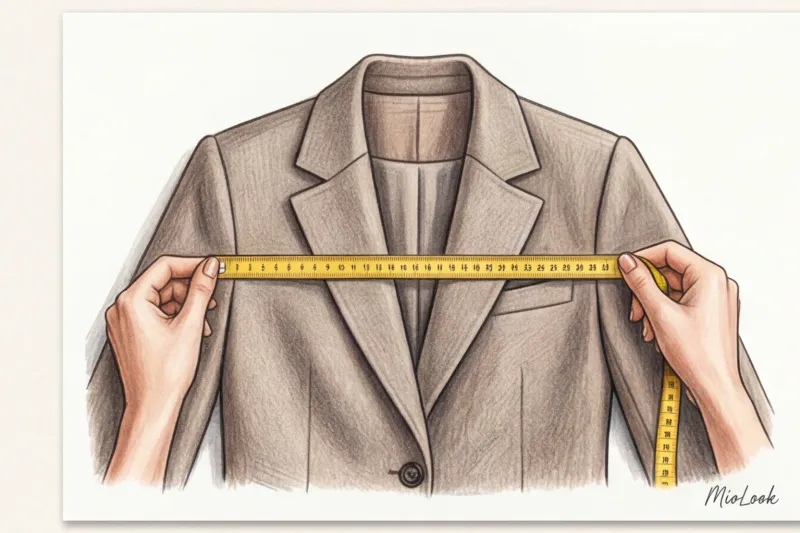
- Exact measurements: Half chest circumference, half hip circumference, back length, sleeve length from shoulder seam.
- Reason for sale: (Changed size / Doesn't fit into new wardrobe).
If there is a defect, describe it elegantly but honestly: “There is a barely noticeable snag on the left sleeve (photo 5), completely invisible when worn, included in the price.”
Sales Features for Different Categories: From Zara to Max Mara
Different price segments require different strategies. It's important to understand the limitations: basic mass-market items (black polyester turtlenecks, basic jeans) are extremely difficult to sell. There are simply too many of them on the market.
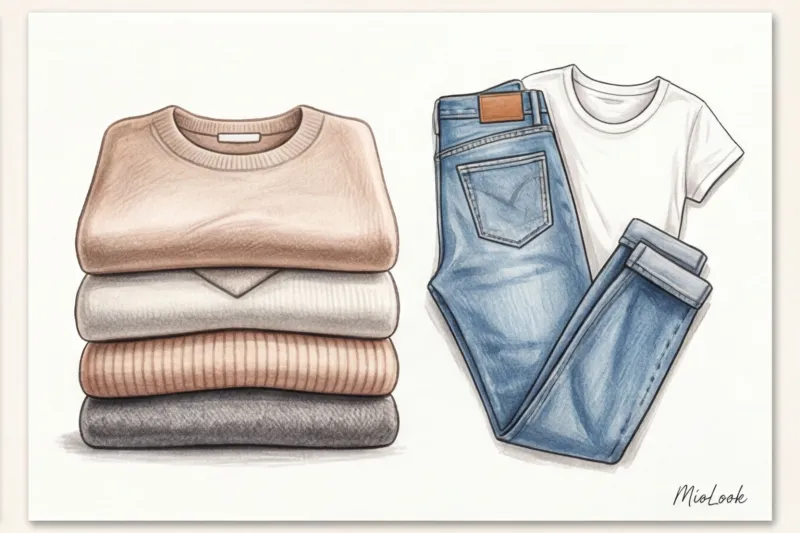
Mass market (Zara, H&M, Mango): Sell in capsules. If you have jeans, a basic shirt, and a cardigan that look great together, list them as a single item, "Office Ready Look, Size 44." This saves the buyer time (no need to assemble the outfit) and you time (one shipment instead of three). Trendy mass-market items that have been snapped up in stores (so-called sold-out items) sell well.
Middle segment (Massimo Dutti, COS, 12Storeez): Here, you need to focus on the composition. According to the annual ThredUp Resale Report (2024), items made from 100% natural fabrics (silk, cashmere, wool) sell 40% faster than mass-market polyester. Emphasize that "such quality now costs from €200 in stores."
How to Sell Luxury Goods Safely and Profitably
The rules of the game are becoming more stringent with premium and luxury items. According to analytics from resale platform Oskelly, the premium segment retains up to 60-70% of the original price, but only with proof of authenticity.
Authentication is crucial for luxury goods. Keep receipts, boxes, dust bags, and authenticity cards. Take close-up photos of serial numbers and hallmarks. If you're selling an expensive bag, I strongly recommend using specialized platforms (Oskelly, TSUM Collect, Vestiaire Collective) rather than regular classifieds. They charge a commission but offer expert verification, which completely eliminates the "what if it's a high-quality fake" objection and weeds out scammers.
Your perfect look starts here
Join thousands of users who look flawless every day with MioLook.
Get access — €0.99 onceReinvesting Profits: Smart Shopping After Decluttering
Selling unnecessary items is only half the battle. The key is to avoid wasting the proceeds on new emotional purchases, so you don't start the cycle all over again in a year. I write about this in detail in my articles. about the rules of smart shopping And secrets of shopping at sales.
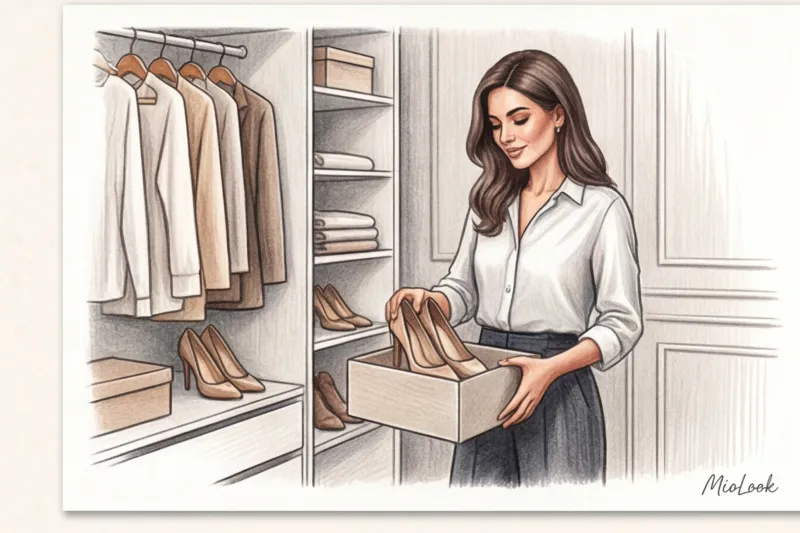
I teach my clients the cost-per-wear rule. If you earn €300 from selling five mass-market polyester dresses, invest it in one high-quality basic. For example, impeccable leather loafers or a structured wool jacket. A €300 bag that you'll wear 150 times a year (cost per wear: €2) is much more cost-effective than a fashionable €50 top that you'll wear once (cost per wear: €50).
Checklist: A Step-by-Step Plan for Launching Your Home Sale
To avoid the process dragging on for months, follow a clear algorithm:
- Cabinet audit: Ruthlessly select items that haven't been worn for over a year, don't fit your size, or don't suit your lifestyle.
- Preparation: Trim the lint, wash, and steam. If the heels of expensive shoes are worn out, take them to a shoe repair shop; the €10-€15 investment will pay for itself many times over when you sell them.
- Photoshoot: Set aside one weekend with good daylight. Shoot all the prepared items at once, following the checklist above.
- Copywriting and publishing: Write honest texts with measurements. Publish ads during prime time (Sunday evenings or weekdays after 7:00 PM, when people are scrolling through their feeds).
- Package: When someone buys something, don't send it away in a wrinkled supermarket bag. Buy craft paper or a neat box and put a thank-you card inside.

It's little things like beautiful packaging that earn you 5-star reviews. A high seller rating is your social capital, which will help your next items sell faster and for more.
Selling your wardrobe isn't a punishment for past shopping mistakes. It's a fun process of personal wealth management. Spend a little extra time visualizing and taking measurements, and you'll see how your forgotten dresses turn into a realistic budget for creating a truly luxurious and functional style.