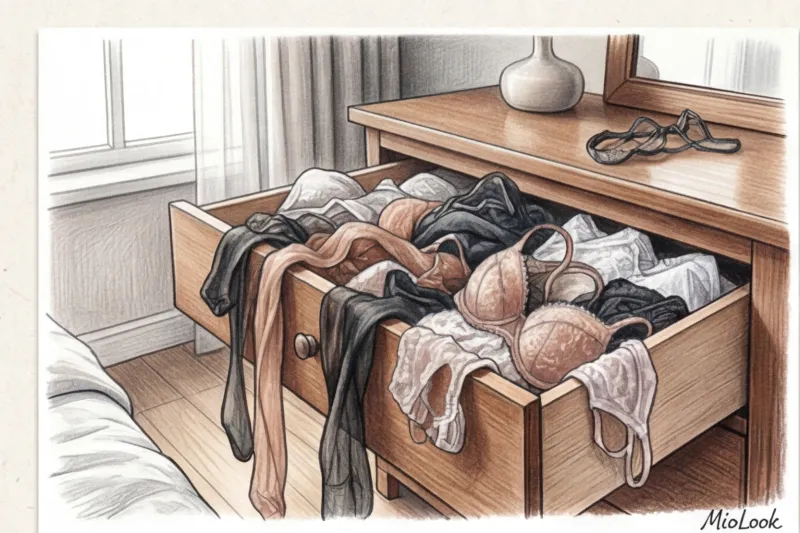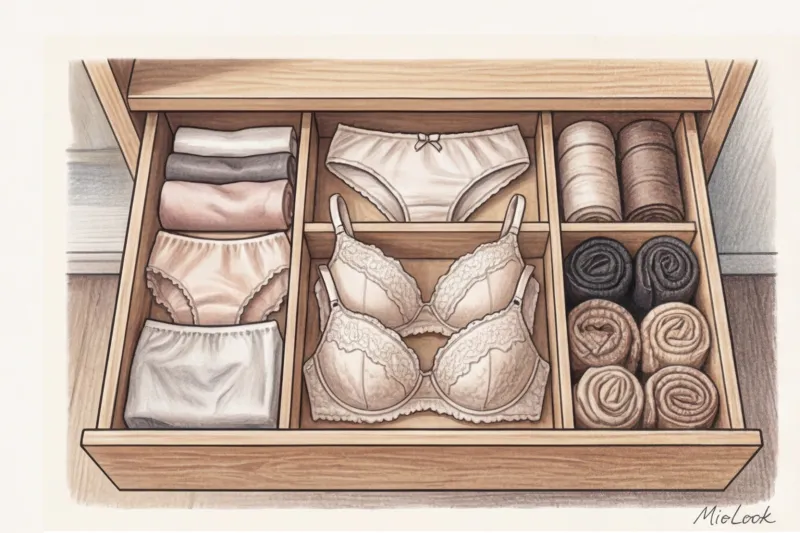
Have you ever noticed that decluttering your outerwear or dress closet is much easier than organizing your underwear drawer? We can easily say goodbye to a boring coat, but we hold on to stretched-out bras and drawstring tights for years. When clients approach me with requests for a total wardrobe detox, the most common and awkward question I hear is: Where to donate old underwear without harming the environment? Spoiler: conventional methods don't work here, and sometimes the road to environmental disaster is paved with good intentions. We've covered more about recycling common items in our the complete guide to eco-friendly decluttering Today, let's have an honest conversation about the most difficult category of textiles. Without guilt or greenwashing.
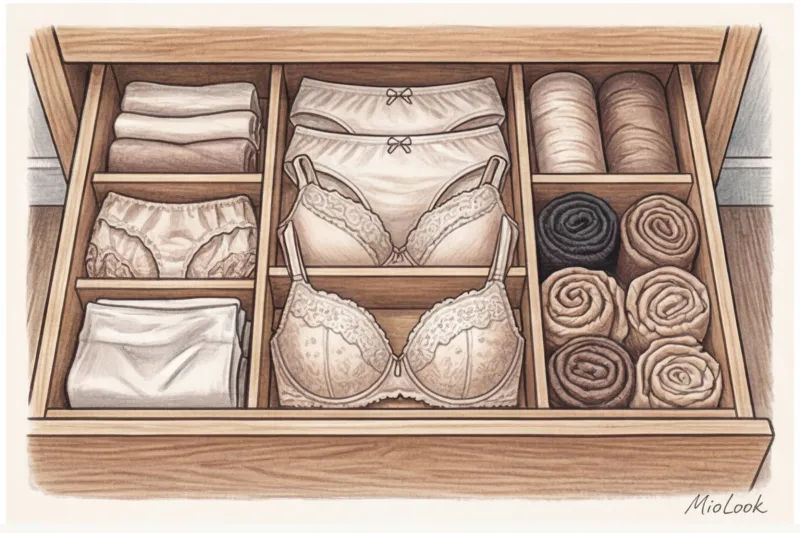
The psychology of the laundry drawer: why we keep things we should throw out
Underwear is our "hidden wardrobe." The paradox is that things that "no one sees" affect our confidence, gait, and posture much more than the most expensive jacket. A properly chosen pair capsule wardrobe always starts with a base layer.
I had a very revealing case in my practice. A top manager from a large IT company came to see me. Her work capsule consisted of impeccable suits, but when we reached the lingerie drawer... there lay a pair of washed-out, shapeless La Perla bras, bought several years ago for €150-200. "Darina, it's such a shame to throw them away, they were so expensive!" " she sighed. It's a classic cost trap. We keep stretched lace solely because of its former value, forgetting that it no longer serves its purpose.
The second psychological trap is the illusion of "I'll save them for renovations or a deep cleaning." Honestly, how many pairs of cotton underwear do you need to paint the walls of your dacha? Certainly not fifteen. Storing such things only clutters the space and creates visual noise every morning.
Access to MioLook for €0.99 — one-time payment
A smart AI stylist will select the perfect look for every day and help you organize your wardrobe.
Get access — €0.99 onceWhere to donate old underwear: the main myths and the harsh reality
Let's dispel the biggest myth I constantly hear from proponents of conscious consumption. Donating old underwear to regular charity bins for "rags" is a disservice. This is a case where your eco-conscious impulse isn't working.
Why? First, there's the issue of hygiene. 99% of foundations and thrift stores categorically refuse underwear. For sanitary reasons (and out of simple respect for people), used underwear cannot be donated to those in need. Volunteers at sorting stations have to manually sort through these bags and send the underwear to the landfill.
Secondly, the myth of recycling into rags. Do you think your synthetic lace will be used as rags for auto body shops? Nope. Synthetics and push-up foam simply don't absorb water and industrial oils. They're useless for industrial use.
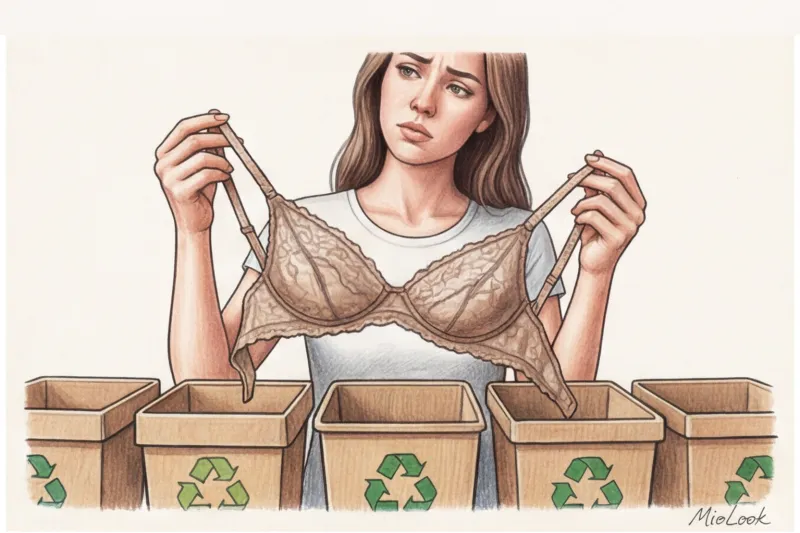
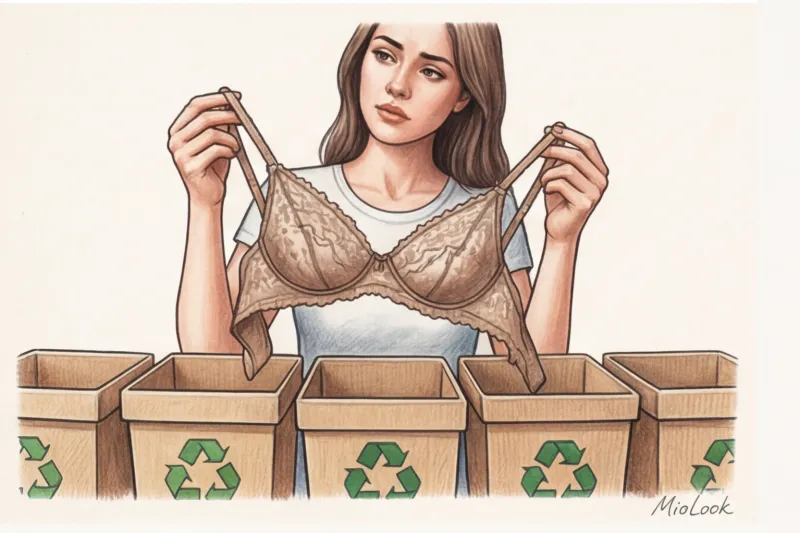
If you are looking for a place to donate old underwear, you need only specialized organizations that deal with deep processing of textiles (For example, recycling programs where raw materials are de-fibered). When searching online, pay attention to the specific wording: the foundation's website should clearly state that they accept underwear.
The specifics of recycling tights: why nylon is a headache for environmentalists
The anatomy of modern tights is a perfect technological dead end. They are composed of a blend of polyamide (nylon) and elastane (spandex). According to garment technologists, if a fabric contains more than 5% elastane, it is virtually impossible to recycle using existing mass-produced methods. The fibers are interwoven at the microscopic level.
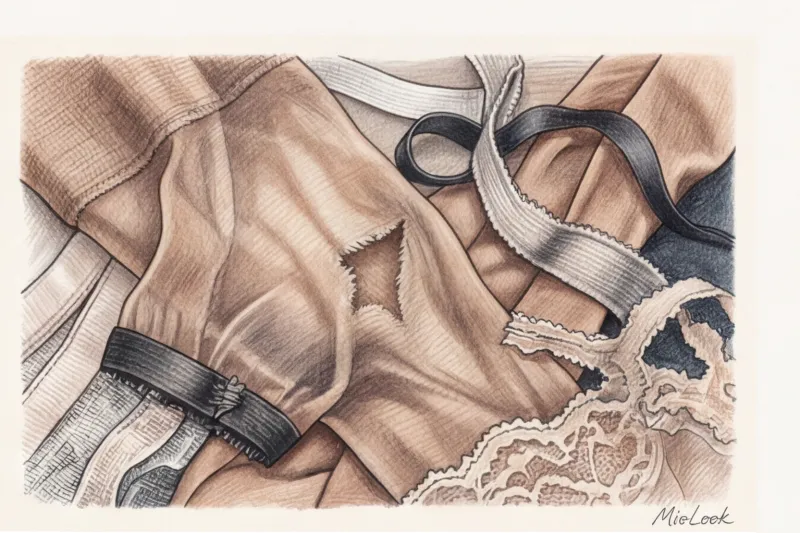
As a stylist who supports an eco-friendly approach to fashion, I'll make an honest confession: sometimes it's more environmentally friendly to simply throw your torn nylon tights in the mixed trash than to waste gas, packaging, and resources shipping them to semi-mythical recycling centers that simply don't exist in most cities.
Instructions: How to recycle bras and panties sustainably
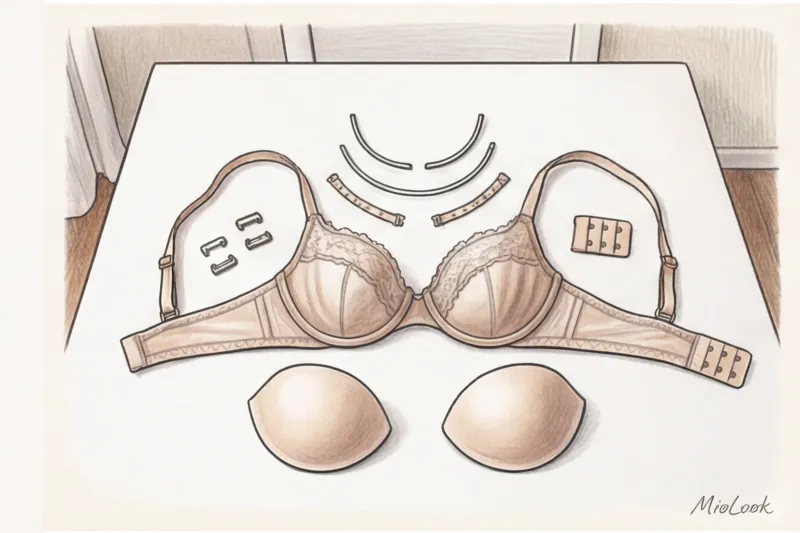
If your city has a recycling center that accepts textiles for fiber removal, don't rush to bring your bag as is. Expert recycling requires preparation—a kind of dismantling. Here's a step-by-step guide:
- Disassembly into spare parts: Get some nail scissors. Remove the metal wires from an old bra and carefully cut off the hook-and-eye clasps. This metal can be collected in a separate container and taken to a scrap metal recycling center along with aluminum cans.
- Foam cups: The mixed polyurethane foam used to make the compacted cups is not recyclable. It should be cut out and placed in the regular trash.
- Cotton panties: If your underwear is 100% cotton, cut off the elastic (it contains pure elastane). The remaining pure cotton fabric will be recycled without any problems, as single-materials are the most valuable raw material.
Regarding brand programs: according to Fashion Revolution's market research (2024), many mass-market giants have discontinued their underwear collection programs due to their complete unprofitability. Therefore, before taking a bag to the mall, be sure to check the latest information on the brand's official website.
Your perfect look starts here
Join thousands of users who look flawless every day and organize their wardrobe with MioLook.
Get access — €0.99 onceA Second Life for Tights: Is Upcycling Worth It?
The internet is full of advice on how to knit bath mats or dish sponges from old tights. Let's be honest: the aesthetics of a modern home rarely benefit from such "grandmother's methods," unless you're a professional upcycling designer. Incorporating a colorful pantyhose rug into a minimalist interior is practically impossible.
However, thick tights (60 denier and above) have practical household uses. Nylon has a unique texture that polishes smooth leather shoes perfectly—often better than any special velvet cloth. Some gardeners successfully use them for winter storage of bulbs due to the good ventilation. Clean scraps of thick nylon can be used to stuff homemade soft toys or pet beds: this material does not rot and does not attract dust mites.
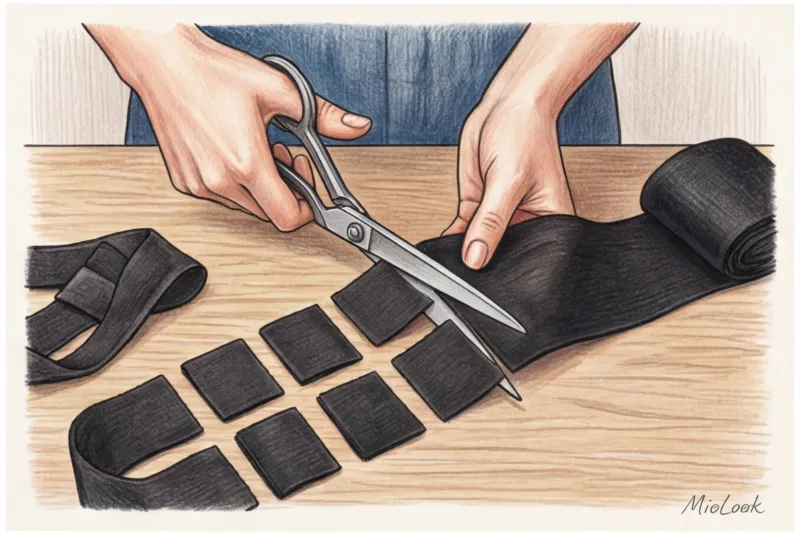
It's important to distinguish between conscious consumption and the hoarder syndrome. It's one thing to cut off a piece of fabric to polish your favorite loafers. It's quite another to methodically accumulate a bag of ripped tights on the balcony for years "just in case."
A Stylist's Checklist: When It's Time to Ruthlessly Say Goodbye to Your Lingerie
How do you know when it's time to dispose of something? Women often turn a blind eye to the physical signs of wear and tear. In my experience, basic wardrobe The lifespan of an everyday bra, with regular wear and proper washing, is only 6-8 months. Here's my professional checklist. If even one of these points applies, it's time to ditch the bra:
- Loss of elasticity: Perform a tension test. If the bra band clasps with the tightest hooks and easily pulls more than 4-5 centimeters away from your back, it no longer supports your breasts. All the strain is placed on your shoulders, which can negatively impact your posture.
- Cup deformation: Creases in the foam or turned-out edges are instantly noticeable under a tight turtleneck or silk blouse. You can wear a €300 blouse, but the misshapen underwear will make the look cheap and unkempt.
- Fabric texture: Pilling on panties and micro-drapes on tights. This violates the basic rules of aesthetics: the texture of the base layer should be completely smooth.
- Resize: Keeping your underwear "until you lose weight" is harmful not only to your psyche but also to your health. As mammologists note, wearing underwear that is too tight impairs lymph flow. Your body deserves to be comfortable at your current size.
Ready to get started?
Try the free plan—no commitments. Create your perfect capsule with AI.
Get access — €0.99 onceHow to Reduce Textile Waste: Preventative Measures
The best way to solve the problem of difficult elastane disposal is to avoid creating unnecessary waste in the first place. A 2024 study by McKinsey confirms that the quality of an item directly impacts its shelf life.
Investing in quality is key. I always tell my clients: three high-quality lingerie sets costing between €60 and €100 each will last significantly longer and provide more comfort than ten cheap sets for €15. High-quality elastane retains its elasticity longer, and lace doesn't unravel after three washes.
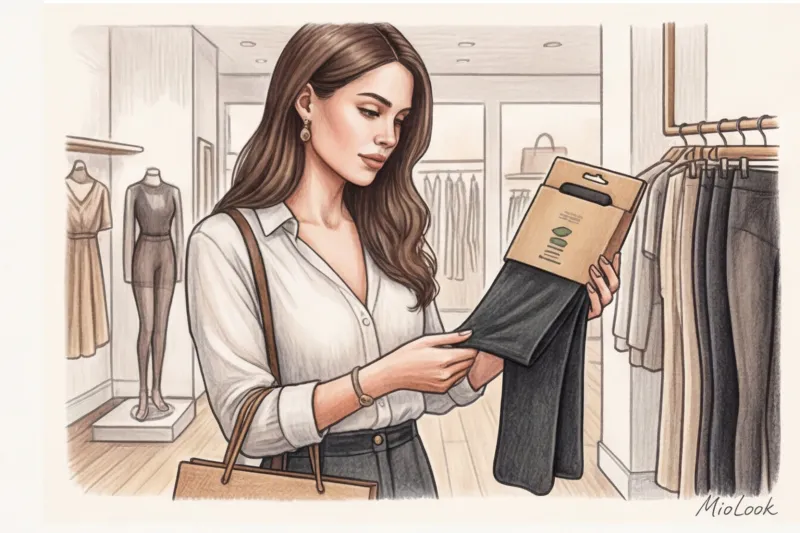
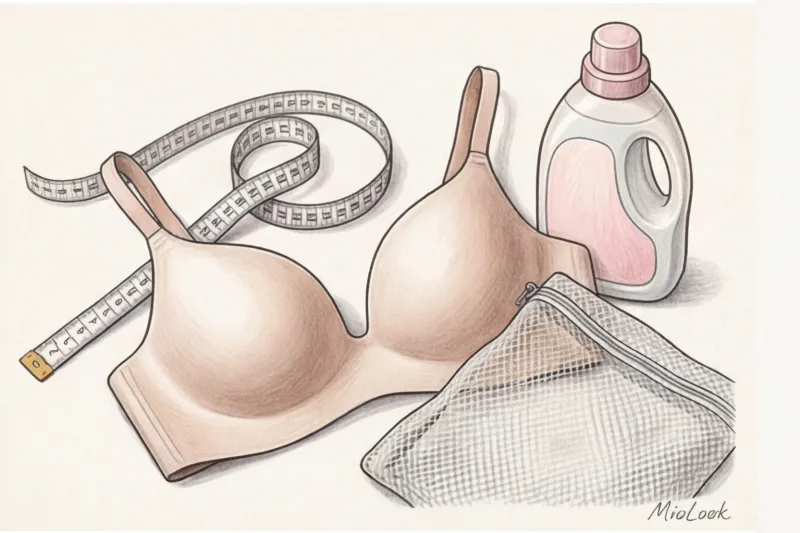
No less important washing rules Remember: spandex is extremely sensitive to high temperatures. Never dry bras and tights on a hot radiator or in a dryer (their elasticity will be permanently destroyed). Wash them only in special mesh bags, using mild liquid detergents and at temperatures no higher than 30 degrees Celsius.
If your thin 15-20 denier nylon tights are tearing after the first wear, reconsider your entire look. For colder months or office days with a casual Friday dress code, invest in thick, opaque microfiber tights (80 denier and up), add stylish stirrup leggings to your collection, or opt for high-quality trouser suits.
To summarize: a perfect global system for recycling elastane and nylon doesn't yet exist. Therefore, our main strategy is to buy less, but better. Choose lingerie that fits you perfectly, take care of it carefully, and when it's time to part with it, do so without guilt. Mindfulness doesn't mean storing junk for years, but rather approaching the purchasing process responsibly from the start.