Why 'Conscious Brands' Aren't Saving the Planet (But Digitizing Your Wardrobe Is)
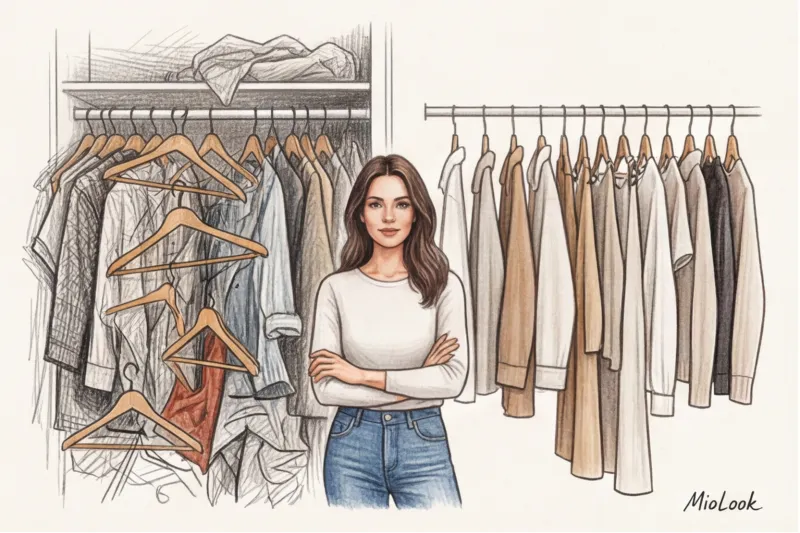
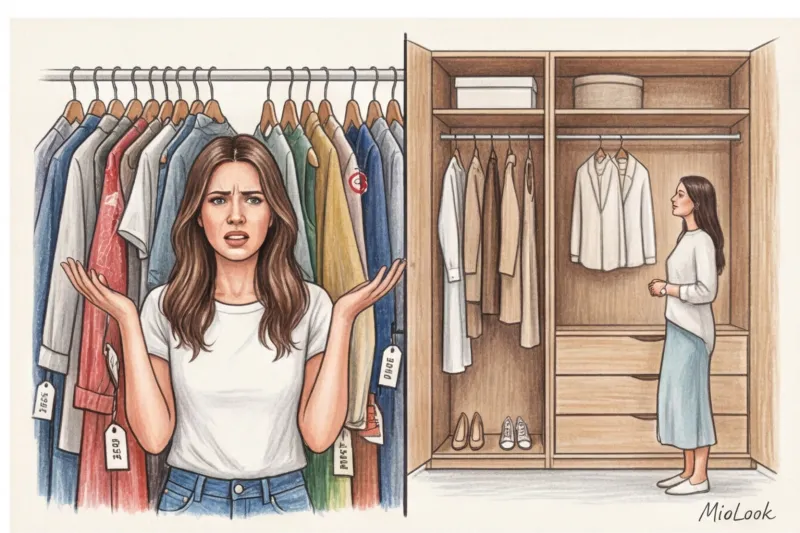
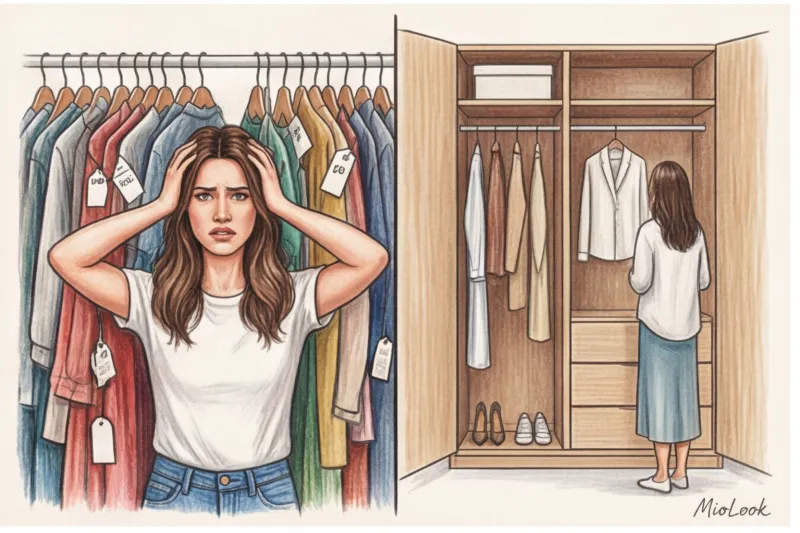
You know what phrase I've heard most often at fashion shows over the past couple of years? "Katarzyna, I've decided to go conscious! Look, I bought three new recycled cashmere sweaters instead of one regular one. I'm saving the planet!" At times like these, I sigh heavily, open the client's closet door, where fifteen more sweaters (some even with tags) hang in the dark, and I realize: true sustainability doesn't start at the mall. True mindfulness is wardrobe digitization and an honest look at what you already own.
We're used to thinking that buying a dress made from organic cotton or sneakers made from recycled plastic makes us eco-activists. But the hard truth that brand marketers won't tell you is this: any Buying a new item (even with the greenest tag) is more damaging to the planet than using an old one. According to research by the Ellen MacArthur Foundation, global clothing production has doubled over the past fifteen years, but the number of times each item is worn has decreased by 36%. We buy more and wear less.
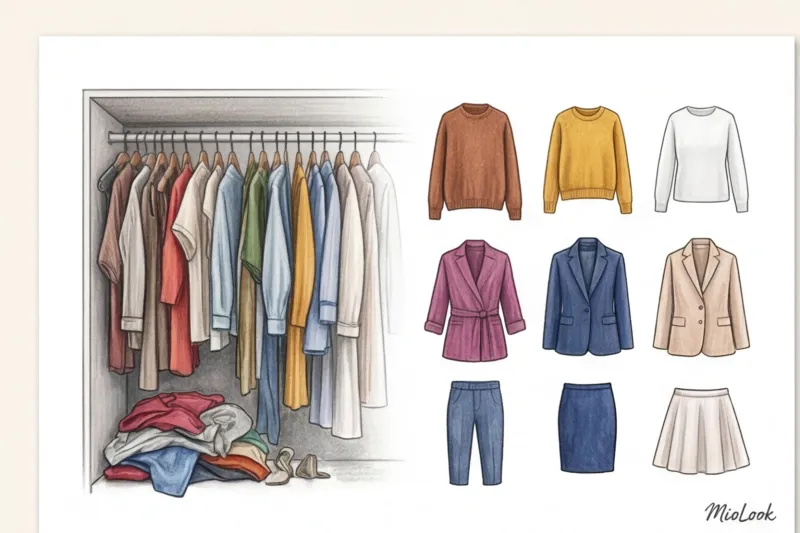
And the main reason for this paradox is the so-called "blind spots" in our closets. In my experience, the average woman wears only 20% of her clothes 80% of the time. The rest is archaeological layers on the back shelves. We go shopping for new black pants not because the old ones are torn, but because we've simply forgotten about those perfect 2021 pants buried under a pile of laundry. The brain works simply: what I can't see doesn't exist.
That's why any an app for digitizing things It tackles overconsumption better than a dozen eco-initiatives from fashion giants. When your entire closet is on your phone, you eliminate blind spots. You go to the store not for "something new," but with a clear understanding of what exactly your customer base is missing.
The Green Shopping Illusion: The Green Label Trap
Let's be honest: the mass-market industry has masterfully monetized our sense of guilt. The introduction of "Conscious" or "Join Life" collections is classic green-worshipping. Brands want you to keep buying, so they give you an indulgence in the form of a Kraft-colored cardboard tag.
"Sustainability marketing today often serves as an incentive for overconsumption. A woman feels less like a spendthrift and more like a savior of the oceans when she buys her fifth eco-shirt."
But the simple physics of fabrics is merciless: five T-shirts made from recycled polyester that pill after three washes will cause enormous harm to the environment. But one high-quality T-shirt made from regular (non-organic) cotton, worn 100 times, is a real contribution to sustainability.
There is gold in the world of fashion The 30-sock rule (#30Wears concept by Livia Firth). Before you take an item to the checkout, ask yourself one question: "Will I wear this at least 30 times?" If the answer is "no," no amount of recycled plastic in the composition will justify this purchase. And if you've been wanting clear out the closet of things that are cheap your image, start with those items that did not pass this test.
Cost Per Wear: Math vs. Marketing
As a pragmatic stylist, I love numbers. And the key indicator of a sustainable wardrobe for me is the CPW (Cost Per Wear) index. This metric is far more important than fabric composition or a designer's name.
It's calculated in a simple way: the cost of an item is divided by the number of times you've worn it.
- Scenario A: You buy a trendy dress for one evening at a mass market for €40. You wear it twice. Your CPW = 20 € for the exit.
- Scenario B: You invest in the perfect wool jumper from a given COS for €120. You wear it 60 times over two winters. Your CPW = 2 €.
The paradox is that the "cheap" item from the first scenario costs you and the planet 10 times more! For this formula to work for you, you need to know exactly how often you wear your clothes. Keeping this in mind is impossible. I always recommend my clients use MioLook Not only for cataloging, but also for statistics. When the algorithm shows you six months from now that you've worn a €150 dress zero times and a pair of €50 basic jeans eighty times, your shopping experience will change forever.
What is wardrobe digitalization, really? A stylist's perspective
In 2014, when I was just starting out as a personal stylist, the capsule collection process felt like a form of torture. I photographed every client's item on my smartphone, transferred the files to my laptop, manually cropped the background in a graphics editor, and then transferred everything into gigantic Excel spreadsheets. Next to each thumbnail, I meticulously wrote: "Zara trousers, straight, wool, €60." Sorting through an average closet and manually cataloging it took up to 15 hours of my time and a significant portion of the client's budget. The evolution from notebook lists and cumbersome spreadsheets to neural networks happened literally before my eyes, and it's arguably the best thing to happen to the fashion industry in the last decade.
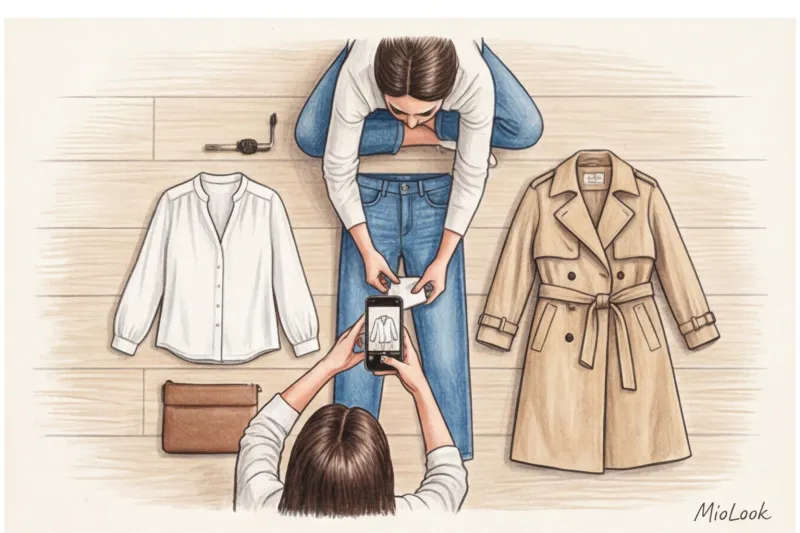
Today wardrobe digitization It's not just a photo album on your phone or a note with a shopping list. It's a fully-fledged, self-organizing database of your clothes, powered by artificial intelligence. How does a modern virtual closet work? Forget about routine. You simply take a photo of an item, even if it's casually lying on the couch or hanging over the back of a chair, and the algorithm does the rest. In literally a split second, technological magic happens: perfect background removal, intelligent auto-tagging, and in-depth color analysis.
I'd especially like to highlight the work with color. The neural network reads shades with an accuracy of up to a semitone—for example, it accurately distinguishes cool emerald from warm olive. This is critical for creating harmonious looks according to the rules of coloristics. That's why I always advise my clients to use specialized tools like MioLook , who take on all this rough analysis themselves.
The main paradigm that the digital closet breaks is the uncompromising shift of focus from the mindless possessions things on conscious control They. According to a 2023 study by the international organization Fashion Revolution, the modern European woman actively wears only 20-30% of her wardrobe. The remaining 70% is "dead capital," occupying hangers for years. When you transfer your clothes to your smartphone, your closet ceases to be a dark hole where your money disappears every season (sometimes as much as €200-500 during a single mass-market sale). It becomes a visual dashboard. You begin to see your wardrobe like an experienced logistician sees a warehouse: what's in excess, what's missing for bundling, and what's long overdue for recycling or resale.
Access to MioLook for €0.99 — one-time payment
A smart AI stylist will select the perfect look for every day and help you organize your closet.
Get access — €0.99 onceThe Anatomy of a Smart Closet: How AI Recognizes Your Clothes
To understand why the app handles our wardrobe better than our own memory, let's take a look under the hood of the technology. Computer vision in fashion tech has made a colossal leap from simple contour recognition algorithms to complex neural networks.
When an algorithm scans an uploaded photo of your new Massimo Dutti shirt or basic dress from &OtherStories, it doesn't simply assign a simple "clothing" tag. Models trained on millions of images from fashion shows and street style catalogs recognize dozens of micro-parameters simultaneously. The AI accurately identifies the style (oversized, fitted, A-line, or straight cut), calculates the sleeve length (3/4, short, long, or puff), and classifies complex prints. Humans are naturally lazy: we'd simply label a photo "checkered jacket." The algorithm, however, recognizes that it's classic tartan, glen check, or contrasting houndstooth, and in the future will be able to suggest the right solid-color pairings to complement that jacket, preventing the look from becoming overwhelming.
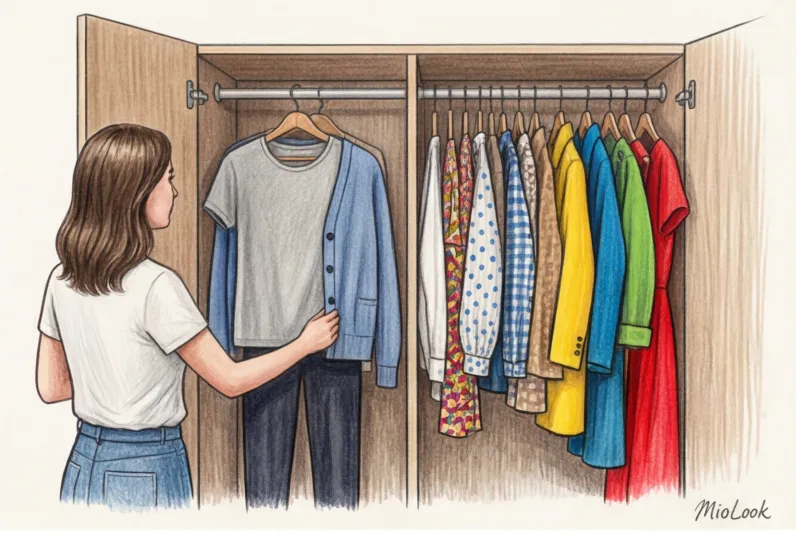
In my experience, this kind of deep cataloging, completely eliminating chaos, solves the most painful problem for most clients: morning paralysis in front of open closet doors. You no longer have to physically rummage through drawers to remember if you have the right base for a bright, statement cardigan. You simply open the app, filter by "tops," "sleeveless," "basic colors," and "cotton," and the system instantly shows you the white COS tank you conveniently forgot about last fall.
"Your wardrobe shouldn't be a museum of forgotten items with their labels still attached. Digitalization transforms it into a working asset, where every detail has its function and regularly repays the investment."
Micro-step for you: Don't try to digitize your entire wardrobe in one evening, or you'll quickly burn out. Start small—take photos of just 5-7 of your favorite bottoms (jeans, pants, skirts) today and watch how the AI organizes them. This process is incredibly addictive, and soon you'll find it hard to imagine shopping without checking your virtual closet first.
How neural networks are changing our shopping habits
According to a McKinsey fashion industry analysis, over 60% of mass-market purchases are made impulsively. We stand at the checkout with a seemingly essential item, succumbing to the magic of clever merchandising or a desire for a quick stress reliever. But emotion aside, more often than not, we're not buying new styles, but rather a predictable comfort zone—yet another clone of the clothes already hanging in our closets.
This is where algorithms come into play, signaling the end of the era of "duplicate items." When your wardrobe is completely digital, a simple smartphone literally stops you from wasting your money right there in the store.
"The most expensive thing in your wardrobe is not the one you paid €500 for, but the one you bought for €50 and never wore because you already have three exactly the same ones."
To substantiate my claims, I'll share a case from my styling practice. One of my clients constantly complained about the classic paradox: her closet was overflowing, but she had nothing to wear. Meanwhile, her substantial shopping budget was evaporating every month. After we digitized her clothes, a revealing situation occurred. The client sent me a message from the H&M fitting room with a photo of an "absolutely essential" basic gray sweater for €90. Her hand was already reaching for the payment terminal. I asked her to open the app and search for "gray jumper." The AI mercilessly returned four similar sweaters: from a basic one from Uniqlo to a premium one from COS. Moreover, the built-in statistics showed that she only regularly wore two of them, while the rest were simply taking up hangers. The purchase was a failure—the visualized data was like a cold shower.
Another sore spot for shopaholics is complex accent things A bright fuchsia jacket, a skirt with a vibrant animal print, and an asymmetrical top. These items are usually bought on a whim, brought home, and... become "orphans," impossible to find a stylish pairing for.
Digitalization breaks this pattern. Now, while in a fitting room or browsing a brand's catalog, you can take a photo of a potential new item, upload it to the "smart wardrobe" feature in MioLook and try to put together at least 3-4 complete images from what already Hanging in your home. The algorithm won't let you fool yourself with fantasies like "I'll buy the perfect top to go with this skirt later." If an item doesn't fit into your existing collection right now, it stays on the rack at the store.
This approach allows us to carry out Wardrobe gap analysis based on real numbers , not emotional guesswork. How it works in practice:
- Mathematics of proportions: The golden rule of styling is that for every one "bottom" (pants or skirts), there should be three to four "tops" (tops, blouses, sweaters). AI calculates this ratio automatically. You go to Zara with the firm belief that you need new jeans, but the chart in the app shows you have 45% bottoms and only 20% tops. Jeans are out, it's time to head to the shirts department.
- Wear index: The neural network detects which clothing categories are clearly idle. There's no point in buying a fifth evening dress at a discount if statistics for the past year show that you spend 85% of your time in smart casual.
Virtual fitting room and pre-testing
While offline shopping suffers from our impulsiveness, the biggest environmental disaster of online shopping is returns. According to the National Retail Federation (NRF), in the apparel e-commerce sector, shoppers return up to 30% of their orders. And no, most of them don't return carefully to the warehouse shelf—return logistics often cost mass-market giants more than the cost of the item itself. As a result, tons of unworn, perfectly good clothes end up in landfills or incinerated.
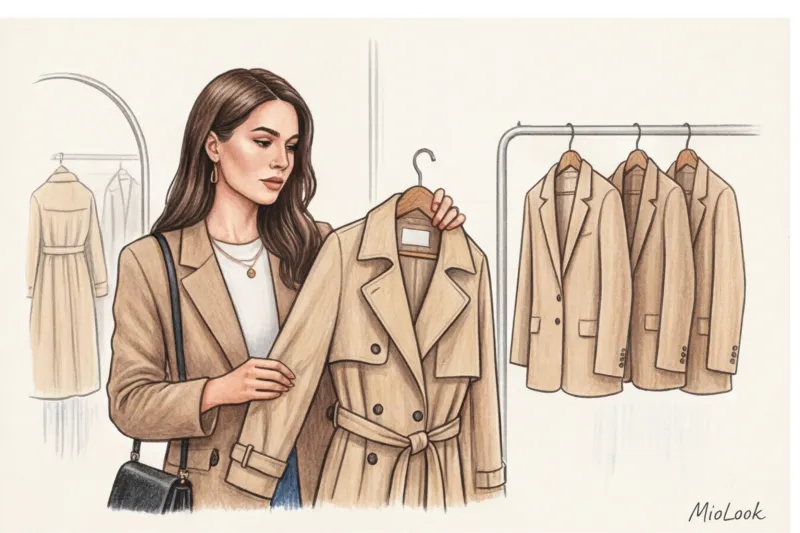
Pre-testing technology (virtual fitting room) solves this problem proactively. The method involves overlaying a photo of a potential purchase (apps automatically crop out the background of the catalog photo) with real items from your digital archive. You literally construct a collage of your future outfit on your smartphone screen in a matter of seconds.
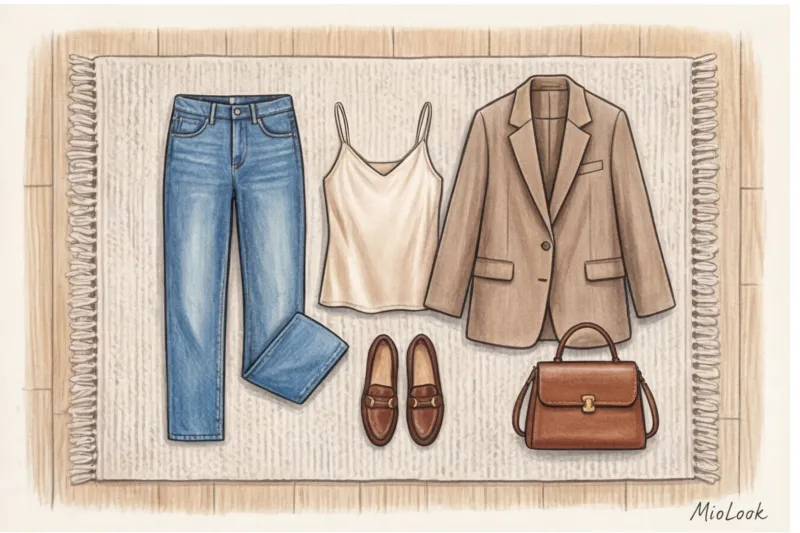
Planning to order a €250 oversized wool blazer on Farfetch? First, add a photo of it to a virtual canvas next to your favorite straight-leg jeans and basic loafers. Often, a critical glance at such a collage is enough to realize that the textures clash and the proportions disrupt your usual silhouette. Pre-testing shifts the focus from the aesthetics of the garment itself (how luxurious it looks on a professional studio model) to its practicality in the context of your personal life. This not only saves you money but also dramatically reduces the carbon footprint of endless and pointless courier deliveries back and forth.
The Mathematics of Style: Calculating Budget Savings and Carbon Footprint
Dry numbers are more sobering than any eco-manifesto. The British environmental organization WRAP (2023 study) published astonishing data: extending the life of an item by just nine months reduces its carbon, water, and waste footprint by 20-30%. But how can you force yourself to wear something that's already hanging in the back of your closet? Here, harsh but fair statistics come to the rescue.
Tracking your wears is a subtle feature that radically changes your approach to your wardrobe. When you open digitized catalog in MioLook When you see that the midi skirt you bought in a fit of rage has been worn exactly zero times in six months, a powerful psychological trigger is triggered. The app turns the dressing process into a game: you intuitively begin to look for ways to "justify" the purchase, integrating the forgotten item into your everyday looks. The statistics force you to wear the items more often, uncompromisingly highlighting the dead weight of your collection.
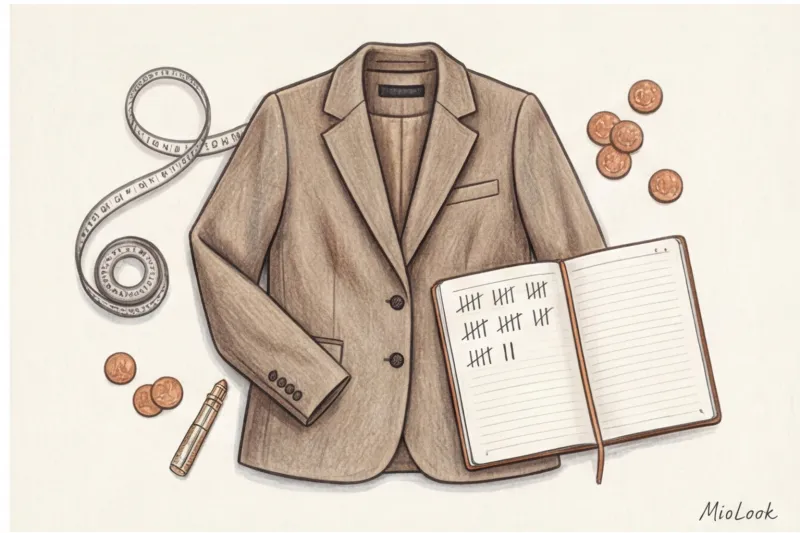
In addition to frequency of wear, it's important to understand the principle of wardrobe depreciation. In professional settings, we constantly rely on the index Cost Per Wear (CPW) — the cost of one outfit. This is the logical explanation for why basic leather loafers for €300 ultimately turn out to be much more affordable than ultra-fashionable mass-market shoes for €30.
- Quality shoes (300 €): will last for about 300 appearances over several seasons. Result: CPW = 1 €.
- Cheap polyurethane shoes (30 €): They will lose their shape, wear out, or tear after 10 active walks. Bottom line: CPW = 3 €.
The paradox is obvious: by trying to save money at the checkout, you end up overpaying three times over the course of one year.
Access to MioLook for €0.99 — one-time payment
Start creating perfect looks with the help of artificial intelligence and track your wardrobe statistics.
Get access — €0.99 onceThis same math demonstrates the direct link between your wallet and the environment. Let's look at a specific calculation using the example of a classic wool blazer. Let's say you bought it from Massimo Dutti for €150. According to Textile Exchange, producing one such jacket generates approximately 30 kg of CO2 equivalent.
Let's look at two scenarios:
- Without digitalization: You wore the blazer 5 times and then hung it up in the closet. The cost of each outing was €30. And the carbon footprint of each time you wore it was enormous. 6 kg CO2.
- With a smart wardrobe: Algorithms regularly suggest integrating the blazer into new capsule collections, and you wear it 50 times over two years. Your CPW drops to a modest €3. And the carbon penalty for each wear is reduced to a negligible amount. 0.6 kg CO2.
The lower your personal Cost Per Wear, the less pressure you put on the planet. You stop funding overproduction because every item you buy earns its price 100%, eliminating the need to rush out and buy another pointless new item.
Step-by-step plan: digitize your wardrobe without stress in a weekend
Digitizing a wardrobe sounds like a task that requires a week's vacation. When I suggest new clients transfer all their items to an app, I often see a quiet panic in their eyes. In fact, this process doesn't have to be a marathon. Two months ago, with one client—a busy lawyer—we completely digitized her seasonal capsule wardrobe in exactly 3 hours and 15 minutes. The secret lies not in the speed of a smartphone camera, but in the correct logic of the process. Forget trying to photograph the entire closet in one sitting. We'll work in sprints.
Preparatory stage: sorting and getting rid of junk
Before picking up a camera, conduct a ruthless inventory. The biggest mistake beginners make is photographing items that have been sitting on the back shelf for a year, "waiting for better times." Algorithms are useless if they're loaded with visual noise. Put aside stretched-out T-shirts, jeans that are two sizes too small, and blouses with stubborn stains, even if they once cost €150. Digitizing your wardrobe starts with decluttering.
I use a strict rule of three "Yeses" in my work: does the item fit right now? Is it in good condition? Would I wear it to a meeting tomorrow? If even one answer is "no," the item doesn't make it into the digital closet. It goes into a recycling box, for repair, or to a resale platform.
Lighting and background rules for perfect algorithm etching
Modern neural networks are excellent at removing backgrounds from photographs, but you can save yourself a ton of time on manual adjustments if you give the algorithm a high-quality source image to begin with.
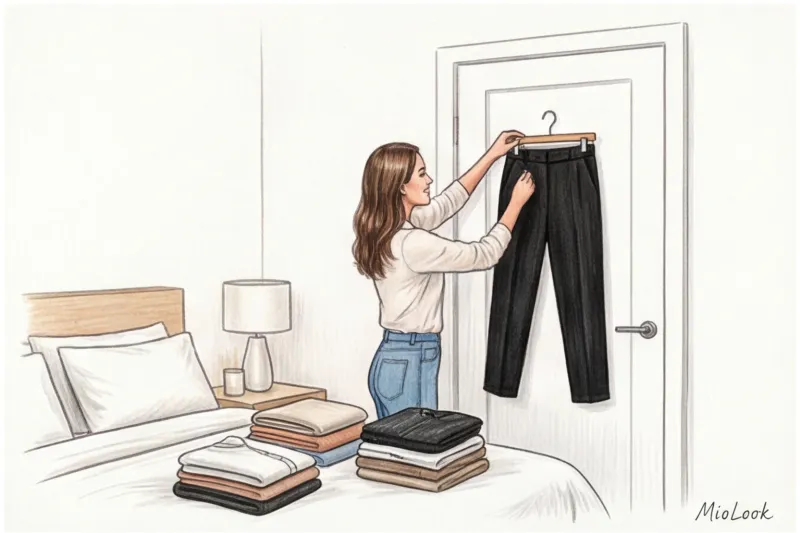
Pro tip: Never lay clothes on a bed with a colorful blanket or, even worse, on the floor. Firstly, it distorts the proportions of the silhouette. Secondly, the shadows from the folds will turn into visual mud when the background is automatically erased. I insist on photographing clothes on hangers against a smooth white interior door or a blank, light-colored wall.
If you're photographing light-colored clothing (for example, a cream jumper from Massimo Dutti or a white shirt from COS), use contrasting backgrounds. Hang a hanger on a dark wood closet door. The higher the contrast between the edge of the fabric and the background, the cleaner and faster the AI will cut out the outline. Avoid harsh backlighting from a window—shoot in even daylight with the light source behind you.
Lifehacks for mass photography (so you don't give up halfway through)
To avoid stalling on the third shirt, divide the process into two completely separate stages: physical photography and digital attribution (labeling). Most people abandon digital attribution precisely because they try to take a photo of the pants, crop the background in the app, fill in all the fields, and only then hang the pants back up. This kills all momentum and wastes unnecessary effort.
Here's my tried-and-true life hack: work like a conveyor belt. Hang 15 hangers with basic tops on your door. Take a photo, remove a hanger, and take the next one. Photographing 50 items this way will take you 20-25 minutes at most. But you can crop the background, add descriptions, and categorize them in the evening, sitting on the couch with a cup of tea. For this step, I recommend using MioLook — there, a built-in neural network takes care of the background removal routine, leaving you with only the pleasant organizational part.
Categorization and tags: so that AI understands you
A neural network isn't a psychic. For an algorithm to curate relevant and wearable looks for you, it needs to understand the stylistic context of every detail. If you simply dump all your photos into one digital pile, you'll end up with the same chaos as a physical closet, only on your smartphone screen.
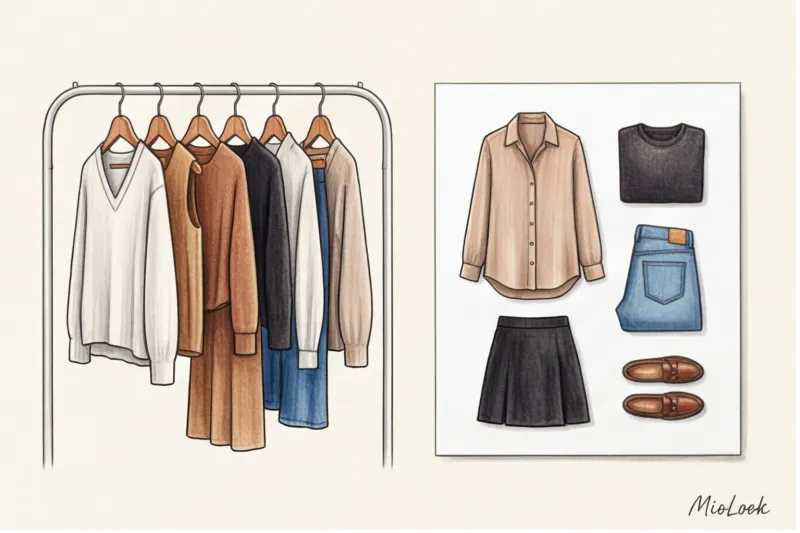
How to set parameters correctly? Start with a strict division into base and accents Basics (straight blue jeans, white T-shirts, classic trench coats) are the glue that holds your wardrobe together. Accents (a sequined jacket, a skirt with a complex print, bright fuchsia) set the mood. When you tag an item as "basic," the algorithm understands that it can be safely mixed with 80% of other items when generating looks.
Next come seasons and dress codes. I always ask my clients to break down the dress code as thoroughly as possible. Instead of vaguely tagging it as "work," use "formal office," "casual Friday," or "for Zoom calls." This will save you time in the morning when you need to create an outfit for a specific task in 15 seconds.
Finally, don't ignore the brand section, even if it's the usual mass-market hits from Zara or H&M. Why is this important? Knowing the brand helps you analyze quality and fit in the future. Over time, you'll look at your statistics and notice a clear pattern: for example, you wear pants from & Other Stories three times more often than others because their cut suits your figure perfectly. This digital hygiene is the key to ensuring your smart closet will serve you well for years to come.
Smart Capsules: AI-powered Image Generation from Old Items
Let's talk about a phenomenon known in professional stylist circles as "wardrobe blindness." Our brains are quite lazy: once we find a safe stylistic solution, it hardens into an unbreakable neural network. You buy a great three-piece Massimo Dutti suit for €200 and wear the jacket with the same trousers for years. Rigid boundaries form in our minds: a silk dress is only for the theater, a formal shirt is only for the office.
Fully digitizing your wardrobe is a game-changer because the algorithm is free of psychological barriers and fear of judgment. For the neural network, your closet isn't a sentimental collection of familiar items, but a rigorous database of silhouettes, color codes, and temperatures. Getting started creating a capsule wardrobe The AI relies on mathematical models: Itten's color wheel and principles of texture contrast. It can easily find unexpected combinations, suggesting wearing that "office" blazer over a sporty hoodie or balancing the smooth satin of an evening skirt with the chunky knit of a vintage sweater. Where humans see incongruities, the machine sees the perfect balance of heavy and light textures.
Think back to the cult classic Clueless from 1995. The scene where Cher Horowitz uses a computer to create the perfect outfit for school seemed like the pinnacle of technology. Today, this fantasy has become a basic smartphone feature, saving our nerves in the morning. When cortisol levels are through the roof and there are 15 minutes left before bed, the "create my look" (or Shuffle) feature in apps like MioLook It works flawlessly. You press one button, enter the weather outside, and the system produces a ready-made outfit with shoes and accessories. This instantly relieves decision fatigue, the fatigue that often keeps us wearing the same jeans day after day.
Your ideal image
it begins Here
Join thousands of users who look flawless every day with MioLook.
Get access — €0.99 onceThe potential of algorithms is especially evident when creating capsules for specific tasks. My clients often struggle before trips: how to pack for a three-day business trip to a specialized conference, so they fit in smart casual without lugging around unnecessary items?
With a digital assistant, this process takes exactly three minutes. You simply set the conditions: 3 days, 2 formal meetings, 1 informal dinner, weather +15°C. The program scans your database and generates a micro-capsule of 8-10 items that are 100% compatible with each other. During my last experiment with a trip to Berlin, the app assembled a wardrobe of 9 items (including a basic COS trench coat and loafers). From this minimum, the AI created 12 completely different looks. Not a single item sat idle in my suitcase, and I didn't have to run to the nearest H&M for "something suitable." Making every purchased item work with maximum efficiency is true eco-friendliness, which also protects your budget.
The Future of Fashion Tech: Resale and Circular Fashion
The secondhand market is currently growing three times faster than the traditional mass market. According to the global ThredUp Resale Report (2024), by 2028, secondhand sales will reach historic highs, gradually displacing fast fashion. My professional forecast for the next three to five years is quite categorical: the line between owning an item and selling it will be completely erased. And the key driver of this revolution will be the widespread digitalization of everyday wearers' wardrobes.
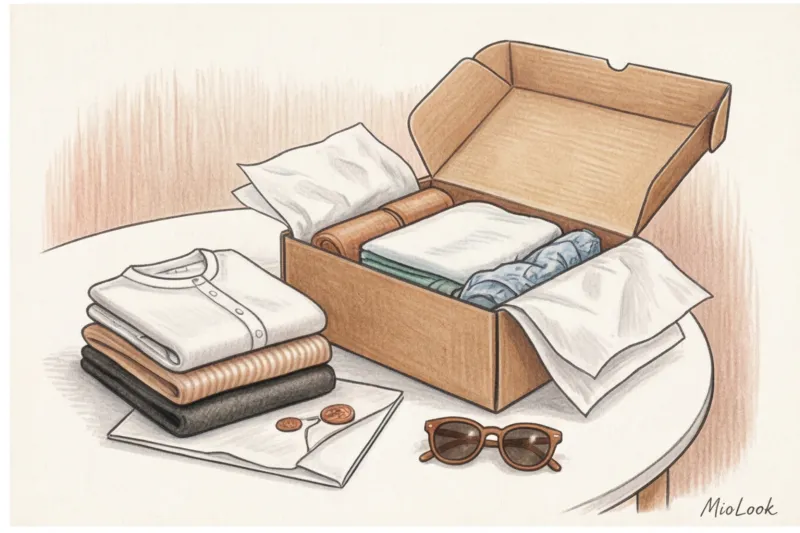
The main obstacle my clients face when trying to give good items a second life is the high barrier to entry and a simple lack of time. To sell a perfectly good trench coat they've fallen out of love with, they need to catch some daylight, steam the fabric, take a series of aesthetically pleasing photos, measure the back, and write a copy. One of my clients once confessed to me, "Katarzyna, I'd rather throw this all in the back or give it away than spend an entire Saturday taking measurements for a marketplace." It's truly exhausting.
But if your clothes are already listed in the app, you can monetize them instantly. Direct integration of digital wardrobes with platforms like Vinted and Vestiaire Collective is currently being actively tested and will soon become standard. Automatic click-to-sell is incredibly simple: the algorithm takes a ready-made studio photo of the item (which you added earlier), generates an accurate description, specifies the brand, size, and even recommends the optimal resale price based on current market analytics. Using tools like MioLook , already allows you to create a structured catalog, which in the future will relieve you of the routine of reselling.
The question of trust remains. How can you prove to an online buyer that your €500 bag or cashmere sweater is 100% genuine? This is where digital product passports (DPPs) and blockchain in the fashion industry come into play. European legislation is already gradually requiring brands to implement this technology. Physically, it looks like a microscopic NFC chip integrated into a tag or a unique QR code. Scan it with your smartphone and you receive a secure, decentralized database. Blockchain guarantees that the history cannot be forged: it shows where the flax was grown, which factory manufactured the item, and who was its official first owner.
The circular fashion of the future isn't about wearing old sweaters out of environmental guilt. It's a completely pragmatic and technologically advanced asset circulation, where your closet functions like a bank account. You buy a high-quality wool coat for €350, wear it happily for two seasons, and when it no longer meets your needs, you can easily resell it with a single click, recouping part of your investment with a clean provenance.
Summary: Your First Step to Technological Sustainability
Have you ever noticed the paradox of modern life? We obsessively track our step count, the quality of our deep sleep, and every cup of coffee in our banking apps. Yet, we continue to manage our wardrobe—an asset worth thousands of euros—using haphazard memories and visual memory.
Having worked with dozens of clients across Europe, I have come to one uncompromising conclusion: Technology is the best, and sometimes the only, working tool for rationalizing consumption Willpower and beautiful eco-manifestoes sound great in theory. But they instantly capitulate to clever visual merchandising when you're standing in front of a Massimo Dutti display window and see the "perfect" wool jacket on sale during the season. At that moment, only the emotionless statistics on your smartphone will save you.
"Mindfulness isn't some abstract feeling of guilt over a purchase. It's concrete data: how many times you've worn what's already hanging in your closet, and what you can wear with what you're just planning to buy."
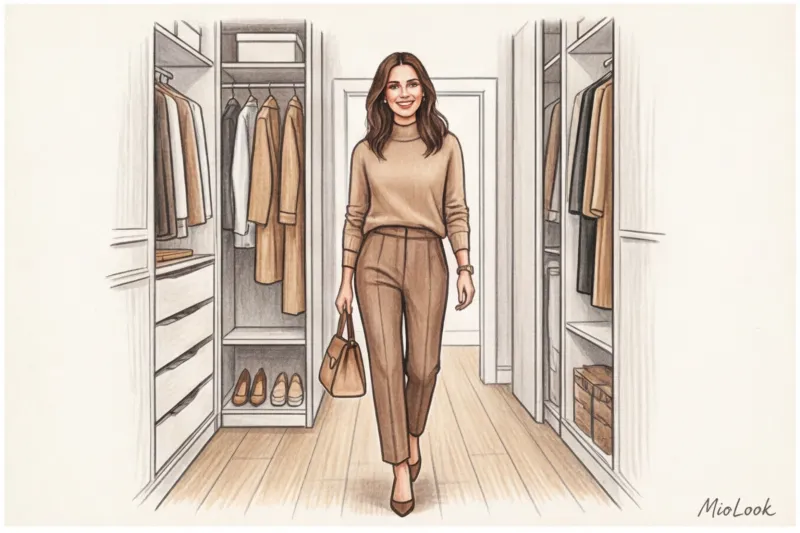
A smart approach to life is built on predictability. An organized closet isn't mere pedantry; it's the conversion of order into real resources: free time and a clear conscience. Using an AI-powered image generator saves an average of 15 minutes on your morning routine. Over the course of a year, that's over 90 hours—two full workweeks—that you gain back by eliminating the panic of opening closets.
But I know full well how daunting the prospect of a global overhaul can be. So, my main professional advice: Get started today by photographing at least 10 basic things Don't try to digitize all 150 hangers in one weekend—you'll burn out on the second shelf of knitwear and abandon the idea.
Choose the backbone you wear most often:
- Favorite straight or wide jeans.
- Perfectly fitting classic trousers (for example, those black palazzo trousers from COS that save you in any situation).
- A white shirt made of thick cotton.
- Oversized blazer in a neutral shade.
- Two basic tops or T-shirts without prints.
- High-quality knitwear: a cashmere jumper or a thick cardigan.
- Two pairs of casual shoes (loafers and minimalist sneakers).
- A structured bag for every day.
Take a photo of this top ten and upload it to MioLook This will take exactly 15 minutes. The goal of this exercise is a quick dopamine hit from the results. When the app assembles 15 new, fresh combinations from these 10 familiar things in just a few seconds, your brain will receive a powerful signal: "new" doesn't necessarily mean just brought from the store.
My final call to action: Make a promise to yourself to rethink the contents of your closet before your next shopping trip. Set a personal moratorium—no new purchases for the next two weeks. During this time, try dressing exclusively based on the virtual capsules collected from your "starter ten."
When you entrust your outfit-choosing routine to algorithms, you'll be surprised at how much less you need to look stylish every day. Not only will you stop funding overproduction, but you'll also save at least €150–€300 per month, which is usually spent on emotional, one-day purchases. The future of fashion isn't closets overflowing with T-shirts made from recycled plastic. It's compact, transparent, and smart wardrobes that fit on a smartphone screen.
Guide Chapters
Capsule Wardrobe App: How to Digitize Your Closet
Is your closet overflowing with clothes, but you have nothing to wear? We'll tell you how to properly digitize your belongings on your smartphone and create the perfect digital capsule.
Smart Shopping: How to Stop Buying Unnecessary Clothes
Impulse buying isn't a psychological issue, but a matter of organizing your space. Find out how digitizing your wardrobe can help you eliminate unnecessary spending once and for all.
Decluttering Your Wardrobe Before Digitizing: Stylist Tips
Treat your closet like a museum curator. A stylist's expert approach to sorting through your pieces before creating a personal digital collection.
Conscious consumption in clothing: stylish and eco-friendly
True sustainable fashion doesn't start with buying new eco-friendly items, but in your closet. Learn how to stop buying unnecessary items and create a smart wardrobe.
How to calculate the actual cost of clothing output
What's cheaper: a €20 high-street turtleneck or a €900 designer jacket? Find out how the Cost Per Wear concept will change your shopping forever.
How to digitize your wardrobe: step-by-step instructions and life hacks
A professional strategy for transferring things to your smartphone that will solve the morning "I have nothing to wear" problem forever.
The Best Wardrobe App: How to Choose
Tired of finding new items in your closet that you've long forgotten about? We'll tell you how digitizing your wardrobe will help you solve the "nothing to wear" problem once and for all.
How to create an outfit from your clothes? A neural network will help.
Forget about the "nothing to wear" problem. Find out how artificial intelligence creates stylish and fresh looks from your old clothes.
Virtual Dressing Room: Ending Bad Purchases
Forget about online shopping disappointments and lengthy returns. Discover how modern technology will forever change the way you shop.