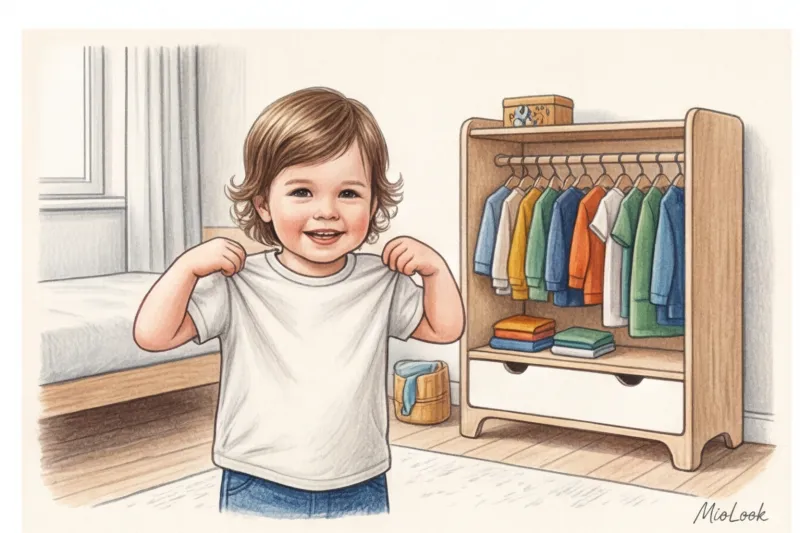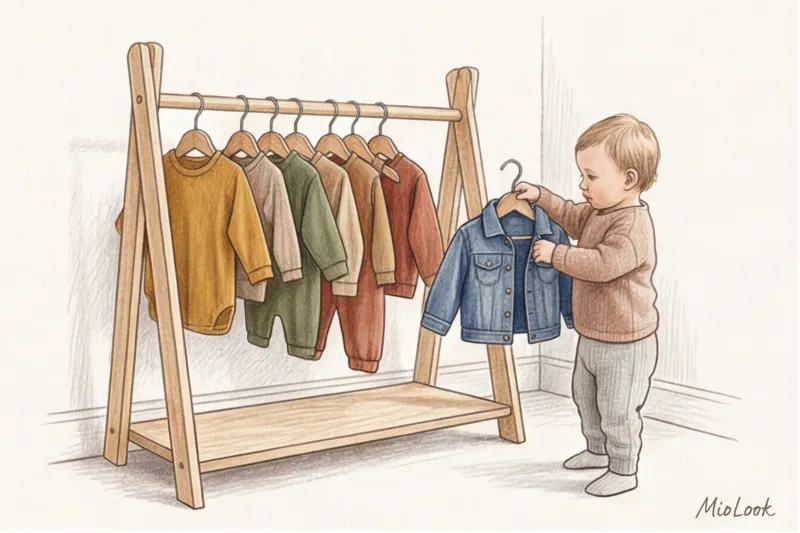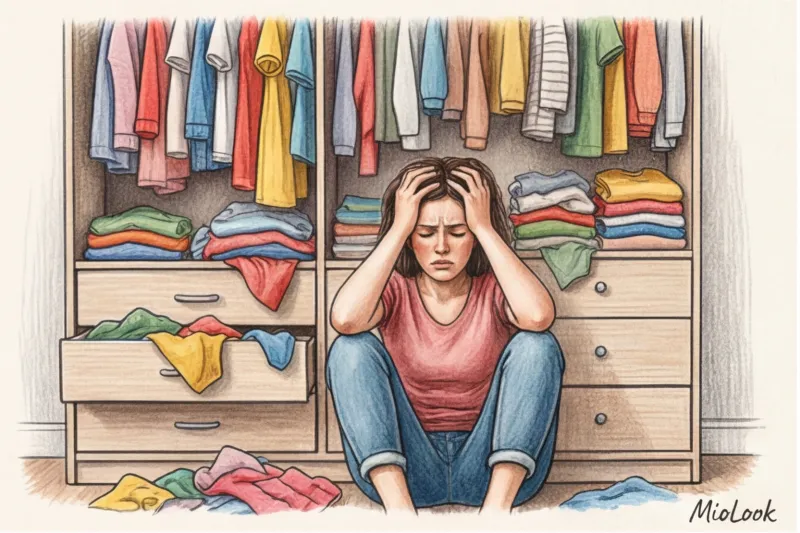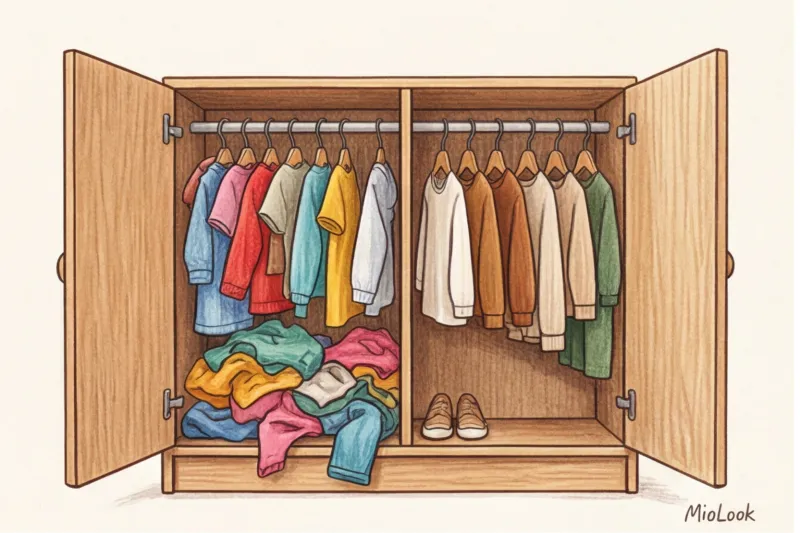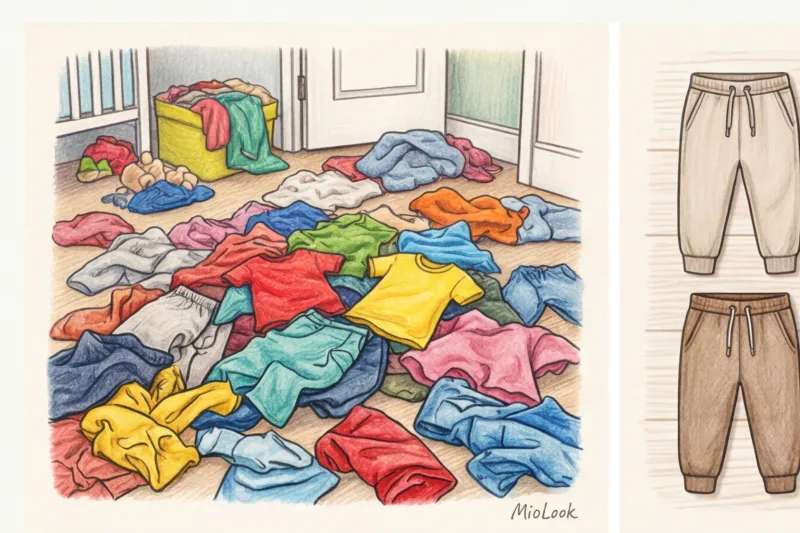
When my son turned three and started kindergarten, I, like the model stylist mom, bought him 15 stunning cotton T-shirts. They came in a variety of colors, from trendy mustard to dusty blue. Do you know how many of them he actually wore? Exactly four. The other eleven sat in the dresser, dead weight, with itchy inseams or necklines that were too tight to get his head caught in.
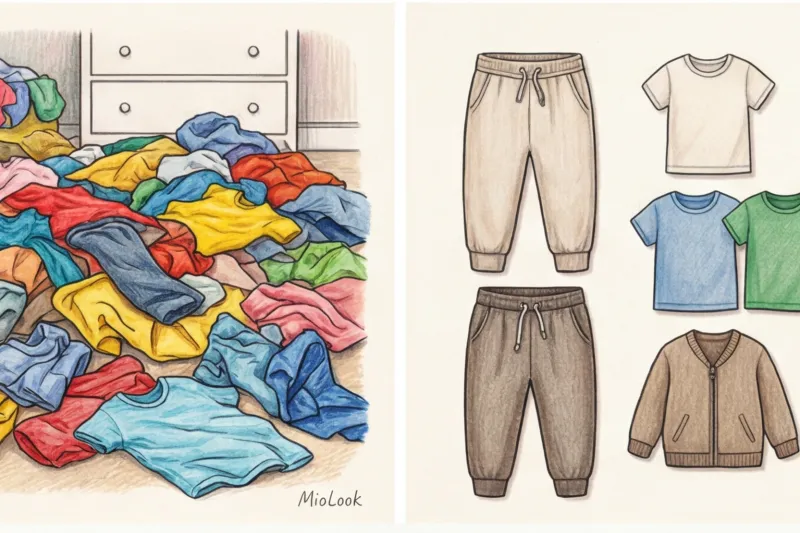
That's when I realized: a child's wardrobe operates by different rules. If you're searching online right now for the perfect look, "Kindergarten clothes list" , stop. You don't need endless "just in case" shopping lists and mountains of spare items. We've covered the philosophy of smart minimalism in more detail in our A complete guide to a child's capsule wardrobe: saving time and money In this article, we'll explore the strict mathematical formula 3-4-7, which will forever rid you of morning tears in the hallway.
Why traditional kindergarten clothing lists no longer work
Behavioral psychologists have long proven the existence of the term decision fatigue (Decision fatigue). But somehow we forget that this mechanism hits three-year-olds even harder than top managers. When you open a closet full of 15 T-shirts, long-sleeves, and sweatshirts in front of a sleepy child at 7:15 a.m., their brain goes into overdrive. The result? A tantrum because "the yellow car is facing the wrong way."
In my practice counseling families, switching from a chaotic closet to a strict nursery capsule saves mothers an average of 22 minutes each morning. This is time that was previously spent on coaxing, changing clothes, and searching for a clean sock with the right print.
Furthermore, the hidden cost of cheap items "in reserve" is a huge budget hit. Buying 10 T-shirts for €5 each at a mass-market store seems like a good deal until they pill and fall apart at the side seams after the third wash. A smarter approach is to invest in fewer items, but in heavyweight knits (at least 180 g/m²) that will withstand 50+ high-temperature washing cycles.
Access to MioLook for €0.99 — one-time payment
A smart AI stylist will help you digitize your entire family's wardrobe and eliminate the "nothing to wear" problem.
Get access — €0.99 onceAnatomy of a Baby Capsule: The Smart 3-4-7 Formula
Instead of scooping up sales, I suggest using my signature 3-4-7 formula. It's based on simple logic: in a busy preschool environment, a child changes clothes on average 1.5 times a day (puddles, soup, paint). If you run the washing machine twice a week (for example, Wednesday evening and Saturday), you need a strictly defined number of items.
One of my clients, Anna, complained that her 4-year-old son absolutely refused to dress himself. We removed all unnecessary items from his reach and put together a mini capsule wardrobe based on the principle: two base colors (gray melange and navy blue) plus two accent colors (ochre and pine green). The idea is that any the top from this set was a perfect match to anyone bottom. Three days later, the boy began dressing himself, simply pulling things out of the piles at random—after all, it was impossible to make a mistake.
Bottom: Focus on freedom of movement
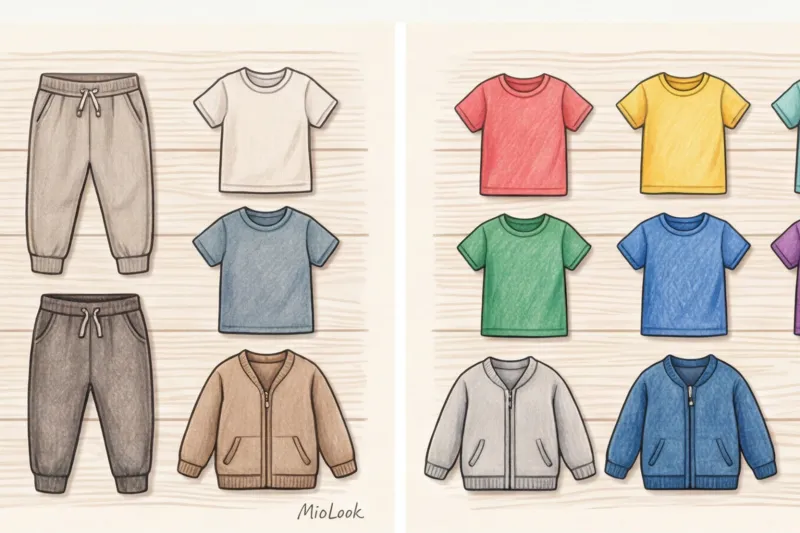
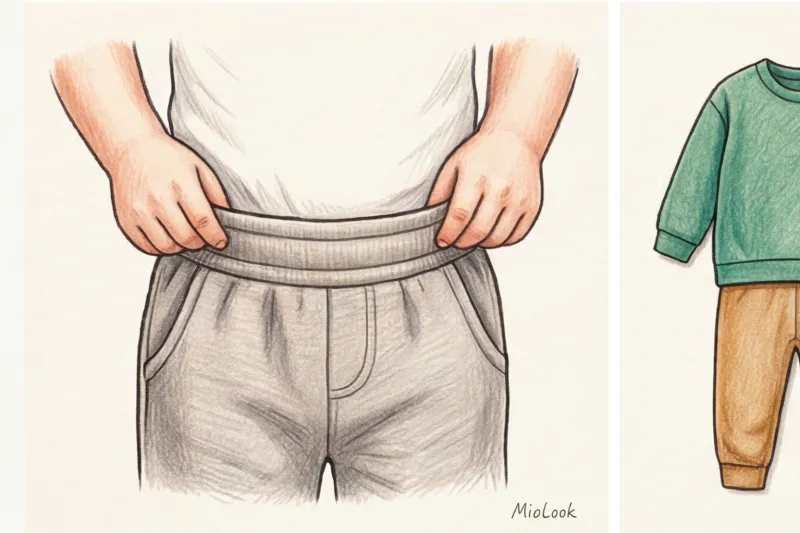
The first rule of a kindergarten wardrobe is to ruthlessly get rid of stiff jeans with metal buttons and zippers. For a preschooler, these are shackles. The ideal base is joggers, soft leggings, or pants made of thick, double-thread fleece with 5% elastane (to prevent stretching at the knees).
The color scheme for bottoms should be practical. Dark shades (graphite, indigo, chocolate) or mélange (speckled) textures are your best friends. They perfectly disguise Play-Doh stains and apple juice drops, allowing the garment to survive until the evening wash in decent condition.
Tops: The principle of layering
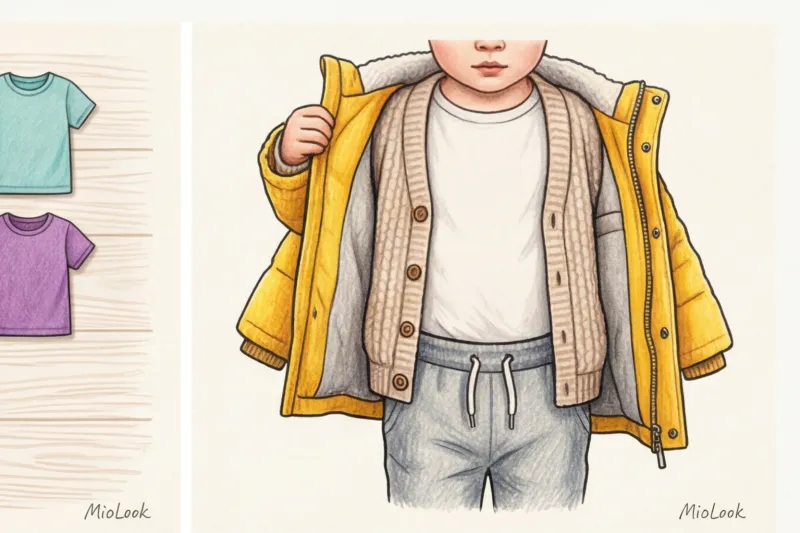
Heating in kindergartens is unpredictable. It can be cool in the morning, but hot in the afternoon. Layering is key. Base layers include loose-fitting cotton long sleeves and T-shirts.
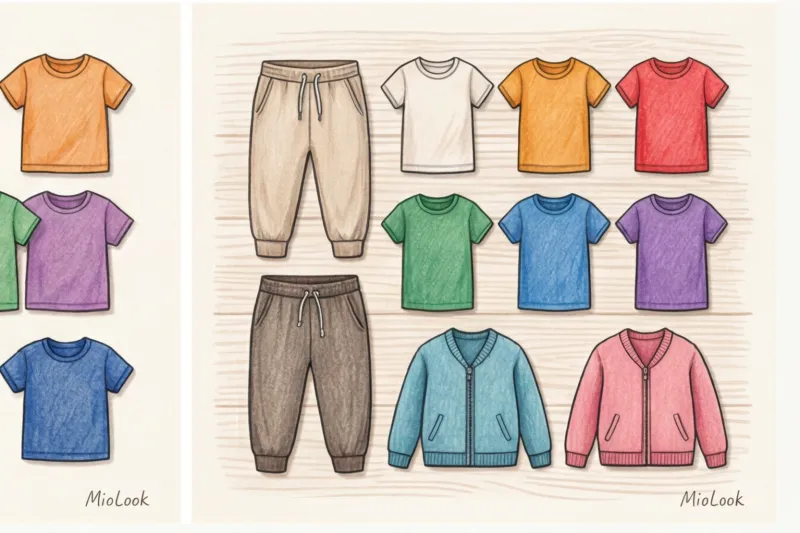
The second layer is a cardigan with a large plastic zipper or a hoodie. An important nuance: Avoid hoodies and sweatshirts with drawstrings. Drawstrings can get caught on playground equipment, so many European kindergartens have officially banned them for safety reasons.
Sensory Safety: How Clothing Helps Children Become Independent
According to the 2023 guidelines from the American Academy of Pediatrics (AAP), the sensory comfort of clothing directly impacts a child's emotional stability throughout the day. Have you ever tried to concentrate on a complex task when a harsh, synthetic label makes your back itch? A preschooler in this situation simply starts crying for no apparent reason.
"In about 40% of cases, when a child throws a tantrum while getting ready for kindergarten, the real reason is not a tantrum, but rather physical discomfort from the clothing: a tight elastic band, a rough seam on the toe, or a scratchy zipper."
What to check in children's clothing:
- Belts: Only wide, soft elastic. Your child should be able to remove the pants in two seconds to make it to the bathroom. If they have to fiddle with the fastener, expect wet surprises.
- Shoes: A categorical refusal to use laces. Shoes with Velcro or slip-ons are the gold standard. This saves the educators' nerves and gives the child a reason to be proud ("I put my shoes on myself!").
- Fittings: Large plastic tractor zippers with pullers (extender rings on the slider). Zipping one of these is a great, stress-free way to practice fine motor skills.
Kindergarten Clothes: A Complete List of Essential Items for 5 Days
Here's where things get interesting. There's a common parenting myth that a child needs 10 pairs of pants—two for each weekday. This misconception leads to overcrowded closets. In reality, if you choose stain-resistant blends (like cotton-polyester for joggers), you'll need significantly fewer.
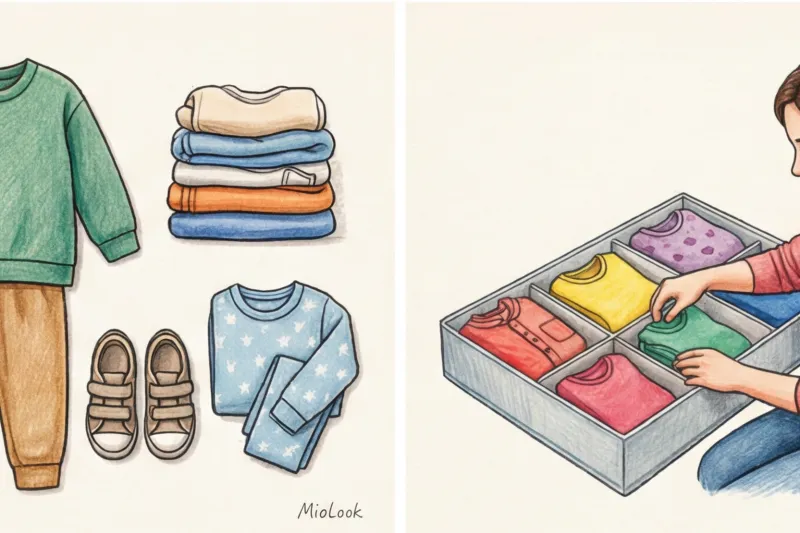
Here is a proven one List of clothes for kindergarten according to the formula 3-4-7 (assuming washing on Wednesday and on weekends):
- Base for the group (room):
- 7 tops (4 T-shirts + 3 long sleeves);
- 4 bottoms (joggers/leggings/shorts - depending on the season);
- 1 warm sweater (cardigan or zipped sweatshirt).
- Spare kit for the locker: (in case of serious accidents with puddles or lunch)
- 2 T-shirts;
- 2 pairs of comfortable pants;
- 3 sets of underwear;
- 3 pairs of socks.
- Quiet time: 2 cotton pajamas (one in the wash, one in the garden).
- Outdoor gear: Waterproof overalls (so-called mud pants - worn directly over clean gardening pants for walking in the mud), a jacket, a comfortable helmet-hat (protects the neck, does not require a scarf) and waterproof boots.
Ready to get started?
Try a free plan in the MioLook app – digitize your kids' wardrobe right now
Get access — €0.99 onceSmart Shopping Secrets and Size Management with MioLook
The biggest headache of children's shopping is growth spurts. A child can grow several centimeters in a month, and clothes bought "just in case" simply won't last until the right time. That's why it's so important to manage your wardrobe consciously.
My main life hack is digitizing a child's closet. Take photos of the child's basic items and upload them to MioLook Firstly, you'll always be able to see how many T-shirts you actually have (and you won't buy a sixth gray one on sale at Zara). Secondly, you can pre-create outfits in the app. If dad or a nanny is getting the child ready in the morning, they won't have to rack their brains – they can simply open their phone and grab a pre-coordinated, stylish outfit from the shelf.
Furthermore, keeping track of your belongings helps you realistically estimate the cost per wear (CPR) for expensive purchases. For example, a high-tech winter jacket from a well-known brand for €150 may seem expensive. But if a child wears it 120 times over the winter (and it doesn't rip on a slide, unlike a cheaper alternative), the cost per wear will be just over €1.20. This is a wise investment in comfort.
Action plan: assemble the capsule for tomorrow morning
Understanding theory is pointless without practice. Right this evening, after your baby falls asleep, take four simple steps that will transform your morning routine:
- Conduct a ruthless audit. Take out all your clothes. Put them away or donate anything that's too small, needs ironing (do you really need that at 7 a.m.?), has tight buttons, or itchy seams.
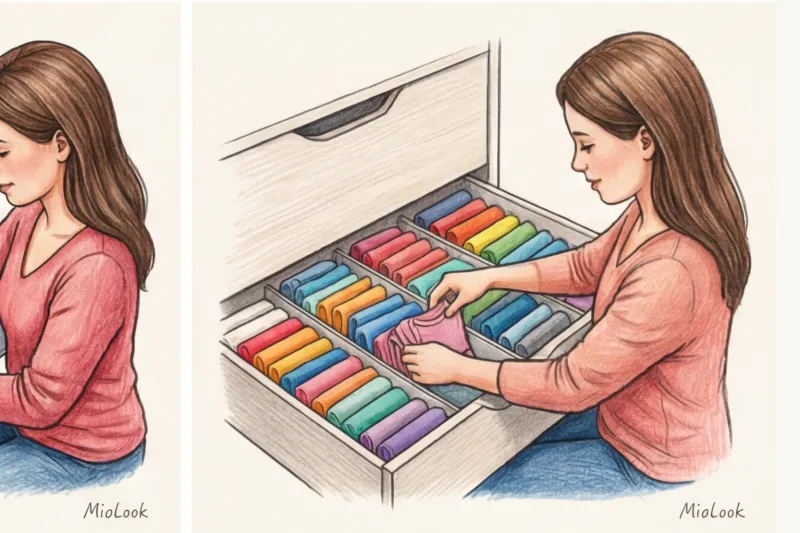
- Change logistics. Designate one bottom shelf in a closet or dresser that's completely within the child's reach. Fold items vertically (using the Marie Kondo method)—this way, all the colors are visible at a glance, and pulling out a single T-shirt will prevent the stack from falling apart.
- Prepare the kits. Create 5 complete looks for the coming week. Check the weather forecast and pin your combinations.
- Hand over control. Tomorrow morning, offer your child a choice: "Will you wear blue pants or gray ones? A dinosaur hoodie or a striped long-sleeve top?" By giving them a choice of two options that you've approved in advance, you give your child a sense of control over their life.
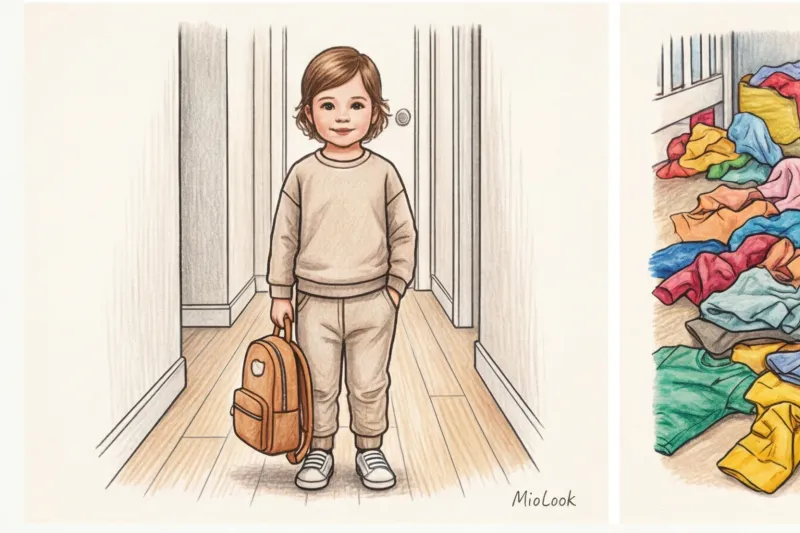
Choosing clothes for preschool shouldn't be a headache. A well-designed capsule isn't about restrictions. It's about creating a safe, comfortable, and predictable environment where your child can play freely and explore, and you can finally enjoy your morning coffee.