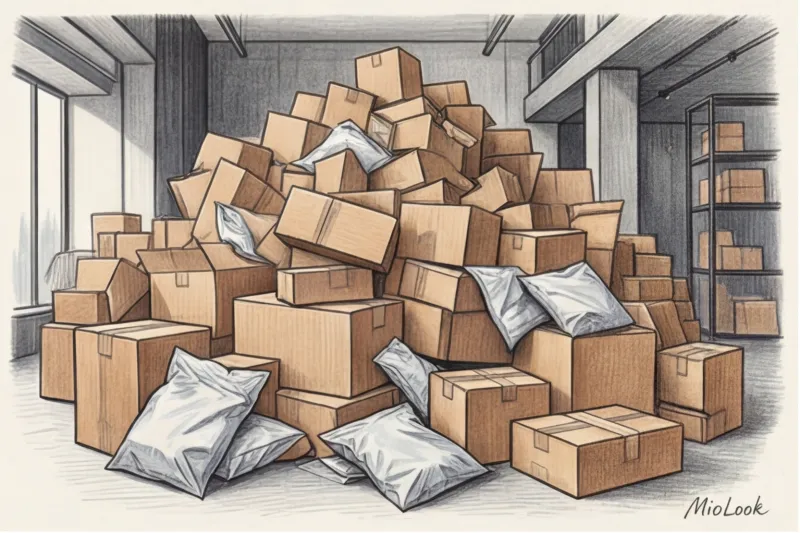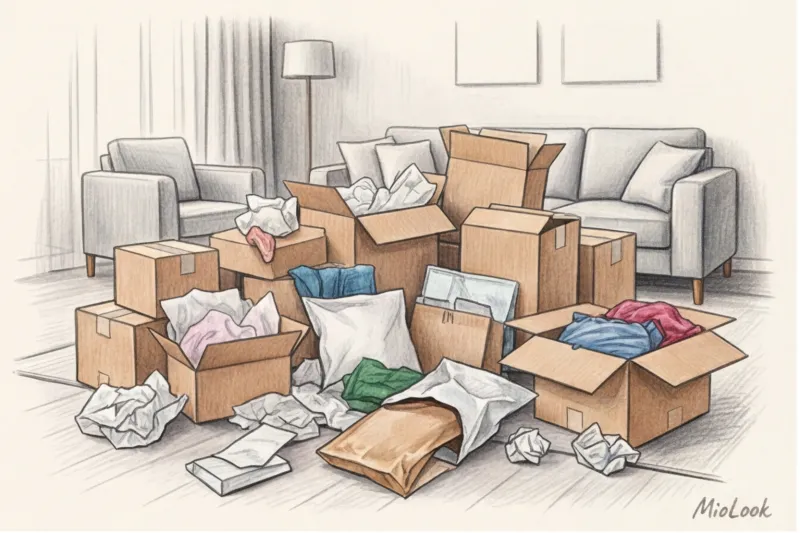
You know that feeling? The courier delivers a huge branded package, and you joyfully unpack it, anticipating a new life in these impeccable clothes. But after 15 minutes, euphoria gives way to disappointment. Your pants are digging into your waist, your blouse is bunching up, and the color of your cardigan makes your face turn a sickly green. And then you stand in front of the mirror, surrounded by a mountain of cardboard boxes, rustling paper, and clothes that don't fit.
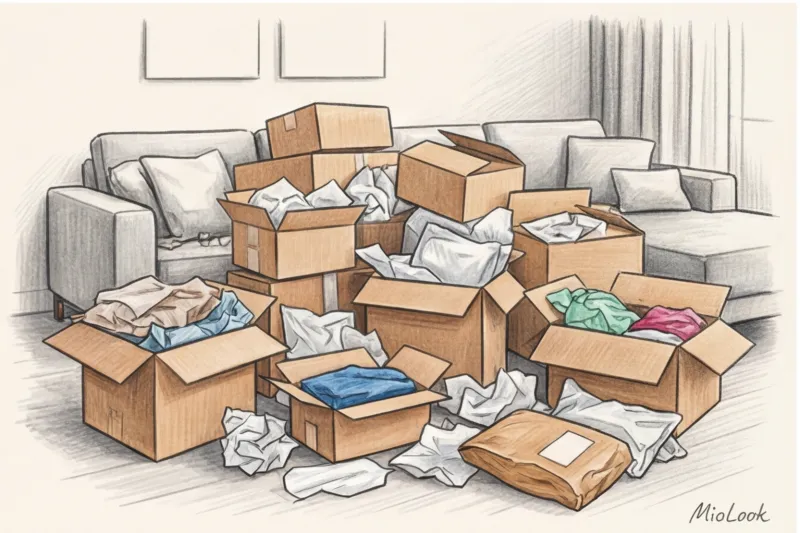
Then comes the worst: you have to process the return, print out forms, and find a pickup location. Many of us give up at this point. virtual fitting room for clothes — it's no longer just a fun toy from geek blogs. It's a tool for financial separation from brands' marketing ploys and the only way to break the toxic cycle of endless orders and returns. I wrote more about the global impact of this problem in a complete guide about How digitizing your wardrobe is saving the planet from overconsumption.
The Illusion of "Free Returns": Why Online Shopping Is Ruining Our Style
For years, retailers have been telling us that ordering three adjacent sizes of the same item is perfectly fine. "If it doesn't fit, return it for free!" scream online store banners. But free returns are a toxic marketing myth that costs us dearly.
Firstly, it destroys self-esteem. When you try on a garment designed for a fitness model's body type with 90-60-90 proportions (the very same mannequins used for mass-market clothing), and it doesn't fit, your brain jumps to the false conclusion: "Something's wrong with me." When in fact, the problem is entirely in the cut.
Secondly, there's the so-called "laziness tax." One of my clients, while sorting through her wardrobe, discovered five bags of unpacked clothes on the top shelves. She'd order items "to choose from," keeping the ones that had shrunk "well, okay," and planning to return the rest over the weekend. Weekends turned into months. We calculated the cost of those bags—she'd paid over €500 simply for her procrastination.
According to the National Retail Federation (NRF, 2024 report), up to 40% of clothing purchased online is returned. But the scariest part is that a significant portion of these people, like my client, keep the unsuitable items simply because the return process is stressful.
Ready to get started?
Try the free plan—no commitments required. Start creating perfect looks with AI.
Get access — €0.99 onceHow a Virtual Dressing Room Works: From 2D Filters to Generative AI
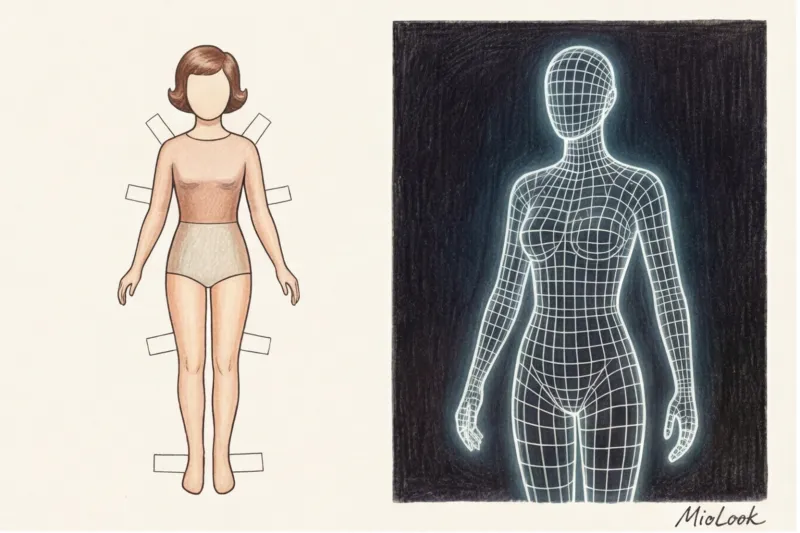
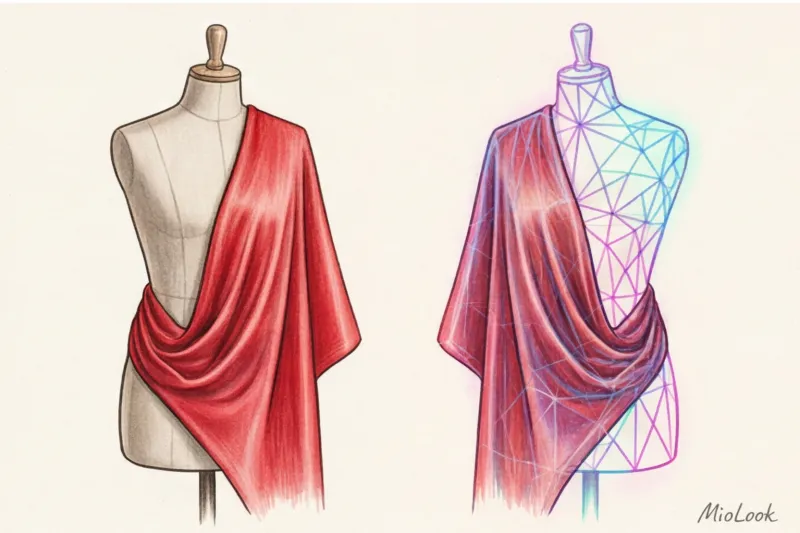
Forget the ridiculous AR masks from social media five years ago that simply pasted a flat image of a dress over your photo. Today's virtual clothing fitting room operates on the principles of physics and generative artificial intelligence (Generative Fit).
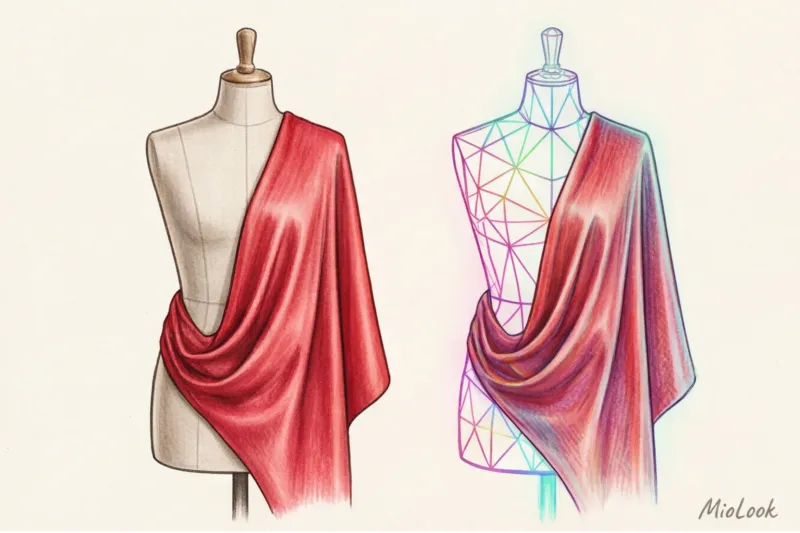
As a stylist, I often see people buying clothes based solely on color and style, ignoring the fabric's properties. But AI algorithms today are trained to think like professional clothing designers. They analyze two critical parameters:
- Fabric tension (Drape): The way a material falls under gravity. Flowing silk and heavy 14-ounce denim feel completely different on the same body.
- Ease Allowance: The difference between body volume and garment volume. The AI understands where an oversized jacket should stand out and where it should fit snugly across the shoulder.
My personal experiment is impressive: when I started using advanced algorithms to test fit before purchasing, my personal return rate dropped from 40% to absolute zero within six months.
Why don't brand size charts work anymore?
If you think you're a size M, I have bad news. Brands actively use vanity sizing. To flatter customers and drive sales, manufacturers intentionally understate the number on the tag. As a result, a size L at Zara might be the same as a size M at Massimo Dutti or H&M. Digital fitting completely ignores brand tags—it works solely with the pure mathematics of your actual measurements.
The biggest mistake a beginner makes is trying on clothes for the "ideal version of yourself."
When I ask new clients to create a digital avatar in the app, 8 out of 10 try to cheat the system. They suck in their stomachs, choose photos from five years ago with a flattering angle, or, even worse, slightly retouch the original.
This is the worst possible strategy. Trying on clothes virtually requires radical honesty.
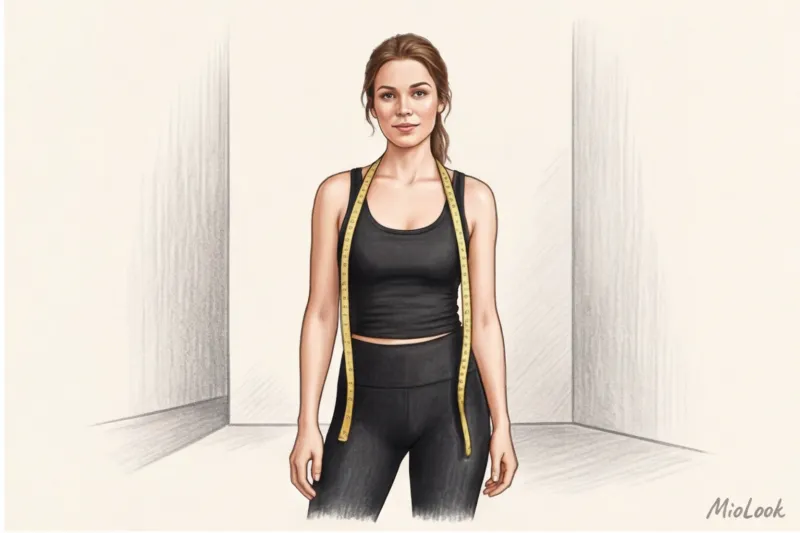
The point of technology is not to paint you the perfect picture, but to find the perfect one clothes For your real body. We all have asymmetries, differences between waist and hip measurements, and sloping or broad shoulders. AI does a brilliant job of selecting styles for non-standard figures, bypassing the humiliating stress of sweating in a cramped shopping mall stall. Read on to learn how to embrace your unique features. How to choose clothes for your body type without stereotypes.
When it does NOT work: Virtual fitting can be problematic when evaluating complex deconstructive cuts (for example, avant-garde pieces by Rick Owens or Maison Margiela), where the fit is designed from the outset to be anti-anatomical. In 95% of cases, the algorithm works flawlessly with basic and modern everyday clothing (budget and mid-price ranges from €30 to €300).
Your perfect look starts here
Join thousands of users who look flawless every day. Upload your parameters and let AI find your style.
Get access — €0.99 onceCloset Ecology: How Virtual Try-Ons Save the Planet (and Your Wallet)
Have you ever wondered where that blouse you returned to the courier goes? Most people believe it'll be carefully steamed and hung back on display. The reality is much more grim.
According to reports from logistics company Optoro (2023), processing returns is so expensive for retailers that in half the cases, it is cheaper for a brand to send a new item with the tag straight to a landfill in the Global South or burn it than to return it to the sales cycle.
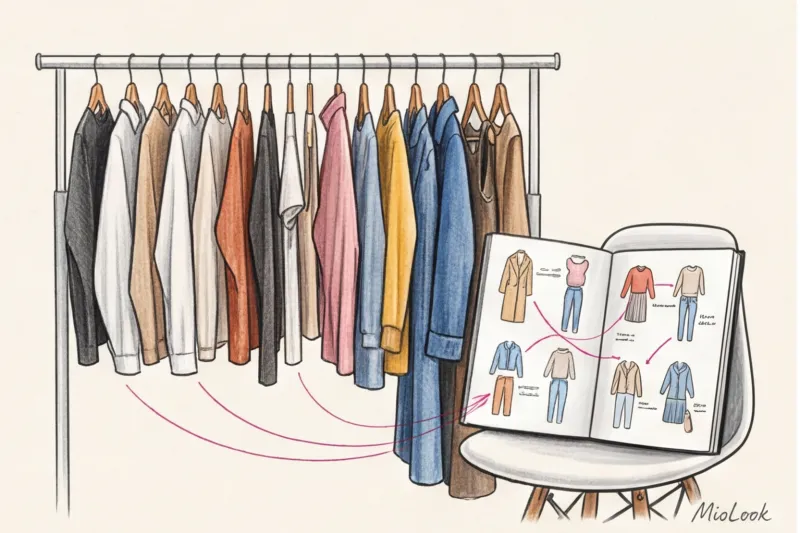
We can endlessly buy things made from "recycled plastic," indulging our eco-ego, but the most eco-friendly item is one that doesn't have to be returned. And here's where the key rule of conscious style comes into play: the average woman wears only 20% of her clothes 80% of the time.
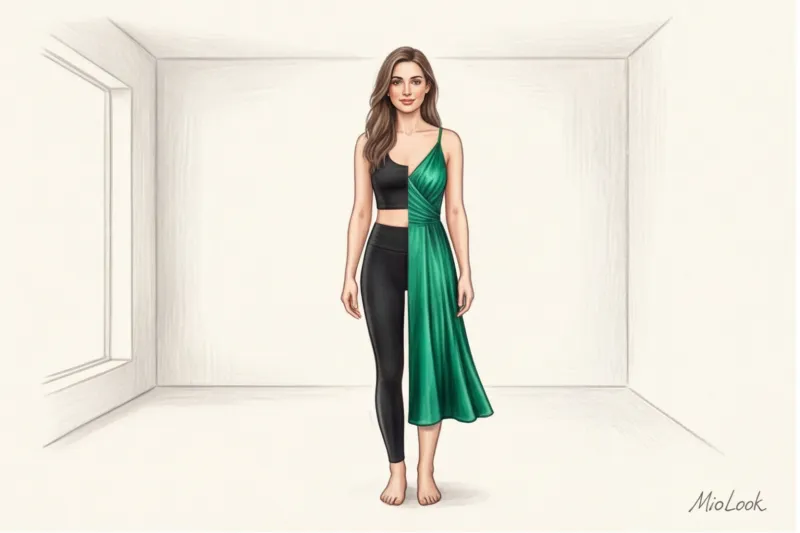
Virtual try-on allows you to crash-test your new purchase BEFORE the transaction. Upload a photo of your favorite sweater and check if it matches your favorite jeans already in your digital closet. No match? No purchase.
Checklist: How to Prepare for Your First Virtual Clothing Try-On
For an AI algorithm to produce accurate results, it needs high-quality input data. As a stylist, I give my clients strict instructions before creating a digital twin. Here's what you'll need:
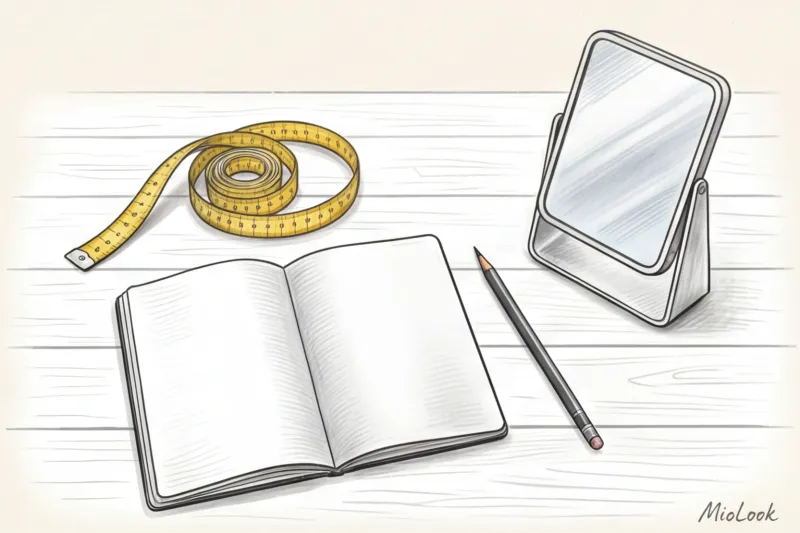
- Daylight from the window: Lighting is 80% of success. No yellow incandescent bulbs or harsh shadows from a chandelier. Face a window during daylight hours.
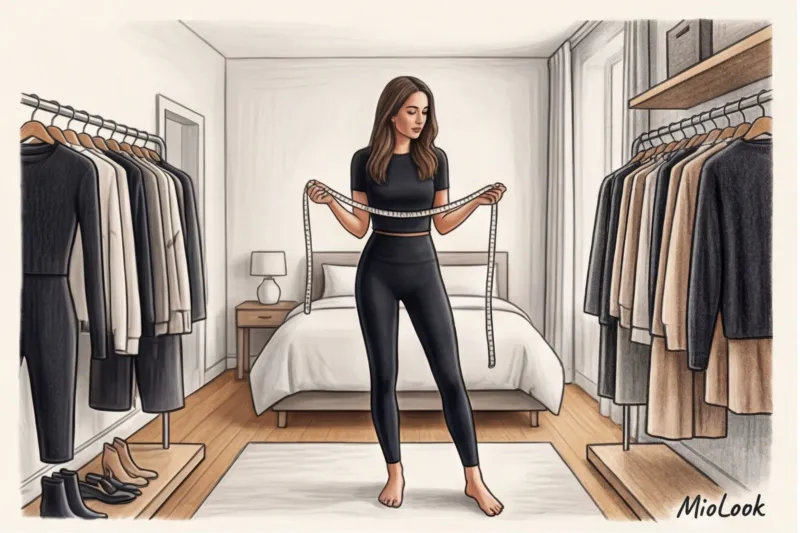
- Correct base: The algorithm should calculate your contours, not the volume of your T-shirt. Wear smooth, neutral underwear, cycling shorts, or leggings with a fitted top. No draping or frills.
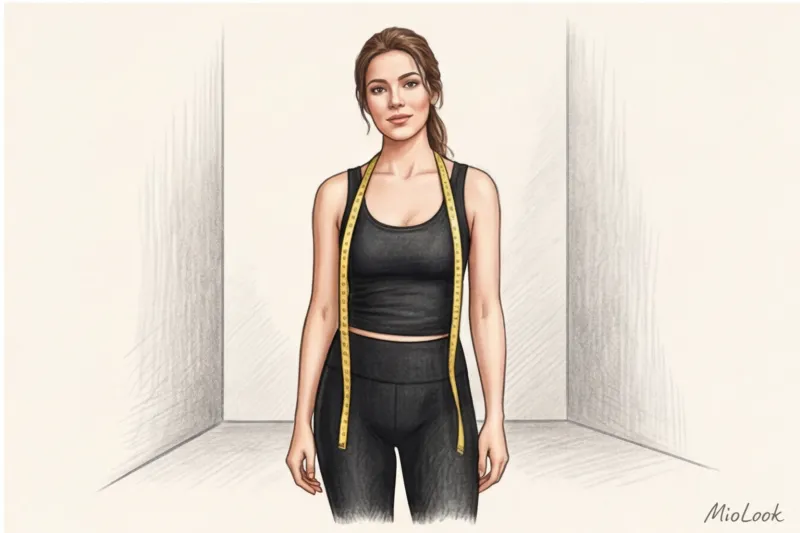
- Latest measurements: Your body changes, and that's normal. Every six months, check your three key measurements (bust at its fullest point, the narrowest part of your waist, and the widest part of your hips). Be sure to measure your inseam (from your crotch to your ankle bone)—this will prevent you from buying pants that are too short.
The Future of Style: From Single Try-Ons to Smart Capsule Wardrobes
A 2024 study by the WGSN trend bureau shows a clear shift in consumer habits: people are tired of buying "simply pretty things." Trying on a single blouse in isolation will soon be a thing of the past. The era of outfit planning—strategic image planning—is dawning.
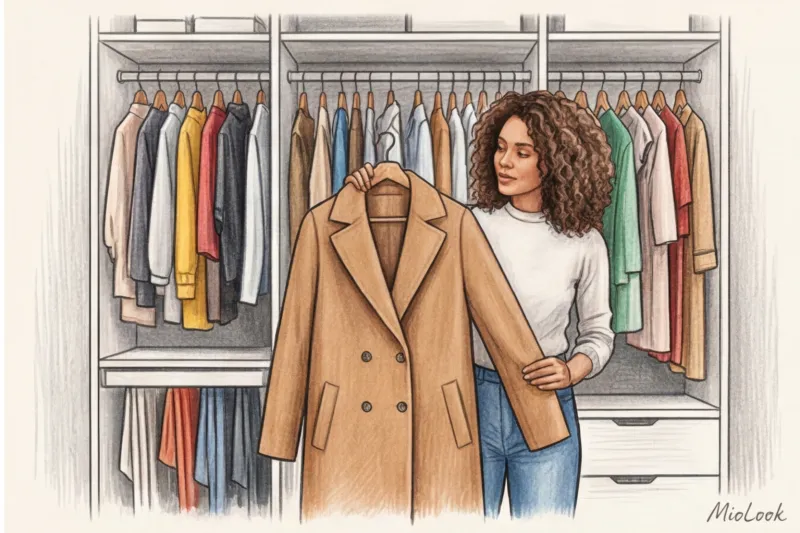
That's why a smart virtual fitting room for clothes shouldn't exist in a vacuum. In the app MioLook The generative fitting feature is integrated directly into your virtual closet. The system analyzes what you already own and shows how a potential new item will complete your closet. This transforms the chaos of your hangers into a functioning, mathematically precise mechanism.
Technology doesn't take the romance out of fashion. On the contrary, it takes away all the dirty, stressful work of logistics, fittings, and returns, leaving you with the most enjoyable part: pure creativity and confidence every time you step out of the house.