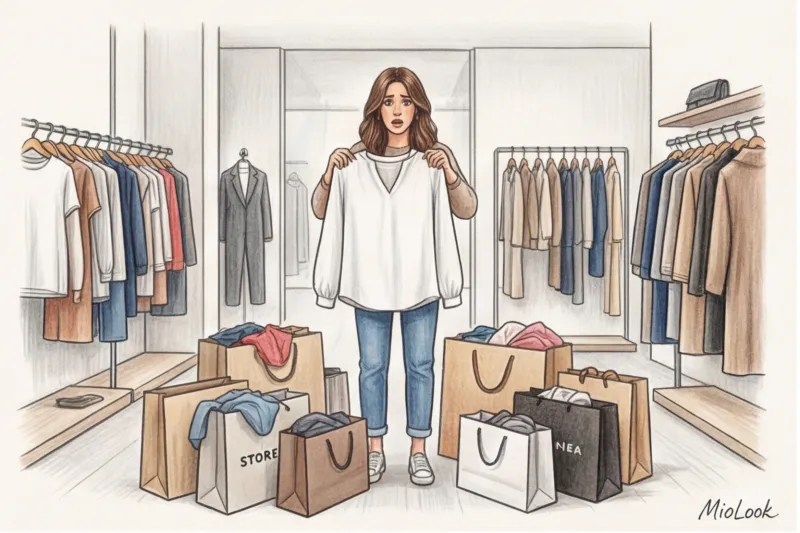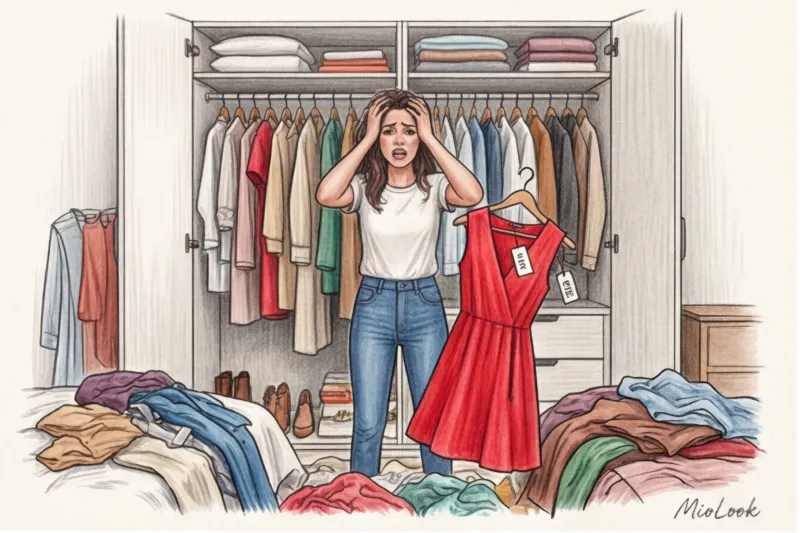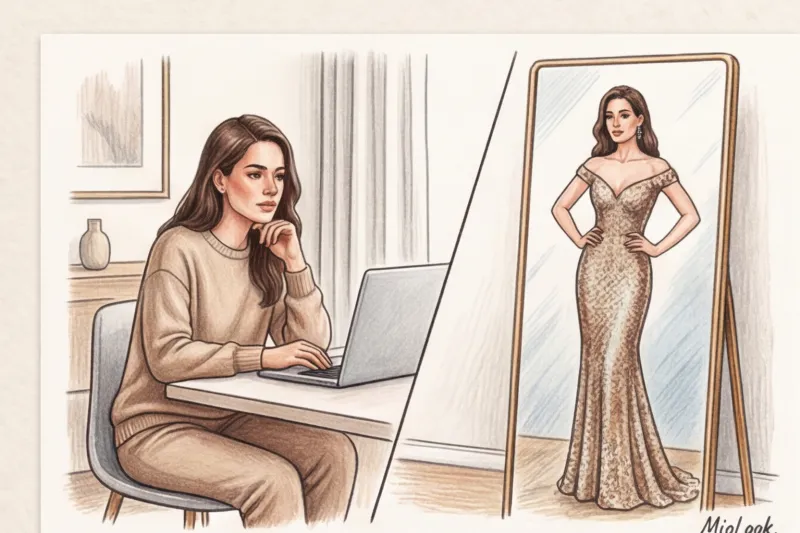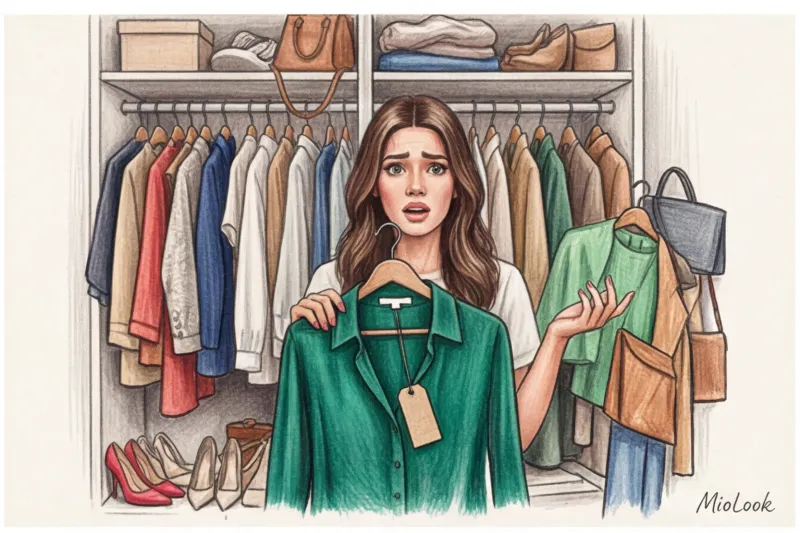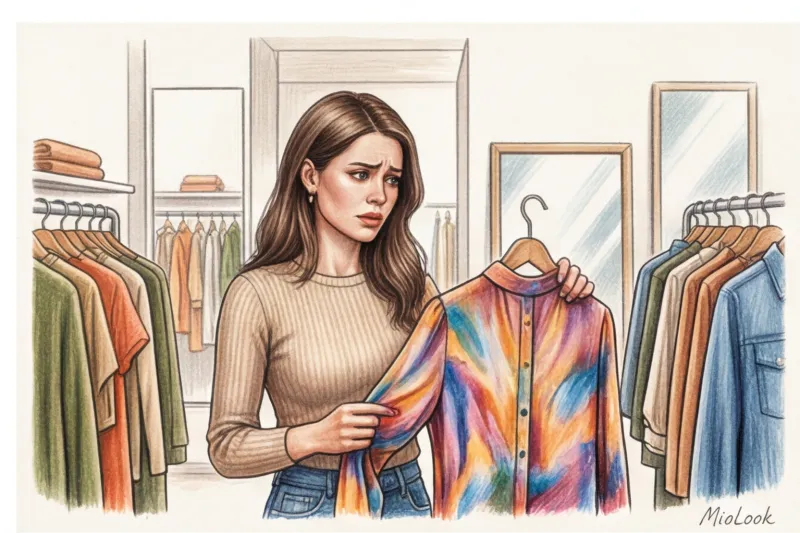
Have you ever come home with a rustling shopping bag, pulled out the perfect basic trench coat, and then opened your closet to find... three more almost identical ones? In my 12 years as a personal stylist, I've seen this scene dozens of times. We blame ourselves for lack of willpower, promise to never set foot in a mall again, and vow to unsubscribe from our favorite brands' newsletters. But spoiler alert: it never works.
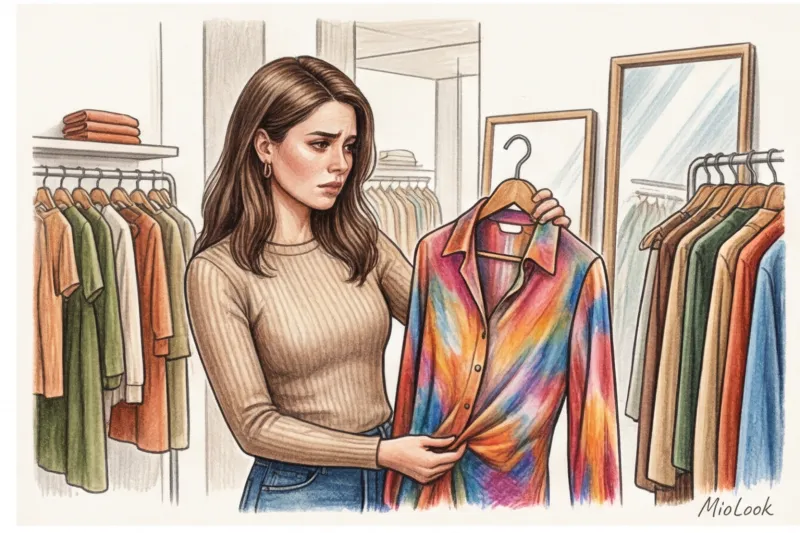
In fact, the problem with impulse buying isn't a psychological one, but a spatial one. We discussed the environmental and global aspects of this problem in more detail in our The Complete Guide: How Digitizing Your Wardrobe Saves the Planet from Overconsumption Today we will talk about that, How to stop buying unnecessary clothes with one elegant and high-tech tool - visualization of your closet.
The Anatomy of an Impulse Buy: Why We Get Overwhelmed at Sales
For years, glossy magazines have been teaching us, "Wait 24 hours before buying, and the urge will pass." It's a beautiful myth. The illusion of control crumbles as soon as you're faced with severe stress or fatigue.
One of my clients, a top executive with an incredibly strict corporate dress code, regularly bought brightly colored silk blouses with abstract prints. She did this every time after difficult board meetings. When we analyzed her purchases, the obvious became clear: she wasn't buying clothes. She was buying dopamine and the image of the "free, relaxed woman" she wanted to feel at that moment. She couldn't wear any of these blouses to the office, so they ended up sitting on the shelves like dead weight.
The biggest mistake 90% of women make is feeling guilty. But shopping addiction isn't overcome by prohibitions. When your brain is caught in a dopamine trap of sales, the only thing that can sober it up is a brutal confrontation with reality in the form of an inventory.
Wardrobe Blind Spots: The Real Reason We Have "Nothing to Wear"
The paradox of a stuffed closet is familiar to almost everyone: hangers are creaking, shelves won't close, and there's absolutely nothing to wear. Why does this happen?
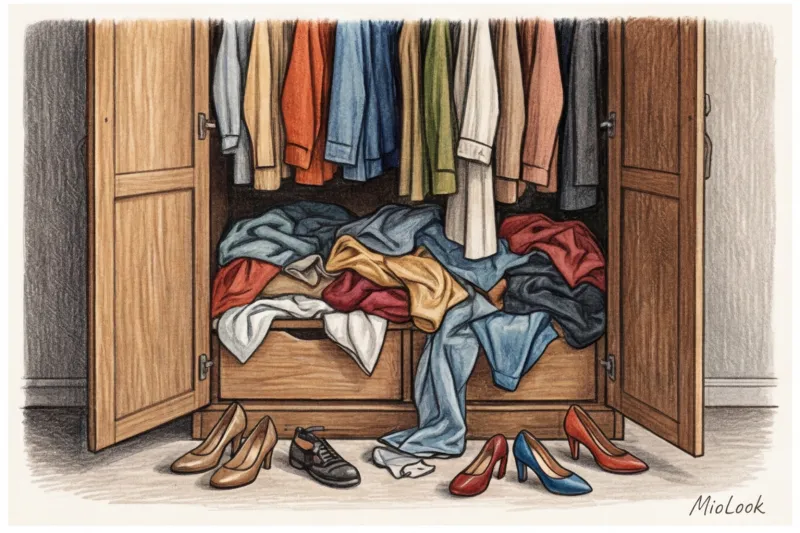
This is where simple behavioral economics and the visual availability heuristic come into play: the human brain values and uses only what it can see right now. In the wardrobe, the 80/20 rule works reliably. We wear the 20% of items that hang at eye level or are on top of the stack. The remaining 80% becomes an "archaeological dig" zone.
According to a major report by the Ellen MacArthur Foundation, global clothing production has doubled over the past 15 years, while we wear each item we buy on average 36% less often.
I call this phenomenon "wardrobe amnesia." If an item hangs in a dark corner behind bulky sweaters, it simply doesn't exist in your mind. You buy a fifth white shirt not because you're a spendthrift, but because you genuinely don't remember the other four.
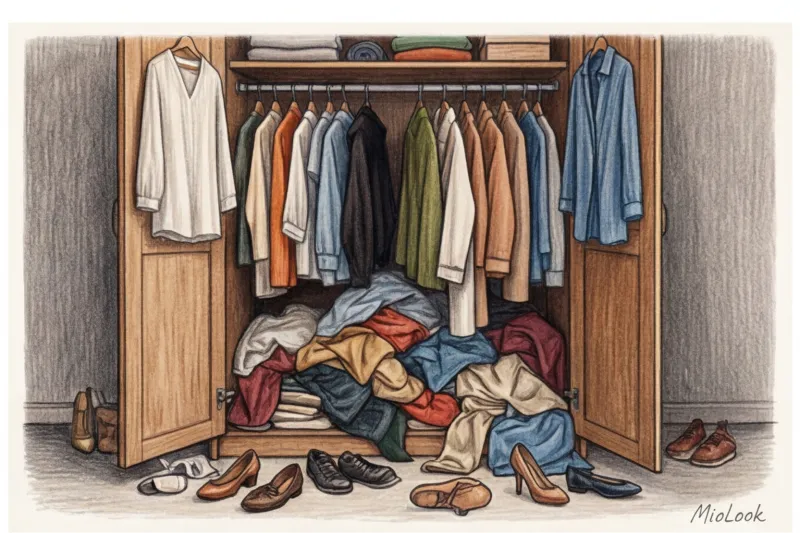
A Virtual Closet as an Antidepressant: How to Stop Buying Unnecessary Clothes
So, we've reached the main secret to stopping buying unnecessary clothes. You need to transform your closet into your phone. A paradigm shift occurs when you change your desires. have something new for pleasure combine your.
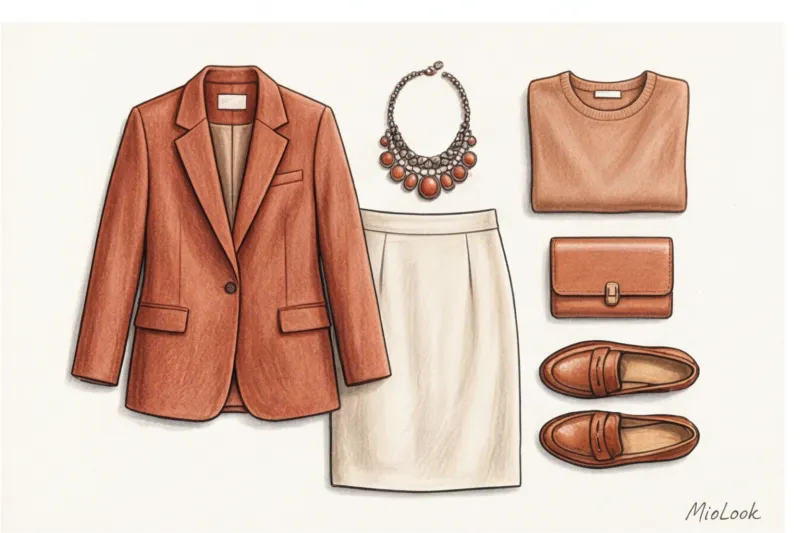
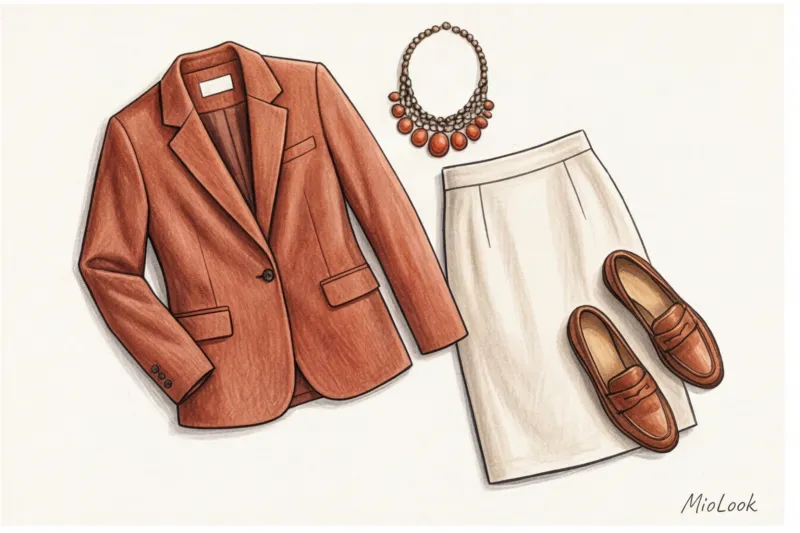
In my stylistic practice, I have a favorite formula for Mediterranean elegance: Structured blazer + flowy midi skirt + leather loafers = instant status When you see your things digitized, you suddenly realize that you already have the components for dozens of such formulas.
Your perfect look starts here
Join thousands of users who look flawless every day and don't waste money on unnecessary things with MioLook.
Get access — €0.99 onceHow does this work in practice? You're standing at the checkout at Zara with yet another cashmere sweater. Your hand is already reaching for your card. But you open your virtual closet in the MioLook app And you see a perfect, visual grid of your 12 sweaters. The app's algorithms immediately suggest three fresh combinations with that sand-colored sweater you haven't worn since last fall. Dopamine is released—the algorithms simulate a feeling of novelty for your brain. You calmly hang the item back on the rail.
The Capsule Method: How Digitalization is Changing the Approach to Image Creation
Most women buy "single items." You see a stunning sequin skirt, fall in love with it, bring it home, and realize you need a completely different top, different shoes, and a different life to go with it.
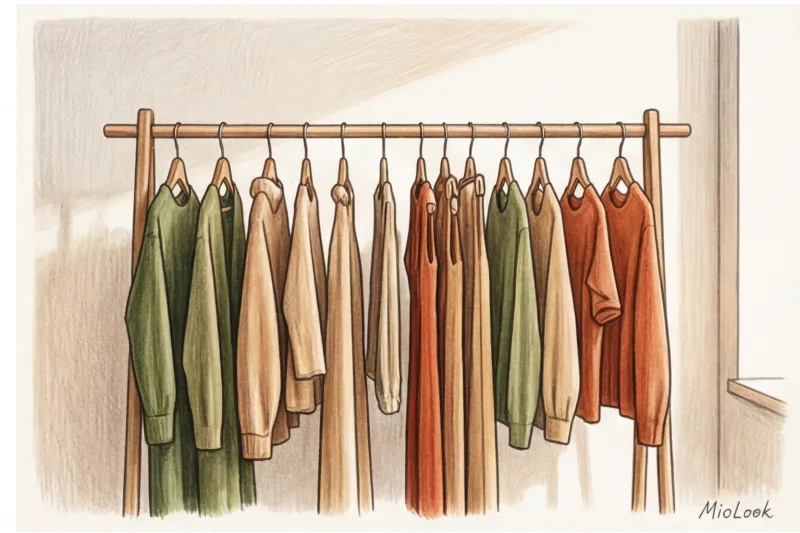
Digitization takes you to the level of buying "missing puzzle pieces." By creating capsule wardrobes for different areas of your life right on your phone, you uncover your true needs. For example, while putting together a relaxed Mediterranean-style capsule wardrobe (dominated by terracotta, olive, and thick natural linen), you might suddenly discover you don't need a fifth cocktail dress. What you're desperately missing are the perfect basic palazzo pants.
The rule of three combinations before the checkout
To ensure the capsule method works flawlessly, I make my clients use a strict filter. Before you check out, mentally (or directly on your smartphone screen) create three different looks with the new item, using only the tops or bottoms you own. already exists.
- Only goes with one item? Leave it in the store.
- Need new shoes? Leave them in the store.
- Does it perform exactly the same function as the jacket you bought a month ago? Leave it in the store.
How to: 4 Steps from Chaotic Shopping to a Smart Wardrobe
I share this tried-and-true algorithm with all my clients before the big sales season. I'll be honest: this method doesn't work for everyone. Trying to digitize your wardrobe by eye won't work. You'll have to set aside time.
Step 1. Total audit and extraction into the light. Drag absolutely everything out onto the bed. This is a frightening, but necessary, reality check. You need to see with your own eyes the scale of the disaster and the number of unworn items with tags (on average, according to my statistics, they account for about 15-20% of the total).
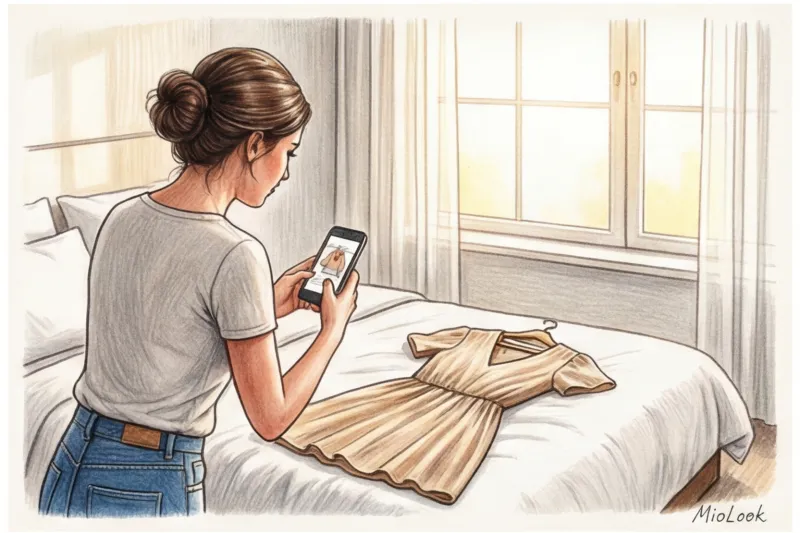
Step 2. Taking photos. Let's convert your wardrobe into data. Photograph each item in daylight against a contrasting background. Yes, this will take several hours. But these hours will save you thousands of euros in the future.
Step 3. Analyzing the “favorites”. Look at those 20% of items you wear regularly. Why those? It's likely a matter of the right fit, comfortable composition (for example, viscose with 5% elastane), and a suitable cut. Record these parameters.
Step 4. Implementing the Mindful Shopaholic Checklist. Now, when you go shopping, you take your digital wardrobe with you, not a shopping list. Every potential new item must pass the compatibility test.
Ready to get started?
Try a free plan—no commitments. Digitize your wardrobe and forget about the "nothing to wear" problem forever.
Get access — €0.99 onceFinancial Mathematics: How Much Money Can Visualization Save?
Shopping without a system only seems cheap in the moment. Let's turn to the mathematics of style and calculate Cost Per Wear (CPE)—the key indicator of your wardrobe's effectiveness.
Imagine you gave in to an impulse and bought a trendy top at a high-street store for €35. You wore it exactly twice to parties, and then the trend faded. Your cost per outing was €17.50. Now, consider a premium, perfectly tailored wool jacket for €250, which you meticulously planned using your virtual closet. You wear it to the office and to meetings three times a week for two seasons (around 70 outings). Its cost per outing is only €3.50! A cheap, impulsive item has cost you five times the value of a status investment.
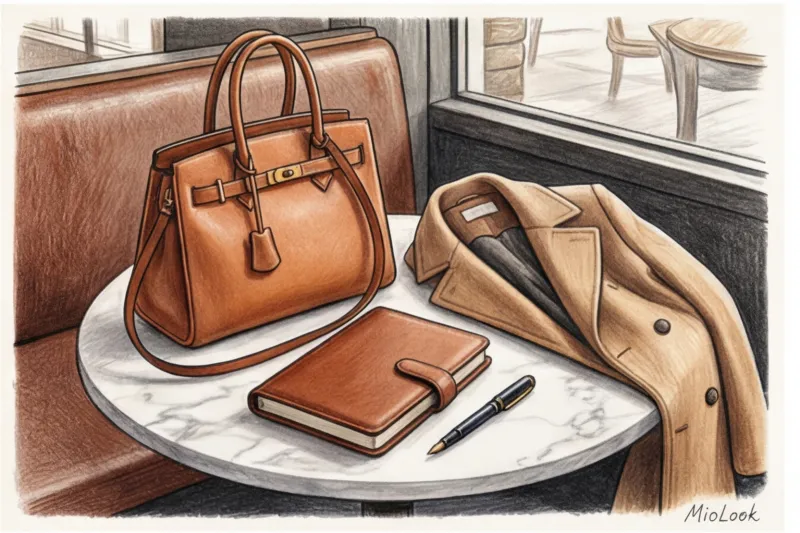
The average woman's frozen capital in the form of clothes with tags in her closet often exceeds €1,000. Visualization stops this budget drain. I always recommend redirecting the money saved on impulse purchases to status accessories: good shoes, rigid bags and high-quality watches , which instantly take any look to the next level.
Digitizing your wardrobe isn't just a way to organize your shelves. It's a way to regain control of your style, budget, and emotions. When you know exactly what you own, stores stop being a place of therapy and become a tool for fine-tuning your personal style.