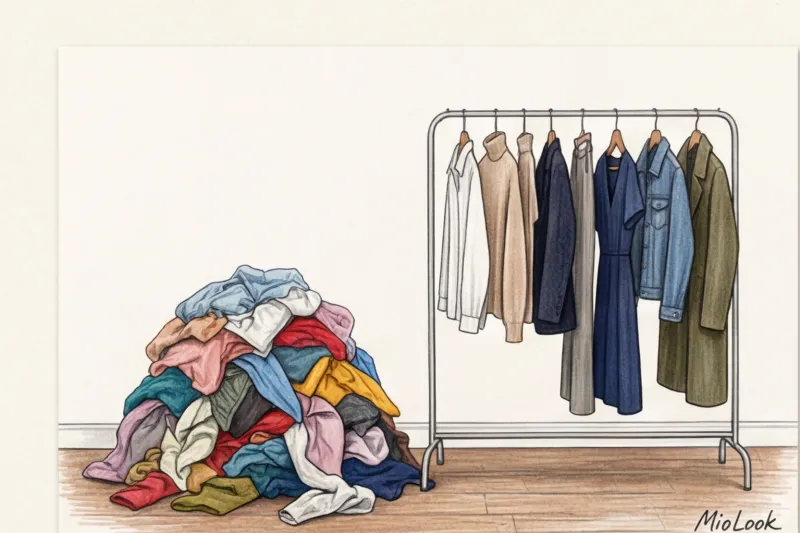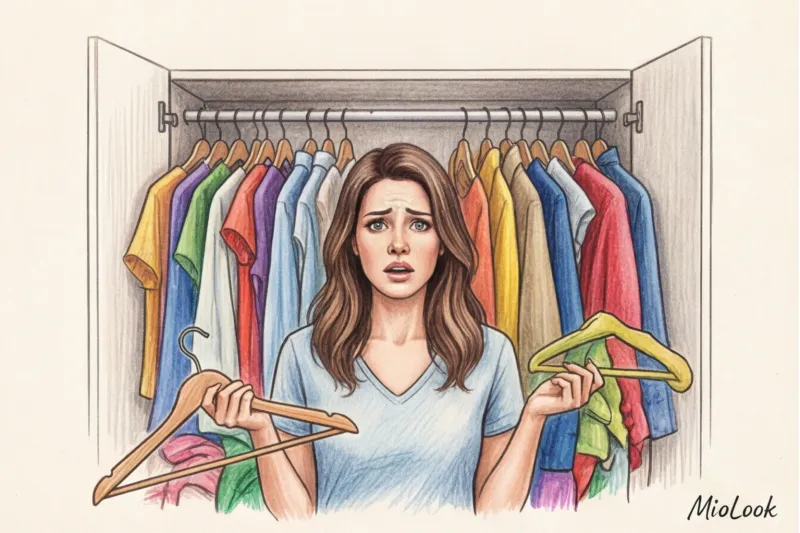
My client Anna recently bought a fourth pair of black dress pants. It wasn't because the previous three pairs had worn out or stopped fitting. She'd simply forgotten they were there—tightly tucked between bulky sweaters in the back of her closet. Sound familiar? In my 14 years as a stylist, I see this scenario every other closet review. We complain about having nothing to wear while standing in front of a closet whose doors won't close due to the abundance of clothes.
That is why today any quality capsule wardrobe app — it's not just a toy for fashion geeks. It's a powerful tool for psychological detox and regaining control of your own style. We've covered in more detail why buying "eco-friendly" sweaters doesn't work if you don't know what's already hanging on your hangers in our The complete guide to digitizing things and saving the planet from overconsumption In this article, I'll share a proven algorithm for digitizing your closet without giving up halfway through.
Why move a cabinet into a phone? The psychology of "blind spots"
Let's face it: the Pareto principle works flawlessly in our wardrobe. We wear the 20% of our favorite, comfortable, and understandable items 80% of the time. The rest are so-called "blind spots." The human brain is designed to ignore items in the back row, on the top shelf, or in opaque boxes. If you can't see a thing, it doesn't exist for you.
According to a 2022 study by the Ellen MacArthur Foundation, global clothing production has doubled over the past 20 years, while the average number of times a garment is worn has decreased by 36%. We buy more and wear less simply because we can't manage the amount of clothes we have.
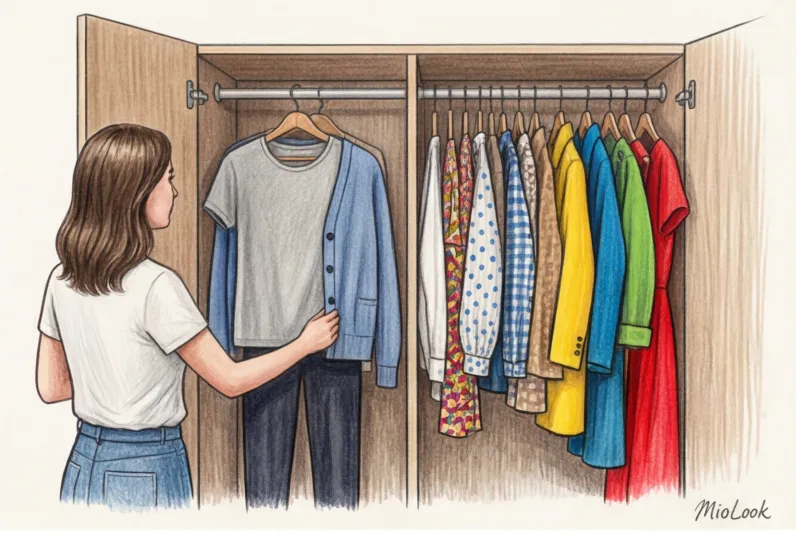
Cognitive psychology has long described the phenomenon of "decision fatigue." In the morning, when we need willpower for work and life, we spend up to 15 minutes irritatingly choosing clothes. The electronic capsule transfers this process to your smartphone. You scroll through ready-made looks over your morning coffee, making a decision in 60 seconds. No closet digging, no trying on clothes that end in a mountain of clothes dumped on the bed.
Access to MioLook for €0.99 — one-time payment
A smart AI stylist will create the perfect look from your own clothes and relieve morning stress.
Get access — €0.99 onceThe biggest mistake beginners make: why you shouldn't digitize everything
As soon as women install the app, they make the same fatal mistake. They dump all 200 items from their closet on their bed and try to photograph them in one weekend. This is a surefire way to burnout. By the time you've reached your 40th T-shirt, you'll hate your closet, the app, and the very idea of digitization.
Moreover, digitalized clutter remains clutter. If you transfer pants that are too tight, a blouse with a stain that won't come out, and a skirt whose zipper has been waiting a year for a replacement to your phone, you'll only clutter your virtual database. Artificial intelligence will suggest images featuring these items, and you'll reject them.
My main rule as a stylist: We're creating an "active wardrobe." Start digitizing ONLY those items you've worn at least once in the last month and that fit you perfectly right now.
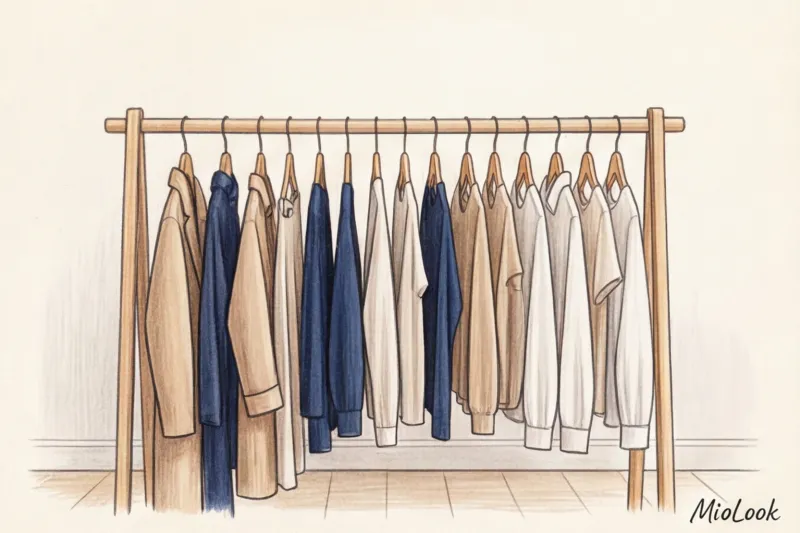
How to Build a Capsule Wardrobe in an App: A Stylist's Step-by-Step Guide
My signature methodology is based on the principle of micro-capsules. Don't try to assemble a wardrobe for every area of your life at once. Pick one, the most problematic area. This is usually the office (if the dress code is strict) or, conversely, maternity leave, when you want to look stylish on the playground rather than wear your old sweatpants. Focus on that.
Step 1. Capsule Core: Choose 15 Favorite Items
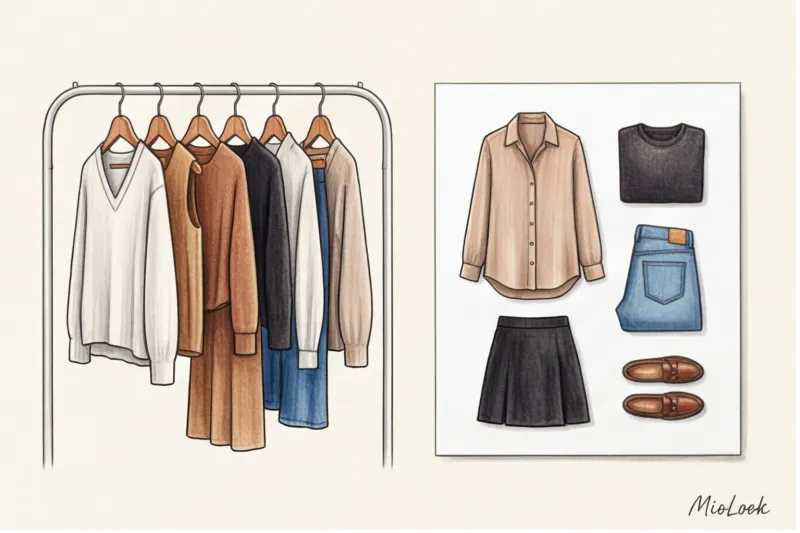
To get started, you only need 15 items of clothing. This is enough for the algorithms to kick into gear and generate dozens of combinations. The formula for a starter office capsule looks like this:
- 3 bottoms: for example, straight jeans without fraying, classic wide trousers, a midi skirt (silk or thick cotton from 180 g/m²).
- 5 tops: a white t-shirt (one that holds its shape and doesn't hang like a rag), a basic shirt, an oversized sweater, a turtleneck, a structured jacket.
- 2 dresses or a suit: things that work as an independent image when there is no time to think at all.
- 3 pairs of shoes: loafers, basic sneakers, ankle boots with comfortable heels.
- 2 bags: a rigid form for work (shopper or tote) and a cross-body for the evening.
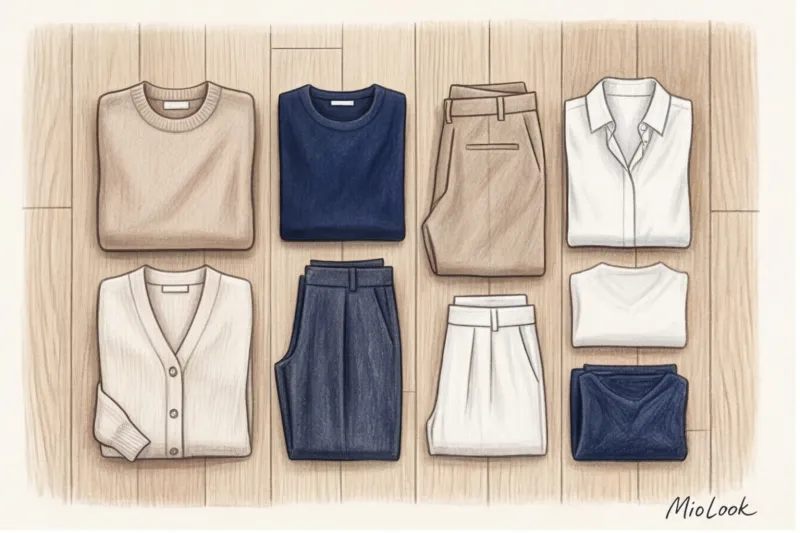
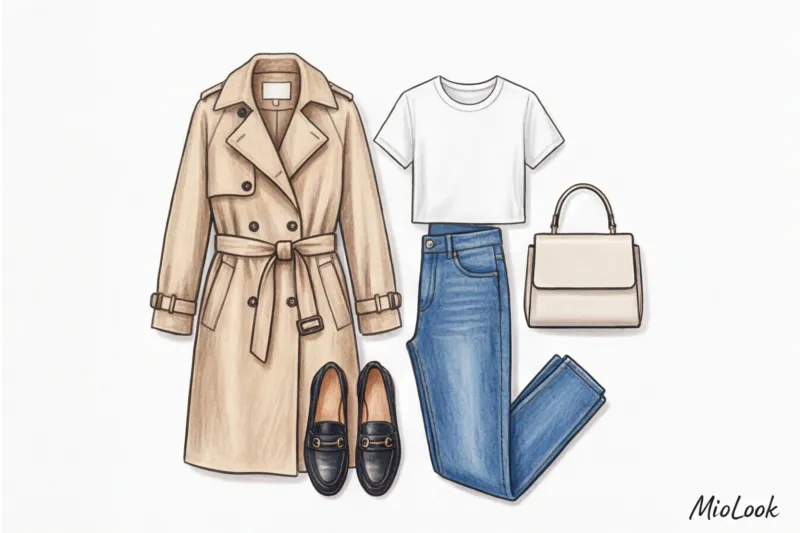
These items should complement each other. Choose a base in neutral tones (black, beige, graphite, off-white) and add one or two accent colors.
Step 2: The right photo is the key to success
Artificial intelligence is great at background clipping, but it needs some help. It's best to photograph clothes during the day, using natural light from a window. Lay them out on the floor against a contrasting background (a light blouse on a dark blanket, dark pants on a light sheet) or hang them on minimalist wooden hangers against a white wall.
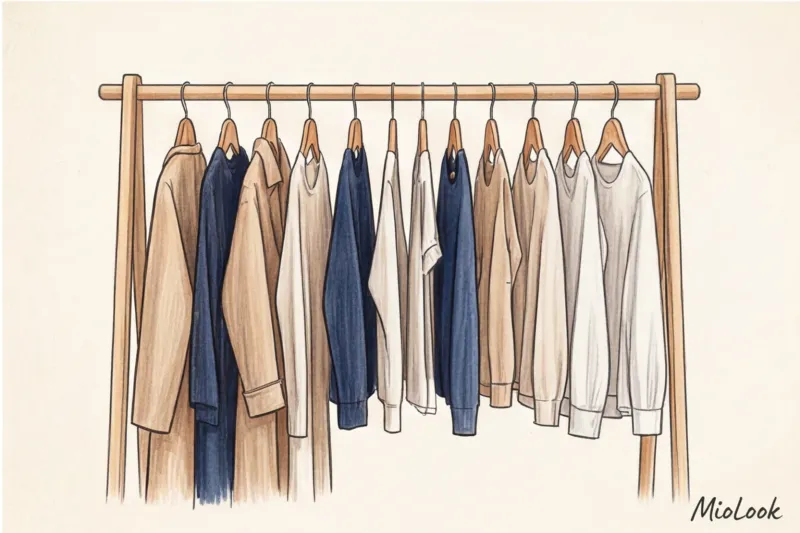
What you absolutely should NOT do is take photos of items on yourself in a mirror to upload to the database. A phone distorts proportions, a mirror adds glare, and the pose ruins the natural silhouette of the item. Save selfies for fittings, and upload clean "portraits" of the garment to the database.
Step 3: Grouping and Smart Tagging
To ensure the app returns relevant looks, don't be lazy with tags. Specify the season (winter/mid-season/summer), dress code (casual/office/evening), and color. If you use advanced systems like MioLook, specify brands. This is incredibly useful for analysis: in six months, you can look at your statistics and see that you've worn €40 jeans from Zara 80 times, while you've worn €200 trousers from a local designer just once.
Ready to get started?
Try the MioLook plan for free—no commitments required. Download your first 15 items today.
Get access — €0.99 onceArtificial intelligence as your pocket stylist
You can also store photos of clothes on your phone in a regular gallery. The magic begins when we move from simple storage to smart styling. Modern apps act as your personal stylist, eliminating the tedium.
One of my clients, Marina, uploaded her capsule into the "smart wardrobe" feature in MioLook She had a champagne-colored silk lingerie skirt, which she considered strictly a summer evening item, and a thick gray cashmere sweater. The app's algorithm unexpectedly suggested pairing them together, adding chunky lace-up boots. Marina confessed: "I would never have thought of combining these textures, but it turned out to be the most stylish autumn look I've ever created.".
In addition to generating images, smart algorithms carry out Gap Analysis The app analyzes your wardrobe and suggests, "You're missing a dark brown belt—if you add it, you'll have 12 new complete looks." You stop buying random things out of impulse and start investing in what truly complements your style.
Seasonal change of electronic capsule without stress
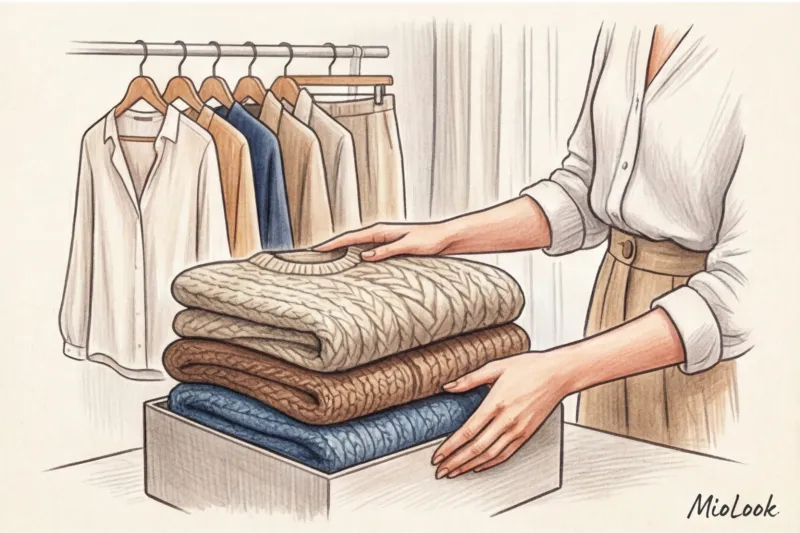
The change of seasons is a classic stress test for any woman. How does it work in real life? We dig out dusty boxes from the attic, discover our favorite sweater has been moth-eaten (or we've simply outgrown it), run to the mall, and panic-buy the first thing we see.
With a virtual capsule, you plan the transition from summer to fall while sitting on the couch. Two weeks before the cold weather sets in, you open the fall tag. Conduct an inventory: mentally check which items are worn out or outdated, and simply delete them from the database. The app then generates a shopping list based on the resulting gaps.
My professional life hack: Try it on virtually before you buy. Let's say you're standing in a store and looking at a bright cardigan for €150. Take a photo of it, upload it to the app as a new item, and see if it creates at least four different looks with the bottoms you already own. If not, hang it up. This one-minute break saves my clients hundreds of euros a month.

Your perfect look starts here
Join thousands of users who look flawless every day with MioLook, saving time and money.
Get access — €0.99 onceChecklist: 5 Signs Your Virtual Capsule Is Working
Digitization for the sake of digitization is pointless. Check your results after using the app for a month using these five criteria:
- The assembly takes less than 3 minutes. You open your phone, click on the generated look of the day, take your clothes off the hangers, and get dressed. No "changing" before going out.
- The wearability index (Cost Per Wear) decreases. The formula is simple: divide the item's price by the number of times it's worn. If a sweater cost €100 and you wear it 50 times, its CPW = €2. The app clearly shows which items are paying for themselves and which are just dead weight.
- Single items have disappeared. Your closet is no longer full of amazing blouses that you just need to buy the perfect pair of trousers to go with them (and they've been waiting for that moment for three years).
- Zero impulse purchases on sales. You know for sure that a €15 discounted green turtleneck won't fit into your capsule wardrobe of warm terracotta and beige tones.
- You look different. It's a paradox, but having a limited number of items in a smart app allows you to create more diverse combinations than having a packed closet from which you wear the same jeans with different T-shirts.
From Virtual Order to Real Style: Where to Start Today
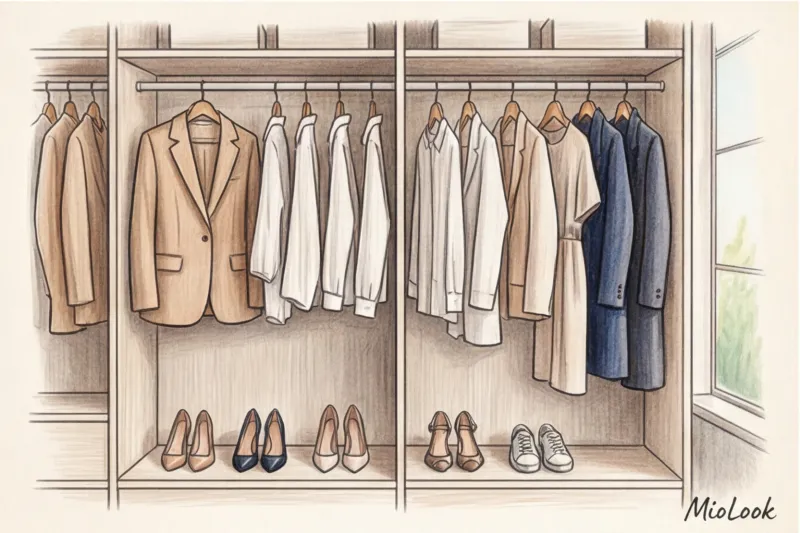
Technology should simplify our lives, not complicate them. Digitizing your wardrobe isn't a passing fad, but the only effective path to conscious consumption that truly saves you money and time in the morning. Remember: the ideal wardrobe isn't one with too many items, but one in which each item is 100% worth its cost.
Don't wait for the perfect moment or a weekend deep cleaning. This evening, when you get home, pull out five of your favorite, most wearable pieces. Photograph them in good room light, upload them to your capsule wardrobe app, and see what combinations the algorithm suggests. You'll be surprised how many new looks have been hiding in your closet all this time.