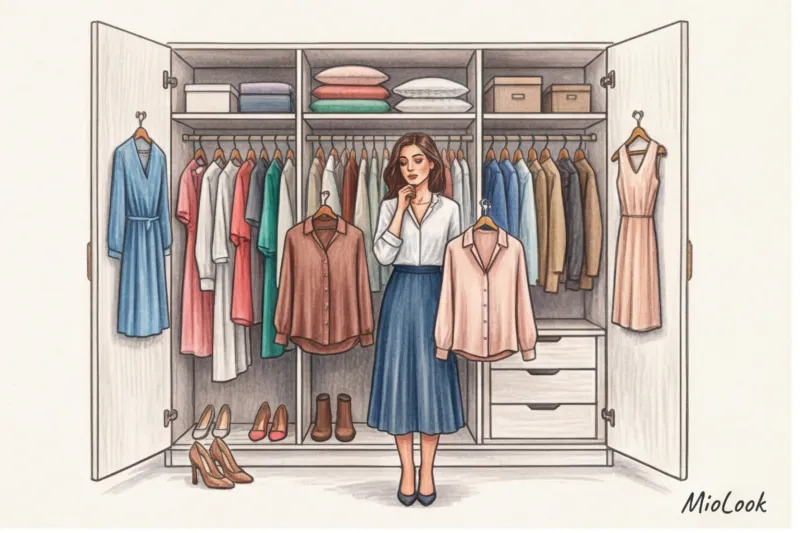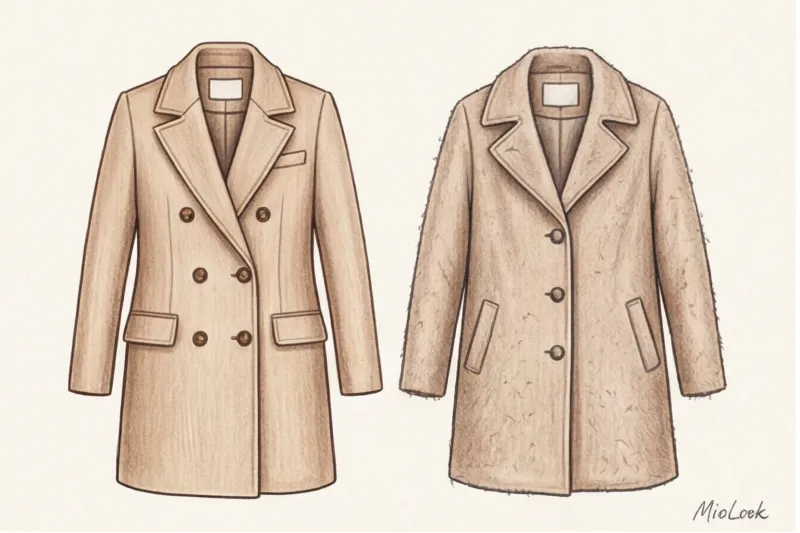
A couple of years ago, a client came to me with a closet that was literally bursting at the seams. While sorting through her wardrobe, we pulled out fifteen identical black turtlenecks from a mass-market store. Each one cost about €20, and she'd worn each one exactly once before they lost their shape. The total cost? €300 in the trash. And on the next hanger hung an impeccably tailored Stella McCartney jacket for €900, which she'd worn three times a week for three years. Guess which item was the cheapest in her wardrobe?
This paradox is the basis of the concept of Cost Per Wear (CPW), or the real cost of wearing. Cost of clothing output It's not a number on a price tag at the time of purchase. It's the mathematics of your personal style, which mercilessly reveals the true value of every piece of clothing in your closet.
Most women suffer from so-called "wardrobe blindness"—we buy things out of inertia, duplicate them, and forget what we already own. We've covered this devastating phenomenon in more detail in our complete guide. How Digitizing Your Wardrobe Saves the Planet from Overconsumption But today I want to talk about money. About your money, the money you lose every time you choose illusory savings over smart investments.
What is the cost per piece (CPW) of clothing, and why does the math beat eco-labels?
According to a major report by the Ellen MacArthur Foundation, global clothing production has doubled over the past 15 years, while the average number of times a single item is worn has fallen by a staggering 36%. We've started buying more and wearing less.
Let's do the math. A Zara dress bought on sale for €30 and worn to one party costs you €30 per outing. A pair of perfect wool trousers from COS or Massimo Dutti for €150, worn to the office twice a week for nine months (about 72 outings a year), costs just over €2 per outing. The cheap dress turns out to be 15 times more expensive than the expensive trousers.
That's why buying another "eco-sweater" made from recycled plastic that you'll only wear a few times is far more harmful to both your wallet and the planet than living long and cozy with old vintage cashmere. Sustainability doesn't start with the kraft paper tags, but with how often a garment leaves your closet.
Your perfect look starts here
Join thousands of users who look flawless every day with MioLook. Find out the true value of your wardrobe.
Get access — €0.99 onceAnatomy of a Formula: Hidden Costs Even Shopaholics Forget About
Most glossy magazine articles use a simplified CPW formula: they divide the price by the number of days. As a practicing stylist, I can tell you frankly: this formula is a lie. The real cost of producing a garment includes hidden service charges.
Isabella's correct formula is: (Item Cost + Fitting Cost + Annual Care Cost) / Number of Wears.
Let's look at the "hidden factors" that artificially inflate the price of your wardrobe:
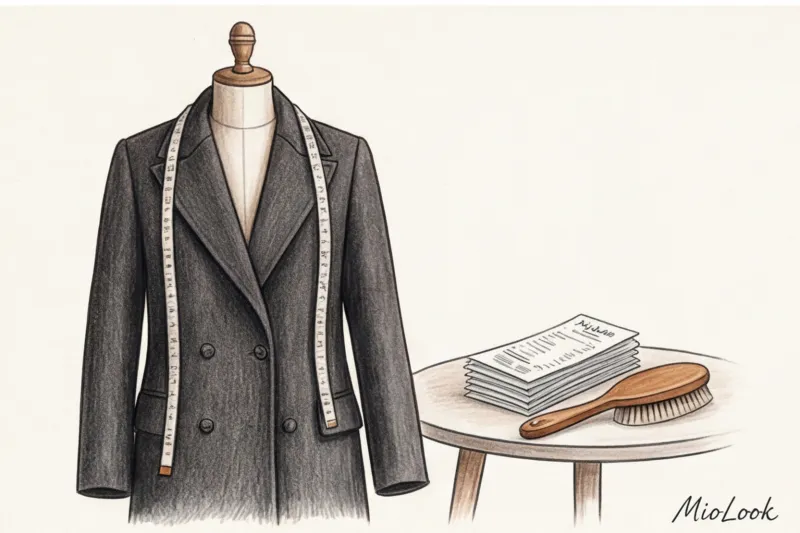
- Complex care tax: A luxurious silk blouse for €100 that requires dry cleaning for €15 after every three wears will cost you a fortune in a year.
- Orphan effect: You buy a fantastic asymmetrical skirt on sale for €40. But when you get home, you discover you need a special seamless top (€25), tights in a certain shade (€10), and new shoes because the old ones are out of proportion (€120). The final price of the skirt skyrockets.
But there's also a counterproductive effect—investing wisely in tailoring. Over 12 years of work, I've noticed one thing: clients hate taking their clothes to the tailor. But as soon as we shorten a jacket's sleeves by half a centimeter (a service that costs around €15–20) to show off a slim wrist, the frequency of wearing the garment skyrockets 200%. The garment begins to fit like a second skin.
The biggest myth of stylists: why a "base" doesn't always pay off
If you open any "must-have" list, you'll be told to buy: a beige trench coat, black pants, and a white shirt. The logic is clear—they go with everything, so the overall cost of the outfit will be minimal. Right?
Absolutely not. This is the biggest misconception in modern styling.
The paradox of emotions is that we often wear what energizes us. One of my clients is a spirited woman from the south of Spain. We tried to put together a classic capsule wardrobe for her, but her CPW of beige jumpers seemed endless—she simply wouldn't wear them. Meanwhile, her luxurious emerald coat and silk blouse with a vibrant Mediterranean print wore through to the point of holes. She felt like a goddess in them.
A bright, statement piece that perfectly reflects your personality will pay for itself much faster than the tenth bland gray sweater that goes with everything and leaves you yawning in boredom in front of the mirror. Furthermore, a high-quality white T-shirt for €80 made of heavy cotton (180 g/m² and above) will last 50 washes. Five T-shirts for €15 will turn yellow, become lopsided at the side seams, and be consigned to the trash within a month.
Rule #30Wears: The Checkout Strength Test
In 2015, Livia Firth, founder of the Eco-Age agency, launched the brilliant #30Wears campaign. The idea was simple: before you reach for a new item, ask yourself one question: "Can I wear this 30 times?".
If the answer is "no," you head out without buying anything. This is a real sobering experience when you see a neon crop top on the final sale. You figure: to wear it 30 times this season, you'd have to wear it every Friday for six months straight.
Fair Limit: This rule doesn't apply to stage wear or black-tie events. Your wedding dress or red-carpet tuxedo may only have one or two appearances. In such cases, we invest not in frequency, but in the scale of emotion and memory. For such one-off appearances, renting will always be mathematically more cost-effective than buying.
Access to MioLook for €0.99 — one-time payment
A smart AI stylist will select the perfect look from your items and help reduce the cost of each outfit.
Get access — €0.99 onceHow AI and wardrobe digitization are radically reducing the cost of clothing production.
There's an old business rule: you can't improve what you can't measure. While your things are piled up in a dark closet, you're only guessing at their CPW.
This is where digitalization comes into play. Apps like MioLook They act as your personal finance manager for your closet. They uncover "archaeological layers" of clothing you've long forgotten about. Artificial intelligence analyzes your wardrobe and suggests unconventional combinations.
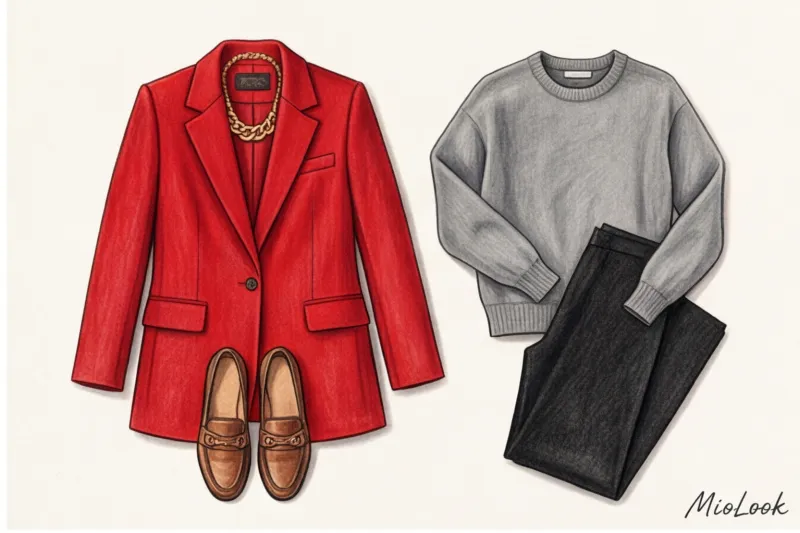
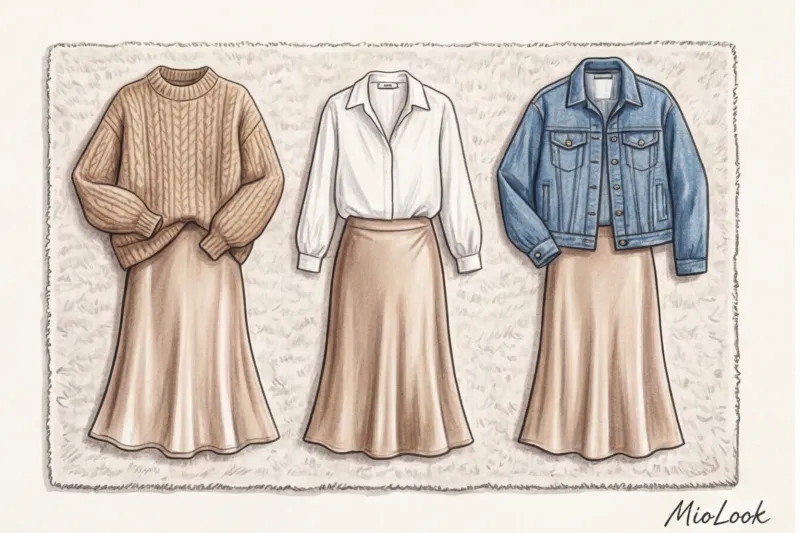
For example, you bought an expensive silk midi skirt for a corporate event and now it's hanging around unused (the CPW is through the roof). The algorithm creates a formula for you: A chunky knit sweater + that same silk midi skirt + leather loafers Voila! You get a look with a subtle Mediterranean flair, perfect for Sunday brunch or an exhibition. The skirt is back in rotation, its value declining with each wear.
After a season of tracking, you'll have solid statistics: which brands, styles, and colors are truly worth the money spent, and which are just a drain on your budget.
Stylist's Workshop: 3 Steps to Reduce the Cost of Removing the Clothes You Already Own
You don't need to buy anything right now to start using this method. Just follow these three steps this weekend:
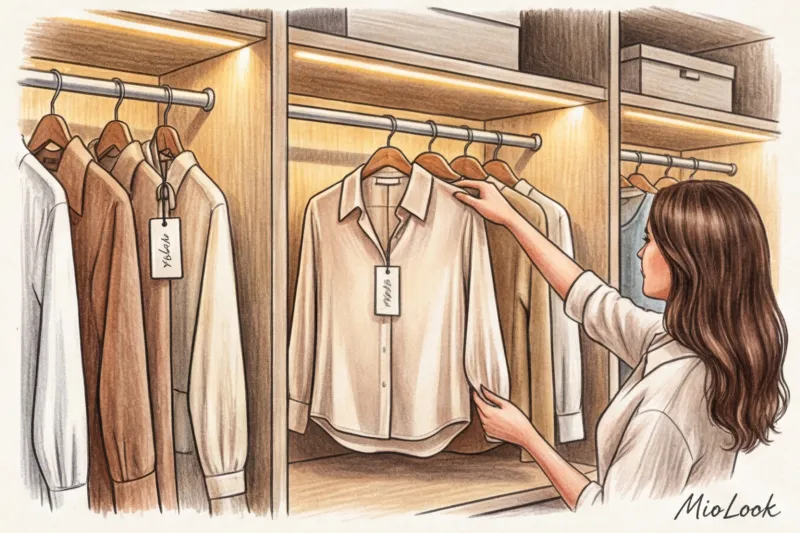
- Resuscitation. Find three items you love but don't wear because of minor flaws. A missing button, pants that are too long, a coffee stain. Take them to a tailor and dry cleaner next Saturday. Spending €20-€30 will add hundreds of euros worth of assets to your active wardrobe.
- Creation of capsule "anchors". Take something you rarely wear and pair it tightly with your favorite, well-worn wardrobe staple. Do you have a pair of impeccably fitting blue jeans? Pair them with that "complicated" jacket. The familiar, comfortable base will offset the unfamiliarity of the new item.
- Isabella's fitting room test. Before you take out your credit card, ask yourself 3 questions: "What can I wear this with right now (without buying anything else)?" "Can I cut the tag off and walk out of the store wearing this?" And "Doesn't this duplicate the function of something I already have in my house?"

Stop hoarding compromises. Your style is your message to the world, not a collection of forgotten items. When you start evaluating clothes through the lens of their true cost per wear, you'll paradoxically allow yourself to buy more expensive, higher-quality, and truly luxurious pieces. And the best part? You'll end up spending less.