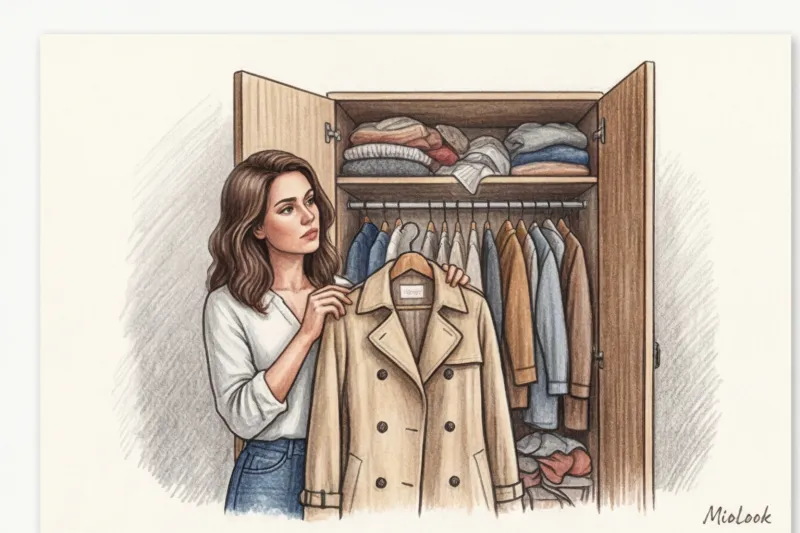
Last Friday, I was sorting through a new client's closet. Five identical beige sweaters lay piled high on the bed. Each proudly sported a green tag reading "Eco," "Conscious," or "100% Organic." And in the far corner of the top shelf, pressed under the weight of a pair of old jeans, sat three perfectly basic, thick wool sweaters she'd simply forgotten about. It's a perfect illustration of how the modern fashion industry has distorted the very concept of sustainability.
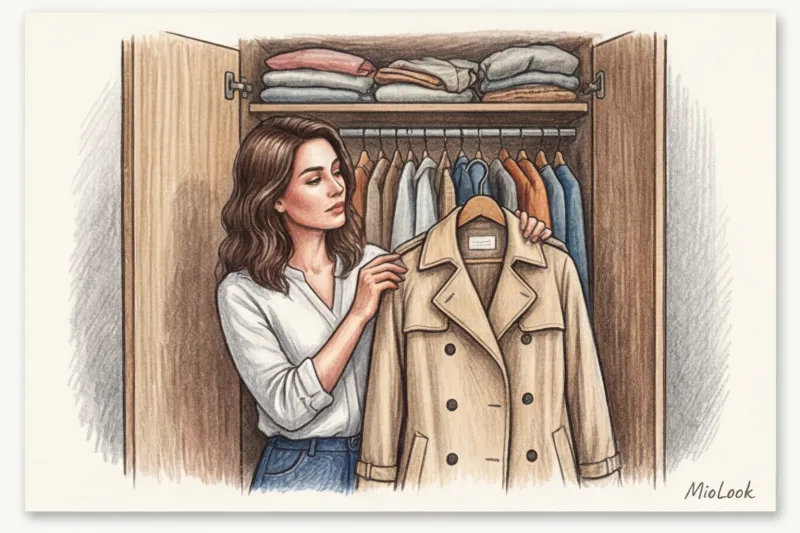
For many conscious consumption in clothing has become synonymous with buying new things, just with a different composition. But true sustainable fashion doesn't start at the checkout counter of an eco-friendly store. It starts in your closet. We discussed this conceptual shift in more detail in our A complete guide to how digitizing your wardrobe is saving the planet from overconsumption..
What does conscious consumption in clothing really mean?
The mass-market industry is brilliant at selling us indulgences. By buying an organic cotton T-shirt, we feel like we're saving the Amazon rainforest, when in reality, we're simply increasing the amount of textile waste in our homes.
Let's look at the raw numbers. According to the Ellen MacArthur Foundation's report "A New Textiles Economy," clothing production has doubled over the past 15 years, but the number of times we wear each item has decreased by 36%. We buy more, wear less, and throw them away faster.
"The most eco-friendly thing is the one you already own. Not the one made from recycled bottles, or the one sewn from farm-raised linen. But the one that's already hanging on your hanger."
Mindfulness isn't about shopping in the right places. It's about foregoing shopping in favor of smart management of what you already own. It's about understanding the cost of each outfit and being able to distinguish good fabric from flimsy rags before you even step into the fitting room.
The Greenwashing Trap: Why the "Recycled" Label Won't Save the Planet
Greenwashing is a marketing ploy where a brand spends more money on positioning itself as "eco-friendly" than on actually reducing its environmental impact. And fashion giants have excelled at it.
Take, for example, the beloved recycled polyester, often made from plastic bottles. Sounds great? Yes. But in practice, when you wash a fleece sweater made from this material, it releases thousands of plastic microfibers into the water. Wastewater treatment plants don't catch them, and they end up in the world's oceans.
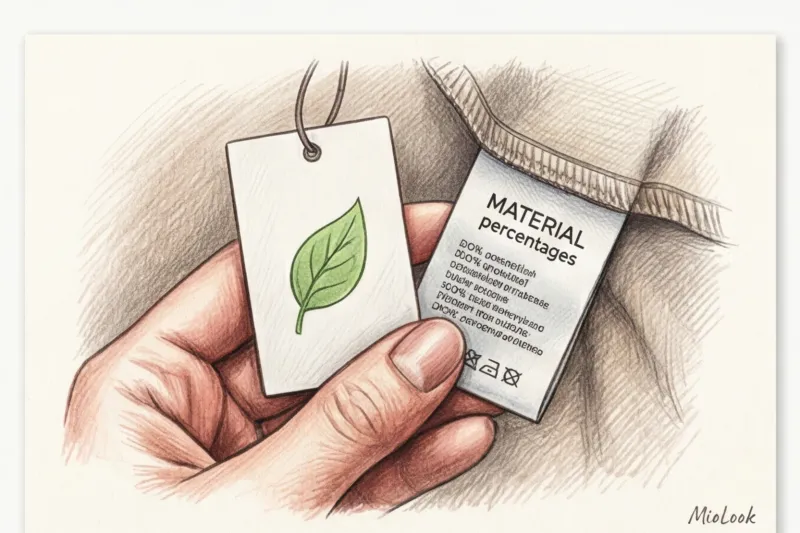
And now controversial insight I often bring up a point in my lectures, often to the bewilderment of my audience. Wearing your old, pilling acrylic sweater from the mass market is much more environmentally friendly than throwing it away and buying a perfect new sweater made of organic cotton or bamboo. Producing a new item always requires water, energy, and logistics. Wear what you have until the bitter end.
Instead of looking for large green tags, learn to read the small white tags in the inseam. That's where the truth lies.
Access to MioLook for €0.99 — one-time payment
A smart AI stylist will select the perfect look from your items and save you from unnecessary purchases.
Get access — €0.99 onceDigitizing your wardrobe: the ultimate tool against overconsumption
The psychology of our closets is primitive: what I don't see doesn't exist. If your silk blouses are hanging tightly next to each other, overlapping each other, and your jeans are in a stack of ten, you'll only wear what's on top. Statistically, we wear 20% of our clothes 80% of the time. The rest are "blind spots."
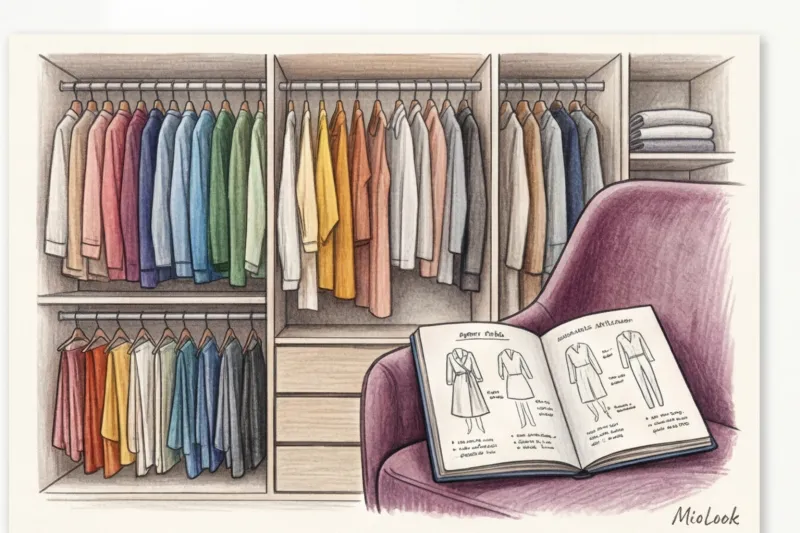
Blind spots encourage impulse buying. You go to the store for "some basic black turtleneck" because you have nothing to wear with your new jacket, forgetting that you already have two, just sitting in the wash or on the top shelf.
Over the course of 12 years as a stylist, I've tried numerous methods of organizing my closet, but the real breakthrough came when I was able to digitalize my closet. Using apps like MioLook's smart wardrobe feature , reduces impulse purchases by 40-50%. When your entire arsenal is readily available on your phone, you can create outfits on the subway, in line for coffee, or lying in bed.
Cost-Per-Wear Formula: The Math of a Sustainable Wardrobe
Before taking an item to the checkout, I make clients calculate its Cost-Per-Wear (CPW)—the cost per wear. The formula is simple: divide the item's price by the expected number of wears.
In 2015, Livia Firth launched the #30Wears campaign. The main question was: "Will I wear this at least 30 times?" If the answer was "no" or "not sure," the item stays in the store. No exceptions.
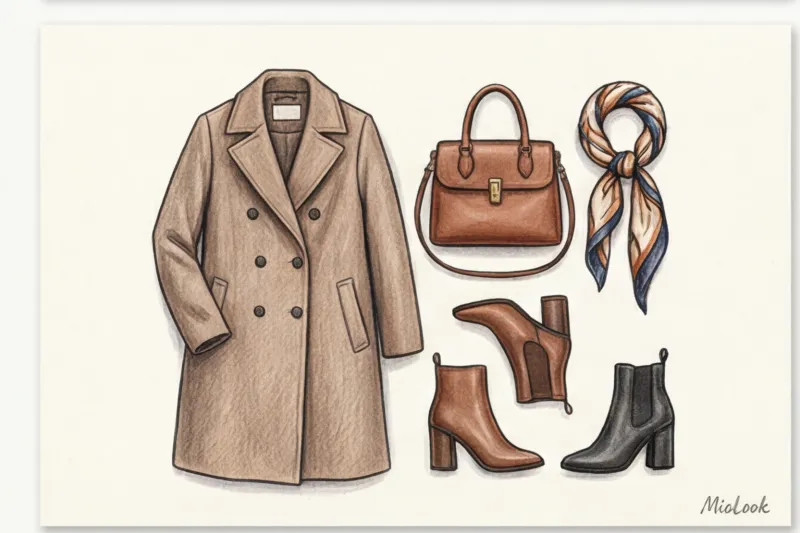
Let's calculate using a specific example.
Option A: You buy a trendy T-shirt made of thin cotton of dubious quality for €30. After two washes, it starts to warp at the seams. You've worn it twice. CPW = 15 €.
Option B: You invest in a basic, thick top made of high-quality cotton for €90. You wear it with jackets, cardigans, and just jeans for three years, wearing it at least 60 times. CPW = 1.5 €.
An expensive but high-quality item always costs you and the planet 10 times less than a mass-market item. And this brings us to the most important skill.
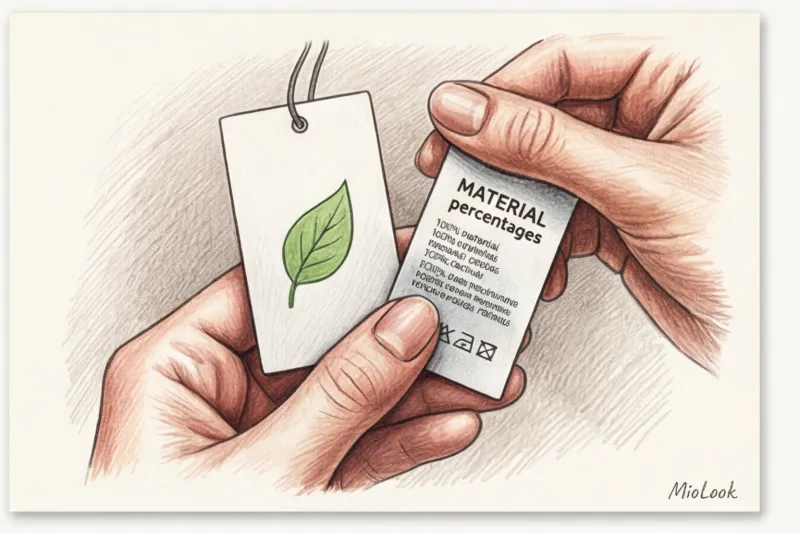
How to Choose a Long-Lasting Item: A Textile Guide
Conscious clothing consumption is physically impossible if you don't understand what your clothes are made of. You can digitalize your closet and vow not to buy anything unnecessary, but if the sweater you bought stretches out after a week, you'll have to buy a new one.
Tissue density and recovery test
My main ritual in the store takes exactly 10 seconds. I call it the fabric "crash test."
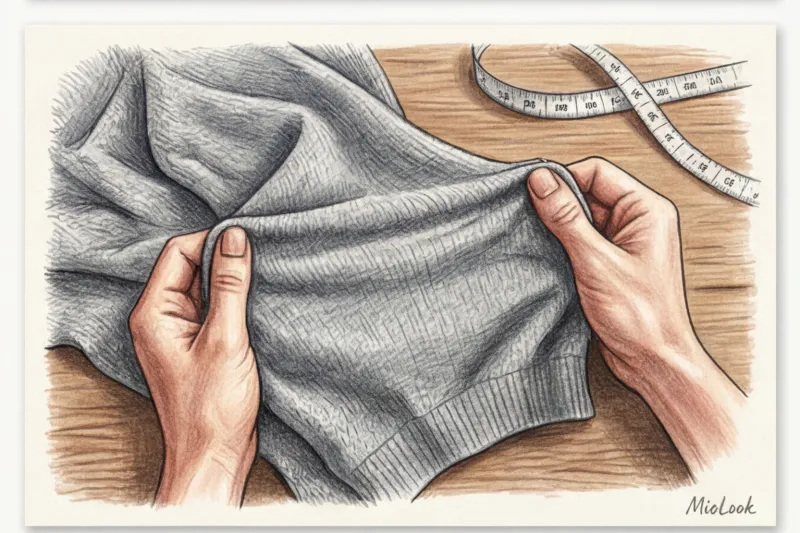
First, try the compression test. Take the fabric in your fist, squeeze it tightly for 5 seconds, and release. If it's crumpled like paper, you'll spend half an hour ironing it every morning and look unkempt at the office by lunchtime. (Of course, this advice has exceptions and does NOT work with natural linen—for that, creasing is normal and a sign of authenticity.)
Next, try the stretch test. Gently tug the knit or elastane fabric sideways and release. It should spring back immediately. If the stretched area becomes wavy, the item will deform after the first wear.
By the way, don't be afraid of blended fabrics. 100% merino wool is wonderful, but it's prone to pilling and fraying. However, a blend of 80% wool, 20% polyamide/nylon will last much longer, retaining its warmth and shape. In this case, a small amount of synthetics is an investment in durability.
Secrets of high-quality assembly and seams
Never judge an item solely from the outside. Turn it inside out. What distinguishes a cheap item from one that was mass-produced at top speed?
- Stitch length: Mass-market items tend to have long stitches (to make the machine sew faster). If you see 2-3 stitches per centimeter, the seam can come apart with the slightest tension. A quality item should have 4-5 stitches per centimeter.
- Seam allowances: Expensive brands leave 1.5–2 cm of fabric inside the seam. Why? So the garment can be adjusted or taken in at a tailor if your figure changes. Cheaper brands trim the seam allowance to the root (to save fabric), making it impossible to adjust the garment to your figure.
Your perfect look starts here
Join thousands of users who look flawless every day with MioLook. Digitize your wardrobe and create capsule collections in one click.
Get access — €0.99 onceExtending the life of things: care is more important than shopping
According to the UK-based WRAP (Waste and Resources Action Programme), extending the life of clothing by just 9 months reduces its carbon, water, and waste footprint by 20-30%.
Our biggest mistake in care is obsessively washing clothes. Drum washing with harsh detergents destroys the fibers faster than the socks themselves.
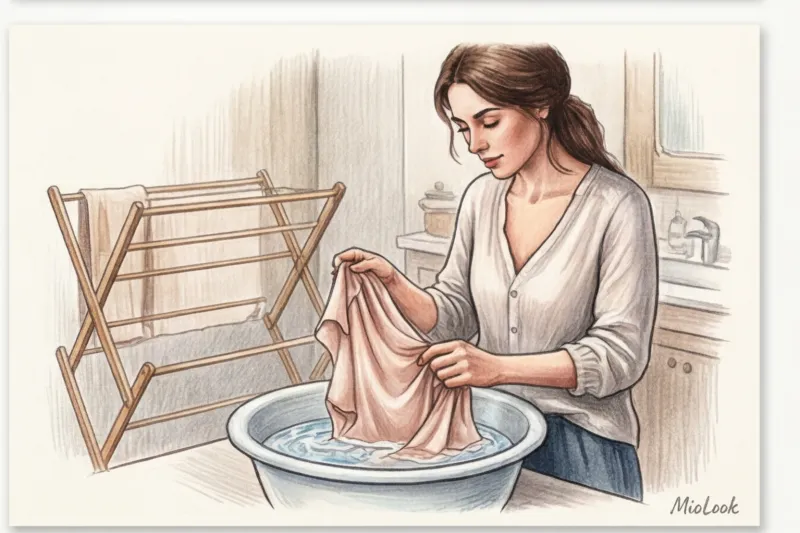
As a textile expert, I implore my clients: stop washing wool and cashmere after every wear. Wool fibers are coated with lanolin and have self-cleaning properties. If a sweater has absorbed a restaurant smell, simply hang it on an open balcony overnight—the smell will disappear by morning. It's better to steam silk rather than wash it—hot steam kills bacteria and removes odors without damaging the fibers.
And another golden rule: never hang knitwear on a hanger. The weight of the loops stretches them, causing the garment to lose its proportions. Knitwear should only be stored folded on a shelf.
Checklist: 5 Steps to a Conscious Wardrobe Without Shopping
If you want to incorporate mindful clothing into your life today without spending a cent, follow this process.
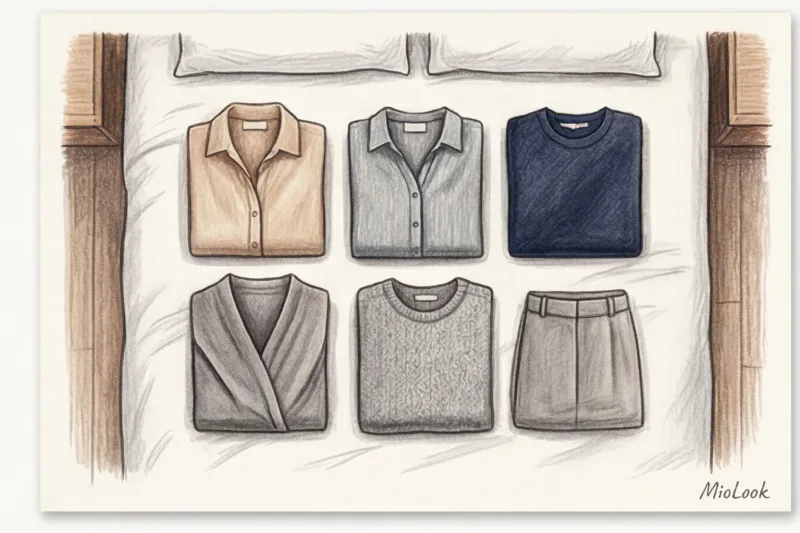
- Conduct a physical examination: Remove absolutely EVERYTHING from the closet onto the bed. Wipe down the shelves. Sort out any items that are too small, stretched out, or covered in stubborn stains.
- Digitize the database: Take photos of the items you've decided to keep and transfer them to the app.
- Create capsules from what you have: Spend an hour putting together new outfits. Try wearing a summer slip dress over a turtleneck, and layer a heavy shirt as a light jacket.
- Take it for repair: Gather a pile of "needs a button on" or "needs a shortening" items and take them to a tailor this week. This will get at least 3-4 items back into working order.
- Enter the "cooling off period": From this day forward, any new item costing over €50 should "sit" in your head (or online shopping cart) for at least 24-48 hours. During this time, your brain will stop producing dopamine from impulsive desire, and you'll be able to realistically assess whether the item will fit into your digital closet.
Mindfulness isn't a trendy label on an eco-friendly bag. It's respect for your own money, the labor of the people who created it, and the planet's resources. Start treating your wardrobe like a personal curated collection, where each piece is carefully selected, loved, and worn for years. And then you'll simply not want to buy anything unnecessary.