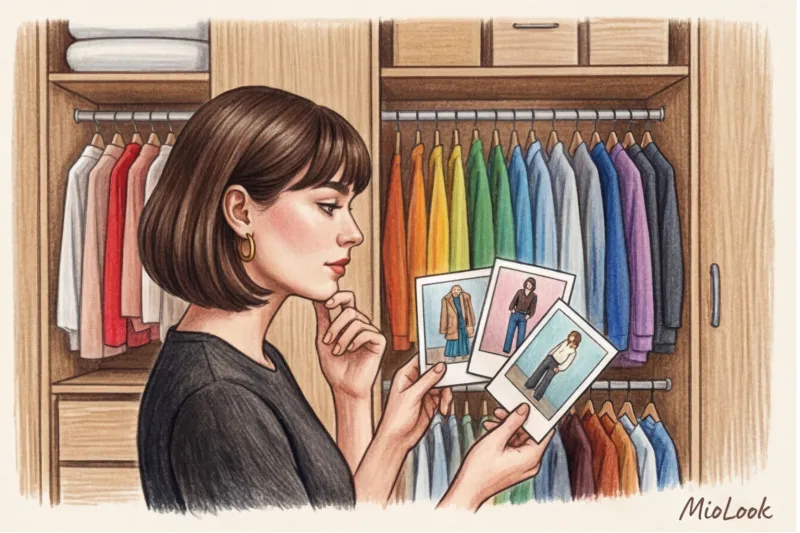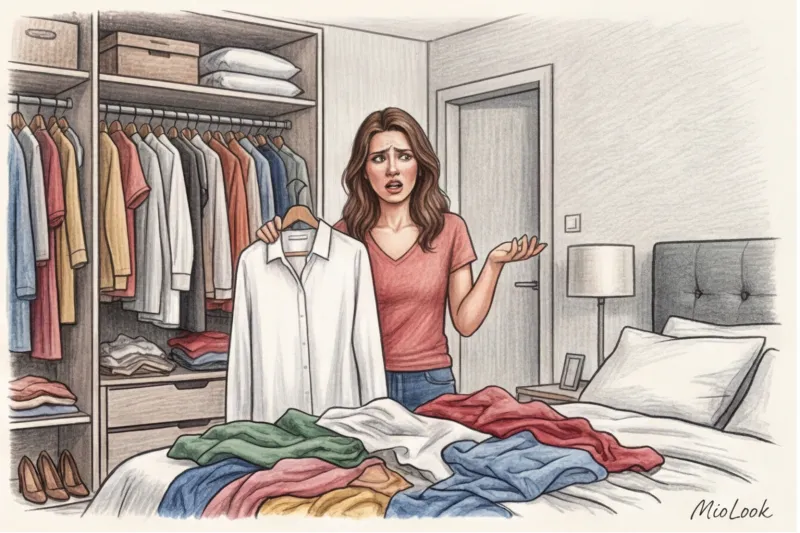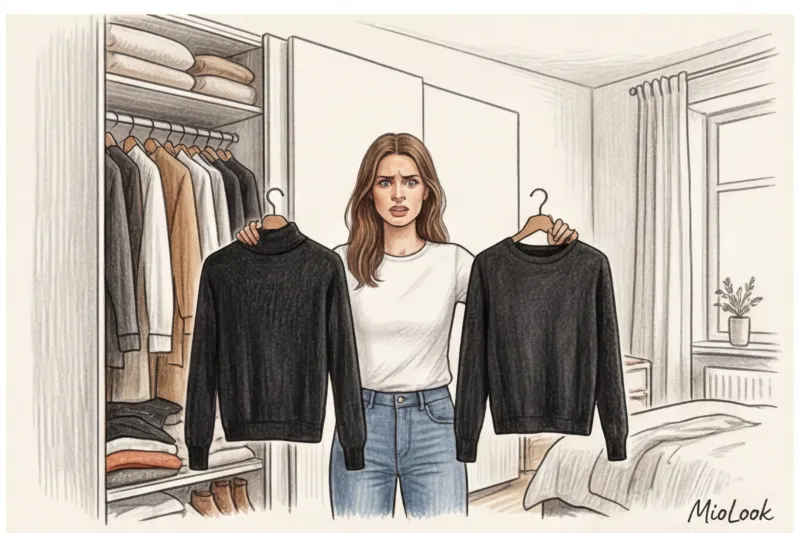
You open the closet doors, mechanically push aside a dozen hangers, and sigh heavily, "I have absolutely nothing to wear again." In 12 years of working as a personal stylist in Europe, I hear this phrase about five times a week. And usually, in front of me is a walk-in closet filled to the ceiling. A paradox? No, it's just simple psychology.
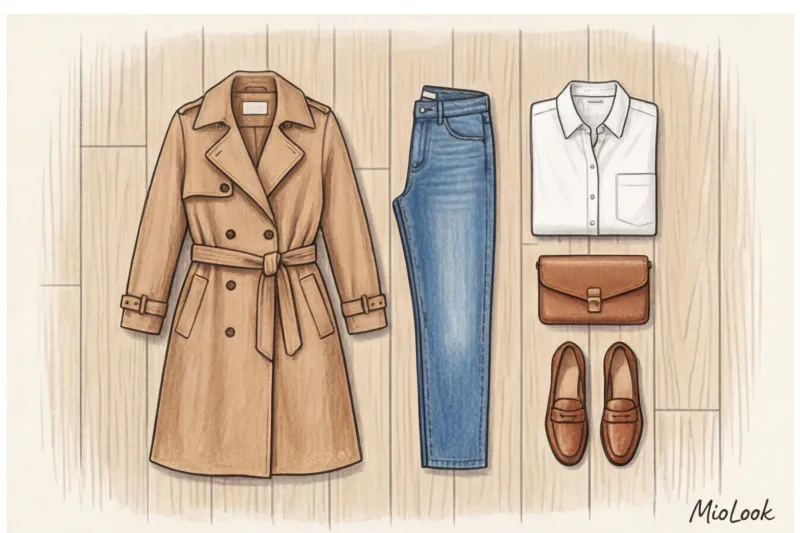
Previously, the only way out of this situation was to call a stylist for a wardrobe review or go on another impulse shopping spree. But technology has changed the rules of the game. Today I'll tell you how create an image from your clothes using a neural network It can be faster and often more creative than you can be. And most importantly, it's not magic, but pure mathematics, freed from human complexes and habits.
This article isn't just a review of smart app features. It's an honest look at our consumer habits. We've covered the global significance of this approach in more detail in our A complete guide to how digitizing your wardrobe is saving the planet from overconsumption. Now let's figure out why your own brain is preventing you from dressing stylishly.
The "wardrobe blindness" phenomenon: why we don't see the potential of our closets
I had a client (let's call her Marta, a top manager from Munich) who complained that she had nothing to wear to the office. When we started sorting through her clothes, I found 15 white shirts. Fifteen! Among them was a luxurious silk Massimo Dutti blouse with a 2021 tag. Marta had simply forgotten it existed because it was hanging behind her bulky winter sweaters.
This is a classic example of "wardrobe blindness." Our closets strictly adhere to the Pareto principle: 80% of the time, we wear only 20% of our clothes. Why is this?
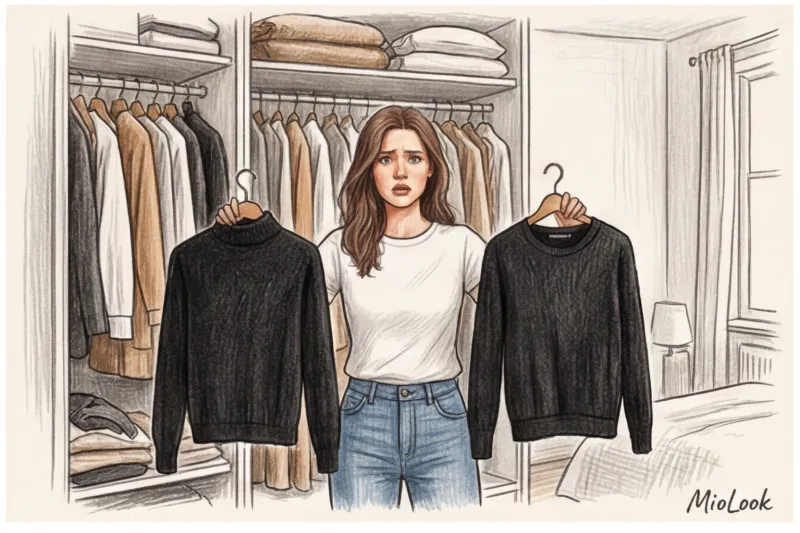
- Emotional attachment and patterns. You once wore these gray trousers with a black jacket, received a compliment, and your brain registered, "This is a safe and successful formula." From that moment on, you stop seeing other options for these trousers.
- Visual noise. Things on far shelves or in bottom drawers physically cease to exist for us. The brain is lazy—it chooses what's easiest to reach.
- The stress of getting ready in the morning. You have 15 minutes before you have to leave. In this state, no one is capable of stylistic experiments with complex cuts.
According to a large-scale study by the Ellen MacArthur Foundation, the number of times we wear an item has decreased by 36% over the past 15 years. We're buying more and wearing less. And that's where artificial intelligence comes in.
How to create the right look from your clothes: A neural network breaks stylistic patterns
What's the algorithm's main superpower? It's emotionless. For you, it's "that same sweater I wore to that interview three years ago." For the neural network, it's "a basic camel-colored, medium-weight, plain knit." The algorithm analyzes color, cut, and texture without bias.
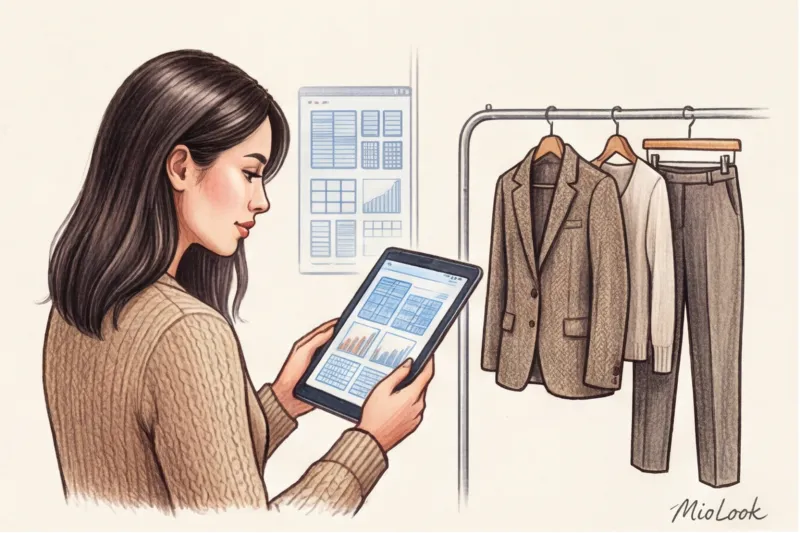
When you trust an app to help you choose your clothes, like MioLook , you gain access to pure combinatorics. The mathematics of a wardrobe is astounding: just 30 well-chosen items (including shoes and bags) can yield up to 400 unique combinations. But a person can only hold 15-20 working capsules in their head at most.
Algorithms use the principle of cross-category styling. A neural network can easily suggest you pair a formal office blazer with sporty joggers and heels. You wouldn't do such a thing on your own, fearing it would look out of place. But the AI relies on Itten's color wheel and texture contrasts (recognizing cotton, silk, and wool by tags), so the result often looks like street style from Copenhagen Fashion Week.

Digitization is the first step to mindfulness (and eliminating unnecessary purchases)
Another important point: algorithms brilliantly bypass "seasonal thinking." We're used to rigidly dividing our wardrobes into summer and winter. AI, however, easily integrates summer silk skirts into thick winter layered looks, suggesting thick tights underneath and a chunky cashmere sweater on top. This instantly doubles your active wardrobe.
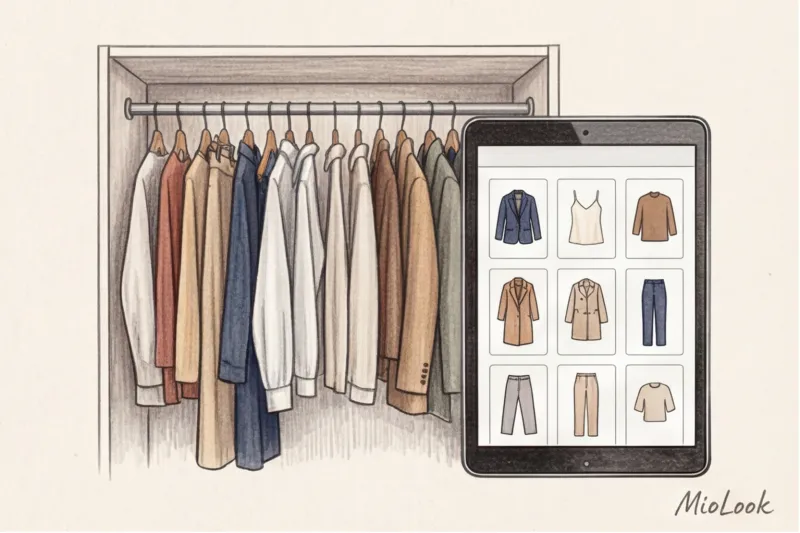
But for this to work, the chaos in your closet needs to be transformed into a database. Digitizing your clothes and transferring them to your phone makes a much greater contribution to the environment than buying another organic cotton T-shirt from an "eco-brand." You're starting to use what's already been produced.
Access to MioLook for €0.99 — one-time payment
A smart AI stylist will curate the perfect look from your items. Turn your closet into an endless source of inspiration.
Get access — €0.99 onceStylist vs. AI: Who's Better at Creating Looks from Old Clothes?
There's a myth in the industry that neural networks will put personal stylists out of work. As a practicing expert, I want to share a counterintuitive insight: stylists aren't afraid of AI; smart stylists are using it.
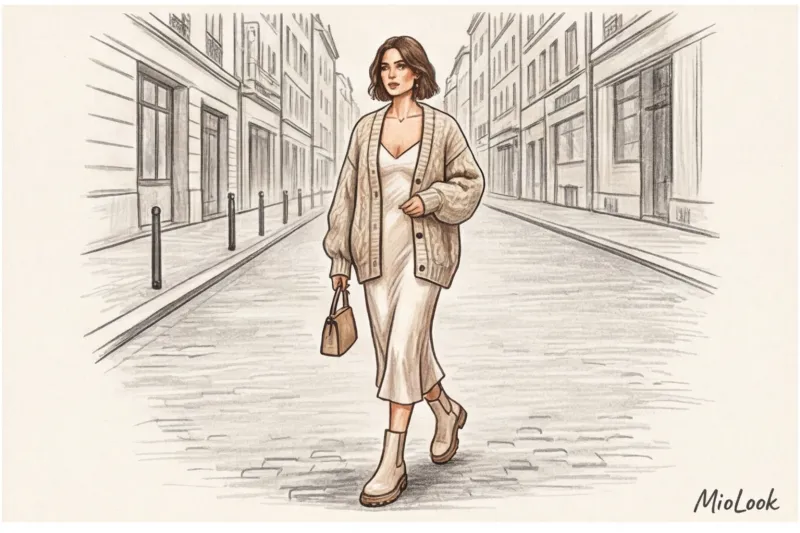
Let's be honest: artificial intelligence handles the basic combinations of an old wardrobe faster and more efficiently than humans. It takes me about two hours to create 50 looks from a client's wardrobe for the season. A neural network does it in 10 seconds. It doesn't get tired, its eyes don't become jaded, and it calculates color combinations perfectly.
Where AI wins hands down:
- Speed of generating hundreds of options.
- No cognitive biases or brand favorites.
- Accurate mathematical calculation of contrast (lightness/darkness).
But there's a limitation. How does AI currently fall short of a human stylist?
"An algorithm sees clothes as 2D objects, while a stylist sees a 3D person in the context of their life. The neural network doesn't know that your legs are swollen today and you shouldn't wear pumps, or that there's a strict dress code at a specific bank interview where bare ankles are unacceptable." — Katarzyna Nowak
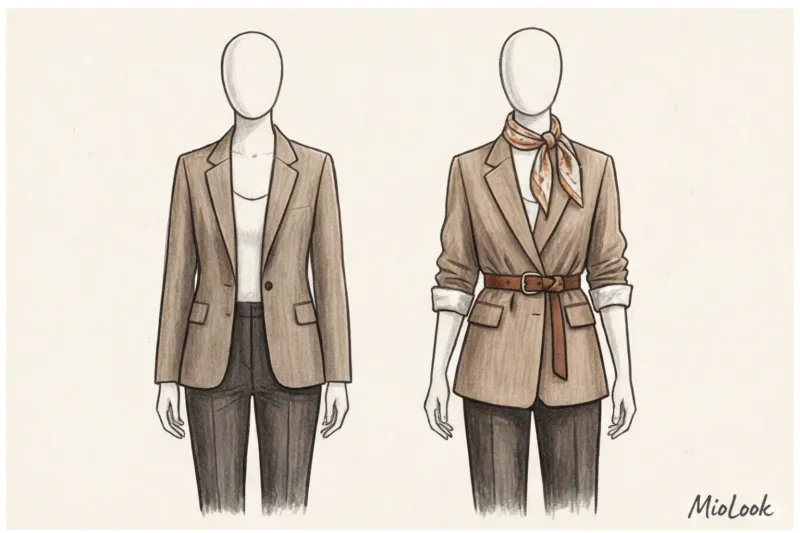
The ideal synergy today looks like this: AI does the grunt work, compiling dozens of interesting combinations from your database, and you (or your stylist) chooses the ones that best suit your figure and mood. The AI is responsible for "what to wear," and a human is responsible for "how to wear it" (rolling up the sleeves, tucking in the hem of a shirt, unbuttoning an extra button).
5 Unexpected Combinations Algorithms Find in Your Basic Wardrobe
To avoid being unfounded, I analyzed hundreds of collections that AI assistants (including smart wardrobe feature in MioLook ) generated for my clients. Here are the 5 most common and stylish non-obvious formulas that people almost never put together themselves:
- Slip dress + oversized sweater + men's jacket. Many people own a silky, lingerie-style dress (like one from Zara) and a chunky sweater. People wear them separately. The AI combines them, creating a play on contrasting textures: fine, flowing silk and chunky knit, topped with a structured blazer that cinches the silhouette.
- Summer poplin shirt as a base layer under a turtleneck. We're used to wearing a turtleneck under a shirt. Algorithms often suggest the opposite: wear a thin cotton shirt and a thin cashmere turtleneck over it, with the collar, cuffs, and hem showing. It's a fresh take on preppy style.
- Business suit, broken down into casual. A two-piece suit (for example, from COS) for €150-200 is usually only worn as a whole for important meetings. The algorithm takes suit trousers and adds a basic gray hoodie, an oversized coat, and retro sneakers. The result is the perfect look for weekend brunch.
- Monochrome of varying density. Creating a total beige look can be difficult if the shades are slightly mismatched. AI has a trick: if you use denim and cashmere of the same color, the difference in their texture will hide the slight mismatch in shade temperature.
- Complex work with prints. The combination of checkered and striped patterns is intimidating for 90% of women. The algorithm uses the rule of scale: it will fearlessly pair a striped vest with large checkered trousers (or vice versa). The main thing is that the prints match in size.
Your perfect look starts here
Join thousands of users who look flawless every day with MioLook. Bring your wardrobe to your phone.
Get access — €0.99 onceInstructions: A Checklist for Preparing Your Wardrobe for AI
As a stylist, I have to tell the harsh truth. Artificial intelligence is not a fairy godmother. If you feed an app stretched-out sweatpants and washed-out T-shirts, the output will look like a city lunatic, not a style icon. Garbage in, garbage out.
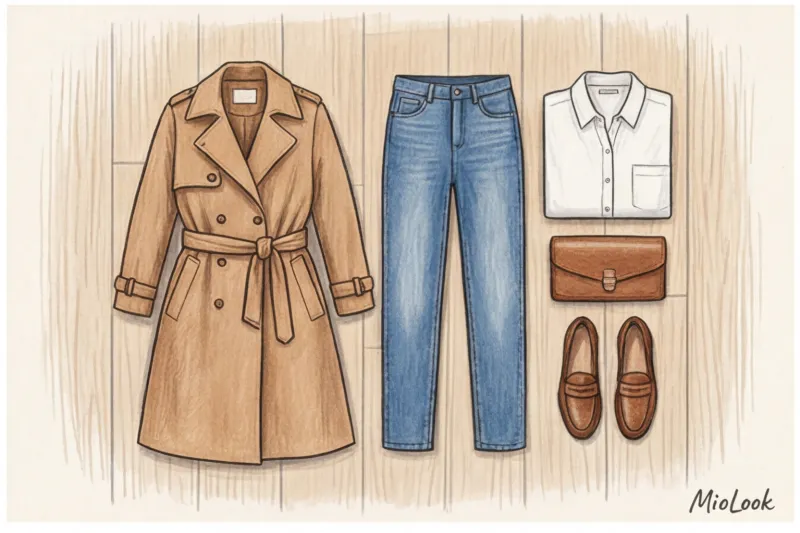
Before you hand over your closet to the neural networks, conduct an audit. Here's my strict checklist:
- Ruthless culling. Items with stubborn stains, machine-unremovable pilling, and irreparably lost shape should be thrown out of the closet. The algorithm can't retouch bent knees in real life.
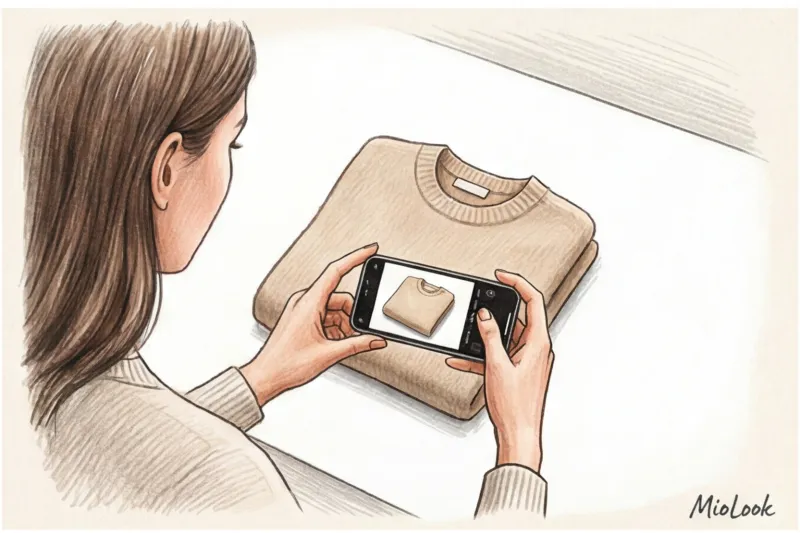
- Clean background rule. To ensure the AI can accurately remove the background and create a beautiful collage, photograph the garment in natural daylight. Place the garment on the floor or a white sheet. Avoid yellow incandescent lamps—they distort the color, and the algorithm might mistake blue for black.
- Detailed tagging. Spend an extra 10 seconds when uploading an item to the app. Specify the season, color, and, most importantly, the fabric (wool, cotton, silk, leather). Texture tags are what allow the algorithm to create those delicious, contrasting looks I mentioned above.
Wardrobe Economics: Reducing Cost Per Wear (CPW) to Zero
In the world of smart shopping, there's only one metric that matters: Cost Per Wear. The formula is simple: divide the cost of an item by the number of times you wear it.
Let's do the math. You bought a great pair of basic straight-leg jeans for €100. Without a neural network, you wear them as usual: with a white T-shirt and a black sweater. You wear them twice a month. Over a season (3 months), that's six times. The CPW is approximately €16.60.
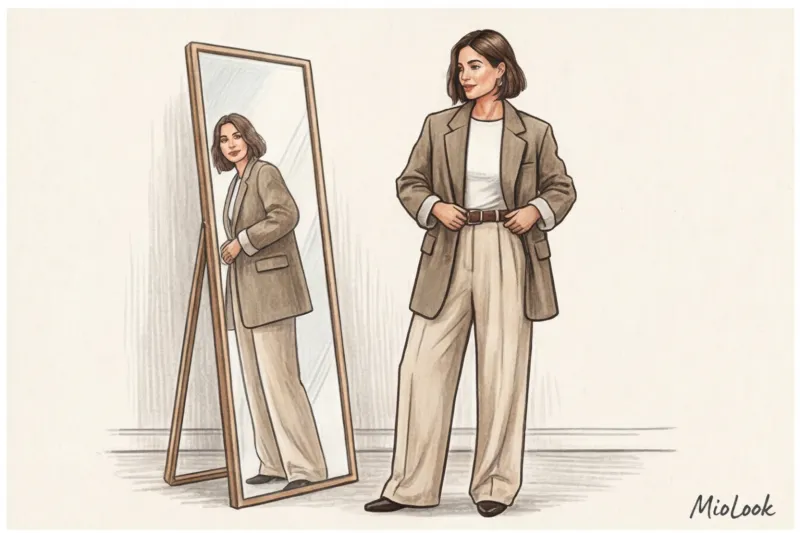
Now you upload these jeans to the app. The neural network generates 20 new looks for you using items you ALREADY OWN. You start wearing these jeans three times a week in completely different styles (from grunge to smart casual). Over the course of a season, you wear them 36 times. Your CPW drops to €2.70.
You didn't spend a single extra euro at the store. You saved hundreds of euros on "wardrobe refresh" purchases. You simply put your assets (your old clothes) to work 100%.
This is the main secret of modern style. The best and most sustainable shopping experience in 2025 is shopping in your own closet with a smart digital guide. Digitize your database, give algorithms a chance to surprise you, and you'll never again utter the phrase "I have nothing to wear" in front of a full closet.