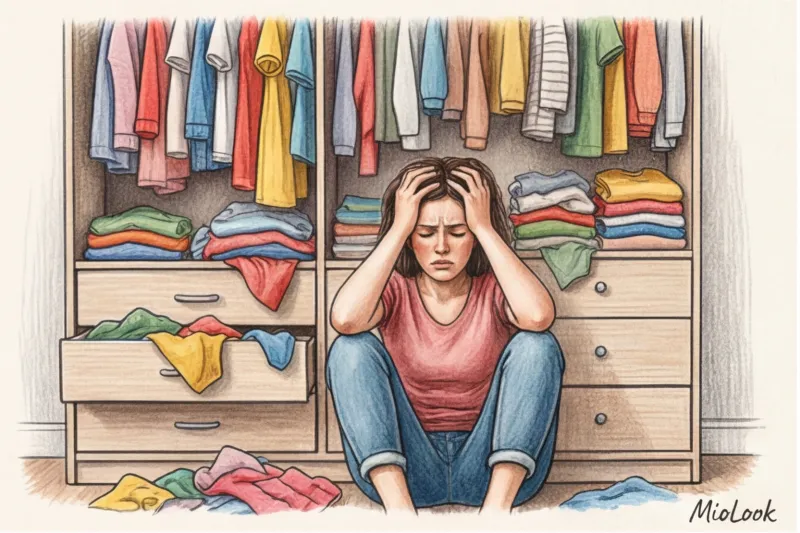
Have you ever noticed how difficult it can be to close a child's dresser drawer because the sleeve of yet another T-shirt your child absolutely refuses to wear is sticking out? We buy clothes in sets, order cute sweatshirts on sale, and accept bags of clothes from older nieces and nephews. Eventually, the closet is overflowing, and every morning the same drama plays out: "I can't wear this!"
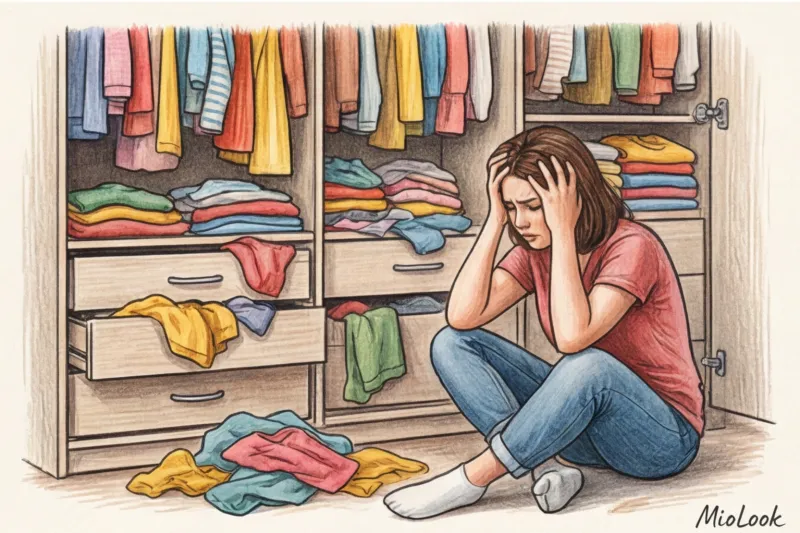
As a stylist with over a decade of experience, I regularly review not only adults' wardrobes but also children's. And you know what I see most often? A huge number of items that create only the illusion of choice. To pinpoint How many things does a child need? , impossible using universal online tables like "5 T-shirts and 3 pants." We've covered the concept of a rational children's wardrobe in more detail in our The complete guide to a children's capsule wardrobe , but today I want to dig deeper and offer you a completely different kind of mathematics.
Instead of rigid guidelines, we'll use an adaptive "Wash Index" formula and dispel the myth that buying clothes in bulk helps you save money.
The Illusion of Abundance: Why a Full Closet Only Complicates Life
Let's be honest: in a child's room, the Pareto principle works flawlessly. A child wears 20% of their favorite clothes 80% of the time. That dinosaur hoodie gets washed to the point of holes, while perfectly ironed shirts hang sadly on hangers.
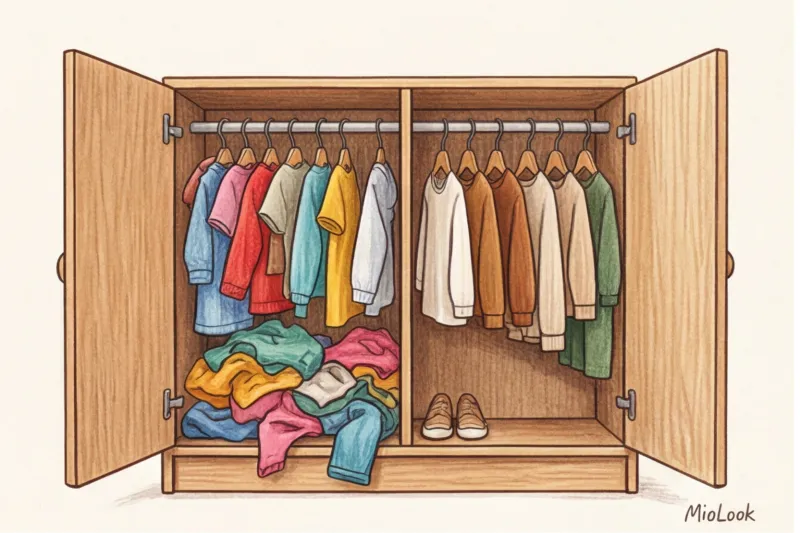
One of my clients, Anna, invited me to sort through her five-year-old son's wardrobe. Every morning, she spent 20 minutes coaxing him into putting on "that pretty turtleneck." The boy cried, his mother was angry, and the day began with stress. By the time we'd pulled all the clothes out onto the bed, there were about a hundred of them. We'd removed 60% of the visual clutter—hiding everything itchy, tight, difficult to button, or that didn't match.
What happened the next morning? The boy chose his own outfit in two minutes. It's not a stylist's magic, it's neuroscience. As research in child psychology (specifically, studies based on the concept of decision fatigue) notes, preschoolers are physically unable to choose from 15 options. An overloaded closet triggers morning tantrums.
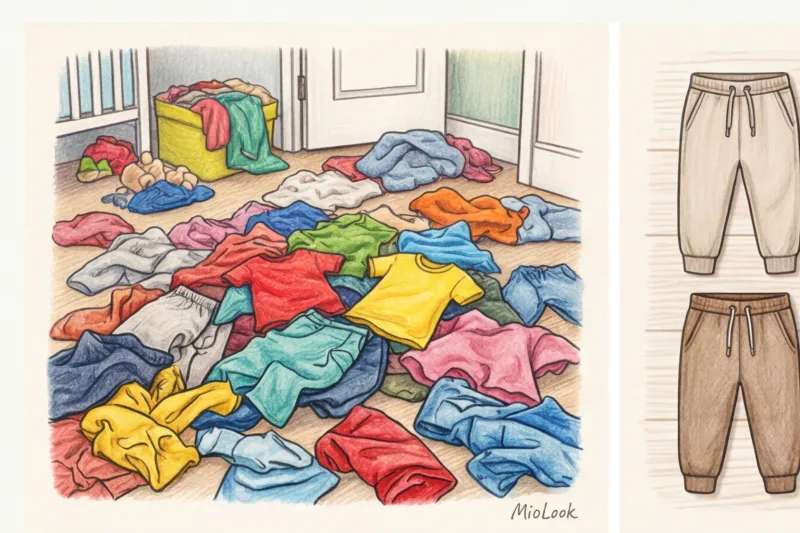
"The more clothes a child has, the less laundry they need to do" is a dangerous myth. A huge wardrobe only delays the big day, creating gigantic piles of dirty laundry by the weekend. Minimalism paradoxically simplifies the laundry routine.
What determines how many things a child actually needs?
Glossy magazine lists often fall short because they don't take into account the most important factors: your child's temperament and your family's lifestyle. You'll agree that the wardrobe of a "quiet explorer" who spends hours building Lego on the carpet will be radically different from the wardrobe of a "puddle buster" who returns from a walk covered in fresh mud.
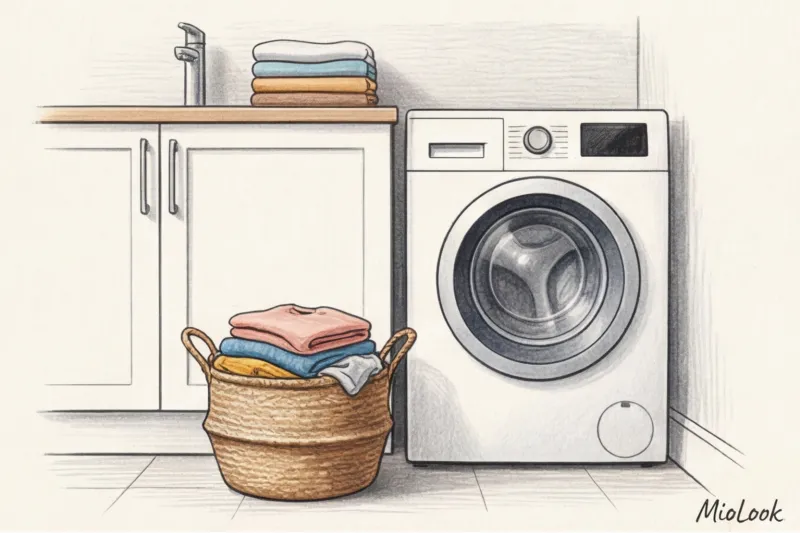
That is why I introduced my own concept into my practice. Washing index Your daily routine directly dictates your wardrobe size. This formula is adaptive and fair.
Stylist's Formula: Calculating Your Wash Index
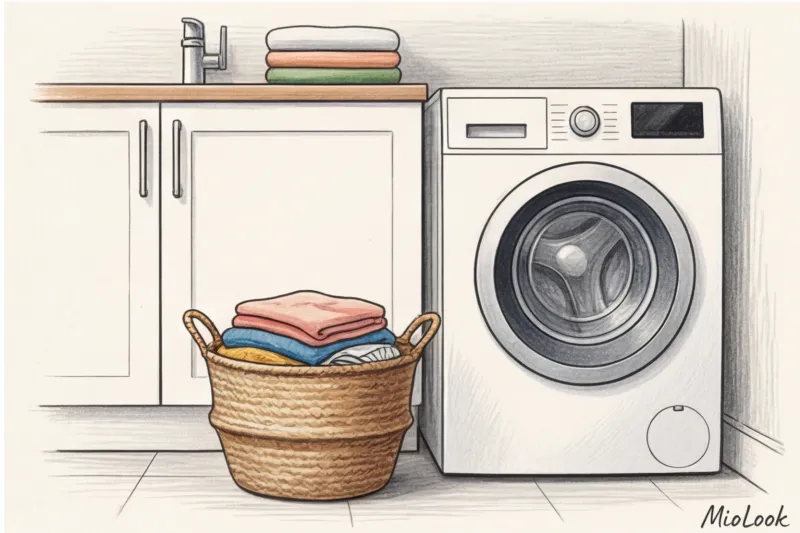
The minimalist's math is incredibly simple. You need to determine the base number of "bottoms" (pants, jeans, skirts), as these are the ones that get dirty the fastest. The formula looks like this: Number of days between washes + 2 = base quantity of bottoms.
If you wash your clothes every three days, you'll need five basic sets (three for every day, plus two extra for unexpected juice or paint stains). You don't need 15 pairs of jeans! Seasonality also plays a role: while T-shirts are changed daily in the summer, a warm top layer (a cardigan or a thick hoodie) is washed much less frequently, and two pairs per season are sufficient.
A Minimalist's Basic Checklist: Building the Perfect Capsule
When putting together a children's capsule wardrobe, I always use the construction set principle: each item should match at least three others. Adults mistakes when creating a basic wardrobe They are often transferred to the children's wardrobe - we buy single items.
Choose 2-3 base colors (for example, beige, dark blue, gray melange) and add 1-2 accent colors - your child's favorite colors (mustard, emerald or dusty pink).
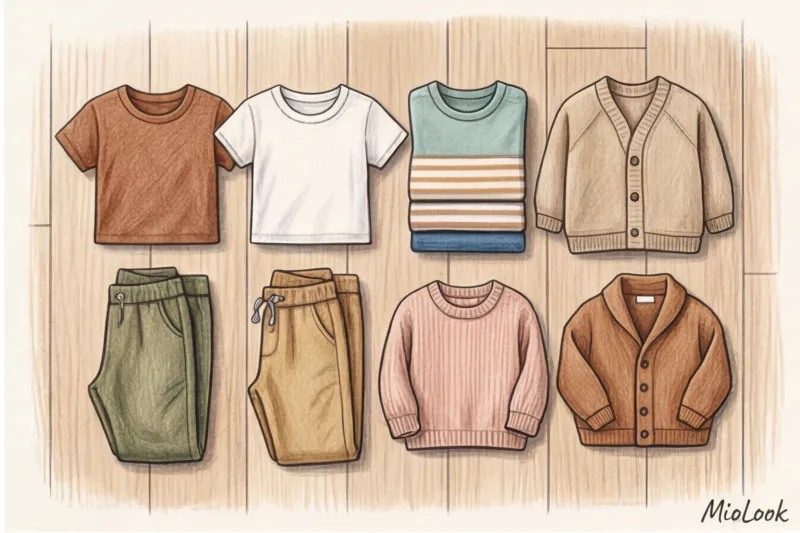
Stylist's secret: I always start assembling a children's capsule wardrobe with the bottoms, not the tops. Pants are more difficult to get right, and they set the tone for the entire look.
Top: The 5-3-2 Rule
For a standard work week in a kindergarten or school, this ratio works well:
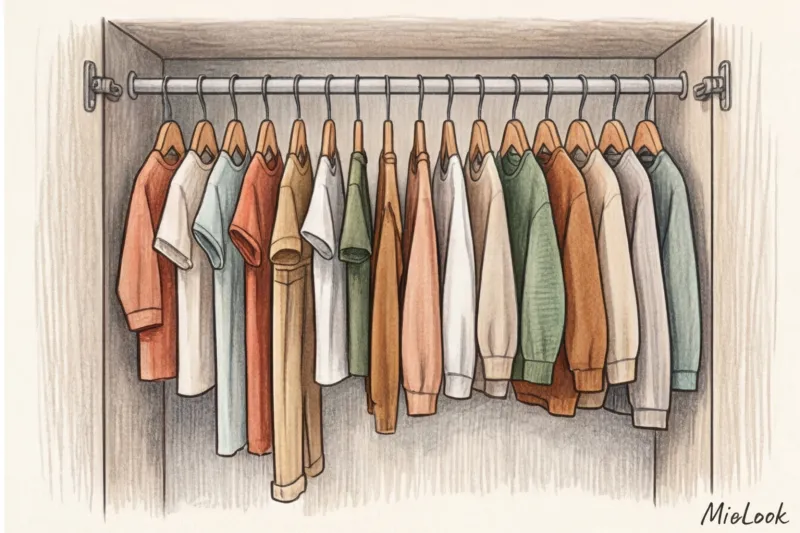
- 5 basic t-shirts or long sleeves: Solid colors, without active prints. They serve as a background.
- 3 accent tops: Here you can indulge in your favorite superheroes or bright patterns, but strictly within the chosen capsule color palette.
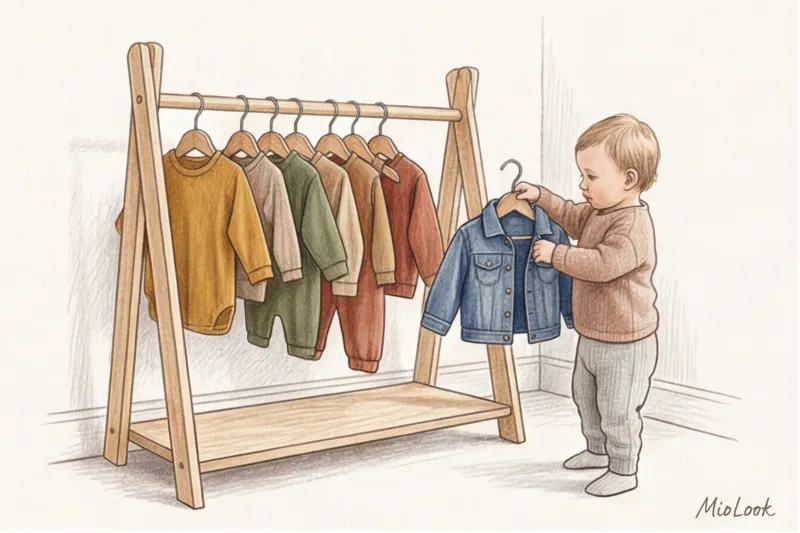
- 2 warm layers: A chunky knit cardigan, sweatshirt or zip-up hoodie.
Bottom Line: Why 4 Is a Magic Number
Four pairs of bottoms are enough to cover 90% of the needs of an active child:
- 2 pairs of comfortable casual trousers or joggers: For active games and kindergarten.
- 1 pair of thick trousers or jeans: It is important to choose fabrics that do not wrinkle, possibly with the addition of elastane for freedom of movement.
- 1 pair of dressy/formal bottoms: For family outings, holidays or school events.
How fabric quality reduces the amount of clothing needed
There's a hidden cost to cheap clothes that we often ignore at the checkout. According to research by the analytical agency WGSN, the life cycle of inexpensive mass-market children's knitwear ends after 5-7 washing cycles. The fabric wears thin, and the seams twist.
The math is ruthless: three high-quality long sleeves for €25 will outlast ten cheap ones for €7, saving you not only money but also closet space. Plus, proper clothing care works only if the source material has sufficient density.
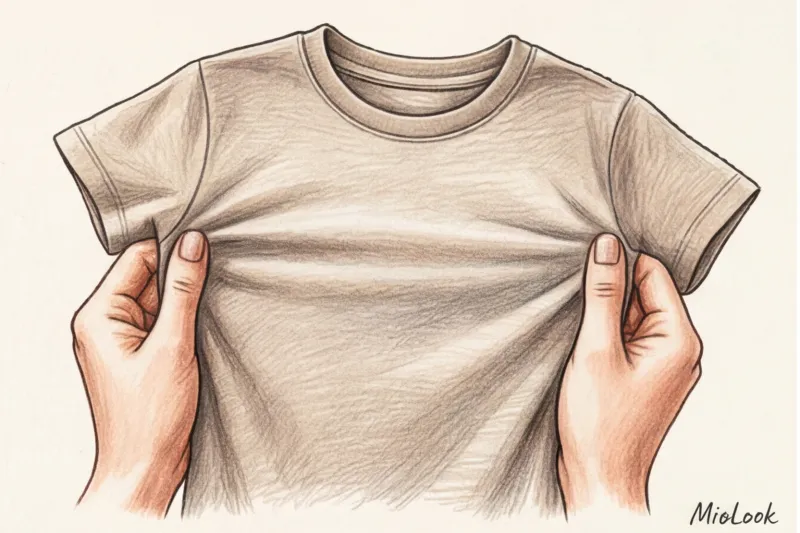
Pay attention to the composition. Cheap 100% cotton quickly loses its shape on children's knees and elbows. Look for dense cotton (at least 180 g/m²) with 5% elastane added—this blended fabric is springy and returns to its original shape. If you don't know, How to wash difficult items correctly , it is better to avoid buying capricious fabrics like thin viscose for children's everyday wardrobe.
The "Grow-In" Mistake: Why This Approach Kills Style and Budget
Perhaps the most counterintuitive insight I share in my consultations is that skimping on a size "with room" means your child NEVER looks well dressed.
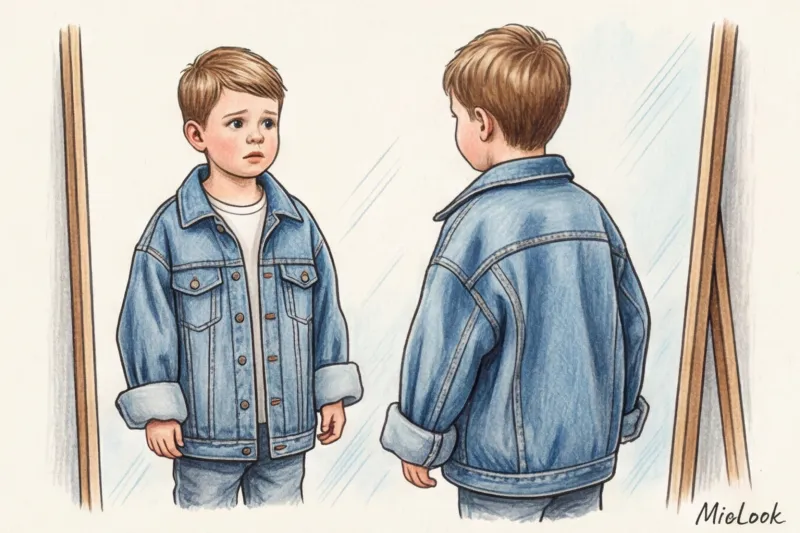
At first, the item is frankly too big: the sweatshirt's sleeves, rolled up three times, create an untidy, baggy silhouette, and the overly long pant legs collect dirt and wear out at the heels. But the worst part comes later. By the time the item finally fits the child, it's already worn, faded from washing, or has a permanent berry stain.
Instead of buying items two sizes too big, choose brands (like Zara Kids or COS) that offer smart fits: elastic waistbands, extended ribbed cuffs that can be neatly rolled up once, or a well-designed oversized silhouette that's designed to be voluminous from the start.
Integration with MioLook: Smart Control of Your Child's Wardrobe
Modern technology can relieve mothers of a huge amount of headaches. When you digitize your child's closet in an app MioLook , you get complete control over the situation.
Firstly, it prevents impulse purchases. Standing in front of an adorable mustard sweater on sale in the store, you simply open the app and check: does your child have matching bottoms? If the app shows 0 combinations, the item stays in the store.
Secondly, MioLook gives your child that all-important illusion of control. Give them a smartphone with a section of ready-made looks you've created in advance. Let them swipe and choose their outfit for tomorrow. They'll be happy they made their own decision, and you'll be reassured that they won't choose striped pants with a polka-dot T-shirt.
Your ideal image
it begins Here
Join thousands of users who look flawless every day with MioLook.
Get access — €0.99 onceAction Plan: How to Declutter Your Child's Closet in One Weekend
Ready for transformation? I recommend using a method that always works in my offline sessions. Involve your child in the process (if they're over 4)—turn it into a game.
Prepare three boxes: "Keep," "Donate/Sell," and "Trash/Recycle." Remove all items from the closet.
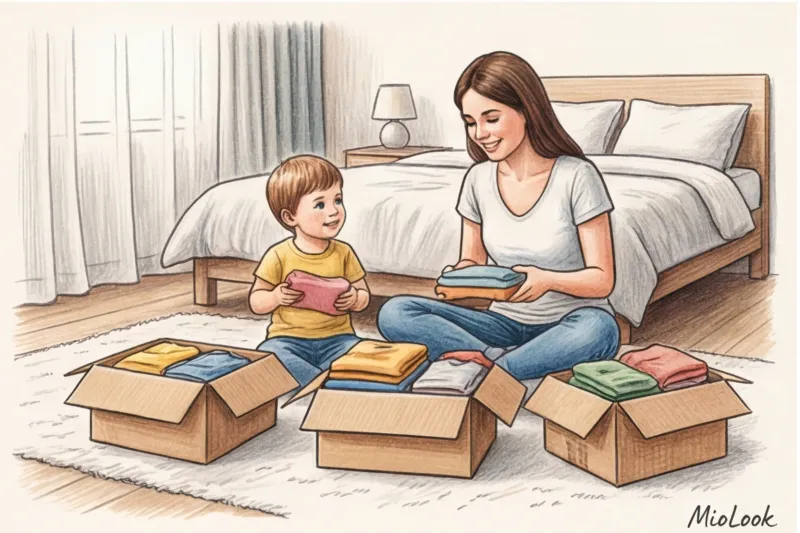
Apply my author's rule 15 seconds Show the item to your child. If they frown, hesitate, or refuse to put it on for more than 15 seconds, it doesn't belong in the active capsule. Children are very physical: if a sweater "bites" them on the neck once, they won't wear it again, no matter how much it costs.
After sorting, organize your storage. Marie Kondo's vertical method is ideal for children's dressers: a child can see all their T-shirts at once and doesn't ruin a stack by pulling out the one underneath. And for shirts and dresses, choose the right hangers (more on that later). Which hangers are best for clothes? , we have a separate detailed material).
Creating a minimalist children's wardrobe isn't about depriving your child of choice, but rather protecting their mental well-being from overexertion. By keeping only 100% favorite, compatible, and comfortable items in your closet, you'll give yourself precious moments of morning peace and your child confidence.
", "tags": [ "children's wardrobe", "capsule wardrobe", "closet organization", "minimalism", "stylist tips", "decluttering" ] }