The Anatomy of Quality: What Distinguishes Premium Women's Trousers from Mass-Market Items
Have you noticed that finding the perfect jacket or blouse is much easier than buying perfectly fitting trousers? It's not because your figure is "just not right." From a tailoring perspective, trousers are the most difficult part of a wardrobe to design. Unlike skirts, which primarily require working with a two-dimensional plane, trousers must take into account the complex 3D geometry of the body: waist and hip circumference, seat height, buttock curve, calf volume, and stride dynamics. By studying various types of women's trousers , we often look only at the outer style, forgetting that the real magic of a perfect fit lies on the inside.
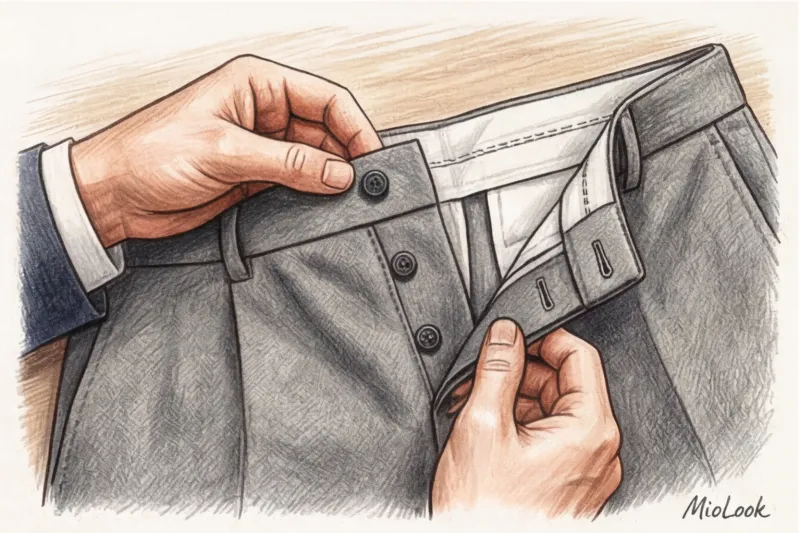
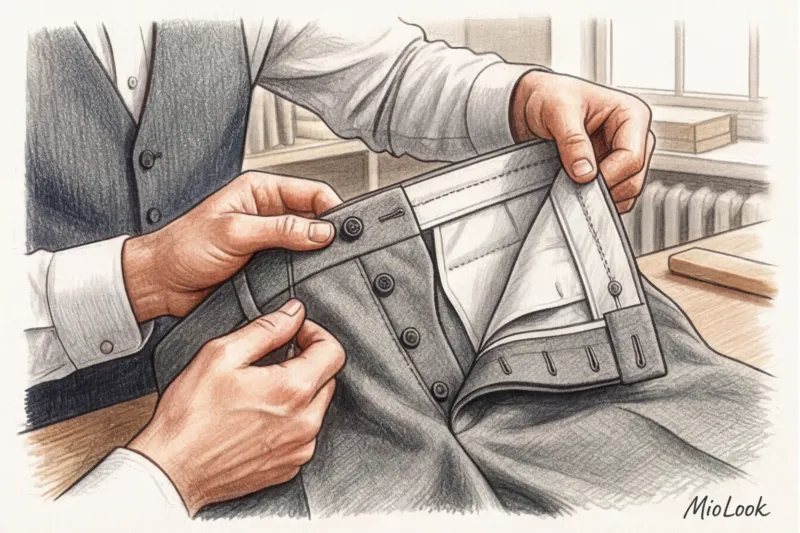
Over 12 years of working as a stylist, I've developed a professional habit. When I walk into a boutique with a client, the first thing I do is turn the garment inside out. Pants that cost €40 and €250 may look exactly the same on the hanger, but the inside never lies. In literally 10 seconds, I can determine their true lifespan. I always look for the quality of the overlock stitch (a good garment has a dense 4-5-thread overlock that won't unravel after the first wash) and the presence of a smooth lining running down the front half of the leg just below the knee. This detail is a crucial quality indicator, protecting the base fabric from friction and deformation during walking.
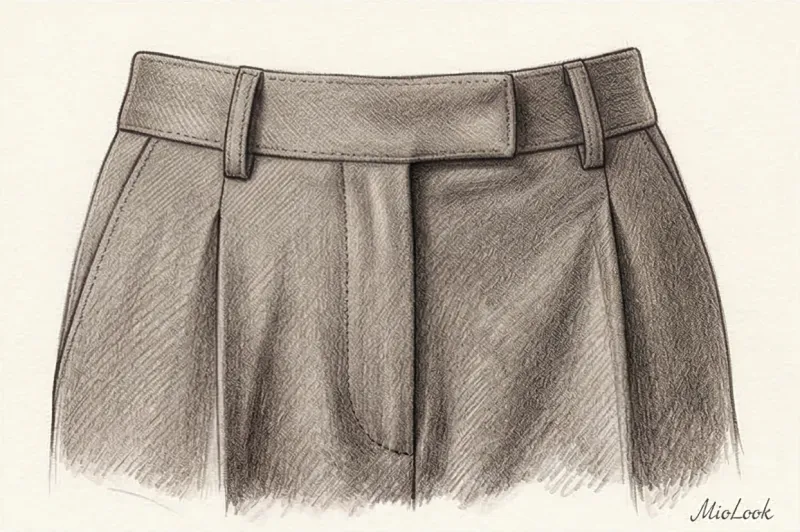
Let's take a closer look at the anatomy of a premium garment. The hidden feature that prevents trousers from slipping is the tailored waistband. In mass-market garments, the waistband is often simply backed with a cheap adhesive backing. Because of this, the natural body heat quickly softens it, causing it to bunch up, causing the trousers to slide down, forcing you to tug at them every five minutes. A rigid, multi-layered waistband, on the other hand, acts as a sturdy architectural framework. The best models also have a thin elasticated strip (a gripper) sewn inside, which securely secures the waist and keeps a tucked-in silk blouse in place, even when you're actively moving.
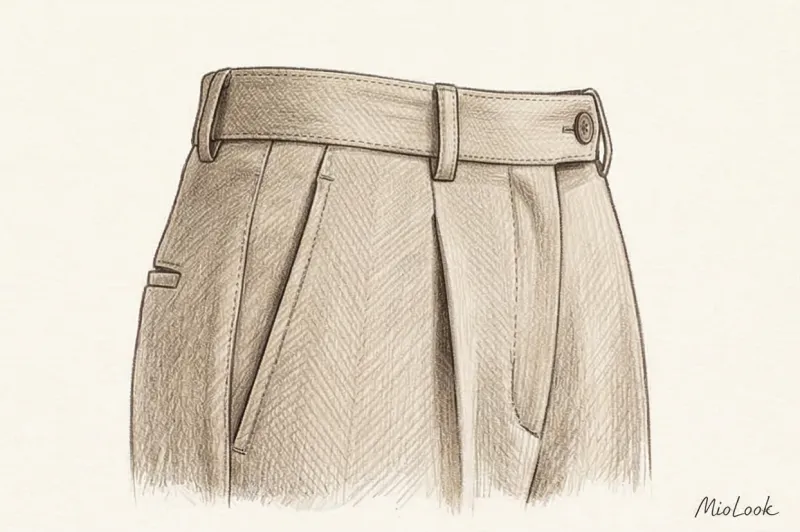
The next critical element is pocket design. Flared side pockets (called "ears") mercilessly disrupt the silhouette, visually widening the hips by several centimeters. This occurs when the darts are out of balance or when the factory patterns don't account for the steepness of the hip. In high-quality trousers, the pocket pockets are cut from thick cotton and are often attached directly to the fly from the inside, creating a subtle tummy-tuck effect. If the pockets still come apart when trying them on, there's only one rule: either go up a size or take the garment to a tailor immediately and have them sewn shut. A clean, vertical hip line is always more important than being able to fit a phone in the pocket.
Finally, I want to dispel a popular myth among advocates of absolute eco-friendliness—the "100% natural" rule. Many customers obsessively search for "100% wool" or "100% cotton" on the tag, only to be disappointed by the garment's unkempt appearance by the end of the workday. According to research by the Institute of Textile Technology (Aachen), trousers vitally need 2-3% elastane or spandex to maintain their shape. It's this tiny amount of high-quality synthetic material that gives the fabric its high recovery rate. It acts like a microspring, saving you from the dreaded "bent knees" and deformed buttocks after hours of sitting at an office desk or in a car.
"The perfect pair of trousers isn't the kind you stand in front of the fitting room mirror in. It's the kind you can comfortably wear for eight hours, and by evening they'll still have the same lines as they did in the morning."
To build a base that will serve you for years to come, I always recommend analyzing your successful purchases. Save the perfect pair in MioLook smart wardrobe , you can easily track which fabric compositions, brands, and design solutions provide you with maximum comfort and a flawless appearance every day.
Glossary: The Main Types of Women's Trousers and Their Impact on the Silhouette
In 1933, the Parisian police prefect threatened to arrest Marlene Dietrich if she dared to appear on the streets in men's clothing. Today, this historical fact only evokes a smile, but it was then, thanks to the courage of Hollywood divas, that a real revolution began. Analyzing modern types of women's trousers , we often take them for granted, forgetting that each cut is a documented story of women's emancipation.
According to a large-scale study by the Fashion Institute of Technology (New York, 2022), changes in pant leg width every 10 years directly reflect global sociocultural trends. Analysts have demonstrated an interesting pattern: wide, sweeping silhouettes (as in the 1940s, 1980s, and now the 2020s) always dominate during periods when women actively assert their rights, occupy new economic niches and leadership positions, literally "taking up more physical space." Meanwhile, eras of extremely tight skinny jeans (for example, the 2010s) correlate with the development of digital technology, an accelerated pace of life, and the cult of fitness. By choosing a style today, you're not simply following a trend—you're communicating a specific social code.
Straight and tapered styles: the basis of business style
If I had to limit my basic wardrobe to just one category, it would definitely be straight and slightly tapered silhouettes. They form the rigid framework on which an impeccable business and casual wardrobe is built.
Let's start with the eternal classics - slacks And chinos They may look similar, but their DNA is completely different. Chinos have military origins: they were made for the British and American armies from twill—a durable cotton fabric with a diagonal weave. They always look slightly more relaxed, often with slight fraying at the seams. Slacks, on the other hand, originated in the 1930s as country wear for the aristocracy. They are traditionally made from gabardine—a fabric with a smoother, denser texture that holds its shape well. This is why slacks always have a higher level of formality and easily replace tailored suit trousers in the office.
Deserving special attention cigarette pants and drainpipe trousers , made iconic by Audrey Hepburn. Their key feature is the 7/8 length, which reveals the ankle. During my consultations, I often see this length become a stumbling block. The main rule I've learned over years of styling is that the hem of the leg should end exactly at the narrowest part of your leg. If the fabric ends an inch higher, cutting through the wide part of your calf, you instantly lose 3-4 centimeters of height and visually weigh down your figure. If you're unsure of your proportions, choose classic, straight, full-length trousers with a crease. A pressed crease acts as a rigid architectural axis—it creates a continuous vertical line that phenomenally slims and elongates your silhouette, no matter your size.
Wide and flared styles: dynamics and status
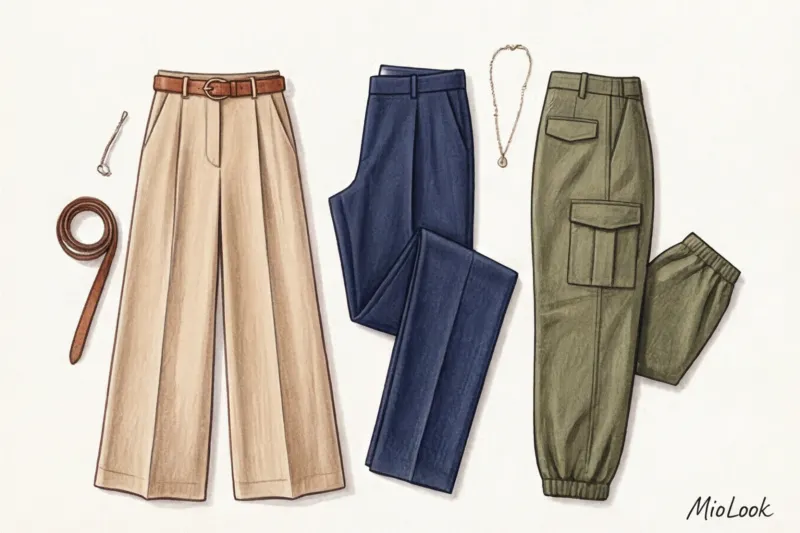
Wide-leg trousers always convey movement, status, and a certain theatricality. It's impossible to go unnoticed in them, but they require a meticulous approach to fabric selection and proportions.
The kings of this category are: palazzo pants Their main purpose is to flow as you walk, creating the effect of a maxi skirt. A huge mistake made by mass-market brands is to make palazzo pants from stiff cotton or cheap, squeaky polyester. In such fabrics, they become rigid and transform the lower body into a massive square. Ideal palazzo pants are made from heavy viscose, silk, or fine suiting wool (marked Super 100s). Regarding length, palazzo pants are uncompromising. They should cover at least two-thirds of the shoe. Wearing the same wide-leg trousers with flat sneakers and stilettos is impossible—you'll have to choose a single heel height and tailor the garment to fit it perfectly.
Complete opposite in length - culottes I'll be honest: these are the trickiest type of trousers in a woman's arsenal. Because they end mid-calf, they inevitably draw attention to the calves. To prevent culottes from cutting off your legs, follow the narrow ankle rule: pair them with shoes that fit snugly (like ankle boots) or show off the instep as much as possible (like nude pumps). If there's a strip of skin between the hem of the culottes and the top of the shoe, it shouldn't visually break up the silhouette into contrasting blocks.
It's impossible not to mention the triumphant return of 70s trends - Flare and Bootcut It's important to understand the difference: bootcuts sit snugly on the hips and knees, widening only at the very bottom to cover the boot shaft. This is the perfect basic style that balances wide hips. Flares, on the other hand, can flare right from the hip, creating a more dramatic, bohemian silhouette in the style of the latest Chloé shows. Flares from the knee are phenomenally leg-lengthening, especially when the hem practically touches the floor, hiding the high heel.
Access to MioLook for €0.99 — one-time payment
A smart AI stylist will select the perfect look and suggest how to pair new trousers for your body type.
Get access — €0.99 onceUtility and sporty casual: comfort without sacrificing style
The pandemic has forever changed our attitude toward comfort. But how can you integrate relaxed silhouettes into your urban wardrobe without looking like you just stepped out of the gym or on your way to a hiking trip?
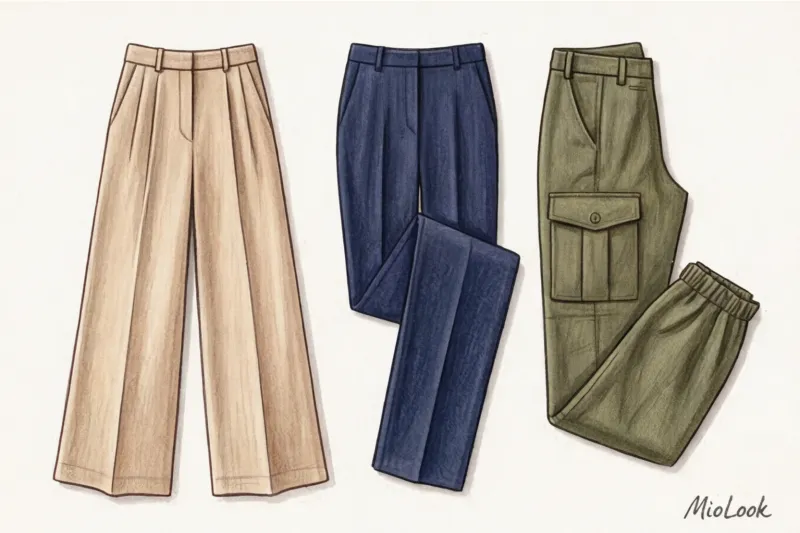
Let's take cargo pants Originally, these were strictly work clothes with patch pockets for tools. Today, cargo pants are universally worn, but to avoid making a grown woman look like a teenage skater, a contrasting texture is essential. The secret lies in abandoning rough canvas in favor of refined fabrics. Cargo pants made of matte silk, dense lyocell, or flowing Tencel lose their aggressive utilitarian appeal. Pair them with an architectural jacket or a cashmere sweater. High-quality cargo pants made of premium lyocell from sustainable brands will cost around 120-180 euros, but this investment will pay off in hundreds of elegant looks. Patch pockets should be flat and not bulge, otherwise they will visually add extra bulk to the hips.
A similar transformation occurred with joggers and banana pants (Slouchy) Joggers, with their distinctive elasticated waistband or ankle cuff, have long since left the confines of fitness clubs. Their integration into smart casual is achieved solely by replacing brushed knits with premium materials. One of my clients, a top manager at an IT company with a strict yet modern dress code, completely replaced her classic suits with a mix of silk joggers in muted shades and oversized cashmere turtlenecks. Banana pants, with their characteristic volume at the hips and tapered leg, work well in heavy cotton or denim. They create a relaxed yet composed silhouette that perfectly fits the concept of a modern, intelligent wardrobe.
To avoid getting confused by the variety of styles and to always have ready-made image formulas at hand, I recommend uploading your current items to MioLook — the algorithm will help analyze which specific silhouettes your capsule lacks for perfect balance.
Women's Shorts: Elegance Beyond the Beach
Did you know that back in the early 2000s, wearing shorts in a city's financial district could cost you your career? Today, we're witnessing a tectonic shift: shorts have finally left the confines of beaches and tennis courts, becoming a legitimate element of urban and even business attire. This is a logical evolution in comfort that can no longer be ignored.
According to a 2023 report by the Society for Human Resource Management, over 60% of large corporations have relaxed their summer dress codes. Even conservative giants like Goldman Sachs and JP Morgan have officially expanded their definition of business casual, opening the door to smart shorts during the hot months. However, a strict stylistic filter applies here—we're talking exclusively about well-designed tailoring, not denim cutoffs.
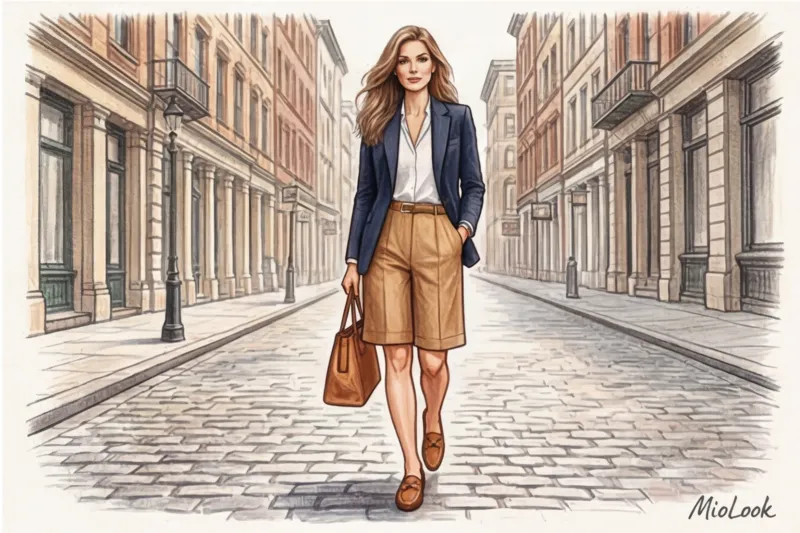
Bermuda shorts are ideal for the office. Forget about micro-lengths; the correct corporate proportions end exactly 2-3 centimeters above the knee. The leg width should allow for airflow: two fingers should fit comfortably between the fabric and the thigh. This width is what respects business etiquette and visually elongates the silhouette without making the leg feel tight.
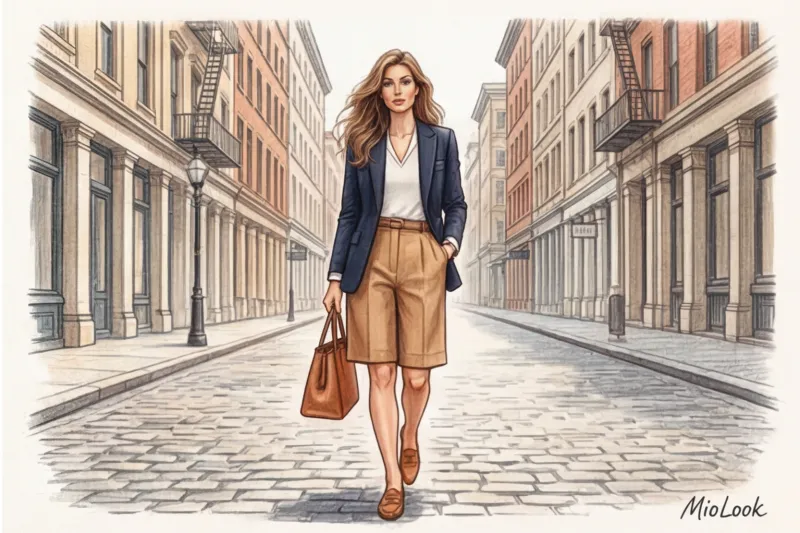
Suit shorts with a crease are an optical illusion that works to your advantage. A pressed or stitched crease creates that crisp vertical line that offsets exposed legs, adding a touch of formality to the look. For a classy look, I recommend pairing Bermuda shorts with straight-cut jackets or lightweight oversized blazers in the same fabric.
Shoes in this outfit are the final touch: no beach sandals or canvas sneakers. Opt for structured leather loafers worn barefoot or closed, minimalist mules. This instantly elevates the look from "promenade stroll" to "client meeting." If you're unsure whether your new suit shorts will fit into your capsule wardrobe, upload a photo of them to MioLook. The app will help you create virtual outfits using your current jackets and shoes before you buy them, saving you money and time on your morning routine.
Now about the most insidious thing—textiles. The biggest mistake I see every summer is trying to wear 100% thin linen shorts in the city.
"Pure linen is luxurious, but has zero elasticity. After an hour of sitting in an office chair, it forms deep, fixed creases in the groin area, turning into an untidy accordion."
My professional tip: look for a linen blend with viscose or lyocell on the label. The optimal ratio is 30% to 50% rayon. Viscose adds weight, creates a beautiful flow, and, most importantly, reduces excessive wrinkling. You can get up from your desk with your hips looking smooth. In the mid-price range (around €70–€120), Scandinavian minimalist brands like COS or Arket consistently produce such blended fabrics well.
Fit Engineering: How to Choose Trousers for Your Body Type Without Stereotypes
Let's be honest: dividing women's figures into "apples," "pears," and "inverted triangles" is hopelessly outdated. A large-scale anthropometric study by the Institute of Textiles and Clothing (2022) proved that only 18% of women fit neatly into these fruit-shaped categories. Today, professional styling relies on body architecture—primarily, the torso-to-leg ratio. It is this measurable metric, not some mythical body type, that determines how any type of women's trousers will fit.
Working on personalization algorithms in the app MioLook We've completely abandoned stereotypical labels. Our system calculates your rise mathematically, analyzing your torso length. You can perform this test at home: if the distance from your crown to your pelvis is greater than your leg length, you need a visual correction of your proportions.
- High Rise (25 cm and above): A fail-safe tool that visually lengthens legs and accentuates the narrowest part of the torso. It's an absolute must-have for women with a longer torso.
- Mid Rise (22-24 cm): A versatile base that sits a couple of centimeters below the navel. It's a real lifesaver for those with a naturally short torso—this fit doesn't cut into the chest area and maintains a harmonious balance.
- Low Rise (below 20 cm): We're seeing an aggressive return of the Y2K aesthetic, courtesy of designers like Miu Miu and Diesel. But let's be honest: this cut mercilessly shortens the legs. If you're shorter than 165 cm and your torso is longer than your legs, it's best to ignore this trend.
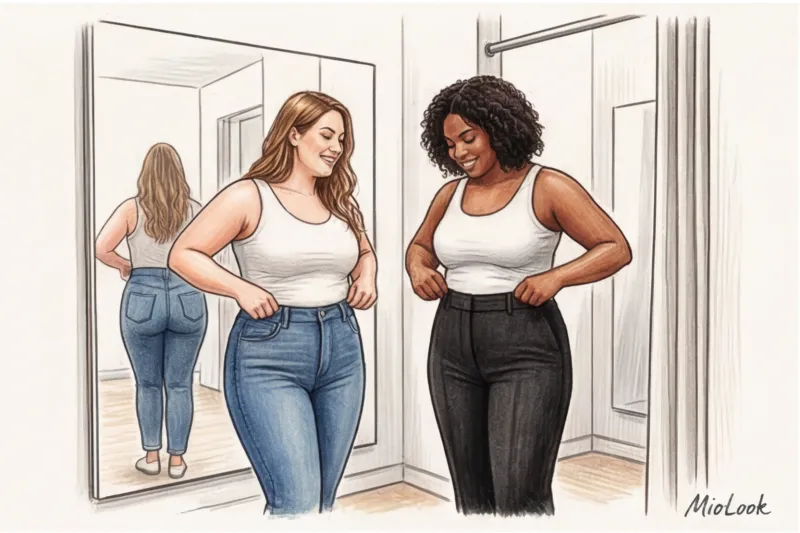
The next complex engineering element is darts and pleats. Many women are terrified of them, believing that excess fabric around the waist will inevitably make them look fat. This is an optical illusion. A single, deep, correctly positioned forward pleat creates the necessary freedom of fit for the hips and delicately conceals a protruding tummy. However, small, flared pleats on trousers made of thin fabric (a typical problem for mass-market trousers in the 30-40 euro range) have exactly the opposite effect. With the slightest movement, they tighten, distort the silhouette, and visually add 5 kilograms.
Finally, let's flip the pants over. The placement of the back pockets is a free plastic surgery option that's a shame to miss. If your goal is to visually enhance the shape and volume of your buttocks with a push-up effect, look for styles with slightly angled pockets and bottoms that end just above the crease.
Pockets that are too large and sewn low (crossing the buttock crease) immediately add weight to the hips and create a flattening effect. Pocket size should be strictly proportional to your measurements: tiny pockets on full hips will make them appear even larger due to the contrast in size. Pay attention to the distance between them: the wider the pockets are, the wider your hips will appear. A well-placed V-shaped yoke above them will help sculpt your silhouette and add firmness.
Access to MioLook for €0.99 — one-time payment
Start creating perfect images with the help of artificial intelligence
Get access — €0.99 onceTextile Guide: Fabrics That Hold Their Shape for Years
According to a 2023 report by the global initiative WRAP (Waste and Resources Action Programme), the average life cycle of women's trousers in mass-market clothing has shrunk to a measly 14 times. The reason lies not in poor designs, but in the complete degradation of the textiles. The styles of women's trousers may vary from season to season, but it's the fabric that determines whether a garment will look premium a year from now or will lose its luster after just one wash.
For ideal demi-season trousers, the gold standard remains smooth suit wool ( Worsted wool , or worsted wool). If you carefully examine the tags of mid- and premium-segment brands, you'll often see the marking Super 100s or 120s This classification system denotes the fineness (thickness) of the wool fiber. The range of 100–120 is the technological ideal: the fabric is flexible enough to drape beautifully while still offering excellent wear resistance. Chasing higher values (for example, Super 150s) for everyday wear is not recommended—the microscopic thickness of the thread makes the material too delicate, and trousers will quickly wear out in the thigh area.
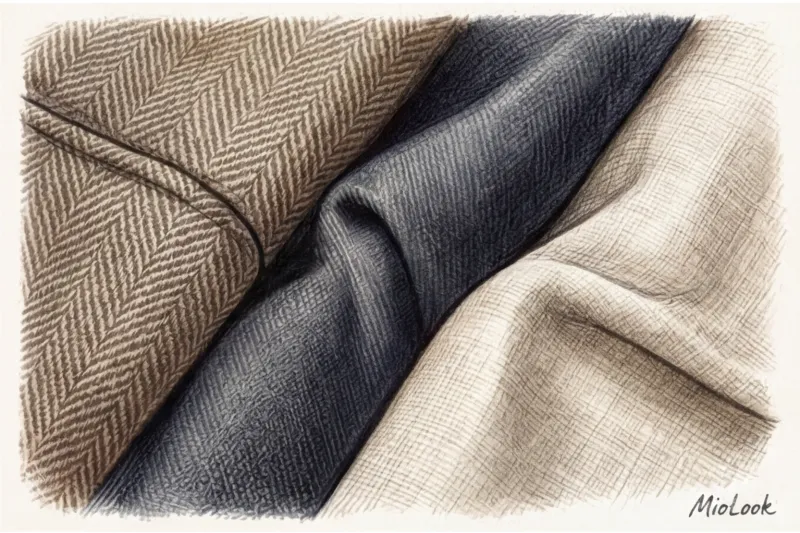
As the weather heats up, many people make the classic mistake of switching to thin cotton, which quickly loses its shape and stretches out at the knees. My favorite summer alternatives are smart, high-tech materials:
- Lyocell and Tencel: An eco-friendly silk substitute made from eucalyptus wood. This material feels cool on the skin, breathes well, and provides the heavy, fluid texture needed for wide-leg palazzo pants, but without the care issues of natural silk.
- Blended flax: Pure linen will inevitably develop stiff creases on the way to work. Look for blends with 30-40% viscose—they retain the noble texture of linen while remaining soft and flowing.
- Tropical Wool (Fresco): The secret weapon of Italian tailors. Thanks to the strong twist of the thread and the open, porous weave, Fresco trousers are more breathable than linen and virtually wrinkle-free, maintaining a flawless crease even at 30°C.
And now about the main enemy of an elegant silhouette: cheap polyester. I'm not demonizing synthetics entirely (as we've already established, 2-3% elastane is vital for elasticity), but pants made entirely of low-quality polyester are an investment in daily discomfort. They create a greenhouse effect, accumulating static electricity so that the fabric sticks insidiously to your legs, distorting your proportions. Moreover, even the slightest overheating of the iron causes glazes to appear on the seams and darts—a cheap, indelible sheen of melted plastic.
"High-quality textiles aren't about overpaying for a brand name, but rather a matter of strict math. By investing in the right fabric, you're buying not just a pair of trousers, but hundreds of confident outings."
Here we come to the most important tool of the stylist - calculation Cost Per Wear (CPW) , or cost per wear. Let's do the math. You buy trendy polyester pants for €30. After 10 washes, they become covered in indelible pilling, lose their shape, and are thrown away. The result: €3 per wear. An alternative is basic pants made of a high-quality wool blend for €150. They will last you at least three years with active wear (about 150 wears). The CPW is only €1.
To visually track the return on your clothing investment, I recommend digitizing your closet. By uploading your items to MioLook , you'll be able to track your wardrobe and quickly understand: high-quality fabrics always earn their value down to the last cent, while cheap synthetics just sit there like dead weight.
Stylist's Checklist: 5 Tests to Follow Before Buying the Perfect Pants
Most women make a fatal mistake right in the fitting room: they simply stand in front of the mirror, sucking in their stomachs. But clothes are designed for movement, not static. We often succumb to the magic of studio lighting and a flashy brand, forgetting the most important thing: how the garment will perform in real life. As a practicing stylist, I've developed a strict five-step protocol that I go through with my clients before handing over even 50 euros at the checkout. This algorithm will forever save you from returns and disappointments.
Step 1. Squat test
Put on your chosen ones types of women's trousers Do a deep squat, then sit on the ottoman in the fitting room. What are we looking for? First, check the tension of the seams on your hips and buttocks—they shouldn't be popping. Second, assess the comfort of the fit: a tight waistband shouldn't dig into your ribs, restricting your breathing. Pay attention to your lower back: if the fabric is treacherously loose, creating a "pocket" and revealing your underwear, the pattern isn't right for your waist-to-hip difference. Pants should support your natural biomechanics, not restrict them.
Step 2: The Clenched Fist Test
This is my favorite quick test for textile quality. Take a piece of fabric in the groin area (or on the front of the thigh) and squeeze it as tightly as possible in a fist for 10-15 seconds. Release and observe the result.
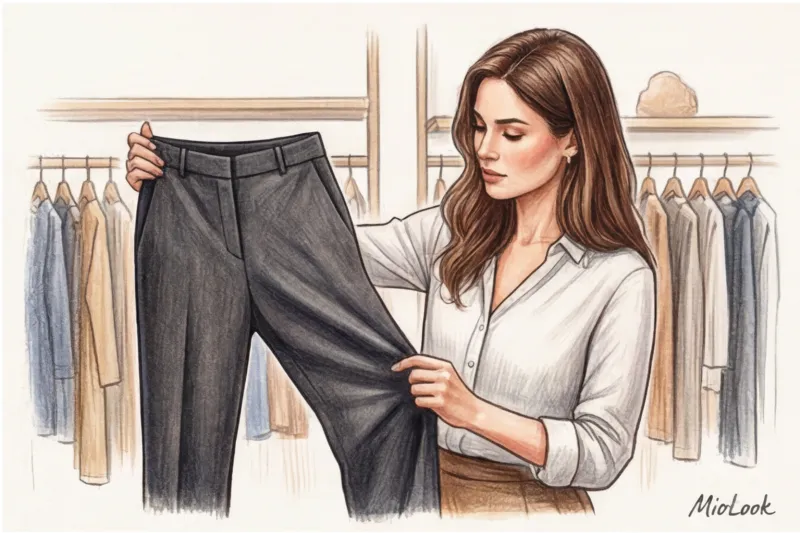
If the fabric is covered in stiff, unruly creases, imagine how this area will look after an hour of computer work or a taxi ride. A good wool suit (with the right twist) or a dense cotton blend should straighten out almost instantly due to its own elasticity. Cheap viscose or thin polyester will give way immediately.
Step 3: Inspecting the Side Pockets
The pocket design is a ruthless indicator of whether you've chosen the right size. Stand up straight, relax, and let your arms hang down. The side pocket lines (especially in classic styles and palazzo pants) should lie perfectly flat, blending with the silhouette of the hip. If they flare out, creating "ears" or bulging unattractively, the trousers are too small. Ignore the number on the tag! Go up a size and, if necessary, have a reputable tailor take them in at the waist. This is the golden rule of fit, and it can visually reduce a couple of pounds.
Step 4: Estimating the length for specific shoes
There's simply no universal length for wide-leg styles. You physically can't wear the same palazzo pants with flat sneakers and 7-centimeter-high ankle boots. In the first case, you'll be sweeping the pavement, destroying the hem of the pant leg in a couple of days (even if it has a protective tape sewn on). In the second case, you'll end up with a short length that distorts the proportions of your legs. Try the item on carefully with the shoes you plan to wear it with. For wide-leg styles, the ideal gap between the hem of the pant leg and the floor is exactly 1–1.5 cm.
Step 5. Inseam Analysis
Walk through the fitting room or sales floor with a quick, sweeping stride. Focus on the sensations on your inner thigh—where the inseam runs and connects to the saddle seam. If there's too much fabric, it will bunch up in untidy folds and quickly wear out from constant friction. If there's not enough, the seam will dig in, rubbing against your skin as you walk, and creating anatomically incorrect contours. The ideal cut leaves just enough room for you to barely feel the fabric as you move.
Finding the perfect pair isn't a lottery, but a systematic skill that's easy to develop. Stop compromising your body for the sake of a pretty label. Using this checklist will help you naturally purge your wardrobe of random purchases that have been gathering dust on shelves for years with their tags still attached. Invest time in trying them on, pay attention to how they feel, and remember: your clothes should serve you flawlessly, not you theirs.
Your ideal image begins Here
Join thousands of users who look flawless every day with MioLook.
Get access — €0.99 onceGuide Chapters
Palazzo pants: what they are, their features, and what to wear them with
Cargo pants: what they are, how they came to be, and what to wear them with
Skinny jeans: what they are, their style, and what to wear them with
Mom jeans: what they are, the cut, and what to wear them with
Culottes: What They Are, How They're Styled, and What to Wear Them With
Joggers: What They Are, Their Cut, and What to Wear Them With
Flared trousers: what they are, the main types, and what to wear them with
Boyfriend jeans: what they are, description, and photos
Bermuda Shorts: What They Are, Types, and How to Style Them
A complete guide to Bermuda shorts, covering their distinct length, popular styles, and versatile outfit combinations for any season.