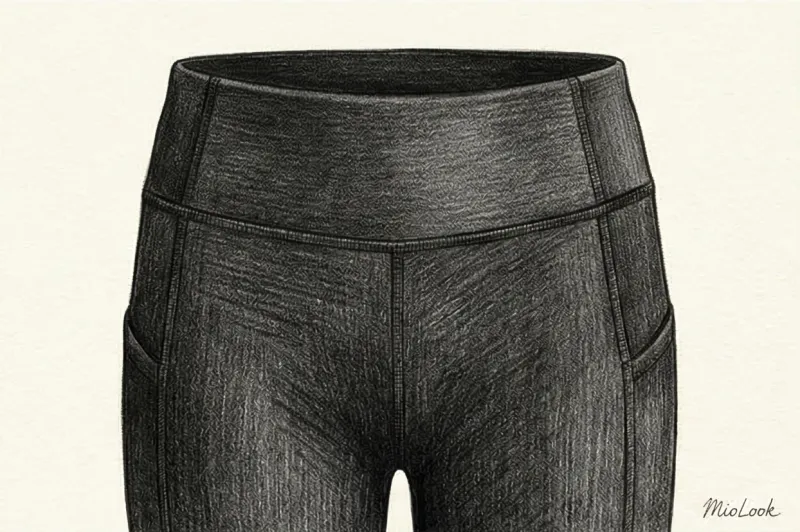
What are leggings?
Leggings - These are tight-fitting trousers without fasteners, pockets or fittings, which fit tightly to the legs along the entire length.
The main difference between leggings and tights is the lack of a toe cap—they don't cover the foot. Furthermore, they are made from thicker, more opaque materials. Historically, this garment originated from tights, a men's military uniform item made from elk skin. Modern women's leggings emerged in the 1960s with the invention of Lycra.
The garments are made from stretchy fabrics that retain their shape well: cotton with elastane, nylon, polyester, spandex, and microfiber. The design features an elastic waistband instead of a rigid buttoned waistband, ensuring a comfortable fit.
Main types
Depending on the purpose and materials used, there are several key types of leggings:
- Sports (tights): They are made from high-tech synthetic materials that wick away moisture. They often feature compression, a wide elastic band, and flatlock seams to prevent chafing.
- Everyday (basic): They are made from thick knitwear, viscose, or cotton with added elastane. Designed for casual looks, the material must be completely opaque.
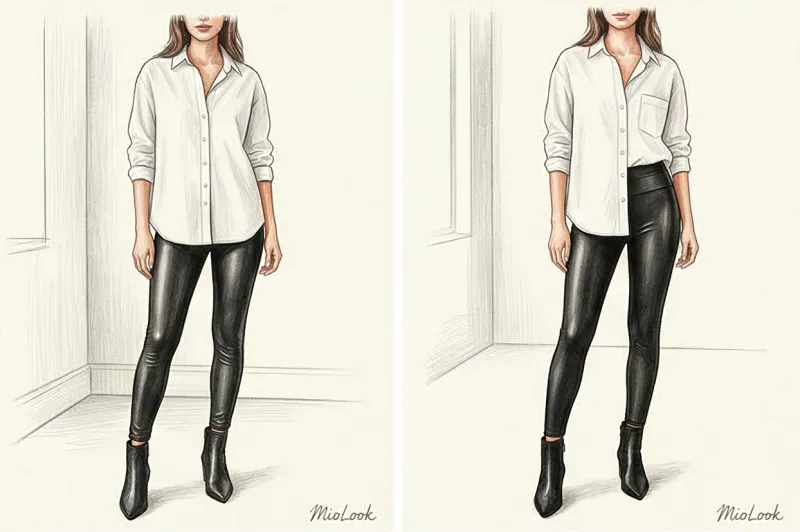
- Leather (eco-leather): Models made of stretch fabric with a polyurethane coating that imitates matte or glossy leather. They serve as a wardrobe accent.
- Insulated: Winter options have an inner layer of fleece, micro-fleece or faux fur to protect against the cold.
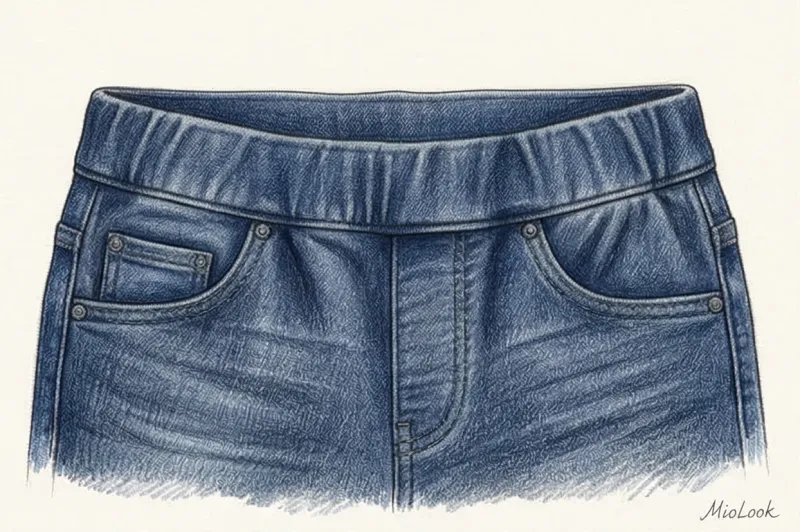
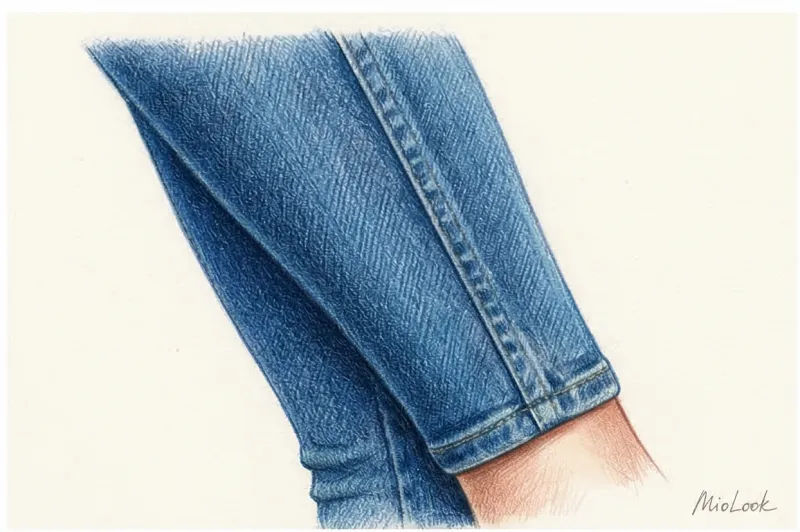
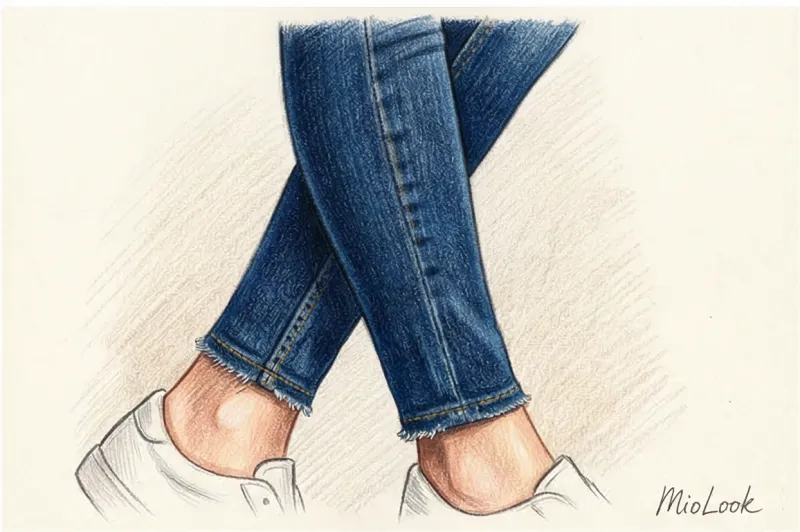
- Jeggings: A hybrid style that visually imitates the texture of denim. Often enhanced with printed pockets and stitching, while maintaining the stretch and fit of classic leggings.
What to combine with
The basic rule of proportions dictates pairing fitted bottoms with voluminous or longer tops. For everyday looks, it's recommended to cover the groin and buttocks.
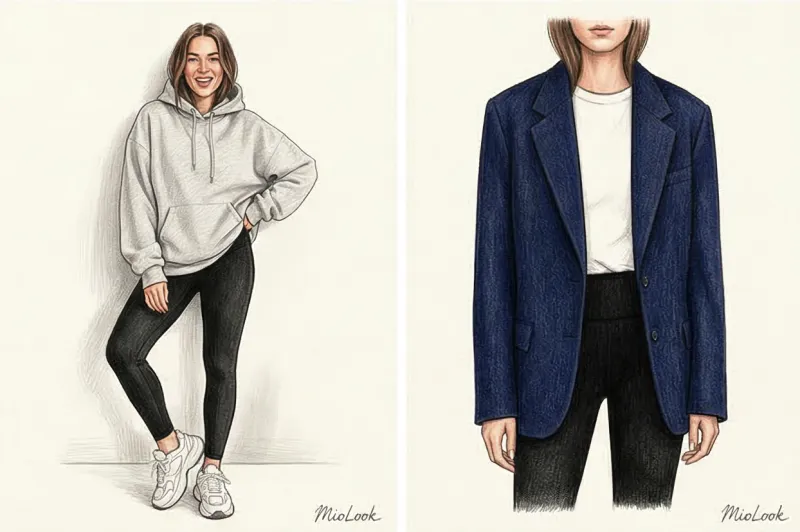
- With knitwear: Thick basic models look harmonious with voluminous hoodies, sweatshirts, long cardigans and oversized knitted sweaters.
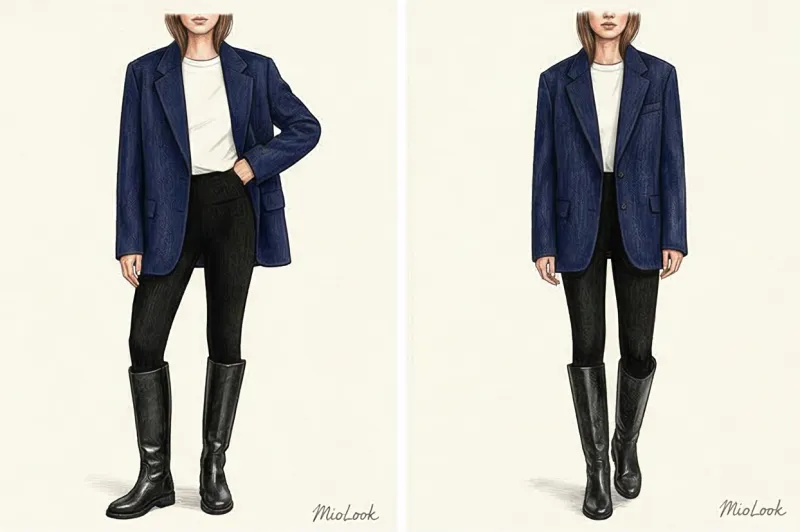
- With a jacket: Black knit or leather leggings are combined with a long, straight-cut jacket and a basic T-shirt to create a contrast of volumes.
- With dresses and shirts: Thin products are used as an alternative to thick tights under short shirt dresses, long tunics and long loose-fitting shirts.
When choosing shoes for everyday outfits, it's worth giving preference to chunky sneakers, chunky lace-up boots (Chelsea boots, Martins), and high tube boots into which the legs of the trousers are tucked.