What Is an Eco-Friendly Wardrobe, Really? (And Why It's Not Just Linen and Hemp)
Every second, an entire truck bed filled with clothes is sent to landfills or burned around the world. When I first saw this report Ellen MacArthur Foundation , I felt uneasy realizing the scale of the problem. The fashion industry generates millions of tons of waste every year, and we, as consumers, are part of this cycle. We're used to thinking that eco-friendly wardrobe — this is exclusively clothing made from untreated linen, hemp, or recycled plastic, always in natural shades and often in shapeless cuts. But let's be honest: for the modern person living in the fast-paced city, sustainable fashion looks completely different.
After 12 years of working as a personal stylist, I've come to the main conclusion: eco-friendliness in fashion is a verb (your action), not a noun (a label on clothing). It's not the green "Eco-friendly" tag on a T-shirt, but something how exactly You're using this T-shirt. The true difference between slow fashion and fast fashion lies not in the price of the item or the brand's status, but solely in your approach to consumption. In my experience, I've seen dozens of cases where a basic mass-market shirt served a client for years, perfectly complementing her everyday looks, and ultimately proved far more eco-friendly than a designer organic silk dress bought for one evening and forever forgotten in the closet.
The Biggest Myth About Sustainable Fashion
When girls decide to embrace the "light side" of mindfulness, the first impulse is often radical: to do a total purge. Collect all polyester, acrylic, and "unethical" mass-market items in black bags (for more on how to properly part with things, read the article about How to get rid of unnecessary things without regret ) and happily go buy new, "correct" brands. Stop. This is the worst thing you can do for the planet.
Buying new eco-friendly items for the sake of "greening" your closet only encourages global overproduction. By throwing away wearable clothing, you increase your carbon footprint, even if you replace it with organic cotton. In the world of sustainable fashion, there's a golden rule, brilliantly articulated by Orsola de Castro (co-founder of the Fashion Revolution movement):
"The most eco-friendly and sustainable thing is the one that's already hanging in your closet."
Cost Per Wear (CPW): How Math Can Cure Shopping Addiction
I love relying on data because numbers are more sobering than any persuasion. There is a metric Cost Per Wear (CPW) is the cost per wear or outing. It's simple math that works like a powerful antidote to impulsive shopping. The formula is crystal clear: (cost of item + cost of care and repair) / number of actual wears.
Let's compare. Let's say you're collecting capsule wardrobe minimalism and buy a great basic trench coat for €300. That's a significant amount. But you wear it 100 days a year for three years. It requires almost no maintenance (one dry cleaning for €20). Your CPW = (300 + 20) / 300 = about €1 per outing. Now let's take a trendy "disposable" dress for €60. You wear it to a corporate event once, plus you pay €15 for dry cleaning the complex fabric. The CPW of this dress = €75. Which purchase actually turned out to be expensive and unsustainable?
Before going to the checkout, I always recommend that my clients apply the rule 30 wears (30 Outings), popularized by Livia Firth. Simply ask yourself, "Will I wear this at least 30 times?" If the answer is "no" or "I don't know," leave it on the hanger. And to avoid keeping track of all your wardrobe statistics in your head, use digital tools. For example, in an app MioLook You can easily digitize your items and track their actual usage. The program will automatically reveal your "blind spots" and help you reduce the Cost Per Wear for each item in your closet.
Auditing Your Current Closet: The First Step to Informed Shopping
It's impossible to build an eco-friendly consumption system based on illusions. And believe me, our brains love illusions when it comes to clothing. You can't call your wardrobe eco-friendly simply by buying a couple of organic cotton T-shirts if you have no idea what treasures (and skeletons) are already hiding on your shelves. Sustainability begins with an honest inventory.
Over the years as a stylist, I've conducted hundreds of analyses and discovered one absolute pattern. Literally every session with a client, regardless of her budget—whether she spends €100 at a mass-market store or €3,000 at luxury European boutiques—inevitably ends with the same phrase:
"Wow, I completely forgot I had this!"
We buy duplicates and multiply textile waste simply because we physically cannot see our things behind dense rows of hangers.
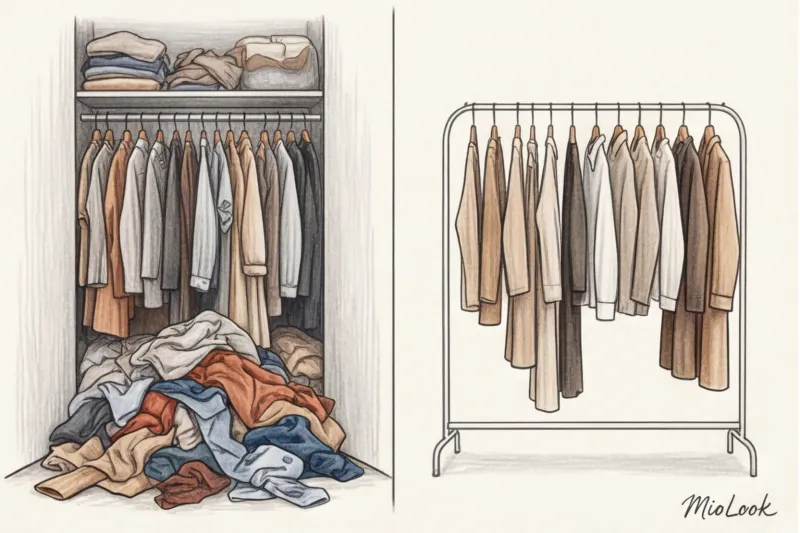
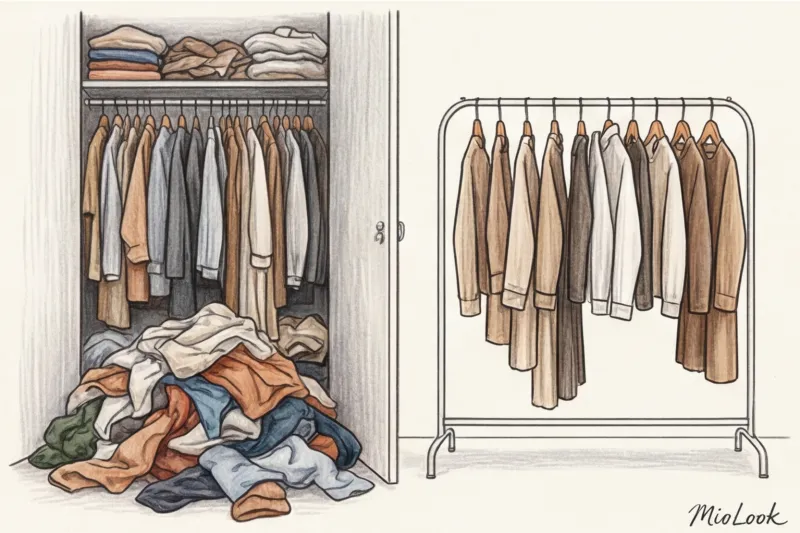
To break this vicious cycle, I always start with "unloading" method This isn't just a simple weekend cleaning; it's a powerful psychological technique for visualizing the scale of your possessions. Your task is to take absolutely everything out of your closets: basic jeans, evening dresses, outerwear, forgotten boxes on the attic. Pile it all into one huge pile on your bed. According to the British organization WRAP (2023), the average consumer actively ignores about 50% of their wardrobe. And when you stand before this mountain of textiles, the scale of the overproduction problem becomes alarmingly tangible.
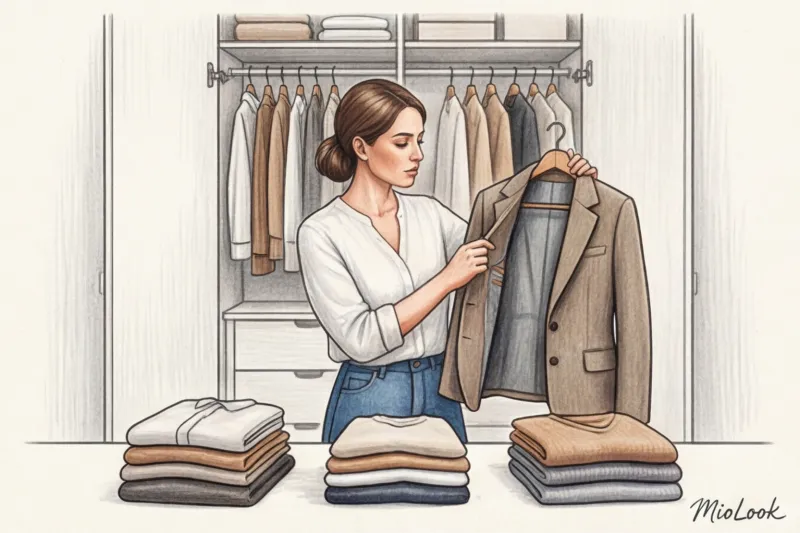
The next stage is ruthless sorting. And here lies the main trap: we tend to evaluate things based on emotional attachment (“I wore this dress to my thesis,” “it cost €500, I feel sorry to give it away”), while we should be evaluating them based on actual frequency of use An eco-friendly wardrobe is a working mechanism, not a museum of memories. If an item hasn't been worn in the last 12 months, it's not functional. I recommend dividing your "mountain" into three strict categories: "wear constantly" (this is your true base), "worn once or twice a year" (risk zone), and "never worn at all."
The Tracking Method: Collecting Data on Your Style
Once the initial sorting is complete, it's time to get analytical. Our intuition often misleads us when it comes to style: we think we wear a little bit of everything, but the numbers tell us otherwise. In the fashion world, the Pareto principle applies harshly: we wear only 20% of our clothes 80% of the time.
To identify your "blind spots" (that 80% of dead weight), you need to start collecting objective data. The simplest analog method is the hanger trick. Turn all the hangers in your closet so that the hooks are facing you (backwards). As soon as you wear an item and wash it, return the hanger to its normal position. After three or four months, you'll clearly see which items are still hanging untouched.
But as a digital evangelist, I prefer to delegate the routine to technology. It's much more efficient to transfer the process to a smartphone. By digitizing my shelves through MioLook , you'll begin to accurately track how many times each item is worn. The app will provide you with impartial statistics: that stunning emerald jacket you considered your signature piece was worn only twice this season, while that "boring" gray cashmere sweater was worn 40 times.
Analyzing this data is critical. Why do untouched items hang around like dead weight? Often, the reason lies in a simple gap between your real life and your "fantasy self." We buy flashy things for a life we don't live. It's this fundamental ignorance of our own aesthetics that leads to impulse purchases that are detrimental to both your budget and the planet. I wrote more about how to close this gap in my guide. How to Find Your Style Once you understand your true uniform, you will automatically stop funding overproduction.
Access to MioLook for €0.99 — one-time payment
A smart AI stylist will select the perfect look from your clothes and help you stop impulse shopping.
Get access — €0.99 onceThe Eco-Friendly Wardrobe Pyramid: From Simple to Complex
Remember the classic food pyramid from school textbooks? At its broad base are basic everyday foods, and at the sharpest point are sweets, permitted only as rare exceptions. In the world of mindful consumption (as conceptualized by illustrator Sarah Lazarovic), a similar pyramid of shopping habits exists, and it brilliantly constructs a hierarchy of our actions.
The foundation of this pyramid is to use what you have already Yes, there are. The middle levels are repair, exchange, buying second-hand, and renting. But buying a brand new item is at the very top, tiny peak. It's always a last resort.
Many brands have convinced us that being eco-friendly means going to the store and buying t-shirts with green labels that say "100% organic" or "recycled." But the truth is, even buying the most "super-eco" item still puts a strain on the planet.
Producing any new fabric (even recycled) requires hundreds of liters of water for dyeing, electricity for weaving machines, and fuel for shipping containers across the ocean. Therefore, the focus needs to shift downwards. In my experience, when clients stop mindlessly reaching for the top of the pyramid and start actively using its lower levels, they save up to 40% of their annual clothing budget. And these hundreds, and sometimes thousands, of euros saved are more logically spent on education, travel, or investments than on yet another sweater.
Repair, upcycling and proper maintenance (Level 1)
According to a large-scale study by the British organization WRAP (2023), extending the life of any item by just nine months reduces its carbon, water, and waste footprint by 20–30%. These are colossal figures, achieved through simple everyday routines. A sustainable wardrobe starts not at the mall, but in your laundry room.
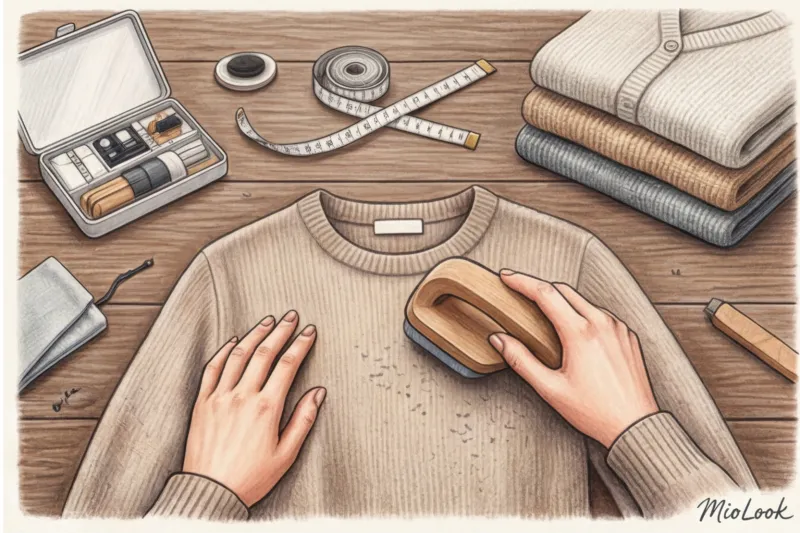
Instead of throwing away items at the first sign of wear, integrate a culture of care into your life. Invest €25–30 in a good, powerful lint remover—it literally brings worn-out cashmere sweaters and knit suits back from the brink of death. Swap your regular iron for a high-quality steamer: unlike a hot iron soleplate, steam doesn't flatten or burn the fibers of the fabric (this is especially critical for silk and viscose), making items last two to three times longer.
Another important rule is washing at 30 degrees Celsius. Modern enzymatic gels dissolve stains perfectly in cool water. By lowering the temperature, you not only prevent fading and shrinkage, but also save significant energy. And finally, please get rid of those thin wire hangers from the dry cleaner. They mercilessly distort shoulder seams. Wooden or wide velvet hangers are a basic and inexpensive investment in the longevity of your wardrobe.
Second-hand, resale, and rental (Level 2)
If your current closet is exhausted and you truly need a specific item, we move on to the next step. And here, many will have to work on their stereotypes. I still often hear from new clients: "Second-hand clothes smell like mothballs, I'm disgusted." Leave these myths in the nineties.
Modern resale involves high-tech platforms with multi-stage authentication and dry cleaning. On sites like Vestiaire Collective, The RealReal, or local curated vintage projects, you can find premium pieces (from a perfect Céline jacket to a basic APC bag) in like-new condition, at 50-70% off the original boutique price. You get stunning quality of cut and materials without funding overproduction.
Clothing for special events (corporate parties, a friend's wedding, a themed photo shoot) is a whole other story. Buying a statement sequin dress for €150-€200, only to wear it once and then tuck it away in a bag forever, is a crime against common sense. Rental services solve this problem elegantly: you pay about €30-€50 for a weekend, shine at the event in a designer outfit, and then simply return it.
And to make sure that a rented or vintage item will fit perfectly with your current style, I recommend using image visualization function in MioLook Simply upload a screenshot of your desired dress from the resale app to your digital wardrobe and, in just a couple of minutes, test how it will look with your favorite shoes and bag. No impulse purchases—only cold calculation and perfect pairing.
Greenwashing in Fashion: How to Spot Pseudo-Eco-Friendliness
Have you noticed how store windows have literally gone green in the last couple of years? Kraft paper tags, nature prints, and loud "Eco," "Vegan," and "Conscious" slogans emblazoned on every other basic T-shirt. This is classic greenwashing—a marketing ploy that creates the illusion of eco-friendliness. The brand deliberately misleads consumers to make them spend more, thereby feeling morally superior.
During shopping sessions, I regularly observe one scene: a client reaches for an item with a green label with relief. She believes that by buying a €60 "eco-dress," she's making a contribution to saving the planet. In reality, an eco-friendly wardrobe isn't built on blind faith in marketers. It's always a matter of thoughtful analysis.
Greenwashing works like an indulgence for a shopaholic: it removes the feeling of guilt for yet another impulsive purchase, encouraging you to consume even more, but under the auspices of “caring for the environment.”
In a recent McKinsey report (2024) on transparency in the fashion industry, analysts uncovered the astonishing scale of this manipulation. My favorite example from there is the term vegan leather (vegan leather). It sounds ethical and progressive. But if you turn the tag over, 9 out of 10 times you'll see 100% polyurethane. The brand is selling you regular plastic made from fossil fuels. Such a jacket will take centuries to decompose in a landfill, but they'll sell it at a hefty premium for its "humane" nature.
Now let's dissect the famous "Conscious" or "Join Life" lines that mass-market brands boast about. Is this just marketing or is there real value? Experience shows that to nail that coveted green card to a sweatshirt, manufacturers often only need to add 15–20% recycled polyester or organic cotton to the composition. The remaining 80% is cheap, non-eco-friendly primary-cycle raw materials.
But the main problem isn't even the ingredients. With green labels, industry giants skillfully disguise their main sin—gross overproduction. It doesn't matter whether a T-shirt is made from bamboo or recycled ocean plastic if a brand produces 10 million copies, half of which will be incinerated unsold. True sustainability means reducing production volumes, not churning out mountains of "green" waste.
Checklist: How to Check a Brand Before Buying
To stop funding marketers and start building a truly sustainable wardrobe, I recommend using a filter of three strict criteria.
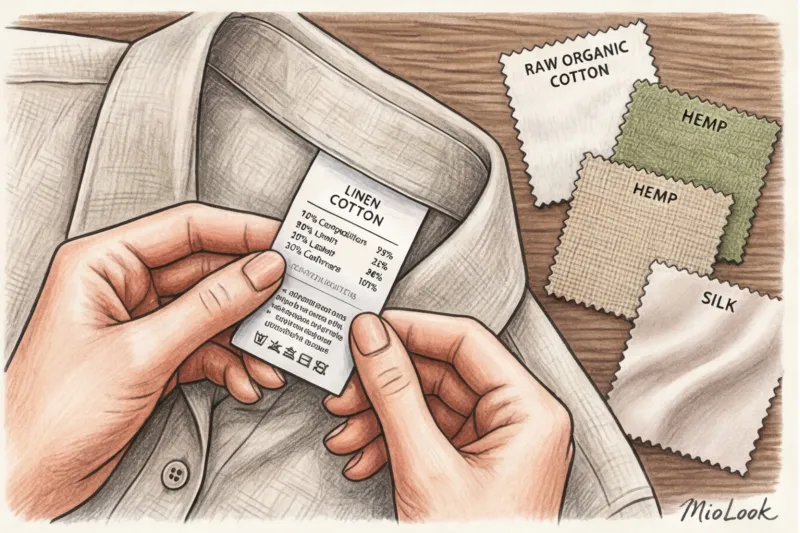
- Look for independent eco-labels. Abstract phrases like "Eco-friendly" or "Nature-loving" mean nothing legally. Only international certificates can be trusted: GOTS (Global Organic Textile Standard) guarantees that cotton is grown without the use of toxic pesticides; Oeko-Tex Standard 100 confirms that the fabric does not contain chemicals or heavy metals that are harmful to the skin; Fair Trade indicates that farmers and seamstresses were paid fair wages.
- Analyze the composition (mono-materials vs. blends). Here's a counterintuitive fact that always surprises: a 100% polyester garment is technically much easier to recycle than a sweatshirt made of 80% cotton and 20% polyester. Blended fabrics are a dead end for recycling. Separating natural and synthetic fibers at the molecular level is currently too expensive and energy-intensive. Therefore, choose single-materials: 100% cotton, 100% wool, or even 100% recycled nylon.
- Demand supply chain transparency. Ask a simple question: who made this item and under what conditions? If a brand's website's "Sustainability" section features only beautiful photos of forests, but not a word about the working conditions in factories in Asian countries, you're looking at greenwashing. Honest brands openly publish lists of their partner factories.
Try MioLook
for free
Start creating perfect looks with the help of artificial intelligence and avoid impulse purchases.
Get access — €0.99 onceThe capsule approach as a basis for conscious consumption
Have you ever noticed how your anxiety skyrockets in front of a packed closet? The paradox of choice at work: the more clothes we have, the harder it is to get dressed. That's why a capsule wardrobe isn't just a tool for creating aesthetically pleasing, minimalist looks, but the most eco-friendly closet organization format of all. The essence of sustainability lies not in recycled plastic tags, but in the maximum efficiency of each individual item. If a garment works 100% together, the need for regular restocking disappears.
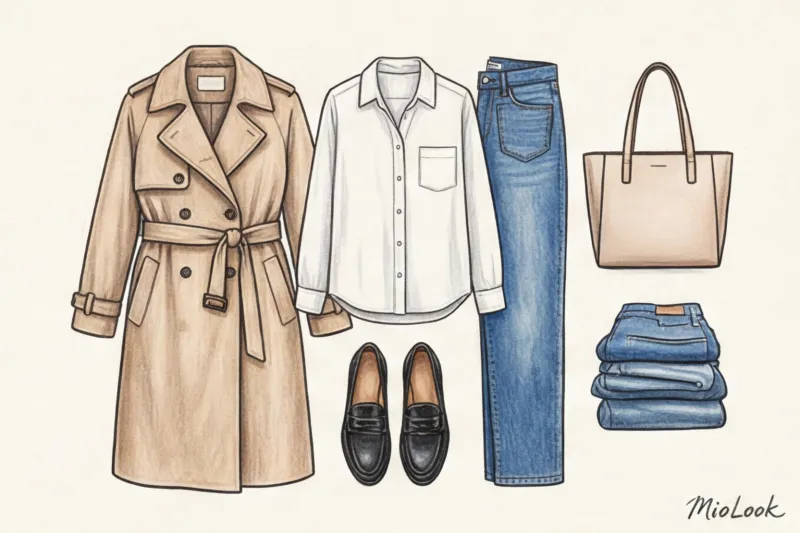
Let's break down the wardrobe math. A typical seasonal capsule wardrobe that we put together with our clients for workdays often consists of just 15 items (excluding lingerie, bags, and jewelry). These include, for example, three bottoms (palazzo pants, straight-leg jeans, a midi skirt), five tops (from a basic T-shirt to a structured shirt), two outer layers (a jacket and a voluminous cardigan), and three pairs of shoes. The magic of maximum combination is that these 15 items easily generate over 30 unique looks. If the color palette is built around a single principle (say, deep blue, ecru, chocolate, and accent burgundy), you can practically pull out items blindly—they will inevitably match.
The most powerful hidden benefit of such a system is a dramatic reduction in decision fatigue. Behavioral psychology, particularly the work of Roy Baumeister, has proven that our brain has a limited amount of energy for daily decisions. By wasting this energy early in the morning on the agonizing task of choosing a blouse and trousers, we lose willpower by evening. This is the root cause of impulsive shopping—a tired brain simply craves a quick dopamine hit. When you have a tightly controlled, functioning framework, you physically lose the urge to grab "just one more cute top for €40" on sale, because you understand it won't fit into the well-oiled machinery of your database.
In practice, creating such a matrix "in your head" can be difficult. While I used to lay out clients' clothes on the floor to find non-obvious visual combinations, now the mechanics of working with capsules have become digital. Smart wardrobes allow you to digitize the contents of your shelves and create outfits on your smartphone screen. By uploading your basic items to MioLook , you can not only identify the blind spots in your capsule wardrobe but also test whether a new potential purchase will fit into your existing 30+ looks before you commit. It's the perfect bridge from physical order on hangers to the full digitalization of your personal style.
Digitalizing the Closet: How Technology is Combating Overproduction
In the digital age, trying to keep your entire wardrobe in your head is as futile as memorizing everyone's phone numbers. According to a large-scale consumer behavior study by McKinsey (2023), women regularly buy duplicates of items simply because they can't physically see similar items on the back shelves. A pair of dark blue jeans forgotten at the bottom of a drawer or another basic white T-shirt hidden under a bulky sweater provokes us to make further, completely pointless purchases. Our brains work on the principle out of sight, out of mind , and this is how environmentally unfriendly “clones” multiply uncontrollably in a closed space, eating up the budget.
Many people think that digitizing a closet is an overwhelming task that takes several weekends. In reality, it is one-time investment of time , which pays for itself on the very first shopping trip. Digitization is a powerful tool for sustainable fashion, translating the abstract panic of "I have nothing to wear" into a strict and understandable database. When I transferred my things to a virtual format with smart wardrobe at MioLook , my approach to consumption has changed dramatically. You don't need to have a professional photoshoot for every shirt: just take quick photos with your smartphone or find similar catalog photos online. The app will neatly crop out the background and organize your clothes by season and color, clearly demonstrating your personal fashion statistics.

But a real breakthrough in how we assemble an eco-friendly wardrobe occurs when artificial intelligence is connected to your catalog. Imagine a classic situation: you're standing in the fitting room, holding a stunning, sophisticated skirt for €120. Your emotions scream "I have to buy it!", but this is where virtual verification comes into play. You upload a photo of the new item to the app and ask the AI to generate images to check if it fits into the database before you check out.
In my experience, this has proven to be the best filter for impulsive spending. I no longer buy skirts that I have nothing to wear with, because the AI warns me in advance about the lack of matching tops. If the algorithm can't create at least three complete outfits with what I already have at home, the item stays in the store.
This virtual fitting and preliminary testing of combinatorics is pre-shopping At its best. Technology takes care of the mundane, saving us from the situation where we have to buy three more tops and a pair of shoes to complement one statement piece, increasing our carbon footprint exponentially. As a result, every new item works 100% from day one.
Your ideal image begins Here
Join thousands of users who look flawless every day with MioLook.
Get access — €0.99 onceEco-friendly recycling: how to say goodbye to clothes the right way
Often, after a comprehensive closet overhaul, my client and I are left with two huge bags of discarded items. Most people's first instinct is to toss them all into the nearest bin from a well-known mass-market brand and, with a sense of accomplishment, go get some coffee. But let's take off our rose-colored glasses.
Recent investigation Changing Markets Foundation showed that more than 60% of the items handed over under the programs take-back (returning clothing in stores) end up in illegal landfills in the Global South or simply incinerated. Simply throwing clothes in the trash is truly the worst-case scenario. A sustainable wardrobe isn't just about what we buy, but also about how we dispose of what we no longer need. Synthetics will take hundreds of years to decompose in landfills, releasing microplastics and landfill gas, and complex blended fabrics are virtually impossible to recycle without special sorting.
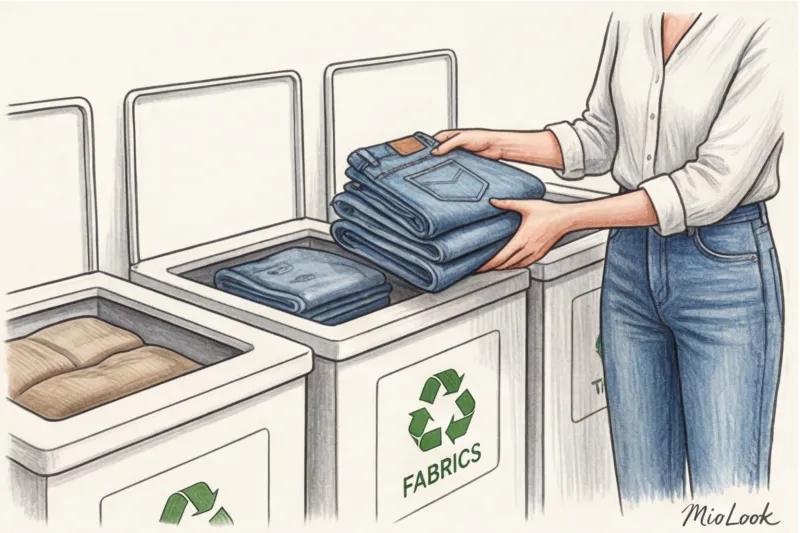
What should you do with outright rags—items that are stained or torn to the point that a tailor's repair would cost more than €50? They should be donated to local environmental projects and specialized recycling centers that openly report on their activities. Shredded textiles can find a real second life: they can be used as cleaning material for auto repair shops, mattress padding, or soundproofing for construction projects. A little insider tip: before donating rags, be sure to cut off any metal zippers or plastic buttons; this will greatly speed up the industrial recycling process.
If an item is in decent condition, we immediately think about charity. There's a strict filter here: charities absolutely don't want your stretched-out rhinestone T-shirts or decade-old, outdated dresses. Charities require clean, modern, and practical basic clothing, flat shoes, and practical outerwear. Remember the golden rule: if you'd be embarrassed to offer something to your sister or close friend, don't give it to someone in need.
But for those very things that simply no longer fit into your wardrobe, but still look great, the ideal solution would be swap parties I love organizing these clothing swaps among colleagues. You bring a high-quality but boring cardigan and leave with a gorgeous jacket that fits you perfectly. You don't spend a cent, get a dopamine hit from "free shopping," and save good clothes from oblivion.
Action Plan: Transform Your Wardrobe into an Eco-Friendly One in 30 Days
Understanding carbon footprint theory is great, but the real magic happens when you take action. Behavioral psychology agrees that changing an ingrained habit requires a month of focused work. That's why I prescribe a 30-day detox plan to all my new clients. And let's be clear: we're not doing this for some vague promise of saving glaciers. We're doing it to regain control of your style, free up your mornings, and save significant amounts of money that's usually wasted on impulse purchases.
Here's a step-by-step guide to transforming your closet from a chaotic clutter into a cohesive, eco-friendly system.
Week 1: Radical Audit and Digitization of Current Items
The first week is the most labor-intensive, but it yields the greatest therapeutic effect. Your task is to extract it from the depths of the apartment. absolutely everything Clothes, including those stored in suitcases under the bed or on the farthest shelves. Lay them out in front of you. This visualization of the scale of your possessions is more sobering than any lecture.
Next, we move on to digitization. I highly recommend taking a photo of every item you decide to keep. Transfer your inventory to your smartphone by uploading the photos to MioLook or a similar application. When your closet is literally in your pocket, you physically can't buy a fifth white shirt—the algorithm will simply remind you that you already have four.
Week 2: Create your first capsule using what you have (no buying required!)
We're declaring a moratorium on all shopping. No marketplaces, no lunchtime sales. In the second week, we're practicing radical creativity—assembling a work capsule for the next month using only the tools we have.
Choose 15 items (excluding underwear and sportswear) that pair perfectly with each other. Experience shows that 15 carefully chosen items can create over 30 unique outfits. You'll suddenly discover that an "eco-friendly wardrobe" isn't about buying new artisan eco-brands, but rather a fresh take on an old trench coat and forgotten palazzo pants.
Week 3: Repairing the deferred and adding on the unnecessary
It's time to sort out the "purgatory"—the pile of items waiting to be repaired or discarded. Take those trousers that need hemming or that coat that needs a new lining to a tailor. Simple math: a quality zipper replacement or a tailored fit will cost you around €15–€20, while buying a similar, high-quality new item will cost you €80 or more.
We use the rest (what can't be repaired or what we've completely fallen out of love with) in an environmentally friendly way: we take it for recycling, give it away at swap parties, or donate it to reputable charities.
Ready to get started?
Try MioLook's free plan to digitize your closet and create capsule wardrobes—no commitment.
Get access — €0.99 onceWeek 4: Implement a 48-hour "pause rule" before making any new purchases
By week four, your brain will start craving the usual dopamine boost from shopping. This is where we introduce a strict filter— 48-hour rule Seen a stunning jacket? Great. Add it to your favorites, close the tab, and set a timer for two days.
In my experience, this rule eliminates up to 80% of impulsive spending. Within 48 hours, emotions subside, rationality kicks in, and you realize that you don't need that jacket at all, or that it duplicates the functionality of something you already own.
The Ultimate Smart Buyer's Checklist
As you complete our 30-day marathon, copy this list to your phone's notes. Open it every time you're at the checkout (or virtual shopping cart) after the 48-hour wait has passed. If you answer "no" to any of the questions, the item stays in the store:
- The Rule of Three: Will I be able to create at least 3 different looks from my current wardrobe with this item?
- CPW Index: Am I willing to wear this item at least 30 times (30 wears test)?
- Compound: Is this a single material or a clear blended fabric that will withstand more than one wash?
- Service: Does this item require complex and expensive dry cleaning that would exceed its value?
Transforming your habits doesn't require deprivation. Ultimately, a truly eco-friendly wardrobe gives you an incredible sense of freedom. You stop wasting mornings trying on clothes, your clothes last longer, and the hundreds of euros you save can be spent on experiences, travel, or quality education. And yes, the planet will thank you for it, but most of all, you'll thank yourself.
Guide Chapters
Ethical Fashion: The Truth About Vegan Leather and Eco-Fur
Buying clothes labeled "Vegan" doesn't always save the planet. We explore why cheap faux leather is harmful to the environment and what makes up a truly eco-friendly wardrobe.
Cost per wear formula: calculating the cost of wearing clothes
Which item is more affordable: basic jeans for €80 or a coat for €1,200? We explore the Cost Per Wear rule, which will help you spend less and wear more.
Clothing upcycling: how to give clothes a second life
Forget about homemade crafts. Learn how to transform old items into exclusive, perfectly-fitting couture pieces.
Renting and exchanging clothes: swapping for a wardrobe update
Statistically, we only wear 20% of our wardrobe. Learn how to look chic without buying anything new with clothing rentals and swap parties.
How to shop secondhand: stylist tips
Vintage isn't about strict savings, but about finding unique cuts and textures. Discover a stylist's secrets to finding gems amid the chaos of rails.
Wardrobe care: how to extend the life of your clothes
The secret to impeccable style lies not in premium brands, but in proper care. Learn how to keep your favorite clothes looking their best for years to come.
Conscious Consumption in Clothing: How to Put Together a Capsule Collection
Total decluttering isn't mindfulness, but a step toward a new kind of hyperconsumption. We'll explain how to manage your belongings and create the perfect capsule wardrobe.
Where to Donate Old Clothes: Eco-Friendly Decluttering
A personal stylist's tips for eco-friendly wardrobe decluttering. Learn to say goodbye to unnecessary items mindfully and without guilt.
Eco-Friendly Fabrics for Clothing: A Guide to Choosing
Eco-friendliness of a material isn't just about its beautiful composition, it's also about its durability. Let's explore which fabrics are truly safe for the environment and your wardrobe.
Virtual Wardrobe: An App for Overconsumption
True sustainability starts not in an expensive boutique, but in your closet. Learn how digitizing your clothes can help stop the endless shopping cycle.
Greenwashing in Clothing: How to Spot Eco-Fraud
Many brands are passing off ordinary items as eco-friendly for profit. We'll explore what greenwashing is and how to avoid falling victim to marketing ploys.