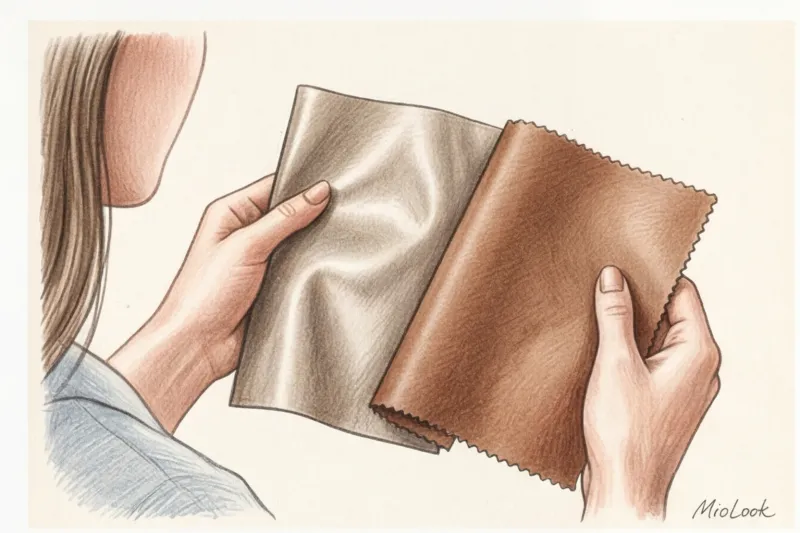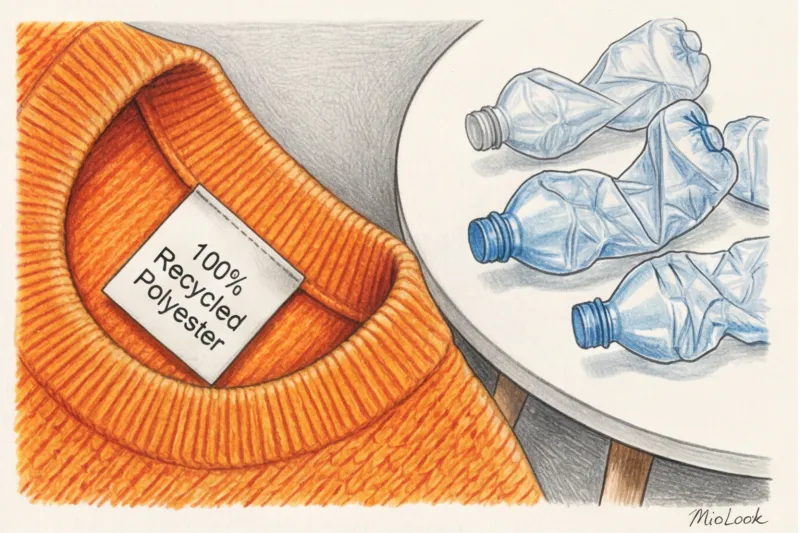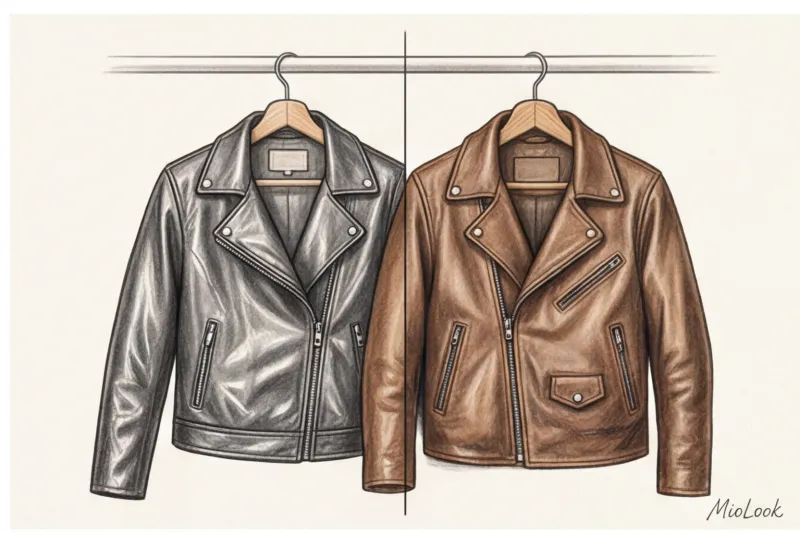
I remember that day vividly. My client proudly laid out five pairs of trousers from a mass-market brand's new collection on the table. "Look, Emily, I'm coming to the light side! These are all vegan leather, no animals were harmed," she declared confidently. I glanced at the labels: 100% polyurethane.
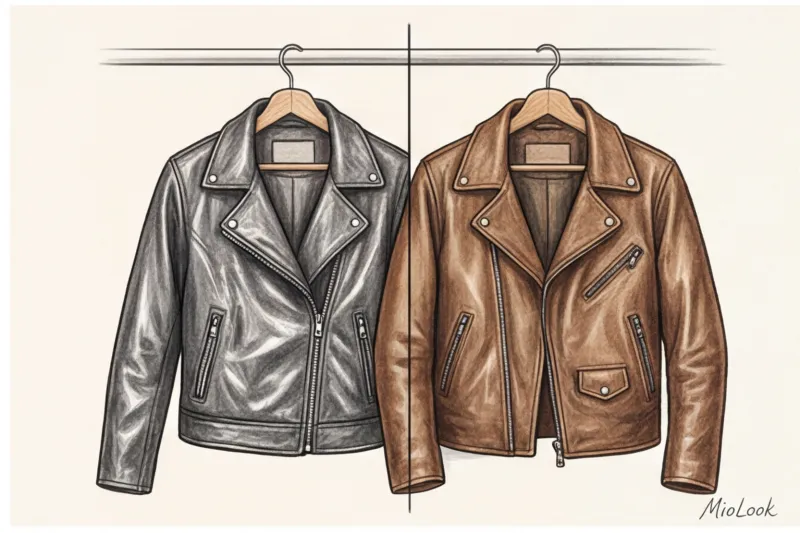
I had to tell her the unpleasant truth. Yes, no animals were involved in the production process. But these pants will be heading to the landfill after just one season, when they start to show telltale cracks at the folds. And they'll decompose there for the next 500 years, releasing toxic microplastics into the soil. The real deal. ethical fashion — it's not just a pretty green "Vegan" tag at the checkout. It's a deep understanding of what your clothes are made of and what their real life cycle is. We discussed these basic principles in more detail in our the complete guide to an eco-friendly wardrobe.
Instead of the typical calls to immediately purge your closet of wool and throw out all your leather bags, let's look at the facts and figures. You'll learn why cheap faux leather is more harmful to the planet than a genuine vintage jacket, and how technology is changing our understanding of a cruelty-free wardrobe.
Ethical vs. Eco-Friendly Fashion: What's the Biggest Pitfall for the Conscious Shopper?
Many brands deliberately confuse the concepts of cruelty-free (created without cruelty to animals) and eco-friendly (safe for the environment). By labeling a €50 jacket "Vegan Leather," the manufacturer commits the perfect act of greenwashing. The buyer feels like a savior of the planet, even though in reality they're purchasing a pure petrochemical product.
According to bare statistics, over 85% of so-called vegan leather on mass-market shelves is made of polyurethane (PU) or polyvinyl chloride (PVC). The production of these synthetic materials requires colossal amounts of water and harsh chemicals, and it is practically impossible to process them into new clothing.
The most ethical item in your wardrobe is the one that's already hanging in your closet. Even if it's a genuine leather jacket you bought five years ago.
Wearing an old, high-quality item longer is much more environmentally friendly than throwing it away in a wave of ethical zeal and buying a new one made of "eco-plastic." Sound counterintuitive? Absolutely. But carbon footprint math works exactly like that: extending the life of any item by just nine months reduces its carbon, water, and waste footprint by 20-30%.
Access to MioLook for €0.99 — one-time payment
A smart AI stylist will select the perfect look.
Get access — €0.99 onceVegan Leather: From Mass-Market Plastic to Future Technologies
After 12 years of reviewing wardrobes, I've discovered a sad pattern. One of my clients went through three polyurethane bags in two years (an average of €60 each) because the handles inevitably cracked and peeled in the cold. As a result, her Cost Per Wear (CPOW) was catastrophically high. By comparison, a basic bag made from next-gen high-tech materials would have cost her €180-250 but would have lasted five times longer without losing its visual appeal.
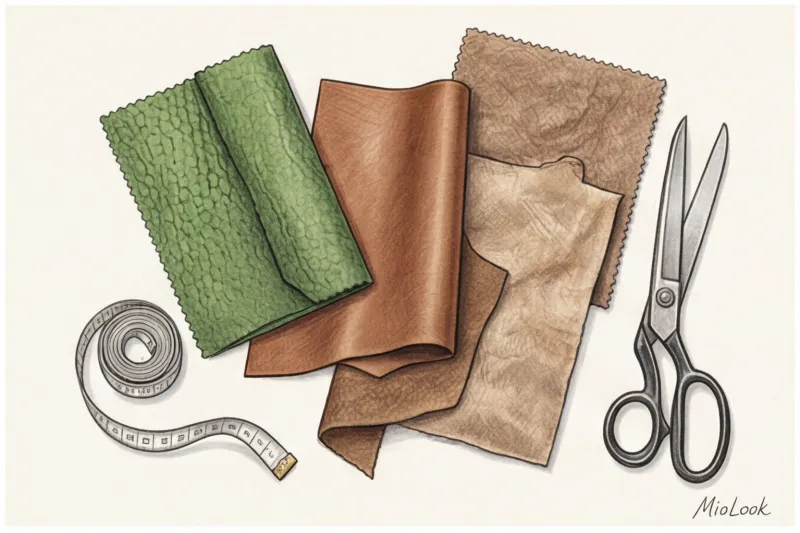
Traditional faux leather is a dead end in fashion evolution. But that doesn't mean we're doomed to wear either short-lived plastic or genuine animal leather.
Innovative materials: apples, cacti and mycelium
According to the Material Innovation Initiative (MII) 2023 report, investment in next-generation materials has tripled. The industry is finally producing alternatives that breathe, retain their shape, and age gracefully:
- Desserto (cactus leather): Grown in Mexico with minimal water consumption, the material is stretchy and incredibly soft—the perfect solution for thin gloves and small crossbody bags.
- AppleSkin: Made from apple pomace left over from juice production in Italy, it's used to make excellent structured backpacks and sturdy footwear that won't warp over time.
- Mylo (mycelium): A unique leather made from the root system of mushrooms. This material is already used by such giants as Stella McCartney. Its feel and density are virtually indistinguishable from premium calfskin.
It's important to make a clear disclaimer here: these innovative materials still use a polyurethane base or coating for strength (about 20-30% of their composition), so they are not 100% biodegradable. This isn't magic, but it is a huge technological leap forward compared to the purely petroleum-based mass-market products.
Your ideal image begins Here
Join thousands of users who look flawless every day with MioLook.
Get access — €0.99 onceEco-fur: How to wear the trend without leaving a plastic footprint
Voluminous acrylic fur coats have become the unofficial uniform of modern urban fashionistas. They're bright, inexpensive, and look great in street style photos. But data from the Ellen MacArthur Foundation (2021) quickly brings us back down to earth: every time synthetic furry clothing is washed, millions of microplastic particles are released into the world's oceans, which then end up in the marine food chain.
If you've decided to invest in faux fur, forget about machine washing at home. The only way to save the environment is to have it professionally dry cleaned or use special filter bags (such as those from Guppyfriend) that trap microfibers in the drum. fashionable shoes for autumn and winter When pairing a fur coat like this, consider chunky boots made from recycled rubber or vegan alternatives to keep the look consistent with an ethical philosophy.

The future of this segment definitely belongs to KOBA—the world's first commercial eco-fur made from 37% plant-based materials (corn fibers). It's significantly warmer than regular acrylic, retains its fluffy texture longer, and, most importantly, is recyclable.

Alternatives to wool and silk for the cold season
The biggest fear when transitioning to a cruelty-free wardrobe is the simple fear of freezing. "Emily, how will I survive February without my favorite cashmere and merino sweater?" I hear this question every fall. As a stylist who puts together winter business capsules for clients in cold regions, I can confidently answer: smart, technological layering always trumps fabric thickness.
I personally tested office and casual looks at -15°C, completely eliminating animal-based materials. The secret lies in the right combination of high-tech thermal underwear (lines like Uniqlo Heattech are excellent in the €30-€50 budget segment) and a thick outer layer. Instead of thin cashmere, we use:
- Thick organic cotton: Look for a density of 250 g/m² or higher on the tags (often labeled as heavy cotton). It holds its shape well, creates a luxurious silhouette, and doesn't pill as quickly as cheaper wool.
- Tencel (Lyocell) and dense bamboo: Fibers derived from eucalyptus wood. They have unique thermoregulatory properties: they provide cooling in summer but retain body heat in winter.
- Cupro and viscose EcoVero: Ideal substitutes for natural silk for flowing office blouses. They shimmer beautifully in the light, but their production is strictly controlled by certificates, and the wood is sourced from sustainable forests. Read more in our guide to eco-friendly fabrics.
Of course, there are situations where this urban approach won't work. If you're heading out on an extreme mountain hike in -30°C or planning a long winter fishing trip, cotton sweaters with Tencel won't save you—in such conditions, specialized membrane fabrics and high-tech fleece are needed.
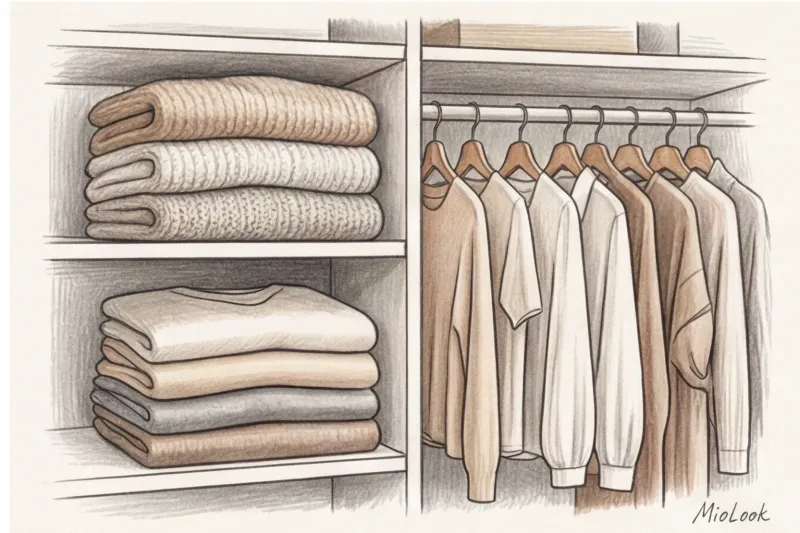
How to Incorporate Ethical Materials into Your Wardrobe: A Stylist's Checklist
The transition to mindful consumption doesn't have to be radical. Start by incorporating three pragmatic principles into your routine:
- Wear what you have. Vintage and high-quality secondhand are a legal "ethical loophole" for those who visually appreciate the texture of genuine leather or thick wool but don't want to fund primary production. You're not creating new demand; you're saving an item from landfill.
- Read the ingredients, not the marketing slogans. Look for independent certifications on labels: PETA-Approved Vegan (guarantees the complete absence of animal components in adhesives and dyes) and GOTS (Global Organic Textile Standard - confirms the organic origin of the cotton and fair working conditions in the factory).
- Calculate the cost of exit. Divide the price of an item by the number of times you realistically plan to wear it. This is where the gulf between mindless shopping and smart investment lies. A €40 faux leather pair worn five times costs €8 per occasion. A high-quality Apple leather equivalent for €200 worn 100 times costs only €2.
To make this checklist practical and not just theoretical, I always recommend that clients use digital tools. You can upload the items you photographed to MioLook app When you see in real time, in numbers, that you've only worn a new mass-market eco-sweater twice this year, the urge to buy another quick item disappears.
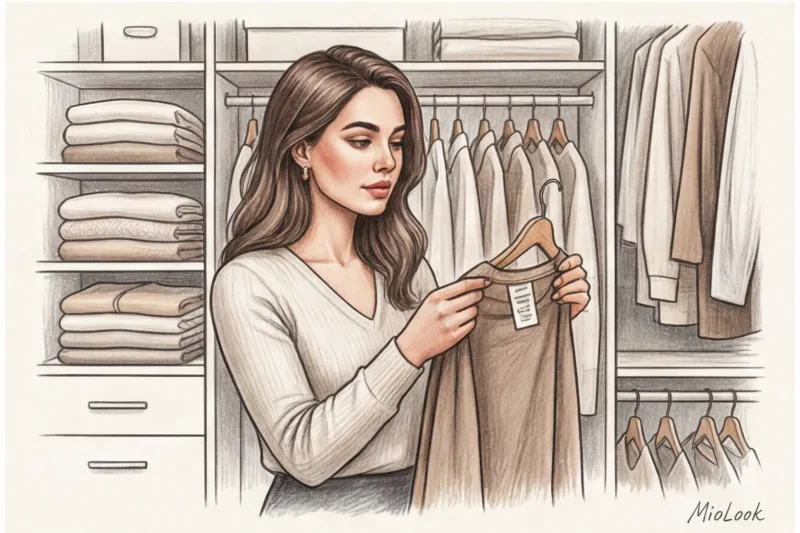
Technology at the Heart of Ethics: The Future of Your Capsule Wardrobe
According to McKinsey analysts (2024), the main problem facing the fashion industry today is not a shortage of innovative materials, but rampant overproduction. We buy 60% more clothes than just 15 years ago, yet wear each item half as much.
Therefore, true ethics lies in a systematic approach. Smart outfit planning apps solve the eternal problem of "a full closet, but nothing to wear" without another trip to the mall. Artificial intelligence can create dozens of new looks from your existing basic capsule wardrobe, combinations you never even imagined.
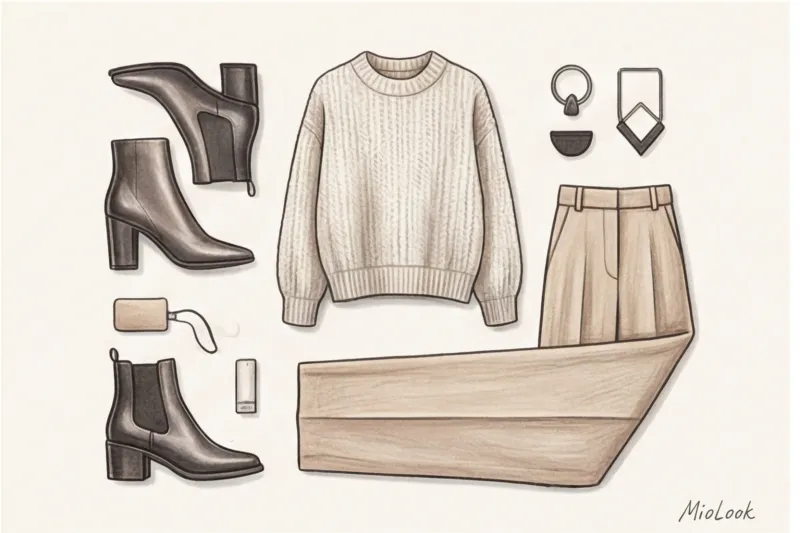
Don't try to build the perfect 100% vegan wardrobe tomorrow—you'll only burn out and spend a ton of money on low-quality substitutes. Aim for a pragmatic wardrobe, where every item you buy pays for itself (both in euros and in carbon footprint equivalent) down to the last thread. Start with this simple step: check the tags on your favorite jackets, digitalize them, and forever stop falling for the "cheap faux leather" marketing ploy.