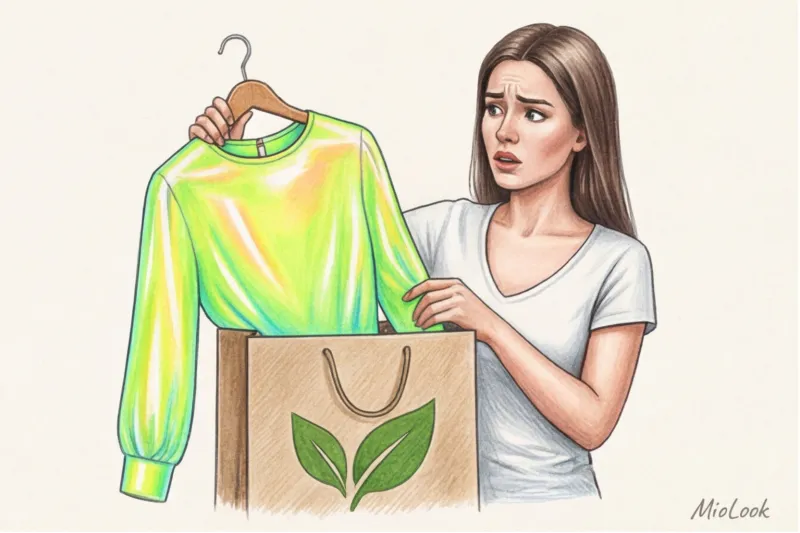
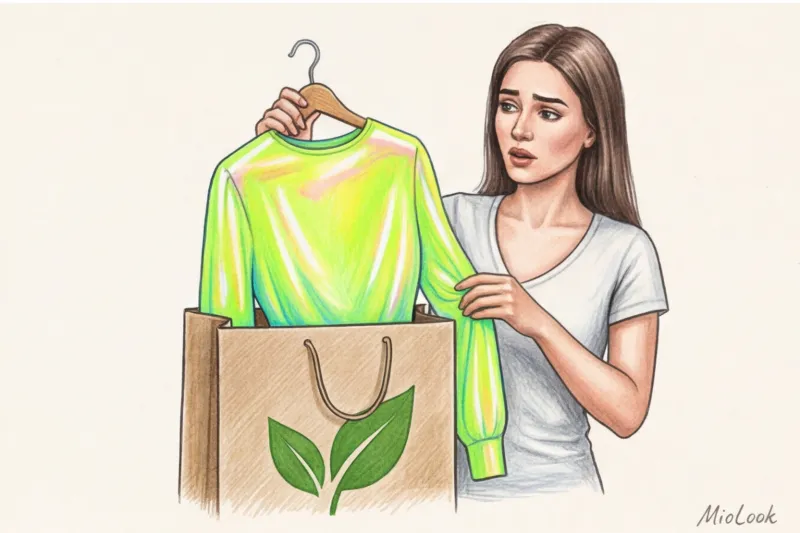
One of my clients proudly dumped a pile of earth-toned clothes on the sofa. "Look, Emily, I've decided to go eco-friendly!" she declared. She spent about €350 on this "conscious" shopping spree at a popular high-street store. The items were packaged in craft bags with green leaves, and the tags proudly displayed the word Conscious Do you know how this story ended? After three washes, the "eco-sweater" made from recycled polyester was covered in stiff pilling, and the T-shirt made from organic, but incredibly thin, cotton was warped at the seams. After two months, half of these items were in the landfill. That's it. greenwashing in clothing in its classic, most cynical form. We discussed the basic principles of true sustainability in more detail in our the complete guide to an eco-friendly wardrobe , but today I want to talk about the traps of marketers.
What is greenwashing in clothing and why is it a trap for conscious shopaholics?
Greenwashing is a marketing strategy in which a brand spends more time and money on creating illusions Their environmental credentials are more important than actually reducing their impact on the planet. For fast fashion giants, this is the perfect tool for managing our emotions.
As a stylist, I see this psychological trap at work all the time. When you're standing at the checkout with your fifth unplanned T-shirt, your brain starts sending out guilt signals: "Why do you need another one? It's overconsumption." But then your gaze falls on the green tag. Made with nature in mind Bingo! The guilt dissolves. You're no longer a victim of impulse shopping, you're a penguin savior. Marketers have sold you an indulgence.
According to a major report by the Changing Markets Foundation (2021), up to 59% of all sustainability claims made by European fast-fashion brands are misleading or lack evidence.
The main principle of work that I always promote in my practice and use in the application MioLook True sustainability means optimizing your wardrobe and keeping your Cost Per Wear high, not buying something new just because it has a craft label.
The Anatomy of Deception: Key Signs of a Pseudo-Eco-Friendly Brand
The industry's problem is that the words "eco," "green," or "conscious" are virtually unregulated. Any brand can print them on a T-shirt perfectly legally. To learn to read between the lines on retailers' websites, you need to understand their main tricks.
The "recycled plastic" myth and the threat of microplastics
The most popular trick is clothing made from recycled PET bottles. Sounds amazing, right? We're saving the ocean from plastic by turning it into cozy fleece. In reality, it's an ecological dead end.
A plastic bottle can be recycled into a new bottle up to 10 times, maintaining a closed loop. But as soon as that bottle is turned into polyester for clothing, the cycle is interrupted. According to statistics from the Ellen MacArthur Foundation (2017), less than 1% of the material used to make clothing is recycled back into new clothing. A fleece sweatshirt made from bottles is a one-way ticket to a landfill. Furthermore, with each machine wash, these synthetics release thousands of microplastic particles, which escape filters and end up in waterways.
Organize your eco-wardrobe smartly
Try MioLook for free: A smart AI stylist will create the perfect look from what you already own, reducing the need for new purchases.
Get access — €0.99 once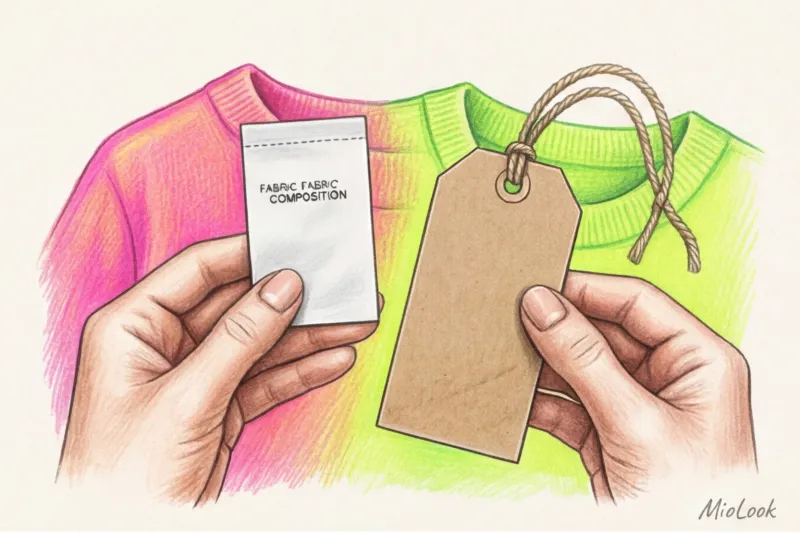
Green Labels and Uncertified Kraft Cardboard
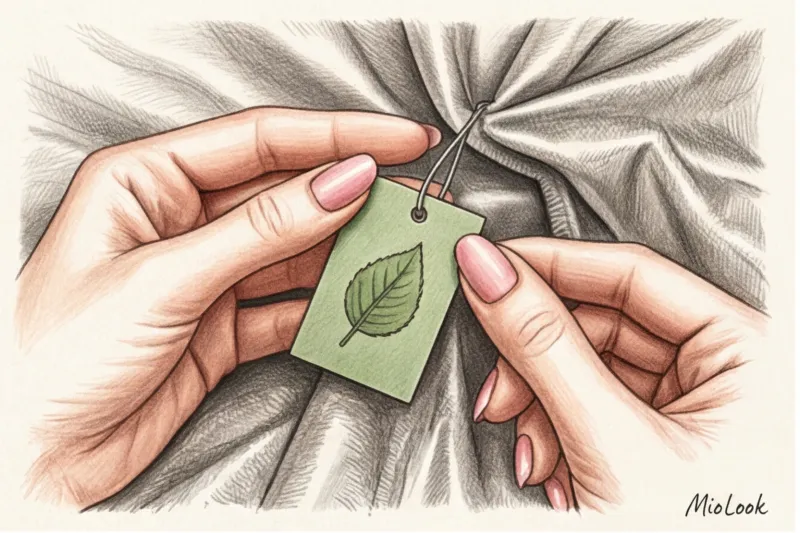
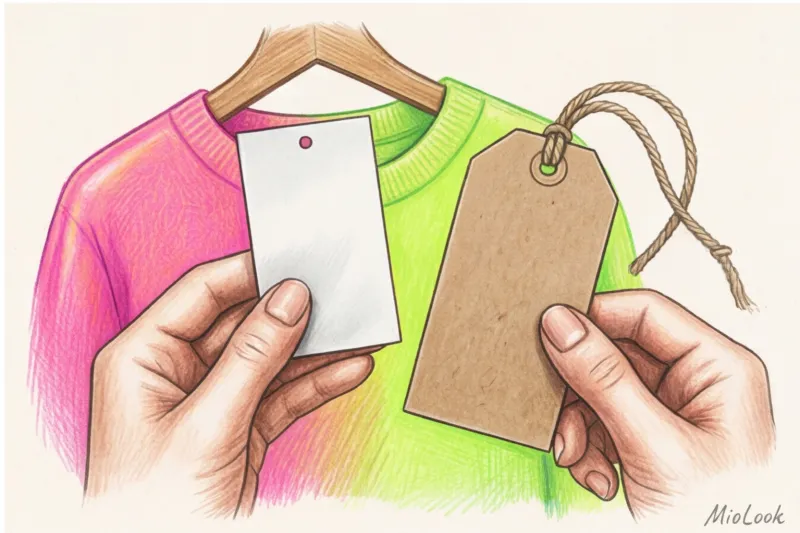
Pay attention to visual anchors. Uncolored cardboard, thick jute ropes, fonts that mimic handwriting. Do you know why brands love this technique so much? Insider fact: producing one craft tag costs a factory approximately €0.02. But actually restructuring the supply chain to obtain a strict international certification like GOTS (Global Organic Textile Standard) costs hundreds of thousands of euros and requires rigorous auditing.
Look not for pictures of leaves, but for abbreviations of real independent certificates: GOTS, OEKO-TEX Standard 100, Fair Trade. If these aren't there, and only the words "Our Eco Promise" are present, it's pure greenwashing.
Tiny "eco-capsules" against the backdrop of mountains of mass-market goods
Imagine a brand that releases a capsule collection of 10 organic cotton T-shirts. They create a beautiful advertising campaign featuring models in a field, promoting environmental conservation. Meanwhile, this same brand produces and delivers 10,000 new styles weekly using the cheapest virgin polyester.
The mathematics of overproduction are inexorable: volume always trumps composition. Fast-fashion giants use such "conscious" lines purely as PR ploys. By purchasing a T-shirt from this capsule, you're funding the company's overall destructive business model.
Visual Illusions: How Design Makes Us Believe in "Naturalness"
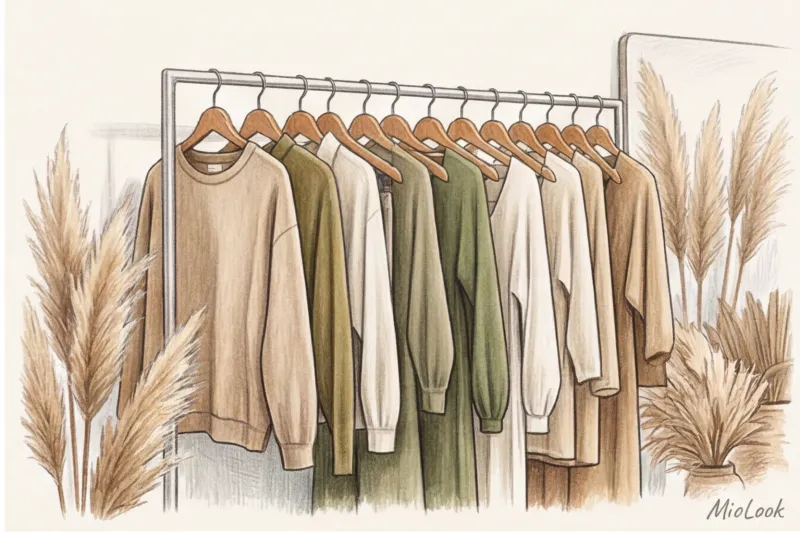
Our brains are surprisingly easy to fool with color and texture. One day, a girl came to me for a wardrobe review. She showed me a dress: "Emily, I bought a stunning linen dress for the summer; it's so breathable! It cost about €45." The dress was a beautiful, undyed oatmeal shade, with a rough texture and raw edges. It looked As eco-friendly as possible. We turned it inside out: 80% polyester, 20% acrylic. Not a gram of linen.
Color psychology is a powerful weapon. Designers deliberately use beige, muted olive, and sand tones, as well as textures like chunky knits or imitation linen knots. The paradox is that a neon pink blouse can be made of 100% organic silk, while an earthy cardigan can be made of 100% toxic acrylic. But subconsciously, we'll consider the latter more "eco-friendly."
The Wardrobe Paradox: Why an Ordinary Thing Can Be More Eco-Friendly Than a "Conscious" One
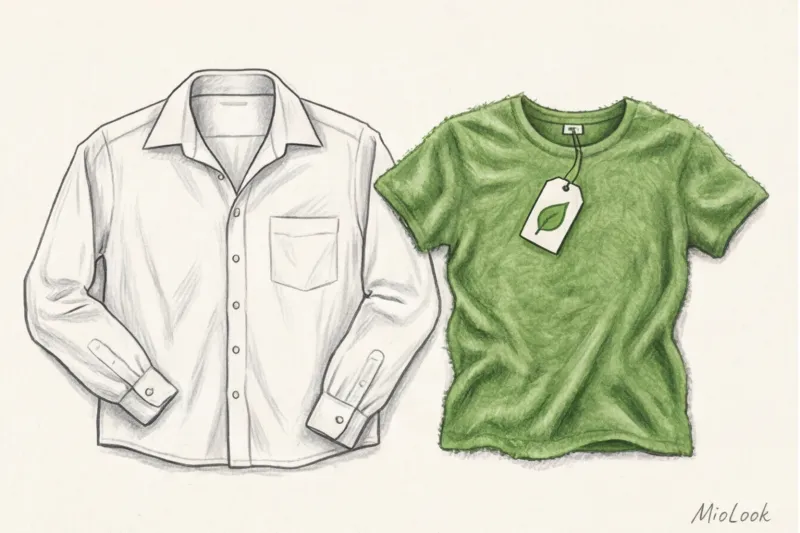
Herein lies my favorite counterintuitive insight, which is often controversial, but the math backs it up. Buying a regular, high-quality item from a regular collection is often more environmentally friendly than buying an item with an "eco" label.
The formula for real eco-friendliness is: durability + frequency of use.
Let's compare. You buy a thick, basic 100% cotton shirt (without any eco-labels) from, say, Massimo Dutti or COS for €60. The fabric holds its shape, the seams are strong. You wear it to work, to meetings, under a sweater, with jeans. Over four years, you'll wear it 100 times. The cost per wear (CPR) is €0.60.
Alternative: You buy a flimsy T-shirt made from "recycled organic cotton" at a budget fast fashion store for €15. Because of the short fibers in the recycled material, it loses its shape after the second wash. After two months and five wears, you relegate it to the "dust rag" category. CPW: €3.
Of course, this doesn't work if you buy a thick item, but it hangs in your closet for years with the tag still on—in that case, even the perfect composition won't help. But in general, shift the focus from "what is it made of?" to "how long can I wear it?" If an item lasts for years, you're already helping the planet.
Stop buying things you don't wear.
Your perfect look starts here: Join thousands of users who look flawless every day with MioLook, calculate their Cost Per Wear, and save money.
Get access — €0.99 once
A Smart Approach: How to Check Brands and Read Ingredients Without Illusions
Your best friend in the store isn't the huge, pretty tag on the chest, but the small, prickly sewn-in composition label in the side seam. I always teach my clients: first touch the fabric, then look at the seam, and only then at the price tag.
Look for single-component fabrics. Items made from 100% cotton or 100% wool have a chance of being truly recycled in the future. However, blended fabrics (for example, 50% cotton and 50% polyester) are currently almost impossible to separate into fibers—they'll become future waste.
Elastane is an exception. A formula of 95% cotton and 5% elastane is better than 100% cotton when it comes to fitted jeans or T-shirts. This 5% will prevent the garment from stretching out at the knees and elbows, meaning you'll wear it significantly longer. I wrote more about how to differentiate materials by touch in the article. How to Choose Quality Knitwear: A Materials Guide.
Want to check out your favorite brand? Visit the project's website. Good On You or look at the transparency index Fashion Transparency Index The data there is collected without the influence of fancy advertising campaigns.
Checklist: How to Avoid Sponsoring Greenwashing in Fashion (A Fitting Room Guide)
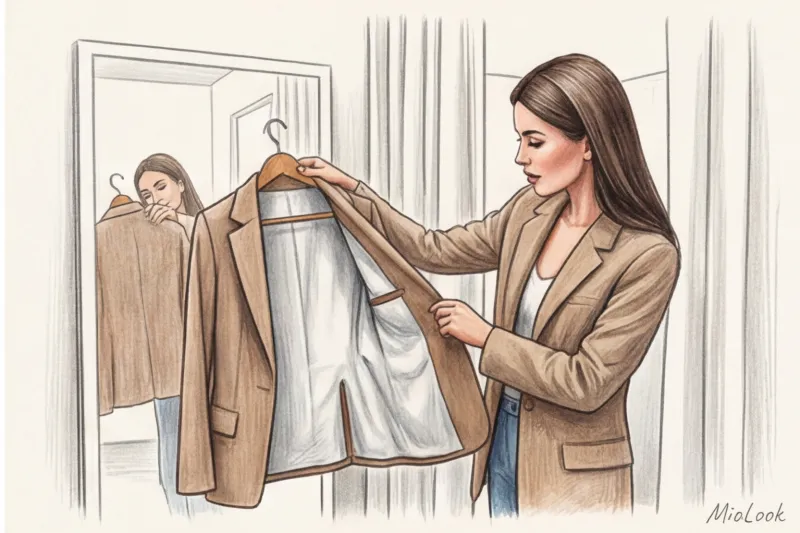
To avoid impulse purchases disguised as "green" slogans, make it a rule to ask yourself three tough questions when standing in front of the mirror in the fitting room:
- What does this go with in my current closet? Name at least three finished looks. If you can't, you don't need the item, even if it's made from unicorn tears and organic hemp.
- Will I be able to wear this in 3 years? Evaluate the design. Is it a passing trend or a staple?
- How to care for it? If an "eco-blouse" requires dry cleaning with toxic solvents after each wear, its eco-friendliness is nullified.
Be sure to check the quality of the seams. Gently tug the fabric where the stitching is—if any gaps or loose threads are visible, the item will quickly become a mess. And if you prefer shopping from the couch, I recommend checking out my tutorials. "Guide: How to Buy Clothes Online Without Returns" And How to Determine Your Clothing Size When Shopping Online to reduce the carbon footprint of constant returns of unsuitable items.
Mindfulness as a Habit: Investing in Style, Not Marketing
Greenwashing in clothing will exist as long as we vote for it with our rubles (or, more accurately, euros). A true eco-wardrobe isn't built on endlessly buying clothes with the right labels. It's built on eliminating the unnecessary.
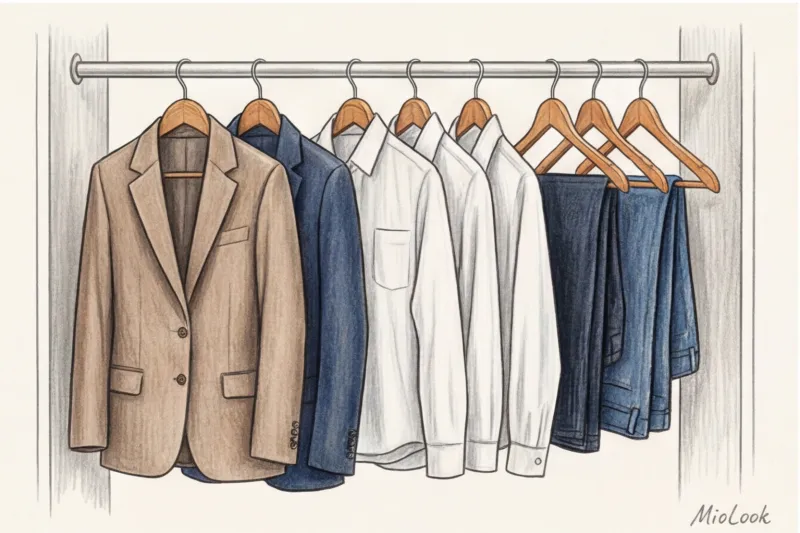
The ideal eco-friendly closet is a well-thought-out capsule, where items are few in number, but each one is 100% worth its cost. You ignore the flashy slogans and look only at the facts: the composition, the density of the fabric, the evenness of the stitching, and how well the item fits you.
Start with a simple step: take an honest inventory of what you already own. Write down what you're truly missing and create a strict shopping list. Next time you reach for that flimsy T-shirt over that pretty cardboard box with a tree illustration, you'll know for sure that leaving it on the hanger is your best contribution to protecting the environment.